ANCHORAGE, Alaska (AP) — After a summer spent packing away sockeye salmon, Alaska’s heftiest brown bears are ready to throw their weight around.
Online voting began Tuesday for Fat Bear Week, the annual contest that pits the rotund residents of Katmai National Park and Preserve against each other for the title of most oversized ursine.
Last year's winner, Chunk — known officially as Bear 32 — is hungry for a repeat. Chunk's weight in 2025 was estimated at 1,200 pounds, which gave him a narrow victory. This year he's back and facing corpulent competition like Gully — aka Bear 903 — the offspring of two-time champion Grazer.
The contest, which is in its 12th year, celebrates the resilience of the 2,200 brown bears that live in the preserve on the Alaska Peninsula, which extends from the state’s southwest corner toward the Aleutian Islands. The animals gorge on the abundant salmon that return to the Brooks River, sometimes chomping the fish in midair as they make their way upstream to spawn.
The event this year features 16 bears facing off in a single-elimination, bracket-style tournament. All voting is done online at www.fatbearweek.org, with the winner declared Sept. 29. The public can watch the bears on explore.org’s livestream cameras before deciding on their favorite.
“Fat bears are successful bears,” the nonprofit's website says. They gorge on salmon starting in late June in order to accumulate fat reserves to prepare for winter hibernation, when they do not eat or drink and lose one-third of their body weight.
Adult male brown bears typically weigh 600 to 900 pounds (about 270 to 410 kilograms) in midsummer. By the time they are ready to hibernate after feasting on migrating and spawning salmon — each eats as many as 30 fish per day — large males can weigh well over 1,000 pounds (454 kilograms). Females are about one-third smaller.
Voters in the online contest can review before-and-after photos of the bears, lean at the start of summer and fattened at the end. The bears are not actually weighed — imagine that process — and some fans choose their favorite based on their looks or backstory.
To be featured in the contest, the bears must frequent the area around the river.
The live cameras at Brooks Falls captured the moments in 2024 when mother bear 128 Grazer ’s cub slipped over the waterfall and floated into the fishing spot occupied by Chunk, who attacked and injured the cub. Grazer fought Chunk, but the cub ultimately died. After the dramatic fight, voting fans handed Grazer a victory over Chunk. Then Chunk returned in 2025 to take the title.
Fat Bear Week was started in 2014 as an interactive way to inform the public about brown bears, the coastal cousins of grizzlies.
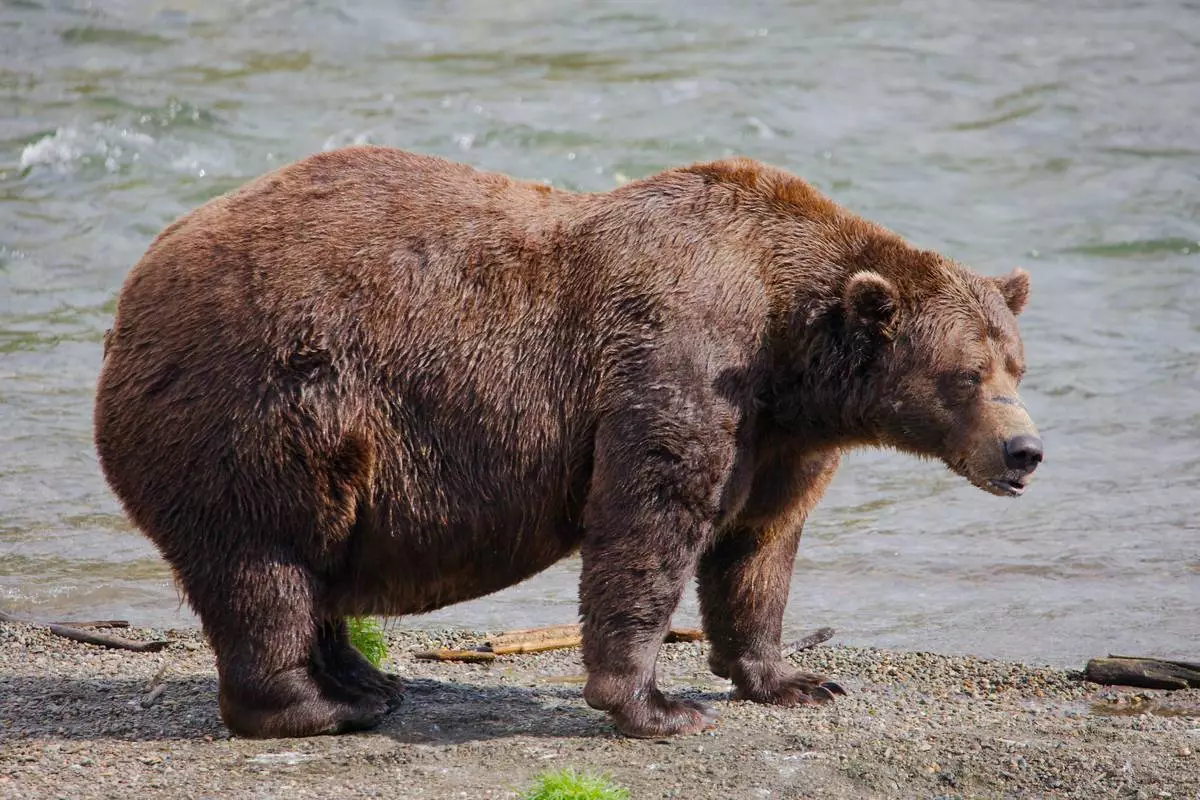
FILE - This image provided by the National Park Service shows bear 32 Chunk at Katmai National Park in Alaska on Sept. 19, 2024. (E. Johnston/National Park Service via AP, File)
KYIV, Ukraine (AP) — Russia bombarded at least four Ukrainian regions overnight with missiles and drones, killing four people, officials said Tuesday, and Ukraine’s forces damaged another Russian oil refinery in their latest long-range strike.
The ongoing exchange of daily aerial attacks, while positions on the battlefield’s front line barely change, provided a backdrop to the visit by Ukrainian President Volodymyr Zelenskyy to the United States.
Zelenskyy was due to meet other world leaders, including U.S. President Donald Trump, at the U.N. General Assembly in New York. The Ukrainian leader is hoping to recruit their help to end Russia’s more than 4½-year-old full-scale invasion of his country.
Russian President Vladimir Putin isn't due to attend the annual event.
The war, which Western officials say has killed more than 500,000 Russian troops, has had global repercussions.
The repeated attacks on Russian refineries, following Moscow’s strikes on Ukraine’s power grid, have caused international shortages of diesel and price spikes, according to Trump. However, the global crunch also came after the Iran war led to curtailed oil shipments through the Strait of Hormuz.
Zelenskyy also wants help to ensure the flow of Ukrainian grain and other farm products to world markets through the Black Sea. Russian attacks on cargo vessels have severely disrupted Kyiv’s exports, hurting its economy and threatening global supplies.
French President Emmanuel Macron said Tuesday that his country would provide Ukraine with more radars to help protect its power grid.
He said on social media that he discussed with Trump the possibility of a truce between Moscow and Kyiv on strikes on energy infrastructure and a “moratorium” on Black Sea attacks.
Zelenskyy began his New York visit by meeting with U.S. senators, thanking them for what he called strong bipartisan support for Ukraine and for recently passing a tougher Russian sanctions bill that Trump has signed into law.
Peace and security will be closer once the bill is fully implemented, he said.
Zelenskyy said on social media that he briefed senators on his proposals for de-escalation measures that he intends to discuss with Trump later Tuesday.
The Ukrainian leader also plans to again press Trump to send more U.S.-made Patriot air defense systems that Kyiv desperately needs to stop Russia’s ballistic missiles.
Ukraine said that it struck the Kuibyshev oil refinery in Samara, southeast of Moscow, in an overnight attack.
Several drones hit their targets, sparking a large fire at the facility, according to a statement from Ukrainian special forces.
The refinery, owned by Rosneft, is a key fuel supplier for central Russia, producing gasoline, diesel, fuel oil and other petroleum products, the statement said. Ukraine said that it struck the same refinery last June.
One person was killed and four others were wounded in the Samara attack, regional Gov. Vyacheslav Fedorishchev said. He said that “the enemy targeted industrial facilities,” but didn’t specify which ones.
The Russian Defense Ministry on Tuesday said that its forces downed 297 Ukrainian drones over 14 Russian regions overnight, as well as the illegally annexed Crimean Peninsula.
Russia’s overnight attack on Ukraine included anti-ship missiles, ballistic missiles, cruise missiles and more than 200 drones, Ukraine’s air force said.
The strikes killed four people in the central Ukrainian city of Dnipro, said Oleksandr Hanzha, head of the Dnipropetrovsk regional military administration.
The strikes across Ukrainian regions damaged homes, businesses and storage facilities, wounding at least five people, authorities said. Five people were wounded in the capital, Kyiv, according to officials.
The Russian Defense Ministry said Tuesday that its forces struck metallurgical and chemical industries, the fuel and energy sector, and the military-industrial complex, as well as port infrastructure facilities in four regions of Ukraine.
They included a Fire Point plant in Kyiv producing components for long-range cruise missiles and a tobacco factory in the central Poltava region used to make small arms ammunition, it said.
Barry Hatton reported from Lisbon, Portugal.
Follow the AP’s coverage of the war in Ukraine at https://apnews.com/hub/russia-ukraine
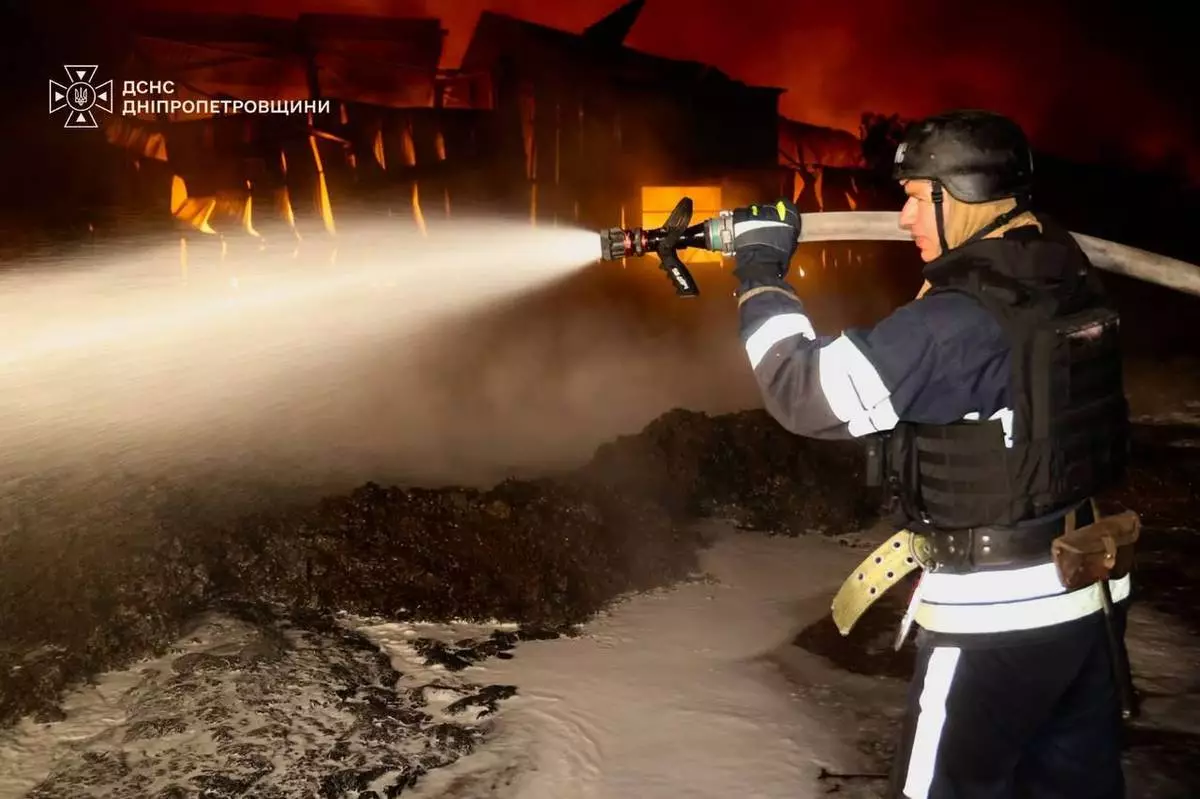
In this photo provided by the Ukrainian Emergency Services on Tuesday, Sept. 22, 2026, a rescue worker put out a fire of a infrastructure facility damaged after a Russian strike on Dnipropetrovsk region, Ukraine. (Ukrainian Emergency Service via AP)
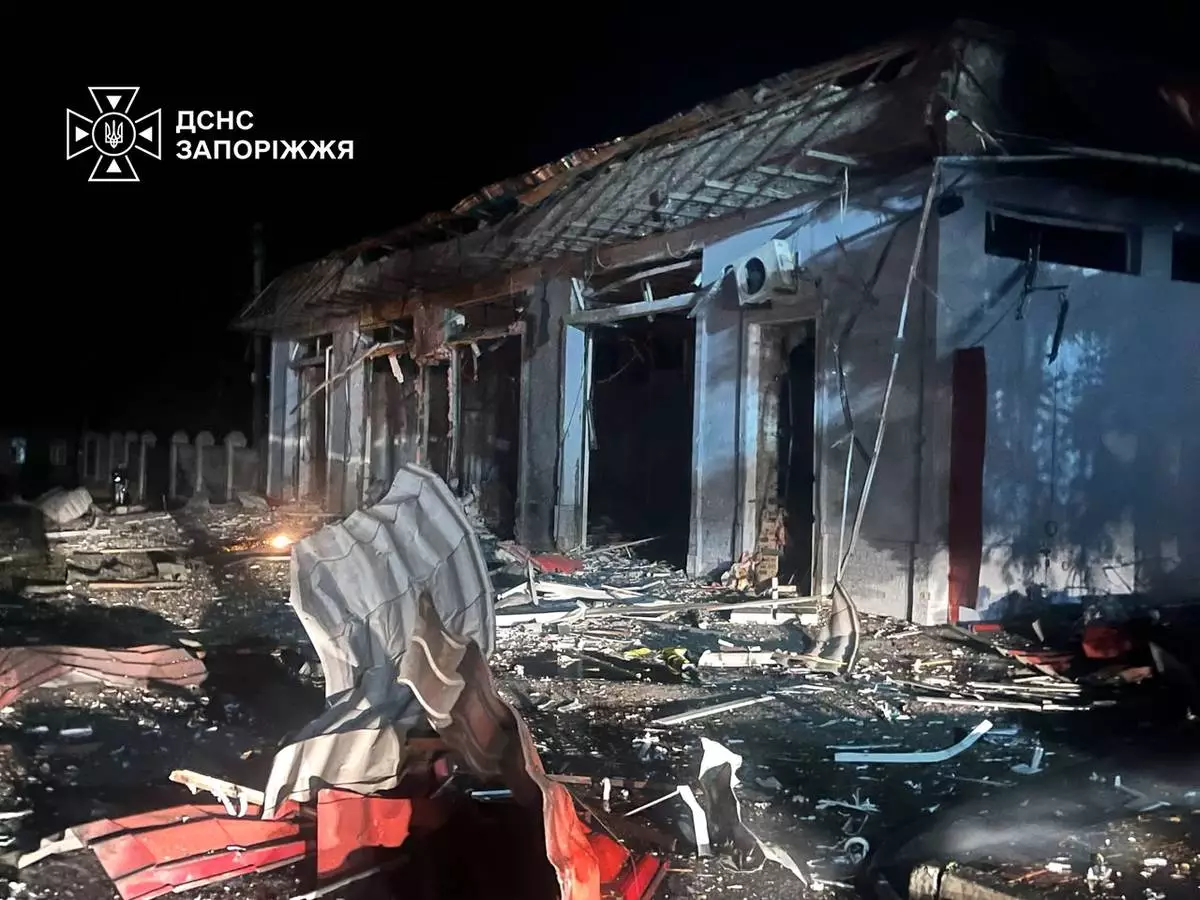
In this photo provided by the Ukrainian Emergency Services on Tuesday, Sept. 22, 2026, a building is seen damaged after a Russian strike on Zaporizhzhia, Ukraine. (Ukrainian Emergency Service via AP)