SAN CARLOS, Calif.--(BUSINESS WIRE)--Sep 22, 2026--
ZAP Surgical Systems, Inc., a global leader in non-invasive robotic brain surgery, today announced that Vibharam Amatanakorn Specialized Cancer Hospital in Chonburi Province, Thailand, will install the first ZAP-X® Gyroscopic Radiosurgery® platform in Thailand and Southeast Asia.
This press release features multimedia. View the full release here: https://www.businesswire.com/news/home/20260922684391/en/
Located approximately 90 minutes southeast of Bangkok, Chonburi is a strategic economic hub within Thailand’s Eastern Economic Corridor (EEC) and a major coastal destination on the Gulf of Thailand. Vibharam Amatanakorn Specialized Cancer Hospital, the first dedicated cancer hospital within the Vibharam Hospital Group, is located adjacent to Vibharam Amatanakorn Hospital at the AMATA City Chonburi industrial estate.
The addition of ZAP-X will significantly expand the hospital’s capabilities to now deliver state-of-the-art stereotactic radiosurgery (SRS) for primary and metastatic brain tumors and other intracranial disorders. Neurosurgeons throughout the Vibharam hospital network are expected to refer appropriate patients to the new dedicated SRS center.
“Introducing the first ZAP-X system in Southeast Asia represents an important milestone for both Vibharam and the region,” said Yair Bauer, Vice President of ZAP Surgical APAC & President of ZAP Surgical Japan. “Vibharam’s commitment to bringing advanced radiosurgery to Chonburi demonstrates how forward-thinking healthcare organizations can expand access to world-class brain tumor care closer to where patients live and work.”
Installation of the ZAP-X system is expected to begin in November 2026, with first patient treatments anticipated in early 2027.
Stereotactic radiosurgery is a completely non-invasive outpatient procedure used to treat many primary and metastatic brain tumors, as well as other disorders of the brain, head, and neck. Frequently serving as an alternative to open surgery, SRS can often be completed in a single brief visit - without incisions or anesthesia - and many patients return to normal activities the same day.
“Radiosurgery represents one of the defining advances in contemporary neurosurgery, yet access remains far too limited around the world,” said John R. Adler, MD, Founder and CEO of ZAP Surgical and Professor Emeritus of Neurosurgery and Radiation Oncology at Stanford Medicine. “Bringing ZAP-X to Thailand is another meaningful step toward changing that reality and making gold-standard SRS available to many more patients.”
Renowned for its groundbreaking precision and treatment quality, ZAP-X utilizes unique gyroscopic mobility to direct radiosurgical beams from thousands of potential angles, precisely concentrating radiation on the intended target. This approach is designed to minimize unnecessary radiation exposure to healthy brain tissue and critical structures such as the brainstem, eyes, and optic nerves, with the goal of preserving cognitive function and quality of life.
ZAP-X also stands apart as the first and only vault-free dedicated SRS platform. Its self-shielded design eliminates the need for costly concrete radiation bunkers, providing hospitals with greater siting flexibility while enabling more open and patient-friendly treatment environments. Unlike legacy dedicated radiosurgery technologies that rely on cobalt-60, ZAP-X uses a modern linear accelerator, eliminating radioactive isotope management, source decay, and recurring source replacement.
About ZAP Surgical Systems, Inc.
ZAP Surgical Systems, Inc., a global leader in non-invasive robotic brain surgery, is committed to reducing the costs and complexities that limit access to world-class radiosurgery (SRS) for the brain, head, and neck. The company manufactures the ZAP-X® Gyroscopic Radiosurgery® platform and is also pioneering new potential applications of high-precision SRS in areas such as depression, addiction, and obesity. Founded in 2014 by Dr. John R. Adler, Emeritus Dorothy & TK Chan Professor of Neurosurgery and Radiation Oncology at Stanford University, ZAP introduced the world’s first vault-free radiosurgery platform – eliminating the need for costly shielded treatment rooms and enabling flexible, high-visibility siting. ZAP-X also advances beyond legacy Cobalt-60 technology with a modern linear accelerator for safer, more sustainable care. Learn more at ZAP Surgical and follow us on LinkedIn.
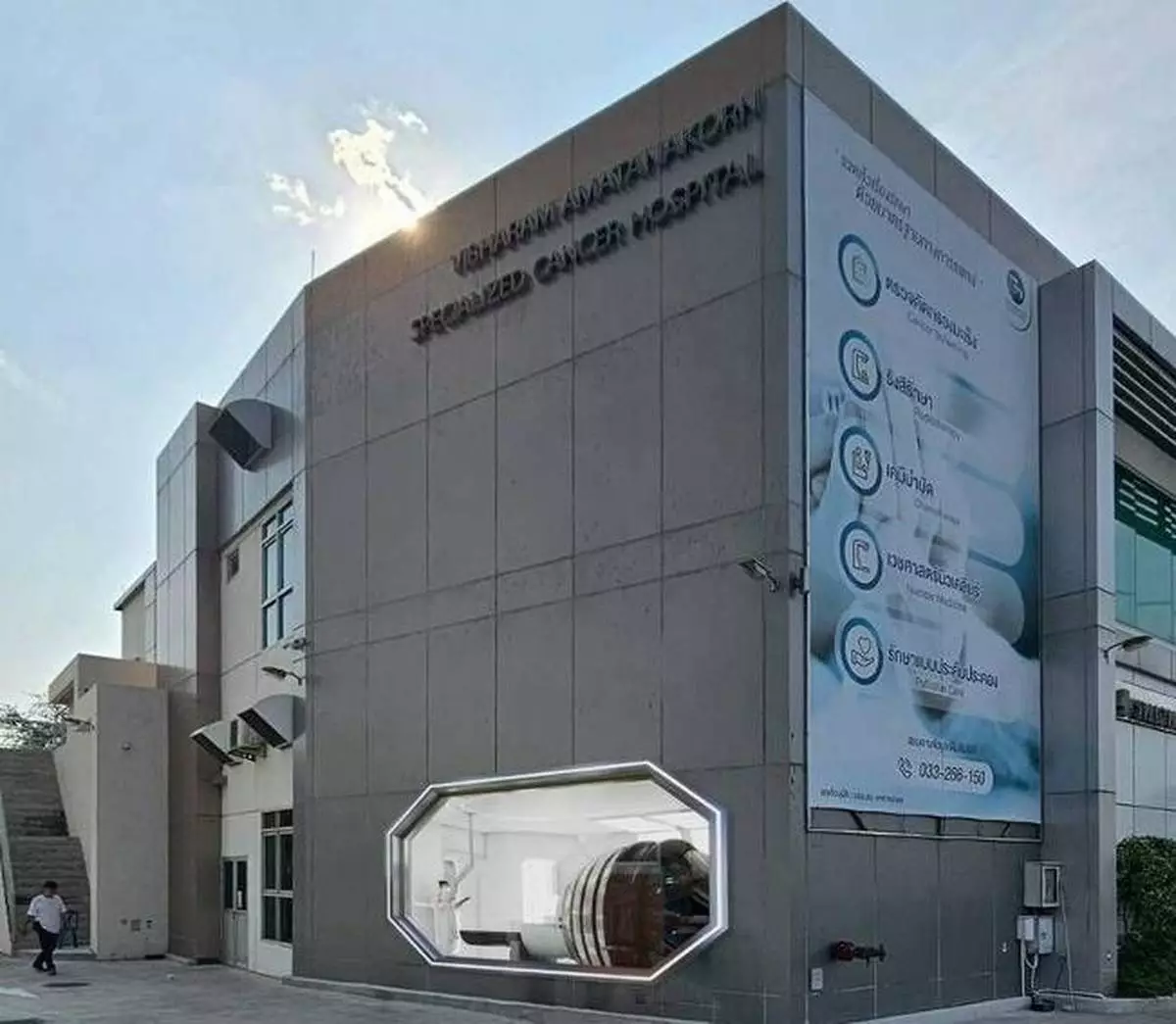
Architectural exterior rendering of the new ZAP-X® Gyroscopic Radiosurgery® treatment suite at Vibharam Amatanakorn Specialized Cancer Hospital, Chonburi Province, Thailand.

Architectural interior rendering of the new ZAP-X® Gyroscopic Radiosurgery® treatment suite at Vibharam Amatanakorn Specialized Cancer Hospital, Chonburi Province, Thailand.
UNITED NATIONS (AP) — With wars raging,temperatures rising and artificial intelligence encroaching, leaders from across the planet converge at the United Nations on Tuesday to address each other and the world, airing their hopes, plans and grievances as the world body’s chief addresses them for the final time.
The annual high-level gathering at the U.N. General Assembly will be consumed with wars in Iran, Gaza, Ukraine,Sudan, Congo and Myanmar and a persisting question: Can the leaders do anything to end them?
And what can they do about the relentless rise of global warming threatening the future of the planet, the growing inequalities within and among nations, and shocks to the global economy as blocked shipping routes and supply chains increase the cost of living and slow growth?
The future of the United Nations will also definitely be on the agenda. At 81, its powers are still the victorious nations from World War II, not the 21st century’s major global players. The U.N.’s 193 member nations have agreed to a wide-ranging reform package that includes updating key institutions such as the powerful U.N. Security Council, where the U.S., Russia, China, Britain and France hold inordinate sway because of their veto power. Reform, however, is easier said than implemented.
Behind the scenes, there will be speculation about who will lead the United Nations next. Secretary-General Antonio Guterres’ second five-year term ends Dec. 31 and no clear successor has emerged.
There is still no question that the U.N. remains the key gathering place for its 193 member nations and their leaders. Some 130 heads of state and government are expected to speak at the General Assembly starting Tuesday along with dozens of ministers.
Among the headliners: U.S. President Donald Trump and French President Emanuel Macron. Both will speak Tuesday after Guterres’ opening “state of the world” address. Ukraine’s President Volodymyr Zelenskyy and Iran’s President Masoud Pezeshkian speak Wednesday.
Israeli Prime Minister Benjamin Netanyahu — whom New York Mayor Zoran Mamdani wanted arrested for his treatment of Palestinians in Gaza until he learned he has no such authority — will address the assembly on Thursday. For a second year, Palestinian President Mahmoud Abbas won’t be coming to the U.N. because the U.S. has refused to give him a visa. He will nonetheless address the assembly by video the same day.
The United States, under its agreement with the U.N. to host the organization, is required to allow diplomats from all member nations to attend meetings.
Equally telling is who else isn’t coming. China’s President Xi Jinping is meeting Trump in Washington on Wednesday, yet he is skipping — some diplomats say snubbing — the U.N. gathering and sending a vice president instead. Russian President Vladimir Putin isn’t coming either, and Indian President Narendra Modi has backed out.
France's U.N. ambassador, Jerome Bonnafont, said it is “extremely critical” for world leaders this week to support the U.N. as the place where the world’s nations meet — especially at a time of such polarization.
“We believe in multilateralism," he said, "and we believe that the high-level week is the occasion for countries in the world to reaffirm that they prefer cooperation and dialogue to confrontation.”
There is no doubt it’s been a tough year for the world body. It has been pushed to the sidelines when it comes to its key responsibility of ensuring international peace and security and trying to end major conflicts in the Mideast and Ukraine. The U.S. failure to pay billions of dollars in outstanding arrears has left the organization’s finances in rocky shape.
Former U.N. deputy secretary-general Mark Malloch-Brown, a United Nations Foundation board member, said, “While the world still trusts the U.N., the global public is eager for change."
The future of artificial intelligence has pushed to the forefront of global concerns, with its speeding advances and the dawning recognition that there are no industry controls, let alone any global guardrails for a technology that has many advantages but also many disadvantages and unknowns.
Days before the global gathering, leaders of three major AI companies warned about the technology getting out of human control and called for a pause, but Trump dismissed their concerns as “a hoax,” and urged continued advances to keep the U.S. ahead of China.
The U.N. Security Council added a high-level meeting on AI to its agenda on Wednesday afternoon, a sign of the growing apprehension and need to address the issue. It was already slated to hold a high-level meeting on Ukraine with Zelenskyy on Wednesday morning.
For the U.N. chief, this will be his last assembly meeting with global leaders. He previewed his speech last week, telling U.N. reporters that power is shifting in “an era of deep uncertainty."
“At a time when the world faces three existential threats," he said, “international cooperation is more necessary than ever.”
Edith M. Lederer has covered international affairs for The Associated Press for more than a half century.

European Commission President Ursula von der Leyen attends the Partnership for Multilateralism Summit on the sidelines of the United Nations General Assembly (UNGA) at the UN headquarters, Monday, Sept. 21, 2026. (Justin Tang/The Canadian Press via AP)

The flag of the United Nations flies during the United Nations General Assembly (UNGA) at the UN headquarters, Monday, Sept. 21, 2026. (Justin Tang/The Canadian Press via AP)

People pose as they arrive for the United Nations General Assembly (UNGA) at the UN headquarters, Monday, Sept. 21, 2026. (Justin Tang/The Canadian Press via AP)

The United Nations Secretary-General Antonio Guterres speaks during an interview with The Associated Press at the United Nations headquarters, Thursday, Sept. 17, 2026. (AP Photo/David R Martin)