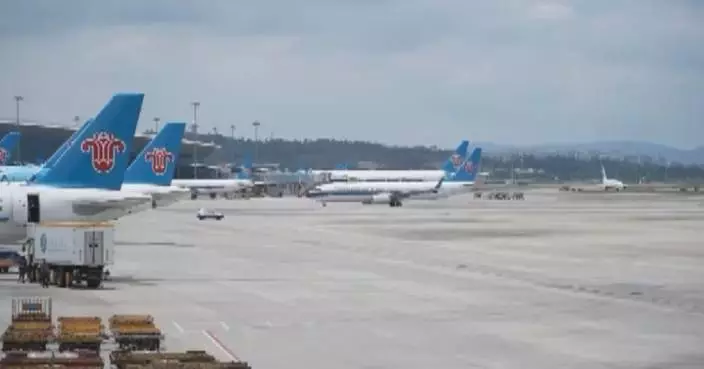
The China Meteorological Administration (CMA) delivered a customized edition of its AI-powered MAZU meteorological early-warning system to Nepal on Tuesday.
This system integrates observation data from China's Fengyun series meteorological satellites and domestically developed AI weather forecast models to provide high-resolution, quickly updated weather monitoring and natural disaster pre-warning services, and support disaster relief efforts, CMA introduced.
Named after Mazu -- the traditional Chinese goddess of the sea and protector of sailors, the system has already been deployed in seven countries while supporting cloud-based trials in more than 50 nations. In the years to come, the Chinese-made Mazu system is expected to be applied in 30 countries.
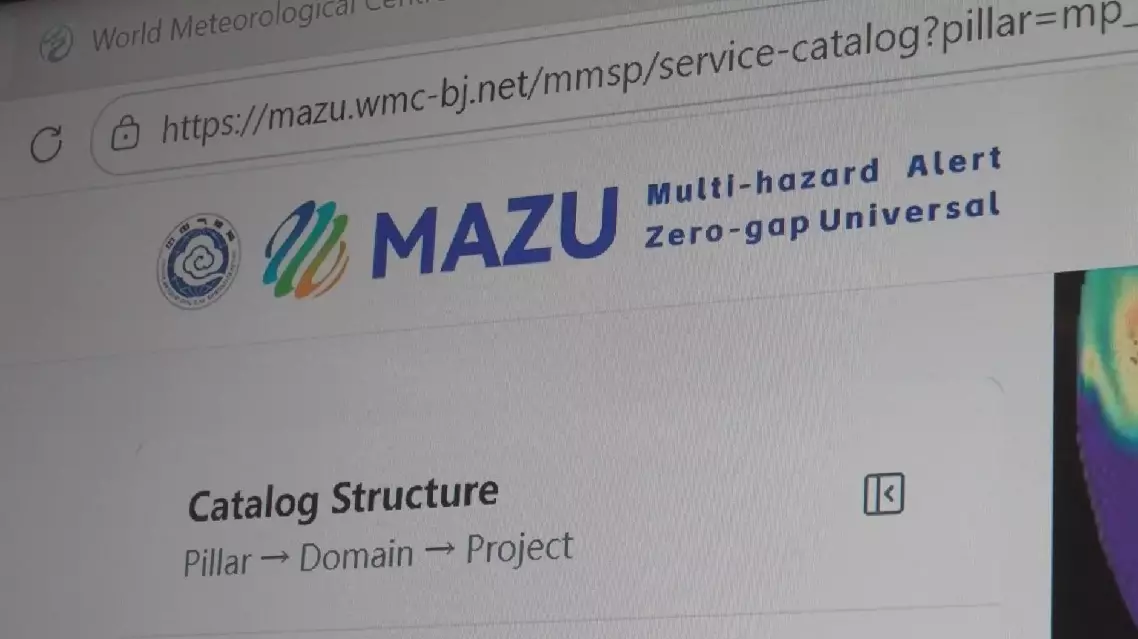
China delivers customized edition of MAZU meteorological early-warning system to Nepal
The U.S. state of Utah's Chinese Dual Language Immersion Program has served nearly 12,000 students from grades 1 to 12 in 98 schools, as many local parents are showing a vision that learning Chinese will help their kids gain better opportunities in the future.
Implementation of the program started in Utah in 2009, one year after the state adopted a legislation to provide financial support for bilingual immersion education.
"I have been learning Chinese for seven years," said a local student with a Chinese name He Jie in Chinese.
"Those were my parents' choice. I didn't want to do it at first, but I've kind of grown to like it more," said another student named Nel Sume.
"We thought it might open more opportunities learning Chinese. Around the world, U.S. is a big country, China is a big country. And so we thought they would be potentially given more opportunities as they get older if they learn Chinese," said a local parent named Asher.
Stacy Lyon, the state director for the Utah Chinese Dual Language Immersion Program, said that more local parents see their kids learning the Chinese language as a preparation for the future.
"In fact, I think the parents understand the particularly important ties between China and the United States, so they hope that their children can be prepared in language and culture," said Lyon.
Local mother Victoria said her daughter became much more confident in having contacts with people after coming back from a China trip earlier this year.
"Her confidence. She became really confident after we went to China and she could speak to the locals. So that was really, really cool to see," said Victoria.
"I can talk to others (in Chinese). I can order things (in Chinese). I know I can talk to Chinese people, so (Chinese) is a very useful tool," said a student named Sarah in Chinese.
The eagerness for face-to-face communication is precisely what makes the people-to-people exchanges between Chinese and American people so valuable.
"I got to go to China, I got to enjoy the food, I got to see everyone, I got to see how the world looks differently through everyone else's perspective. And I think that's just such a cool way. I would love to do a study abroad to China in my college years," said He Jie.
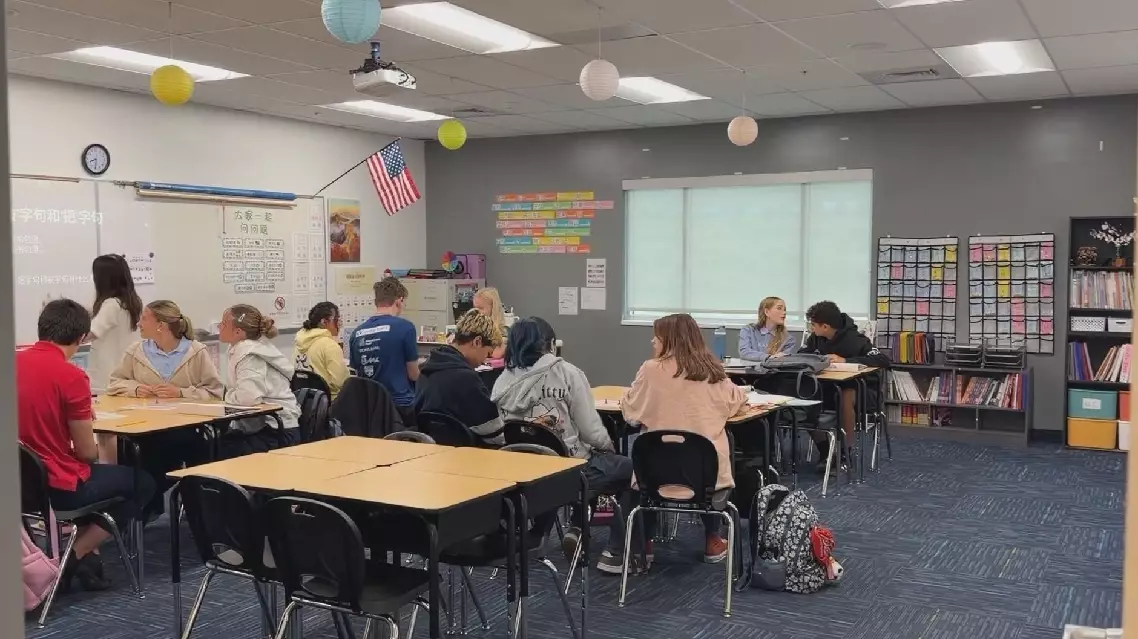
Utah's Chinese Dual Language Immersion Program serves 12,000 students in 98 schools