NEW YORK (AP) — The Trump administration's whole-of-government effort to find and prosecute noncitizens illegally on state voter rolls has resulted in about 1,600 voter fraud cases that have led to 160 arrests, Homeland Security Investigations senior official Matthew Millhollin said in a press briefing Tuesday.
The numbers unveiled just six weeks before Election Day provide a rare status update on an initiative that has redirected federal resources and hundreds of employees to search for foul play in elections at the direction of President Donald Trump.
They fall far short of the hundreds of thousands of noncitizen voters that Trump and the Department of Homeland Security have previously suggested were on the rolls. They also represent a tiny fraction of the country's more than 211 million active registered voters, underscoring what former election officials and election law experts say is a proven fact: Voter fraud, including voting by noncitizens, is rare.
“They have tried to manufacture evidence of widespread noncitizen voting, and every time they do, their numbers are incredibly small, even when they’re overstated,” said David Becker, a former U.S. Justice Department attorney who leads the nonprofit Center for Election Innovation and Research. “They confirm what we’ve known for years, which is that states have been doing an extraordinarily good job of keeping noncitizens off their voter lists.”
Millhollin shared the arrest data at a joint press briefing with the Justice Department and the U.S. Postal Service about DOJ charges against a Utah postal worker for throwing out more than 300 mail ballots during the state's June primary. In the same briefing, Acting Deputy Attorney General Trent McCotter said the DOJ had charged 70 people since the start of the administration with “unlawful voting and registration offenses.”
Neither Millhollin nor McCotter clarified exactly what charges their data included, or whether they overlapped. Homeland Security Investigations, as a subagency of U.S. Immigration and Customs Enforcement, is generally focused on immigration-related crimes. A Justice Department spokesperson didn’t immediately respond to an emailed request for clarification.
Ahead of November's midterms, which will determine control of Congress for the final two years of his term, Trump has taken extensive measures to try to crack down on noncitizen voting. It's something he claims is rampant and marring elections across the nation, but research shows it is incredibly rare.
He signed two election-related executive orders designed in part to address the issue, both of which are tied up in legal challenges. He also has pressured states to use a controversial federal voter database that has been blocked by a federal judge for violating Americans’ privacy, and tried repeatedly to get lawmakers to pass a stagnant documentary proof of citizenship bill.
In a last-ditch effort to hunt for noncitizen voters without detailed data from all states, DHS in August ordered a group of U.S. Citizenship and Immigration Services staff to pivot to a full-time manual investigation of state voter rolls, according to a federal whistle blower’s report. The whistleblower said the effort is directing federal employees to misrepresent themselves on state voter lookup tools in a way that could violate state laws. The person also warned the initiative leans on unreliable data that could wrongly implicate U.S. citizens in federal documentation.
State election officials in Texas investigated registered voters who were flagged as noncitizens on their voter rolls by Trump's federal voter database before a judge blocked its use. Of the 2,724 registered voters, it referred 117 cases to the Texas attorney general's office for investigation. In mid-September, seven people in the state were charged with illegally voting in federal elections or falsely claiming citizenship. Texas has about 18 million registered voters.
Becker said examples like that are characteristic of what often happens when potential instances of noncitizen voting are investigated: The real numbers are consistently small.
“No system is perfect,” he said, adding that he was not aware of a single election whose outcome was altered by noncitizens voting.
McCotter, in Tuesday's briefing, argued that even a small number of fraud cases can be significant.
“The right of American citizens to have their votes properly counted is vital to determining the rightful winner of an election,” McCotter said. “But the actions of even one malicious actor on the ground can fatally undercut that security.”
Kathy Boockvar, the Democratic former secretary of state of Pennsylvania who now runs a nonpartisan election security firm, said there are real consequences for election officials when Trump and others make hyperbolic claims of fraudulent voting.
“Lots of people just believe what they hear, then reach out to election officials, and these days don't have any qualms about threatening them,” Boockvar said. “There is a direct, constant effect here that leads to the fueling of antagonism against election officials.”
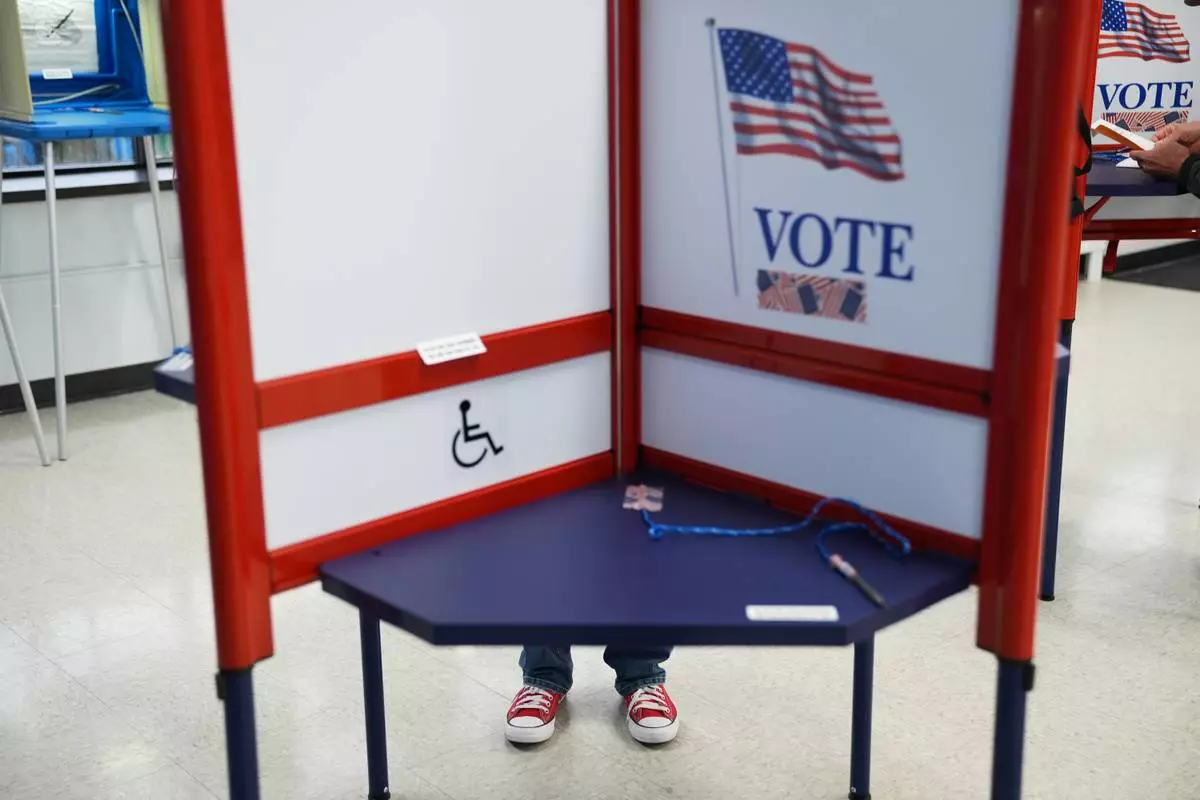
Voters cast their ballots on the first day of early voting in Minnesota at the Elections & Voter Services building, Friday, Sept. 18, 2026, in Minneapolis. (AP Photo/Ellen Schmidt)