Iran conveyed conditions regarding the reopening of the Strait of Hormuz to the United States on Tuesday, said Iranian Foreign Ministry spokesman Esmaeil Baghaei during a media interview.
Iran's positions were relayed to the U.S. side in a meeting between Iranian Foreign Minister Seyed Abbas Araghchi and U.S. presidential envoy Steve Witkoff on the sidelines of the 81st session of the United Nations General Assembly in New York, mediated by Qatar, said Baghaei. According to the spokesman, among Iran's conditions for the waterway's reopening are lifting the U.S. naval blockade, releasing frozen Iranian assets, and ending the war in the region on all fronts.
Witkoff posted on his social media account on Tuesday that the U.S. side had "lengthy talks" with the Iranian delegation, through the working of mediators. The U.S. side hopes the talks "will prove constructive and promising".
On the sidelines of the 81st session of the UNGA on Tuesday, U.S. President Donald Trump confirmed that officials from the U.S. and Iranian sides had a three-hour talk and are planning to hold another one soon. On June 18, the United States and Iran signed a memorandum of understanding (MoU) on ending the war in the region on all fronts, including Lebanon. Under the MoU, they were scheduled to hold negotiations within 60 days, which ended on Aug. 17, to reach a final agreement, but the fate of the talks remains unclear following a series of recent escalations between the two countries.
Following the U.S.-Israeli strikes on Iran on Feb. 28, Tehran restricted passage through the Strait of Hormuz, while U.S. forces imposed a naval blockade targeting vessels traveling to or from Iranian ports.

Iran conveys conditions for reopening Strait of Hormuz to U.S. in New York: spokesman
China will push for the rollout of next-generation communication networks ahead of market demand in the coming five years, a senior official with the Ministry of Industry and Information Technology (MIIT) said on Wednesday at the annual International Postal and Telecommunications Expo (PT Expo).
The push mirrors the development plan recently issued by the ministry for the information and communications industry during the 15th Five-Year Plan period (2026-2030).
According to the plan, a new-generation communications network with comprehensive coverage and leading performance is expected to be fully established by 2030, the 5G user penetration rate will reach 95 percent, gigabit-capable broadband will connect to 320 million households, and intelligent computing power will reach 9,800 EFLOPS -- a unit of computing performance, with each unit representing one quintillion floating-point operations per second.
"We will systemically promote the development of an application-driven and appropriately future-oriented next-generation communications network, push broadband networks toward dual 10-gigabit evolution, and advance the construction of low-Earth orbit satellite internet systems. We will also holistically optimize a communications network that links ground and sea, expand and improve computing facilities, and strengthen computing-network integration and the interconnection of computing power, so as to better support the national integrated computing network," said Yu Xiaohui, vice minister of the Ministry of Industry and Information Technology.
The move came as breakthroughs in digital intelligence technologies -- represented by artificial intelligence -- brought opportunities for the development of information and communication.
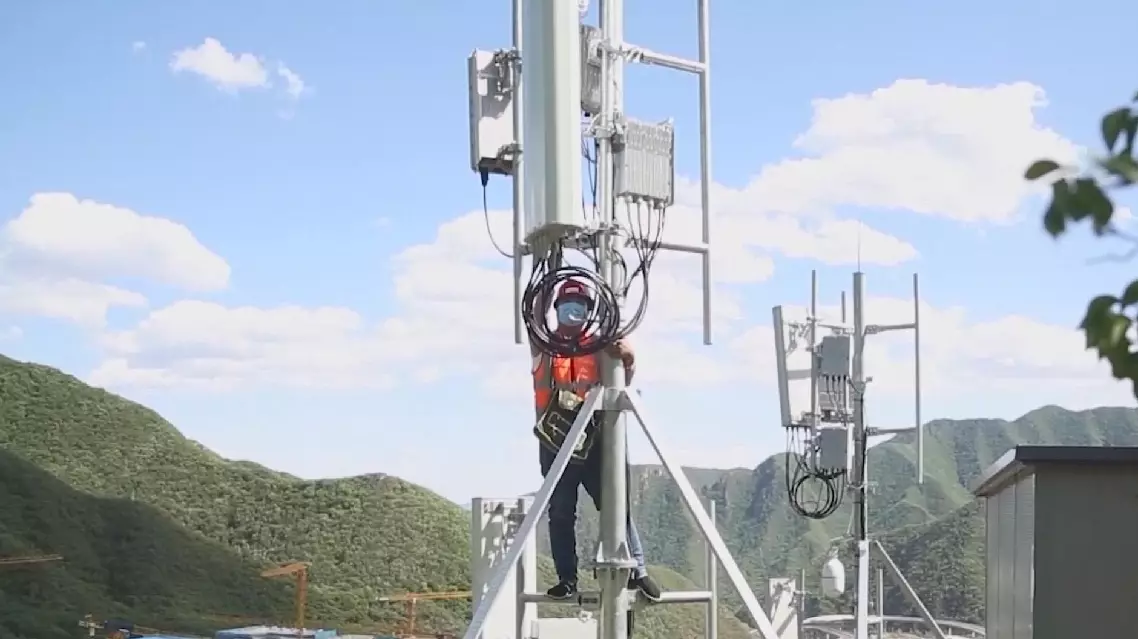
As of the end of July, China had deployed over 5.15 million 5G base stations, with early-stage deployment of 10-gigabit optical networks already underway and intelligent computing power standing at 2,185 EFLOPs, according to official data.
China will also deepen the integration of terrestrial and satellite networks, including commercial applications for smartphone direct-to-satellite services and the Internet of Things (IoT), ramp up research and development for 6G base stations, and advance the development of standards in key information and communication sectors, such as computing power networks and quantum communication, according to the development plan.
The PT Expo this year is being held from Tuesday to Thursday in Beijing.
China to push ahead-of-demand rollout of next-generation communications networks