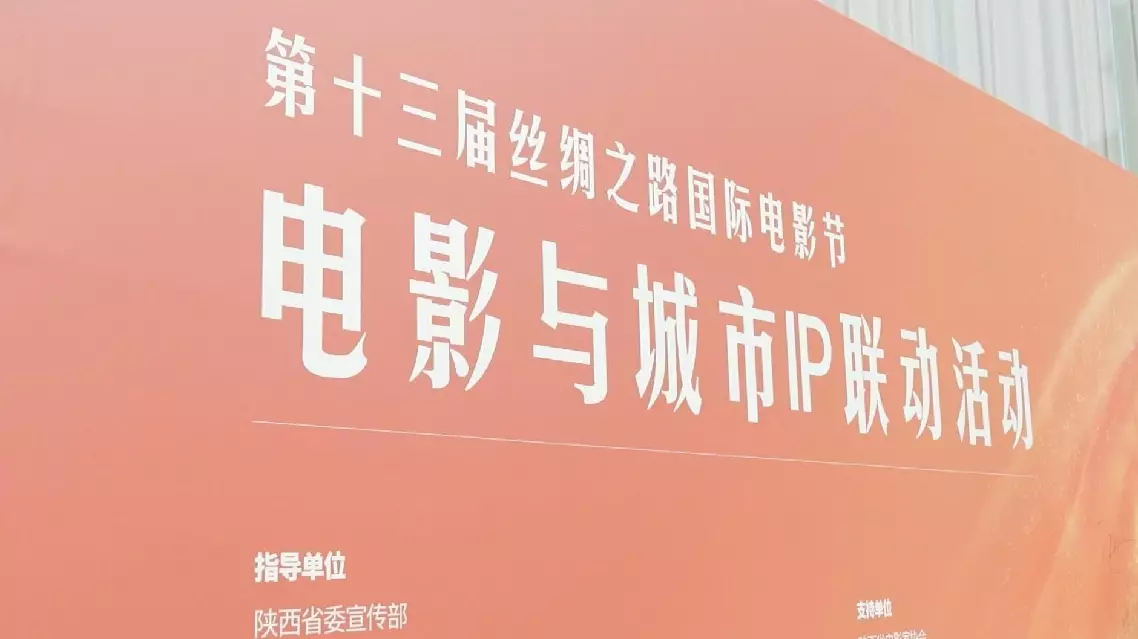
Bridging cinematic arts and urban development, a dedicated event showcasing the charm of cities where influential films were taken was held on Monday in Xi'an City of northwest China's Shaanxi Province -- a world-renowned historical metropolis that served as the imperial capital for 13 different dynasties in ancient China over a span of more than 3,100 years.
As part of the 13th Silk Road International Film Festival, the gathering combined outdoor exhibitions, destination promotions, and industry dialogues to foster regional film collaboration and co-create urban IPs.
The film festival opened on Saturday in Xi'an, featuring more than 2,000 films from 139 countries and regions.
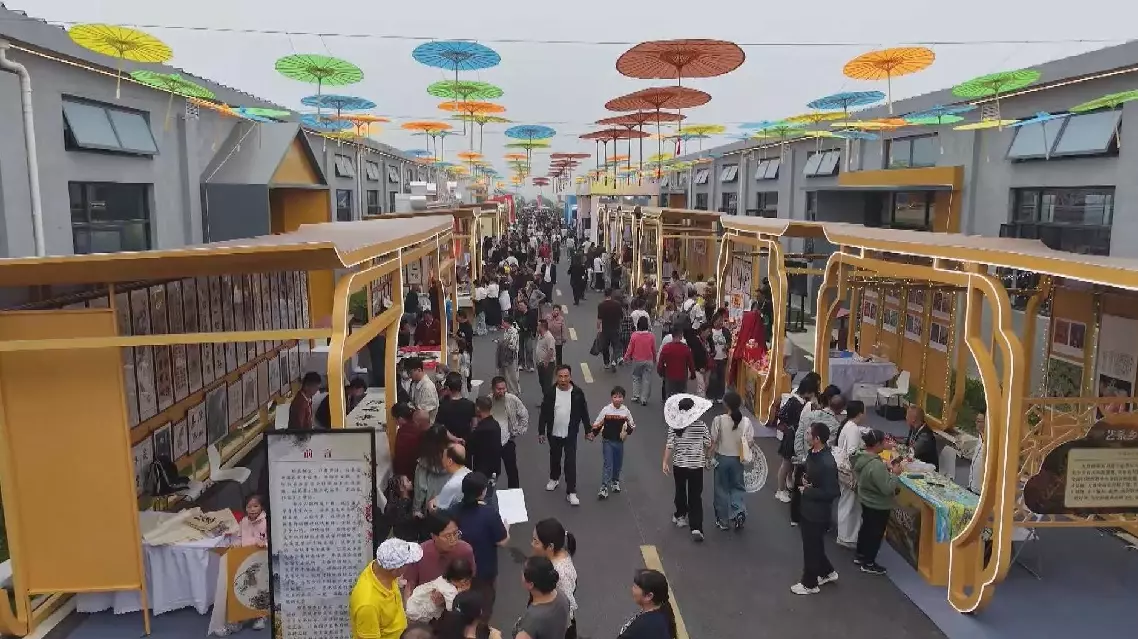
The exhibition area featured classic film and television stills alongside physical and digital materials of corresponding urban cultural landmarks. Through a side-by-side comparison of imagery and real-world scenes, the display vividly illustrated how cinematic creation extracts, transforms, and re-expresses regional cultural symbols.
Six provincial-level regions -- Gansu, Qinghai, Ningxia, Xinjiang, Fujian and Shaanxi -- showcased their unique urban landscapes, cultural backdrops, and incentive policies for film production.
The event aimed to explore actionable pathways and cooperative models, driving tangible progress in integrating film production with urban IP development.
"We are working to develop a city's intellectual property (IP) and promote its sustainable publicity, which involves systematically exploring its history, culture, intangible heritage, notable figures and even legends," said Li Dexin, executive deputy director of the China Chamber of Tourism (CCT) Tourist Attractions Association.
The 13th Silk Road International Film Festival concludes Wednesday, with the winners of the Golden Silk Road Awards, including best film, best director, and best screenwriter, set to be announced.
Silk Road Film Festival spotlights urban synergy in northwest China's Xi'an
China marked its ninth farmers' harvest festival on Wednesday with diverse activities, highlighting the country's rich agricultural heritage and a booming rural economy driven by industrial integration.
A national-level event celebrating the festival was held in Dongjiao Village of Zaoyang City in central China's Hubei Province, a major grain-producing region.
Among the various celebrations, the demonstration of traditional agricultural craftsmanship became a highlight.
An inheritor to the Zaoyang coarse cloth weaving technique, a national-level intangible cultural heritage item, showcased the intricate process on a traditional wooden foot-pedal loom. With coordinated hand and foot movements, the weaver precisely controls the density and texture of the fabric.
"By carefully controlling the force and tempo, the cloth we weave is neat and uniform in density. We have made many China-chic creative cultural products, such as bags, pendants and sachets," said Liu Qian, an exhibitor.
Another exhibitor showcased the delicate art of doing pyrography on silk.
"What we make here is to do pyrography on silk, with the key points lying in the pressure applied to the burning pen and the speed of the strokes. This painting is called 'two steeds chasing the wind', symbolizing immediate success," said Zhao Qingyin, another exhibitor.
Known for its distinct industrial characteristics, Dongjiao Village produces over 840 tons of high-quality rice annually, while its peach industry generates an output of more than 12 million yuan (about 1.79 million U.S. dollars) each year.
"Our orchard features over 20 peach varieties that hit the market from May to October. We sell them by the piece, at 10 to 20 yuan (1.5 to 3 U.S. dollars) each, which increases our income by 2,000 to 3,000 yuan (300 to 450 U.S. dollars) per mu (about 0.067 hectare)," said Zhang Bing, a local villager.
Dongjiao Village has actively developed an integrated industrial model combining agriculture with cultural tourism. Offerings, including flower viewing, fruit picking, study tours and fish tasting, attract tourists from around the country.
This model has spurred joint development of 19 surrounding villages, benefiting over 1,600 households.
"As our industries continue to expand, the farmers' incomes have risen year by year. In 2025, the per capita income in our village reached 30,123 yuan (4,500 U.S. dollars). As a result, our quality of life and sense of happiness have greatly improved," said Hu Aiguo, a village official.
The Chinese farmers' harvest festival is the first national-level festival created specifically for the country's farmers.
Launched in 2018, the festival coincides with the Autumnal Equinox each year, which is one of the 24 solar terms of the Chinese lunisolar calendar and usually falls between Sept. 22 and 24 during the country's agricultural harvest season.
China marks 9th farmers' harvest festival with diverse activities