NEW YORK--(BUSINESS WIRE)--Sep 23, 2026--
Following the deaths of two University of Mississippi students, Mountainside is urging families and college communities to seek reliable information about kratom and cychlorphine, an emerging synthetic opioid.
This press release features multimedia. View the full release here: https://www.businesswire.com/news/home/20260923330682/en/
Authorities reported finding retail-packaged kratom during two separate death investigations. They have not determined that kratom or any other substance contributed to either death, established that the deaths are connected, or reported finding cychlorphine in either case. Mountainside extends its condolences to the students’ families, friends and campus community.
“What we’re seeing isn’t just the emergence of new substances—it’s a fundamental shift in how quickly the drug landscape is changing,” said Jana Wu, LCSW, leading kratom expert, Director of Clinical Integration at Mountainside, and founder of the first clinician-led kratom support group, Let’s Talk Kratom. “Kratom and 7-OH, cychlorphine, novel synthetic opioids, counterfeit pills and substances we may not yet be routinely testing for are creating a much more complicated clinical picture. The name on a package or pill may not tell us the whole story of what someone is actually taking.”
Kratom is a plant-derived substance sold in powders, capsules and concentrated products. Retail availability does not guarantee that a product is safe. Cychlorphine is a separate synthetic opioid identified by international drug-monitoring authorities as an emerging threat. No connection between cychlorphine and the Ole Miss deaths has been confirmed.
Mountainside has a long history of identifying emerging cultural and substance-use trends and translating them into education and prevention. Giving families, campuses and communities the information and tools they need earlier helps prevent tragedies.
“New substances like cychlorphine are a reminder that prevention education can't be a one-time conversation,” said Laura Maguire, Vice President of Educational Partnerships at Mountainside. “When universities keep resources visible and teach students how to respond if a friend needs help, students feel prepared to reach out for themselves or others.”
Mountainside encourages parents and caregivers to ask students what they have heard, correct misinformation without judgment and discuss the risks of using unfamiliar substances.
About Mountainside Treatment Center
Mountainside Treatment Center is a nationally recognized behavioral health organization specializing in the treatment of substance use disorders and co-occurring mental health conditions. Through evidence-based care, innovative programming, and community partnerships, Mountainside helps build meaningful lives in recovery.

Jana Wu LCSW, LADC, CASAC-Advanced, Director of Clinical Integration at Mountainside Treatment Center
NEW YORK (AP) — The U.S.-backed Board of Peace is proposing a six-month, $2.45 billion plan to begin reconstruction and governance in Gaza as President Donald Trump’s ceasefire plan struggles to stay afloat.
At a meeting of the group’s board in New York on the sidelines of the U.N. General Assembly on Wednesday, the governors unveiled a 66-project blueprint to get things started while acknowledging enormous hurdles that must still be overcome. The projects include ambitious infrastructure, education and health initiatives that are designed to support Trump’s 20-point plan to end the Israel-Hamas war.
“The need is immense,” the board said, noting that full reconstruction from the physical damage across Gaza will cost roughly $35.2 billion over the medium term and an additional $71.4 billion over the next 10 years.
The proposal is largely aimed at potential donors who are being asked to foot the bill for reconstruction of the war-devastated territory that has seen numerous failed peace initiatives in the past. Those have included previous premature pronouncements of agreements between Hamas and Israel that have left would-be donors skeptical.
The ceasefire, which took effect on Oct. 10, was meant to clear the way for a broader process to rebuild Gaza under the guidance of the Board of Peace. The plan included additional Israeli military withdrawals from Gaza, the disarmament of Hamas, the arrival of an international peacekeeping force and a new apolitical Palestinian government to administer the territory’s day-to-day affairs. It also envisioned an ambitious program for rebuilding war-ravaged Gaza.
But the U.S.-backed plan has largely stalled. While the ceasefire halted the heaviest fighting and humanitarian conditions have improved, the Israeli military has expanded its control of Gaza and now occupies some 60% of the territory. Hamas has not given up its weapons. The international military force and new government still have not entered Gaza, and reconstruction has not begun. The vast majority of Palestinians continue to live in tent camps or ruins of their former homes.
The board’s high representative, Nickolay Mladenov, has said progress hinges largely on Hamas disarming — a step the militant group has refused to take. But he also has pressed Israel to scale back its military operation.
“Given the complexities of what we’re dealing with, I think we’re making slowly and steadily progress,” he said. Mladenov added that discussions with Israel have been politically sensitive and emotional because of next month’s elections.
Steve Witkoff, Trump’s Mideast envoy, acknowledged that the ceasefire had not been a 100% success but said the board “can point to real progress.”
“There is a ceasefire, imperfect as it may be, but it still exists,” he said.
Witkoff's partner in peacemaking, Trump's son-in-law, Jared Kushner praised the Board of Peace team for the work it has done to advance the prospects for peace.
“We’re building something that is really a platform to enable the Palestinian people in Gaza to finally focus on improving their livelihoods and improving their lives and for those who want to live in peace, to give them a chance to do so,” Kushner said.
Despite laying out a six-month plan that prioritizes 66 projects — ranging from humanitarian shelters and home repair to education programs and food security — the timeline was still nebulous. Documents that the board released Wednesday says the programs are “ready to begin the moment funding and access allow.”
Speaking about the difficult steps of disarmament and Israeli withdrawal, Mladenov said, “I want to be very clear that we are not bound by a calendar — we're bound by verification. We want to make sure that this works.”
U.S. Gen. Jasper Jeffers, commander of the international stabilization force planned for Gaza, outlined a five-step approach to dealing with the thorny issue of demilitarizing Hamas. It begins with the first wave of the multinational unit being deployed with troops from Kosovo and Morocco, to be followed by additional personnel from Albania and Kazakhstan.
Their task will be to demilitarize the territory and decommission all of Hamas’ military infrastructure.
The goal, he said, is to gradually turn security control over to the interim government, after which Israel will be expected to withdraw its forces.
Speaking to reporters separately, Secretary of State Marco Rubio said the challenge is daunting but not impossible to meet.
“Obviously, this is a long-term project,” he said. “This is not something that can happen in six months, but at least gives people the hope (of a) future that awaits you if everyone does their part.”
Associated Press writers Josef Federman and Julia Frankel in Jerusalem and Ben Finley in Washington contributed to this report.
This story has been corrected to show that Nickolay Mladenov's first name was misspelled.
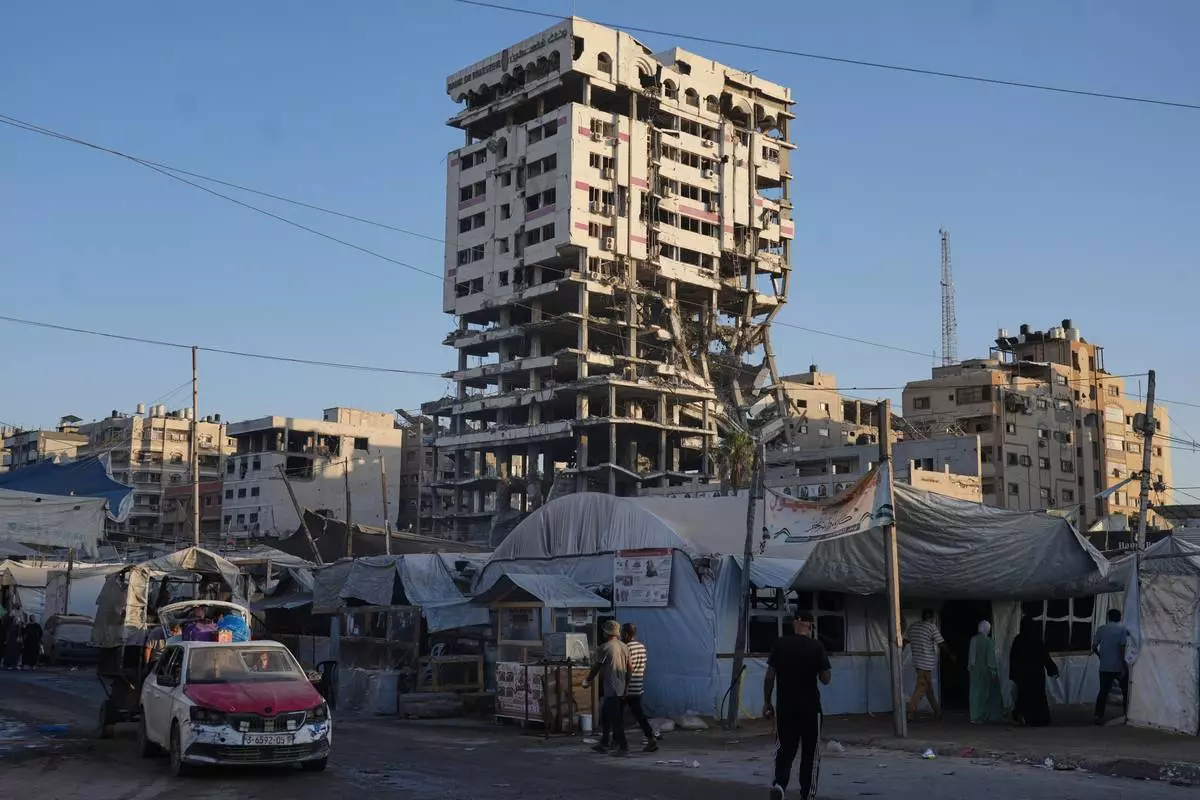
Tents sheltering displaced Palestinians and a market surround a building heavily damaged during the Israel-Hamas war in Gaza City, Thursday, Sept. 17, 2026. (AP Photo/Jehad Alshrafi)
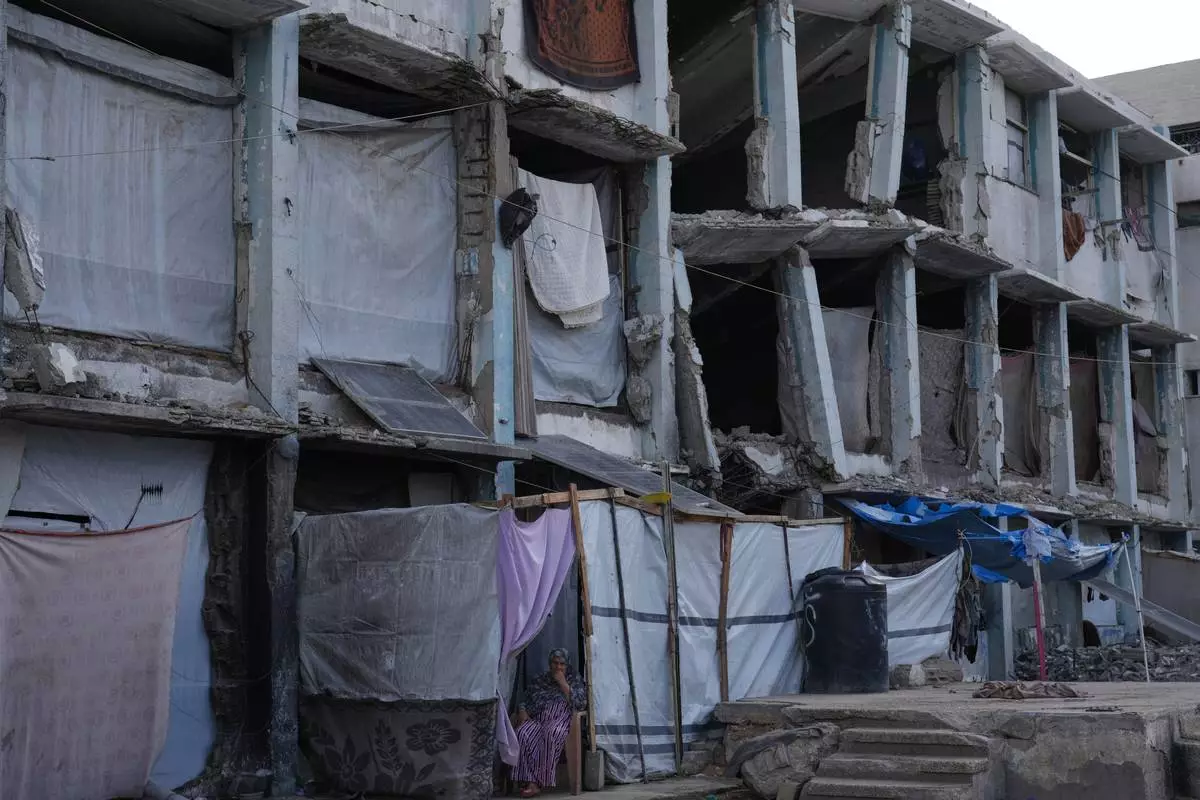
A displaced Palestinian woman sits at the entrance of her tent adjacent to a destroyed U.N.-run school on the first day of the new academic year, in the Shati refugee camp in Gaza City, Saturday, Sept. 19, 2026. (AP Photo/Jehad Alshrafi)
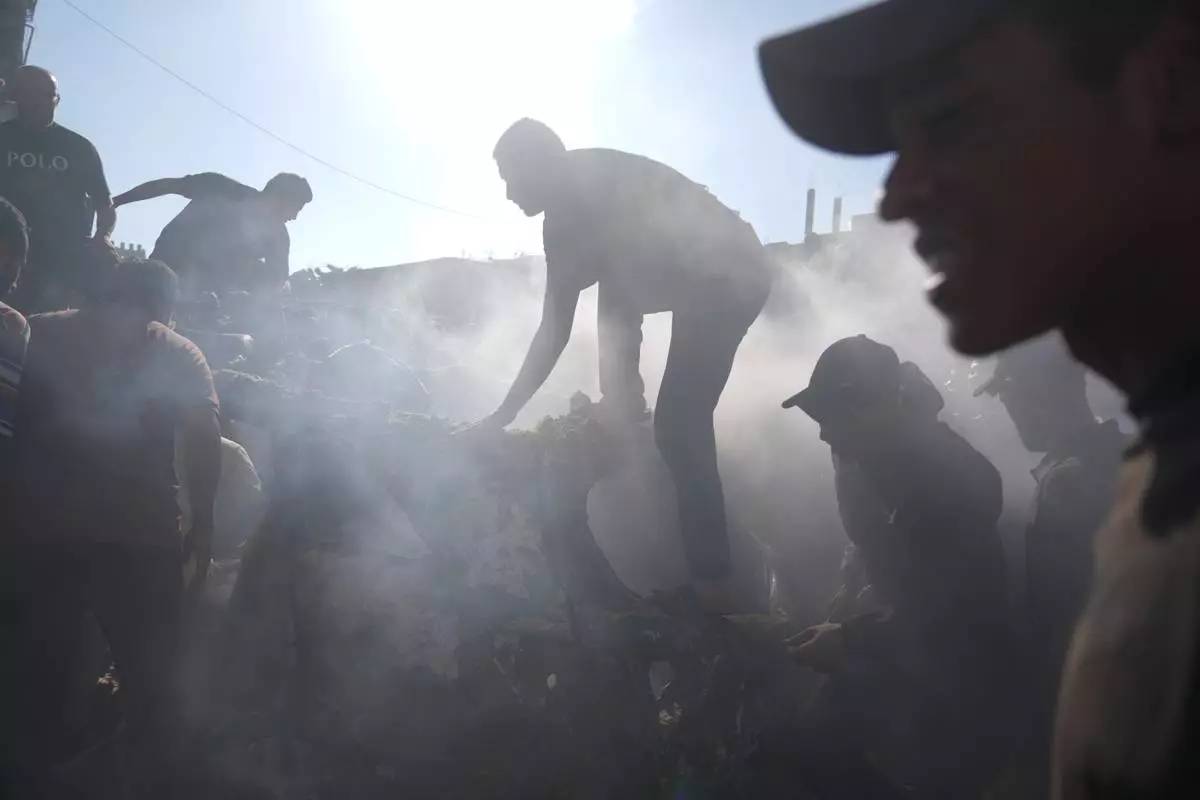
People operate on a destroyed vehicle following an Israeli airstrike in Gaza city, Saturday, Sept. 19, 2026. (AP Photo/Jehad Alshrafi)