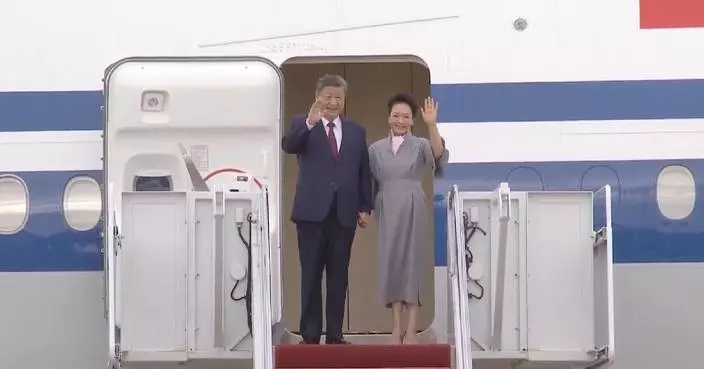
More than four decades after young Xi Jinping visited the small U.S. city of Muscatine, Iowa, the friendships forged there are reaching a new generation, as more American students travel to China to see the country for themselves, explore its development and connect with their Chinese peers.
In 2023, during his trip to the United States, Chinese President Xi Jinping announced a program to invite 50,000 young Americans to China in the next five years for exchange and study visits.
Among those who answered the call were students from Muscatine, the city Xi visited in 1985 during his first trip to the United States.
Xi, then an official from Zhengding County in north China's Hebei Province, led a delegation to Muscatine and stayed with local residents, getting a glimpse of everyday life in the American Midwest.
Decades later, the memories of that visit remain part of the city’s connection with Xi.
"Back in 1985, when President Xi visited Muscatine, a number of members of our community were able to host him and really got to develop a friendship. We in Muscatine continue to be incredibly grateful that President Xi hasn't forgotten about us," said Adrianne Towe, who was a trip chaperone for the first Muscatine student delegation to visit China.
In January 2024, more than 20 students from Muscatine High School became the first group of young Americans to visit China under the five-year initiative.
They traveled to Beijing, Shanghai and Hebei, among other places in China and, towards the end of their trip, they wrote to Xi, sharing their excitement with what they had experienced in China.
In his reply in the following month, Xi recalled his first visit to the United States in 1985 and the warm and friendly American people he met there.
Citing a Chinese saying "seeing is believing," Xi said he believed the students could gain a more intuitive and in-depth understanding of China and the Chinese people through their exchange.
For the young visitors, the experience was personal.
"Thank you, Grandpa Xi! You invited us to China. China is very big and beautiful," said Muscatine student Cole Roth in Chinese.
For Sienna Stoneking, then a first-year student at Muscatine High School, the experience went beyond seeing new places.
"So basically after the trip I had an amazing time. I mean, even though it wasn't my home and I felt so welcomed and it almost felt like a second home to me," she said.
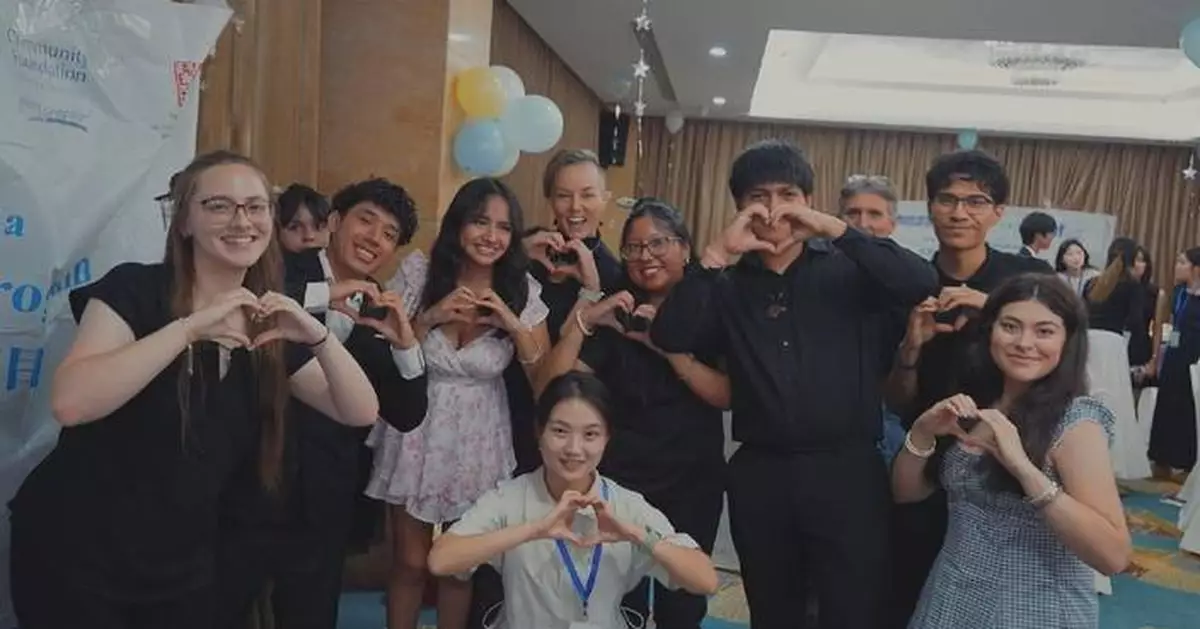
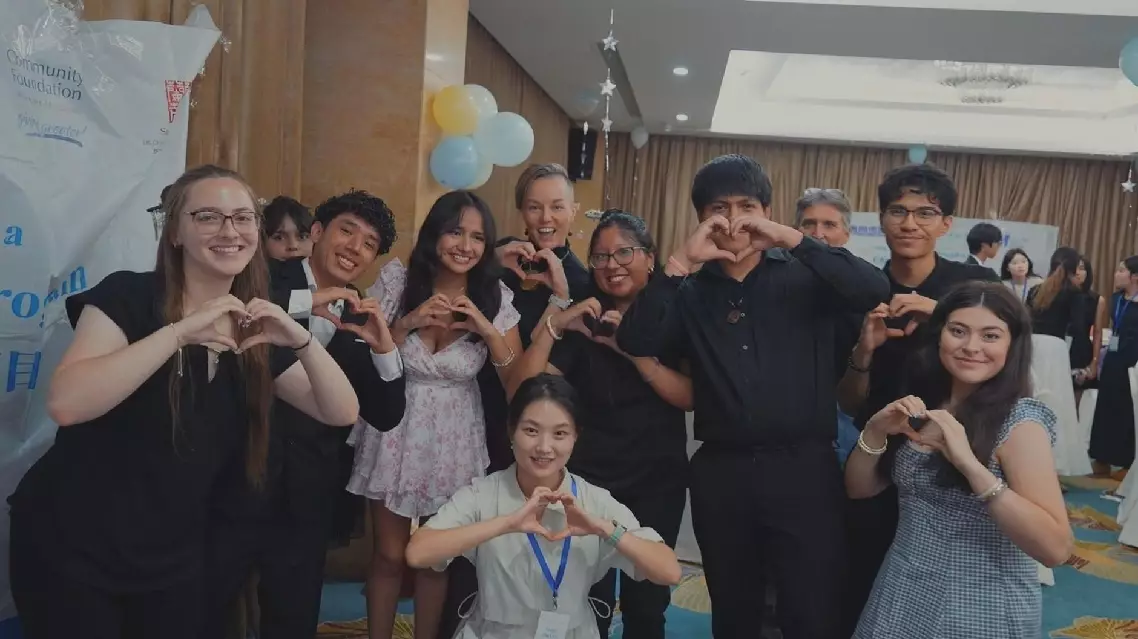
In the summer of 2026, another group of students from Muscatine and from several U.S. universities, including Northwestern University, traveled to Hangzhou and other parts of eastern Zhejiang Province on another exchange program.
For Muscatine student Giovani Ocampo, the decision to return was rooted in his first experience.
"I really enjoyed the first time coming here, that's why I came here again, just seeing how much the experience really adds to my life," he said.
This time, the students explored a China they had not seen before, attending clean-energy workshops and learning about Hangzhou's approach to green development.
"On this trip, we have a lot of clean energy classes that I'm really liking. I'm really enjoying those classes. We've definitely discussed a lot about how Hangzhou prioritizes green energy. I think there’s definitely a lot of high tech. We've seen robot dogs, humanoid robots, and that's the first time I've seen them. They're very unique and very modern,” Ocampo said.
For Northwestern University student Arun Brahma, a visit to an energy project offered a closer look at how technology is being applied to China's energy transition.
"But I thought the coolest was definitely the battery system technology. You got to see where they were moving like the old batteries and what they were developing and seeing the whole Energy City project. That was very cool to see what the future plans are, I think," he said.
The students' observations also extended to China's broader development.
"I'd always like know about China's role in like the world and how it's growing. And we haven't seen a country like grow this much so quickly. Pretty spectacular to see how rapidly things have expanded. China has so many opportunities that are developing and have so many lessons that we can take away," Brahma said.
For Alex Rosenzweig, also from Northwestern University, what stood out during his visit was the pace of development and the scale of the effort behind it.
"And it just kind of hit me like, wow, this country has got the development so fast, and it was just so easy to mobilize it, like the entire country to do all this work to make it so efficient. And I think under President Xi Jinping, that's kind of continued in a new way where it's like now it's like technology is integrated into that," he said.
But the students' journey in Quzhou was not only about looking toward the future. It also took them back more than eight decades to a moment when Chinese and American people stood together in wartime.
At the Memorial Hall to the Doolittle Raid in Quzhou, they learned about a chapter of China-U.S. history dating back to WWII.
In 1942, U.S. airmen who took part in the Doolittle Raid on Japan were forced to make emergency landings or parachute into China after their aircraft ran short of fuel. Chinese civilians and military personnel rescued 64 of them despite the danger posed by Japanese forces.
Heather Mooney, a Northwestern student, had encountered the story in a history class before, but said seeing the site gave her a deeper understanding of it.
"I've heard of it before in a history class but never learned about it in detail. I think what like struck me the most was in the fact that China kind of and the U.S. were able to develop such a strong like allyship so early into the war against Japan," she said.
For Brahma, the story offered a reminder of how people-to-people ties can endure even in difficult times. "I think that's a great representation of how like America and China can coexist realistically. The biggest like people who sacrifice during the raid were the Chinese people that helped them. It makes you feel very, very warmly about kind of generosity and selflessness and like the ability to cooperate. It just tells us that throughout even the most dire times, like the Chinese-U.S. relationships always going to be super important," he said.
Ocampo said the most memorable part of the 2026 trip was not necessarily a particular landmark or lesson, but the people they met.
"It has a lot of interactions with our ambassadors. It's just a lot of fun to get to interact with each other, have Hangzhou to explore with and talk about with, and just having those connections across nations really warm my heart," he said.
He hopes that more young people on both sides will have the same opportunities in the future.
"I can't count how many good experiences I've had on this trip, but there's definitely a lot. Every day there's just something that fun that happens. I want more students to come here, more Chinese students to go to America. Get to know each other and just really build those connections. It's really a strong foundation for the future," he said.
For Muscatine student Yamileth Montes, the memories of China will remain long after she returns home.
"When I go back to America, I will have China in the back of my mind forever. I really do appreciate everything that I've learned from here, like how important friendships are, and most importantly, how nice it is to have bonds," she said.
And for Brahma, there is already a plan for another visit.
"This everything, I mean, it was just an amazing experience. Genuinely, everything has been like incredible. I want to come back and I have to bring my mom and dad apparently," he said.
For Towe, the value of the exchanges lies precisely in giving young people experiences of their own, rather than relying only on what they have heard about another country.
"I think one of the most significant things our students benefit from this program is the ability to see their own truth and their own reality about China and Chinese people. When we have our own stories, when we have our own memories together. I think that's one of the most incredible things students can take away," she said.
That idea echoes the message Xi conveyed in his 2024 reply to the Muscatine students, in which he welcomed them to revisit China and encouraged more American students to come to China for exchanges and study, to get first-hand experience of a real China in a multi-dimensional and comprehensive manner, foster genuine friendship with young Chinese people and learn from each other so that they can jointly contribute to a stronger friendship between the people of the two countries.
At Hangzhou Wanxiang Polytechnic, Chinese and American students have planted trees together on campus, a physical reminder of their time together.
"As a young person, I'm more willing to serve as a bridge between the two sides and bring us closer," said Xiang Zhixuan, a student at the college.
Hu Ying, an official with the college's international exchange office, said the trees represent the hope that friendship between young people in China and the United States will continue to grow.
"In our school, there is a small grove where trees have been planted by American students and teachers and our Chinese students during their exchanges. We planted these trees with the hope that friendship between young people from China and the United States will grow and flourish like these trees and remain evergreen," Hu said.
Letters across Pacific carry US-China friendship into new generation