- 53% of surveyed developers now have AI agents in production or broad use, but only 38% consider their codebase ready for full autonomy.
- Cost is now the top barrier to broader AI adoption, cited by 28% of developers as the primary obstacle to wider AI agent use.
- 70% expect AI agents to handle most development work within three years, though 79% still require human approval for production deployment.
SINGAPORE, Sept. 24, 2026 /PRNewswire/ -- Digital travel platform Agoda has released a new study showing that software developers across Southeast Asia and India are rapidly transitioning from using AI assistants for individual tasks to deploying autonomous AI agents across the software-development lifecycle.
The Agoda AI Developer Report 2026 explores how this transition is reshaping the way developers work, how organizations manage costs, and where human accountability sits.
Drawing on extensive input from the developer community across Indonesia, Malaysia, Thailand, the Philippines, Singapore, Vietnam, and India, the report examines the opportunities and challenges shaping AI's next phase across these markets.
AI is delivering more value, but developers still verify the output
Developers are experiencing greater productivity gains from AI. More than half (55%) now save at least seven hours each week, compared with 18% in 2025. Reported code usability has also improved, with 62% saying AI-generated code is usable often or almost always without major changes.
AI is also being used more broadly across development work, including code review, architecture, debugging, learning, and documentation. Yet human judgment remains essential: 86% of respondents still review or validate AI-generated outputs always or most of the time.
Agents are arriving fast, but cost is holding back wider adoption
More than half (53%) of respondents say AI agents are already used in selected production workflows or broadly across their organization. However, only 38% describe their codebase as mostly or fully ready for a fully autonomous agent.
Cost is the primary barrier to wider adoption, cited by 28% of respondents, ahead of integration complexity (24%) and lack of governance (19%). The report finds that AI costs extend beyond model calls to include the work needed to design, integrate, review, and validate agents. Four in five respondents said they are currently working under some degree of AI usage limits, such as token quotas, usage caps, or budget restrictions.
Autonomy is growing, while accountability remains human
Developers are open to granting AI agents more autonomy for lower-risk, reversible work such as documentation. But as work moves closer to production, the demand for human oversight rises: 79% report requiring human approval for production deployment.
AI is also changing the developer's role. System architecture and design, AI literacy, and agent orchestration are emerging as future skills. The transition is uneven, however: 49% of junior developers report feeling less secure about their future career prospects, compared with 17% of CTO and VP Engineering respondents.
Idan Zalzberg, Chief Technology Officer at Agoda, shared, "Artificial intelligence is reshaping how developers across Southeast Asia and India build, learn, and collaborate. What began as a way to speed up individual tasks is becoming a broader change in how software is built. Across industries, developers are seeing stronger productivity gains and are beginning to use agents across more of the development lifecycle. But greater capability brings new responsibilities. The real cost is not simply the model call. It is the work required to make AI trustworthy in production. The organizations that will excel in this next phase will be the ones that manage cost carefully, build the right safeguards, and keep human judgment where it matters most."
The study was commissioned by Agoda and conducted in partnership with Macramé Consulting. As a digital travel and technology company in the region, Agoda is committed to supporting local technology talent, fostering innovation, and sharing insights that help developers and organizations build responsible AI practices.
Agoda's commitment to innovation extends beyond AI, offering over 6 million holiday properties, more than 130,000 flight routes, and over 300,000 activities, all of which can be combined in the same booking.
For more information and to download the free report, visit apacdeveloperreport.com.
** This press release is distributed by PR Newswire through automated distribution system, for which the client assumes full responsibility. **
Agoda Releases AI Developer Report 2026: Agentic AI Adoption Outpaces Enterprise Readiness Across Southeast Asia and India
LAS VEGAS, Nov. 7, 2026 /PRNewswire/ -- At the recently concluded AAPEX 2026, more than 45,000 professionals from 128 countries and regions and over 2,500 exhibitors gathered in Las Vegas, a clear sign of sourcing demand across the global automotive aftermarket. At the same time, a long-standing industry challenge has become harder to ignore: as vehicle model counts keep climbing and model refresh cycles shorten, global repair networks are commonly facing difficulties in parts data matching, fragmented supply sources, low quotation efficiency, and insufficient repair technical capabilities.
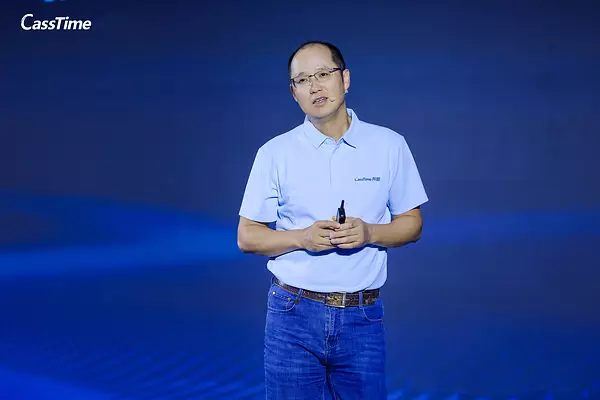
In response to these bottlenecks, Li Li, CEO of International Business at CassTime, introduced an AI-driven "T+D Solution" at the 2026 CassTime Partner Conference. T refers to Digital Trade, which connects supply with overseas procurement demand through the CassChoice platform; D refers to an intelligent localized service platform, which uses PartGrid to bring parts matching, repair support, and insurance claims assessment capabilities to local markets. The solution has already been put into practical operation in markets such as Saudi Arabia.
Industry Bottlenecks: Data Matching and Repair Capability Are Global Challenges
Li Li noted that channel and market-access conditions vary significantly across regions: the Middle East has many new vehicle models and a growing number of supply channels; Brazil has a complex channel and market-access system; Central Asia's supply channels are being restructured; and North America has mature certification and channel requirements for branded parts. The common challenges are concentrated in four areas: data matching, supply stability, quotation and delivery efficiency, and local repair service capability. Insufficient data leads to matching difficulties, fragmented demand leads to unstable supply, and local repair capabilities are difficult to build up quickly.
"After decades of development, the automotive aftermarket has formed a complete supply chain system, and CassTime has also built a digital system covering the entire value chain," Li Li said. "We hope to translate proven digital practices into a holistic solution that can be implemented overseas, covering both parts and repair services."
Li Li emphasized that China's auto parts industry has been tempered through intense competition and has long built a comprehensive domestic supply chain. In particular, its parts SKU coverage for Chinese-brand vehicles is especially complete: Chinese vehicle models have a large installed base and rapid update and iteration cycles. Leveraging deep accumulation in the local market, CassTime has formed the industry's most complete coverage in parts data, VIN decoding, and repair cases for Chinese-brand vehicles. This is also the foundation of the T+D Solution. Supported by this most complete Chinese-brand vehicle SKU database, wherever Chinese-brand vehicles go in the world, CassTime can bring along the parts supply and repair experience already proven in China, enabling overseas partners to share the best practices of China's supply chain.
CassChoice: Digital Trade to Solve Supply-Demand Matching Challenges
In traditional procurement scenarios, when a customer submits demand for hundreds of thousands of SKUs, it usually requires manual order splitting, separate inquiries to multiple suppliers, quotation consolidation, and delivery in batches—a long and inefficient process. The CassChoice system can automatically break down demand, generate batch quotations, track order status, and output reports. The relevant data can also be used for demand tracking and analysis—a direct manifestation of using AI and digital tools to solve "difficult data matching and fragmented supply."
According to CassTime, its overseas platform has accumulated more than 5 million SKUs—with particularly complete SKU data for Chinese-brand vehicles—and can generate quotes in seconds for more than 10,000 SKUs. On the supply side, CassChoice connects factories, brands, and distributors, helping overseas customers complete sourcing, procurement, and local delivery, and efficiently matching fragmented supply with fragmented demand on a digital platform.
PartGrid: AI Agents to Fill Local Repair Capability Gaps
To address matching challenges caused by the large number and rapid updates of vehicle models, PartGrid integrates CassTime's VIN decoding system to help local partners achieve precise matching just as they would in China, reducing error rates. Multilingual communication is handled by AI, enabling barrier-free interaction. The platform can use formats such as WhatsApp Chatbot to connect with local users, adapting to the usage habits of small repair businesses and end users.
Beyond parts circulation, PartGrid also provides three AI agent service capabilities: an AI Repair Master, which synchronizes accumulated repair data and cases to local markets to help solve technical difficulties, especially overseas repair of Chinese vehicle models; an insurance claims assessment agent, which combines real-time fault analysis, parts matching information, and labor-hour estimation to support efficient implementation of insurance business; and an AI Seller, which provides accurate and timely quotations around the clock. Together, these three capabilities form a localized service loop of "parts + repair + insurance," directly addressing the industry bottleneck of "repair capability falling behind."
Saudi Arabia Case: Localized Operations Starting from Claims Scenarios
CassTime's partner in Saudi Arabia is a Middle East technology company that manages insurance business. Its digital platform, Tamam, handles related business for nearly half of Saudi Arabia's insurance companies. The two parties began their cooperation with online access in claims scenarios: through PartGrid, the partner's platform connects local car owners, workshops, and the supply chain to enable digital tracking and management of the process; through CassChoice, it connects supply, opening up the parts value chain from source to end user.
On this basis, the cooperation has three expansion directions: extending application scenarios from claims to more end-user demand; as workshops adoption and business volume grow, more local suppliers join the platform; and upstream factories, brands, and distributors connecting to supply.
At present, CassTime has advanced implementation in the Middle East and is extending the mature model to Central Asia, South America, and other regions, accelerating the construction of a global parts service network. CassTime stated that it will continue to rely on AI and digital capabilities and work with local partners to jointly build a sustainable overseas service ecosystem.
About CassTime
CassTime Holding Co., Ltd. ( "CassTime") is a leading digital intelligence platform for the automotive aftermarket in China. It is committed to building AI-enabled digital infrastructure for all participants across the automotive aftermarket value chain, driving the industry's upgrade toward digital intelligence, standardization and efficient collaboration. The company focuses on auto parts trading, supply chain integration, digital intelligence management for workshops and end-consumer vehicle owner services. It has built a full-value-chain ecosystem covering upstream OEMs and auto parts manufacturers, auto parts distributors, auto service workshops and car owners.
Media Contact
Ben Chan
General Manager, North & South America
Email: ben.chen@casstime.com
Phone: +86 186 6512 3710
Related Links
CassChoice – China Auto Parts, Direct Supply Worldwide
https://www.facebook.com/people/CassTime/61595799821591/
** This press release is distributed by PR Newswire through automated distribution system, for which the client assumes full responsibility. **
CassTime Unveils AI-Driven "T+D Solution" to Tackle Data and Repair Bottlenecks in the Global Automotive Aftermarket