As athletes compete for medals at the 20th Asian Games, a wide range of Chinese-made sports equipment, from gymnastics mats to bicycles, has traveled across the sea to reach the competition venues in Nagoya, Japan.
At a sports industrial park in Dezhou, east China's Shandong Province, rows of gymnastics equipment are rolling off the production line while soft mats undergo impact testing in the lab, the same apparatus now in use at the Asian Games.
The Nagoya event marks the ninth time the company has supplied the Asian Games since the 1990 Beijing Games, a run built on precision and constant innovation that has earned its products recognition from international sports federations.
This year, the mats produced there are used not only in the gymnastics hall but also in judo, martial arts, trampoline and karate, and they have been upgraded for better performance.
"We have applied smart technologies to piezoelectric sensors for use in exercise mats, along with equipment that athletes come into contact with, such as vaulting tables, pommel horses and balance beams, to help athletes improve their training and facilitate data collection for judges," said Wang Wei, chief engineer at Taishan Sports.
Starting from simple hand-sewn gymnastics mats, manufacturers in Dezhou have expanded their output to include horizontal and parallel bars, balance beams, pommel horses, bicycles and artificial turf, growing into major suppliers that meet rigorous international standards. At this year's Asian Games, the hub is providing equipment for 16 sports.
Another highlight among Chinese-made products is the Pardus carbon-fiber race bike, which made its Olympic debut at Rio 2016 and ended century-long monopoly by European and American brands.
"This workshop of ours assembles and develops products mainly for professional teams, including the national team. Some products still in development will undergo trial assembly and sample production right here," said Feng Jintian, product manager at Taishan Pardus Composite Materials Company.
Powered by these industry leaders, the sports industrial park in Dezhou's Laoling County has drawn more than 30 suppliers across the industrial chain, becoming a key driver of the local economy.
"With government support in land use and financing, along with our market expansion and the arrival of support companies, Laoling's sports industry now generates more than 10 billion yuan (about 1.49 billion U.S. dollars) in output value each year," said Zhang Keqiang, director of the Laoling Sports Development Center.
The Asian Games 2026, running from Sept 19 to Oct 4, features 469 medal events across 43 sports and 71 disciplines, drawing more than 11,000 athletes from 45 countries and regions across Asia. China has sent 815 athletes to compete in 369 events across 38 sports.
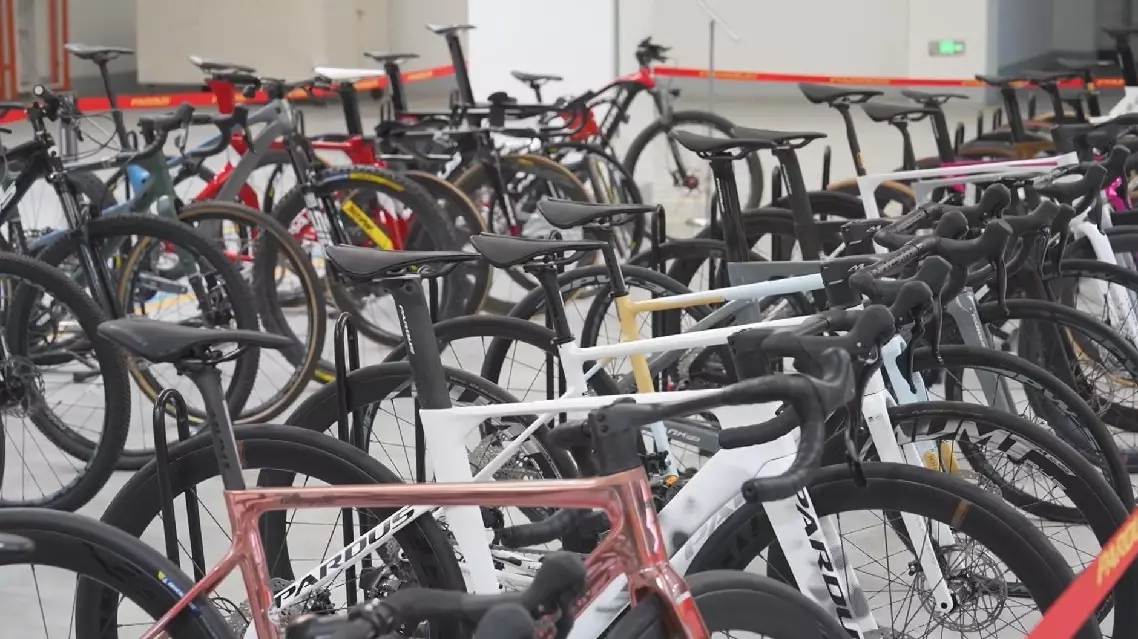
Made-in-China gear shines at Aichi-Nagoya Asian Games
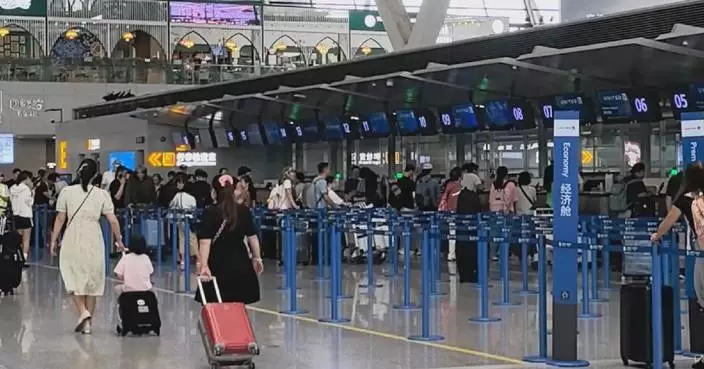
Inbound travel to China has kept growing since the start of this year, as the country's adoption of travel facilitation measures, including expanded visa-free access, has made border entry easier for international visitors.
Foreign nationals made nearly 61.29 million border crossings in the January-August period, up 19.5 percent from a year earlier, according to the latest official data released Thursday. Visa-free entries accounted for 23.72 million of the total, or 77.6 percent, up 26.8 percent from a year earlier.
In Beijing, various ports in Beijing have seen an average of 15,000 border entries by foreigners each day since the start of September, up 20 percent from August's daily average. Notably, the figure topped 17,000 on Sept 7, setting a new single-day record for the year.
During the three-day Mid-Autumn Festival which starts on Friday and the week-long National Day holiday season starting on Oct 1, the number of border entries and exits through Beijing's airports is projected to reach 727,000. The Beijing Capital International Airport is expected to handle 547,000 entries and exits, or 54,700 per day on the average, while the Beijing Daxing International Airport is expected to handle 180,000, or 18,000 per day on the average.
To ensure smooth customs clearance, the Beijing General Border Inspection Station will open additional inspection lanes during peak periods to reduce travelers' waiting time. It will also maintain permanent multilingual advisory and guidance stations staffed by on-site officers, thereby improving passenger clearance efficiency.
East China's Shandong Province, one of the Chinese provinces closest to South Korea, is expected to see more than 190,000 border entries and exits by travelers, averaging over 8,000 per day, according to the Shandong General Border Inspection Station. Notably, the Weihai Shidao Port is expected to receive more than 3,000 tourist arrivals from South Korea, a marked increase in inbound group travel compared with previous years.
"I'm very interested in Chinese traditions, so I've chosen to visit Rongcheng in Weihai during the Mid-Autumn Festival to experience the holiday here firsthand," said Kim Kyung-nam, a tourist from South Korea.
In response to the overlapping passenger flows and the concentrated arrival of large tour groups during the Mid-Autumn Festival holiday, the Shidao Border Inspection Station has worked out a specific duty plan including strategic deployment of personnel and the opening of all inspection lanes to minimize clearance times and maximize operational efficiency.
"We have set up border inspection and cultural tourism facilitation service posts, where on-duty officers will provide bilingual service for consultation and process entry formalities for tour groups, balancing efficient customs clearance with a human touch," said Li Nannan, head of a frontier inspection team at the Shidao Border Inspection Station.
East China's Jiangsu Province, with its rich cultural heritage and diverse cultural and tourism resources, attracts tourists from around the world. The Jiangsu General Border Inspection Station predicts that the ports across the province will process 110,000 border entries and exits and handle over 750 inbound and outbound flights and vessel voyages during the two holiday seasons. For outbound travel, Singapore, Thailand and other countries have emerged as popular destinations for mainland residents departing from Jiangsu's ports.
Tourist cities in south China's Guangxi Zhuang Autonomous Region are top choices for Vietnamese tourists. Thanks to its advantageous geographic location, efficient customs clearance services, and abundant border tourism resources, cross-border tourism between Guangxi and Vietnam is steadily gaining popularity.
According to the Guangxi General Border Inspection Station, the total number of border entries and exits through the four key ports -- Nanning, Guilin, Youyiguan, and Dongxing -- is expected to exceed 355,800 during this year's Mid-Autumn Festival and National Day holiday season.
The Mid-Autumn Festival, a traditional Chinese holiday, is celebrated on the 15th day of the eighth month of the Chinese lunar calendar. This year, the festival falls on Friday, and the public holiday lasts three days through Sunday.
China's National Day holiday lasts from Oct 1 to 7 this year.
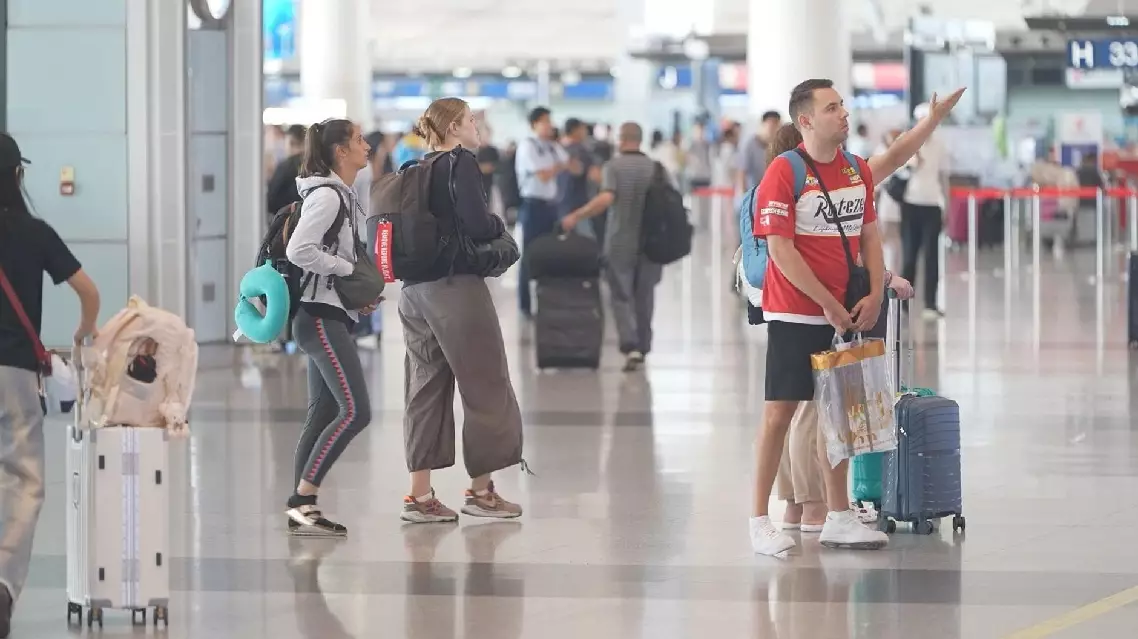
Inbound travel to China continues to surge as visitors seek diverse experiences