SAN RAMON, Calif. & LONDON--(BUSINESS WIRE)--Sep 24, 2026--
The Global Certification Forum (GCF) and the Mobile Satellite Services Association (MSSA) today announced the signing of a Memorandum of Understanding (MoU) to formalize cooperation on supporting and promoting standards-based satellite communications technologies globally.
This press release features multimedia. View the full release here: https://www.businesswire.com/news/home/20260922983080/en/
The collaboration focuses on 3GPP Non-Terrestrial Network (NTN) standards, including direct-to-device (D2D), NTN 5G NR, and NTN NB-IoT services, with a focus on ensuring interoperability and certification for products connecting to non-terrestrial networks.
GCF and MSSA will work together on areas of mutual interest related to the certification of products and services, supporting a broad range of applications, including personal communication, IoT, mission-critical and automotive devices with access to Non-Terrestrial networks.
Accelerating Certification and Interoperability for NTN Services
Under the MoU, GCF and MSSA will collaborate to support the development of certification requirements and testing frameworks for 3GPP NTN technologies, such as NTN 5G NR, NTN NB‑IoT, and direct‑to‑device (D2D) services, leveraging the current GCF framework.
The collaboration will also support the deployment of a scalable NTN certification model, promote interoperability and roaming between terrestrial and non‑terrestrial networks as well as across different NTN constellations, and encourage validation and field testing activities in operational conditions by leveraging MSSA operators’ networks.
“GCF is proud to join forces with MSSA to drive the market adoption of 3GPP standards-based NTN technologies,” stated Lars Nielsen, GCF Director General. “MSSA’s expertise and leadership in Mobile Satellite Services is crucial as we build certification programs for Non-Terrestrial Networks, ensuring mobile satellite devices deliver uncompromising reliability and interoperability.”
“This collaboration with GCF strengthens a critical foundation for the future of mobile connectivity. Certification and interoperability are essential to turning NTN innovation into real-world solutions,” said Mark Dankberg, Chairman of MSSA. “Together with GCF, we will help drive standards-based, interoperable solutions and support a more unified certification approach that enables scale and brings satellite-enabled services to market with greater confidence.”
Supporting the Evolution of NTN Ecosystems
GCF has been actively working with industry partners, including 3GPP and GSMA, to develop certification programs for devices supporting NTN access, with conformance testing for NTN NB-IoT in GEO satellite systems being active in GCF Certification since 2024, and ongoing work to expand to NGSO (LEO) constellations, and include NTN 5G NR technology.
MSSA, together with its members and partners, is advancing the broader NTN ecosystem by promoting standards, open architectures, and industry alignment to support the integration of terrestrial and satellite networks.
By bringing together GCF’s global certification expertise and MSSA’s role in coordinating across the satellite and mobile ecosystem, the two organizations are well-positioned to address evolving industry requirements and support the development and deployment of interoperable, standards-based NTN solutions. This collaboration highlights the value of industry-wide cooperation in enabling scalable, reliable mobile connectivity across integrated terrestrial and non-terrestrial networks.
About the Global Certification Forum (GCF)
Since 1999, the Global Certification Forum (GCF) has been leading the global ecosystem, facilitating standards-based interoperable devices, networks, and services, enabling reliable and secure wireless communications. GCF’s solutions cover 5G NR, LTE, Cellular IoT (NB-IoT and eMTC), Mission Critical Services, NTN access, eSIM, and legacy technologies.
GCF has over 300 members, including device manufacturers, major and smaller commercial operators over Terrestrial and Non-Terrestrial Networks (NTN), communication service providers, Mission Critical Communication Operators and Service providers, and the test industry, working together with key industry partners on certification programmes demanded by the market.
www.globalcertificationforum.org
About the Mobile Satellite Services Association (MSSA):
The Mobile Satellite Services Association (MSSA) is a non-profit industry association, founded in 2024, that seeks to develop, promote, and advance the emerging ecosystem for advanced Non-Terrestrial Network (NTN) services, including direct-to-device, for consumer, commercial, civil, and government applications globally. MSSA supports the efforts of advanced NTN solutions providers, including terrestrial mobile and satellite operators, original equipment manufacturers, infrastructure providers, chip vendors, and others. This includes enabling seamless global mobile connectivity through the integration of terrestrial and satellite (non-terrestrial) networks in a way that facilitates innovation, choice, and competition for these emerging capabilities.
By evolving industry technical standards, promoting open, interoperable architectures and standards, and supporting policies that promote adoption and availability of satellite-enabled services, MSSA is driving initiatives that foster innovation and alignment to accelerate the future of advanced mobile services for the benefit of consumers. For more information, visit our About page, sign up for our Interest List, and follow us on LinkedIn.
https://www.mss-association.org
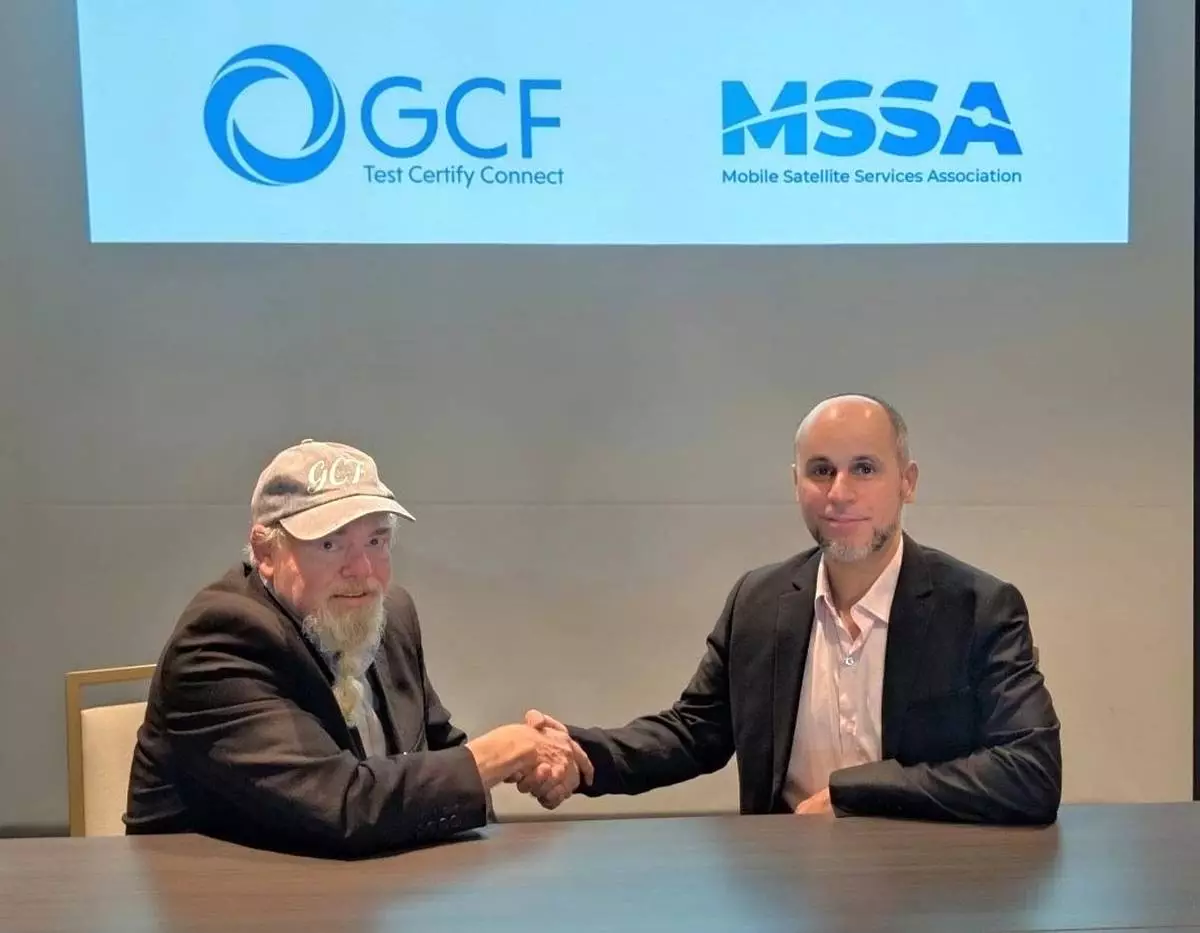
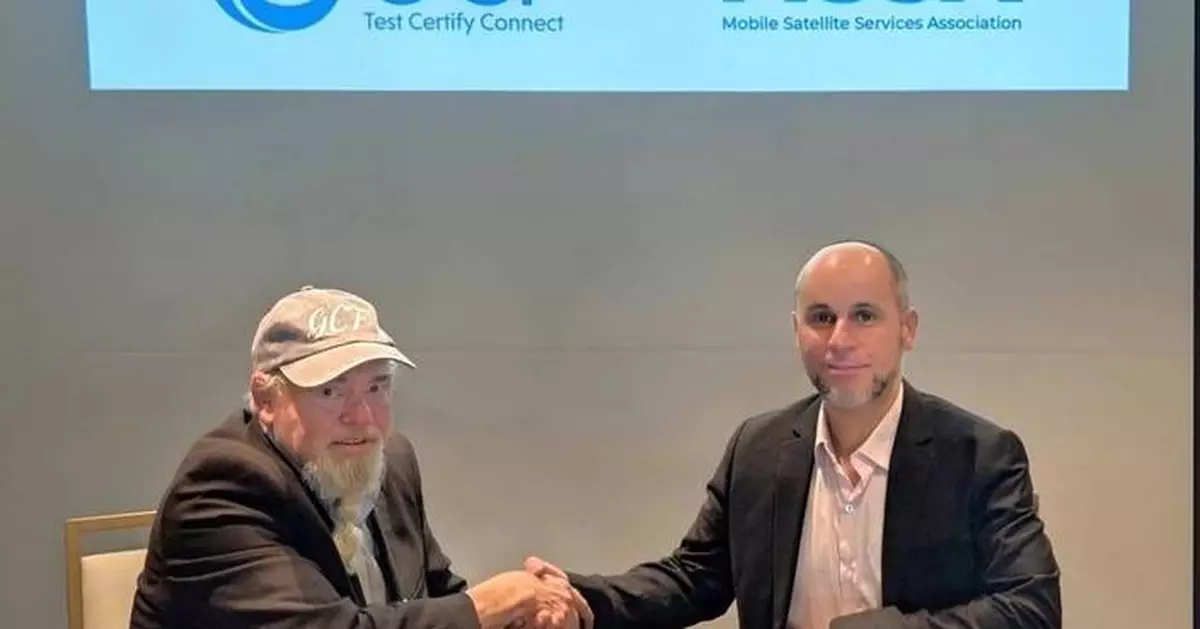
Lars Nielsen, Director General of the Global Certification Forum (GCF), and Lotfi Benachenhou, MSSA Device Certification & Licensing Working Group Lead and Director, Mobile Device Development & Architecture, Terrestar Solutions, mark the signing of a Memorandum of Understanding to advance certification, interoperability, and standards-based Non-Terrestrial Network (NTN) technologies. The collaboration supports the development of certification frameworks and interoperable solutions that will help accelerate the adoption of satellite-enabled mobile services worldwide.