Advancing upgrading and transformation of Hong Kong's waste paper recycling to drive circular economy
The Environmental Protection Department (EPD) today (September 24) announced that, with the modernised paper pulping facility (the Facility) at EcoPark, Tuen Mun having commenced its operation on July 27, 2026 and gradually ramping up its processing capacity, waste paper recovered in Hong Kong will be pulped locally at full scale from October 1, 2026 onwards, without reliance on exports. The types of recyclable waste paper will be expanded from the traditional "three types of paper" (namely cardboard, newspapers, and office paper) to include other mixed paper (such as paper bags, packaging boxes, wrapping paper). This marks the upgrading and transformation of Hong Kong's waste paper recycling towards achieving wastetoresources transformation, representing an important milestone in driving the development of a circular economy.
Click to Gallery
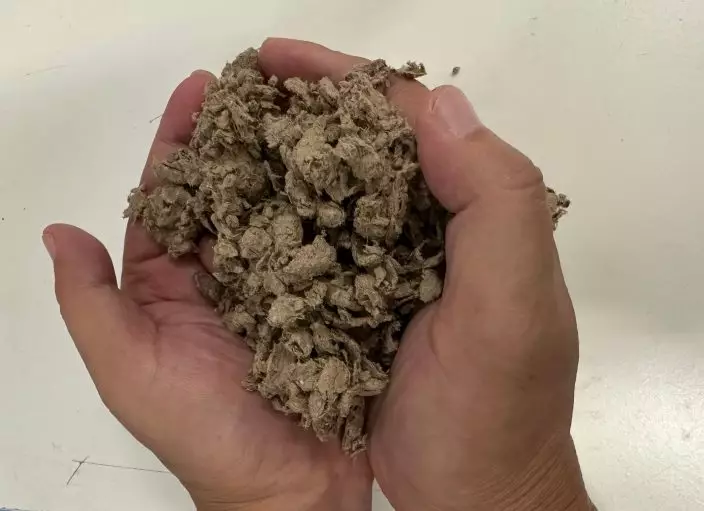
The Environmental Protection Department indicates that the paper pulping facility has been in operation for nearly two months and is running smoothly. Photo shows the recycled pulp. Source: HKSAR Government Press Releases
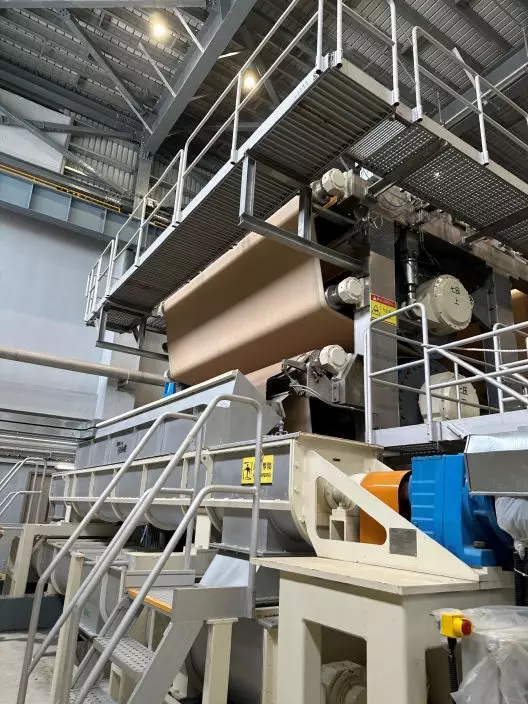
The Environmental Protection Department indicates that the paper pulping facility has been in operation for nearly two months and is running smoothly. Photo shows the recycled pulp being produced by dewatered by the pressing machine. Source: HKSAR Government Press Releases
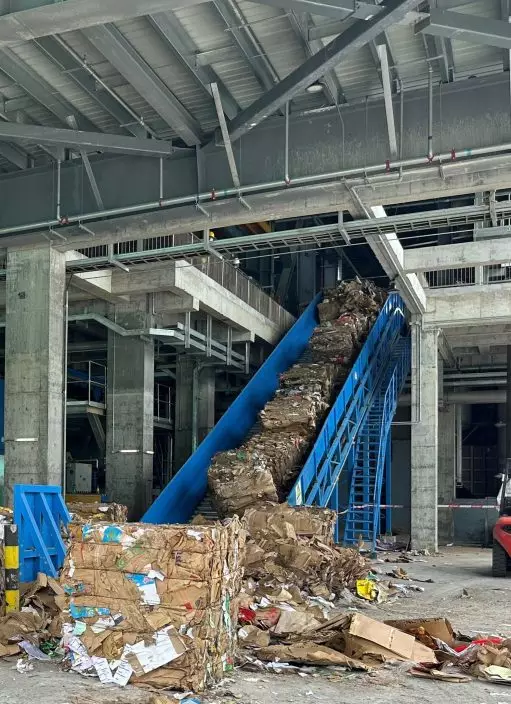
The Environmental Protection Department indicates that the paper pulping facility has been in operation for nearly two months and is running smoothly. Photo shows the waste paper collected entering the recycled pulp production line via the slat chain conveyor. Source: HKSAR Government Press Releases
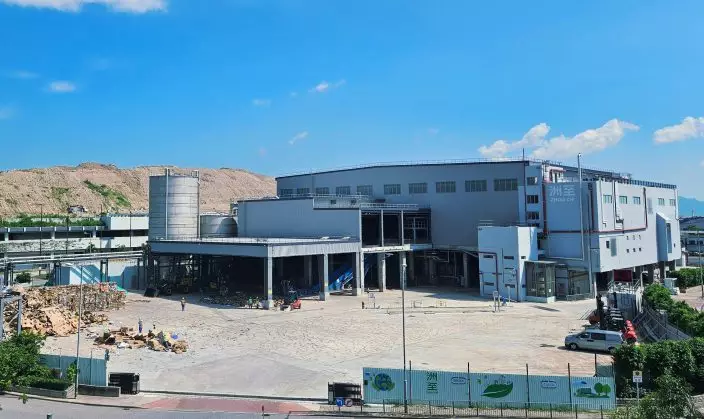
The paper pulping facility (the Facility) at EcoPark commenced its full operation in July 2026, expanding the type and scale of waste paper to be processed locally. Waste paper received will be processed into recycled pulp, demonstrating waste-to-resources. Photo shows the Facility at EcoPark. Source: HKSAR Government Press Releases
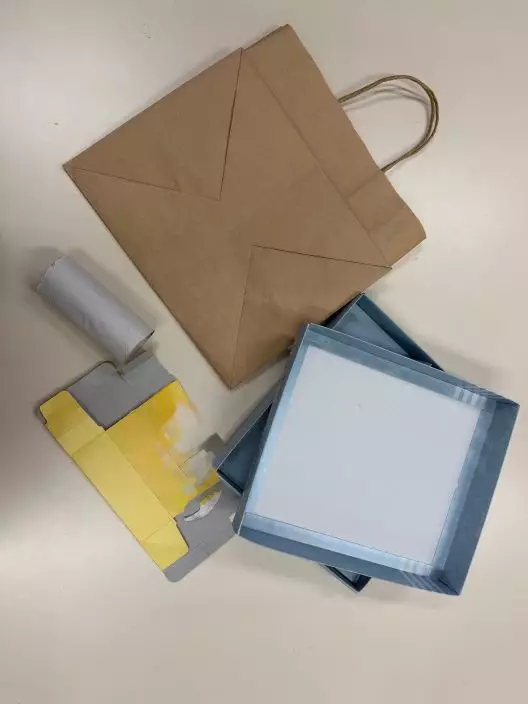
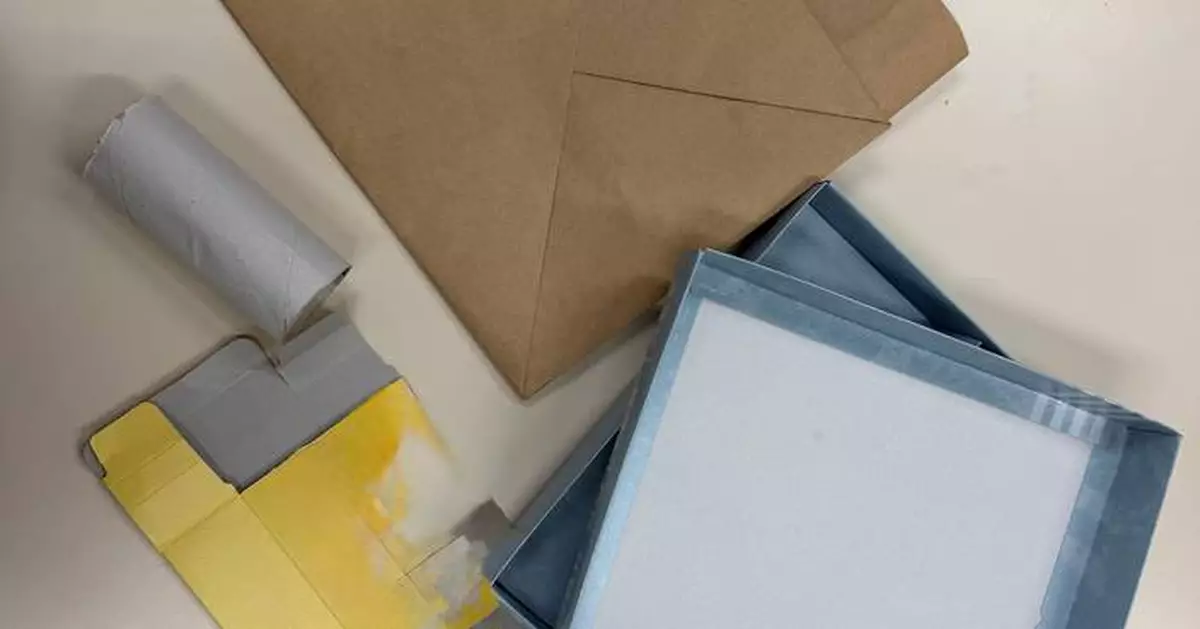
The types of recyclable waste paper are expanded from traditional "three types of paper" (namely cardboard, newspapers, and office paper) to other mixed paper (such as paper bags, packaging boxes and wrapping paper). Photo shows the recyclable mixed paper. Source: HKSAR Government Press Releases
"With the commissioning of the Facility, Hong Kong's local waste paper recycling chain is undergoing a transformation: moving beyond simple collection, introducing more diverse outlets, and expanding the types and scale of local waste paper processing. This marks a shift from a past reliance on exporting waste paper to achieving wastetoresources locally, enhancing the efficiency of resource circulation and supporting the development of a circular economy." an EPD spokesman said.The Facility's processing capacity is sufficient to handle all waste paper generated in Hong Kong, widening the scope from recovering only the "three types of paper" to including mixed paper such as shoes boxes and wrapping paper. Recovery volumes can also be gradually increased from more than 500 000 tonnes per year to 720 000 tonnes of waste paper annually.
At present, the market and the trade have been gradually adapting. This month, the Facility set a new single-day record for paper intake at 1 608 tonnes, which is 4 per cent higher than last year's average daily intake.
Under the "Waste Paper Pulping and Export Services" contract, the facility operator, is required to purchase waste paper from waste paper collectors and recyclers at a price not less than the "Designated Purchasing Price" (DPP) stipulated in the contract. As before, theEPD will regularly review and adjust the DPP in accordance with price trends of the prevailing purchase price of the highest quality corrugated paper and paperboard (i.e. cardboard) in Guangdong Province of the Chinese Mainland.Under this mechanism, the DPP has been raised from HK$1,200 per tonne in July 2026 to current level of HK$1,295.51 per tonne.
In advancing the upgrading and transformation of Hong Kong's waste paper recycling, we have sought to balance the interests of all parties across the recycling chain, while also paying particular attention to safeguarding the livelihoods of frontline waste paper collectors (especially those from grassroots backgrounds). To this end, the contract also includes a "Designated Minimum Price" (DMP) to ensure that waste paper collectors and recyclers will pay frontline collectors at a price not less than the DMP for waste paper that meets the specified quality standards. The EPD will regularly adjust the DMP in line with the offered price by the Facility to maintain demand and price stability in the local waste paper recycling market and support the sustainable operation of the entire recycling chain. The current DMP is HK$0.65 per kilogram.
Both prices abovementioned have been published on the EPD website (www.wastereduction.gov.hk/en-hk/waste-paper-pulping-and-export-services), the contractor's website (www.zhouzhipaper.com), and at prominent places within the Facility, ensuring open and transparent disclosure of information.
The spokesman supplemented that, since the Facility commenced operations nearly for two months, the market and the trade have been gradually adapting. This month, the Facility set a new single-day record for paper intake at 1 608 tonnes, which is 4 per cent higher than last year's average daily intake.
The trade generally supports the local waste-to-resources transformation for waste paper. To facilitate a smooth transformation and transition for the trade, the facility operator has already organised briefing sessions for the trade to explain acceptable paper types and the processing flow, and the EPD has established a tripartite communication platform to strengthen the communication among the EPD, the trade of sorting and baling facilities and the facility operator. The EPD anticipates collaboration between the trade and the Facility to become increasingly smooth and robust.
With the smooth progress of local waste-to-resources transformation of waste paper, the existing "Waste Paper Collection and Recycling Services" contract, which was established to support waste paper exports, will end. Should recyclers wish to export waste paper to markets in other regions, they may make their own arrangements in accordance with market mechanisms. The EPD will keep abreast of market conditions and maintain close communication with the trade to assist it in adapting to the new operational mode.
The Environmental Protection Department indicates that the paper pulping facility has been in operation for nearly two months and is running smoothly. Photo shows the recycled pulp. Source: HKSAR Government Press Releases
The Environmental Protection Department indicates that the paper pulping facility has been in operation for nearly two months and is running smoothly. Photo shows the recycled pulp being produced by dewatered by the pressing machine. Source: HKSAR Government Press Releases
The Environmental Protection Department indicates that the paper pulping facility has been in operation for nearly two months and is running smoothly. Photo shows the waste paper collected entering the recycled pulp production line via the slat chain conveyor. Source: HKSAR Government Press Releases
The paper pulping facility (the Facility) at EcoPark commenced its full operation in July 2026, expanding the type and scale of waste paper to be processed locally. Waste paper received will be processed into recycled pulp, demonstrating waste-to-resources. Photo shows the Facility at EcoPark. Source: HKSAR Government Press Releases
The types of recyclable waste paper are expanded from traditional "three types of paper" (namely cardboard, newspapers, and office paper) to other mixed paper (such as paper bags, packaging boxes and wrapping paper). Photo shows the recyclable mixed paper. Source: HKSAR Government Press Releases