SAN FRANCISCO (AP) — A Republican California sheriff must return more than a half-million ballots he seized for an investigation into unfounded voting improprieties in a special election last year, the state Supreme Court ruled Thursday.
Riverside County Sheriff Chad Bianco in February seized approximately 650,000 ballots from a November 2025 special election on statewide congressional redistricting favorable to Democrats and pushed by Gov. Gavin Newsom. The measure easily passed statewide, and won in Bianco's county by roughly 80,000 votes.
The court called the ballots’ seizure “unlawful,” saying California law requires voted ballots to remain in the custody and control of election officials, even during a criminal investigation. Bianco must also “refrain from further handling of the ballots except as necessary to comply with our order,” the court said in an unanimous decision. Bianco did not immediately comment on the ruling.
“If election misconduct is suspected, the Elections Code provides several mechanisms for law enforcement to review and examine ballots without compromising their integrity,” the court wrote.
Bianco’s ballot investigation came as President Donald Trump has repeatedly disputed the results of the 2020 election, citing unsubstantiated instances of fraud. His administration in January seized ballots and other documents from an election office in Georgia. Some Republicans have mirrored Trump’s rhetoric on voting in their states.
Election officials and civil rights groups have been following the Bianco case carefully as they brace for the possibility that Trump or his allies may try to seize ballots in November.
Bianco said he confiscated the election materials as part of a criminal investigation after receiving a complaint from a local citizens group that the count was off. Local election officials had previously said the complaint was unfounded. Bianco, was running for governor at the time, but he did not make it through the primary.
Democratic Attorney General Rob Bonta immediately launched a legal challenge, arguing the sheriff had no authority over election materials and warning the seizure was designed to sow distrust in elections. He ordered Bianco to return the ballots, but Bianco did not.
“The Court has now made clear that this kind of defiance cannot stand, that the Attorney General has the authority to intervene when sheriffs take improper action, and that voted ballots belong in the custody of elections officials,” Bonta said Thursday.
The University of California, Los Angeles Voting Rights Project also sued the sheriff and the Riverside County Registrar of Voters on behalf of several Riverside County voters. The state Supreme Court last month heard arguments in both cases.
The Court also found that a search warrant does not override the state's electoral law.
“The Court’s decision reaffirms a basic principle that in California, the Election Code applies to everyone, including law enforcement,” said Chad Dunn, legal director and co-founder of the UCLA Voting Rights Project. “These are the voters’ ballots. They must be protected through the processes the Legislature has established. This ruling provides important clarity for election officials, law enforcement, and voters across California.”
Newsom on Saturday signed a bill that would prevent anyone from seizing ballots, as Bianco did.
Bianco began recounting the vote shortly after seizing the ballots using sheriff’s officials under the supervision of a special master appointed by a court but suspended it days later, citing mounting legal challenges from the state attorney general and the voting rights group. But he has not returned the ballots.
Bradley Hertz, who represented Bianco before the court, argued the sheriff had a legal duty to open a criminal investigation after receiving a complaint and he followed the penal code to carry out that investigation, first issuing search warrants in February.
Hertz said Bianco has not returned the ballots to the Riverside County Registrar of Voters because those ballots are “evidence.”
At the time of the ballots’ seizure, Bianco was one of two prominent Republicans running for governor in a crowded June primary. He did not advance to the general election and later announced plans to run for reelection as sheriff in 2028.
Xavier Becerra, a former state attorney general and Democrat running for governor, is part of the UCLA lawsuit to halt Bianco’s efforts.
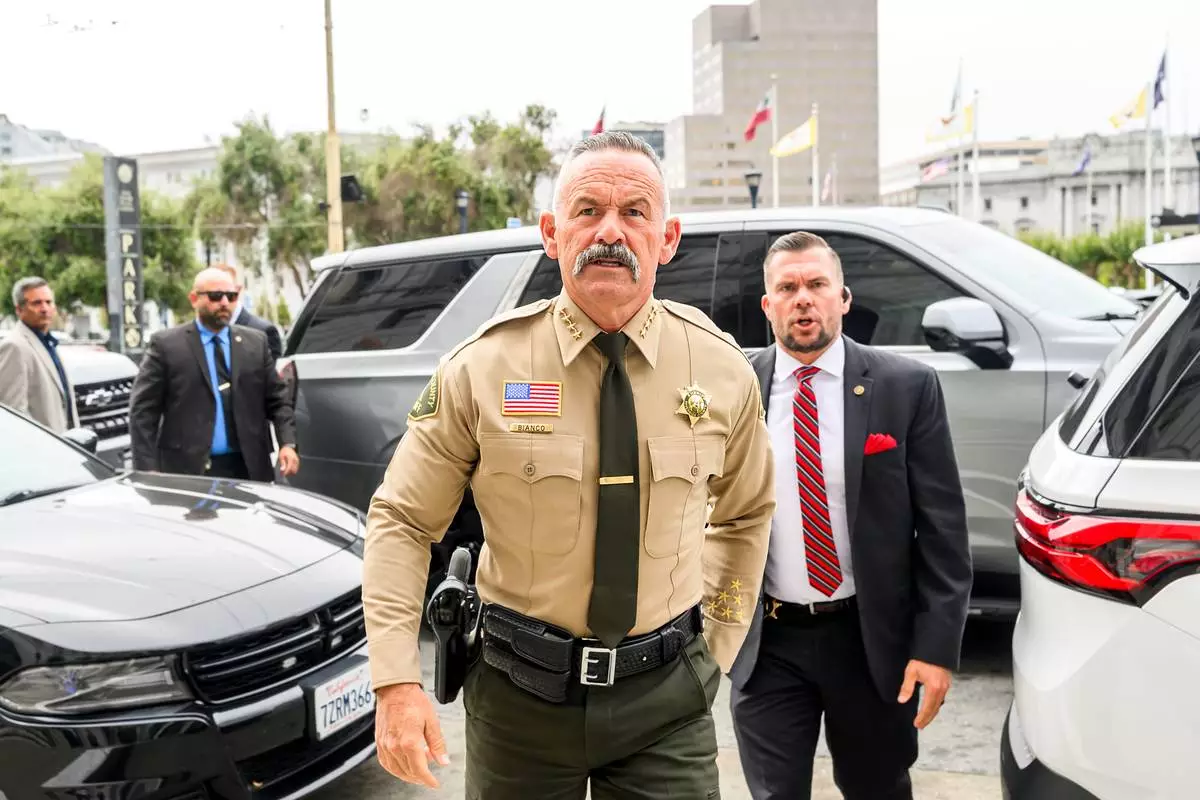
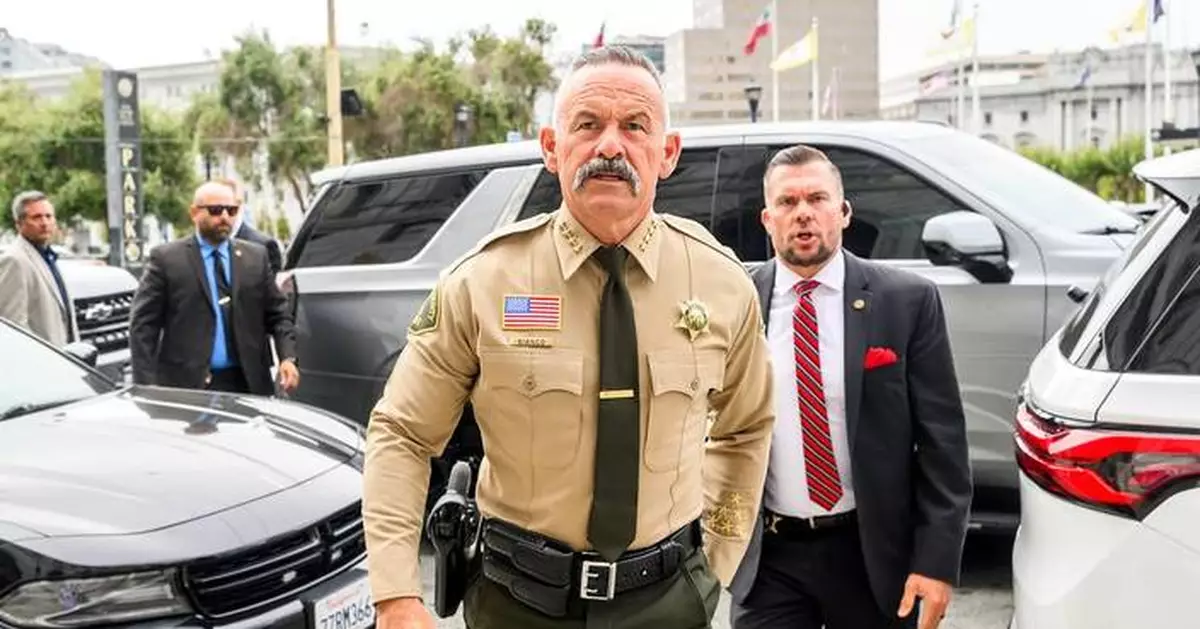
FILE - Riverside County Sheriff Chad Bianco arrives at the Supreme Court of California for a hearing about his seizure and recount of more than half a million 2025 election ballots on Aug. 24, 2026, in San Francisco. (AP Photo/Noah Berger, File)
Israeli Prime Minister Benjamin Netanyahu told world leaders Thursday that attacking Iran “was one of the easiest decisions I’ve ever had to make” and denounced as “moral cowards” a mass of delegates who walked out of the U.N. General Assembly when he took the podium to speak.
“In defending itself, Israel is also also defending many of the countries whose delegates just left this hall," Netanyahu said. "In fact, I want you to know that many of their leaders even thank us privately for taking out Iran’s nukes.”
When Netanyahu walked to the rostrum, a mix of cheers, boos and mass walkouts erupted. Scores of delegates trooped out and a majority of seats sat empty afterward. “Order in the hall, please,” General Assembly President Khalilur Rahman said repeatedly.
“If there are any other moral cowards who have not yet left the hall, please do so now,” Netanyahu said.
The Palestinian Mission to the U.N. said in a message to many of the 193 U.N. member nations to bring as many staff as possible to the assembly hall and “collectively walk out of the assembly” once the Israeli prime minister is announced.
“This will send a clear message to Netanyahu and his government that no one is willing to aid, abet, or be complicit in its genocide and war crimes and illegal occupation, which all peace-loving states and peoples demand must come to an end,” the message said.
Israel rejects allegations that it committed genocide and war crimes and is illegally occupying Palestinian territory. All Israeli settlements are illegal under international law, but the Israeli government insists they are legal.
Netanyahu, who is prone to using visual aids during his General Assembly speeches, at one point held up a pager while reminding the audience of Sept. 17, 2024, when Israel remotely detonatedthousands of pagers that had been distributed to the Iran-backed Hezbollah militant group in Lebanon. The pager attack wounded more than 3,000 people and killed 12, including two children.
He reminded the assembly of the scale of the Oct. 7, 2023, attack in which Hamas militants killed about 1,200 people. “This is equal to 40,000 innocent Americans slaughtered in less than 24 hours,” he said, or 16 times the death count on the 9/11 attacks that left nearly 3,000 people dead in New York.
Netanyahu thanked U.S. President Donald Trump for taking decisive action against Iran, and he insisted Israel would prevail: “We will continue to win because we have no other choice.”
Palestinian President Mahmoud Abbas also addressed the U.N. General Assembly earlier Thursday, delivering prerecorded remarks from his office in Ramallah after the United States denied him and other top Palestinian officials visas to attend the gathering for the second year in a row.
The 90-year-old leader's popularity at home and relevance abroad have both waned. But in his remarks, Abbas made clear he did not intend to quietly accept being sidelined.
“We will not leave our homeland. We will not accept displacement. And we will not allow anyone to decide our future on our behalf,” Abbas said.
Though world leaders have repeatedly invoked the plight of Palestinians in speeches throughout the week, Abbas urged the international community to take more tangible action against Israel.
"How long will some countries continue to remain silent about Israel, or continue supplying it with weapons that it uses against our people? The world has witnessed the enormous cost in the Gaza Strip and the West Bank," Abbas said. “What, then, is the international community waiting for before it acts to protect the Palestinian people?”
In past years, Netanyahu has used his General Assembly speech to both denounce the United Nations as biased and make Israel's case to world leaders. His address — scheduled for prime time in Israel — is the cornerstone of an abbreviated trip to the United States unfolding under the shadow of New York City Mayor Zohran Mamdani calling him a “war criminal” and pushing for his arrest.
Mamdani has acknowledged that New York does not have the authority to execute an International Criminal Court warrant but urged federal authorities to do so.
Israel has grown increasingly isolated throughout the war in Gaza. The war began on Oct. 7, 2023, when Hamas-led militants attacked Israel, killing around 1,200 people and kidnapping 251. At least 73,922 Palestinians have been killed in Israel's subsequent offensive, according to the Gaza Health Ministry, part of the Hamas-run government whose numbers are generally considered reliable by the international community.
A ceasefire agreed to by Israel and Hamas last October halted the heaviest of the fighting and led to the release of the remaining hostages yet further steps have since stalled. Israel maintains control of most of Gaza and continues to carry out airstrikes on Palestinians near military-held zones. Hamas not disarmed or relinquished power and there has been no progress toward reconstruction in the mostly destroyed territory.
As Abbas spoke, the Israeli delegations' seats in the General Assembly hall sat vacant.
“The Palestinian people face one of the most dangerous periods in their history,” Abbas said.
In Gaza, he said, “Neighborhoods, cities, refugee camps, institutions, schools, universities, hospitals, mosques, and churches have been destroyed. Every foundation of life, and the future of entire generations, has been targeted.”
Though negotiations have not taken place for years, Abbas urged the international community to push for a two-state solution to the Israeli-Palestinian conflict and said Palestinians could live “alongside the state of Israel.”
Netanyahu has said no Palestinian state will be established while he is Israel’s leader and has argued that the Palestinian Authority is not a partner for peace.
Netanyahu dismissed incidents of Israeli settler violence against Palestinians in the West Bank as a “handful of young juvenile delinquents” throwing stones, chopping down olive trees and lighting fires.
“I can’t stand that. I won’t stand for vigilantism,” the prime minister said before accusing foreign leaders and the international press of distorting the scale of violence in the West Bank.
Netanyahu’s government is dominated by settlers and their allies, including the Cabinet minister who oversees the police. There have been few arrests of settlers involved in attacks on Palestinians.
Since 2005, Abbas has led the Palestinian Authority, which is the internationally recognized representative of the Palestinian people. But his support among Palestinians has withered during years of corruption and anger toward the authority's security cooperation with Israel.
Under Abbas, Palestine has been recognized as a country by a majority of U.N. member states. But on the ground in the West Bank, the mostly symbolic moves have not affected Israel’s decades long military occupation. Throughout the war in Gaza, Abbas and the authority have been largely sidelined from negotiations over the territory's postwar future.
The international community has instead backed Trump’s plan for a group of apolitical administrators to govern Gaza under the Board of Peace. Yet Abbas said the territory could not remain politically separate from the West Bank and east Jerusalem for the long term.
He said the Gaza Strip, east Jerusalem and the West Bank needed to be governed by “one state, one government, one law and one legitimate entity authorized to bear arms.”
Israel captured the West Bank and east Jerusalem in the 1967 war, and the Palestinians want both as part of their future state. The Palestinians and much of the international community view the settlements as illegal and as an obstacle to creating a viable, contiguous Palestinian state.
Associated Press reporters Jennifer Peltz and Edith M. Lederer contributed.
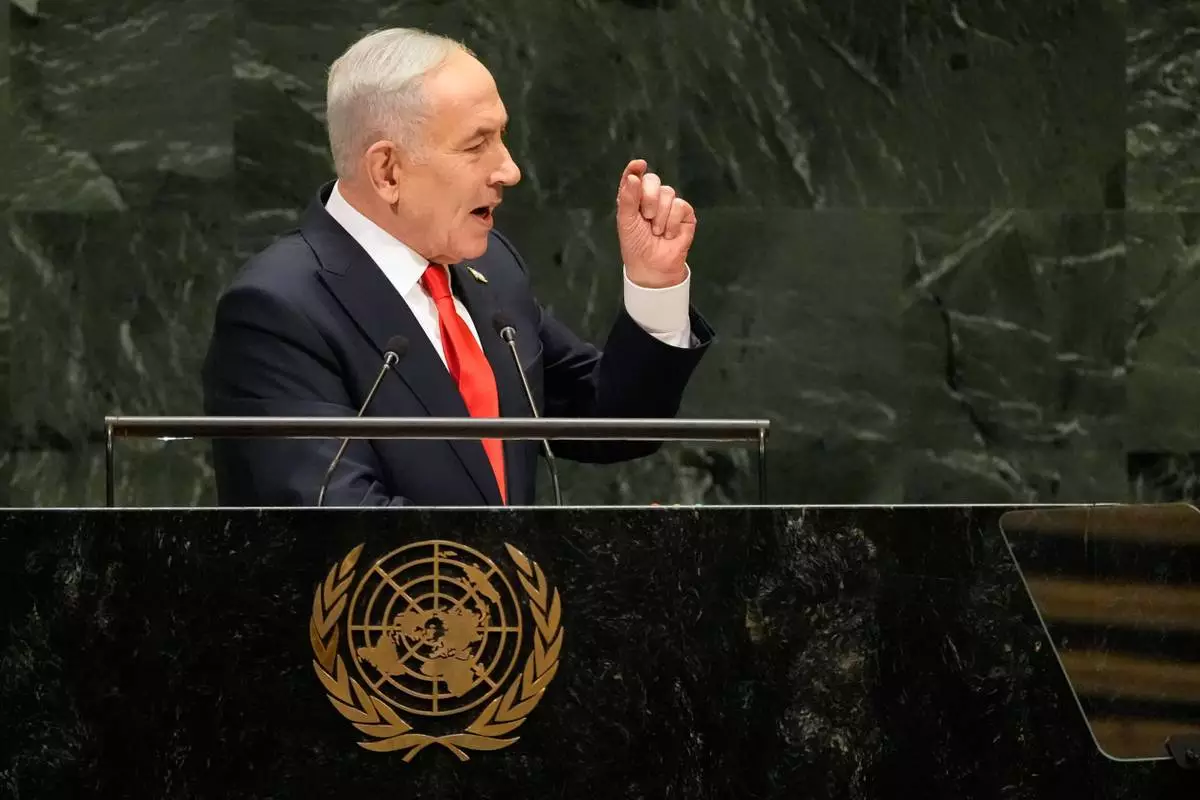
Israeli Prime Minister Benjamin Netanyahu speaks during the 81st session of the United Nations General Assembly at United Nations headquarters, Thursday, Sept. 24, 2026. (AP Photo/Seth Wenig)
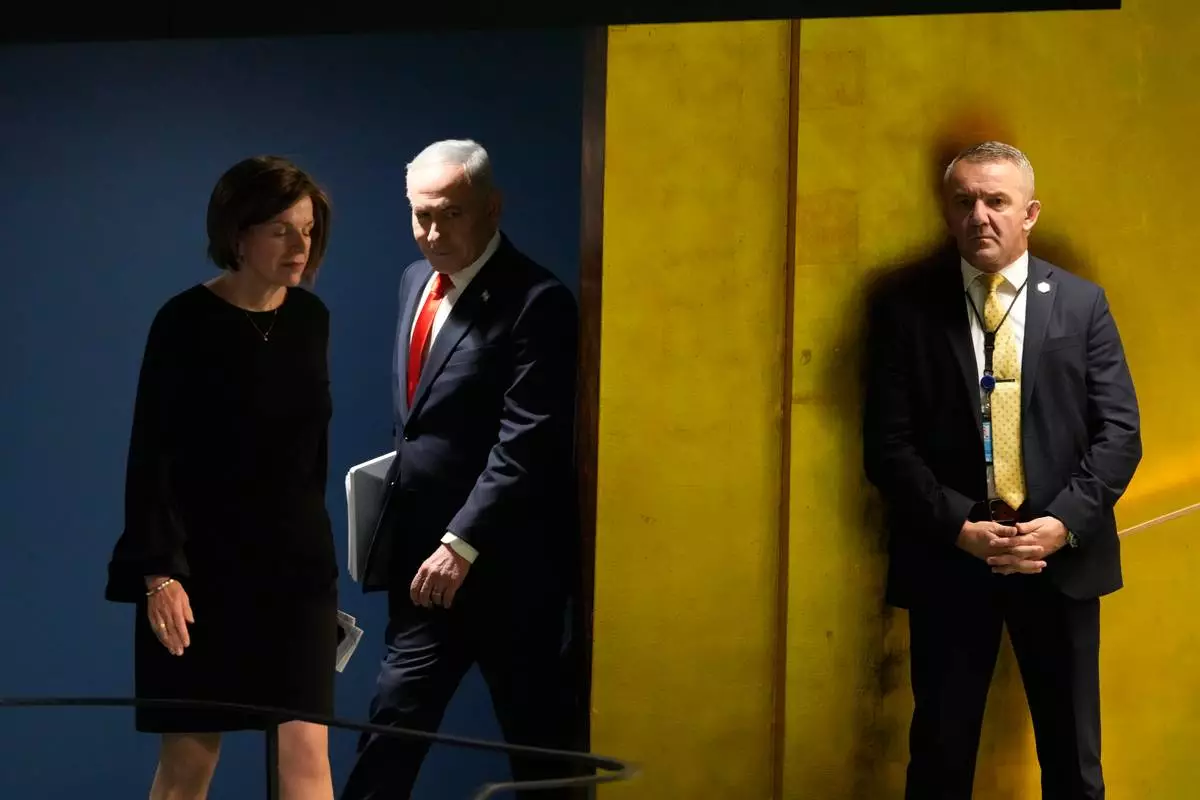
Israeli Prime Minister Benjamin Netanyahu, center, enters to speak during the 81st session of the United Nations General Assembly at United Nations headquarters, Thursday, Sept. 24, 2026. (AP Photo/Seth Wenig)
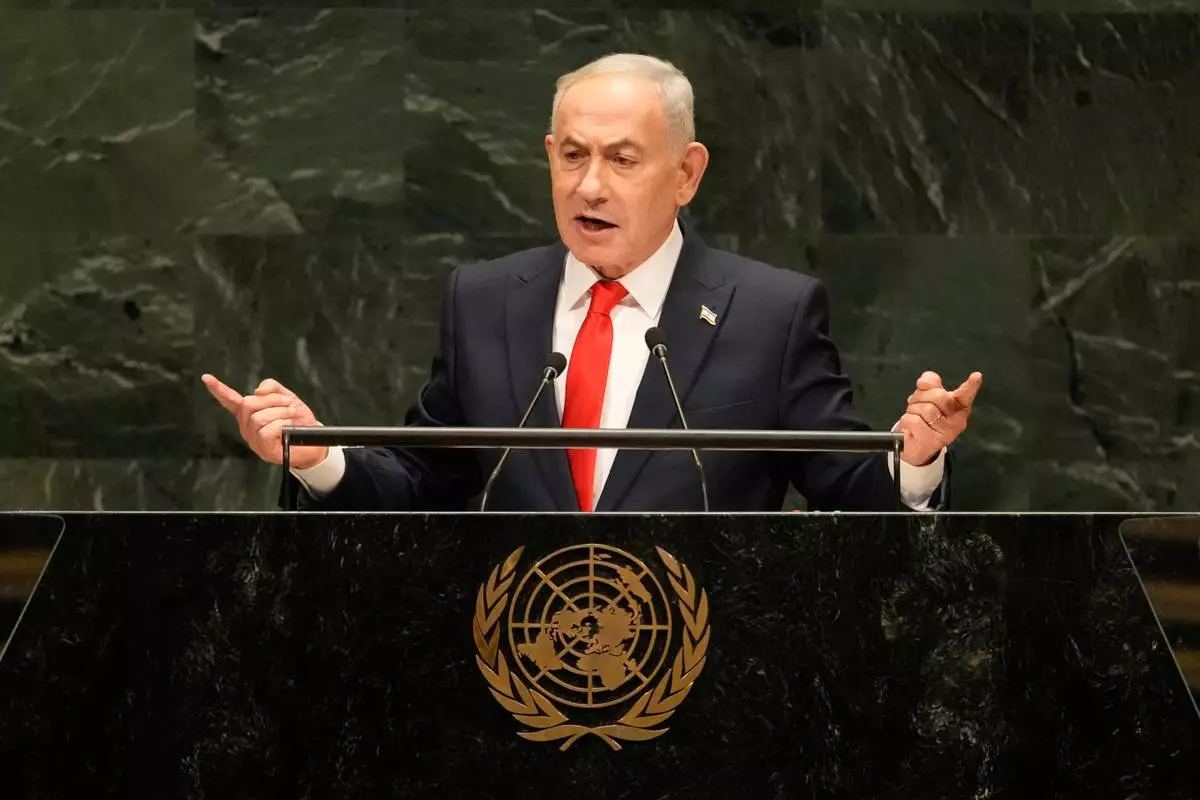
Israeli Prime Minister Benjamin Netanyahu speaks during the 81st session of the United Nations General Assembly at United Nations headquarters, Thursday, Sept. 24, 2026. (AP Photo/Seth Wenig)
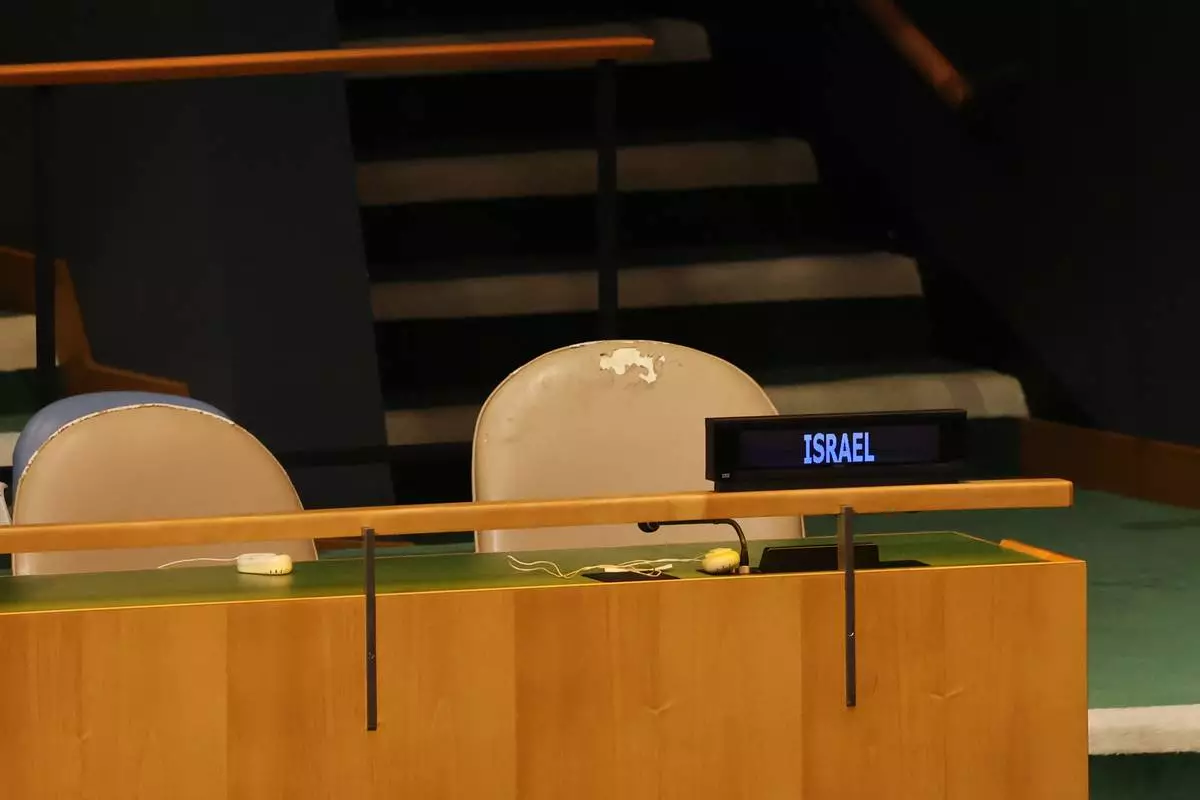
Chairs for delegates from the state of Israel are unoccupied as Palestinian President Mahmoud Abbas speaks via pre-recorded video during the 81st session of the United Nations General Assembly at United Nations headquarters, Thursday, Sept. 24, 2026. (AP Photo/Heather Khalifa)
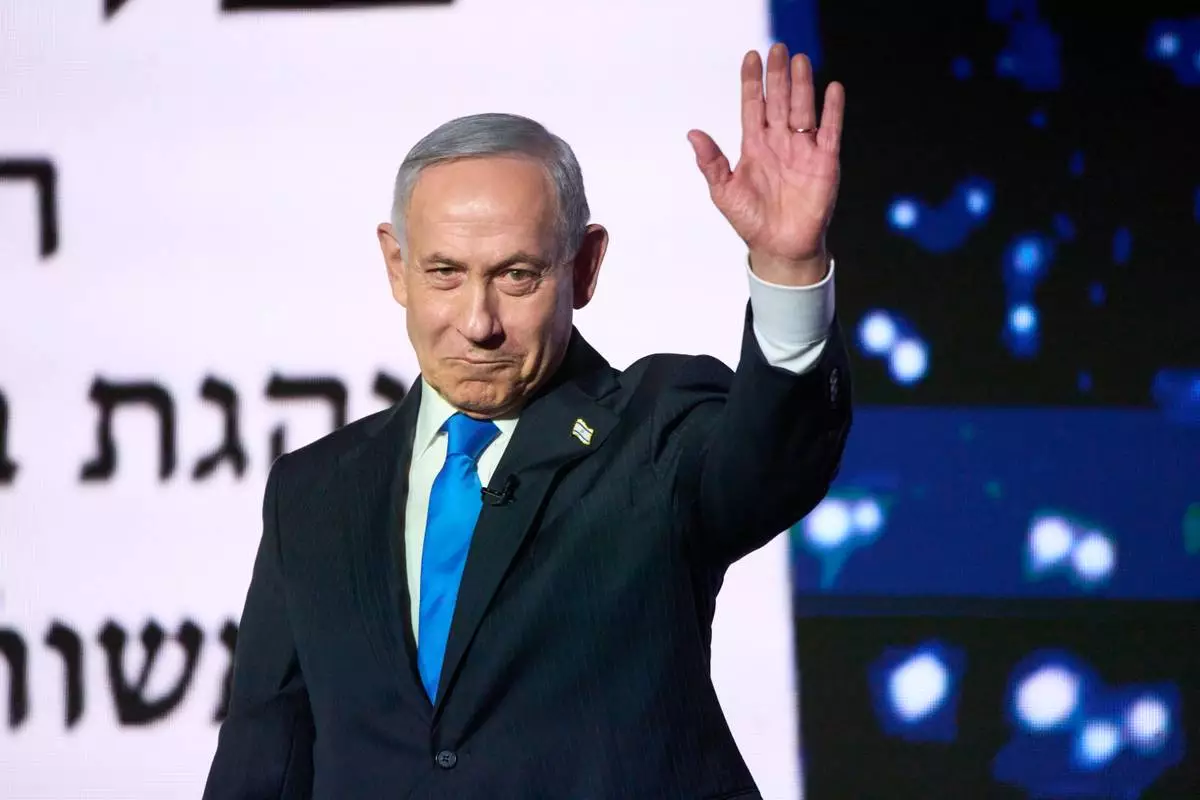
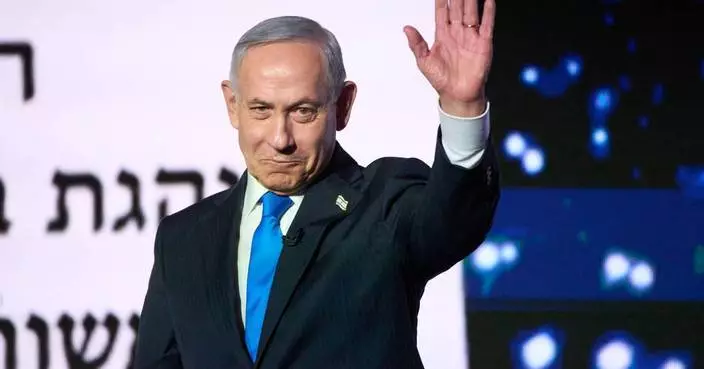
Israeli Prime Minister Benjamin Netanyahu at his Likud party New Year event in Tel Aviv, Israel, Thursday, Sept. 17, 2026. (AP Photo/Ariel Schalit)
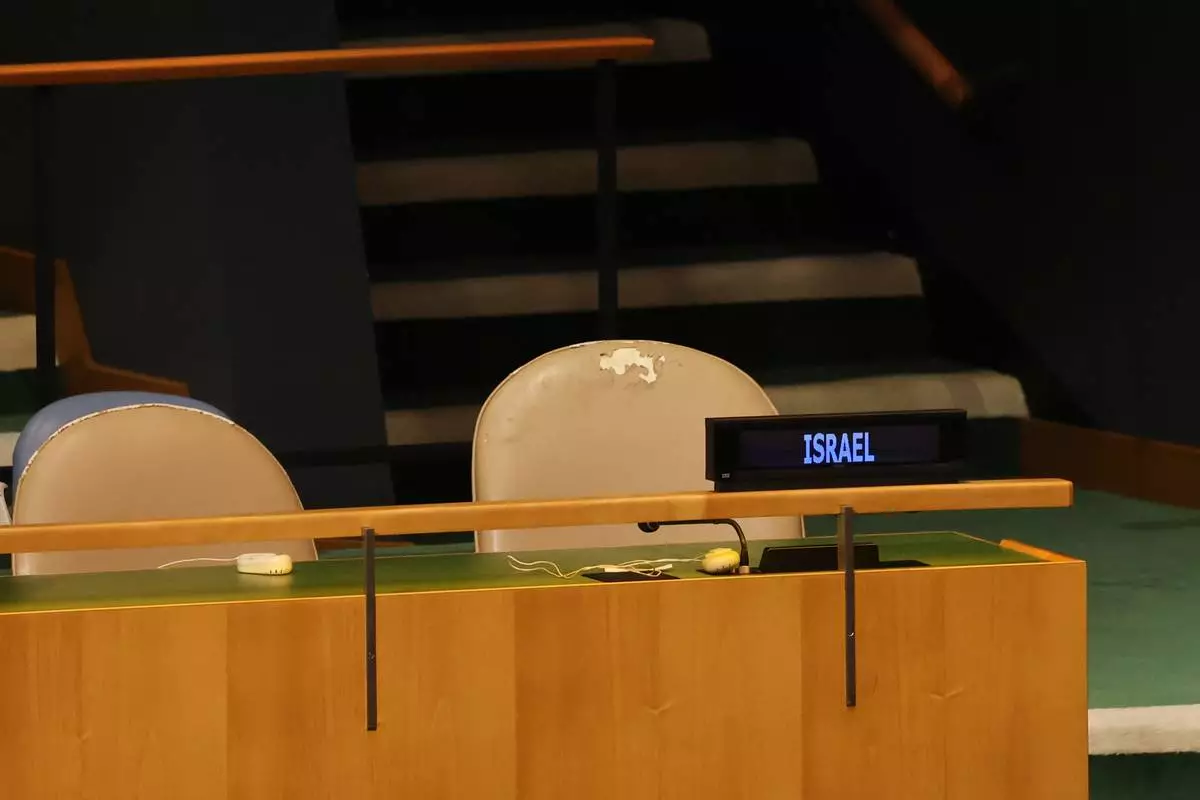
Chairs for delegates from the state of Israel are unoccupied as Palestinian President Mahmoud Abbas speaks via pre-recorded video during the 81st session of the United Nations General Assembly at United Nations headquarters, Thursday, Sept. 24, 2026. (AP Photo/Heather Khalifa)
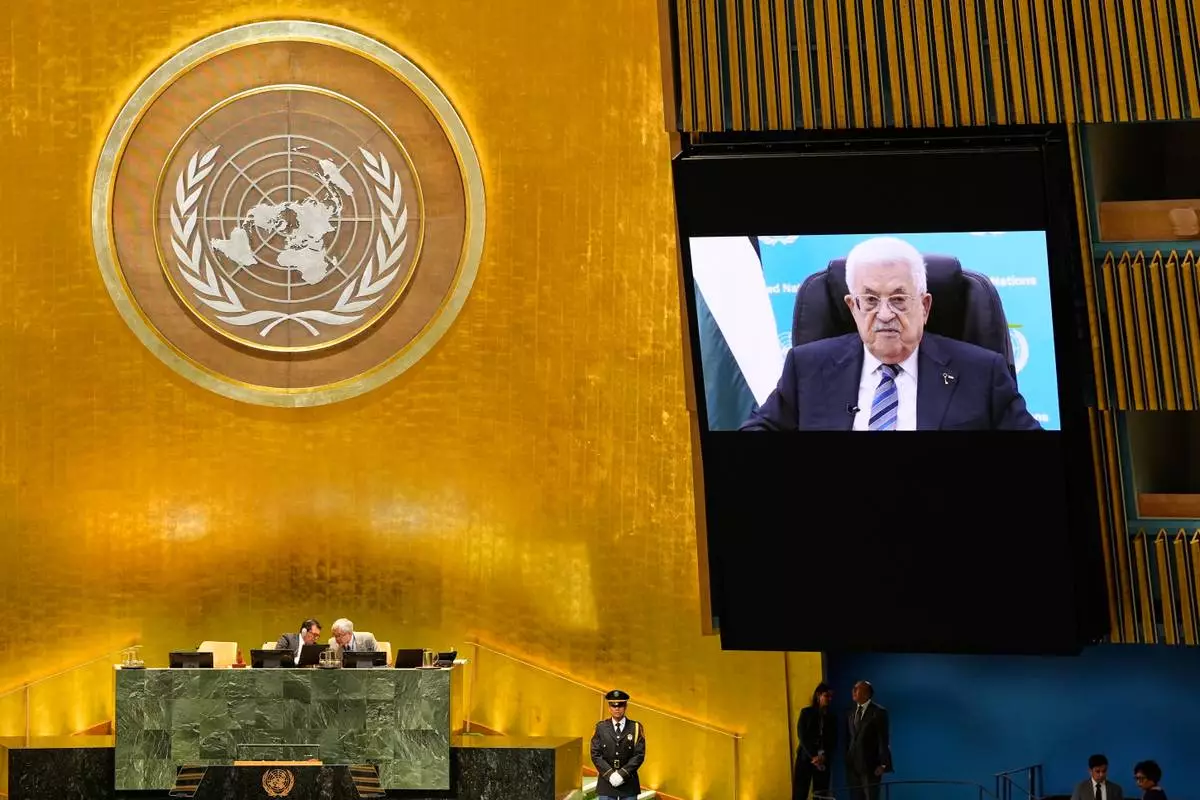
Palestinian President Mahmoud Abbas speaks via pre-recorded video after being denied a visa to attend in person during the 81st session of the United Nations General Assembly at United Nations headquarters, Thursday, Sept. 24, 2026. (AP Photo/Seth Wenig)