Skip to Content Facebook Feature Image

Nepal's leader, at UN, says recent floods serve as a 'warning to the world' about climate change

News

Nepal's leader, at UN, says recent floods serve as a 'warning to the world' about climate change
News

News

Nepal's leader, at UN, says recent floods serve as a 'warning to the world' about climate change

2026-09-25 10:49 Last Updated At:11:01

UNITED NATIONS (AP) — Nepal's prime minister scolded fellow world leaders Thursday, saying the nation's recent deadly flood reminds a warming world that climate change keeps hurting people who didn't cause the crisis but now need help.

The August disaster “was not just a local tragedy. It was a warning to the world. And I ask you today: Have you really heard that warning?” Nepali Prime Minister Balendra Shah said at the U.N. General Assembly on Thursday night. “Nearly three years ago, standing in the shadow of our Mount Everest, the secretary-general of the United Nations warned about humanity about the madness and impending climate disaster.”

More Images
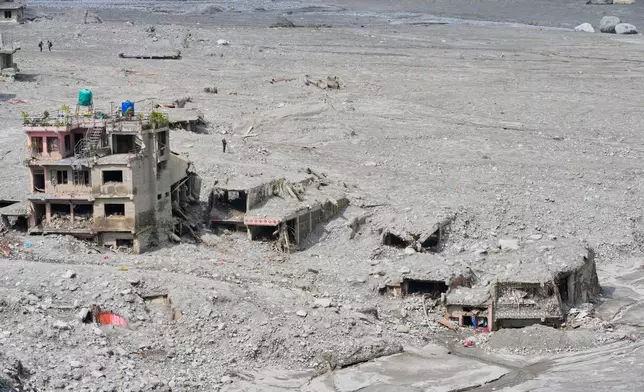
FILE - Houses damaged by recent flash floods stand amid thick layers of sludge, mud and debris in Nepal's Nuwakot district, Sept. 8, 2026. (AP Photo/Dar Yasin, File)
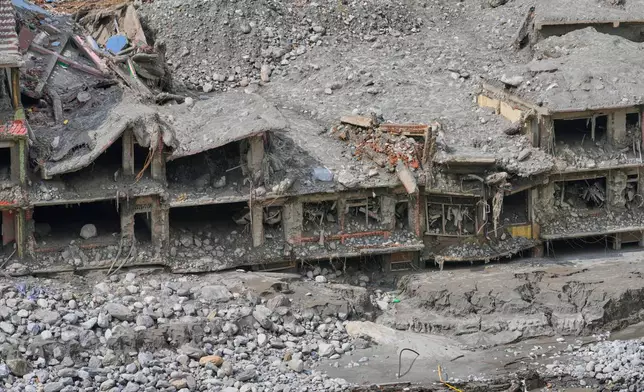
FILE - Houses damaged by recent flash floods stand amid thick layers of sludge, mud and debris in Nepal's Nuwakot district, Sept. 8, 2026. (AP Photo/Dar Yasin, File)
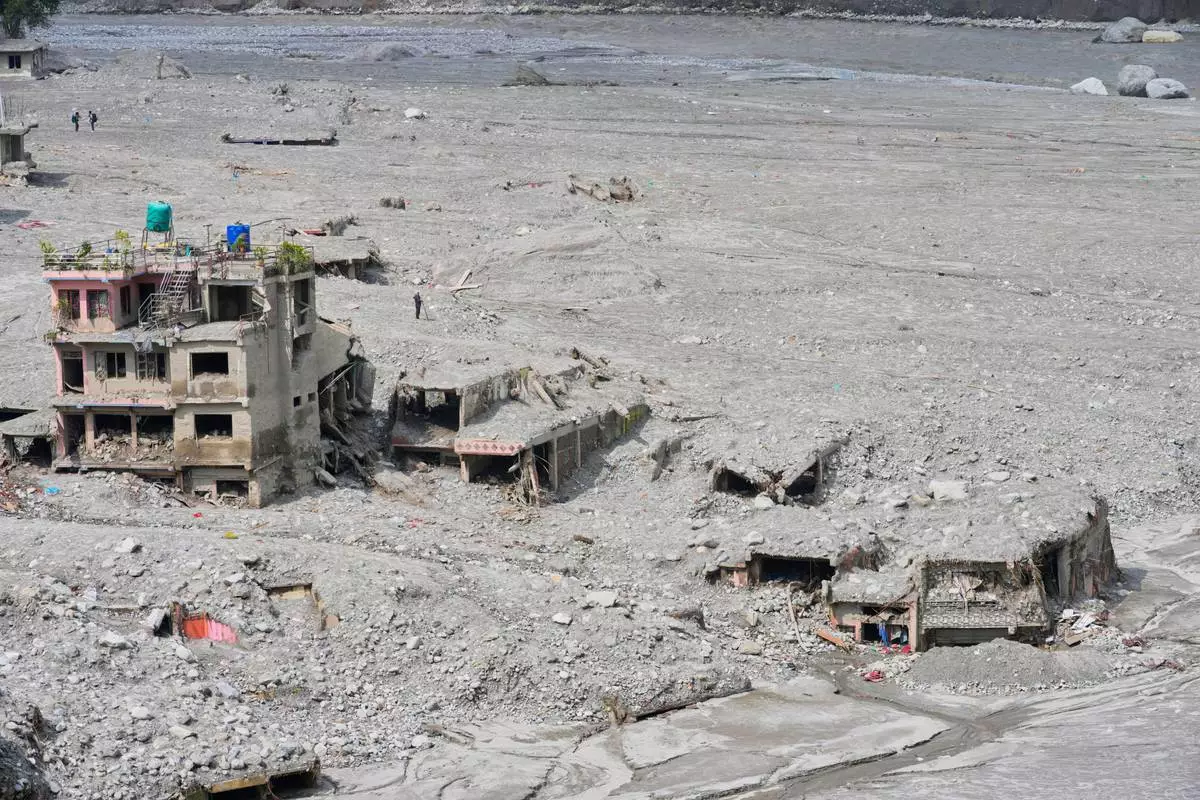
FILE - Houses destroyed by recent flash floods stand amid thick layers of sludge, mud and debris in Nepal's Nuwakot district, Sept. 8, 2026. (AP Photo/Dar Yasin, File)

FILE - Houses destroyed by recent flash floods stand amid thick layers of sludge, mud and debris in Nepal's Nuwakot district, Sept. 8, 2026. (AP Photo/Dar Yasin, File)

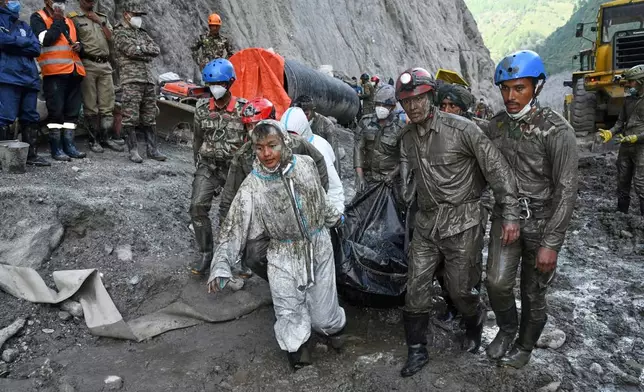
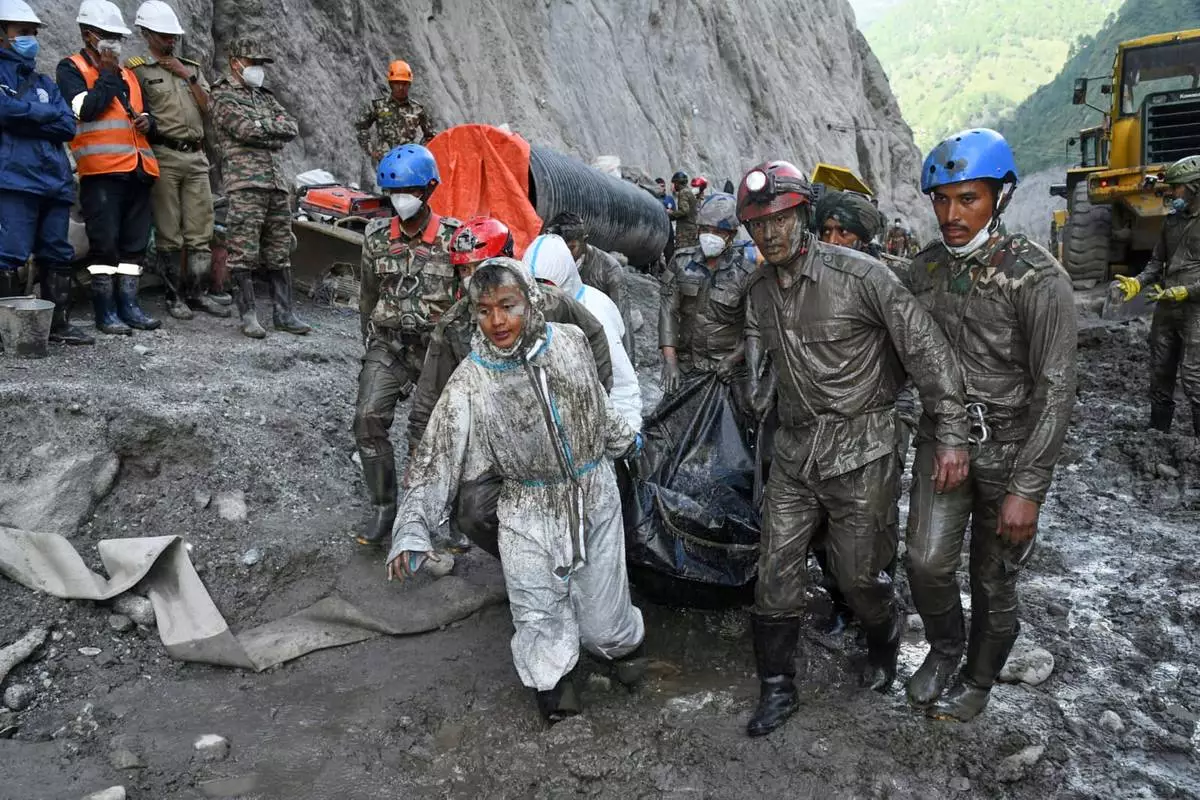
FILE- In this handout photograph provided by the Nepal Army, Nepalese soldiers carry the bodies of workers recovered during a search and rescue operation at the Chilime hydropower project following earlier flash floods in Nepal's Rasuwa district, Sept. 16, 2026. (Nepal Army via AP, File)

FILE- In this handout photograph provided by the Nepal Army, Nepalese soldiers carry the bodies of workers recovered during a search and rescue operation at the Chilime hydropower project following earlier flash floods in Nepal's Rasuwa district, Sept. 16, 2026. (Nepal Army via AP, File)

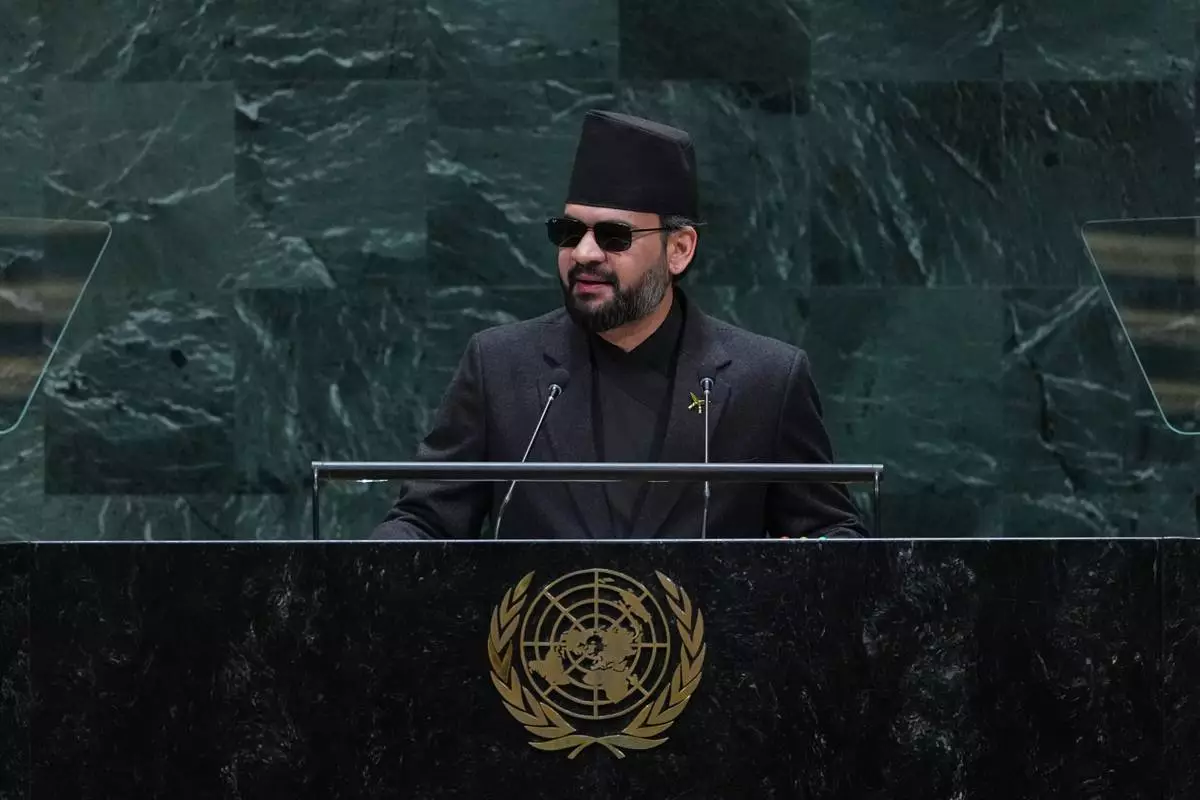
Nepal's Prime Minister Balendra Shah addresses the 81st session of the United Nations General Assembly at U.N. headquarters Thursday, Sept. 24, 2026. (AP Photo/Frank Franklin II)

Nepal's Prime Minister Balendra Shah addresses the 81st session of the United Nations General Assembly at U.N. headquarters Thursday, Sept. 24, 2026. (AP Photo/Frank Franklin II)

“That cry from the rooftop of the world was not heard enough,” Shah said. “We in Nepal heard it. Our communities heard it. Scientists around the world heard it. They repeated it with evidence. But we, the political leaders, have been negligent to translate those warnings in action at the speed and scale that the vulnerable people require.”

International scientists have connected melting permafrost from climate — caused by burning coal, oil and gas — to the instability of the glacier, which partly collapsed and triggered a massive flood that has killed at least 1,400 people with even more still missing.

Shah said that Nepal contributed less than one-tenth of 1% of the heat-trapping gases behind climate change. About 99% of Nepal's electricity comes from hydropower, and many workers were trapped in tunnels by the flooding.

“We did not create this crisis, yet we are paying a colossal price for it,” said Shah, 36, a former rapper and engineer who is the youngest head of government to address the General Assembly this year. “Our glaciers are retreating, our mountain slopes are becoming unstable, our rivers are becoming less predictable, and every major disaster threatens to erase years of development.”

In a black Dhaka topi, a traditional brimless Nepali hat, Shah spoke while wearing his signature dark sunglasses, which he uses for medical reasons. He said “the tragic consequences of a warming climate” tells the world that “climate change does not recognize borders. Glaciers and floods do not travel with stamps and passports.”

Subeksha Khadka, a humanitarian and former Miss Nepal International, in an online interview, praised Shah's speech and echoed the warning: "This time Nepal has been on the target, but it could be anyone. This is our story right now, and it can be anybody else’s tomorrow. So it’s time to act.”

Shah didn't ask for a specific amount in aid, but he called the international financial aid system inadequate and too bureaucratic. This included a loss and damage fund agreed upon a few years ago for poor nations hit by climate disasters not of their own making.

“Climate finance must not become another bureaucratic maze through which vulnerable countries spend years” maneuvering through when they need help. “When the house is burning, we do not ask a family to complete 50 forms. We act. This is what climate justice means.”

He exhorted the General Assembly to act on relief, rehabilitation, reconstruction — which are traditional international help concepts — but also “responsibility, reparation, resilience.” Reparation is a word and an issue that rankles industrial western nations like the United States, which is historically the world's biggest carbon emitter.

Over the past 75 years, the United States has spewed about 1,500 times more carbon into the air than Nepal has, according to the Global Carbon Project, a group of scientists that track greenhouse gas emissions by countries. Historical emissions matter because carbon dioxide stays in the atmosphere for more than a century trapping heat.

The U.S. this week announced $31 million in aid to Nepal for flood recovery, which bring America's total financial help up to $36 million. It's less than 1% of what they need.

“Preliminary assessments indicate that from recent disaster alone, Nepal has suffered loss of over $5 billion, nearly 15% of our GDP and a third of our annual budget," Shisir Khanal, Nepal's foreign minister, said Wednesday at the UN climate summit. "Thus for Nepal, this catastrophe is not merely a humanitarian emergency. It is a development emergency dismantling years of progress. It is a justice crisis exposing the inequities of global climate action and it is an existential crisis striking at the very survival of our communities and our future.”

“What happened in Nepal is not an isolated disaster but a preview of what awaits many vulnerable nations,” Khanal said.

Former United States Vice President Al Gore said in an interview that Nepal's disaster shows that the climate crisis “was getting worse much faster” than people can handle and foreshadows problems with melting glaciers that feed all of the great rivers of Asia, putting the water supply of 2 billion people at risk.

Delgado reported from New York. Associated Press writer Jennifer McDermott contributed to this report.

The Associated Press’ climate and environmental coverage receives financial support from multiple private foundations. AP is solely responsible for all content. Find AP’s standards for working with philanthropies, a list of supporters and funded coverage areas at AP.org.
FILE - Houses damaged by recent flash floods stand amid thick layers of sludge, mud and debris in Nepal's Nuwakot district, Sept. 8, 2026. (AP Photo/Dar Yasin, File)
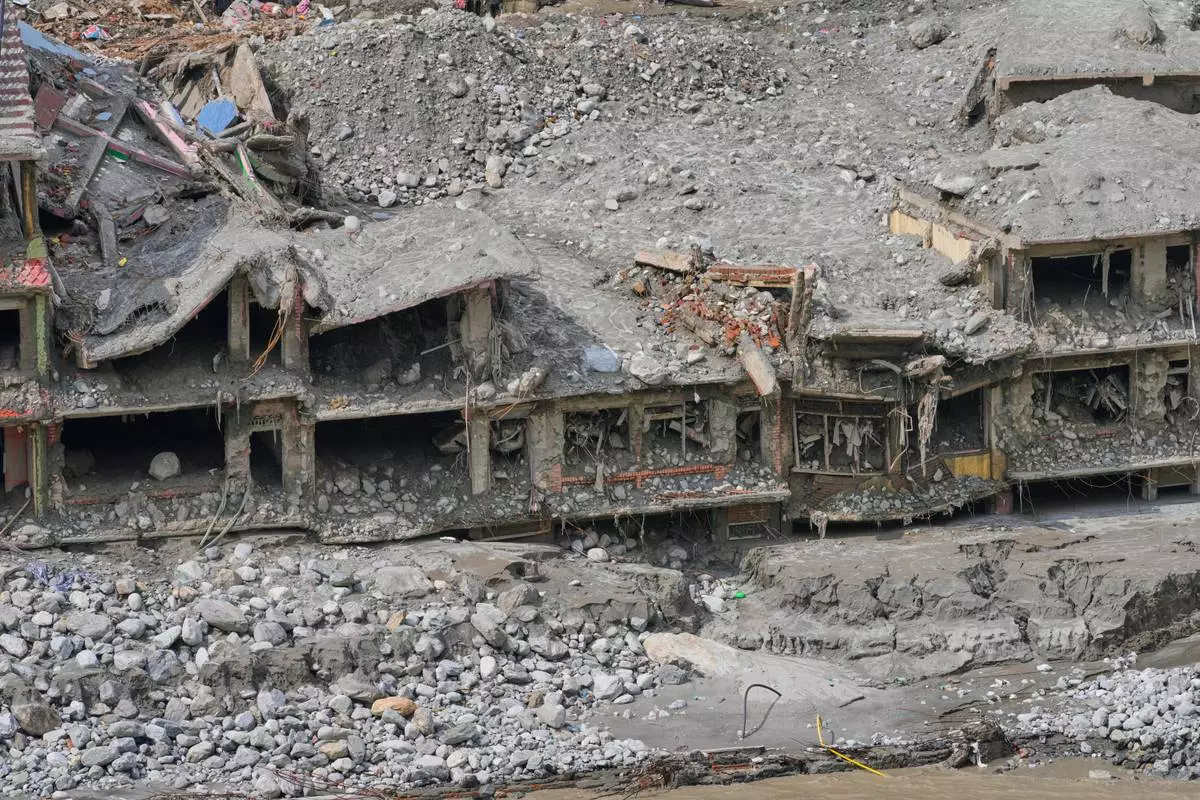
FILE - Houses damaged by recent flash floods stand amid thick layers of sludge, mud and debris in Nepal's Nuwakot district, Sept. 8, 2026. (AP Photo/Dar Yasin, File)
FILE - Houses destroyed by recent flash floods stand amid thick layers of sludge, mud and debris in Nepal's Nuwakot district, Sept. 8, 2026. (AP Photo/Dar Yasin, File)

FILE - Houses destroyed by recent flash floods stand amid thick layers of sludge, mud and debris in Nepal's Nuwakot district, Sept. 8, 2026. (AP Photo/Dar Yasin, File)

FILE- In this handout photograph provided by the Nepal Army, Nepalese soldiers carry the bodies of workers recovered during a search and rescue operation at the Chilime hydropower project following earlier flash floods in Nepal's Rasuwa district, Sept. 16, 2026. (Nepal Army via AP, File)
FILE- In this handout photograph provided by the Nepal Army, Nepalese soldiers carry the bodies of workers recovered during a search and rescue operation at the Chilime hydropower project following earlier flash floods in Nepal's Rasuwa district, Sept. 16, 2026. (Nepal Army via AP, File)

Nepal's Prime Minister Balendra Shah addresses the 81st session of the United Nations General Assembly at U.N. headquarters Thursday, Sept. 24, 2026. (AP Photo/Frank Franklin II)

Nepal's Prime Minister Balendra Shah addresses the 81st session of the United Nations General Assembly at U.N. headquarters Thursday, Sept. 24, 2026. (AP Photo/Frank Franklin II)
MEXICO CITY (AP) — Nolo became a hurricane in the Pacific Ocean on Thursday and was expected to strengthen while turning toward Hawaii’s Big Island, the National Hurricane Center said, as residents braced for potentially catastrophic flooding.

Forecasters warned that the Big Island could see rainfall totals of 15 to 20 inches (38-50 centimeters), with higher amounts possible through Saturday. The island of Maui also could be hit with life-threatening floods, the hurricane center said.

Some areas of Hawaii will likely start experiencing hurricane conditions by Friday night, the center said.

THIS IS A BREAKING NEWS UPDATE. AP’s earlier story follows below.

MEXICO CITY (AP) — Residents along Mexico’s west coast stacked sandbags to fortify beachfront shops and evacuated their homes, while Hawaii’s Big Island and Maui braced for potentially catastrophic flooding, as two separate storms swirled in the Pacific on Thursday.

Heavy rains from powerful Hurricane Polo could cause life-threatening flooding and landslides in Mexico, according to the U.S. National Hurricane Center. In places like the port city of Lazaro Cardenas, seawater swept through homes Thursday and left wooden planks and furniture strewn on the streets.

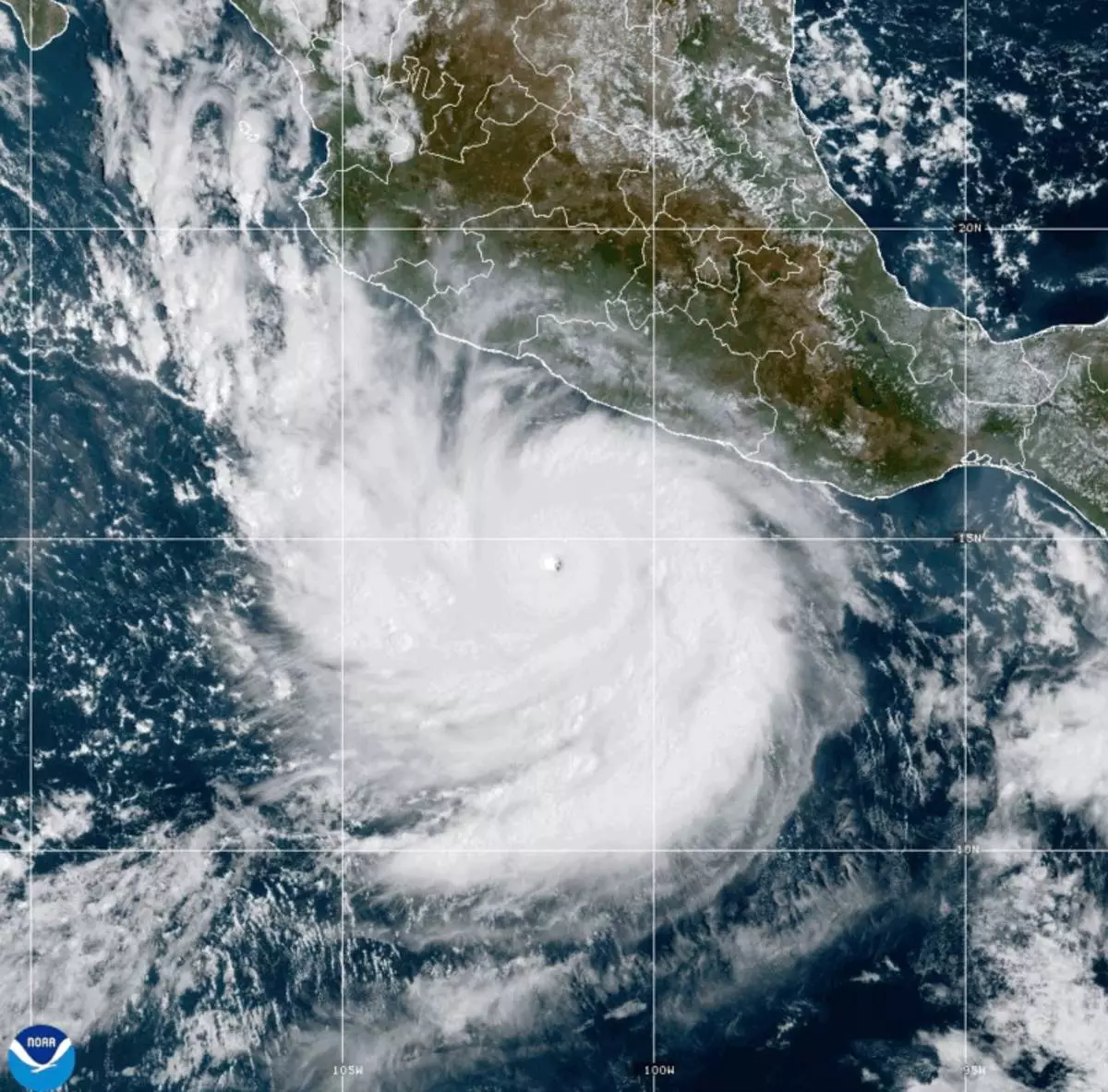
Polo has gone back and forth between Category 4 and 5, both major-hurricane strength. The strongest winds were expected to remain offshore as the storm’s center skirts the coast before moving out to sea. But Polo was forecast to hook back toward Mexico’s coast farther north on Saturday.

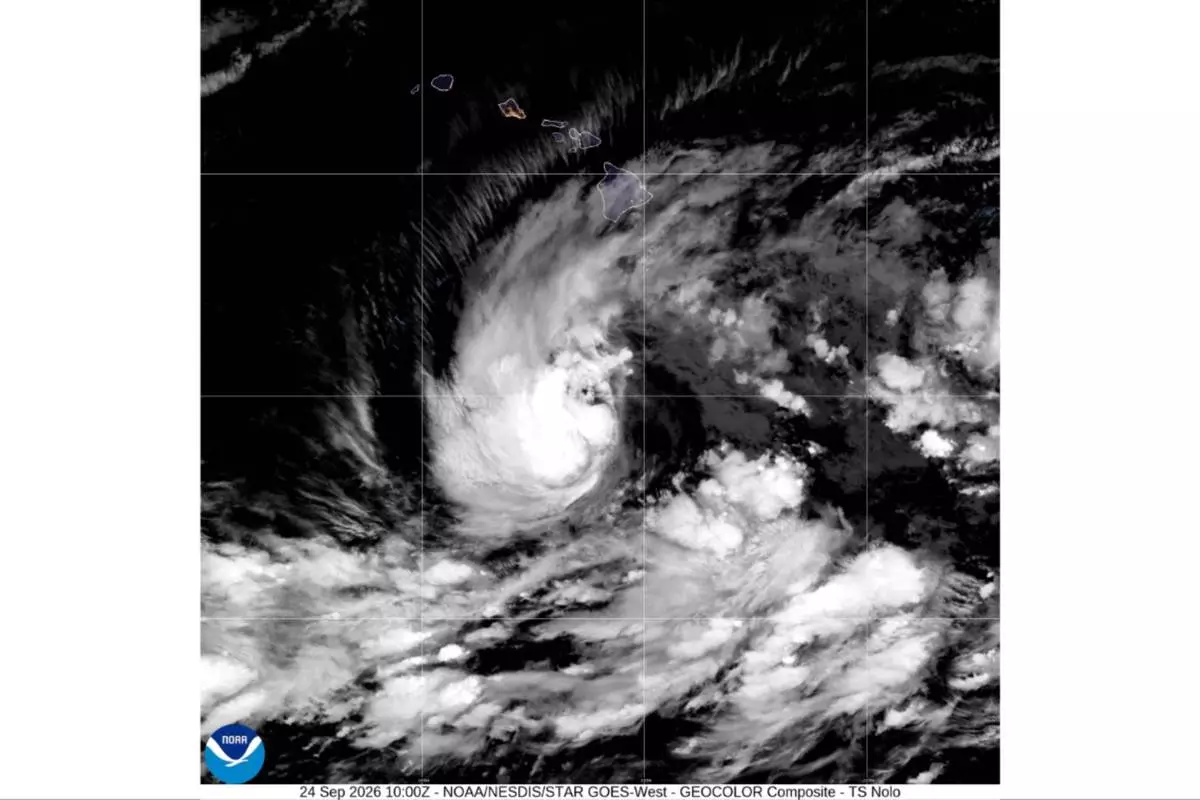
Far off the southern tip of Hawaii’s Big Island, Tropical Storm Nolo was gathering strength, and forecasters expect it to become a hurricane soon. Hawaii is likely to see heavy rains starting late Thursday and winds reaching hurricane levels by early Saturday. Nolo could dump more than 2 feet (60 centimeters) of rain across islands still recovering from a string of storms.

The series of powerful storms comes as the weather phenomenon El Niño prompts major environmental shifts across the world, fueling drought in some areas and flooding in others. El Niño traditionally dampens the Atlantic hurricane season, while it tends to rev up tropical cyclone activity in the Pacific with moist air and little wind shear.

Hawaii has been battered this year by major flooding in the spring, an earthquake and two other hurricanes since mid-August.

“In my 20 years of experience here, I’ve never seen three hurricane watches for the islands in the same year,” said John Bravender of the National Weather Service in Honolulu.

Mexican authorities were opening shelters and clearing people from beaches, while coastal residents tried to protect businesses from getting swept away. People in high-risk areas were being evacuated, though authorities didn’t immediately say how many.

Much of the worry from locals comes from hurricanes in past years that devastated cities along the Pacific coast. Hurricane Otis in 2023 unexpectedly plunged Acapulco into turmoil for weeks.

“So many people said it wouldn’t happen and then it did. After that, you’re left on edge,” said Gonzalo Ramírez, a bartender in the city.

Polo posed the biggest threat to Guerrero and Michoacán, neighboring states in southwest Mexico that share a long coastline scattered with small ports, tourist towns and fishing villages. Much of the area is marked by poverty, and residents routinely complain they are left to fend for themselves during natural disasters.

Mexican authorities have deployed 15,000 security personnel across the coast and suspended schools.

In Lázaro Cárdenas, a port city in Michoacán that was hit with high surf, locals and government officials were clearing out piles of wooden planks from a number of destroyed ramadas and shoveling thick mud coating much of the town.

Alicia Contreras said the walls and roof of her restaurant had been severely damaged by 15-foot (4.5-meter) waves. As officers and family helped pick through the damaged house, Contreras worried how she would economically recover.

“This is huge because we have no other source of income. Now we’re just surviving,” Contreras said.

Forecasters said Tropical Storm Nolo might grow into a major hurricane and could drop 20 inches (50 centimeters) of rain on the Big Island, with even higher amounts possible through Saturday.

The island of Maui could also be hit with life-threatening floods and mudslides, the hurricane center said.

While the Big Island is expected to bear the brunt of the storm, its full path remains uncertain, according to Bravender, the weather service's warning coordination meteorologist in Hawaii.

Most concerning, he said Thursday, is that the heaviest rain is likely to fall over the same southeastern region of the Big Island hit in August by Hurricane Lala and where grounds are still wet from additional precipitation.

“There are several communities that were isolated, flooded, roads that were washed out,” he said. “It’s that same area that is most under threat,” Bravender said.

Hawaii officials told residents to put together emergency kits and the governor issued an emergency proclamation, activating more than 230 Hawaii National Guard members. Schools were closed for the rest of the week.

Hawaiian Electric, the state’s primary utility, said crews that had been helping restore power in Kauai after this month’s Hurricane Lowell would return to Oahu, Maui and the Big Island in preparation for the coming storm.

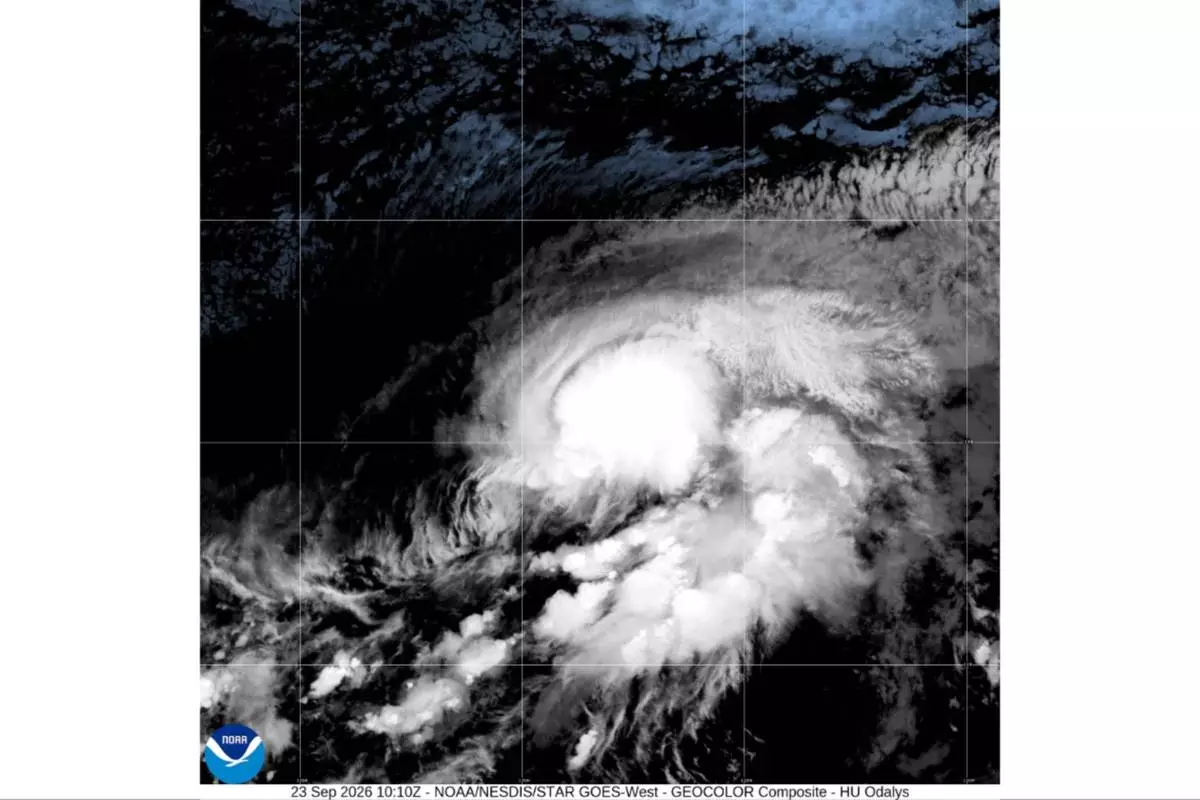
A third storm in the Pacific, Hurricane Odalys, was centered far from land roughly 1,110 miles (1,785 kilometers) west-southwest of the southern tip of Mexico’s Baja California peninsula.

In the northern Atlantic Ocean, Tropical Storm Fay re-formed early Thursday, the U.S. hurricane center said. It was nearly 1,000 miles (1,600 kilometers) west-southwest of the Azores.

Aoun Angueira reported from San Diego. Associated Press journalists John Seewer in Toledo, Ohio, Hannah Schoenbaum in Salt Lake City and Jeriel Vargas Ambriz in Lázaro Cárdena, Mexico, contributed.

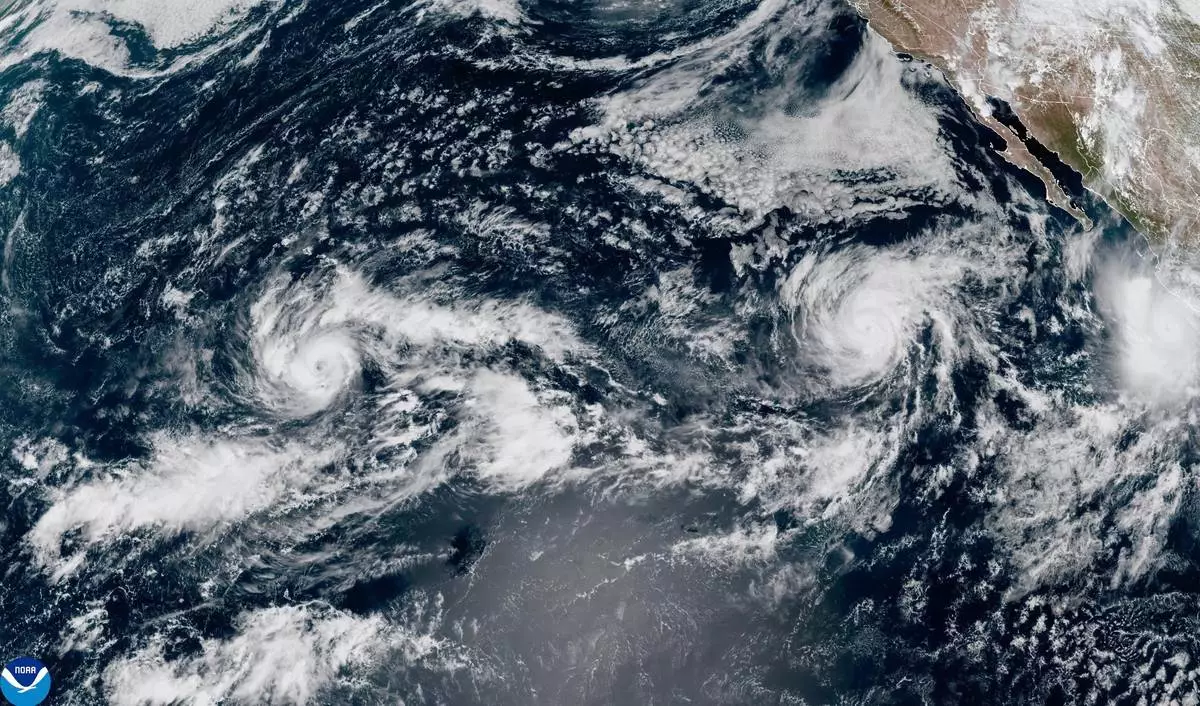
This satellite image provided by NOAA shows Tropical Storm Nolo, left, south of Hawaii; Hurricane Odalys, middle, and Hurricane Polo, right, off the coast of Mexico, in the Pacific Ocean on Thursday, Sept. 24, 2026. (NOAA via AP)

This satellite image provided by NOAA shows Tropical Storm Nolo, left, south of Hawaii; Hurricane Odalys, middle, and Hurricane Polo, right, off the coast of Mexico, in the Pacific Ocean on Thursday, Sept. 24, 2026. (NOAA via AP)

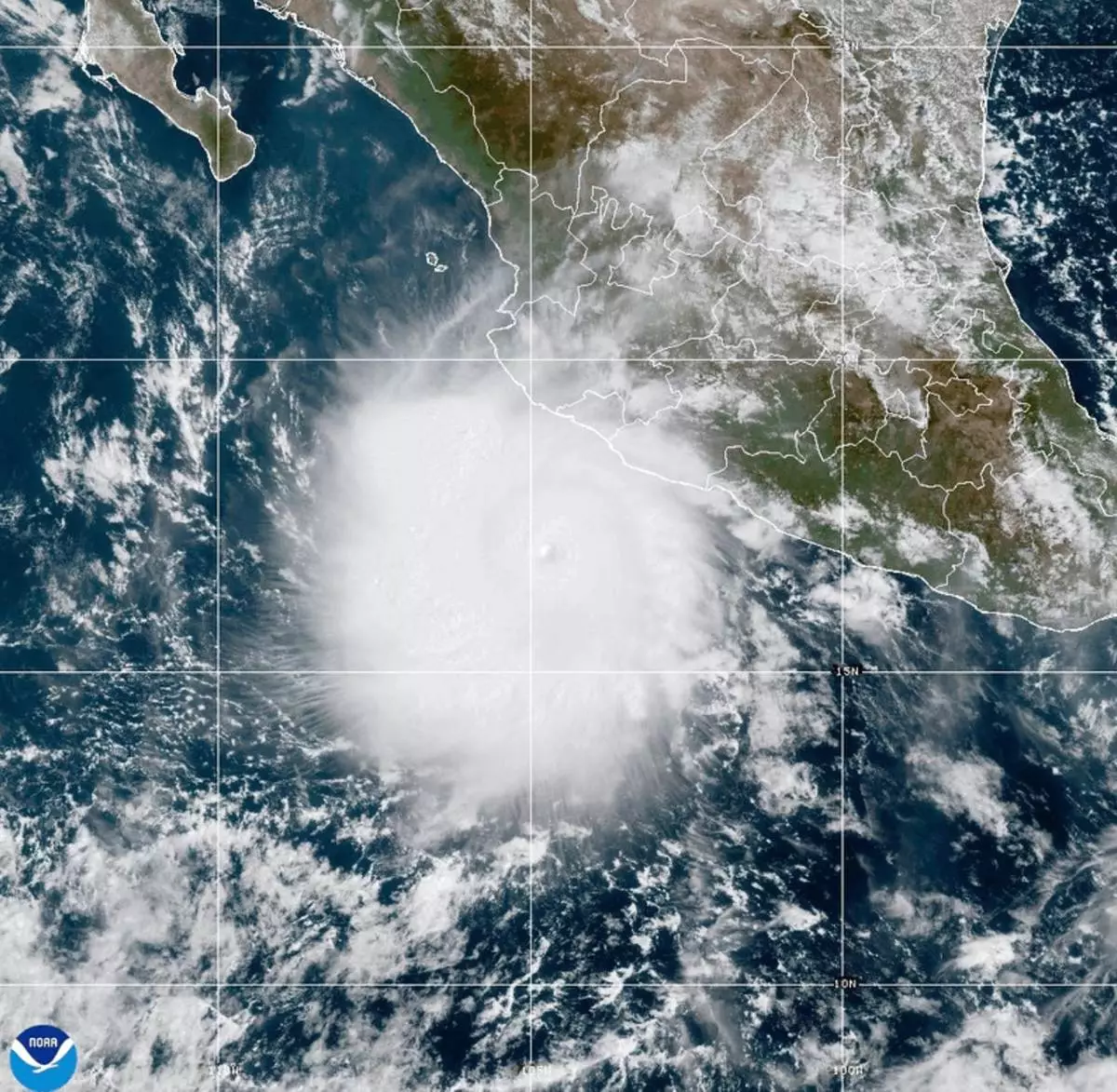
This photo provided by NOAA shows Hurricane Polo moving away from the southwestern coast of Mexico on Thursday, Sept. 24, 2026. (NOAA via AP)

This photo provided by NOAA shows Hurricane Polo moving away from the southwestern coast of Mexico on Thursday, Sept. 24, 2026. (NOAA via AP)

This satellite image from the National Oceanic and Atmospheric Administration shows Tropical Storm Nolo in the Pacific Ocean, Thursday, Sept. 24, 2026. (NOAA via AP)

This satellite image from the National Oceanic and Atmospheric Administration shows Tropical Storm Nolo in the Pacific Ocean, Thursday, Sept. 24, 2026. (NOAA via AP)

This satellite image from the National Oceanic and Atmospheric Administration shows Hurricane Odalys in the Pacific Ocean, Wednesday, Sept. 23, 2026. (NOAA via AP)

This satellite image from the National Oceanic and Atmospheric Administration shows Hurricane Odalys in the Pacific Ocean, Wednesday, Sept. 23, 2026. (NOAA via AP)

This photo provided by NOAA shows Hurricane Polo strengthening in the Pacific Ocean off the coast of Mexico on Tuesday, Sept. 22, 2026. (NOAA via AP)

This photo provided by NOAA shows Hurricane Polo strengthening in the Pacific Ocean off the coast of Mexico on Tuesday, Sept. 22, 2026. (NOAA via AP)

Recommended Articles