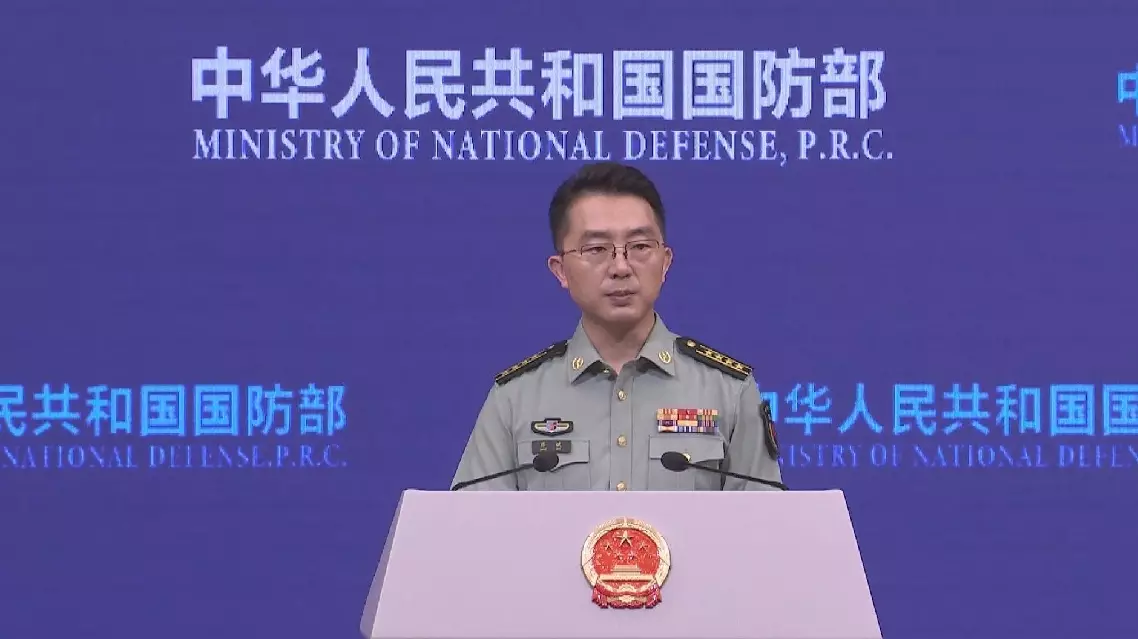
China urged Japan to stop sowing discord, creating trouble in the South China Sea and jeopardizing peace and stability in the region, said Jiang Bin, spokesnan for China's Ministry of National Defense, at a press conference in Beijing on Thursday.
In the wake of an incident provoked by a Philippine vessel near Xianbin Jiao of China's Nansha Qundao, the Japanese Embassy in the Philippines quickly posted on social media that it's "gravely concerned" over the so-called "dangerous actions" by China, and portrayed itself as "upholding the rule of law and opposing any actions which increase tensions".
In response, Jiang emphasized that the Chinese side firmly opposes the Jananese behavior.
"As a country outside of the South China Sea, Japan distorts facts and confuses right and wrong by siding with the Philippines. Its underlying aim is to stir up trouble in the South China Sea for selfish gains, to which we are firmly opposed. For some time, Japan has kept strengthening its collusion with the Philippines. It has exported arms and equipment to the Philippines, sent troops there for joint military drills, during which it launched offensive missiles on foreign soil for the first time," said Jiang.
"The Japanese side is attempting to break away from the post-war international order and revive its doomed dream of military expansion. This is a real threat to regional peace and stability. We urge Japan first to offer a clear explanation of its accelerating 'remilitarization' efforts, and stop sowing discord and undermining peace and stability in the South China Sea," he added.
China urges Japan to stop sowing discord in South China Sea
People from different walks of life in the United States have stressed the global significance of Chinese President Xi Jinping's visit, expressing hopes that the visit will strengthen bilateral cooperation across various sectors.
Xi arrived in the United States on Wednesday to begin a three-day state visit at the invitation of U.S. President Donald Trump. It comes after Trump paid a state visit to China in May, which marked the first by a U.S. president in nearly nine years.
"I think these have been unique spectacles and these are historical moments which will reverberate, I mean years and decades later where the two are partners, not rivals and should see that relationship in that context and whether the two sides should coexist with each other," said Sourabh Gupta, a senior fellow at the Institute for China-America Studies.
"You know, these are the two largest and most important countries in the world, geopolitically, economically, so virtually anything these two countries do with each other, it's going to have an impact on the people," said Dan McClory, a U.S. international investor.
Many Americans also noted that Xi's visit will create more opportunities to foster people-to-people exchanges between the two countries and further enhance mutual trust.
"What we need is a really firm base of understanding and that's what person-to-person kinds of relationships happen, that's what they bring. And I believe that they also promote trade, to be honest," said Michael Dembrow, former Senate member of Oregon.
"The announcement that President Xi made of inviting 100,000 youngsters to China, I think is a very welcome one. I would like to see also that the U.S. be a little bit more welcoming in terms of Chinese scholars, academics and students. The hope is that as U.S.-China relations ease and settle into a more coexistent framework that it will also encourage people to go across and see each other first hand and that would be, as I said, the most important stabilizing ballast in the relationship," said Gupta.
Xi said 100,000 young Americans will be invited to visit China for exchanges and study over the next five years on Thursday morning while attending a welcome ceremony held by Trump at the White House.
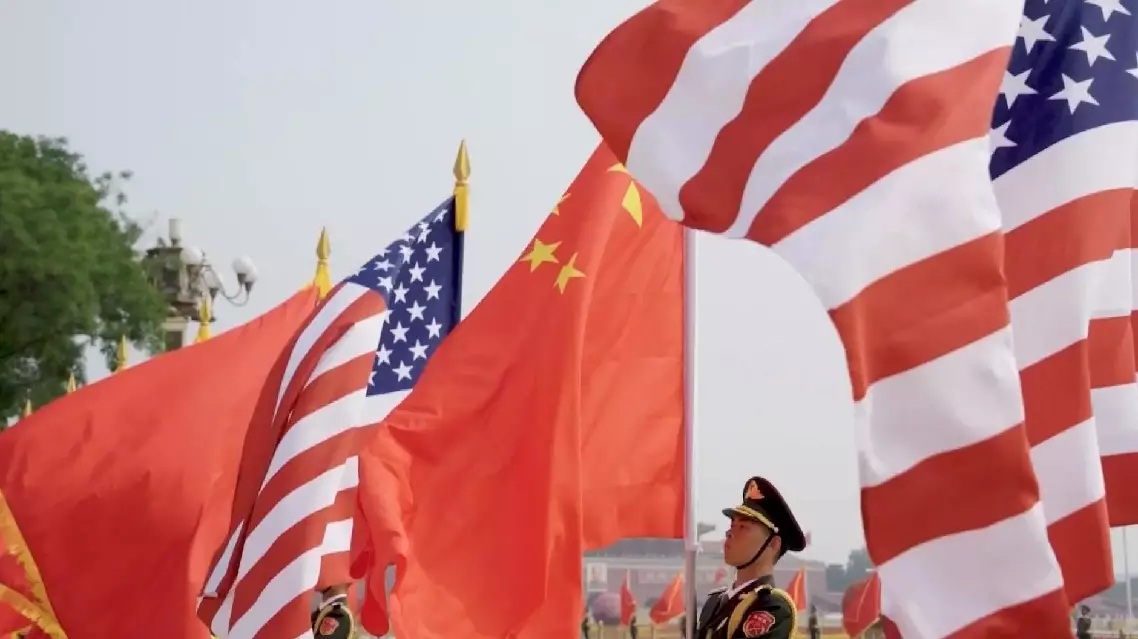
US experts, officials hail significance of Xi's visit, call for closer cooperation