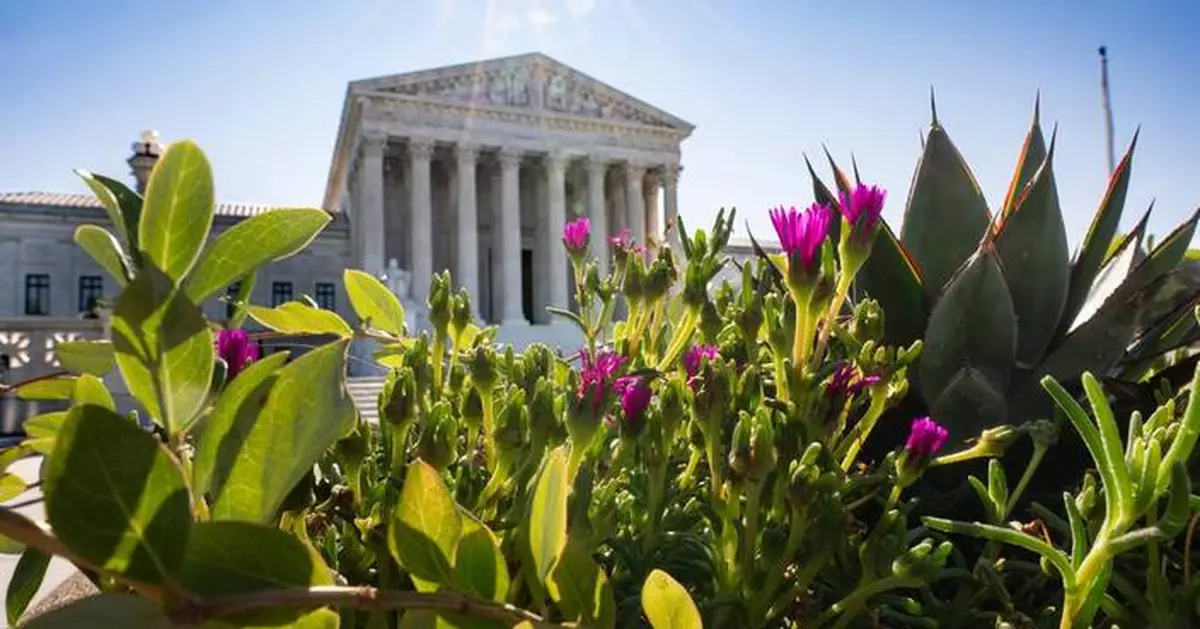
NEW YORK (AP) — The Supreme Court on Friday lifted restrictions on a controversial federal voter database before November’s elections, granting President Donald Trump a temporary win in his aggressive campaign against noncitizen voting.
The court's three liberal-leaning justices publicly dissented from the decision.
The emergency order allows states, for now, to use the Department of Homeland Security program, called Systematic Alien Verification for Entitlements, or SAVE, in their efforts to verify the eligibility of voters on their rolls.
States' use of the SAVE program is voluntary. The immediate impact on the upcoming midterms is likely limited because existing law blocks most states from systematically purging voters from their rolls within 90 days of an election, said David Becker, an election law expert who leads the Center for Election Innovation and Research.
He said since the program is voluntary and DHS itself has admitted the data is not perfect, “states may find this to be a useful tool used along with other tools to keep their lists up-to-date.”
The court’s order puts on hold a federal judge’s June ruling that had deemed the Republican administration’s recently revamped version of SAVE illegal. U.S. District Court Judge Sparkle L. Sooknanan had blocked the use of the tool, saying it violated Americans’ privacy rights and could result in voters being wrongly removed from the rolls.
A federal appeals court let her order stand.
But the Supreme Court majority found that a 1996 law explicitly allows DHS to get information about citizenship and immigration from other federal agencies. The federal government also has “an obligation to respond” to states seeking to verify citizenship.
“The order below prevents the Federal Government from using the program it believes is best suited to the task,” the majority wrote in the unsigned order.
Justice Ketanji Brown Jackson dissented, joined by Justices Elena Kagan and Sonia Sotomayor. The database has long been seen to fall under federal privacy laws, she wrote, and there are real risks that legitimate voter registrations could be mistakenly revoked.
“The harm caused by burdening or disenfranchising even a few lawful voters outweighs the nonexistent harm that the Government experiences when it is prevented from taking an action that it likely lacks the authority to take,” Jackson wrote.
The plaintiffs and counsel team in the case called the ruling “profoundly disappointing” and said it puts “millions of Americans at risk of being unlawfully targeted by the administration’s unreliable voter purge database” before the midterms.
“However, this case is not over,” their statement read. “The D.C. district court ruled that the expanded SAVE program violated multiple laws. We will be doing everything in our power to protect Americans’ voting and privacy rights by ensuring that the district court decision stands.”
The White House did not immediately respond to a message seeking comment.
The SAVE program was created under an immigration law mandating that DHS help federal, state and local agencies prevent government benefits from going to noncitizens. The Trump administration last year moved to significantly expand its search abilities. Since then, at least 67 million registrations have been scanned through the program, but critics worry it could end up purging valid voters from the rolls.
Some registrants have already been wrongly flagged. In Travis County, Texas, for example, officials said they investigated 97 voters flagged by SAVE as apparent noncitizens and found that at least 10% of them — and likely up to 21% — were U.S. citizens. The county urged the Supreme Court to reject the administration’s appeal, while the state of Texas submitted its own brief defending the database.
Even though the use of the SAVE program has been blocked for months, the administration said in court filings that DHS officials have continued using Social Security Administration data "in certain cases to verify information and help determine whether illegal voting may have occurred."
DHS in August launched its own investigation to find noncitizen voters on state rolls, according to a federal whistleblower statement that said the effort is rushed, filled with errors and potentially violates state laws. DHS has defended that investigation as being conducted “diligently and professionally.”
The effort to create a national voter list is among numerous steps Trump has taken during his second term to try to overhaul the way elections are run. Most of those steps have been blocked by various courts, in part because the Constitution gives states and Congress the authority to set election rules, but provides no such power to the president. In mid-September, the Supreme Court rejected a bid from Trump to restrict mail ballot procedures before the midterms.
Research shows that noncitizen voting, which is already illegal and punishable as a potential felony that could lead to deportation, is exceptionally rare. But Trump has remained fixated on the idea that massive numbers of noncitizens are voting in U.S. races.
Associated Press writers Lindsay Whitehurst in Washington and John Hanna in Topeka, Kansas contributed to this report.
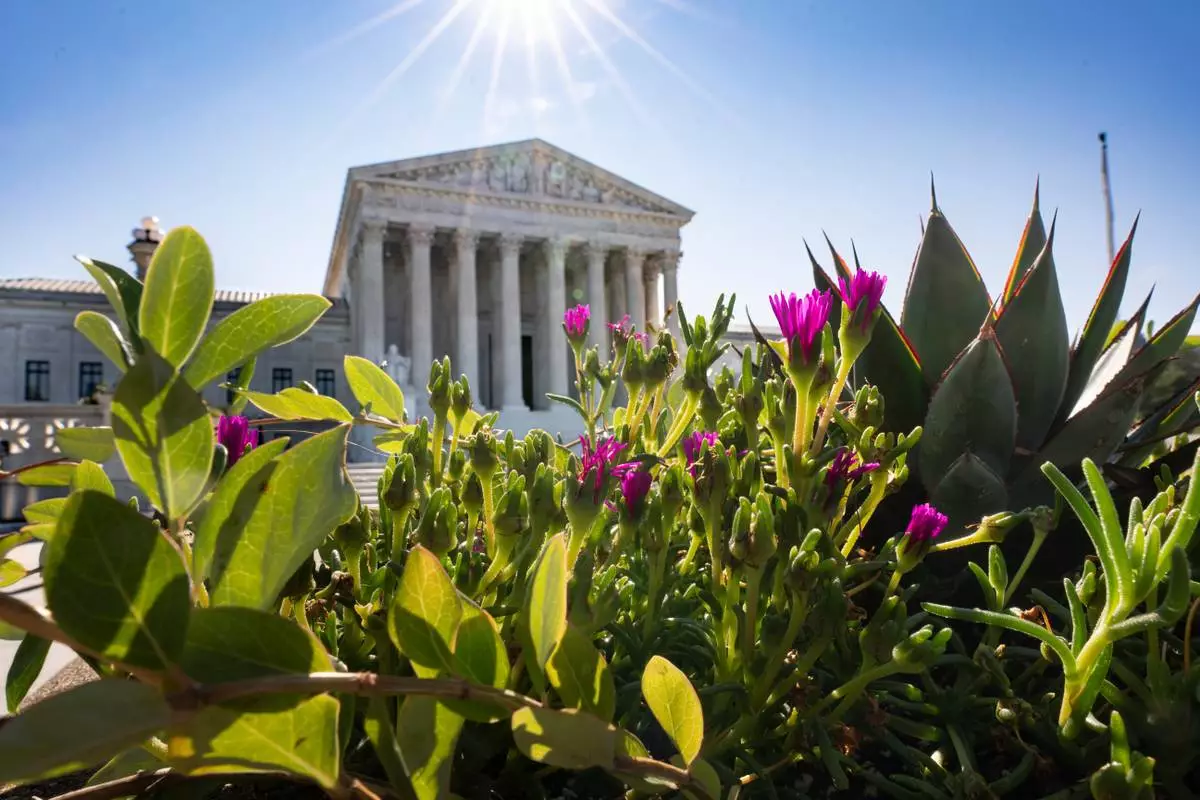
FILE - The Supreme Court is seen on Capitol Hill in Washington, Aug. 25, 2026. (AP Photo/J. Scott Applewhite, file)
KAILUA-KONA, Hawaii (AP) — Residents on Hawaii's Big Island were bracing Friday for potentially life-threatening and catastrophic flooding from Hurricane Nolo, while Mexico was still under the threat of Hurricane Polo as it headed toward the Baja Peninsula after bringing storm conditions to the southwestern coast.
Nolo was about 210 miles (338 kilometers) south of the Big Island on Friday morning and headed northeast, with tropical storm conditions expected to begin on land in the evening, the U.S. National Hurricane Center said.
Forecasters warned eastern and southern areas of the island could see rainfall totals of 10 to 15 inches (25 to 38 centimeters), with a maximum of 25 inches (64 centimeters). That was down from an earlier forecast of 15 to 30 inches (38 to 76 centimeters), with a maximum of 35 inches (89 centimeters). Peak winds on land were expected to hit up to 40 mph (64 kph), with gusts of up to 50 mph (80 kph).
Nolo was expected to strengthen to a major hurricane on Saturday.
“This rainfall could produce catastrophic life-threatening flooding and mudslides, especially in areas of steep terrain," the hurricane center said.
While Nolo was not forecast to directly hit the islands, heavy rainfall also was possible on Hawaii's other islands, the hurricane center said. Maui also could see heavy rainfall and potential life-threatening flooding and mudslides, forecasters said.
The hurricane's maximum sustained winds were 85 mph (137 kph) on Friday morning and expected to increase into the weekend.
Hawaii officials told residents to put together emergency kits and the governor issued an emergency proclamation, activating more than 230 Hawaii National Guard members. Schools were closed for the rest of the week.
The heaviest rain from Nolo is likely to fall over the same southeastern region of the Big Island that was hit in August by Hurricane Lala and where grounds are still wet from additional precipitation.
Hawaiian Electric, the state’s primary utility, said crews that had been helping restore power in Kauai after this month’s Hurricane Lowell would return to Oahu, Maui and the Big Island in preparation for the coming storm.
Residents and tourists on the Big Island were busy preparing.
“I guess that’d be my concern — whether we’re getting out of here or not, but, you know, as far as the weather goes, it is what it is," said Daniel Compton, who was visiting from Seattle.
Hawaii Gov. Josh Green requested an emergency disaster declaration for four Hawaii counties on Wednesday. The request is still pending approval from President Donald Trump. Approval would unlock federal dollars and support for immediate needs like emergency services and debris removal.
The hurricane center said Polo gained significant force overnight into Friday morning, when maximum sustained winds were estimated at 290 kph (180 mph). It remained well off the western Mexico coast heading westward, but is expected to turn to the north and reach the Baja California Peninsula late Sunday into Monday, the center said.
No major damage or flooding was reported along the coast overnight into Friday, although some towns in Colima and Michoacán were affected by tides.
Residents stacked sandbags to fortify beachfront shops and evacuated their homes in some coastal areas on Thursday. Mexican authorities were opening shelters and clearing people from beaches, and 15,000 security personnel were deployed across the coast. Schools were closed.
In the port city of Lázaro Cárdenas in Michoacán, seawater had already swept through homes Thursday and left wooden planks and furniture strewn on the streets. Locals and government officials were clearing out piles of wooden planks from a number of destroyed ramadas and shoveling thick mud coating much of the town.
Alicia Contreras said the walls and roof of her restaurant had been severely damaged by 15-foot (4.5-meter) waves. As officers and family helped pick through the damaged house, Contreras worried how she would recover economically.
“This is huge because we have no other source of income. Now we’re just surviving,” Contreras said.
El Niño is prompting major environmental shifts across the world, fueling drought in some areas and flooding in others. It traditionally dampens the Atlantic hurricane season, while it tends to rev up tropical cyclone activity in the Pacific with moist air and little wind shear.
A third storm in the Pacific, Hurricane Odalys, was at Category 4 status and was still far from land, roughly 955 miles (1,537 kilometers) west-southwest of the southern tip of the Baja California peninsula. It carried maximum sustained winds of 130 mph (215 kph) and was moving north. It could intensify by Friday night.
Two other powerful storms were churning in the Atlantic Ocean, but were not near land.
In the northern Atlantic, Tropical Storm Fay re-formed early Thursday. As of Friday, it was about 1,040 miles (1,674 kilometers) west-southwest of the Azores, the hurricane center said.
Off Africa's western coast, Tropical Storm Gonzalo strengthened early Friday as it approached the Cabo Verde Islands with maximum sustained winds of 50 mph (85 kph). The center was expected to pass near or over portions of the islands later Friday and gradually weaken over the weekend.
Associated Press writers Dave Collins in Hartford, Connecticut; Gabriela Aoun Angueira in San Diego; and Kathy McCormack in Concord, New Hampshire, contributed to this report.
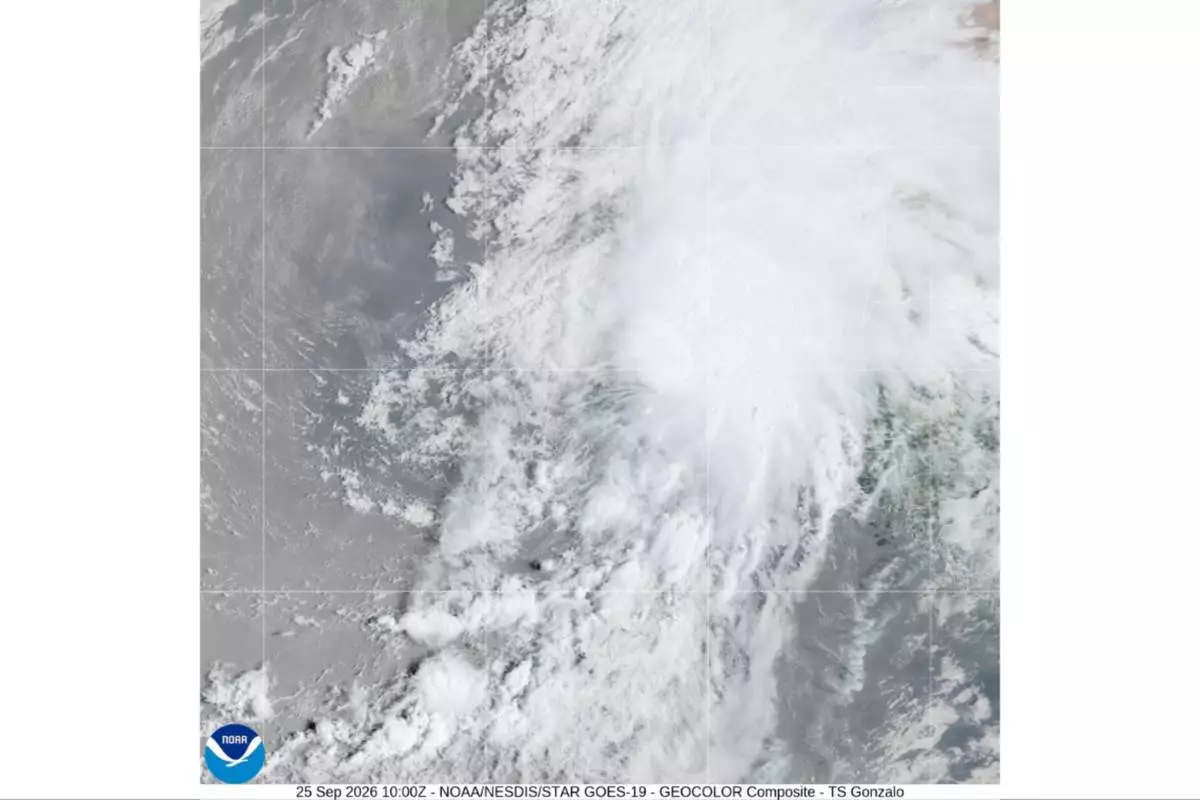
This satellite image from the National Oceanic and Atmospheric Administration shows Tropical Storm Gonzalo in the Atlantic Ocean, Friday, Sept. 25, 2026. (NOAA via AP)
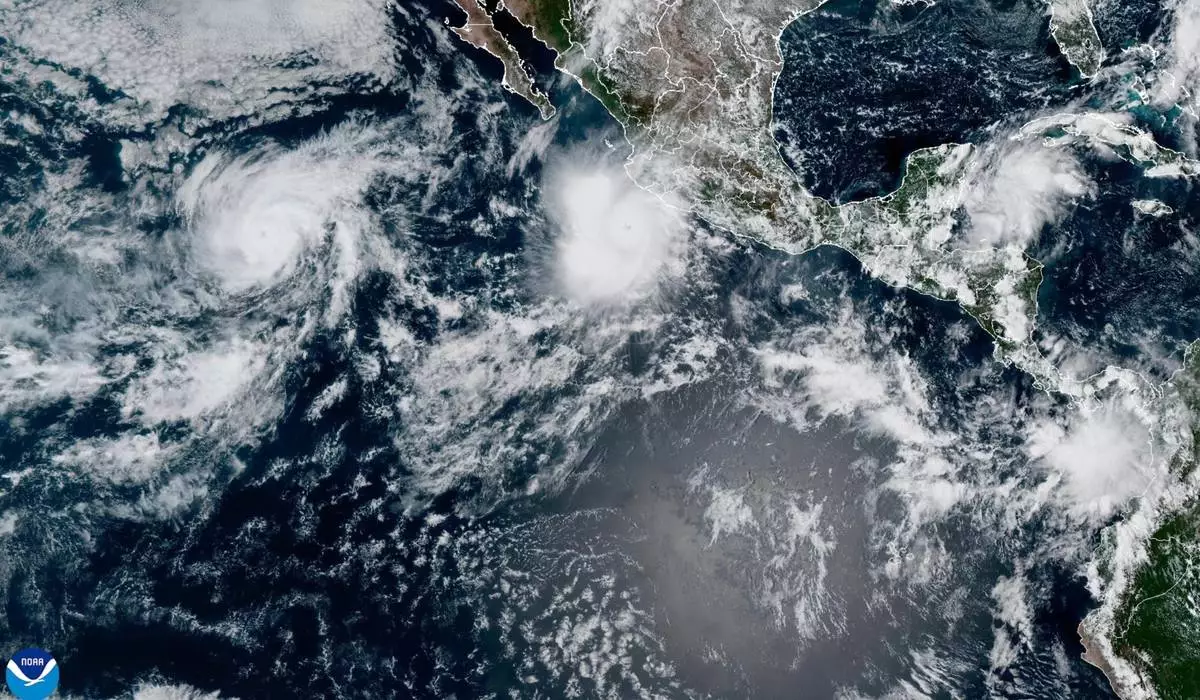
This satellite image provided by NOAA shows Hurricane Polo off the southwestern coast of Mexico and Hurricane Odalys, left, on Thursday, Sept. 24, 2026. (NOAA via AP) CORRECTION: Changes to Hurricane Odalys, not Tropical Storm Nolo.
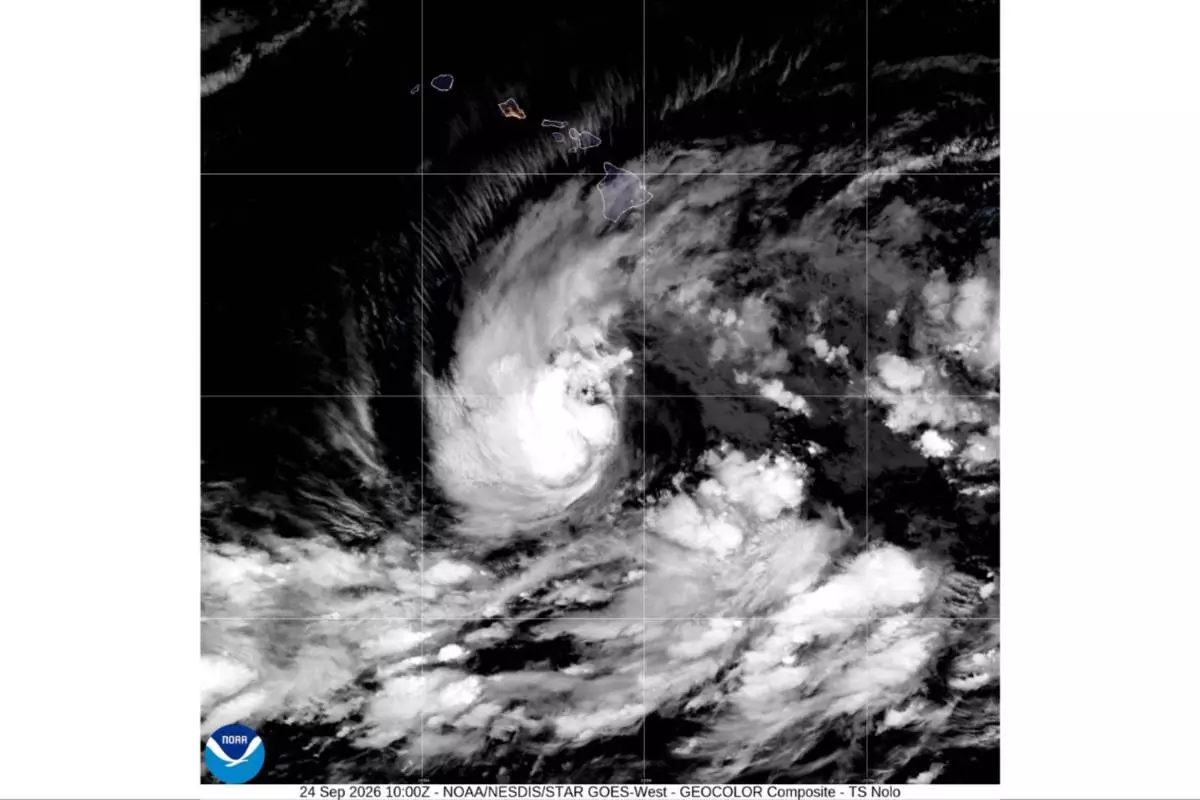
This satellite image from the National Oceanic and Atmospheric Administration shows Tropical Storm Nolo in the Pacific Ocean, Thursday, Sept. 24, 2026. (NOAA via AP)
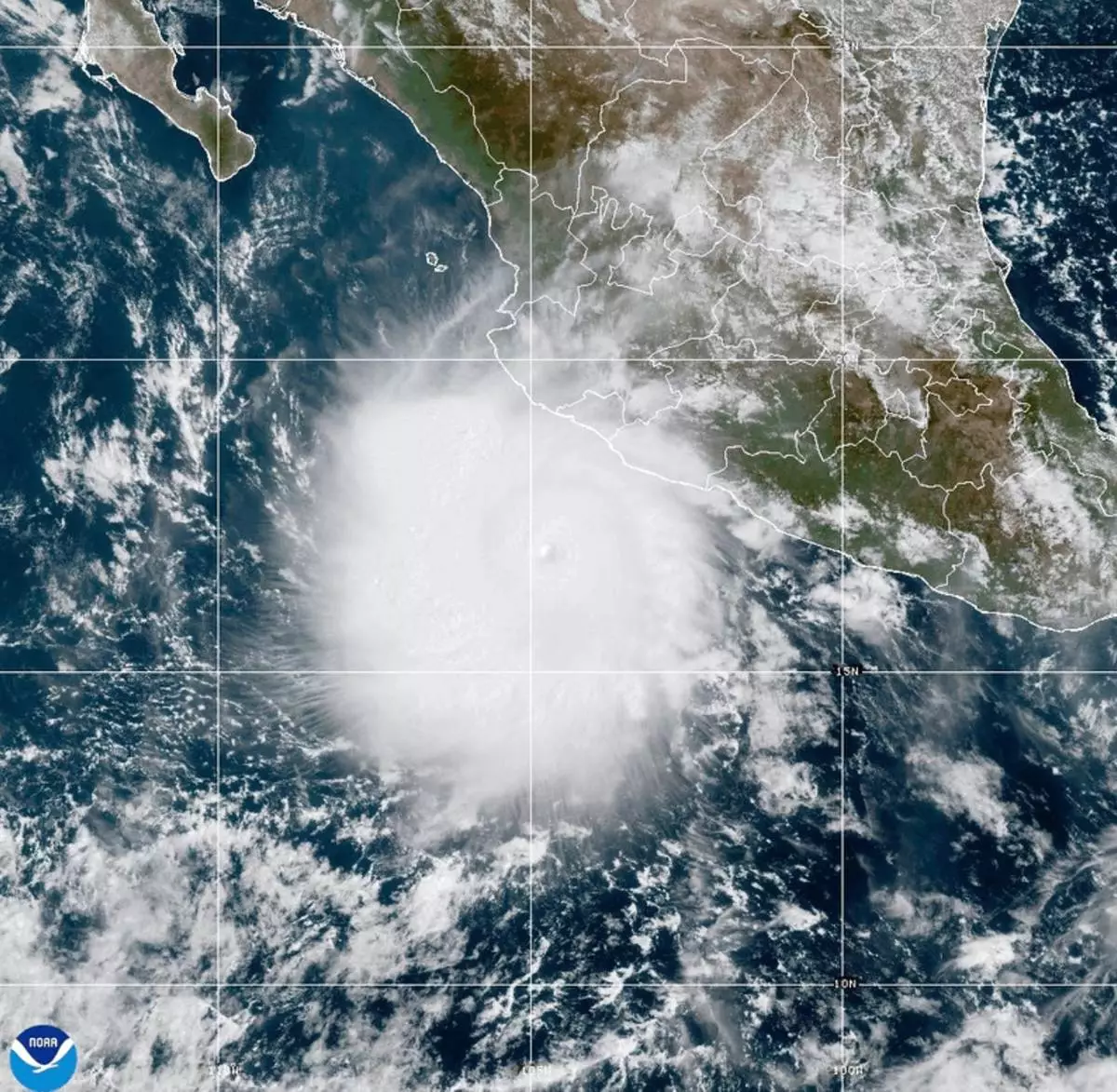
This photo provided by NOAA shows Hurricane Polo moving away from the southwestern coast of Mexico on Thursday, Sept. 24, 2026. (NOAA via AP)
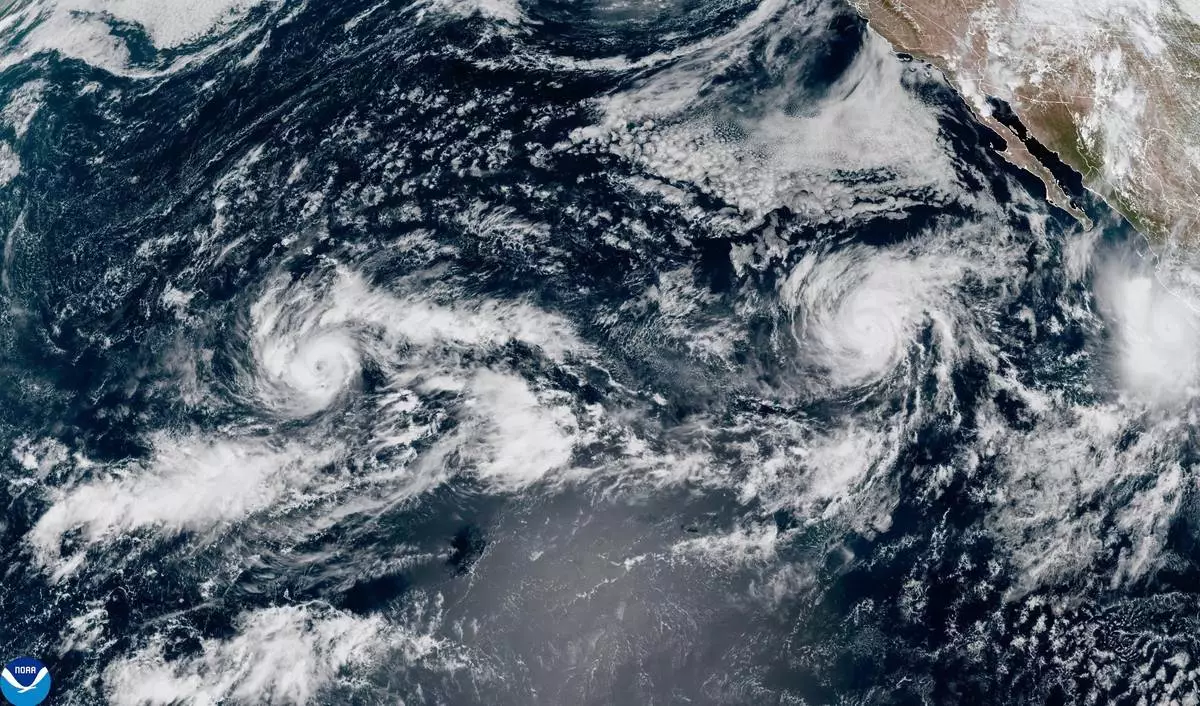
This satellite image provided by NOAA shows Tropical Storm Nolo, left, south of Hawaii; Hurricane Odalys, middle, and Hurricane Polo, right, off the coast of Mexico, in the Pacific Ocean on Thursday, Sept. 24, 2026. (NOAA via AP)