UNITED NATIONS (AP) — The leaders of many island nations spoke of the dangers of climate change. Former U.S. Vice President Al Gore was also on scene, talking to reporters as part of New York Climate Week.
Watchers from across the globe could find news that affected their lives at the U.N. General Assembly meetings. Here are a few moments:
Click to Gallery
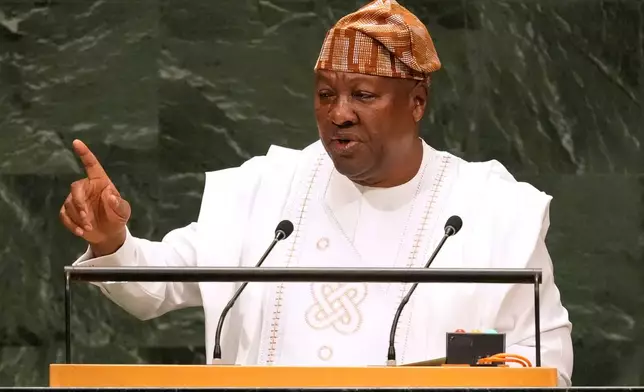
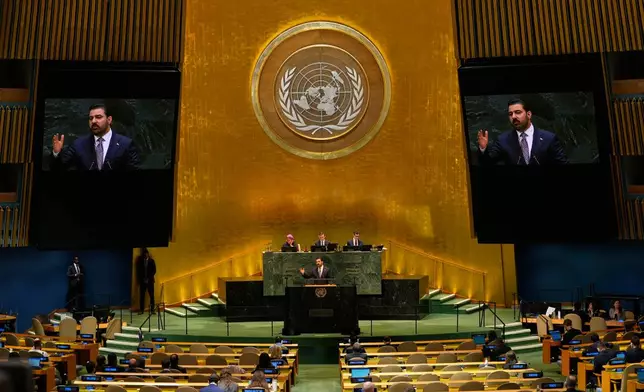
Ghana's President John Dramani Mahama speaks during the 81st session of the United Nations General Assembly at United Nations headquarters, Thursday, Sept. 24, 2026. (AP Photo/Seth Wenig)
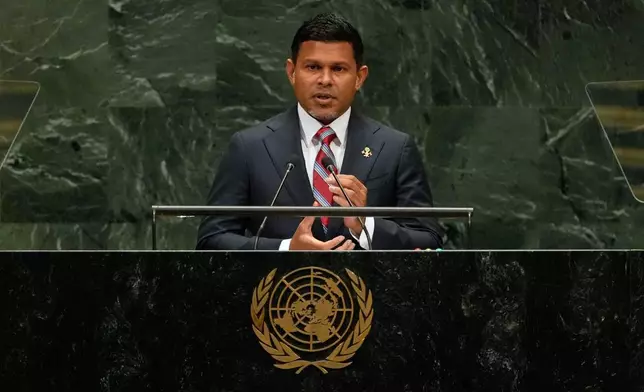
Maldives' Vice President Hussain Mohamed Latheef speaks during the 81st session of the United Nations General Assembly at United Nations headquarters, Friday, Sept. 25, 2026. (AP Photo/Seth Wenig)
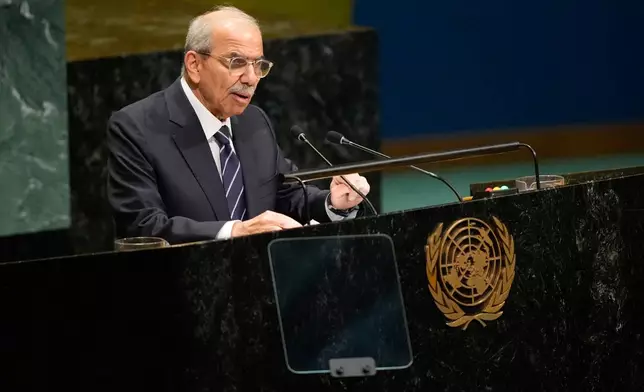
Lebanon's Prime Minister Nawaf Salam speaks during the 81st session of the United Nations General Assembly at United Nations headquarters, Friday, Sept. 25, 2026. (AP Photo/Yuki Iwamura)
Iraq's Prime Minister Ali al-Zaidi speaks during the 81st session of the United Nations General Assembly at United Nations headquarters, Friday, Sept. 25, 2026. (AP Photo/Seth Wenig)
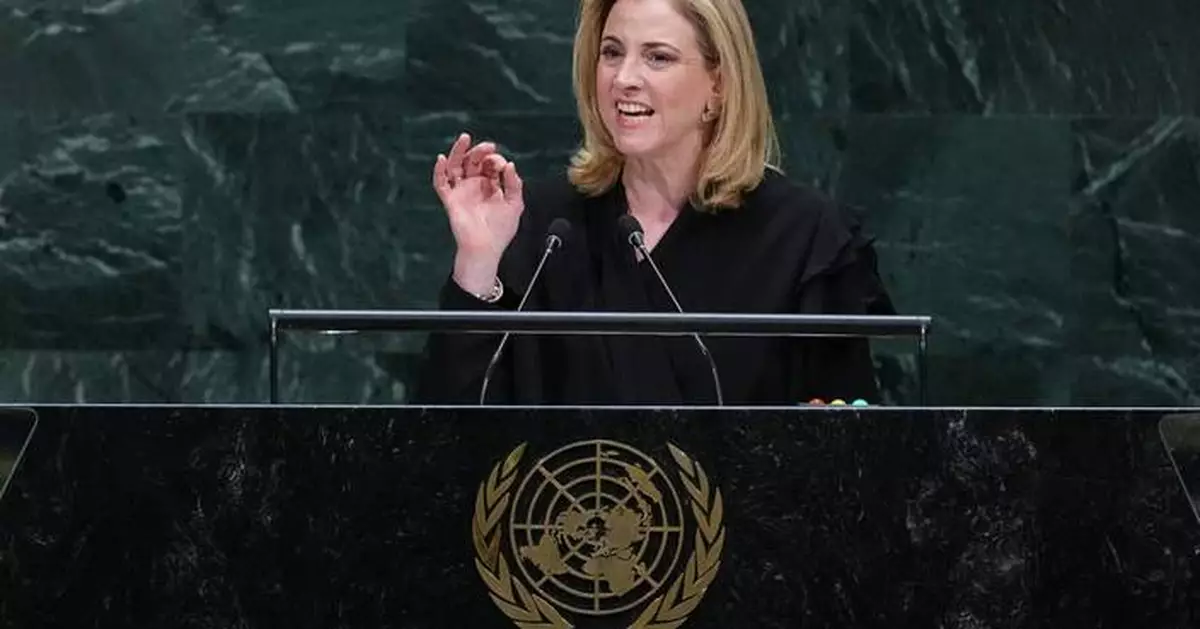
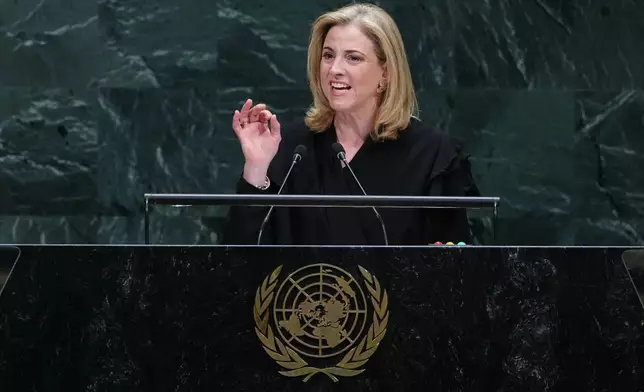
Austrian Foreign Minister Beate Meinl-Reisinger addresses the 81st session of the United Nations General Assembly at U.N. headquarters Thursday, Sept. 24, 2026. (AP Photo/Frank Franklin II)
When Austria took the podium, its most famous actor came up.
Beate Meinl-Reisinger, Austria’s federal minister for European and international Affairs, referenced the “Terminator” movies, and Arnold Schwarzenegger, when speaking out against autonomous weapons.
The “killer robot” played by Schwarzenegger was science fiction, but autonomous weapons are now real, she said.
“Machines are gaining more freedom to find and strike targets. But a machine cannot understand surrender, nor mercy. It cannot face a court or answer for a death. It must never have the final say over who lives and who dies,” she said.
She called for international rules prohibiting machines from deciding to take human life.
The prime ministers of Iraq and Lebanon both called for weapons and decisions over war and peace to be brought under state control, as both governments seek to disarm active armed groups in their countries.
For his part, Lebanese Prime Minister Nawaf Salam said Beirut, whose government has been pushing to disarm Hezbollah, must “reclaim our decision,” with no weapons or decisions to go to war outside state institutions.
“We are the only ones who will negotiate,” he said, referring to Iran, which sought to include the war in Lebanon in its own negotiations with Washington, a position backed by Hezbollah, while Beirut pursued separate talks with Israel.
Iraqi Prime Minister Ali al-Zaidi said Baghdad’s priority was to keep weapons in the hands of constitutional institutions and pledged to strengthen the rule of law.
Several leaders noted that a woman has never led the international body, and they called for that to change.
“It is time for women to lead this organization. A leader who will defend the charter without exception, who can turn reform into delivery, and who will listen to all member states, including smallest,” said Hussain Muhammad Latif, vice president of the Maldives.
On Thursday, Ghanaian President John Dramani Mahama seemed to reference Donald Trump’s speech on Tuesday when the U.S. president suggested he might “annihilate” Iran.
“No human civilization deserves to be annihilated, and certainly not a member of the United Nations," Mahama said.
Asked about that comment while visiting the Council on Foreign Relations, Mahama said Friday that he’s a student of history and has studied all civilizations.
“If anybody proposes a concept of annihilating a civilization, it’s anathema to me. So I’m not referring to anybody,” he said, drawing a few laughs from the audience. “My words were simple, and to be understood: No civilization deserves to be annihilated. That’s it, period.”
—-
Jennifer McDermott in New York and Sally Abou AlJoud in Beirut, Lebanon, contributed.
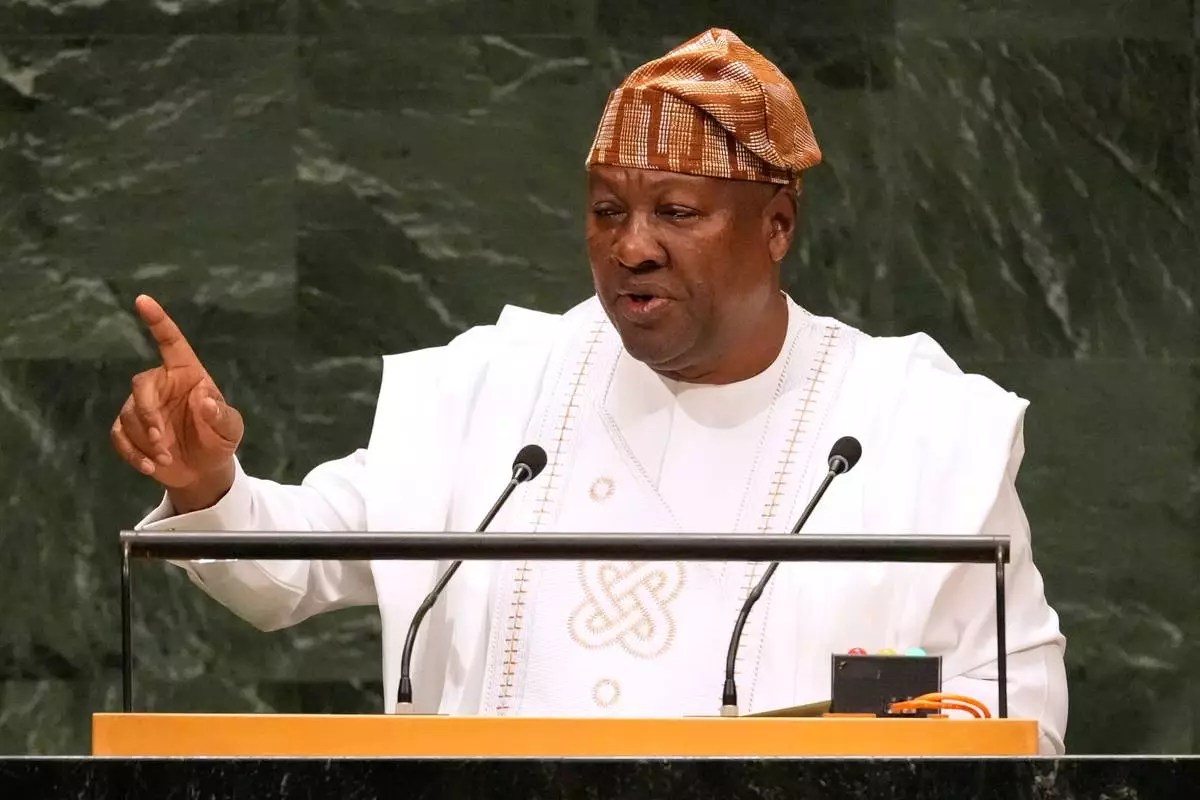
Ghana's President John Dramani Mahama speaks during the 81st session of the United Nations General Assembly at United Nations headquarters, Thursday, Sept. 24, 2026. (AP Photo/Seth Wenig)
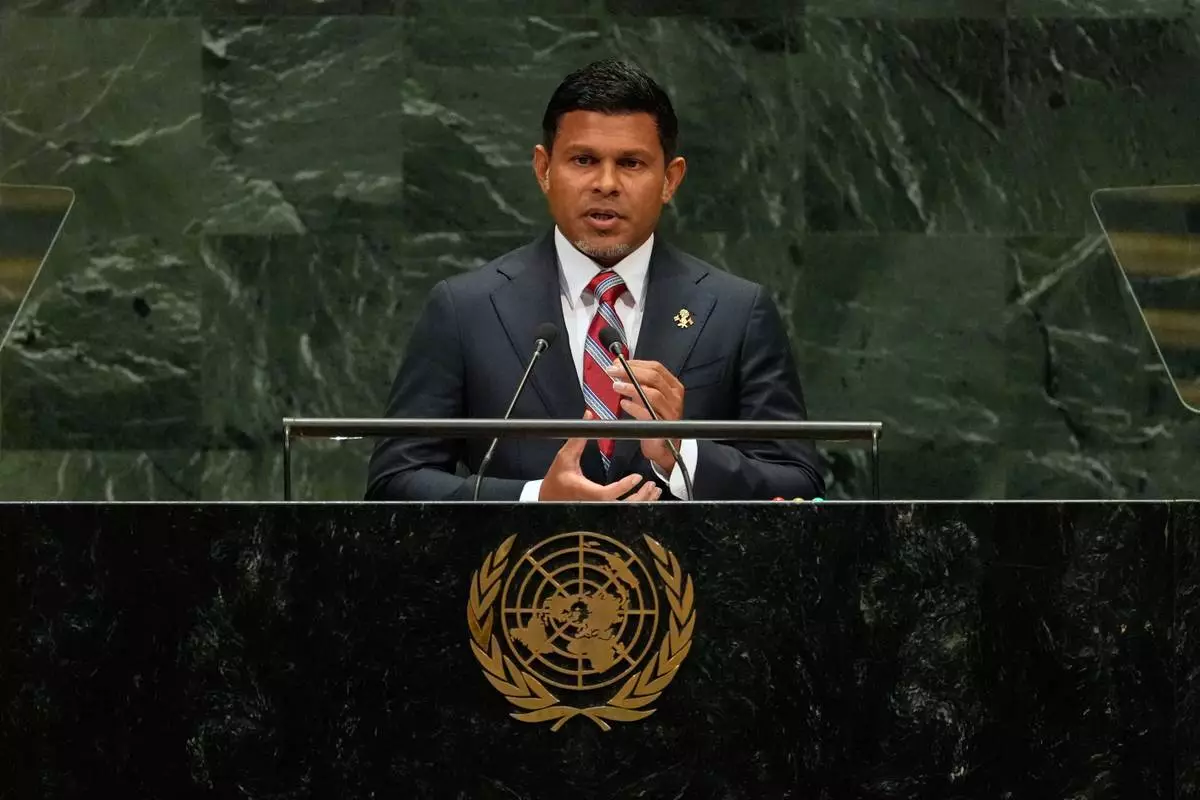
Maldives' Vice President Hussain Mohamed Latheef speaks during the 81st session of the United Nations General Assembly at United Nations headquarters, Friday, Sept. 25, 2026. (AP Photo/Seth Wenig)
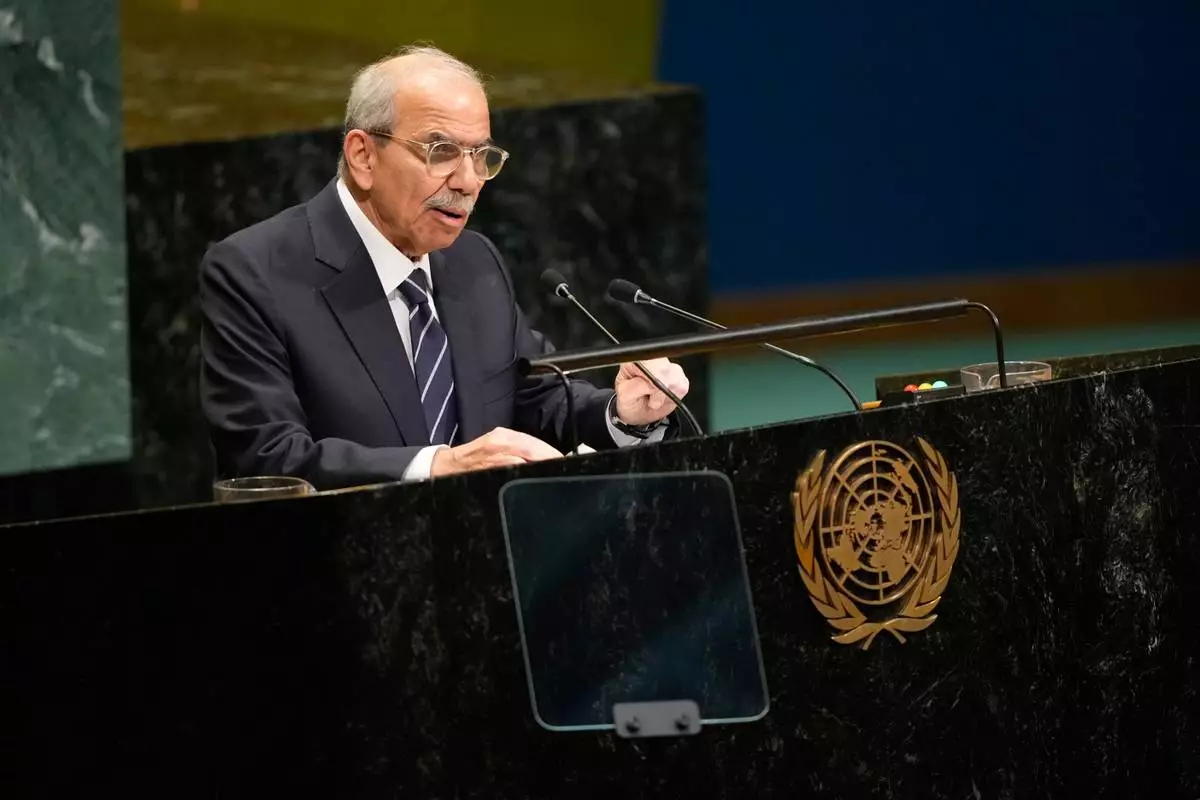
Lebanon's Prime Minister Nawaf Salam speaks during the 81st session of the United Nations General Assembly at United Nations headquarters, Friday, Sept. 25, 2026. (AP Photo/Yuki Iwamura)
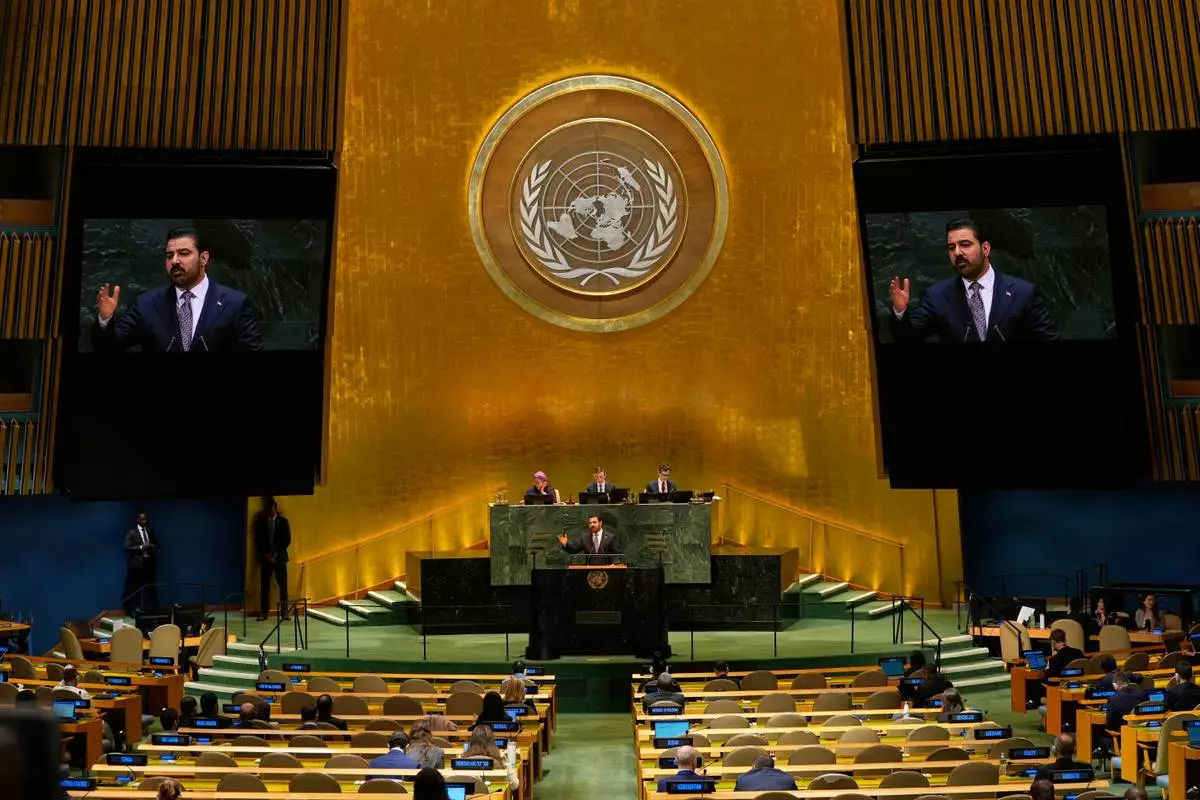
Iraq's Prime Minister Ali al-Zaidi speaks during the 81st session of the United Nations General Assembly at United Nations headquarters, Friday, Sept. 25, 2026. (AP Photo/Seth Wenig)
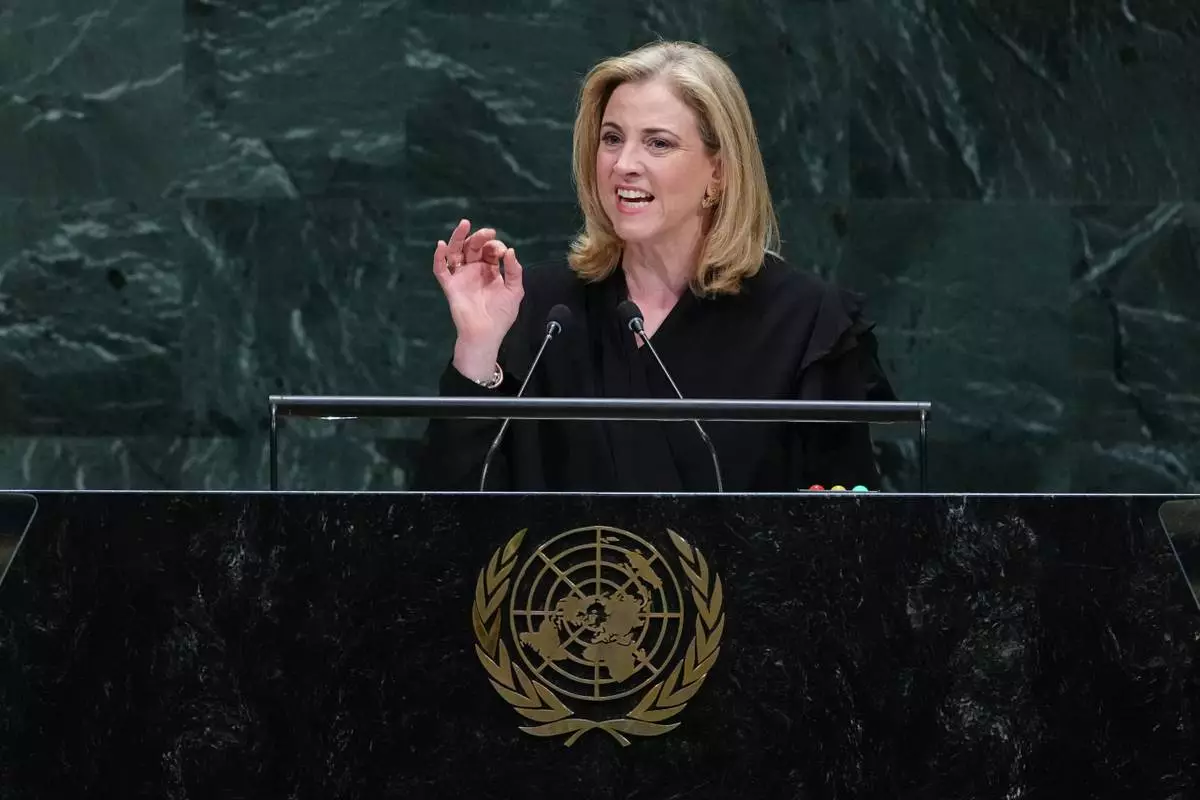
Austrian Foreign Minister Beate Meinl-Reisinger addresses the 81st session of the United Nations General Assembly at U.N. headquarters Thursday, Sept. 24, 2026. (AP Photo/Frank Franklin II)
SALT LAKE CITY (AP) — Charlie Kirk’s political organization insisted he speak outdoors at the Utah university where he was assassinated, despite security concerns from campus officials who then failed to properly assess dangers including a potential rooftop shooter, according to a report released Friday.
An external review released by Utah Valley University found that the school failed to conduct a formal security assessment, did not create a written event action plan and deferred critical decision-making to Turning Point USA, the Kirk-led organization that scheduled his appearances on college campuses across the U.S.
A charismatic but polarizing figure, Kirk, 31, was killed on Sept. 10, 2025, by a sniper perched on a rooftop more than 400 feet (122 meters) away, authorities said. The conservative activist had been debating students before a crowd of thousands in an outdoor courtyard surrounded by tall buildings and elevated walkways on the campus in Orem, about 40 miles (64 kilometers) south of Salt Lake City. His appearances often attracted protests, further complicating his security.
Tyler Robinson has pleaded not guilty to aggravated murder in Kirk’s killing, a charge that could make him eligible for the death penalty if convicted. Prosecutors say the 23-year-old defendant wrote in a text message about Kirk: “I had enough of his hatred. Some hate can’t be negotiated out.” No trial date has been set.
Kirk’s killing was a watershed moment during a wave of political violence in the United States. President Donald Trump has survived multiple assassination attempts in the past three years, the CEO of UnitedHealthcare was gunned down in 2024 and a Minnesota lawmaker and her husband were killed at their home in 2025.
Utah Valley President Jon Anderson said in a statement that the school has a responsibility to “learn from the findings of this review, and follow through on its recommendations.”
Last week, Kirk’s family announced a wrongful death notice — a precursor to a possible lawsuit — accusing Utah Valley officials of hastening his death with a string of “reckless decisions.”
They included failing to conduct an adequate risk assessment, failing to establish a secure perimeter and failing to have first responders immediately available, which led to Kirk being taken to a hospital in a private vehicle instead of an ambulance.
The family’s lawyer, Brett Parkinson, said in a statement that the report reaffirms those allegations. By hosting the event, he said, Utah Valley assumed responsibility for the safety of all in attendance, including Kirk.
“The buck stopped with UVU leadership and law enforcement,” Parkinson said. “Justice for Charlie and his family requires true accountability for UVU’s fatal shortcomings that day.”
According to the report, which Utah Valley said was done independently by outside consultants, some university officials expressed reservations in an August 2025 meeting with Turning Point about holding the event in an outdoor space surrounded by tall buildings.
The officials suggested multiple other locations, including some that were indoors. But a Turning Point representative insisted that Kirk speak at a campus courtyard because he had been there previously and the organization was familiar with the location. The university ultimately allowed the event to go forward in the courtyard.
“In our assessment, those decisions were consequential,” the report said.
Turning Point USA deferred to Parkinson’s statement when asked for comment on the findings. The organization and its security team did not respond to several requests to participate in the review, according to the report.
The event location “created significant protective operations considerations,” the report said, but the planning process failed to include a documented line-of-sight assessment, pre-event briefing or walk-through with security stakeholders. Nor was there clear coordination with Kirk's private security team and external law enforcement partners, the report said.
An Associated Press review last year found that the campus did not use several public safety practices that have become standard at events around the country. Campus police did not fly a drone to monitor rooftops or coordinate with local law enforcement to secure the event attended by about 3,000 people. There were no bag checks or metal detectors.
The report also highlighted a lack of coordination and communication between campus police and Kirk’s private security in the days leading up to the event.
In foregoing a day-of walk-through and pre-event briefing, they missed opportunities to go over roles, assess staffing and equipment, add resources such as drones, and address any concerns or threats, the report said.
The university’s police chief sent a text message asking Turning Point’s security supervisor to meet at the event location a few hours beforehand, but no meeting ever happened, the report said.
The report makes nearly 150 recommendations, including hiring a police sergeant to focus on campus events and creating clear criteria for when events must be moved indoors or to more controllable venues.
“This requires humility, an honest examination of our policies and practices, and a commitment to act on what we learn,” said Anderson, who took over as university president last month. He added that the university has made “meaningful progress in strengthening campus safety over the past year.”
That includes hiring a chief public safety officer to coordinate with emergency response agencies and hiring more campus police officers. At the time of the shooting, the university had just 13 sworn officers, which the report said was not sufficient for Utah Valley’s size and the types of events held on the campus. It’s the state’s largest university, with about 50,000 students on a sprawling campus in Orem, beneath the Wasatch Mountains.
Sisak reported from New York. Associated Press reporter Claudia Lauer in Philadelphia contributed.
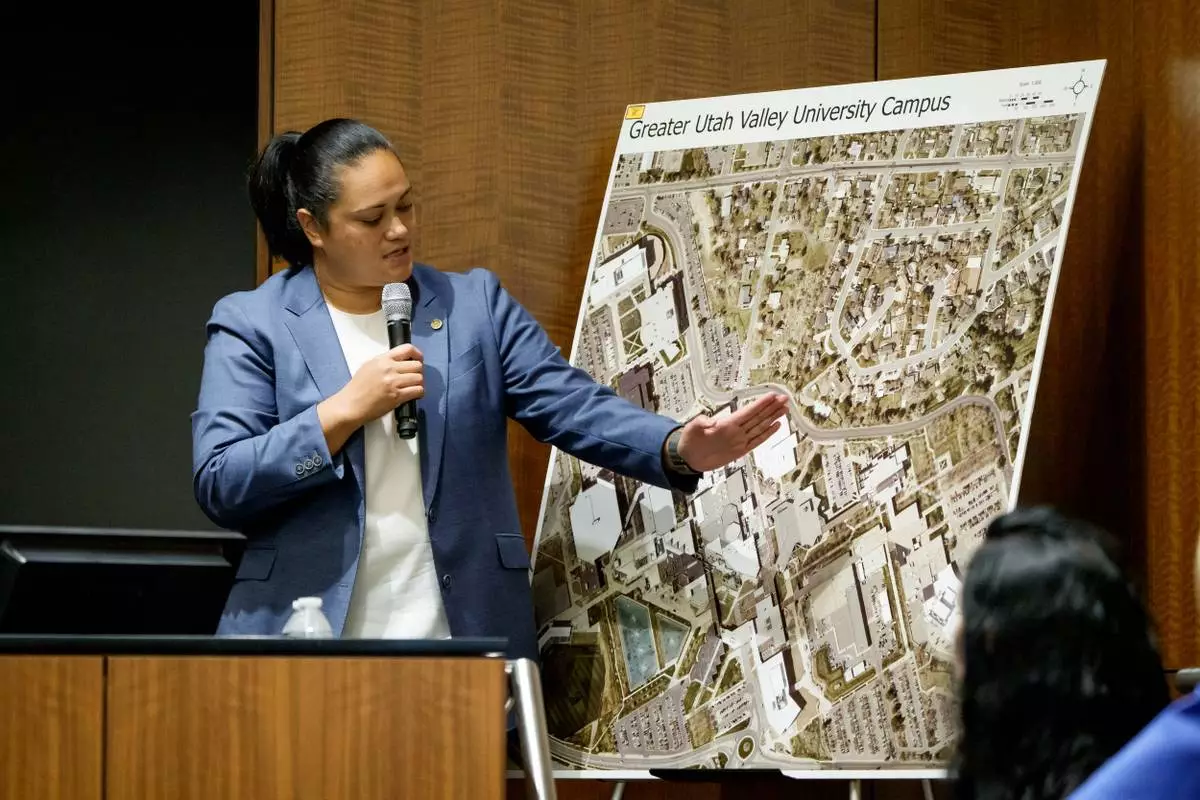
FILE - Sgt. Jennifer Faumuina, of the Utah Department of Public Safety, motions toward a map of the Utah Valley University campus during a preliminary hearing for Tyler Robinson, who is accused in the fatal shooting of Charlie Kirk, at the Fourth District Courthouse in Provo, Utah, July 9, 2026. (AP Photo/Spenser Heaps, Pool, File)
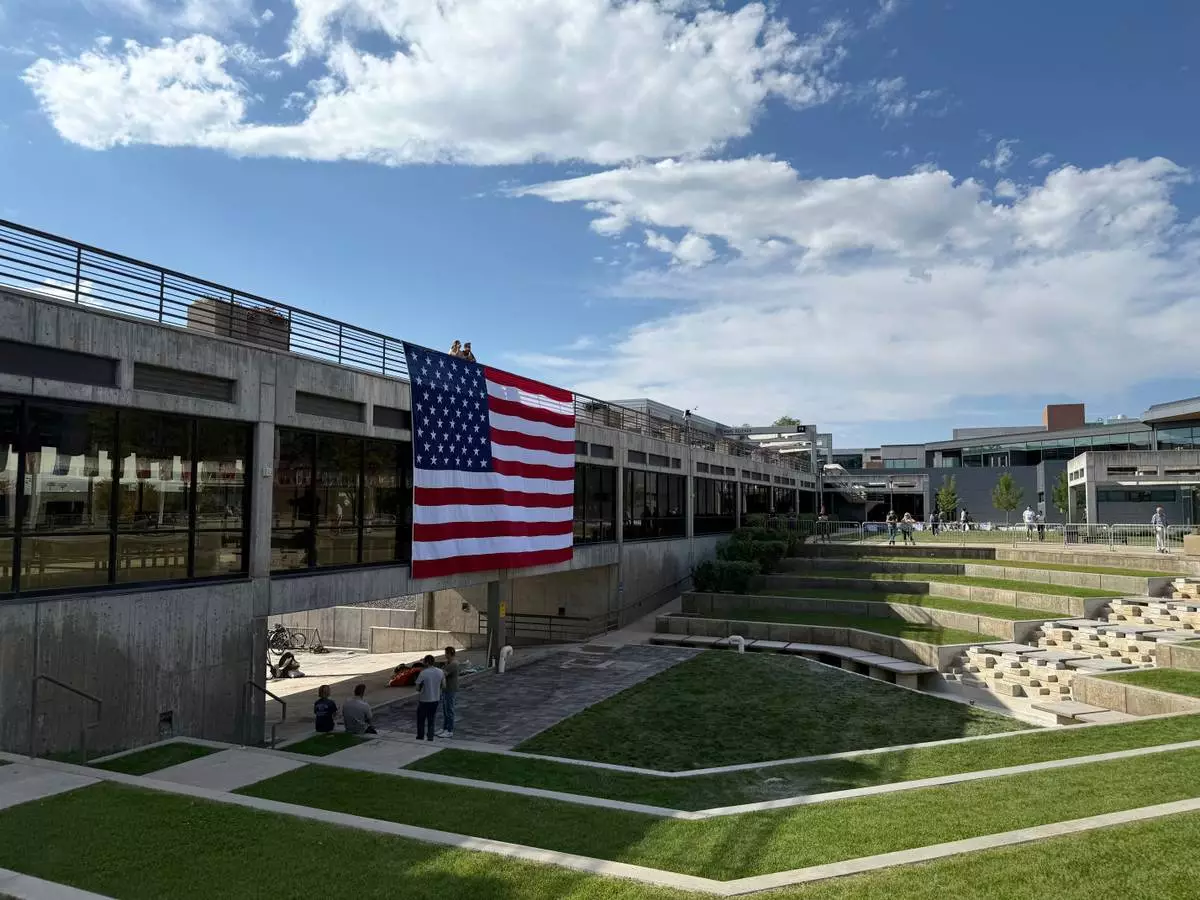
FILE - People gaze down at the site where Charlie Kirk was shot, above which hangs an American flag, at Utah Valley University, Sept. 15, 2025, in Orem, Utah. (AP Photo/Jesse Bedayn, File)
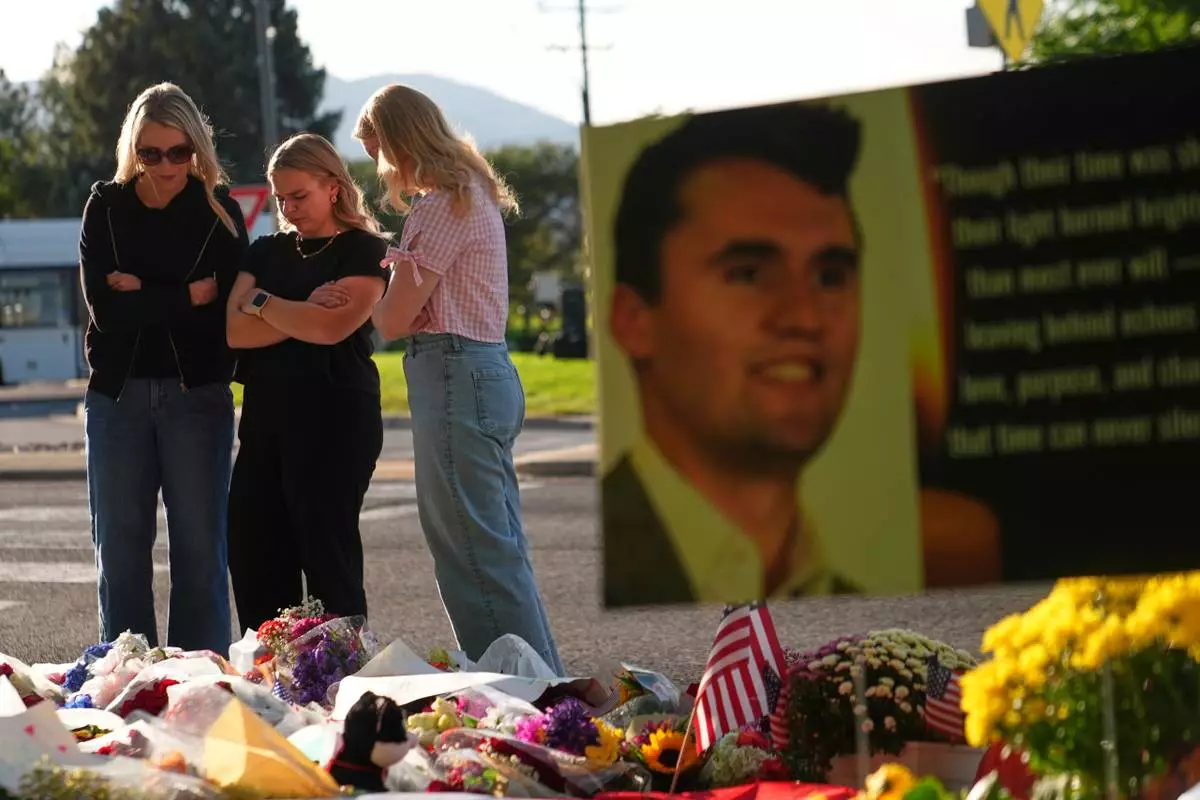
FILE - Women pray at a memorial outside Utah Valley University after Turning Point USA CEO and co-founder Charlie Kirk was shot and killed, Sept. 13, 2025, in Orem, Utah. (AP Photo/Lindsey Wasson, File)