Chinese President Xi Jinping and U.S. President Donald Trump on Friday agreed to build a constructive relationship of strategic stability based on respect, fairness and reciprocity.
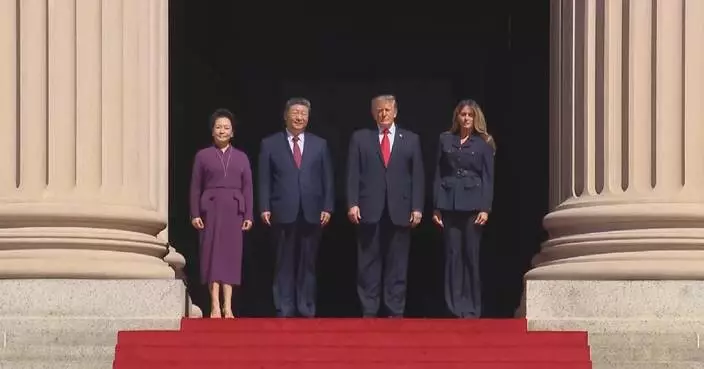
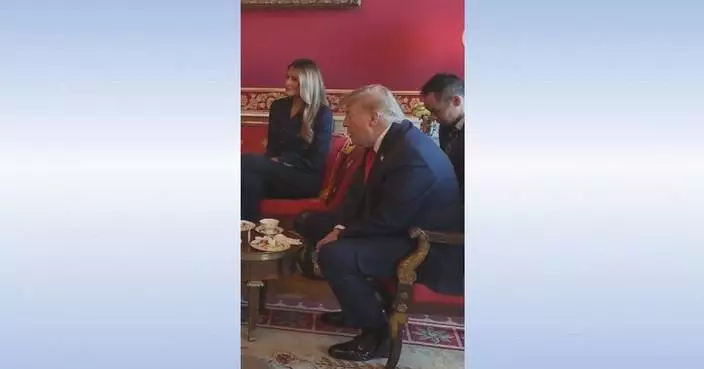
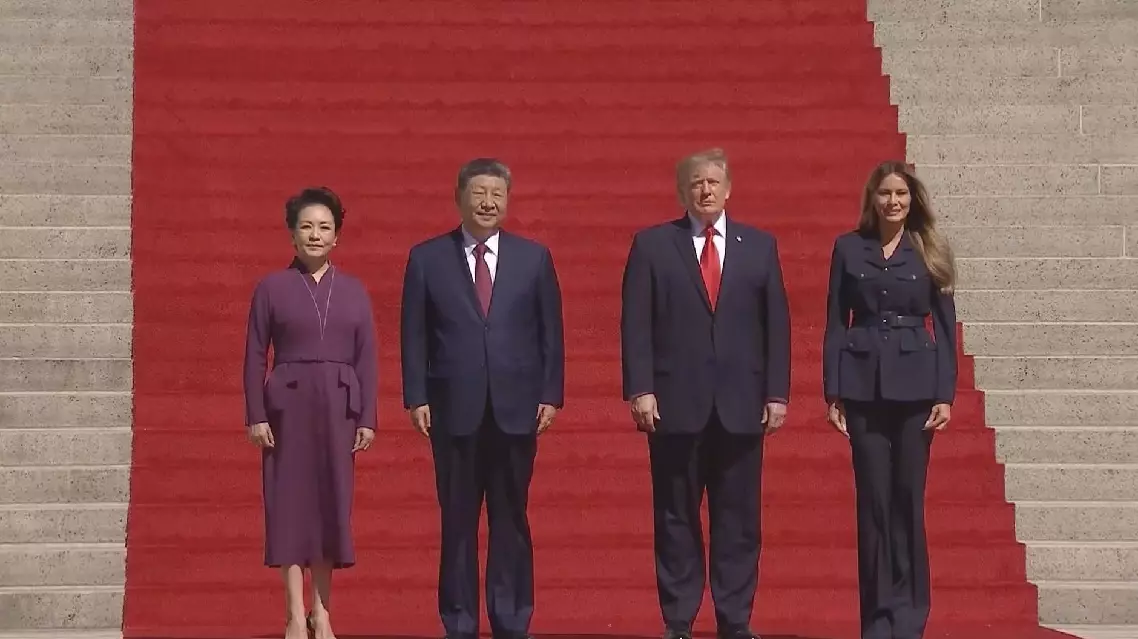
The consensus was reached during a tea chat at the White House attended by Xi and his wife, Peng Liyuan, and Trump and his wife, Melania Trump.
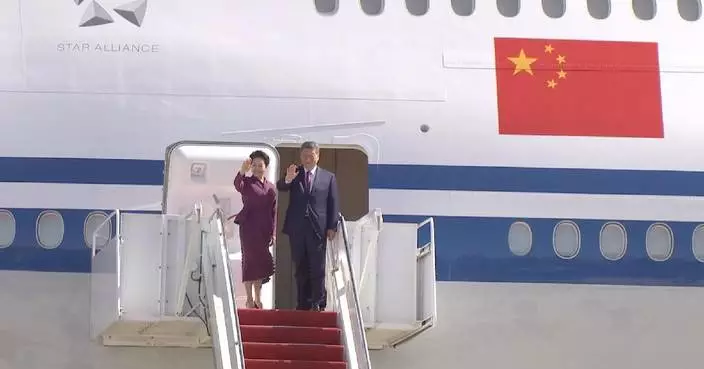
Xi said the trip to Washington was his first state visit to the United States in 11 years.
During the visit, the two sides added new substance to the vision for the China-U.S. relationship, and agreed to jointly build a constructive relationship of strategic stability based on respect, fairness and reciprocity, Xi said.
The two sides also achieved mutually beneficial outcomes in the economic and trade fields, which will be welcomed by the people of both countries and the international community, he added.
Stressing that the future of China-U.S. relations is bright, Xi said that it reflects the trend of history.
The road to a bright future is often winding, with difficulties and challenges bound to arise along the way, Xi said, adding that it is in line with the laws governing the development of things.
Xi said he is willing to work with Trump to write a new chapter in the history of China-U.S. relations with the courage and a sense of responsibility to history.
Calling Xi's state visit to the United States constructive and very successful, Trump said that the two sides held in-depth exchanges on U.S.-China relations and major international and regional issues, achieving positive outcomes that will benefit both countries.
He said he looks forward to maintaining close contact with Xi and jointly guiding the development of U.S.-China relations.
After the tea chat, Xi and Peng, accompanied by Trump and Melania, visited the U.S. National Archives. They walked together into the central hall, where they were briefed on the National Archives and its exhibits.
The archives carry the wisdom of the forebears and offer insights for the future, Xi said, adding that over the past 250 years, the American people have pursued the American Dream and built a prosperous country and a beautiful home on the North American continent.
The Chinese people, inheriting 5,000 years of Chinese civilization, have continued to make new achievements on the new journey toward realizing the Chinese Dream of the great rejuvenation of the Chinese nation, Xi said.
As two distinctive countries, China and the United States have different histories and cultures, social systems and development paths, Xi said.
However, the people of the two countries share the same aspiration for a better life despite the differences, he said.
If the two countries recognize and respect their differences, deepen mutual understanding and learn from each other, seek the biggest common denominator, expand the list of areas for cooperation, and properly manage differences, China-U.S. relations will enjoy steady and sustained growth, Xi said.
China, US agree on constructive strategic stability based on respect, fairness, reciprocity