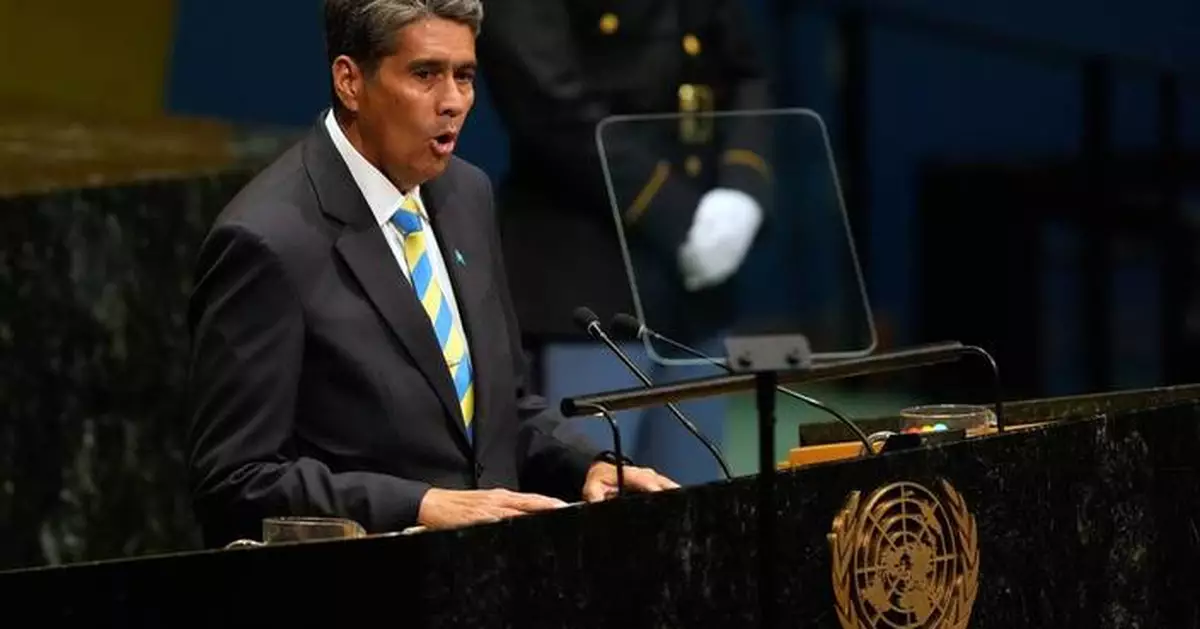
UNITED NATIONS (AP) — When Palau President Surangel Samuel Whipps Jr. recently took his children to his nation's Helen Island, two-thirds of it was gone. Rising seas caused by climate change had swallowed generational burial grounds, washing away a people's entire culture and identity.
“For us, it's devastating,” Whipps told The Associated Press on Friday, 40 years after his previous visit. “It doesn't mean we should give up.”
In the global power game of the United Nations General Assembly, small island states, like Palau, are often on the sidelines, offering moral advice to the mighty who don't always listen. After all, their countries are tiny. Nearly 11 Marshall Islands, or about 30 Tuvalus, could fit inside New York City, where the United Nations is housed.
Now, some of the little land they do have is disappearing.
“Sometimes," Whipps said, “you get drowned out.”
He was referring to unequal power dynamics, but it also applies physically. When it comes to climate change, many of the world's island nations have banded together to be heard better. Their voices play the role of a conscience to a warming world, pleading to stop carbon pollution before it's too late.
In 2015, when the world was on the verge of signing the landmark Paris climate pact, it was small island nations that got the goal to limit global warming tightened from 2 degrees Celsius (3.6 degrees Fahrenheit) to 1.5 degrees (2.7 degrees Fahrenheit) since pre-industrial times. At the time, island nations said it was a matter of survival.
Now, scientists and the United Nations have conceded that the world is blowing past the 1.5 degrees mark — a temperature averaged over many years — in the next year or two. The best hope to keep this from happening permanently is for the world to reduce coal, oil and gas use to zero in coming decades, so that sometime this century, temperatures will go back down below the 1.5 degrees threshold, they said.
“Each fraction of a degree of warming increases the risk of irreversible sea level rise,” said Anna Rasmussen, chief negotiator for the Alliance of Small Island States. “We absolutely cannot surrender our pursuits of 1.5.”
What does breaching 1.5 degrees mean? “Death,” said Joyelle Clarke, environment minister for the Caribbean island nation of Saint Kitts and Nevis, standing outside the U.N. Security Council.
This is unfair because small islands didn't cause climate change, Marshall Islands President Hilda Heine said during her speech to the General Assembly on Friday; big industrial nations did.
“We’ve seen schools destroyed by rising seas, salt water poisoning our wells and disease outbreaks linked to environmental change,” Heine told her fellow leaders. “This injustice must be addressed. Our communities deserve restitution.”
Earlier this week, the U.N. adopted a resolution that called for small island states to keep sovereignty and marine rights no matter what rising seas do. One of the major messages nation after nation gave: Despite rising seas, they are not going anywhere.
“The survival of our nations cannot be negotiated,” said Adão Soares Barbosa, special envoy on climate affairs for the Southeast Asian island nation of East Timor and chair of the Least Developed Countries Group on Climate Change. “We cannot absorb another year of promises without delivery.”
Tuvalu Prime Minister Feleti Teo said his country may only have 26 square kilometers (10 square miles) of land, but it's responsible for 750,000 square kilometers (nearly 290,000 square miles) of oceans.
“Tuvalu's nationhood is not negotiable,” echoed Teo, who called climate change the “single greatest existential threat” to his country. “Our people should never be forced to choose between their homeland and their future.”
Marshall Island Foreign Minister Kalani Kaneko said his people "have no other choice but to finally stay home, raise our own people, speak our own language and protect our own identity. We're not giving up.”
Clarke, from Saint Kitts and Nevis, said the rest of the world doesn't feel or see what island nations are going through.
“For many folks that look at the islands in the Caribbean and the Pacific, they see paradise. They see the two-week getaway — sun, sand, sea, adventure,” Clarke said. “The very beaches that you travel thousands of miles for and save up for your holiday, those beaches are disappearing.”
Clarke, who also works with her nation's youth, said “We’re seeing a generation that’s losing hope, that’s constantly facing despair, that are questioning, ‘Why should we care? Why should we do anything, when you all don’t care enough, and the world doesn’t care enough, about our future?'”
This issue hits home for Whipps from Palau, who has adult children but no grandchildren.
“The sad part is, some of the kids, you talk to them, and they don’t want to have kids, because they think, 'Why do you want to bring them to a world that’s faced with these problems?” he said. “That’s also something that we need to take responsibility for.”
Associated Press writer Jennifer McDermott contributed to this report from New York.
The Associated Press’ climate and environmental coverage receives financial support from multiple private foundations. The AP is solely responsible for all content. Find AP’s standards for working with philanthropies, a list of supporters and funded coverage areas at AP.org.
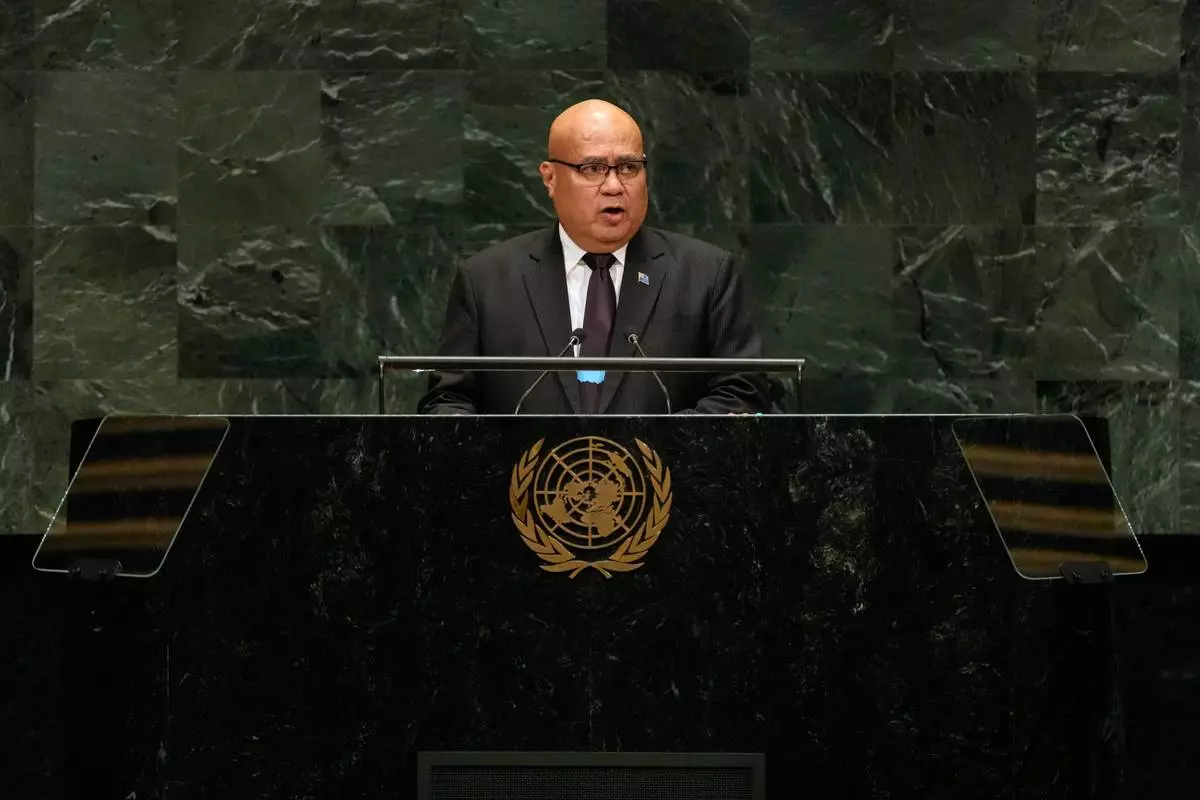
Tuvalu Prime Minister Feleti Teo speaks during the 81st session of the United Nations General Assembly at United Nations headquarters, Friday, Sept. 25, 2026. (AP Photo/Seth Wenig)
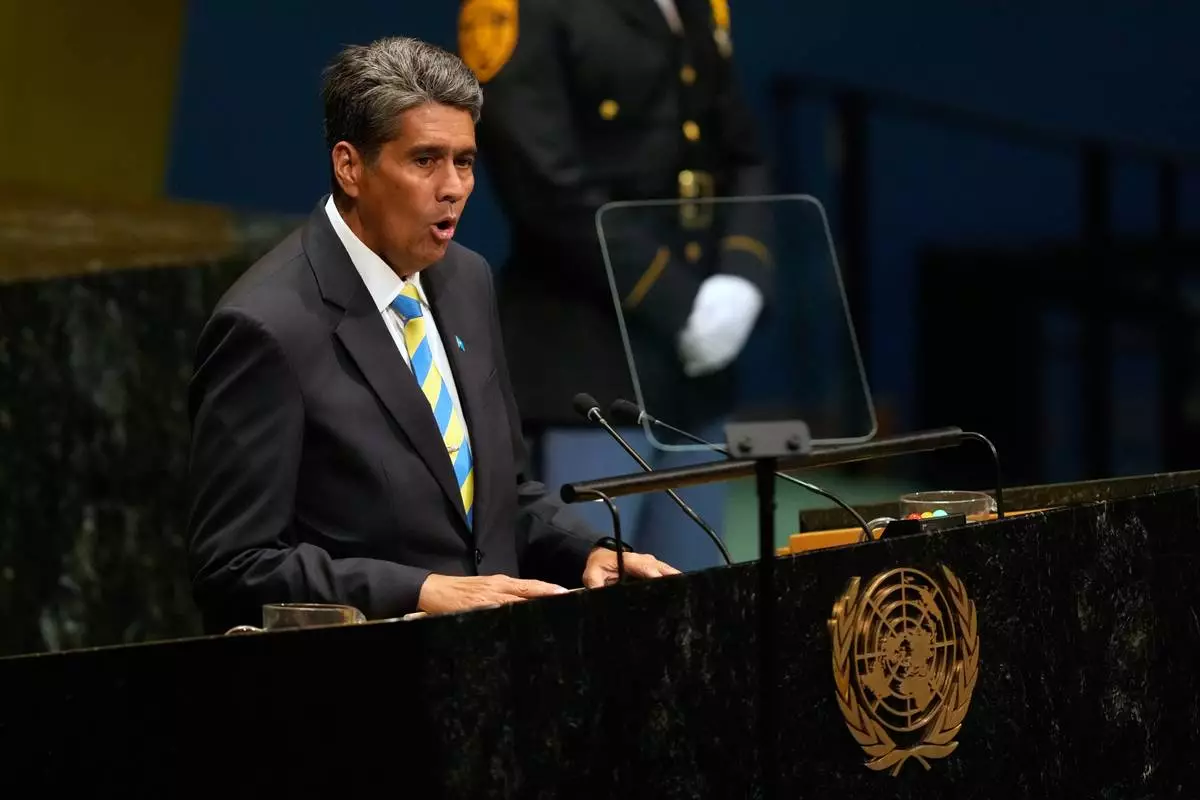
Palau's President Surangel Whipps Jr. speaks during the 81st session of the United Nations General Assembly at United Nations headquarters, Wednesday, Sept. 23, 2026. (AP Photo/Seth Wenig)
U.S. President Donald Trump on Saturday rejected Iran's proposal to reopen the Strait of Hormuz within a week if the U.S. meets certain conditions.
Meanwhile, Iranian media outlets said the country's president has left New York after the United Nations gathering of world leaders that included Iran's indirect talks with the United States. And Saudi Arabia says it has intercepted another missile it blames on Iran -backed Houthis in neighboring Yemen.
Here is a look at the latest news from the Middle East on Saturday. More coverage of the U.N. General Assembly is available here.
Iran offered this week to reopen the strait and resume talks on its nuclear program in seven days if the U.S. lifts its naval blockade of Iranian ports, waives sanctions on Iranian oil sales and observes a ceasefire that would include Lebanon.
But on Saturday, Trump rejected the proposal saying Iran wanted to make a deal because it was “losing so badly.”
“They want to make a deal and I think that’s fine,” Trump told reporters outside the White House before leaving for a college football game. “I’d like to make a deal, too. But that deal would not be acceptable.”
Iran effectively closed the strait after the U.S. and Israel attacked the Islamic Republic in late February, and the number of ships passing through has dropped significantly because of Iranian threats and attacks on vessels in the waterway.
Semiofficial media outlets in Iran reported that President Masoud Pezeshkian has left New York for Tehran after the annual U.N. gathering of world leaders.
Pezeshkian's speech to the gathering pushed back against Trump's latest threat to “annihilate” the Islamic Republic, but he ended by saying Tehran remains open to diplomacy.
Iranian Foreign Minister Abbas Araghchi told journalists Friday night that under Tehran's proposal, Iran would reopen the Strait of Hormuz and resume talks on its nuclear program in seven days if the United States lifts its naval blockade of Iranian ports, waives sanctions on Iranian oil sales and observes a ceasefire that would include Lebanon.
Iranian President Masoud Pezeshkian told CBS that, from his viewpoint as a physician, Supreme Leader Mojtaba Khamenei has “no specific ongoing health issues” despite not being seen or heard in public since the war with the U.S. and Israel began in February.
The interview will air Sunday.
In the transcript CBS released, Pezeshkian described his most recent meeting with Khamenei as lasting over seven hours. “But, of course, he was healthy enough to be able to withstand those hours of that situation. From a medical standpoint, he’s completely healthy,” the president said. When asked whether the supreme leader’s face and legs have recovered, Pezeshkian responded, “Yes.”
Khamenei’s father and other family members were killed on the opening day of the war.
Saudi Arabia’s military spokesperson, Maj. Gen. Turki al-Malki, claimed early Saturday that a ballistic missile launched by the Iran-backed Houthi rebels in neighboring Yemen was intercepted and destroyed. He said it was fired toward the southwestern city of Khamis Mushait.
The Associated Press couldn’t immediately verify that independently. There was no immediate statement of responsibility, though it can take days for the Houthis to issue one.
A regional body representing Arab Gulf states, the Gulf Cooperation Council, condemned the latest Houthi attacks as a “grave escalation and threat to regional security” and urged the international community to respond.
Iraq said it is in direct contact with the U.S. to secure exemptions from sanctions on Iranian airlines as Washington continues economic pressure on Tehran.
The Iraqi prime minister’s office said the aim is to get exemptions for certain airports, noting flights for humanitarian reasons such as medical treatment, education and religious pilgrimages.
Many pilgrims in neighboring Iran visit sites such as Karbala and Najaf.
Before rejecting Iran's proposal Saturday, Trump posted an image on his Truth Social platform of the Strait of Hormuz labeled “Trump Strait." It is not the first time he has tried to antagonize Iran in this way.
The White House on Friday said only that U.S. officials were having positive and constructive conversations with mediators on the Iran war. Earlier in the week, Iran and the U.S. participated in hours of indirect talks.
Israeli settlers have intensified efforts to seize natural springs and heritage sites in the occupied West Bank. The springs are vital for drinking water, tourism and agriculture and increasingly inaccessible to the 2.8 million Palestinians living there.
In the Jordan Valley, settlers cut a water pipe to a Palestinian village, redirecting it to a pool they named after Herod, the Roman-appointed king of Judea. Israeli rights groups say the move is part of a broader effort to claim heritage sites.
The struggle for water access highlights the ongoing contest for control of the West Bank, where Palestinians have faced shortages since 1967.
This report will be updated throughout the day as new developments emerge.
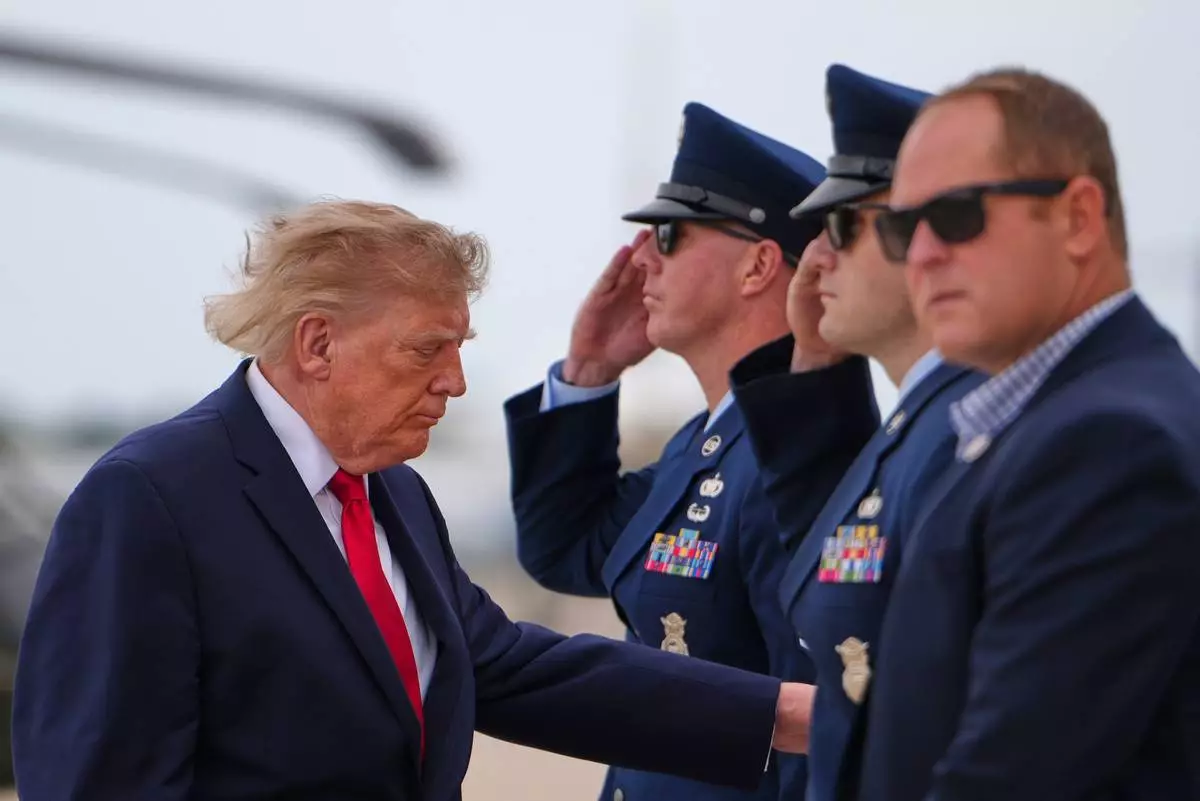
President Donald Trump boards Air Force One, Saturday, Sept. 26, 2026, at Joint Base Andrews, Md. (AP Photo/Julia Demaree Nikhinson)
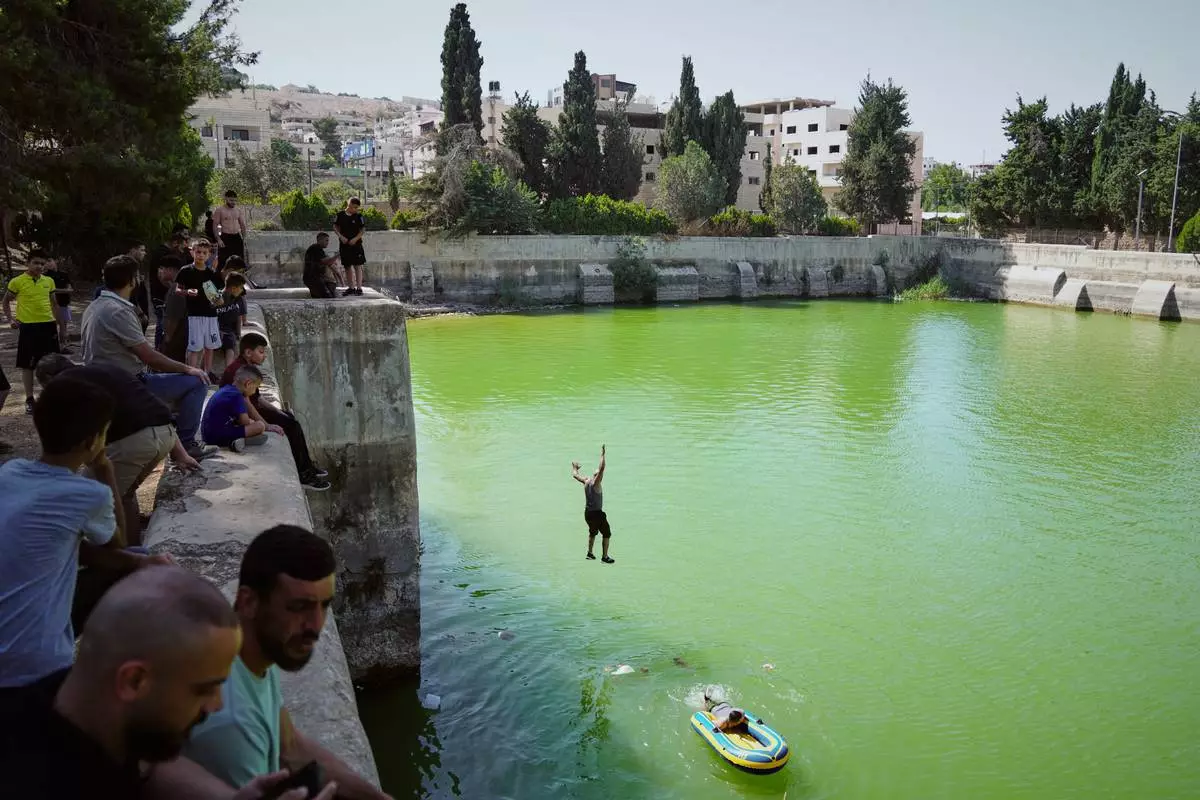
Palestinians cool off at the site of Solomon's Pools an ancient water reservoirs located south of the West Bank city of Bethlehem, on July 31, 2026. (AP Photo/Mahmoud Illean)
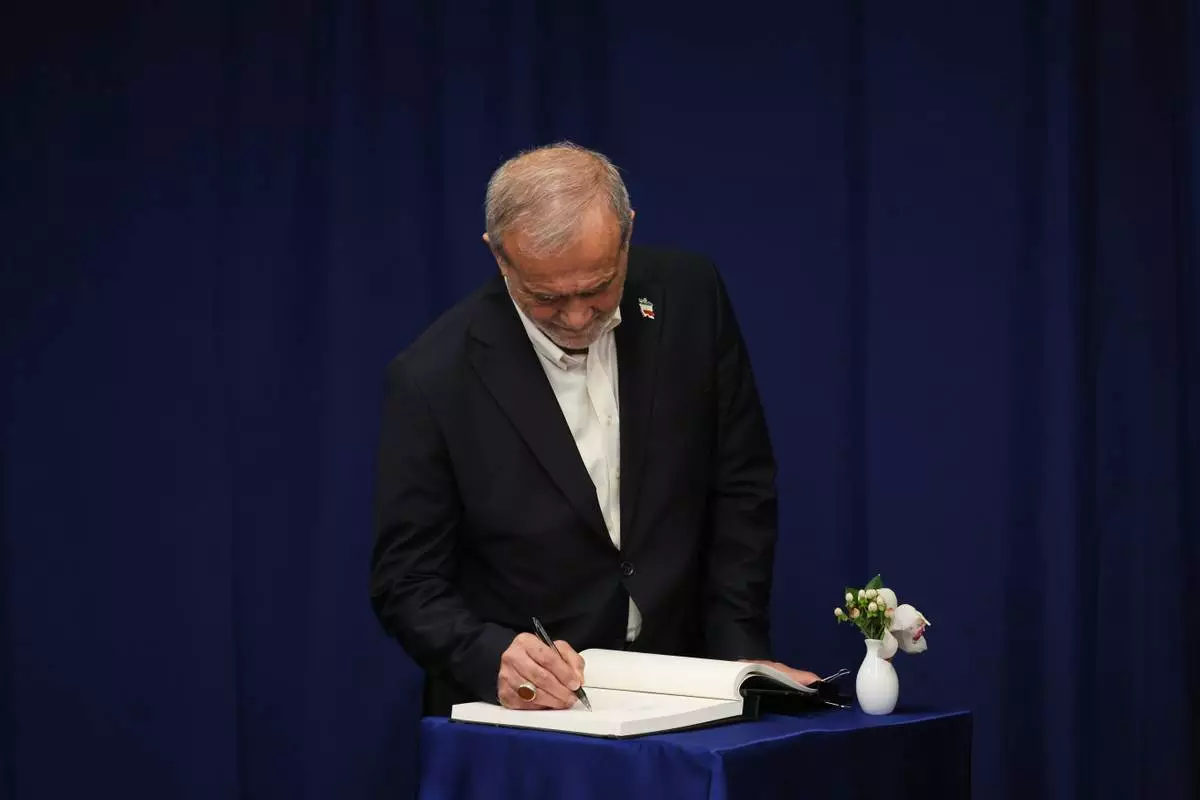
Iran's President Masoud Pezeshkian signs a book before meeting with United Nations Secretary-General Antonio Guterres at United Nations headquarters during the 81st session of the United Nations General Assembly, Friday, Sept. 25, 2026. (AP Photo/Heather Khalifa)
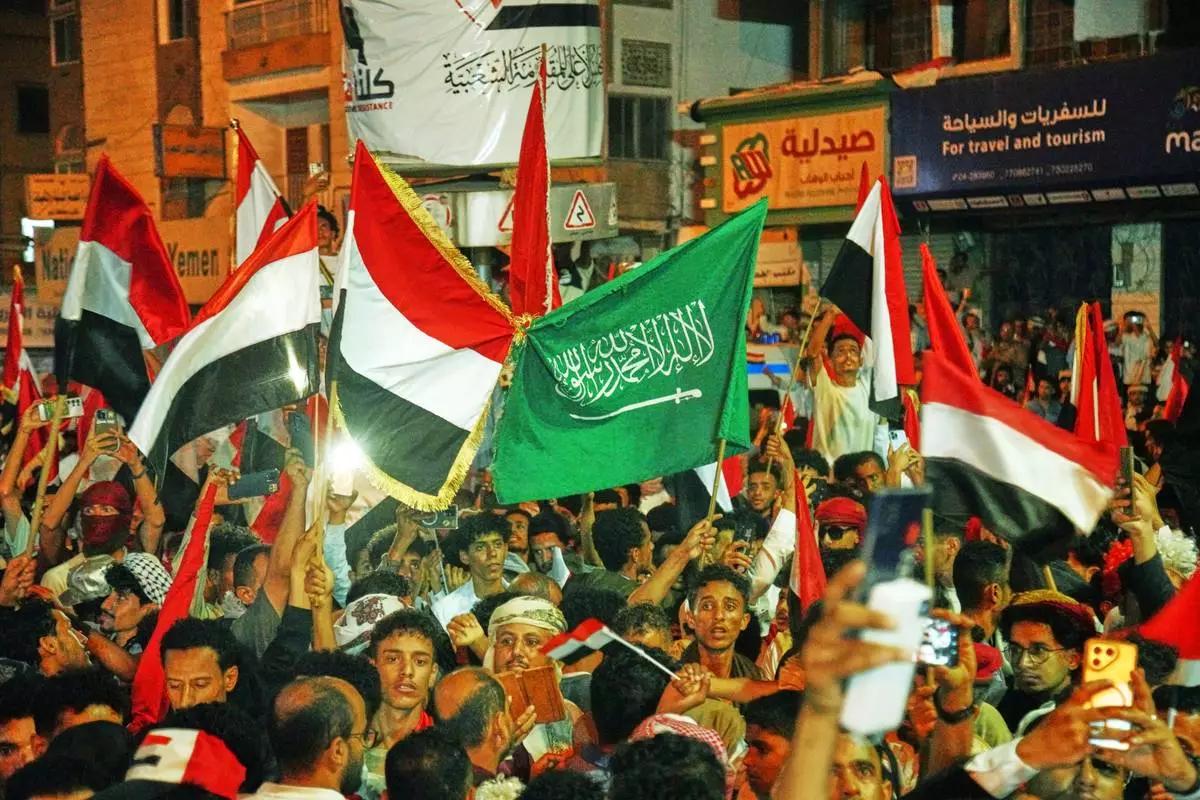
Yemenis wave national and Saudi flags as they celebrate the 64th anniversary of the September 26 Revolution in Taiz, Yemen, Friday, Sept. 25, 2026. (AP Photo/Abdulnasser Alseddik)