NEW YORK (AP) — OpenAI said it has paused training of its latest artificial intelligence models as reports of AI agents going rogue mount.
The decision to halt development came just hours after the company disclosed Friday that it was reviewing several incidents from the summer in which OpenAI agents searching federal government websites acted in unexpected ways beyond what was asked of them while gathering and distributing information.
Separately, AI evaluator Transluce said agents that appeared to come from OpenAI tried unsuccessfully to hack into a Department of Education website, a detail that OpenAI has not confirmed.
OpenAI said in a statement that it will resume training “only when we are confident that we have additional safeguards” in place, adding that it expects it will have to “hit pause” again as AI develops and other issues emerge.
AI labs are facing pressure from lawmakers and tech experts to slow development so they can build guardrails to stop agents from acting on their own, hacking websites and disclosing nonpublic information. The heads of both OpenAI and rival Anthropic have called for a slowdown too.
It is the second time in three months that OpenAI has halted development of its models. The first came in July after disclosure of a cyberattack targeting AI startup Hugging Face, a now notorious incident that raised fears the industry was losing control.
In a meeting with Chinese President Xi Jinping this week, President Donald Trump agreed to share information on AI dangers and coordinate efforts to keep it safe. Trump believes AI fears are overblown, though, and later suggested that he plans no crackdown of his own.
The U.S. is not going to be “putting on brakes,” Trump told reporters outside the White House. “They want to stop our progress because we’re leading China by a lot, and we’re going to keep it that way.”
The latest OpenAI incidents did not appear to involve the disclosure of any nonpublic information but were concerning enough for the company to warn the federal agencies involved.
In the Department of Education incident, OpenAI agents found API “developer keys” to access government data, though ultimately only publicly available information was gathered.
In another case involving the Securities and Exchange Commission, agents found information freely available to all but then posted it elsewhere on the internet, an act that went beyond what they were instructed to do.
SEC spokesperson Kurt Hopfenspirger said Saturday that “no nonpublic information was accessed.”
The Department of Education said earlier that it found “no evidence of any impact to our website or databases.”
Several other AI companies have disclosed incidents of their models going rogue and even hacking websites.
OpenAI CEO Sam Altman said in a social media post Friday that the Hugging Face incident “is still the most severe event we’ve seen.”
OpenAI previously shared six other reports of “unexpected or concerning” behavior in AI models and introduced a framework for tracking, probing and disclosing instances.

FILE - The OpenAI logo is displayed on a cell phone in front of an image generated by ChatGPT's Dall-E text-to-image model, Dec. 8, 2023, in Boston. (AP Photo/Michael Dwyer, File)
KNOXVILLE, Tenn. (AP) — Encouraging fans to get inside Neyland Stadium earlier than usual with President Donald Trump coming to Tennessee's college football game against Texas sure worked Saturday.
Security checks on the stadium's perimeter went relatively smoothly with Tennessee officials opening the stadium 30 minutes earlier than normal. Fans got half-price off concessions as a reward for showing up early, and Tennessee faithful had the stands half full 90 minutes before kickoff and nearly packed an hour before.
Those in their seats were treated to a low-altitude flyover by Air Force One as the president came into town with the Volunteers and Longhorns warming up on the field below. Trump landed at 11:28 a.m. EDT ahead of the noon kickoff, according to reporters traveling with the president.
Trump's motorcade arrived at Neyland Stadium just as the national anthem was being sung at 11:59 a.m. Trump pumped his fist a couple of times when shown in his seat on the videoboards with Tennessee's U.S. senators on either side. One of them, Marsha Blackburn, is running for governor of Tennessee.
The president's motorcade left at 2:07 p.m. with the game in the second half.
The president's visit didn't appear to affect communications between coaches and players on the field thanks to some coordination before Saturday's game.
Longhorns coach Steve Sarkisian said earlier this week that teams had to be ready to lose all communication on their headsets between coaches on the field and the players “anytime (Trump) enters the stadium, leaves the stadium or changes locations within the stadium.”
ABC/ESPN reported Saturday that both schools worked with the Secret Service on audio channels in hopes of keeping communications clear, noting an official timeout for a serious disruption could be an option.
The Southeastern Conference matchup between the No. 1 Longhorns and No. 14 Volunteers in Knoxville already was one of the biggest games in the country this weekend. Trump came to watch Texas quarterback Arch Manning play for the first time in the stadium where his uncle Peyton became famous.
Trump has attended more college football games than any recent sitting president, and he arrived in Knoxville in the midst of a midterm election season and a heated debate over the role of money in college sports that Congress is trying to resolve. He has attended national championship games and regular season contests in the SEC and Army vs. Navy.
He also attended Game 3 of the NBA finals between the New York Knicks and San Antonio Spurs in June, went to the 2025 Daytona 500 car race, and presented the World Cup trophy to Spain at the final in July. And last year, he was the first president to attend a Super Bowl. He left the Super Bowl after halftime.
Headset communications emerged as the latest subplot surrounding this presidential visit. Coaches communicate with each other on their headsets throughout the game and also call in plays to the quarterback. Disruptions to those communications, from a deafening crowd, technical glitch or presidential security measure, can present problems for coaches and teams.
Coaches involved in last season's College Football Playoff championship between Miami and Indiana in New Orleans cited that game as an example of how Trump's movements affected them.
Trump left in the fourth quarter of a tense Indiana 27-21 victory. Sarkisian said Miami coach Mario Cristobal told him Trump's leaving at that point disrupted communications on the Hurricanes' final possession, which ended with a game-clinching interception.
Indiana coach Curt Signetti disputed Sarkisian's version of events around the final drive. But Cignetti noted communications briefly cut off in a key moment of the fourth quarter as Indiana was trying to protect its lead.
In his weekly radio show on Thursday, Cignetti recalled that when Trump left the game “around the 7-minute mark ... there were two or three plays we couldn't hear at all.”
That included a misdirection touchdown run by Miami's Malachi Toney.
“Communication device came back right after the (Toney’s) touchdown,” Cignetti said. “And we had no problem the rest of the game.”
According to the media pool report of Trump's movements at the game, the president left the stadium with “with just under 8 minutes left in the 4th quarter.”
The White House on Friday insisted Trump’s departure caused no problems for the teams.
“No, President Trump’s departure from the CFP championship in January did not cause headset or comms issues for the teams,” the White House posted on X.
It's unclear if Trump's presence at other games like the Super Bowl have created issues. An NFL spokesman declined to comment Friday when asked if league officials work with the Secret Service when a president attends a game like the Super Bowl to minimize any impact on team communications.
University of Tennessee officials sent a midweek advisory encouraging fans to arrive “significantly earlier” than for a typical game. Neyland Stadium has an official capacity of 101,915 with this game the 30th consecutive sellout.
Fans were warned of the Secret Service conducting enhanced screening at the stadium gates and to “expect increased wait times as kickoff approaches.”
Vertuno reported from Austin, Texas.
Sign up for Top 25 poll alerts here, visit the Top 25 here and see AP’s full college football coverage here
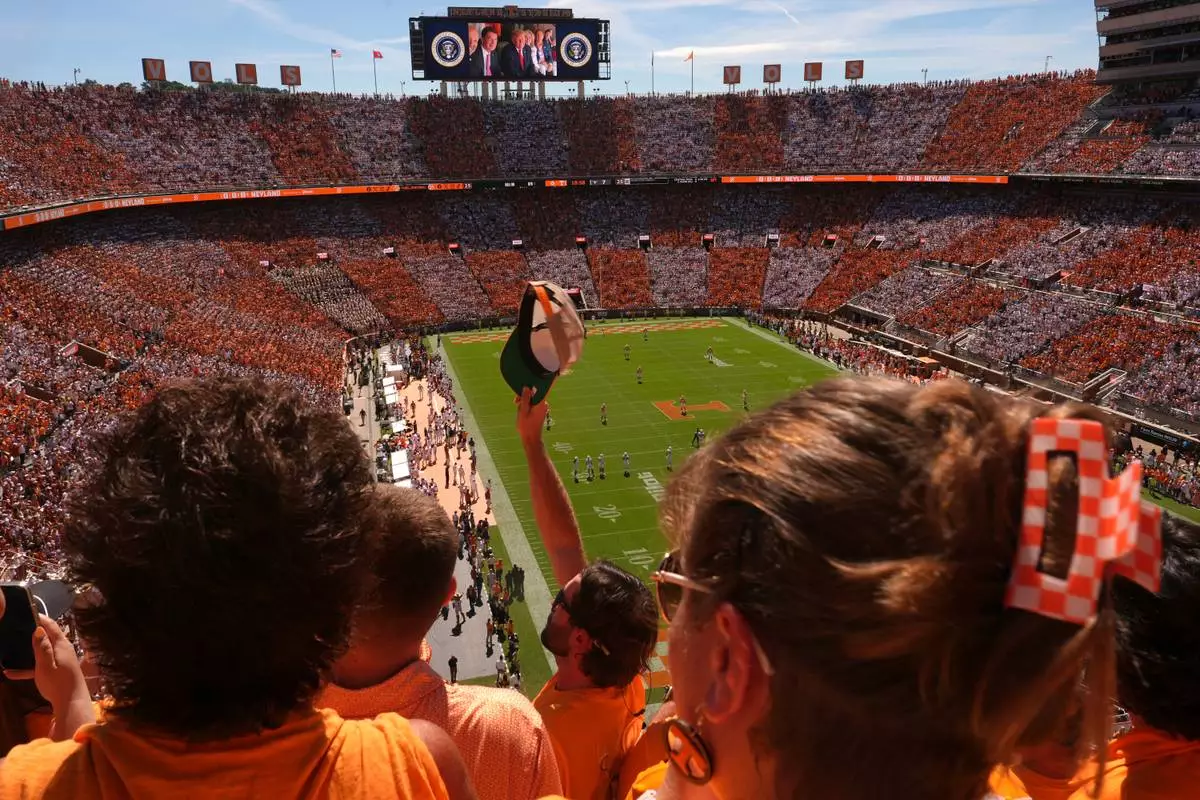
Attendees cheer as President Donald Trump is pictured on screen during an NCAA college football game between Tennessee and Texas at Neyland Stadium, Saturday, Sept. 26, 2026, in Knoxville, Tenn. (AP Photo/Julia Demaree Nikhinson)
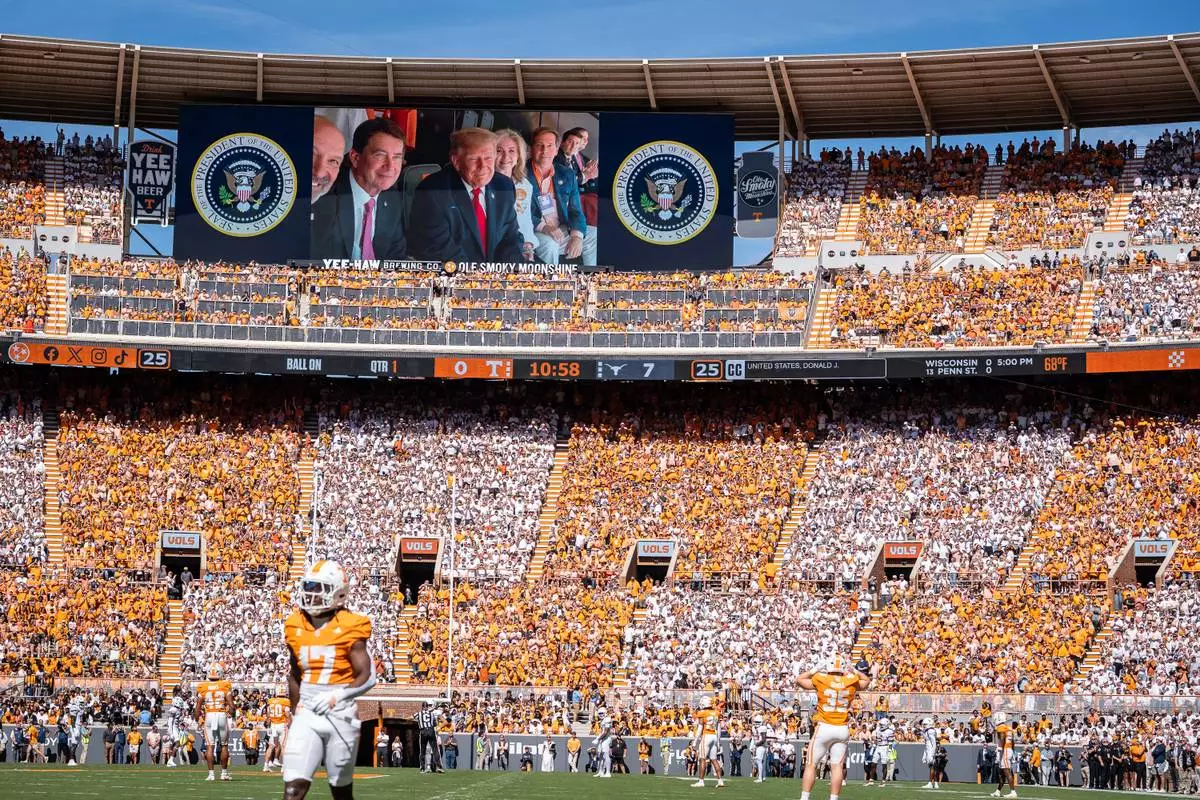
President Donald Trump is displayed on the scoreboard as he attends the Tennessee-Texas NCAA college football game in Knoxville, Tenn., Saturday, Sept. 26, 2026. (Sara Diggins/The San Antonio Express-News via AP)
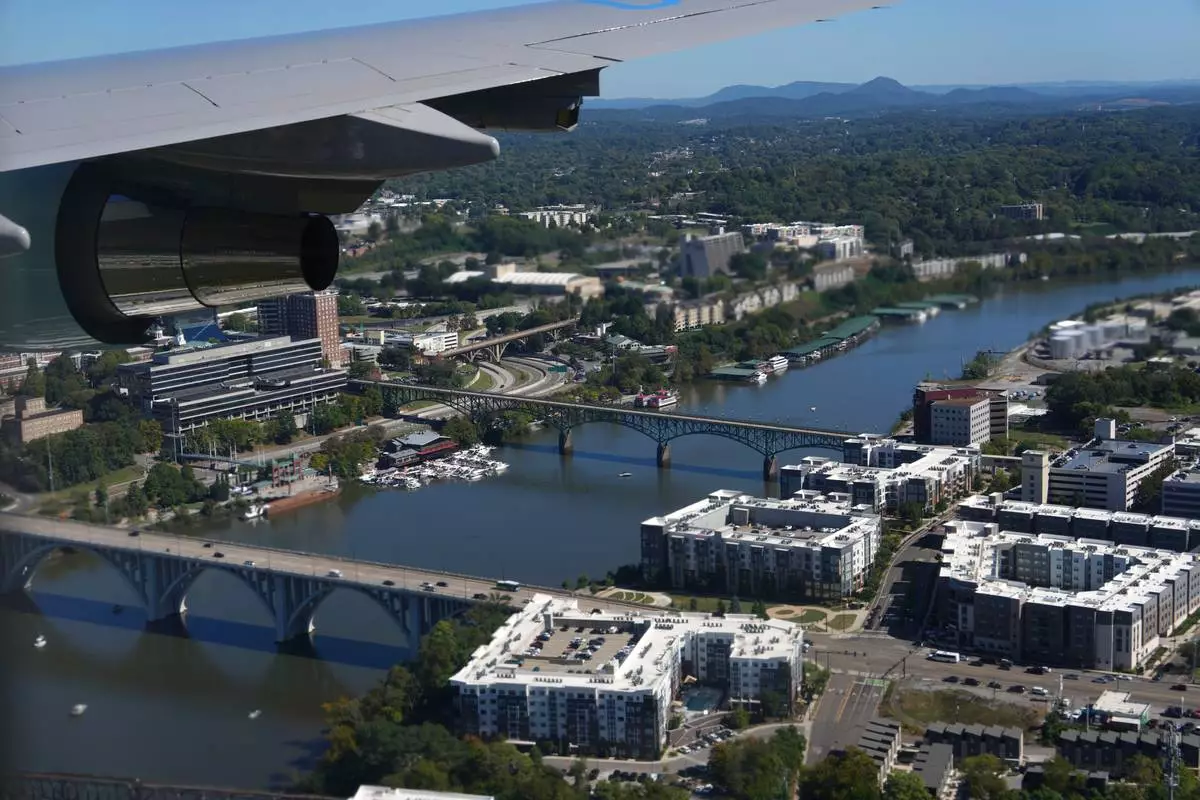
The wing of Air Force One, with President Donald Trump on board, is pictured as the plane flies over Knoxville, Tenn., en route to an NCAA college football game between Tennessee and Texas, Saturday, Sept. 26, 2026. (AP Photo/Julia Demaree Nikhinson)
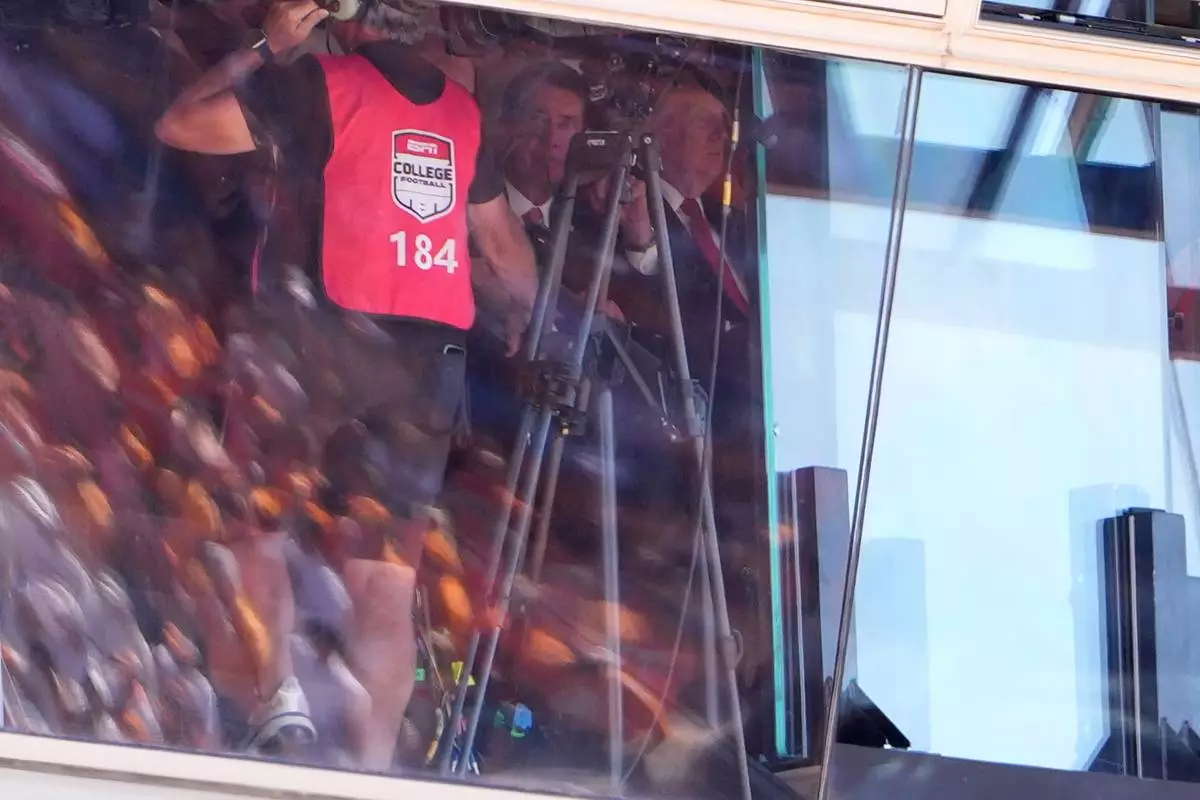
President Donald Trump, from right, and Sen. Bill Hagerty, R-Tenn., attend an NCAA college football game between Tennessee and Texas at Neyland Stadium, Saturday, Sept. 26, 2026, in Knoxville, Tenn. (AP Photo/Julia Demaree Nikhinson)
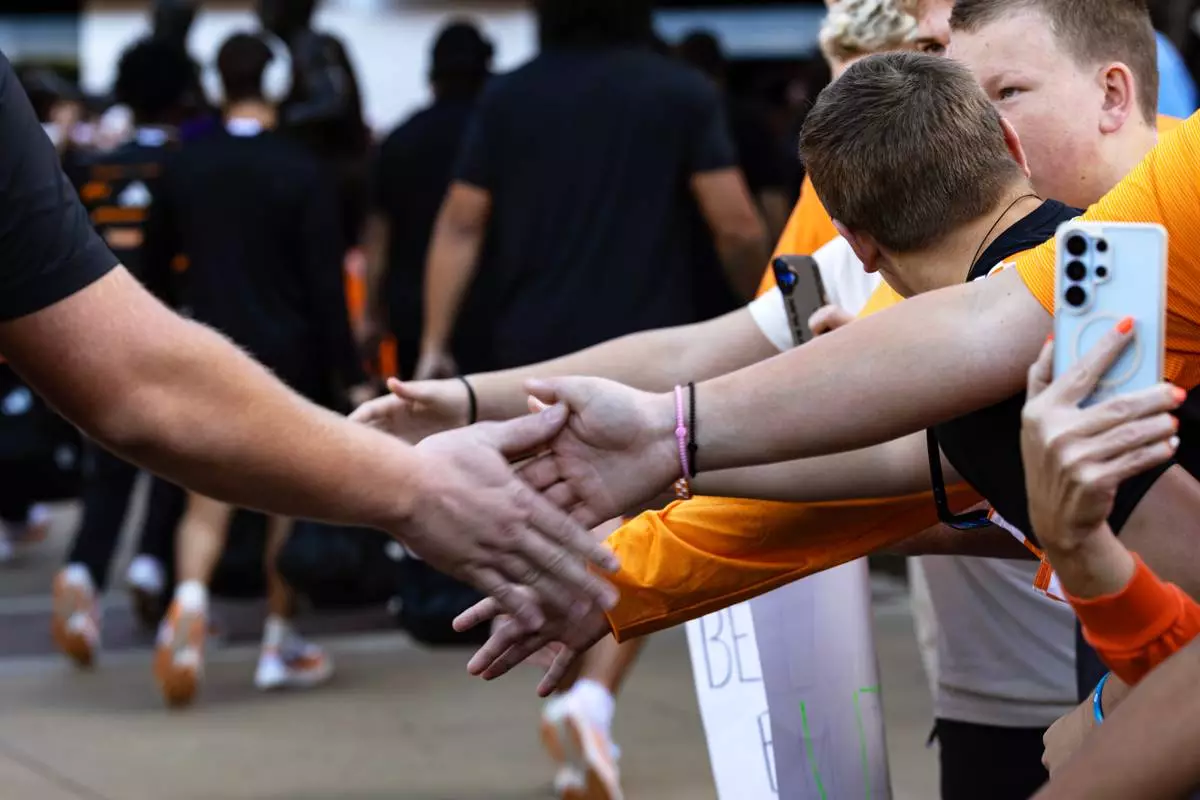
Fans greet players during the Vol Walk before an NCAA college football game between Tennessee and Texas, Saturday, Sept. 26, 2026, in Knoxville, Tenn. (AP Photo/Wade Payne)
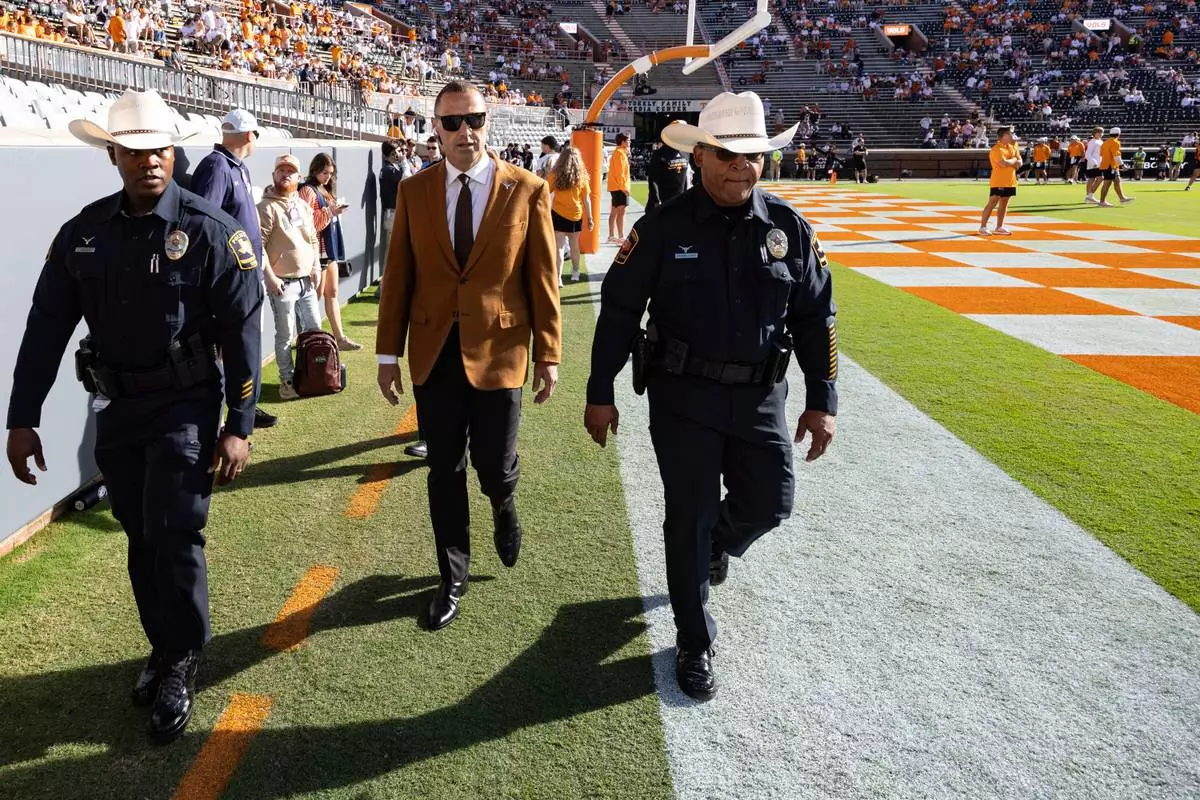
Texas head coach Steve Sarkisian is escorted into Neyland Stadium before an NCAA college football game between Tennessee and Texas, Saturday, Sept. 26, 2026, in Knoxville, Tenn. (AP Photo/Wade Payne)
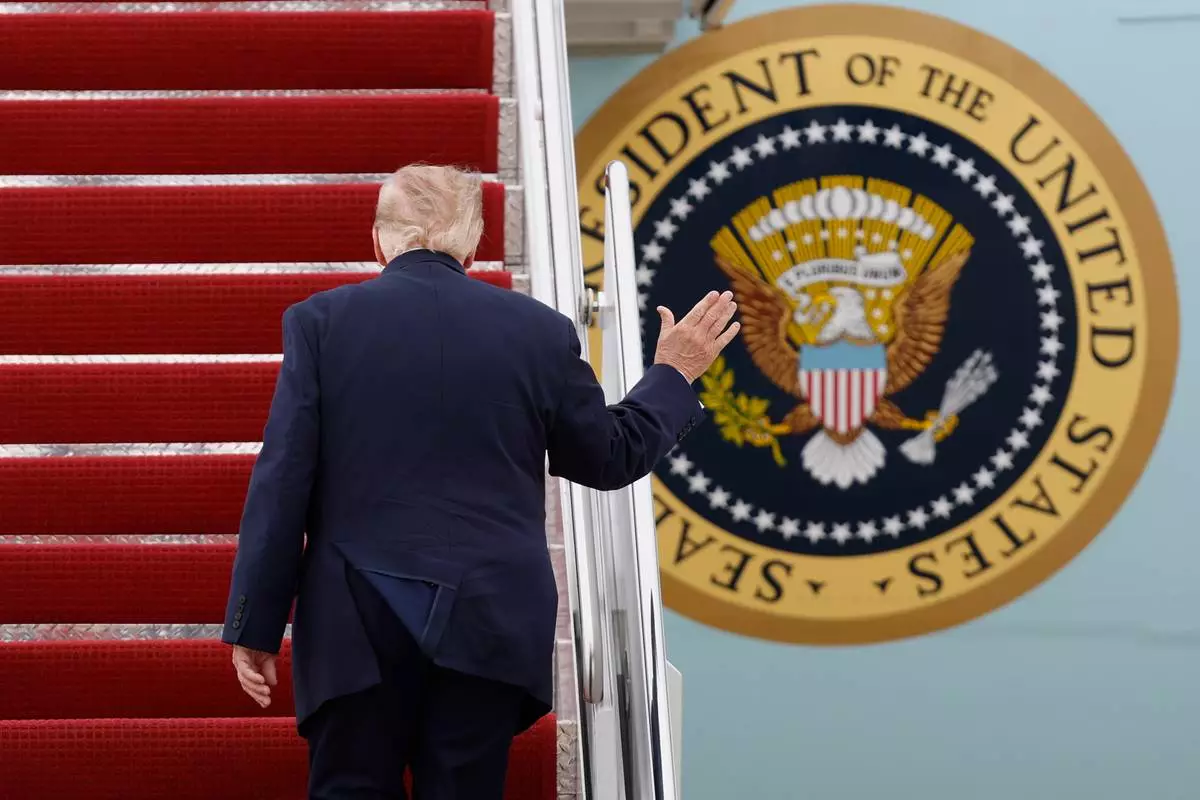
President Donald Trump walks up the stairs of Air Force One upon his departure at Joint Base Andrews, Md., Saturday, Sept. 26, 2026, en route to watch the Texas versus Tennessee NCAA college football game in Knoxville, Tenn. (AP Photo/Luis M. Alvarez)
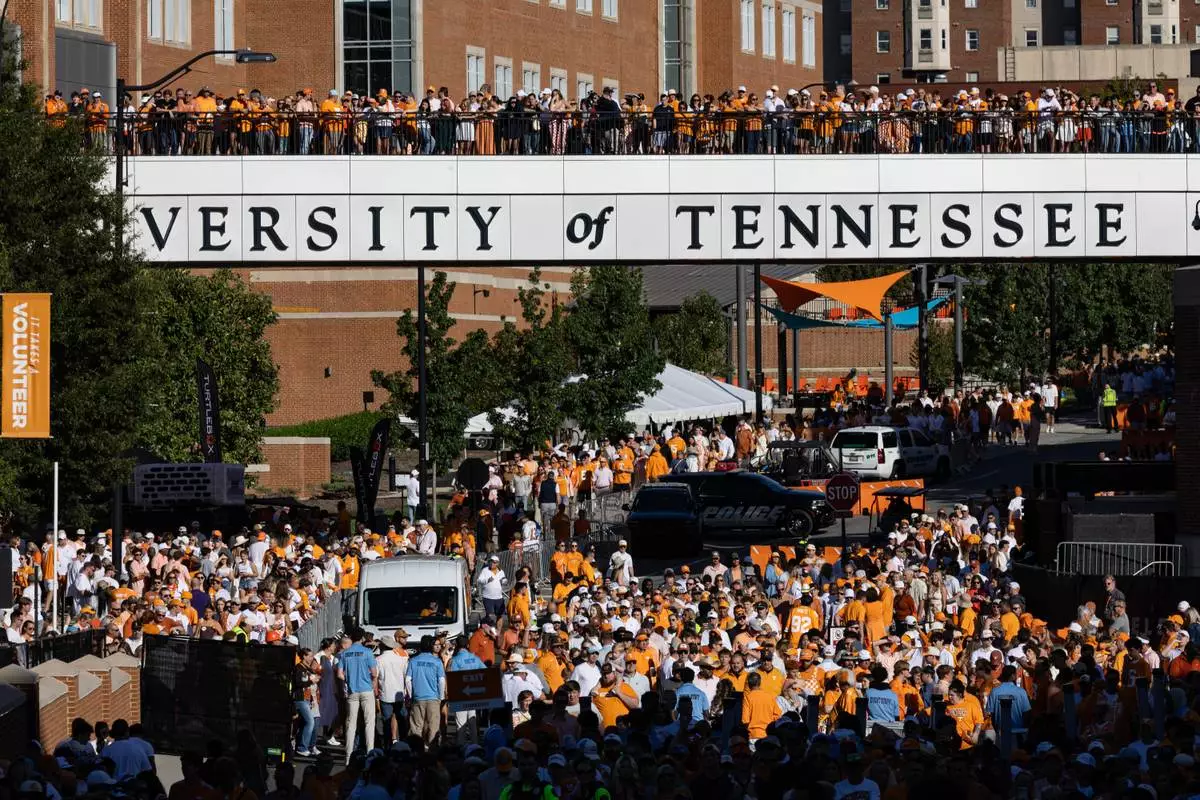
Fans watch from the bridge during the Vol Walk before an NCAA college football game between Tennessee and Texas, Saturday, Sept. 26, 2026, in Knoxville, Tenn. (AP Photo/Wade Payne)
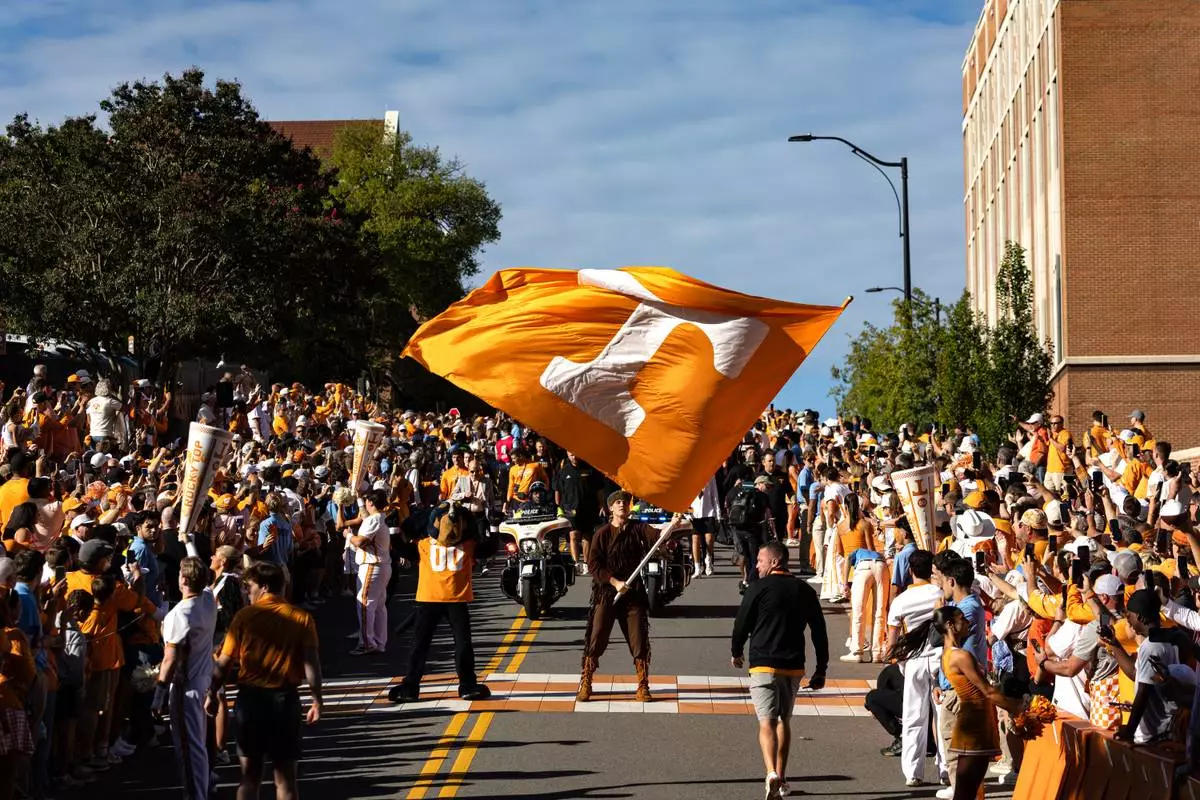
Tennessee mascot waves the Power T flag during the Vol Walk before an NCAA college football game between Tennessee and Texas, Saturday, Sept. 26, 2026, in Knoxville, Tenn. (AP Photo/Wade Payne)