Many pedestrians in Hong Kong might barely notice the steady rhythm of the “yellow box” mounted on traffic lights, but for a visually impaired resident like Lee Kai-tak, that sound is a lifeline.
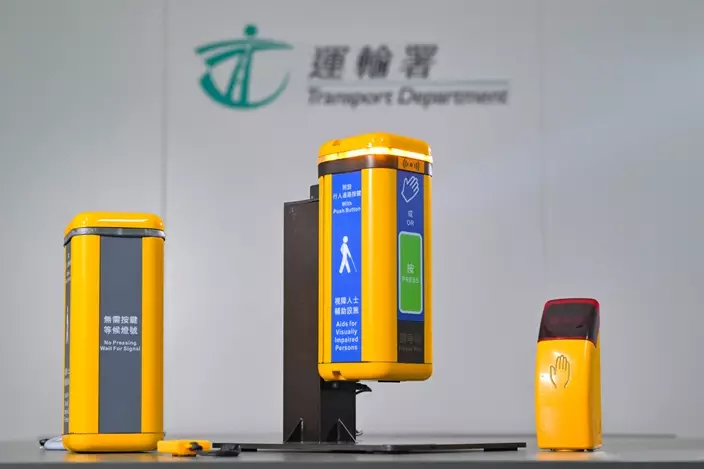
Citywide upgrade: The Transport Department has already installed new-generation electronic audible traffic signals (left and centre), featuring people-oriented designs to support visually impaired pedestrians, at more than 800 pedestrian crossings. Image source: www.news.gov.hk
The “yellow box” is the electronic audible traffic signal (eATS), which utilises sound and vibrations to alert visually impaired people to changes in pedestrian lights.
Click to Gallery
Citywide upgrade: The Transport Department has already installed new-generation electronic audible traffic signals (left and centre), featuring people-oriented designs to support visually impaired pedestrians, at more than 800 pedestrian crossings. Image source: www.news.gov.hk
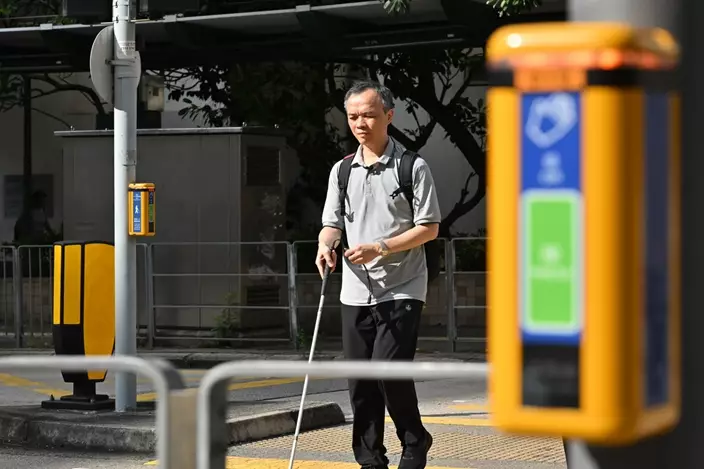
Voice guidance: Visually-impaired resident Lee Kai-tak, who often travels alone, says the voice message on audible devices at crossing locations is the feature he relies on most. Image source: www.news.gov.hk

Mindful touch: Mr Lee commends the Transport Department for incorporating feedback from the visually impaired community by developing a remote control that temporarily increases the volume of audible devices during night-time hours. Image source: www.news.gov.hk
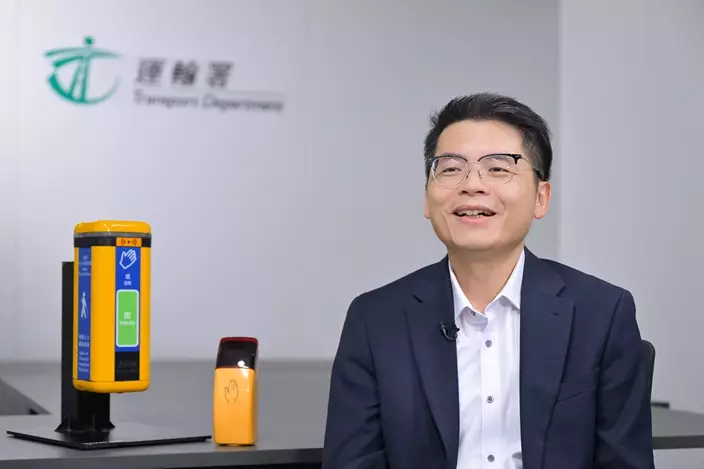
Safer commuting: Transport Department Chief Engineer (Traffic Control) Gordon Kwok says ensuring road safety and improving pedestrian facilities are key pillars of the Government’s district governance initiatives. Image source: www.news.gov.hk
While most of the original eATS have been in operation for more than two decades, the Transport Department has been progressively rolling out a new generation of devices across the city since April 2025, adding a range of people-oriented features.
As of August this year, more than 800 pedestrian crossings have been upgraded with new devices, accounting for 40% of the city’s total.
Thoughtful features
Having lost his sight more than 30 years ago, 57-year-old Mr Lee is a passionate advocate. His schedule is packed as he travels extensively across Hong Kong Island, Kowloon and the New Territories for government and organisational meetings.
As someone who usually goes out alone, he relies heavily on these audible devices to navigate the streets.
The upgrade introduces several features designed to make daily travel easier. The one Mr Lee relies on most is the voice message at crossing locations, which reads out street names in Cantonese, Putonghua and English.
“It is indispensable,” Mr Lee said. “When I am heading somewhere I do not know very well, I need to know which street I am on.”
The tactile map on the device is another key addition, helping visually impaired people get a sense of road layouts.
Voice guidance: Visually-impaired resident Lee Kai-tak, who often travels alone, says the voice message on audible devices at crossing locations is the feature he relies on most. Image source: www.news.gov.hk
Taking Hong Kong Island as an example, Mr Lee noted that the district possesses ordinary traffic lanes alongside tram tracks and mixed traffic sections shared by cars and trams. Before crossing, understanding the terrain is crucial.
Mr Lee believes that safe, comprehensive and reliable accessibility features are vital in helping visually impaired individuals integrate into the community and build a new life.
“Just imagine - a visually impaired person steps out of their building, and the first thing they have to do is to cross the road," he said. "But if we dread stepping off the kerb, with nothing to help us, where do we find the courage to face a new life?”
Fortunately, all crossings in Hong Kong are equipped with audible devices - something Mr Lee notes only a handful of cities worldwide can claim, making him proud of the city’s progress.
He is also satisfied with the pace of the replacement, especially as the department prioritises areas near organisations for the visually impaired.
User-driven design
As a long-time user, Mr Lee is not just benefiting from the new devices - he helped design them.
Collaborating closely with the department since it began exploring improvements in 2017, he and his peers inspired many of the new features.
While the new devices lower the volume at night to reduce disturbance to nearby residents, extra assistance is required if a visually impaired person needs to cross after dark.
Mindful touch: Mr Lee commends the Transport Department for incorporating feedback from the visually impaired community by developing a remote control that temporarily increases the volume of audible devices during night-time hours. Image source: www.news.gov.hk
Following discussions with Mr Lee, the department introduced a dedicated remote control and a mobile application for volume adjustments.
A total of 15,000 dedicated remote controls are being distributed by the Government through organisations for the visually impaired.
The remote is simple in design. The “1” button gives the audible signal a one-off volume boost, while the round “O” button keeps raising the volume on a loop for 20 minutes.
Mr Lee described it as a “ten-out-of-ten design” and praised the department for fully embracing the views of the community.
Making progress
“Ensuring road safety and improving pedestrian facilities are key aspects of the Government’s district governance measures,” said Transport Department Chief Engineer (Traffic Control) Gordon Kwok.
Mr Kwok described the replacement as progressing as intended, and expects the target of completing updates at about 2,000 junctions across Hong Kong will be met by late 2027.
He noted that the department prioritises areas where visually impaired people frequently pass by, such as Sham Shui Po and Kwun Tong.
Highlighting the new flexible volume control function, Mr Kwok explained that lowering the night-time sound levels of the devices by up to 5 decibels cuts resident disturbance, while the remote control or mobile application ensures safety when needed.
Safer commuting: Transport Department Chief Engineer (Traffic Control) Gordon Kwok says ensuring road safety and improving pedestrian facilities are key pillars of the Government’s district governance initiatives. Image source: www.news.gov.hk
“This is a win-win arrangement that precisely addresses public needs, while fostering a more harmonious and inclusive society,” he said.