SAINT-JUST-EN-CHAUSSÉE, France (AP) — As the lights of their small bakery flicker on in the early morning darkness, Kevin and Sandrine Luce’s oven is already cranked up to 270 degrees Celsius (518 degrees Fahrenheit) to give their latest batch of baguettes a crunchy crust.
When the couple first fired up the oven in their store in Saint-Just-en-Chaussée, a small town about 90 kilometers (55 miles) north of Paris, in March, they paid 2,230 euros ($2,540) for 2,000 liters (528 gallons) of the heating oil that it burns. Last week, they spent almost the same amount on just 1,200 liters (317 gallons).
Click to Gallery
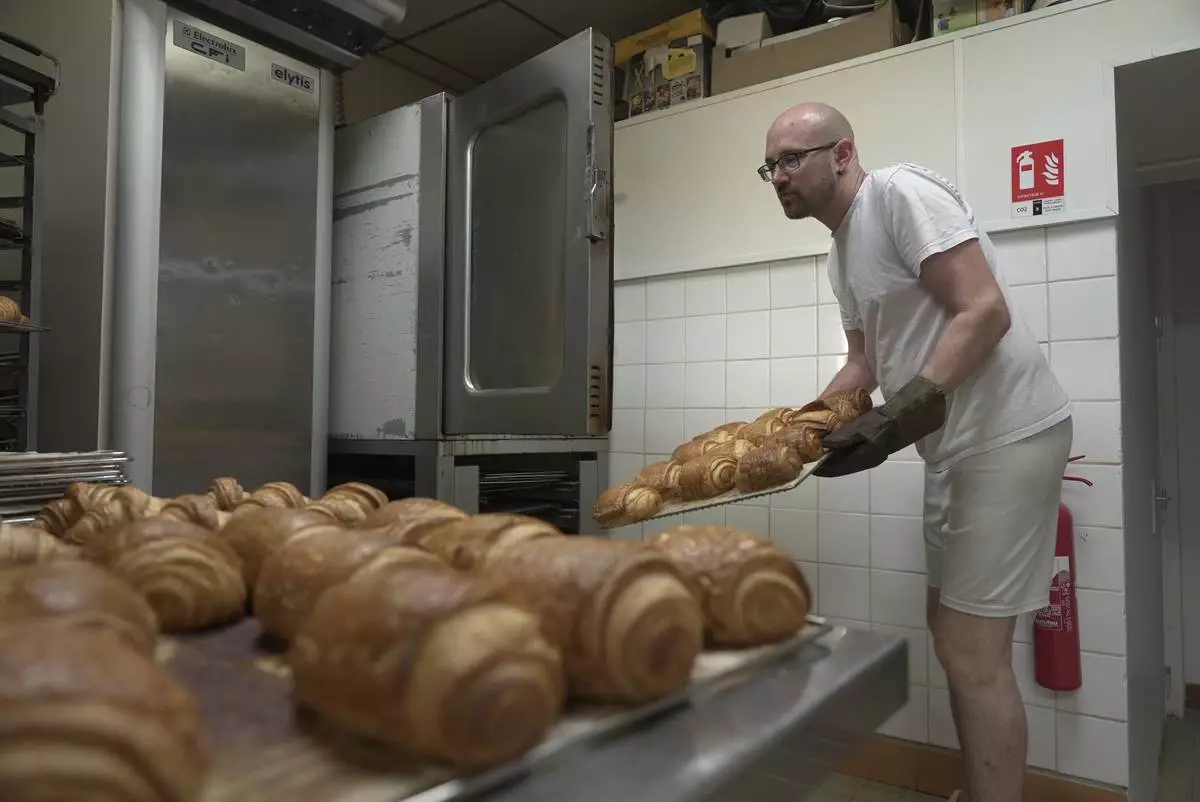
Baker Kevin Luce makes pastries in Saint-Just-en-Chaussee, France, Thursday Sept. 24, 2026. (AP Photo/John Leicester)
Martial Realland serves customers from his food truck in Saint-Just-en-Chaussee, France, Wednesday Sept. 23, 2026. (AP Photo/John Leicester)
Martial Realland's food truck in Saint-Just-en-Chaussee, France, Wednesday Sept. 23, 2026. (AP Photo/John Leicester)
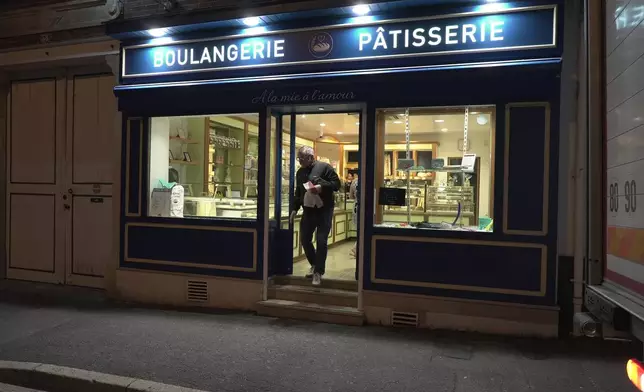
A customer leaves the bakery of Kevin Luce in Saint-Just-en-Chaussee, France, Thursday Sept. 24, 2026. (AP Photo/John Leicester)
Baker Kevin Luce makes bread in Saint-Just-en-Chaussee, France, Thursday Sept. 24, 2026. (AP Photo/John Leicester)
Fuel prices that have spiked since the start of the Iran war on Feb. 28 are dealing a hard blow to the couple and other small businesses across Europe.
“Originally, it was a good deal, because initially, a fuel-heated oven is more economical than an electric one,” Kevin Luce said. “That is until the price (of fuel) increased by 50%. So, yes, now it’s not a good deal.”
The Luces aren't alone. There are more than 34,000 bakers across France churning out around 6 billion baguettes each year, according to the national federation of bakeries and patisseries, which says that about one quarter of them use oil- or gas-fired ovens.
As customers filed through the bakery for their morning baguettes, croissants and other pastries, Luce told The Associated Press that “all this superfluous expenditure on energy represents a loss of earnings. It’s salary we can’t take, it’s salary increases we can’t give to our employees. It’s investments we can’t make.”
Although inflicting pain globally, the energy crisis is biting particularly hard in the rural expanses and communities of the European Union’s largest country by area. The roughly 21 million people who live in the countryside — about a third of the French population — often rely on cars to get around, because public transportation is limited. Rural areas make up nearly 90% of France’s territory.
The so-called yellow vest protest movement, which rocked French President Emmanuel Macron’s government during his first term in office, put down wide roots in rural towns and villages, with protesters setting up camps on roundabouts.
The demonstrations, some violent, gripped France for months. Fuel prices were one of the triggers of the anger then, a painful memory for Macron’s ministers that hangs over them now, as they wrestle with renewed angst and fury about soaring costs.
The French government responded this week with its latest aid package — worth an estimated 450 million euros (around $512 million) — for people and industries battered by the eye-watering prices at the pumps. It includes subsidies for people who commute at least 15 kilometers (9 miles) to work and support ranging from 48 euros to 277 euros ($54 to $315) to assist 5.8 million families with their winter energy bills.
Martial Realland sold his home to help realize his long-held dream of owning a food truck that he drives from village to village in the l’Oise region of northern France, selling savory ham and cheese pancakes, fries and other snacks. Filling the truck with diesel costs 200 euros (around $228), compared to 120 euros ($136) before the Iran war, he said.
“It really hurts,” he told the AP. “It’s catastrophic.”
And as the fall and winter loom, he’s also bracing for a sky-high heating bill, because the home that he rents is warmed with heating oil.
“I’m scared” of that bill, he said, estimating that filling his 1,500-liter (396-gallon) tank could cost 2,500 euros ($2,847). “Last year, it cost 1,600 euros.”
With that in mind, he may not fill the tank at all this year.
Realland said he is already turning down work that requires a long drive, because the diesel that his truck burns wouldn’t make it worthwhile financially.
Christine Loir, a lawmaker from the National Rally party of far-right presidential hopeful Marine Le Pen, said that more than 10% of homes in L’Eure, the Normandy region she represents in the National Assembly, use heating oil. The prices for the fuel are soaring, and Loir said that many can't afford to install other heating systems or better insulate their homes.
She is lobbying the government to lower taxes on heating oil, which is more commonly used in rural areas, both in homes but also by enterprises, including in some bakers’ ovens. She said some constituents have told her that this winter they’ll have to choose between heating and food.
“People are extremely worried,” Loir told the AP. “People say that if fuel prices don’t come down, they’ll stop going to work, they can't cope.”
There is at least one crumb of comfort for customers of the Luces’ bakery in Saint-Just-en-Chaussée who come not just for bread and cakes but often for a chat, too.
Their prices: 1 euro (about $1.14) for a basic baguette and 1.10 euros ($1.25) for a “traditional” baguette, which takes longer to make, aren't rising in line with fuel prices.
“I won’t change my price,” he said. “It wouldn’t be of any help. It wouldn’t soak up the lost revenue and it would be counterproductive, because our customers would feel betrayed. They shouldn’t have to pay more. They’re already paying enough at home.”
Mike Corder in The Hague, Netherlands, contributed to this report.
Baker Kevin Luce makes pastries in Saint-Just-en-Chaussee, France, Thursday Sept. 24, 2026. (AP Photo/John Leicester)

Martial Realland serves customers from his food truck in Saint-Just-en-Chaussee, France, Wednesday Sept. 23, 2026. (AP Photo/John Leicester)

Martial Realland's food truck in Saint-Just-en-Chaussee, France, Wednesday Sept. 23, 2026. (AP Photo/John Leicester)
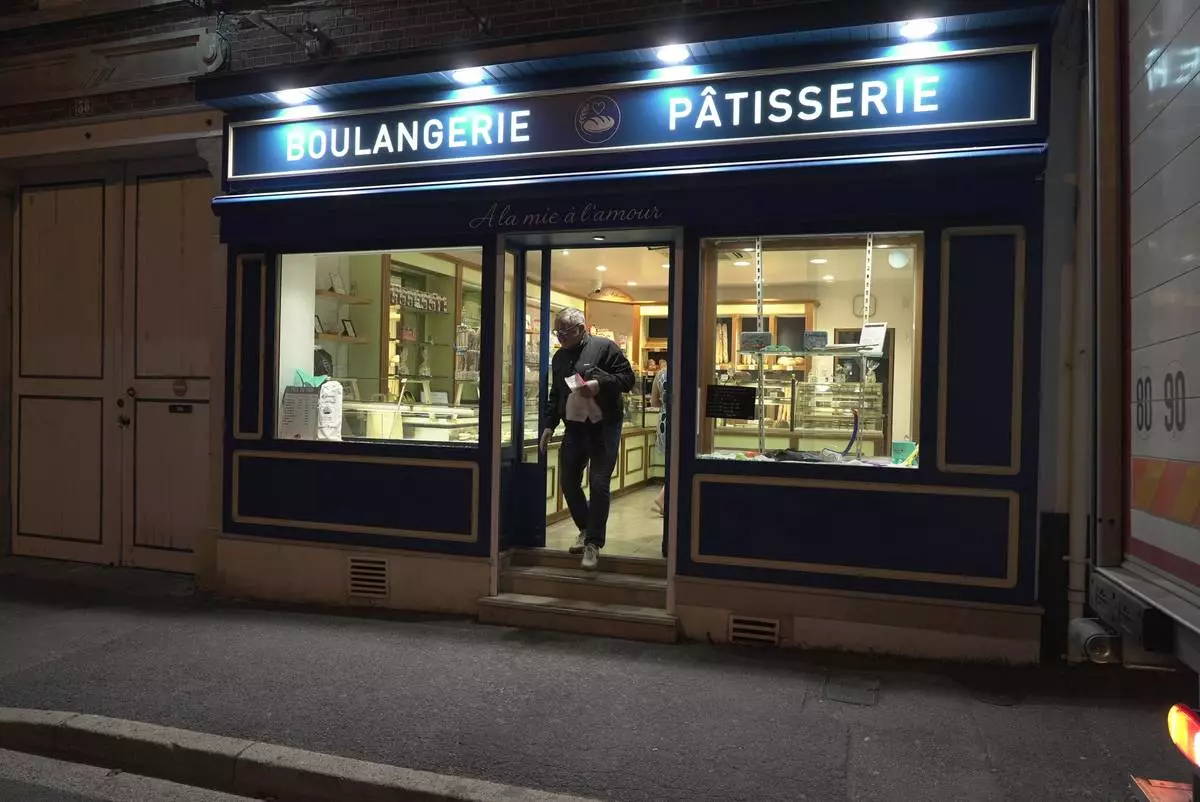
A customer leaves the bakery of Kevin Luce in Saint-Just-en-Chaussee, France, Thursday Sept. 24, 2026. (AP Photo/John Leicester)

Baker Kevin Luce makes bread in Saint-Just-en-Chaussee, France, Thursday Sept. 24, 2026. (AP Photo/John Leicester)
NASHVILLE, Tenn. (AP) — The Tennessee governor ordered an outside investigation and halted executions late Wednesday, hours after an inmate survived a lethal injection attempt.
Tennessee officials were unable to put Christa Gail Pike to death for a 1995 murder after administering two doses of a lethal drug. A death penalty expert said it was an unprecedented failure.
Gov. Bill Lee said in a statement that he has ordered “a comprehensive, third-party review to determine exactly what occurred” and that scheduled executions will not be carried out this year.
“Carrying out a lawfully imposed sentence is among the State’s most serious responsibilities, and the people of Tennessee expect it to be done in a manner that is not only legal and constitutional, but is effective,” he said.
Tennessee only has one other execution scheduled this year.
Pike, 50, had been scheduled for execution at 10 a.m. Wednesday for the killing she committed at age 18 and would have been the first woman executed in Tennessee in more than 200 years. An appeals court stopped the lethal injection just an hour before it was to start and hours later the U.S. Supreme Court overturned that stay.
Officials gave Pike two doses of pentobarbital, her attorneys said in court filings late Wednesday.
Pike was alive and loudly snoring after the attempted lethal injection and taken by ambulance from the prison, her attorneys said. She was being treated at a hospital, but they said they hadn’t been told about her condition.
The Tennessee Department of Correction said in a statement that they “followed every step of the State’s lawful, established execution protocol approved by the Attorney General’s Office.”
The state's execution protocol calls for a secondary set of drug syringes to be administered “if the inmate is not deceased” after the first set. It does not spell out what happens if the subject is alive after the second set.
Robin M. Maher, executive director of the Death Penalty Information Center, said what Pike experienced is “singular and unparalleled.”
Seven other people have survived medical problems due to an execution team's failure to access a vein to administer lethal injection drugs, but no one has stayed alive after receiving the drugs used in such executions, she said.
Media witnesses observing from a separate room said officials raised curtains to the execution chamber at 7:27 p.m., showing Pike strapped to a gurney.
“I’m going to leave this world the way I spent most of my life and that is in love,” she said in her “last” words. She described herself as at peace.
But Pike remained awake and at one point raised her head and asked prison officials if her arm was supposed to feel that way. It was not clear what she was referencing.
By 8:26 p.m., execution witnesses reported that the second dose of pentobarbital had been administered.
Pike continued to be heard snoring behind the closed curtain until the microphone was cut off at 8:53 p.m. At that time there was an announcement to escort media witnesses out of the area.
Lawyers for Pike filed an emergency motion late Wednesday to the Tennessee Supreme Court seeking to immediately halt and stay the execution, saying she was in “unnecessary agony” and it was violating her right to be executed free of cruel and unusual punishment. They also filed motions in the Sixth Circuit court and district court.
It was the second time this year that Tennessee has been unable to carry out an execution: In May state officials called off the lethal injection of Tony Carruthers, who was convicted of kidnapping and killing three people in 1994, after executioners tried and failed for over an hour to place an IV to administer pentobarbital.
Pike and her boyfriend were convicted of the fatal stabbing and beating in 1995 of 19-year-old Colleen Slemmer, their classmate at a job training facility in Knoxville. The case garnered widespread attention in part because of a pentagram that was carved on Slemmer’s body and other elements of the crime stoked fears of Satan worship during the “satanic panic” of the 1980s and 1990s.
Pike was initially scheduled to be put to death in the morning, and witnesses had gathered at the Riverbend Maximum Security Institution in Nashville when the 6th Circuit U.S. Court of Appeals voted 2-1 to issue a stay. That court said a delay was needed to consider whether Pike’s allegations of childhood sexual abuse were fully considered at her sentencing.
The attorney general’s office appealed to the Supreme Court, saying that halting the execution at the last moment traumatized Slemmer’s family and rewarded “abusive delay tactics” by Pike’s attorneys.
Later in the day, the high court cleared the way for the execution to proceed. The conservative majority did not explain their order, while the three liberal members signed a dissent that said Pike’s claims deserved a closer look.
Pike did not deny committing the killing, but her supporters argued that the state should consider her age at the time, her mental illness and her allegations of severe sexual abuse.
As the execution date drew near, debate renewed over the death penalty for young offenders.
Assistant Federal Defender Stephen Ferrell said Pike’s death sentence is an outlier because other 18-year-olds in Tennessee have had such sentences vacated.
After the killing, Pike was diagnosed with bipolar disorder and post-traumatic stress disorder. In her clemency petition, she said she only wanted to fight Slemmer but killed her in a frenzied attack when she couldn’t “put the brakes on.”
“I was a mentally ill 18-year-old kid. It took me numerous years to even realize the gravity of what I’d done,” Pike said in a statement.
Slemmer’s mother had come to the prison in the hopes of seeing the lethal injection go forward. She's said she has waited decades to see Pike’s sentence carried out.
“Every time I think about it, I think about Colleen feeling that pain and trying to get up and run,” May Martinez told The Associated Press in a telephone interview on Saturday.
Martinez said her daughter’s age also should matter in deciding Pike’s fate.
“Not a day goes by, or a minute goes by that I do not think about Colleen,” she said, noting that her daughter would have turned 51 in September.
The killing rocked the city of Knoxville. Prosecutors said Pike, fearing Slemmer was trying to steal her boyfriend, lured her to a wooded area on Jan. 12, 1995. Pike cut Slemmer with a box cutter and beat her with a large chunk of asphalt. Shipp, Pike’s boyfriend, has admitted that he was the one who carved a pentagram, a star-shaped symbol associated with Satan, into her body.
Shipp was 17 when the crime happened and received a sentence of life in prison with the possibility of parole. Pike was the only one sentenced to death.
Since the Supreme Court reinstated the death penalty in 1976, 18 women have been put to death, representing about 1% of all executions, according to the Death Penalty Information Center.
Pike would have been the 30th person executed in the U.S. this year after Florida carried out an execution on Tuesday.
Tennessee announced in 2024 that it was switching from a three-drug series for lethal injections to the single drug pentobarbital. That came more than two years after the state abruptly halted the execution of Oscar Smith and acknowledged that it had failed to ensure its lethal injection drugs were tested properly.
This story has been updated to correct that Pike had been scheduled for execution at 10 a.m. local time, not 11 a.m. and that the lawyers filed an emergency motion to the Tennessee Supreme Court, not U.S.
Associated Press writers Jeffrey Collins in Columbia, South Carolina, Ed White in Detroit and Hallie Golden in Seattle contributed.

Emergency vehicles arrive at Riverbend Maximum Security Institution after the execution of Christa Pike was halted Wednesday, Sept. 30, 2026, in Nashville, Tenn. (AP Photo/George Walker IV)

May Martinez, left, mother of murder victim Colleen Slemmer, walks out of Riverbend Maximum Security Institution during a stay of the planned execution of Christa Pike, Wednesday, Sept. 30, 2026, in Nashville, Tenn. (AP Photo/George Walker IV)
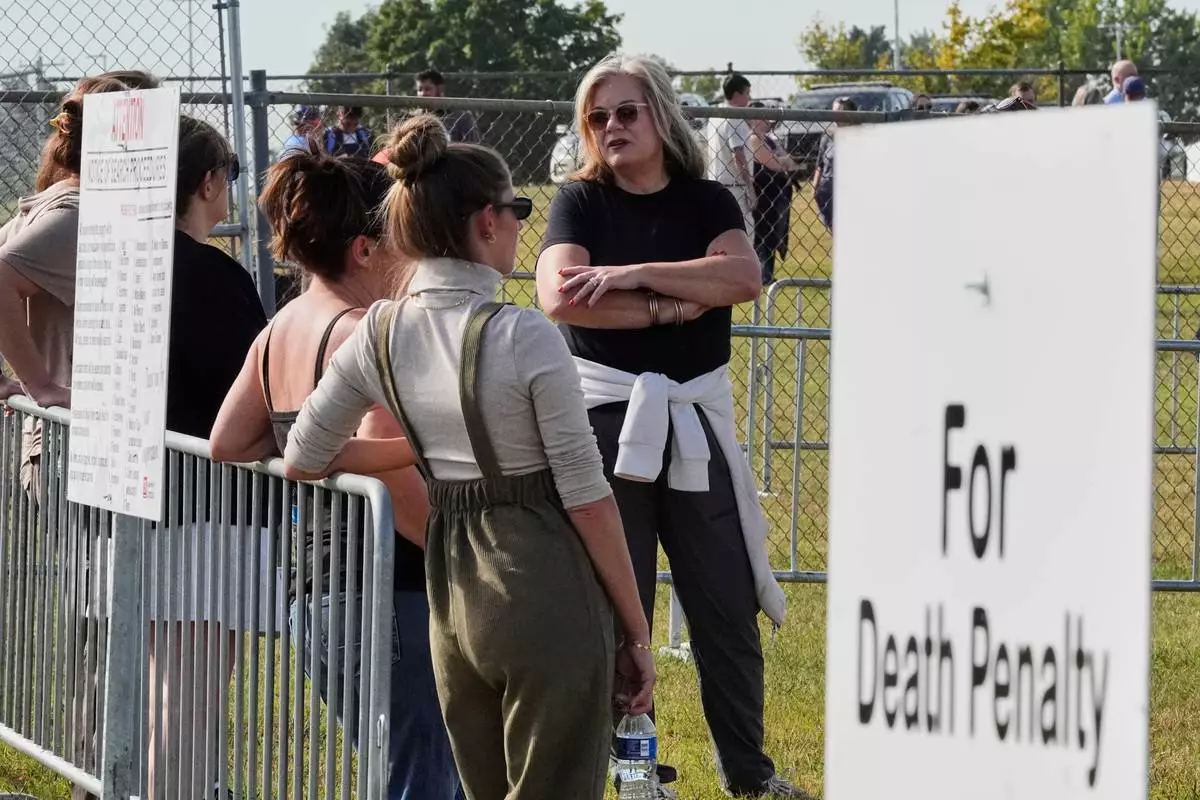
Leslie Brown, right, stands with others in the area reserved for people in favor to the death penalty outside Riverbend Maximum Security Institution before the planned execution of Christa Pike, Wednesday, Sept. 30, 2026, in Nashville, Tenn. (AP Photo/George Walker IV)
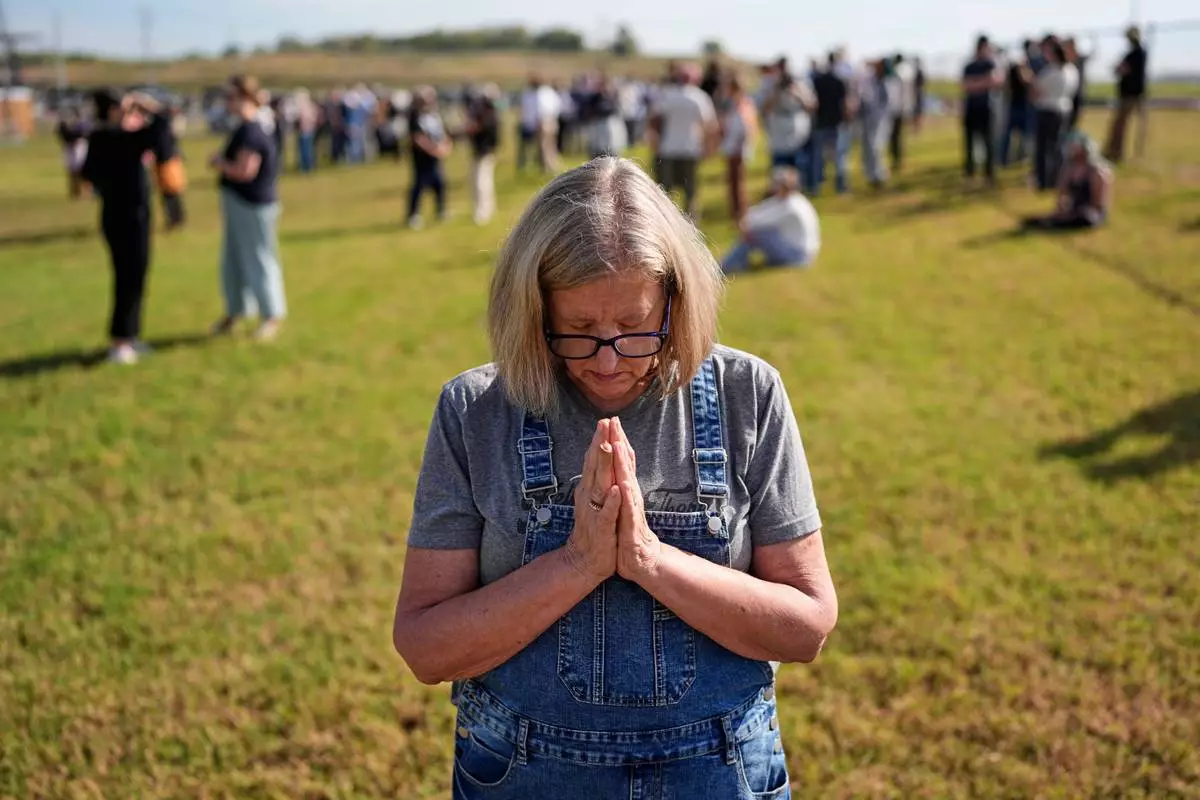
Kathleen Walter prays in the area reserved for people opposed to the death penalty outside Riverbend Maximum Security Institution before the planned execution of Christa Pike, Wednesday, Sept. 30, 2026, in Nashville, Tenn. (AP Photo/George Walker IV)

Abraham Bonowitz speaks during a March 4 Mercy protest against the death penalty at the Tennessee State Capitol, Sunday, Sept. 27, 2026, in Nashville, Tenn. ahead of the Sept. 30th scheduled execution of Christa Pike. (AP Photo/George Walker IV)

Alonzo Hughes participates in a March 4 Mercy protest against the death penalty at the Tennessee State Capitol, Sunday, Sept. 27, 2026, in Nashville, Tenn. ahead of the Sept. 30th scheduled execution of Christa Pike. (AP Photo/George Walker IV)

In this image from video provided by WBIR-TV, Christa Pike cries after being sentenced to death on March 30, 1996 in Knoxville, Tenn. (WBIR-TV via AP)
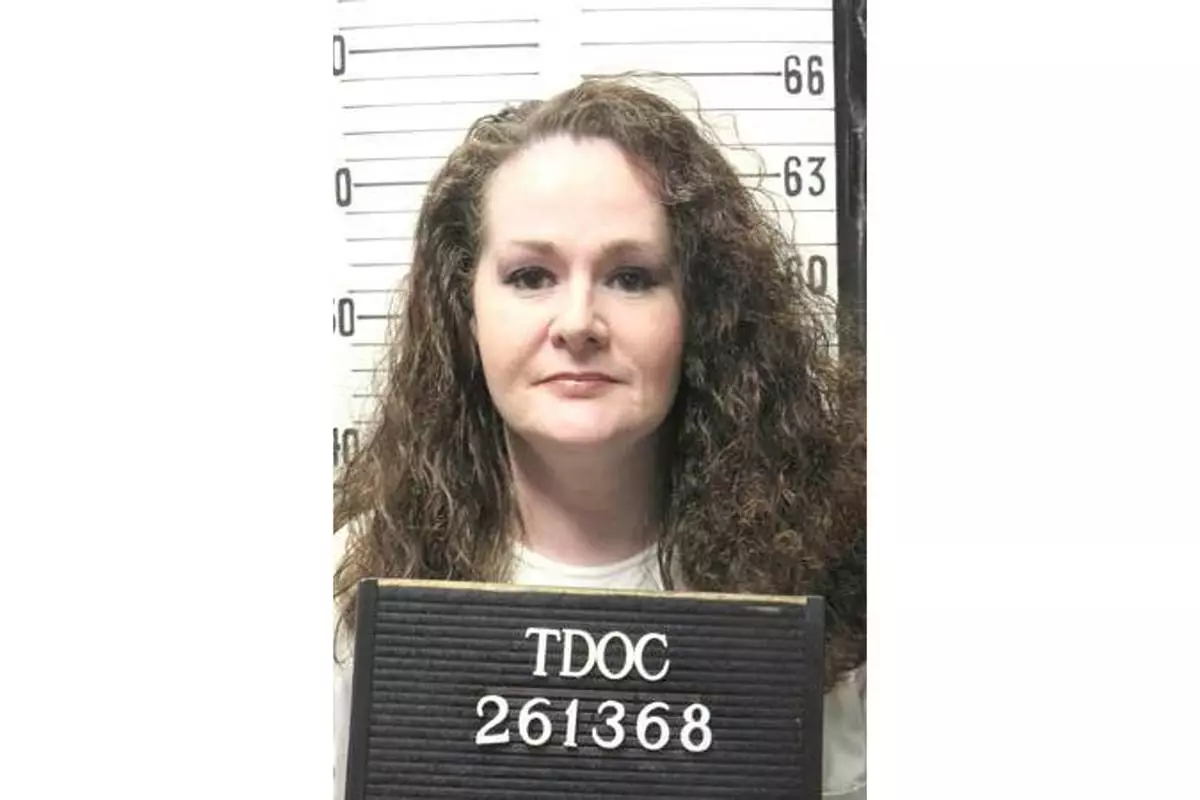
This photo provided by the Tennessee Department of Correction shows Christa Pike on Jan. 12, 2023. (TDOC via AP)