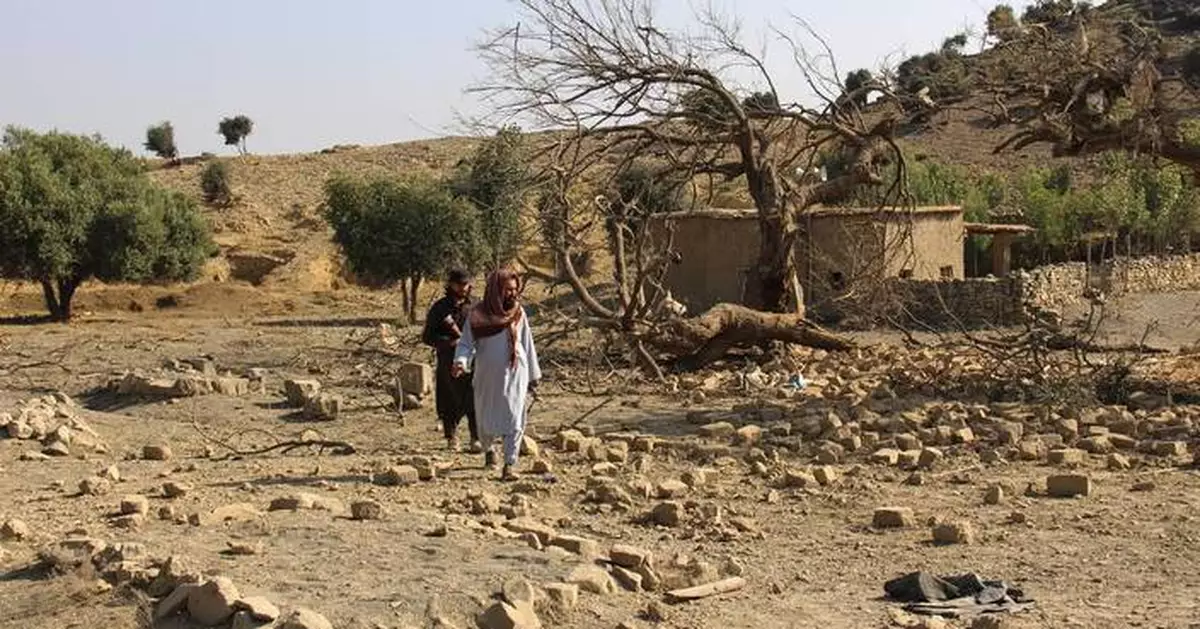
KABUL, Afghanistan (AP) — Afghanistan said on Sunday that its forces killed 28 fighters and captured 32 others, including alleged members of the Islamic State group said to have crossed from neighboring Pakistan.
Tensions between Pakistan and Afghanistan have increased in recent days, with cross-border fighting and Pakistani airstrikes on Afghan territory adding to longstanding disputes over militant activity along their border.
Afghanistan's Defense Ministry said in a post on X that the fighters were killed or captured on Saturday in Kamdesh district in the northeastern province of Nuristan. It alleged that several IS-affiliated groups had been sent from Pakistan with the support of Pakistani authorities “with the aim of carrying out acts of subversion and creating insecurity.”
Afghanistan does not recognize its frontier with Pakistan as an international border. The countries share a 2,611-kilometer (1,622-mile) boundary known as the Durand Line.
Pakistan’s Ministry of Information rejected the allegations as “frivolous, baseless and devoid of any truth.” In a post on X, it said Pakistan “categorically rejects” claims that its security forces or intelligence agencies were involved in clashes in Nuristan or elsewhere in Afghanistan. It also denied recruiting or training former Afghan security personnel or facilitating IS or other militants.
The ministry said Afghanistan had provided no evidence to support its allegations, including identities, documents, communications or forensic material. It dismissed a video circulating on social media as showing only a few unarmed people and described it as part of a “pre-planned video shoot” by Afghanistan’s Taliban government.
Pakistan said the presence and activities of militant groups in Afghanistan had been documented in reports by the United Nations and other international organizations. It accused Kabul of trying to “manufacture a Pakistani connection” to obscure what it described as the continued presence of militants in Afghanistan.
Meanwhile, Pakistan’s military said Sunday that its forces had killed more than 71 militants during multiple operations in southwestern Balochistan province over the previous 96 hours. The military said the operations targeted hideouts of groups it refers to as Fitna al-Khawarij and Fitna al-Hindustan, terms used by Islamabad for Afghanistan-based Pakistani Taliban and members of the outlawed Baloch Liberation Army, or BLA.
Pakistan frequently accuses Afghanistan’s Taliban government of allowing the Pakistani Taliban, formally known as Tehrik-e-Taliban Pakistan, or TTP, to operate from Afghan territory and carry out attacks inside Pakistan. The TTP is separate from Afghanistan’s Taliban but is allied with it. Kabul denies providing the group a safe haven and has rejected Pakistan’s accusations.
The latest hostilities followed Pakistani airstrikes Monday on sites in eastern Afghanistan that Pakistan described as militant hideouts. Pakistan said the strikes killed 28 militants, while Afghan authorities said three civilians were killed, a toll confirmed by the United Nations.
The Afghan Defense Ministry said most of those involved in the alleged Nuristan plot were former members of Afghanistan’s military who served under the previous government, which was ousted when the Taliban returned to power in August 2021.
“According to available information, Pakistani intelligence agencies had brought them to Pakistan under the promise that arrangements would be made for them to obtain asylum in foreign countries and receive high salaries,” the ministry said.
It alleged that the men were instead taken to camps established by Pakistan’s military and intelligence agencies, given brief military training and sent back into Afghanistan to create insecurity in parts of Nuristan, which borders Pakistan’s northern Chitral district.
The ministry called on “all young people and former military personnel who have been deceived by Pakistani intelligence agencies” not to become further victims of what it described as enemy conspiracies.
Ahmed reported from Islamabad.
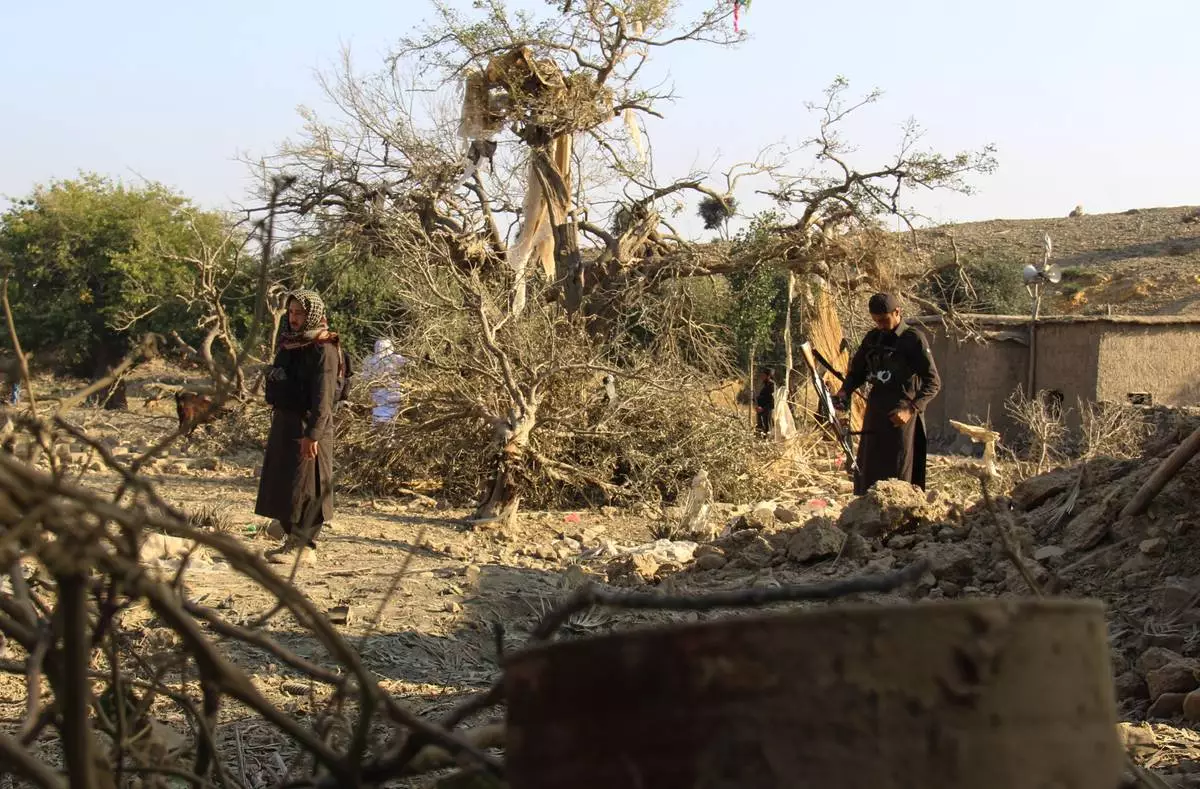
Taliban security officers inspect the scene of what Taliban officials said were Pakistani airstrikes in Khost province, Afghanistan, Thursday, Sept. 24, 2026. (AP Photo/Saifullah Zahir)
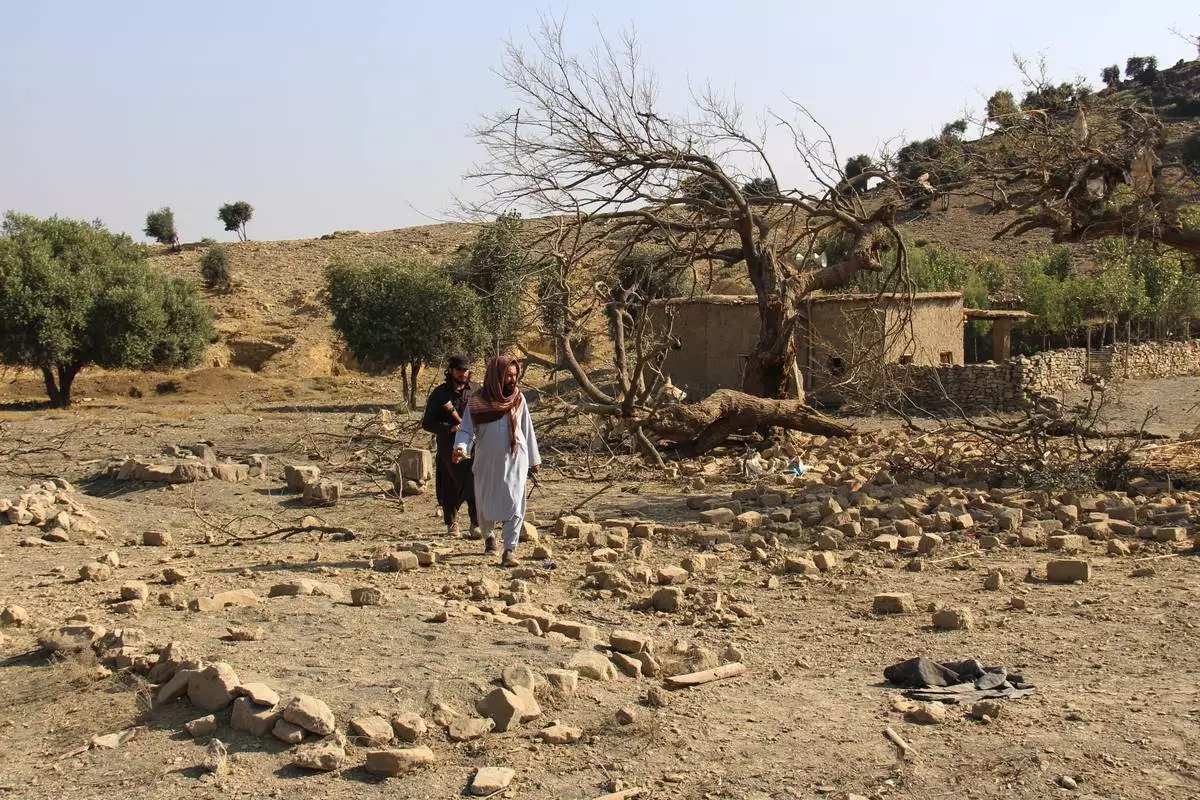
Taliban security officers inspect the scene of what Taliban officials said were Pakistani airstrikes in Khost province, Afghanistan, Thursday, Sept. 24, 2026. (AP Photo/Saifullah Zahir)
LOURDES, France (AP) — Pope Leo XIV blasted the legalization of medically assisted death as immoral “false compassion,” as he doubled down on Catholic teaching about life during a visit Sunday to Lourdes, the French Catholic shrine associated with miraculous cures of the sick.
On his third day in France, Leo again waded into the end-of-life debate that has erupted in countries around the world. It roiled French politics for years before resulting recently in legislation allowing adults with incurable illnesses to receive lethal medication.
Leo's visit to the once staunchly Catholic and officially secular France has been marked by huge crowds — 800,000 at Leo's Mass on Paris' iconic Place de la Concorde — and his messaging against abortion and assisted dying.
On Sunday, the American pope celebrated Mass before some 150,000 people — many in wheelchairs — on the prairie next to Lourdes' main basilica. He then visited a care center for sick people on the sanctuary's grounds. He sought to encourage especially those who live in “terrible pain” that they have inherent dignity that no law or algorithm can “eliminate.”
“On the contrary, it is precisely in the name of this inalienable dignity of the human person that we must reject the temptation to cause death under the guise of false compassion,” he said. “What is legal is not necessarily moral,” Leo said to applause from the crowd.
Lourdes became a major pilgrimage destination after the Catholic Church officially recognized visions of the Virgin Mary reported here by a young girl in 1858. The site near the Spanish border draws millions of pilgrims each year, especially sick and disabled believers hoping for a cure from the famed spring water in the Lourdes grotto where the visions purportedly occurred.
Leo arrived in Lourdes from Paris on Saturday night and immediately prayed inside the Grotto of Apparitions and drank from the spring.
“He has given a message of hope for France, a message of hope and greatness for France, and renewal for France," said Paris pilgrim Pierre Caziljc.
In France, Leo has repeatedly called for a renewed respect for life in keeping with Catholic teaching that all human life must be protected and defended from conception until natural death. The teaching translates into firm opposition to abortion, euthanasia and medically assisted dying.
In Lourdes, where the church has recognized 72 “miraculous” cures as authentic, the question of respecting even the most frail, sick and vulnerable is particularly acute.
“Your crutches, your wheelchairs and your hidden tears are not obstacles; instead, they are the very place where you are fully respected and welcomed,” Leo said in his homily. “Lourdes is blessed as a place for professing the beauty and sanctity of life, for life is welcomed here as a precious gift from God.”
More recently, Lourdes has also become a place of healing for survivors of clergy sexual abuse. Leo was to meet with seven survivors later Sunday, including one who was abused as an adult, in recognition of the new frontier of the abuse crisis facing the church.
The French church has endured a brutal reckoning with its legacy of abuse. An independent report in 2021 estimated 330,000 children had been abused over 70 years by some 3,000 priests and church workers.
Despite criticism of the report’s methodology and conclusions, French bishops put in place an independent system of compensation for victims that to date has recommended the church pay out more than 20 million euros ($22.7 million).
During a meeting with French bishops on Sunday morning, Leo praised their response to victims and urged them to continue. But he also acknowledged that the cratering in priestly vocations in the French church is related to the scandal, given the priesthood is now sometimes viewed with suspicion.
“For priestly vocations to flourish, the priest must be welcomed, accepted, and loved,” Leo said.
On the day Leo arrived in Paris, a group of victims wrote an open letter asking him to acknowledge the church’s responsibility in the scandal, highlighting what critics see as the conflict of interest of bishops being asked to be both spiritual fathers to their priests and judges when they abuse.
“The Church must relinquish its position as both judge and party to the proceedings,” the victims wrote in the letter published by French newspaper Liberation. The victims also complained that only seven of them would meet with Leo, chosen by the church.
Monsignor Pierre-Antoine Bozo, spokesperson for the bishops’ conference, said Leo intentionally wanted to keep the group small to facilitate an intimate encounter.
“When it comes to listening to them, you can’t have 50 people in front of you,” he said. “So I think that’s really what the pope chose: to listen so that we can act and respond more effectively."
In Lourdes, Leo was also reminded of a prickly abuse case inherited from Pope Francis.
The façade of one of the Lourdes basilicas was designed by the Rev. Marko Rupnik, a religious mosaic artist.
Rupnik is currently on trial in a Vatican court, accused by more than two dozen women of having psychologically, spiritually and sexually abused them starting in the 1990s, including during the creation of his artworks.
His case was covered up for three decades by his Jesuit superiors, and even Francis was suspected of having protected his fellow Jesuit. In response to a media outcry, Francis ordered a canonical trial in 2024, which is ongoing.
The Rupnik case posed the question of what to do with his mosaics, which adorn basilicas around the world.
Lourdes Bishop Jean-Marc Micas in 2025 decided cover the façade of the Notre Dame du Rosaire Basilica, reasoning that abuse victims who come to Lourdes for healing shouldn’t be forced to see them.
On Sunday, Leo looped in front of the basilica in his popemobile, passing by the mosaic panels now covered by mustard-colored curtains affixed with plastic ties.
In a letter to Leo ahead of his trip, five women who say they were abused by Rupnik praised Micas’ decision to cover the mosaics. But they criticized the Vatican’s handling of their case and the three decades it has taken for them to be heard.
“This prolonged and loud silence has been experienced by us, the victims, as a further, continuous violence,” they wrote.
Associated Press writer Samuel Petrequin in Paris contributed to this report.
Associated Press religion coverage receives support through the AP’s collaboration with The Conversation US, with funding from Lilly Endowment Inc. The AP is solely responsible for this content.
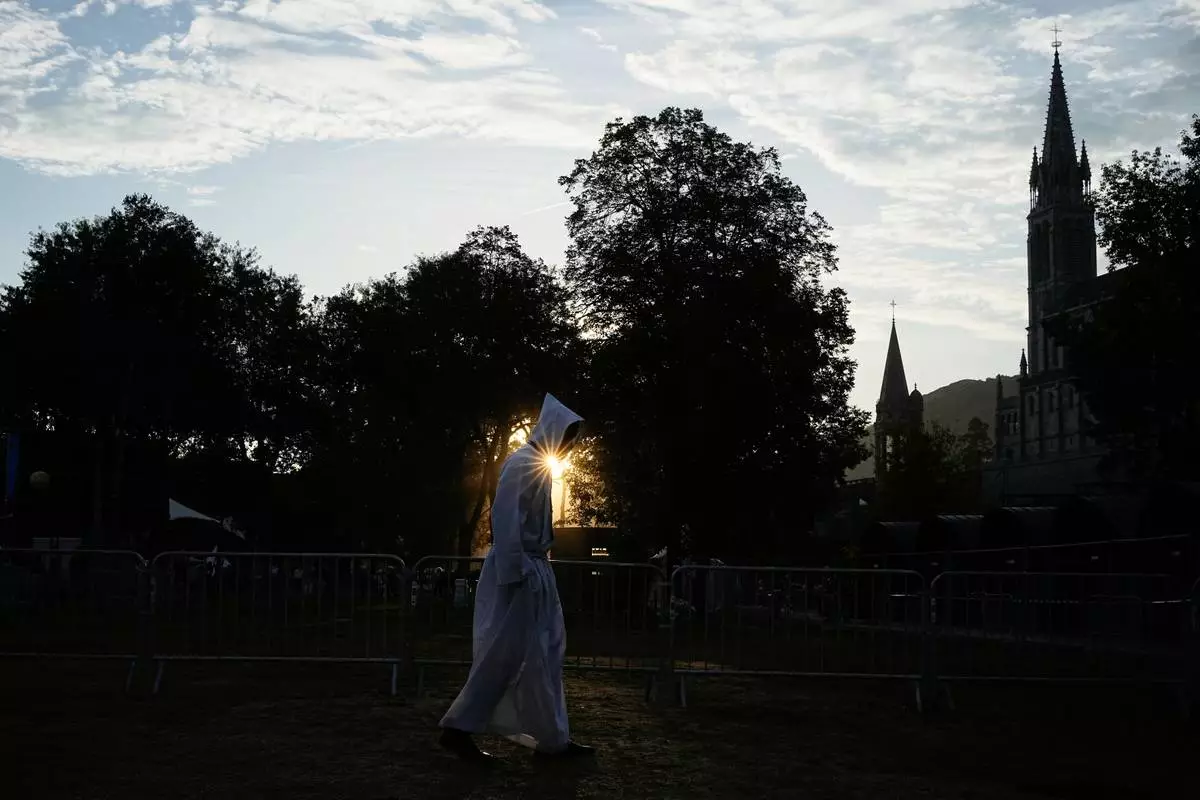
A priest arrives for a Mass celebrated by Pope Leo XIV at the Sanctuary of Our Lady of Lourdes, Sunday, Sept. 27, 2026. (AP Photo/Laurent Cipriani)
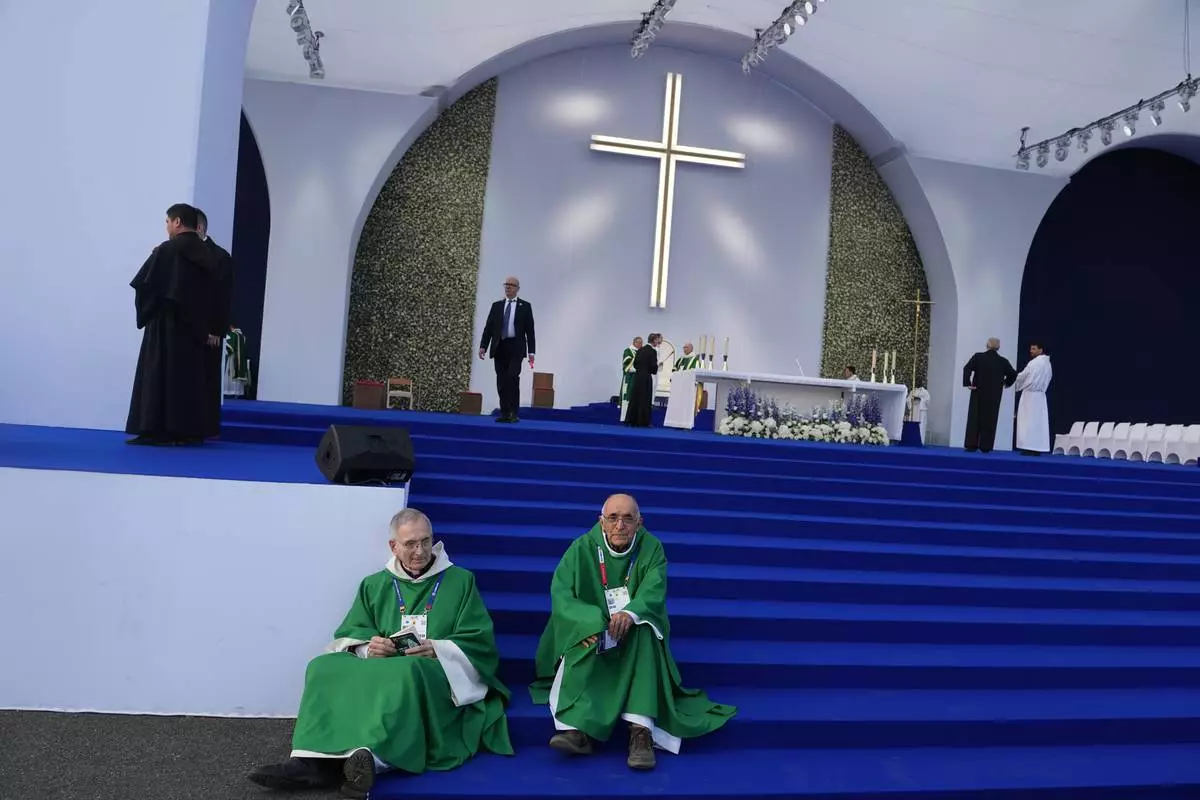
Priests sit before a Mass celebrated by Pope Leo XIV at the Sanctuary of Our Lady of Lourdes, France Sunday, Sept. 27, 2026. (AP Photo/Thibault Camus)
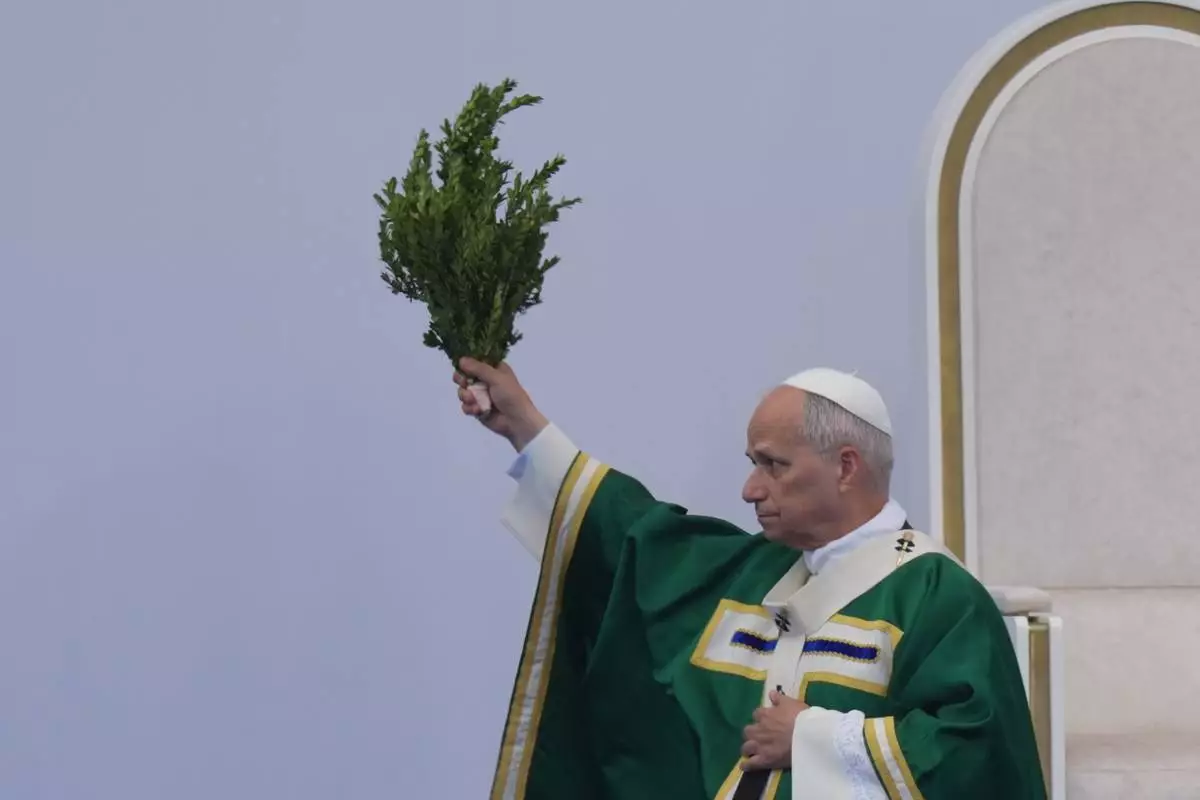
Pope Leo XIV celebrates Mass at the Sanctuary of Our Lady of Lourdes, France, Sunday, Sept. 27, 2026. (AP Photo/Thibault Camus)
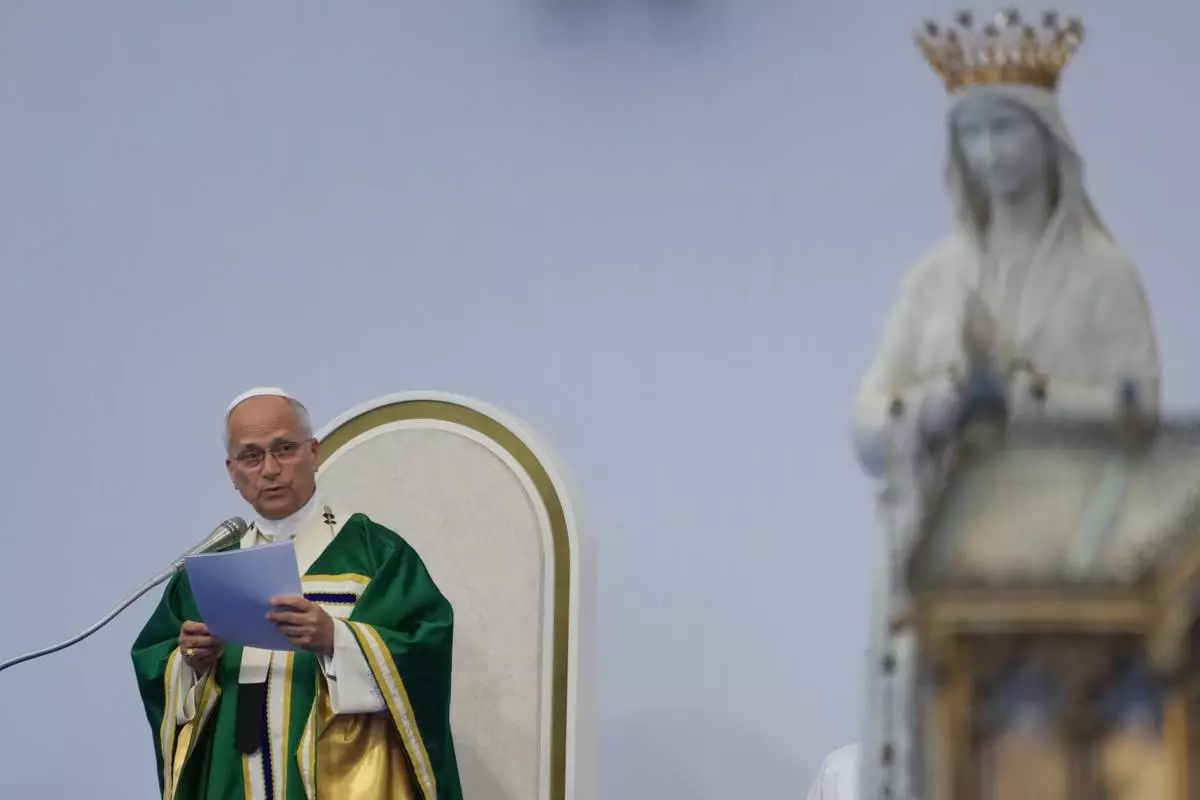
Pope Leo XIV presides over Mass at the Sanctuary of Our Lady of Lourdes, Sunday, Sept. 27, 2026, in Lourdes, France. (AP Photo/Gregorio Borgia)
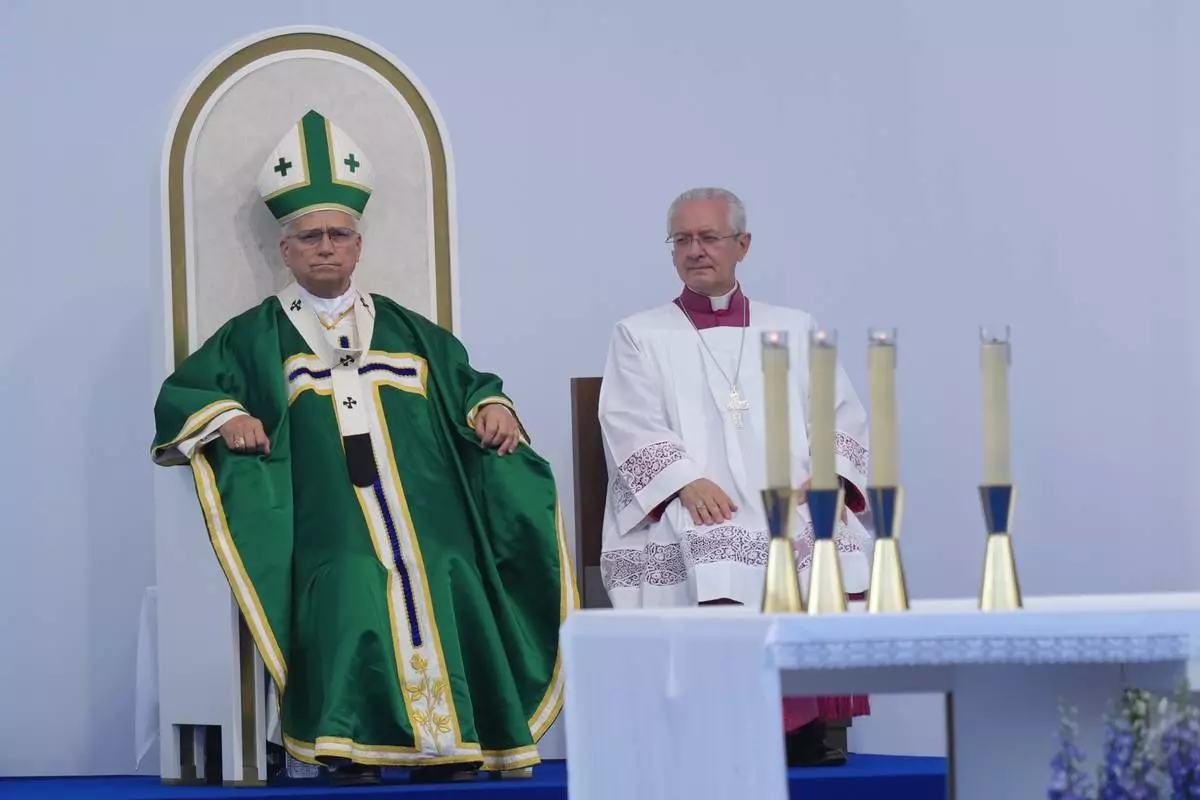
Pope Leo XIV celebrates Mass at the Sanctuary of Our Lady of Lourdes, France, Sunday, Sept. 27, 2026. (AP Photo/Thibault Camus)
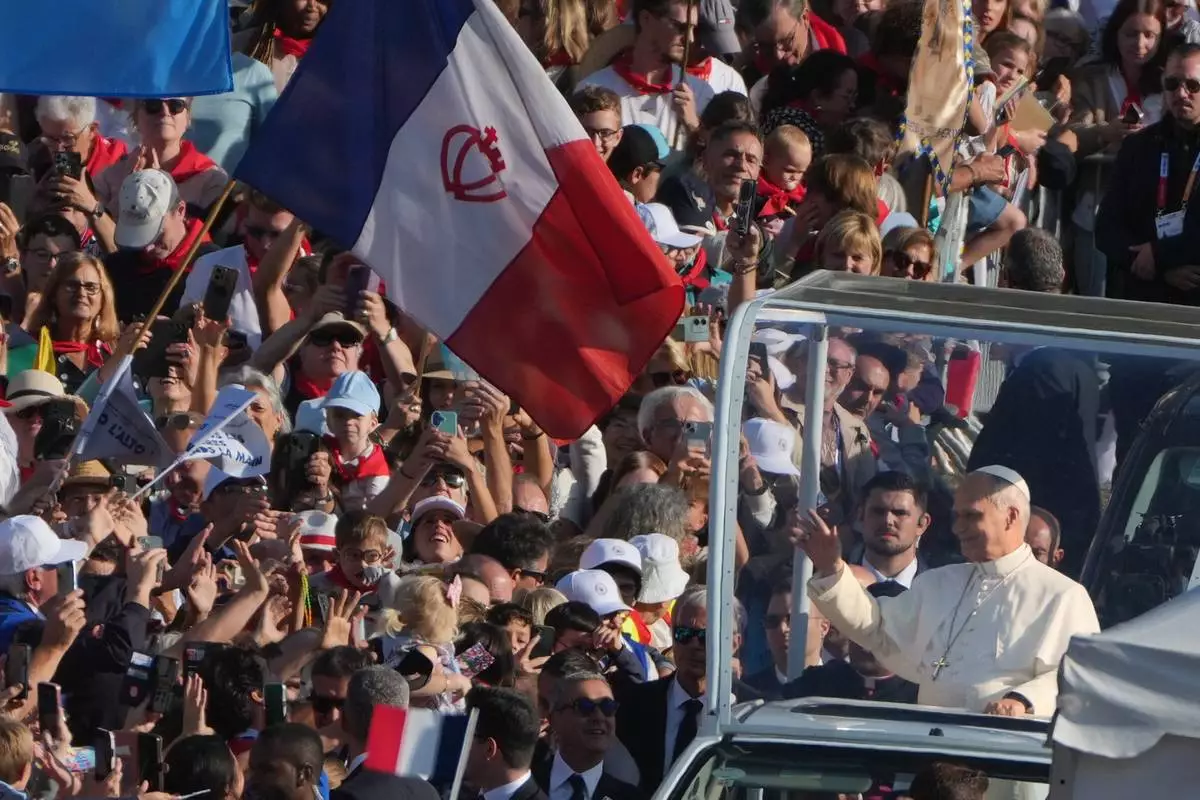
Pope Leo XIV arrives on the popemobile to celebrate Mass at the Sanctuary of Our Lady of Lourdes, Sunday, Sept. 27, 2026, in Lourdes, France. (AP Photo/Gregorio Borgia)
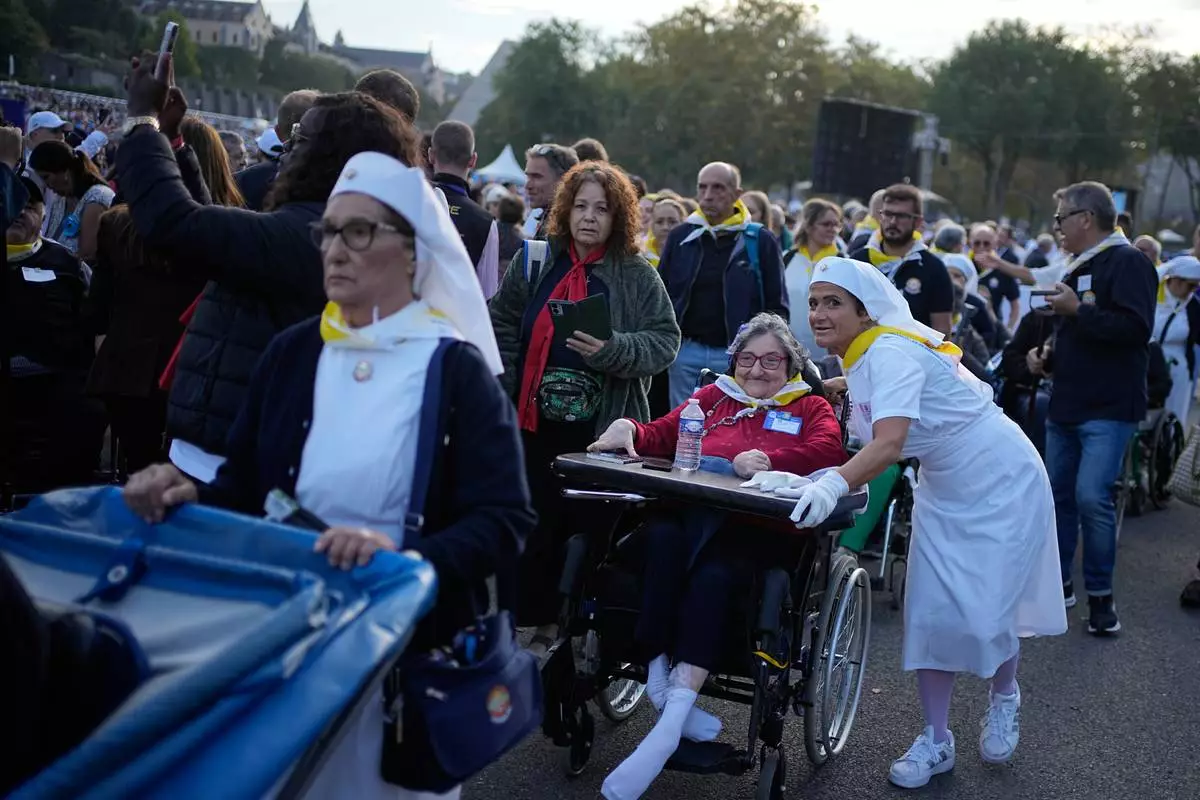
Pilgrims arrive for a Mass celebrated by Pope Leo XIV at the Sanctuary of Our Lady of Lourdes, France Sunday, Sept. 27, 2026. (AP Photo/Laurent Cipriani)
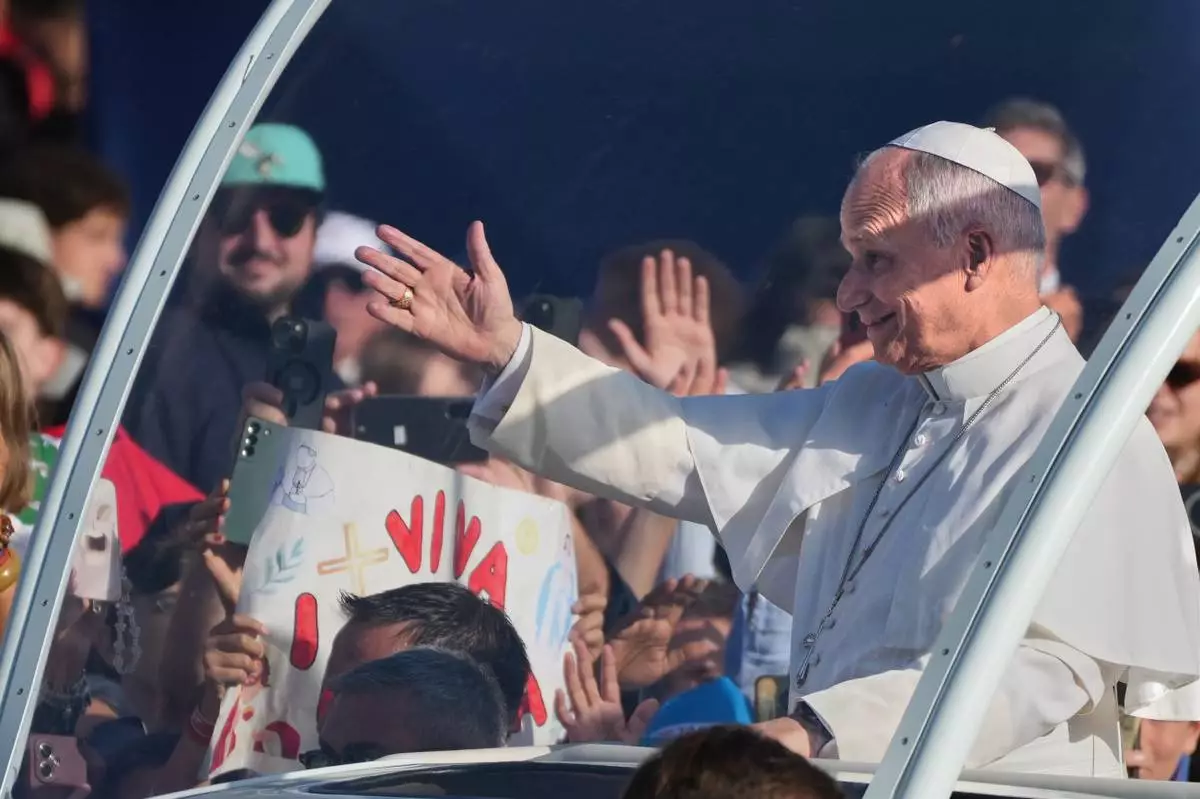
Pope Leo XIV arrives on the popemobile to celebrate Mass at the Sanctuary of Our Lady of Lourdes, Sunday, Sept. 27, 2026, in Lourdes, France. (AP Photo/Gregorio Borgia)
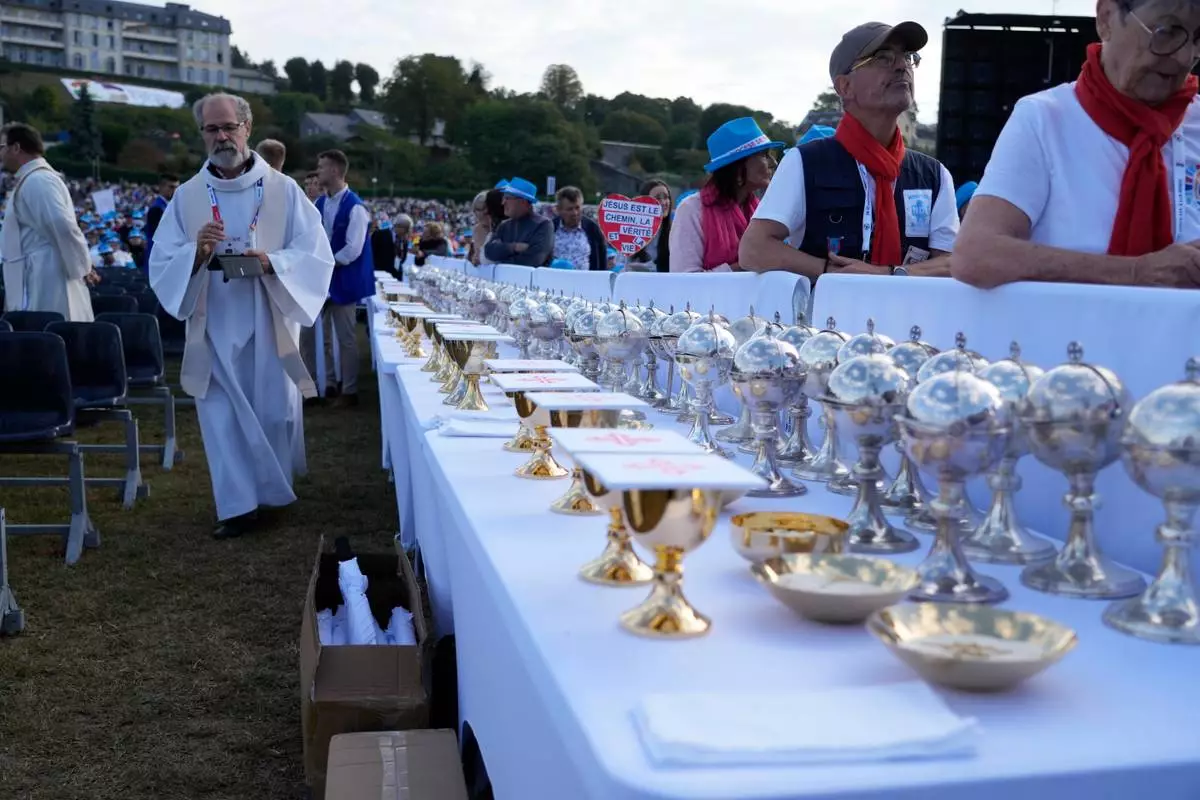
Pilgrims and faithful wait for Pope Leo XIV to celebrate Mass at the Sanctuary of Our Lady of Lourdes, Sunday, Sept. 27, 2026, in Lourdes, France. (AP Photo/Gregorio Borgia)
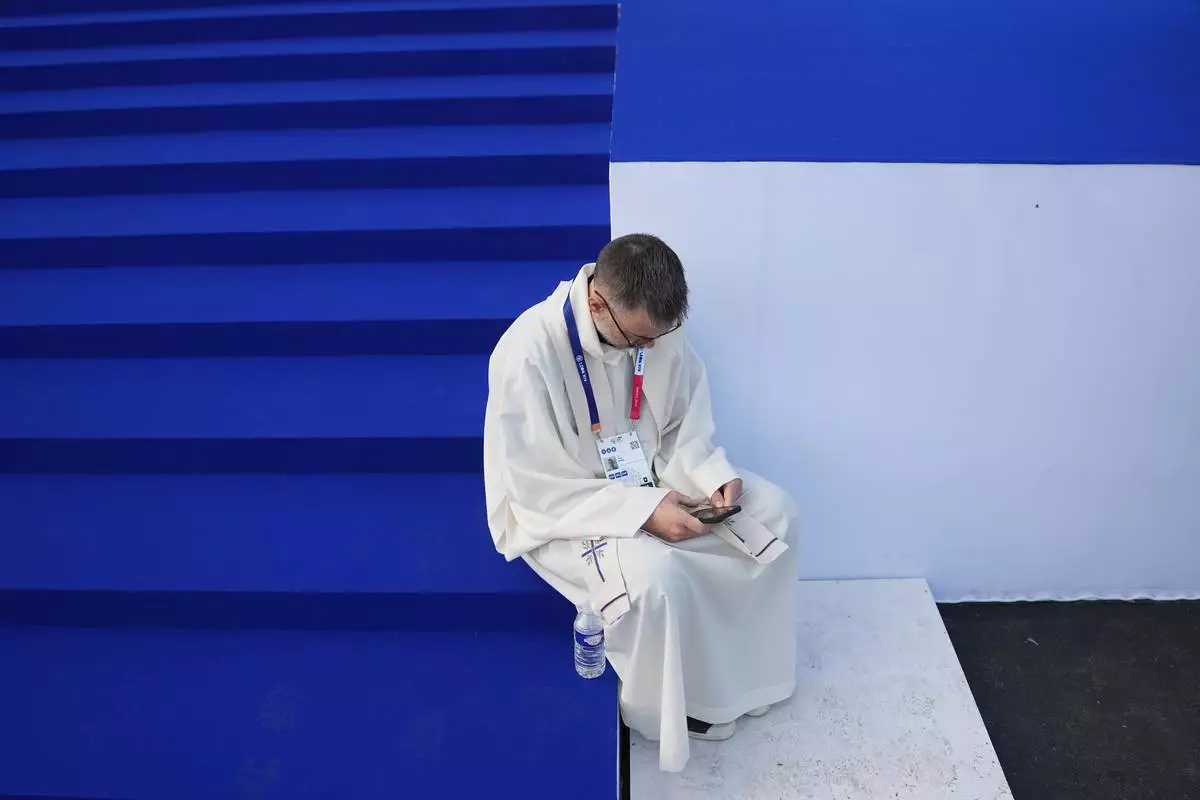
A priest watches his phone before a Mass celebrated by Pope Leo XIV at the Sanctuary of Our Lady of Lourdes, France Sunday, Sept. 27, 2026. (AP Photo/Thibault Camus)
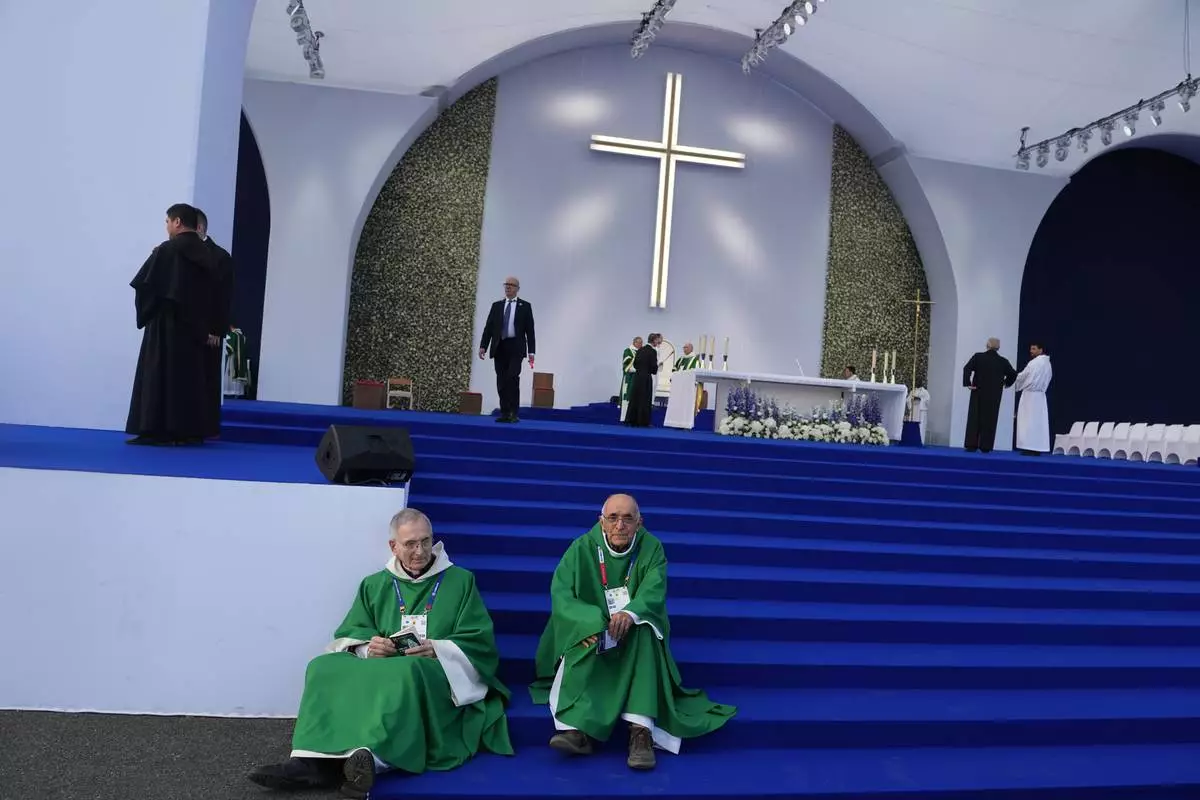
Priests sit before a Mass celebrated by Pope Leo XIV at the Sanctuary of Our Lady of Lourdes, France Sunday, Sept. 27, 2026. (AP Photo/Thibault Camus)
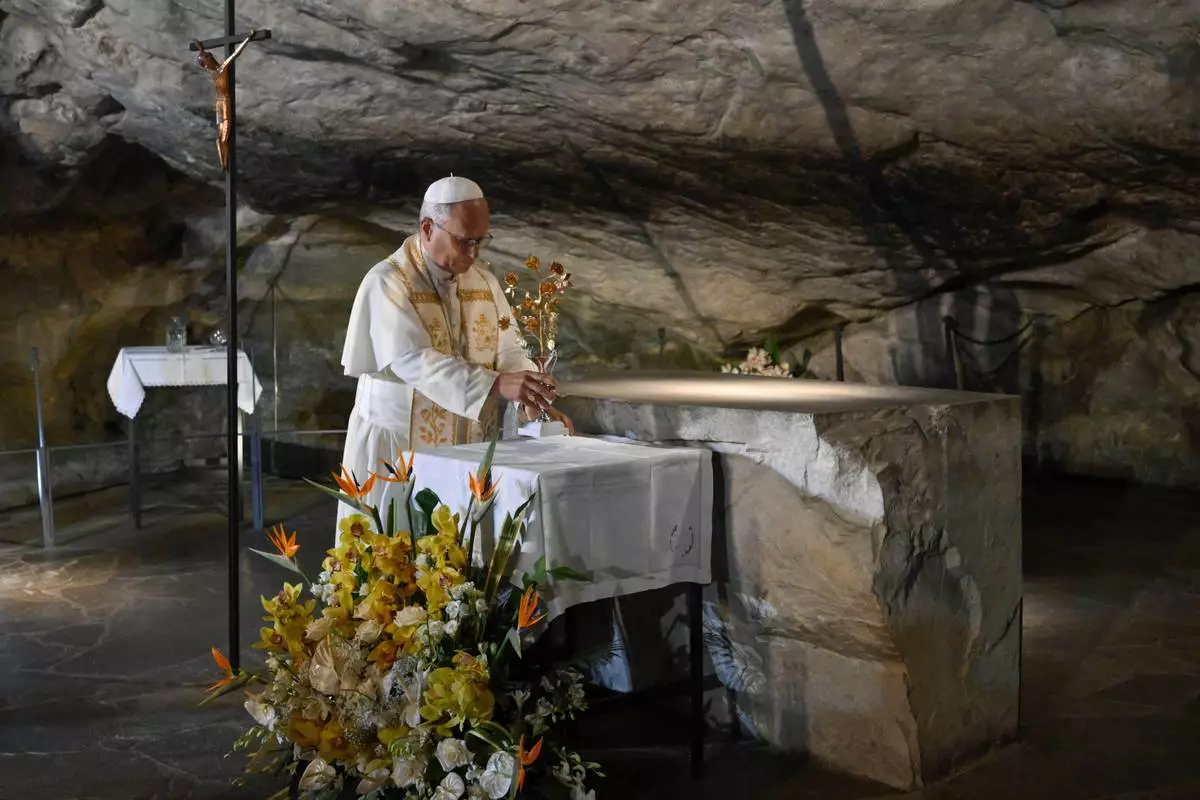
In this handout photo provided by Vatican Media Pope Leo XIV prays at the Grotto of the Apparitions of Massabielle, in Lourdes, France, Saturday, Sept. 26, 2026. (Vatican Media via AP)
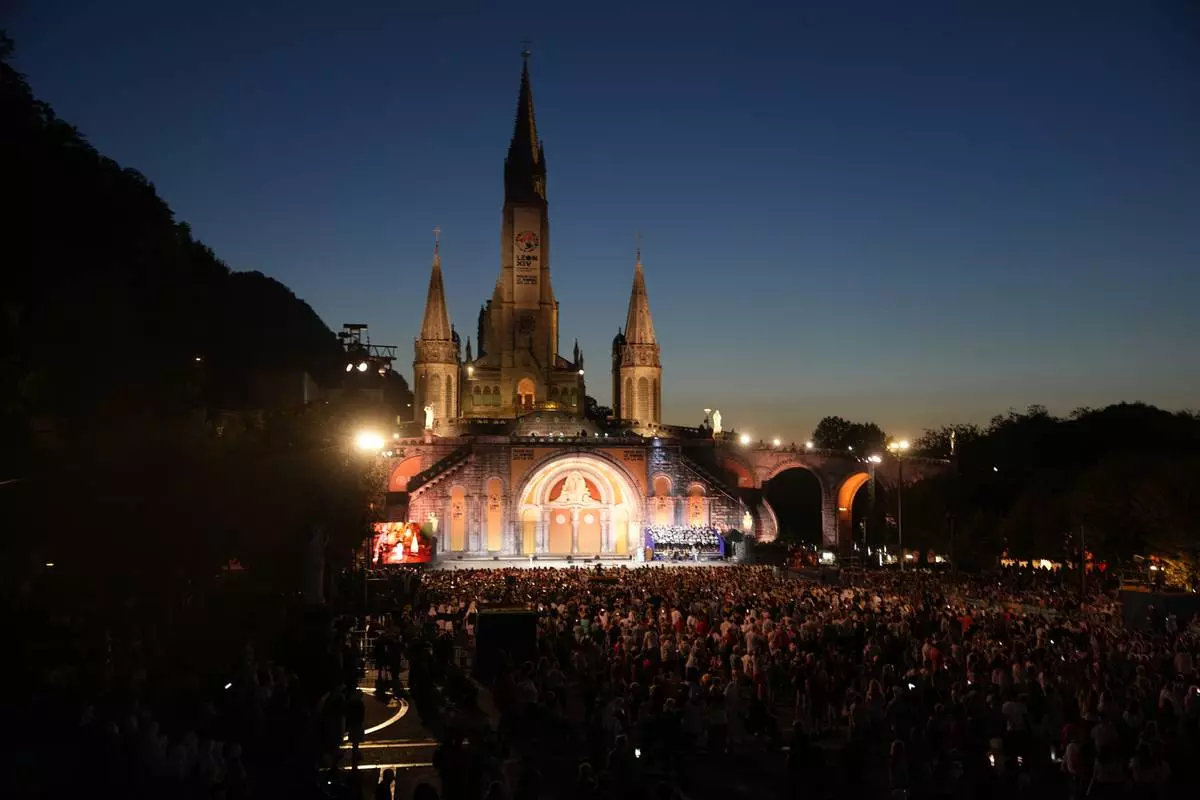
The Notre-Dame-du-Rosaire Basilica is seen during the prayer of Pope Leo XIV in Lourdes, France, Saturday, Sept. 26, 2026. (AP Photo/Thibault Camus)
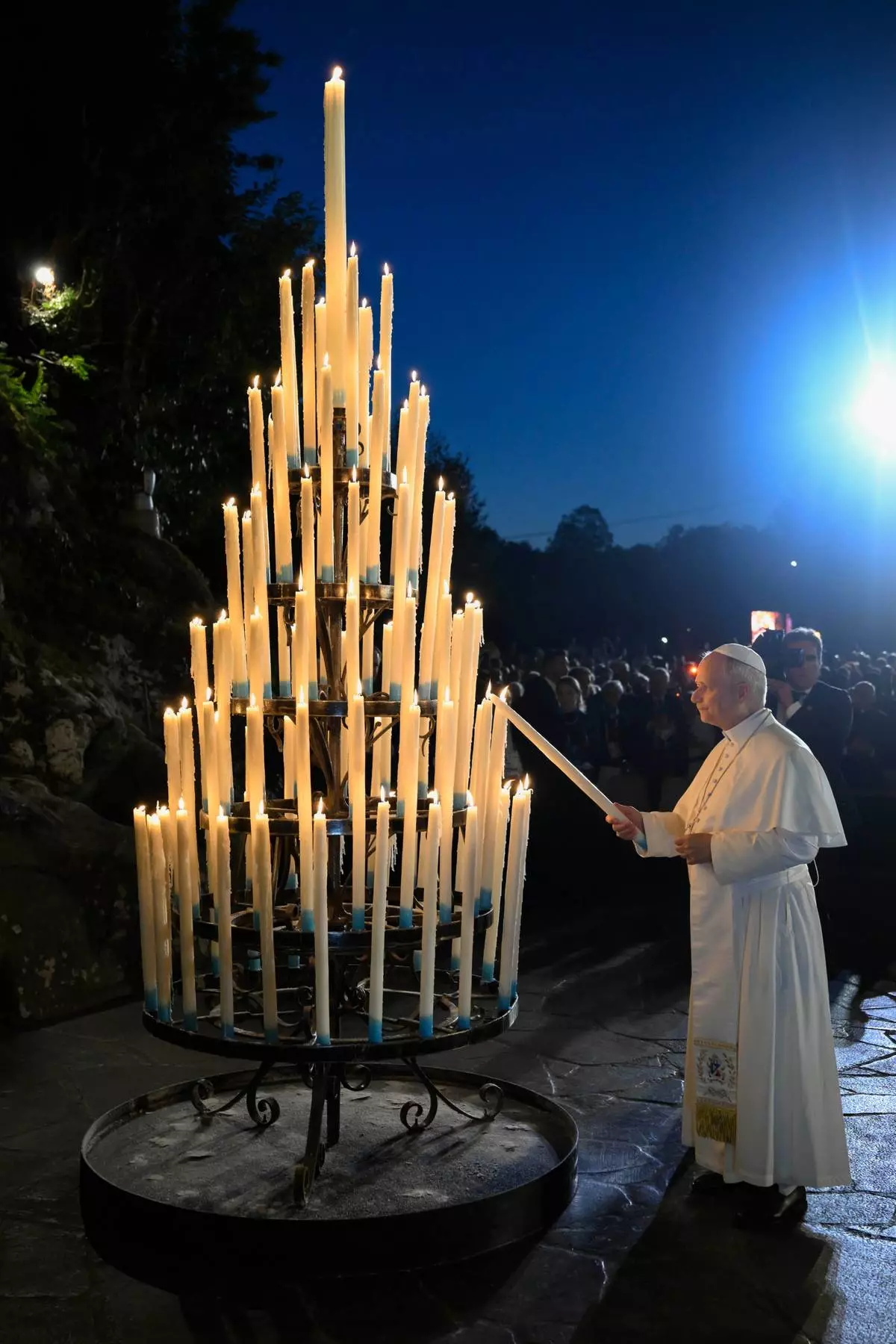
In this handout photo provided by Vatican Media Pope Leo XIV lights candels before praying at the Grotto of the Apparitions of Massabielle, in Lourdes, France, Saturday, Sept. 26, 2026. (Vatican Media via AP)
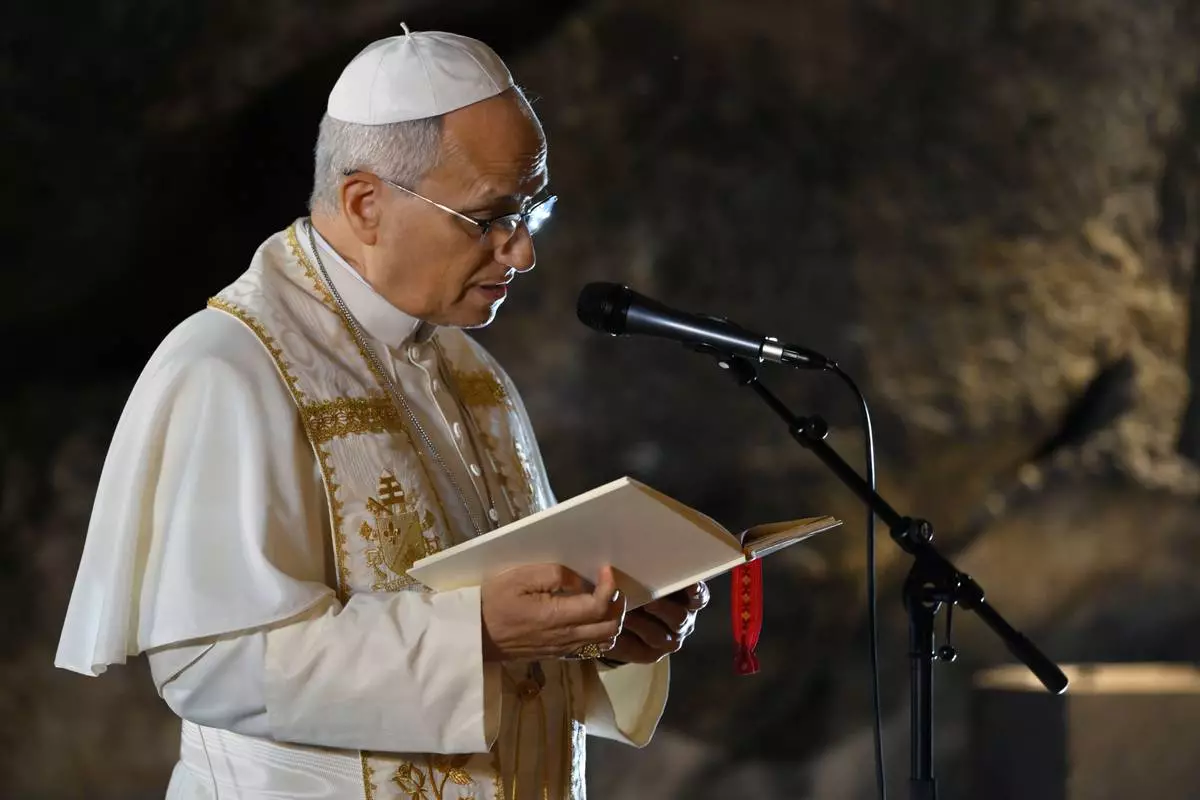
In this handout photo provided by Vatican Media Pope Leo XIV leads a prayer at the Grotto of the Apparitions of Massabielle, in Lourdes, France, Saturday, Sept. 26, 2026. (Vatican Media via AP)
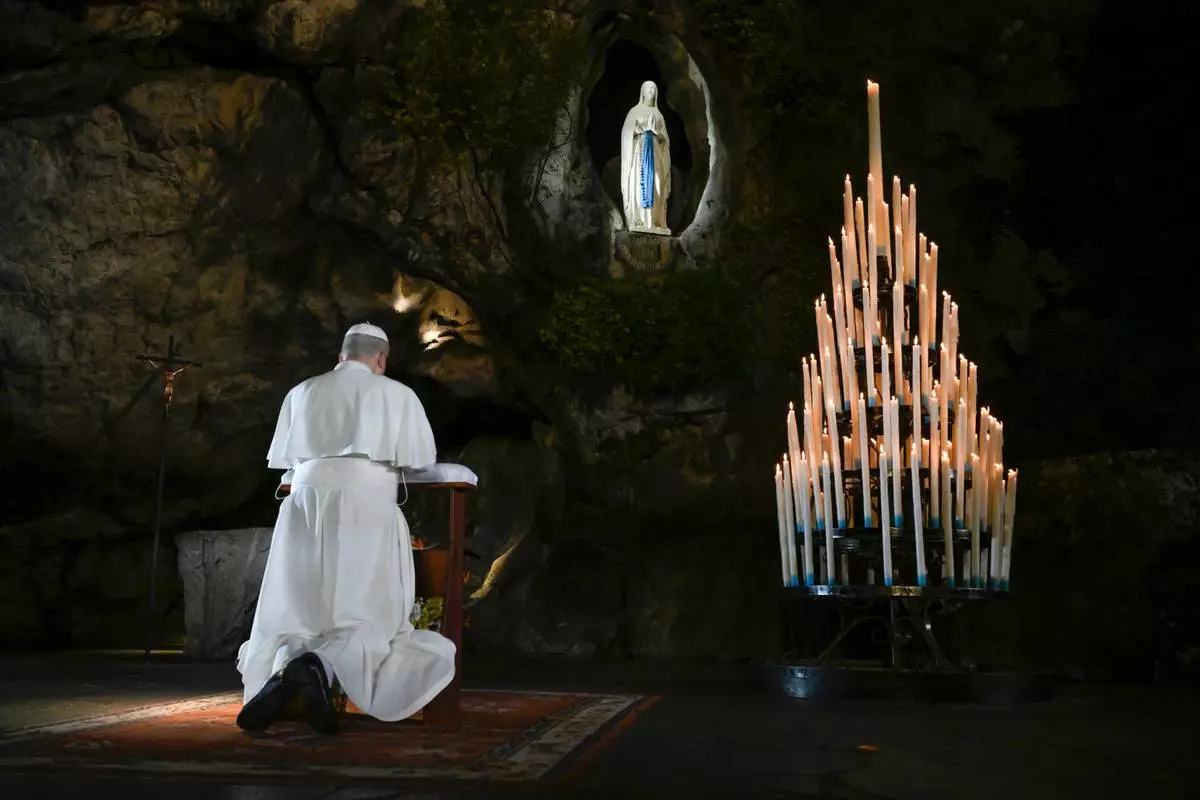
In this handout photo provided by Vatican Media Pope Leo XIV prays at the Grotto of the Apparitions of Massabielle, in Lourdes, France, Saturday, Sept. 26, 2026. (Vatican Media via AP)