Skip to Content Facebook Feature Image

What to know as trials over the assassination of Haiti's president resume in Miami

News

What to know as trials over the assassination of Haiti's president resume in Miami
News

News

What to know as trials over the assassination of Haiti's president resume in Miami

2026-09-28 12:02 Last Updated At:12:10

Five years after the assassination of Haitian President Jovenel Moïse, dozens of people arrested in connection with the killing in the troubled Caribbean nation are still awaiting trial in Miami.

Haiti has not had a president since a squad of gunman killed Moïse and wounded his wife in an overnight raid at their home. U.S. prosecutors have charged more than 40 people with crimes related to the assassination and a dozen have been convicted, included five who are serving life sentences.

Christian Emmanuel Sanon, a Florida pastor and dual Haitian-American citizen who authorities said aspired to be Haiti’s president, was set to stand trial Monday in the next case to go before a jury. He faces eight charges connected to the assassination, including conspiring to kidnap or kill a person outside the U.S., and has pleaded not guilty.

Federal prosecutors in the U.S. say South Florida served as a central location for planning and financing the plot to oust Moïse and replace him with someone of the conspirators’ choosing.

Haiti is the poorest country in the Americas, and its history of dictatorship, political upheaval and foreign intervention has long stymied the consolidation of democratic rule.

Moïse was killed on July 7, 2021, when about two dozen foreign mercenaries, mostly from Colombia, attacked his home near Port-au-Prince. The scheme to kill Moïse included paying mercenaries with money obtained from U.S. government programs that were intended to help businesses during the COVID-19 pandemic, according to court records.

In 2025, justice officials in Haiti asked the U.S. and Canada for help after a local court of appeals ordered a new investigation into Moïse’s killing, the third inquiry of its kind since he was shot 12 times at his private residence. His wife, Martine, also was wounded in the attack.

The previous investigations were stalled because Haitian judges kept resigning from the case, fearing for their lives, and gangs seized control of the downtown Port-au-Prince courthouse where the judges were interrogating suspects.

Any proceedings in Haiti “continue to face significant difficulties,” the country's Ministry of Justice and Public Security said recently.

Haiti has been overwhelmed by gang violence: More than 3,000 people were killed this year by June and about 1.5 million people have been displaced in recent years, according to the United Nations.

The plan to oust Moïse began to truly take shape in April 2021, when Sanon met in South Florida with a former Haitian senator and several U.S. businessman, according to an indictment. The group agreed that, once in power, Sanon would award contracts to Florida-based Counter Terrorist Unit Federal Academy and Counter Terrorist Unit Security, collectively known as CTU, for infrastructure projects, security forces and military equipment, investigators said.

CTU initially retained about 18 Colombian nationals with military training to provide security for Sanon, according to prosecutors. Conspirators also spent months obtaining weapons and body armor and attempting to build relationships with Haitian gangs, officials said.

By June 2021, the conspirators realized Sanon had neither the constitutional qualifications nor sufficient popular support to become president. They then backed Wendelle Coq Thélot, a former Haitian Superior Court judge. She died in January 2025 while still a fugitive.

Martine Moïse described the attack while testifying earlier this year at the trial of four men who were ultimately convicted in the conspiracy to kill her husband.

She said she went to bed around 10 p.m. and awoke to the sounds of gunfire about three hours later. She said she turned to her husband in bed next to her to ask what was going on.

“Honey, we are dead,” Jovenel Moïse said, according to his wife’s testimony.

Martine Moïse said gunfire continued as she crawled downstairs to check on her two adult children. She said she then returned to her and her husband’s bedroom, where she and Jovenel Moïse got on the floor on either side of the bed and used it as protection from gunfire.

Men eventually burst into the room and opened fire with what sounded like an automatic weapon, Martine Moïse said. She was struck several times. She said she heard men speaking in Spanish before someone shot Jovenel Moïse multiple times, killing him.

After the attackers cleared out, Martine Moïse said she expected to find the dead bodies of the 30 to 50 security officers assigned to protect the house, but there were none. She said she later learned that they were paid to leave their posts.

Sanon was previously scheduled to be tried with the four other men who were convicted earlier this year, but his case was separated and delayed for health reasons. Prosecutors have said Sanon helped raise money for the conspiracy and arranged travel to Haiti and lodging for himself and others on the island.

The latest defendants charged include Joseph Badio, a former Haiti Ministry of Justice employee, and 17 others described as Colombian mercenaries. They were recently transported to the U.S. from Haiti.
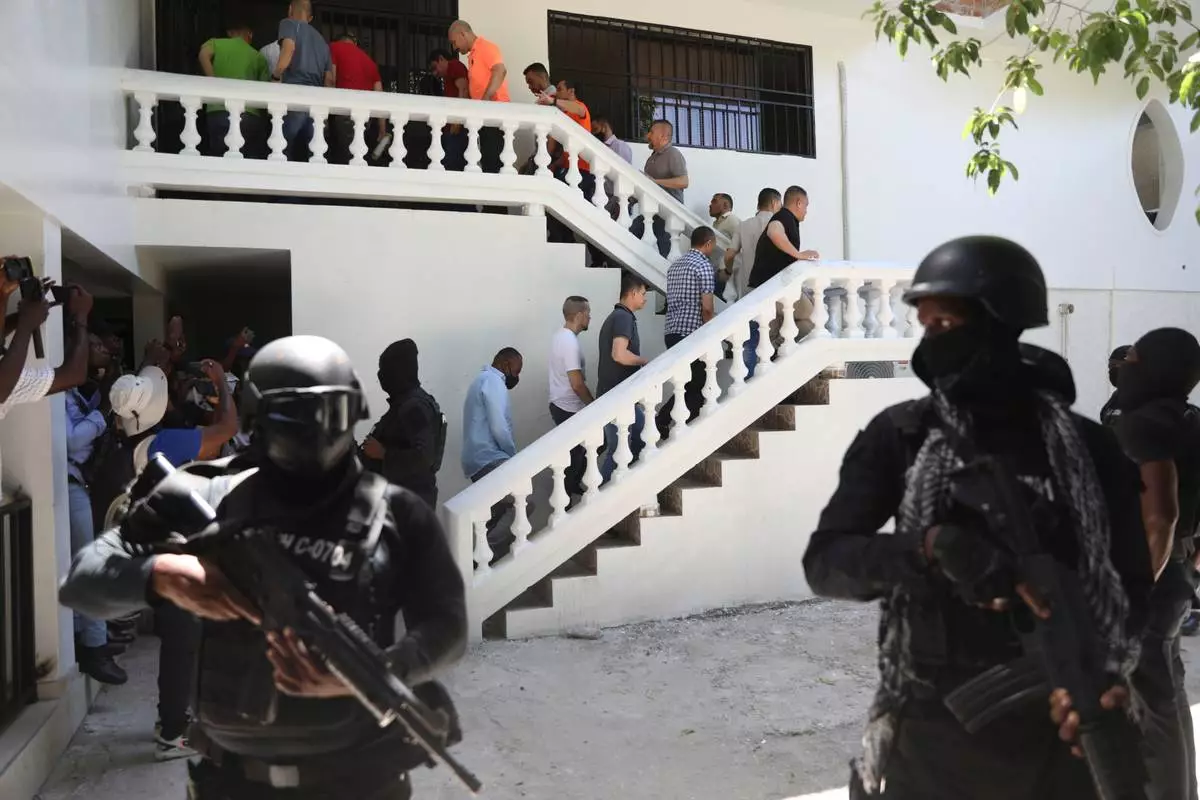
FILE - Colombians and Haitians who are accused of involvement in the 2021 assassination of Haitian President Jovenel Moise are escorted in handcuffs to their court hearing in Port-au-Prince, Haiti, May 26, 2025. (AP Photo/Odelyn Joseph, File)
FILE - Colombians and Haitians who are accused of involvement in the 2021 assassination of Haitian President Jovenel Moise are escorted in handcuffs to their court hearing in Port-au-Prince, Haiti, May 26, 2025. (AP Photo/Odelyn Joseph, File)

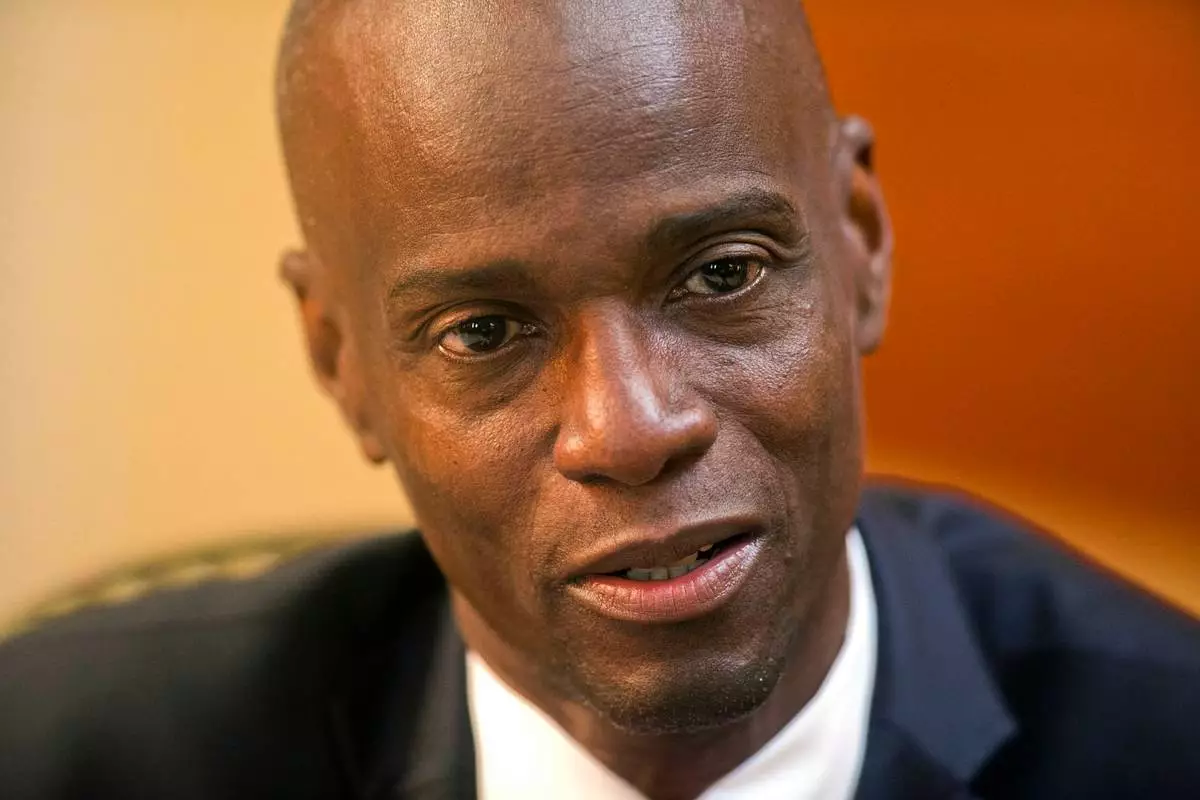
FILE - Haiti's President Jovenel Moise speaks during an interview at his home in Petion-Ville, a suburb of Port-au-Prince, Haiti, on Feb. 7, 2020. (AP Photo/Dieu Nalio Chery, File)


FILE - Haiti's President Jovenel Moise speaks during an interview at his home in Petion-Ville, a suburb of Port-au-Prince, Haiti, on Feb. 7, 2020. (AP Photo/Dieu Nalio Chery, File)
NEW YORK (AP) — The Trump administration on Monday plans to release new fuel economy standards that would relax regulatory requirements for automakers to control pollution from gasoline-powered cars and light trucks.

President Donald Trump said on his Truth Social media account Saturday that the less stringent mileage requirements would “take the waste out of building cars in America" and save families “thousands on a new, beautiful and safe car," while boosting auto production in the U.S.

Last December, the National Highway Traffic Safety Administration projected that the new standards would set the industry fleetwide average for light-duty vehicles at roughly 34.5 miles per gallon in the 2031 model year, down from a projected 50.4 miles per gallon in 2031 under rules put in place by the Biden administration.

Fuel economy requirements set out how far new vehicles need to travel on a gallon of gasoline. The change would further make do on Trump’s promise to revoke policies that encouraged or created incentives for the production of electric vehicles.

Since taking office, Trump has relaxed auto tailpipe emissions rules, repealed fines for automakers that do not meet federal mileage standards and terminated consumer credits of up to $7,500 for EV purchases.

Secretary of Transportation Sean Duffy said Saturday on his social media account on X that the changes would be announced Monday. The White House, Department of Transportation and NHTSA couldn't immediately be reached for comment on the details of the new standards.

General Motors, Stellantis, and Ford Motor, maker of the top-selling pickup truck, the F-150, also couldn't be immediately reached for comment. The administration and automakers have said the new rules will increase Americans’ access to the full range of gasoline vehicles they need and can afford.

The average new car in America sold for $50,089 in August, crossing over the $50,000 line for the first time since last December, according to Kelley Blue Book data. At the same time, Americans are spending more on gas as Washington’s war with Iran disrupts the global flow of fuel. The national average price for a gallon of gas was $4.47 on Sunday, up from $4.09 a month ago, according to the AAA motor club.

Trump has repeatedly pledged to end what he falsely calls an EV “mandate,” referring incorrectly to President Joe Biden’s target that half of all new vehicle sales be electric by 2030. No federal policy has mandated auto companies to sell EVs.

According to data from the automotive research group Edmunds, EVs accounted for 6.5% of new vehicle sales in February, down from 7.4% for all of 2025.

News of the revised standards immediately drew rebukes from environmentalists.

Dan Becker, director of the Center for Biological Diversity's Safe Climate Transport Campaign, said that the final rule “ignores the feasibility of clean technology and the millions of fuel-efficient cars already on the road.”

“Trump is tanking sensible mile per gallon standards at the worst possible time for consumers, who are getting hit with sky-high prices at the pump,” Becker said in a statement. “Consumers will pay the price for these reckless rollbacks while Trump’s Big Oil and Big Auto buddies reap the short-term profits."

Katherine García, director of the Sierra Club's Clean Transportation for All campaign, vowed the environmental group would fight the rule and said that the loosening of fuel standards would “make driving more expensive too.”

"Less fuel-efficient cars mean more gas burned, spending more at the pump, and dirtier air in our communities,” Garcia wrote in a statement.

When the 2024 standards went into effect, NHTSA estimated they would save 14 billion gallons of gasoline from being burned by 2050. The agency also said that while new fuel-efficient vehicles cost more up front, savings on gasoline over the lifetime of the car or truck would more than make up for that.

Without these standards, in 2035, cars could produce 22,111 more tons of carbon dioxide per year than under the Biden-era rules. It also translates to an extra 90 tons a year of deadly soot particles and 4,870 additional tons a year of smog components such as nitrogen oxides and volatile organic compounds emitted into the air in coming years.

Mileage standards, known as the corporate average fuel economy, or CAFE, have been implemented since the 1970s energy crisis, and over time, automakers have gradually improved their vehicles’ average efficiency.

FILE - Unsold 2026 F-150 pickup trucks sit in a long line outside a Ford dealership on April 12, 2026, in Centennial, Colo. (AP Photo/David Zalubowski, File)

FILE - Unsold 2026 F-150 pickup trucks sit in a long line outside a Ford dealership on April 12, 2026, in Centennial, Colo. (AP Photo/David Zalubowski, File)

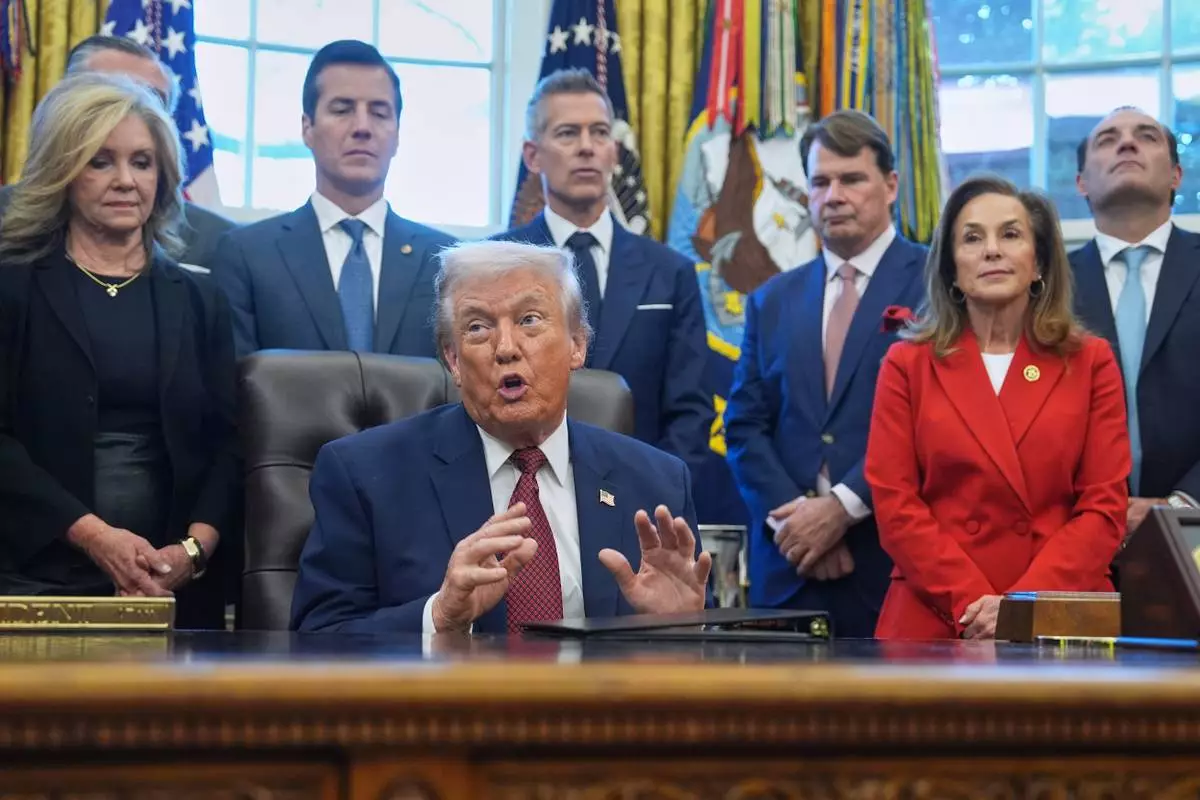
FILE - President Donald Trump speaks during an event on fuel economy standards in the Oval Office of the White House, Dec. 3, 2025, in Washington. (AP Photo/Evan Vucci, File)

FILE - President Donald Trump speaks during an event on fuel economy standards in the Oval Office of the White House, Dec. 3, 2025, in Washington. (AP Photo/Evan Vucci, File)

Recommended Articles