Government releases Long Term Housing Strategy Annual Progress Report 2026
The Government released today (September 28) the Long Term Housing Strategy Annual Progress Report 2026 (Progress Report).

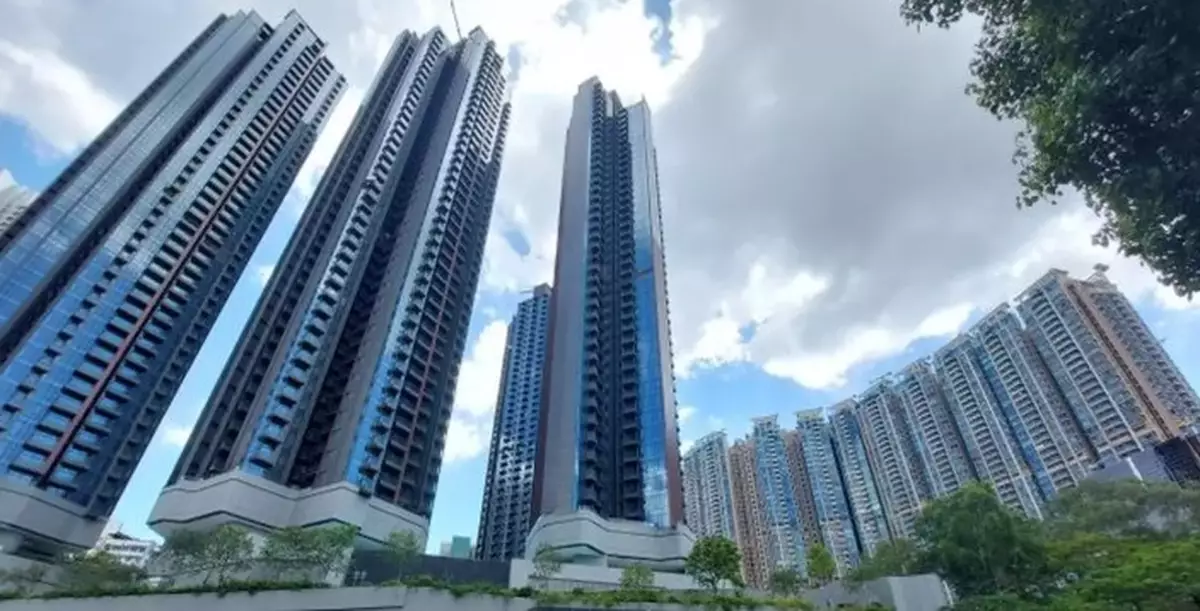
The Central Government Offices, Photo source: reference image
According to the established methodology for projection under the Long Term Housing Strategy (LTHS), the gross total housing demand for the next 10-year period is 419 300 units. Hence, the Government set the supply target at 420 000 units.
"Since the LTHS annual update in 2018, the public/private split of the new housing supply has been adjusted to 70:30. Balancing the Government’s commitment to substantially increase the public housing supply to meet the social demand and the demand for private housing, the Government will maintain the public/private split of the new housing supply at 70:30 for the next 10-year period from 2027-28 to 2036-37. Accordingly, out of the total housing supply target of 420 000 units, the public housing supply target will be 294 000 units and the private housing supply target will be 126 000 units," a spokesman for the Housing Bureau said.
"In the LTHS Annual Progress Report 2024, we announced that to further meet the public’s home ownership needs, the public housing supply would be planned with a gradual move towards a 60:40 ratio between public rental housing (PRH)/Green Form Subsidised Home Ownership Scheme (GSH) units and other subsidised sale flats (SSF). The Government will continue to advance in this direction in the next decade. Correspondingly, the public housing supply target of 294 000 units will comprise 176 000 PRH/GSH units and 118 000 other SSF units," the spokesman added.
Solving the housing problem tops the agenda of the current-term Government. Through the current-term Government’s unremitting efforts to "enhance speed, quantity, quality and efficiency", a solid foundation for public housing production has been laid, and the programme is now entering its harvesting phase. This shift has enabled faster fulfilment of the public’s housing needs. The Composite Waiting Time for Subsidised Rental Housing has been shortened from the peak of 6.1 years before the current-term Government took office to 4.8 years, which is the lowest level in over eight years for two consecutive quarters, moving towards the target of reducing it to 4.5 years in 2026-27. Since the current-term Government took office (i.e. from July 2022 to June 2026), more than 85 500 applicants have been housed to PRH. Meanwhile, the Hong Kong Housing Authority (HA) and the Hong Kong Housing Society (HS) have also offered approximately 48 000 SSF units for sale, representing a significant increase of nearly double that of approximately 25 000 new SSF units offered for sale in the previous four-year period prior to the current-term of Government (i.e. from July 2018 to June 2022). In fact, since the current-term Government took office (i.e. from July 2022 to June 2026), more than 133 000 families have been housed to PRH or have purchased SSFs offered for sale by the HA and HS, representing a significant increase of over 35 per cent as compared to approximately 97 000 families in the previous four-year period prior to the current-term of Government (i.e. from July 2018 to June 2022).
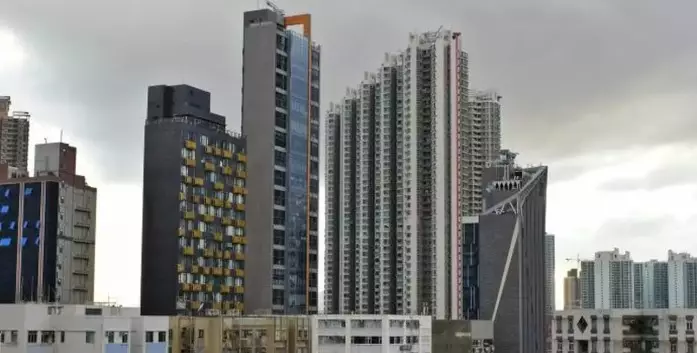
Photo source; reference image
In the next 10 years, the Government has identified sufficient land to meet the public housing supply target of 294 000 units. The Government will strive to provide more than 35 000 public housing (including PRH and SSF) units per year on average in the next five years (i.e. from 2027-28 to 2031-32), representing an increase of about 73 per cent compared with the five-year production since the current-term Government took office, the highest in the past 25 years. In addition, compared to the five-year period at the start of this Government, the supply of Home Ownership Scheme flats has increased significantly by approximately 100 per cent over the original projections. As in the past, when planning public housing development, the Government will maintain adequate flexibility to ensure that the public housing production can be adjusted in a timely manner in response to changes in the actual circumstances.
As for private housing, the supply target in the coming decade is 126 000 units. The Government will have sufficient land to meet the target in the next 10 years. Besides Government land sales, other sources of private housing land supply include railway property developments and Urban Renewal Authority projects, as well as private development projects. As regards private housing supply in the shorter term, based on the latest projection as at end-June 2026, the supply in the primary private residential property market for the coming three to four years is about 96 000 units.
With the continuous increase in the public housing supply, the Government has more room to further enhance various housing policies to better address the public’s housing needs. To this end, the Housing Bureau has announced four key directions for future housing policy in the Progress Report:
(i) further encourage citizens to move up the housing ladder;
(ii) enhance SSF;
(iii) eradicate substandard subdivided units and implement the Basic Housing Unit regime in an orderly manner; and
(iv) persistently promote the use of building technologies to enhance cost-effectiveness in construction, thereby ensuring the smooth implementation of the public housing programme.
Photo source: reference image
Details of relevant measures are set out in the Progress Report on the Housing Bureau’s website at www.hb.gov.hk/eng/policy/housing/policy/lths/index.html.
According to the supply-led and flexible principles under the LTHS, the Government updates the long term housing demand projection annually and formulates a rolling 10-year housing supply target. The gross total housing demand takes into account the housing demand derived from the following four components:
(i) net increase in the number of households;
(ii) households displaced by redevelopment;
(iii) inadequately housed households; and
(iv) miscellaneous factors.