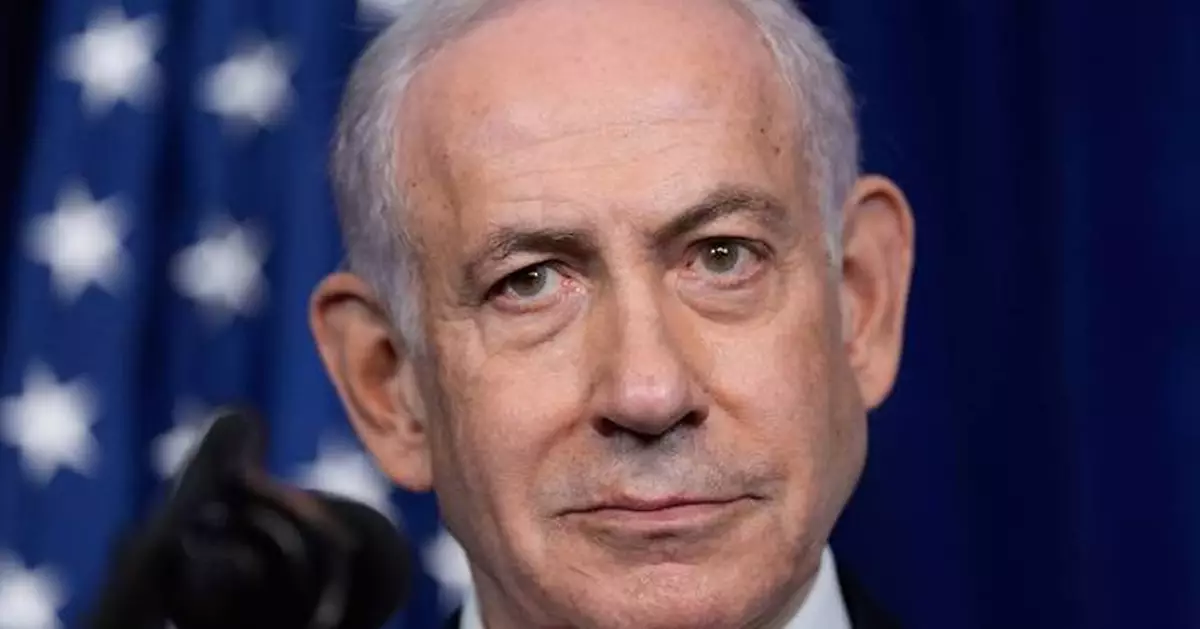
Benjamin Netanyahu traveled secretly to the United Arab Emirates over the weekend to ask its leader to deny reports that he had warned the Israeli prime minister about a looming Hamas threat ahead of the Palestinian militant group's Oct. 7, 2023 attack on southern Israel.
The meeting between Netanyahu and Sheikh Mohamed bin Zayed Al Nahyan took place on Sunday, two people who were briefed on the Israeli leader's trip confirmed on Monday.
Meanwhile, the European Union's top diplomat Kaja Kallas said the bloc is applying for observer status to a Saudi-led maritime defense coalition formed to protect the kingdom's energy exports. The EU already has six vessels deployed to the Red Sea to protect shipping.
Here is the latest news from the Middle East on Monday. Full coverage is available here.
The Israeli prime minister held a meeting with the UAE’s president on Sunday, according to two people who were briefed on Netanyahu's trip, which was first reported by Israel’s Channel 12 TV station.
One person familiar with the matter said the talks focused on a report published by the Israeli daily Haaretz earlier this month that said the Emirati leader had delivered a warning to Netanyahu about a looming attack by Hamas just ahead of its Oct. 7, 2023 attack that triggered the war.
Netanyahu asked Sheikh Mohamed to deny the report, according to the person who purported to have first-hand information about the meeting. Netanyahu’s office had previously denied the Haaretz report.
The person, along with a regional official briefed on the meeting, spoke on condition of anonymity to discuss the secret trip.
The UAE’s Foreign Ministry declined to comment on reports about the meeting. But it said it maintains “open and direct lines of communication” with Israel and shares “all relevant intelligence.”
There was no immediate comment from Netanyahu’s office.
—By Josef Federman in Jerusalem and Samy Magdy in Cairo
The European Union is applying for “observer status” in a new multinational maritime defense coalition led by Saudi Arabia and formed to protect the kingdom’s energy exports.
The bloc’s top diplomat Kaja Kallas made the announcement on Monday, ahead of a meeting in Brussels of defense and foreign affairs ministers. The energy-hungry EU is facing record energy prices due to the war in Iran.
Kallas said she will ask the assembled ministers to expand the bloc’s own small naval force in the Red Sea dubbed ASPIDES to help escort cargo vessels through the key strategic chokepoint of the Bab el-Mandeb strait against attacks by Yemen's Iran-backed Houthi rebels.
Kallas repeated that the “need is bigger than it’s ever been” for more ships than the six currently deployed under ASPIDES.
It’s unclear what observer status in the Saudi-led coalition would mean operationally for either the EU or ASPIDES.
Israel summoned the Spanish Embassy’s chargé d’affaires over remarks by Spain's youth minister who declared the country's public support for a Palestinian state “from the river to the sea” — a slogan that implies a call for the elimination of the Israeli state.
The Israeli Foreign Ministry said Monday that Spanish Youth Minister Sira Rego’s remarks were “part of a systematic anti-Israel policy pursued by the Spanish government” and its leader, Prime Minister Pedro Sánchez.
The ministry said Rego had opted not to condemn the Oct. 7, 2023 Hamas-led militant attacks on Israel that sparked the war in Gaza. Rego was barred from entering Israel in Sept. 2025.
The Dutch foreign minister says he “deeply regrets this unnecessary decision” after Israel announced it was expelling Dutch diplomats in the city of Ramallah in the West Bank, within a week.
Israeli Foreign Minister Gideon Saar said on Sunday that the decision was in response to a Dutch ban that went into effect Sept. 22 on the “import, purchase and sale of goods” originating from Israeli settlements in the occupied West Bank.
The Netherlands and many in the international community consider such goods illegal.
Dutch Foreign Minister Tom Berendsen said in a statement Monday that the temporary import ban wasn’t directed against Israel but that it “stems from an obligation under international law not to contribute to an unlawful situation — namely, the illegal settlements.”
This report will be updated throughout the day as new developments emerge.
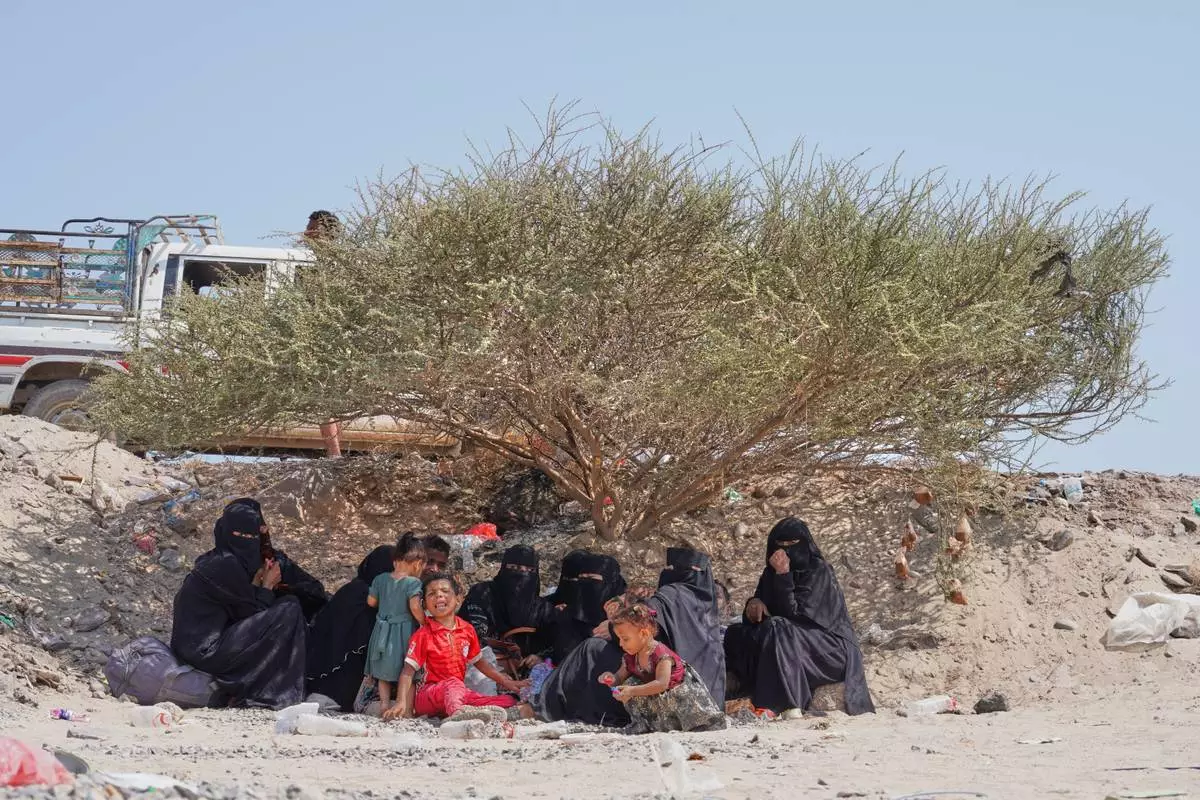
Displaced Yemenis sit outside at Al-Firdaws camp in Ras Imran, on the western outskirts of Aden, Yemen, Thursday, Sept. 24, 2026. (AP Photo/Abdulnasser Alseddik)
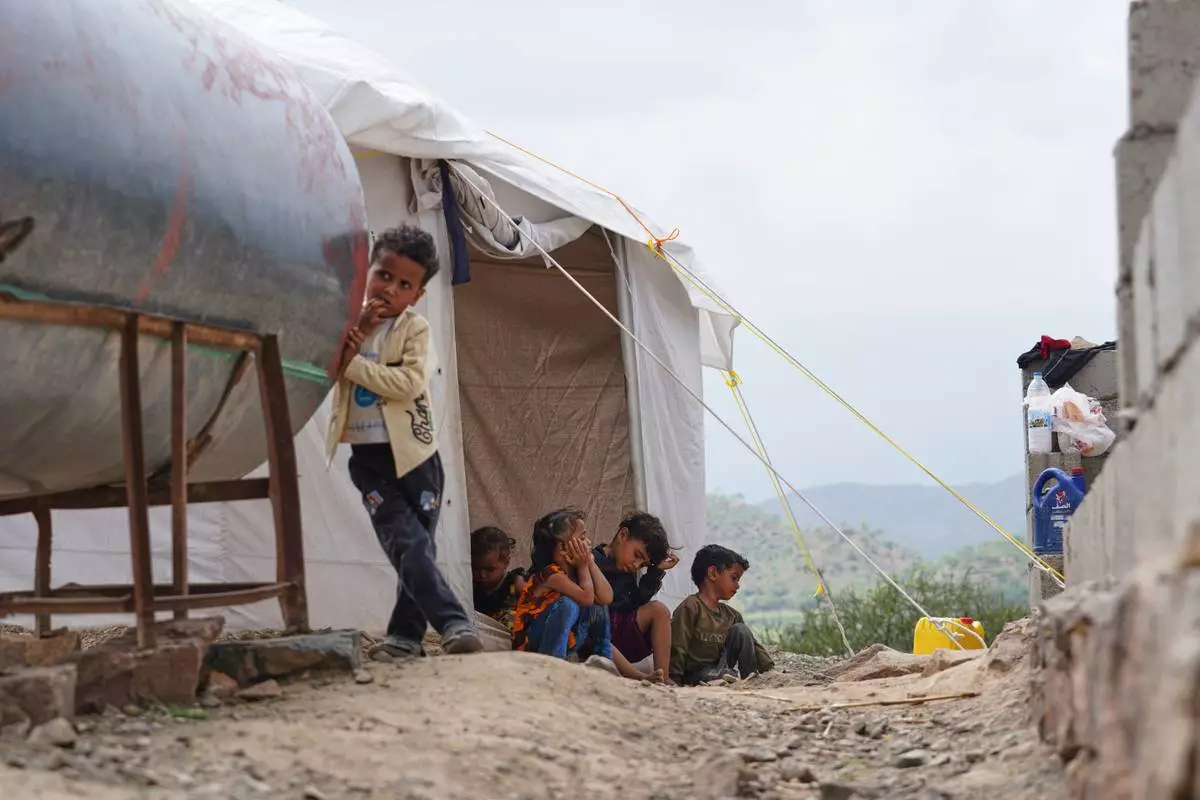
Displaced Yemeni children from Al-Kadha, west of Taiz, gather at the Al-Akdaf camp in Taiz, Yemen, Saturday, Sept. 26, 2026. (AP Photo/Abdulnasser Alseddik)
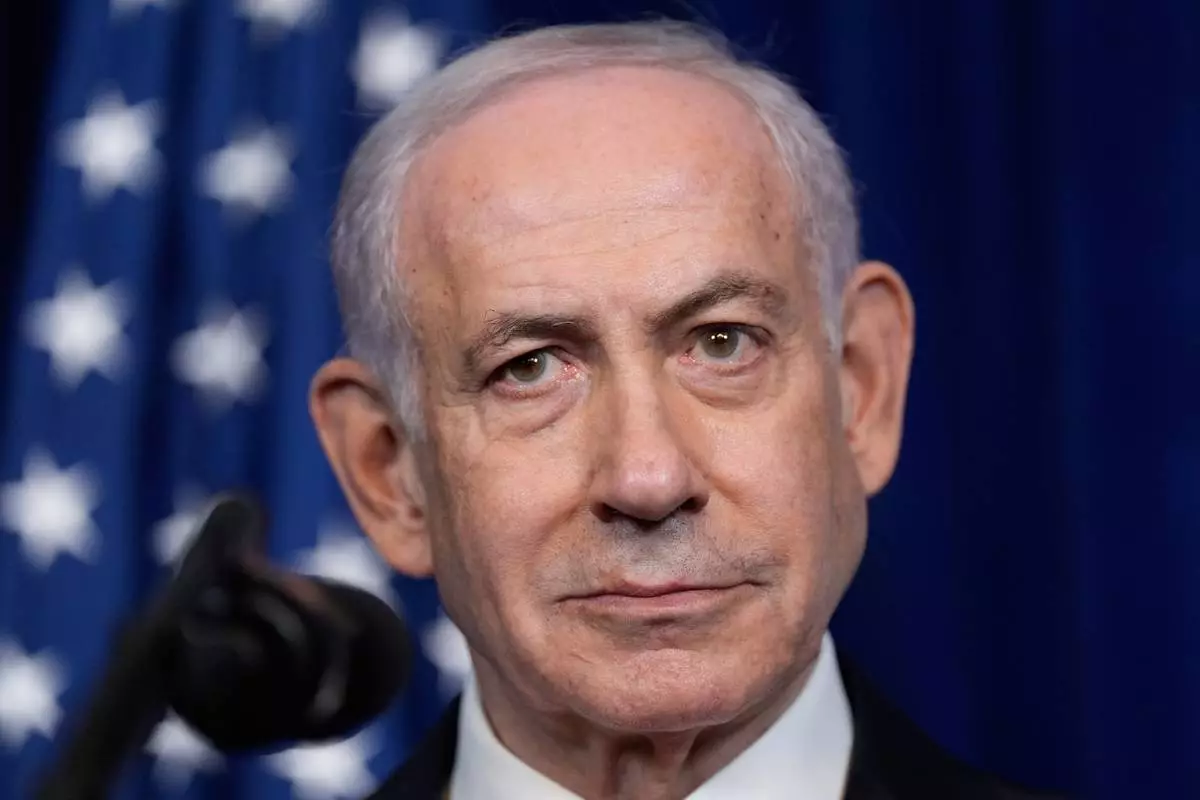
FILE - Israel's Prime Minister Benjamin Netanyahu listens during a news conference with President Donald Trump at Mar-a-Lago, Dec. 29, 2025, in Palm Beach, Fla. (AP Photo/Alex Brandon, File)
METZ, France (AP) — Pope Leo XIV urged religious leaders on Monday to preach messages of peace and unity as he wrapped up a visit to France by recalling the forces of dialogue that contributed to Europe’s post-World War II integration.
Leo traveled to the eastern city of Metz, near the border with Luxembourg and Germany, to preside over an interreligious meeting. It was held at a conference center named for Robert Schuman, a French Catholic statesman regarded as one of the founding fathers of European unity.
Leo decided to end his four-day visit to France in Metz to drive home his appeal for Europe to remember its tradition of dialogue to confront today’s challenges of war, migration and polarization.
Speaking to Jewish, Muslim, Protestant and Orthodox leaders gathered in the conference center, Leo cited Schuman’s example of promoting dialogue even among rivals in saying faith leaders had a shared responsibility to forge friendships across borders in the name of peace.
“Indeed, to invoke God’s name in order to justify violence or oppression is to profane that name,” he said. “Religious discourse must constantly call for the disarmament of hearts and words.”
Leo’s visit to the once staunchly Catholic and officially secular France has been marked by his appeal for Europe to remember its Christian heritage and apply it to today’s ethical and geopolitical challenges.
On Sunday at the Catholic shrine in Lourdes, he condemned legislation — recently approved in France — permitting medically assisted dying as “false compassion.” Huge crowds have met him at nearly every turn — 800,000 were at Leo’s Mass on Paris’ iconic Place de la Concorde — surprising even organizers.
On Monday morning, Leo's Air France charter received a military escort of two French fighter jets for the flight from Lourdes to Metz.
Later Monday in his final event in France, Leo was to celebrate Mass in the cathedral of St. Stephen in Metz. The cathedral is one of the greatest examples of French Gothic style, with its soaring vaults and stained-glass windows, some of which were designed by the 20th century Jewish artist Marc Chagall.
The colored glass has given the cathedral the nickname the “Lanterne du Bon Dieu,” or “The Good Lord’s Lantern.”
Schuman is best known for the Schuman Declaration of 1950, five years after the war ended. It proposed the creation of a European Coal and Steel Community to pool production between historic rivals France and Germany.
The idea, as Europe was emerging from the ruins of World War II, was guided by the belief that intertwined economic interests would make another war between them “not merely unthinkable, but materially impossible.”
The coal and steel organization was the first among European institutions that were precursors to what eventually became the European Union.
Schuman, a resistance fighter imprisoned by the Nazis, was declared “venerable” in 2021, a step in the process toward possible sainthood.
Associated Press religion coverage receives support through the AP’s collaboration with The Conversation US, with funding from Lilly Endowment Inc. The AP is solely responsible for this content.
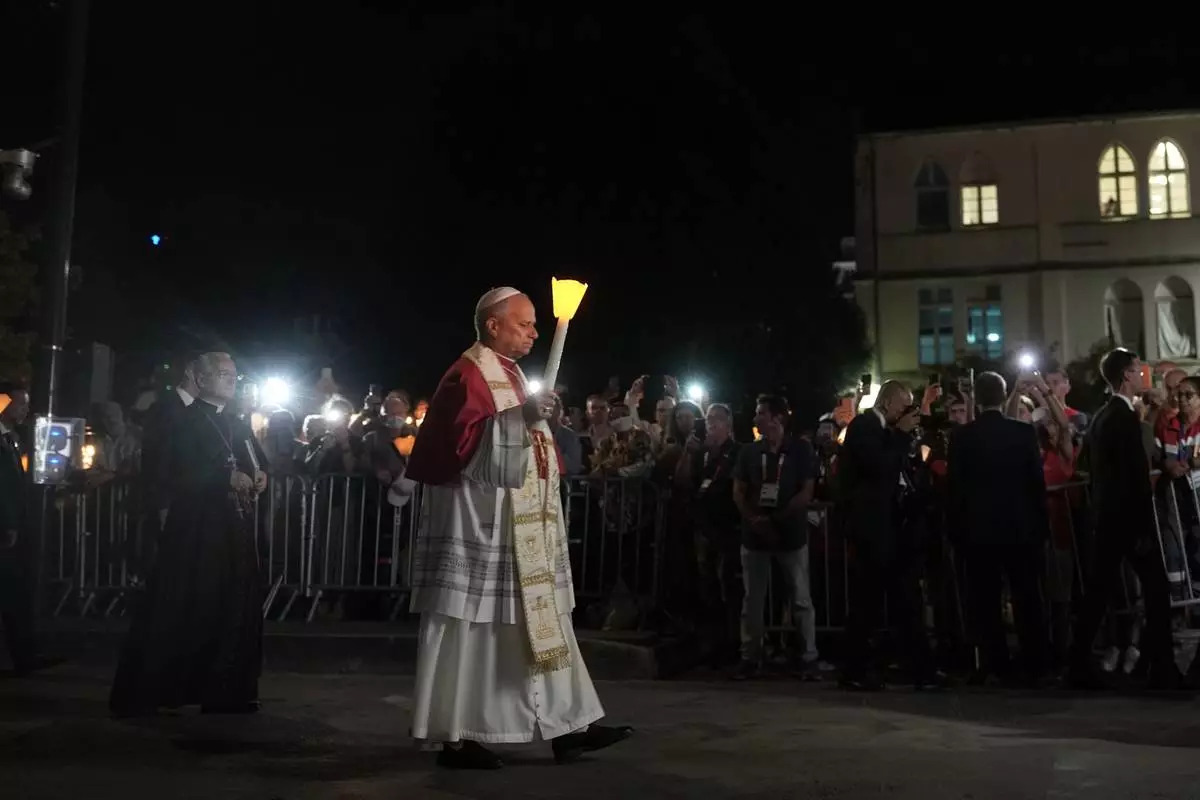
Pope Leo XIV holds a candle during a prayer of Holy Rosary and torchlight procession at the Sanctuary of Our Lady of Lourdes, France, Sunday, Sept. 27, 2026. (AP Photo/Thibault Camus)
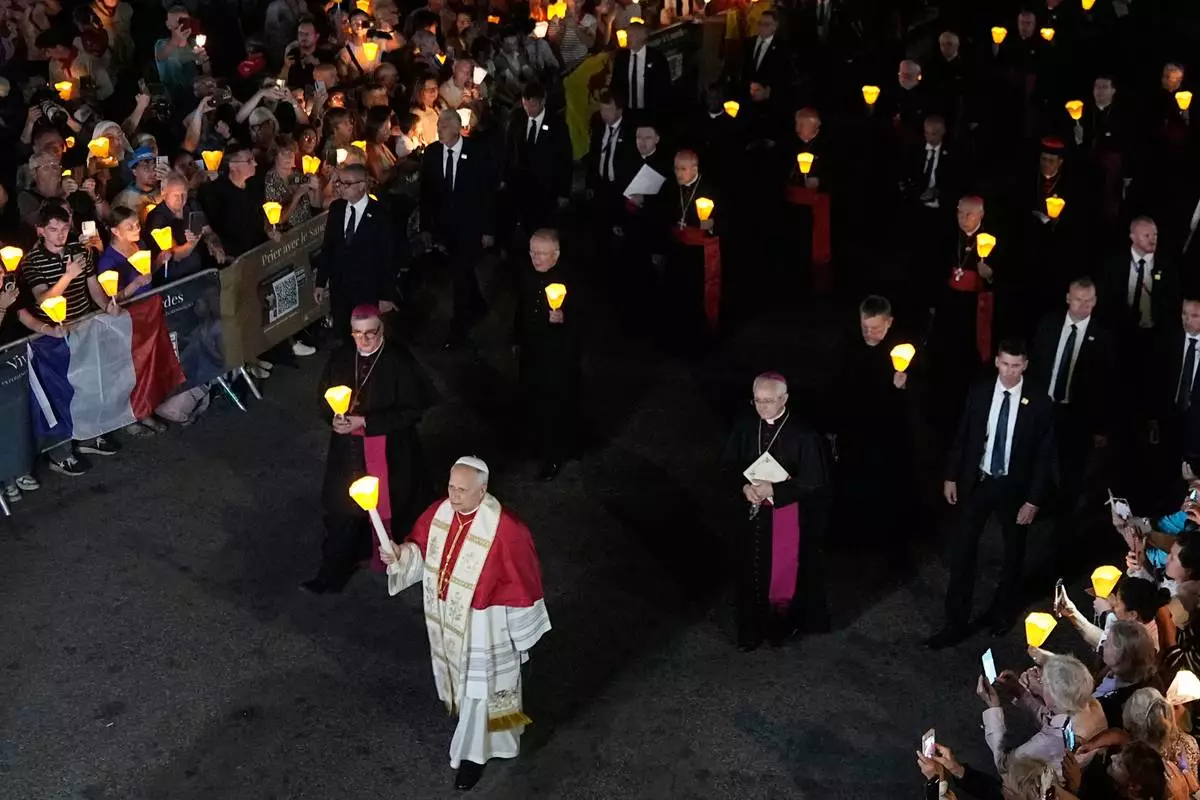
Pope Leo XIV, center, holds a candle during a prayer of Holy Rosary and torchlight procession at the Sanctuary of Our Lady of Lourdes, France, Sunday, Sept. 27, 2026. ((AP Photo/Laurent Cipriani)
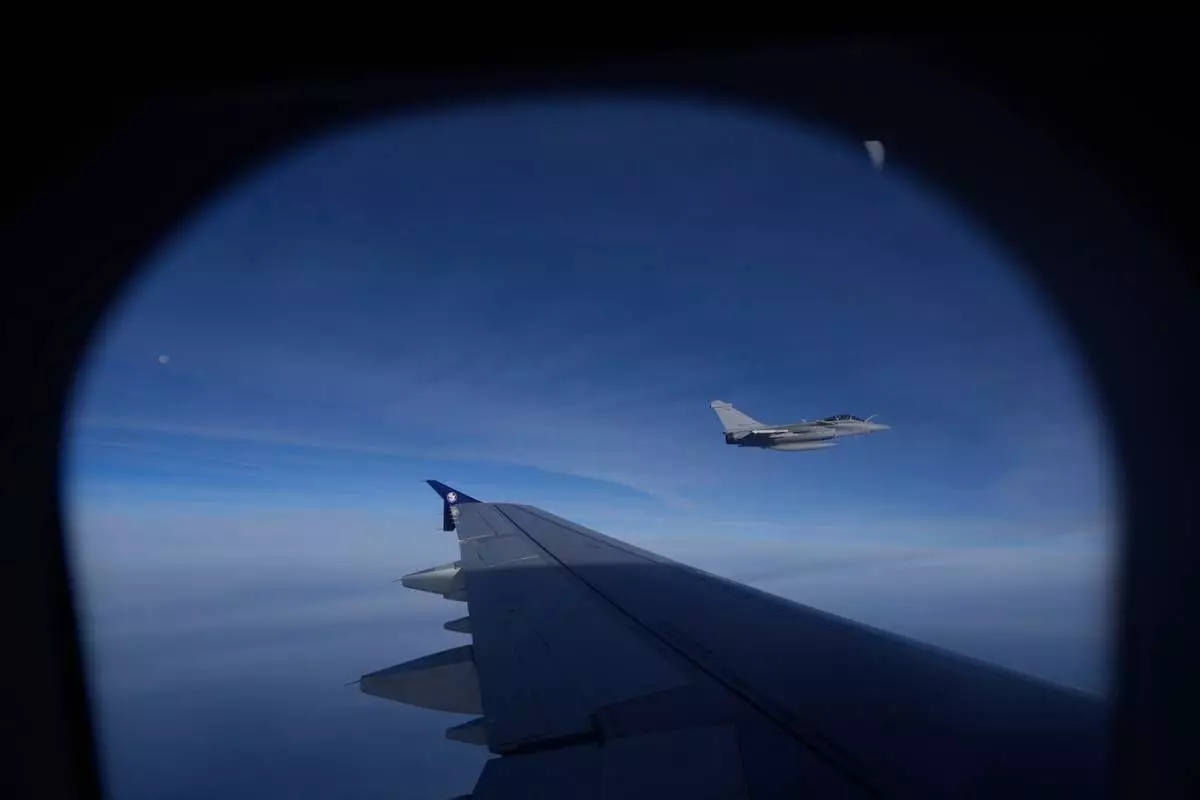
A French Air Force Dassault Rafale C fighter jet is seen through a window of the aircraft carrying Pope Leo XIV from Lourdes to Metz on the last day of his four-day visit to France, Monday, Sept. 28, 2026. (AP Photo/Gregorio Borgia, Pool)
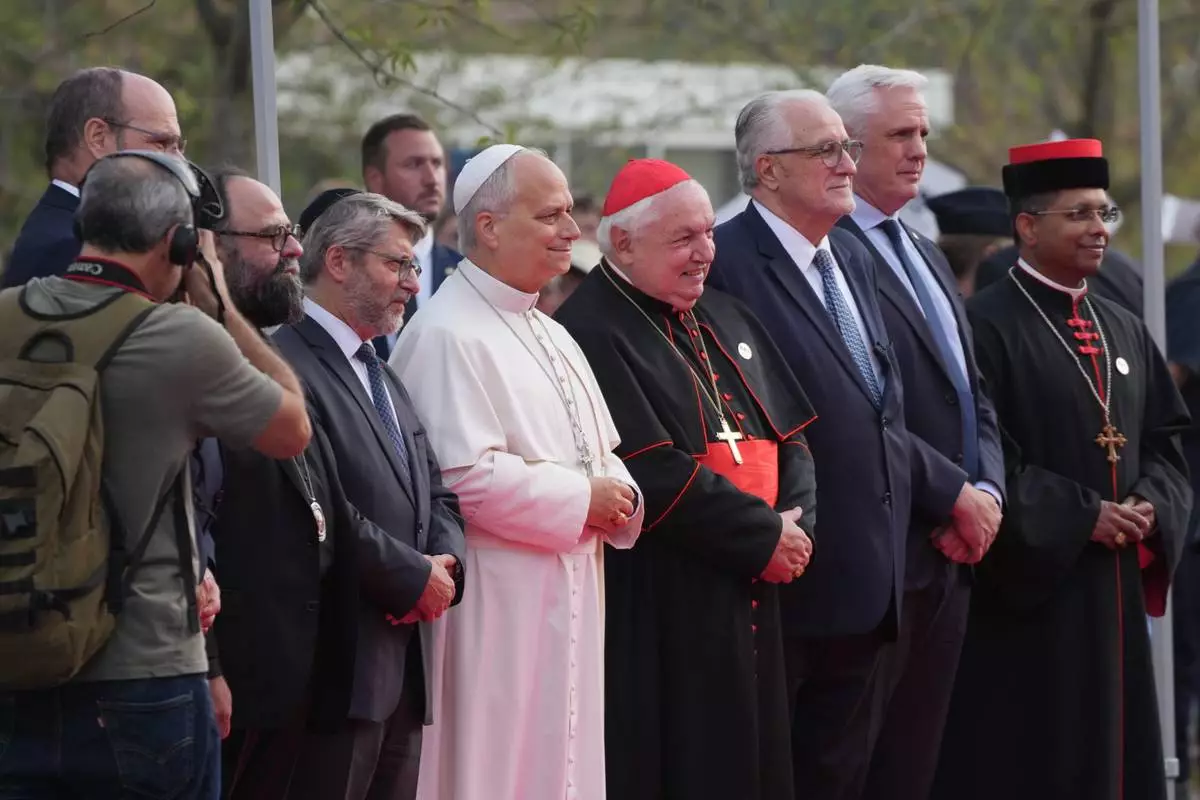
Pope Leo XIV, center, arrives, with, from left, Christian Krieger, president of the Protestant Federation of France (partially covered, Bishop Dimitrios (Ploumis), the Greek Orthodox Metropolitan of France, Haïm Korsia, Chief Rabbi of France, President of the French Bishops' Conference, Cardinal Jean-Marc Aveline, Chems-eddine Hafiz, rector of the Grand Mosque of Paris, Anthony Boussemart, representing French Buddhists, and Cardinal George Jacob Koovakad, prefect of the Dicastery for Interreligious Dialogue, to attend an interreligious meeting at the Robert Schuman Convention Centre, Monday, Sept. 28, 2026, in Metz, France. (AP Photo/Gregorio Borgia)
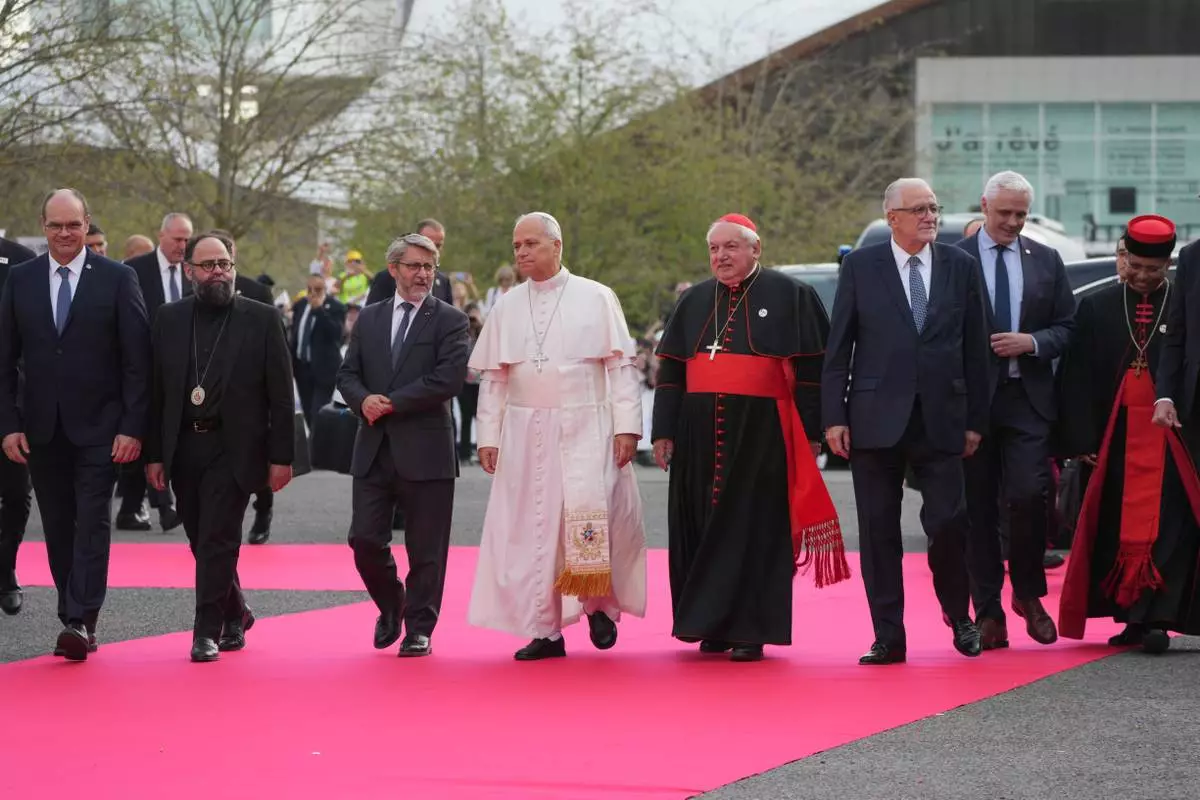
Pope Leo XIV, center, arrives, with, from left, Christian Krieger, president of the Protestant Federation of France, Bishop Dimitrios (Ploumis), the Greek Orthodox Metropolitan of France, Haïm Korsia, Chief Rabbi of France, President of the French Bishops' Conference, Cardinal Jean-Marc Aveline, Chems-eddine Hafiz, rector of the Grand Mosque of Paris, Anthony Boussemart, representing French Buddhists, and Cardinal George Jacob Koovakad, prefect of the Dicastery for Interreligious Dialogue, to attend an interreligious meeting at the Robert Schuman Convention Centre, Monday, Sept. 28, 2026, in Metz, France. (AP Photo/Gregorio Borgia) ADDITION: Add names of persons in the photo