Skip to Content Facebook Feature Image

People with Down syndrome and other disabilities find their rhythm in Indiana dance program

ENT

People with Down syndrome and other disabilities find their rhythm in Indiana dance program
ENT

ENT

People with Down syndrome and other disabilities find their rhythm in Indiana dance program

2026-09-28 17:52 Last Updated At:18:23

FISHERS, Ind. (AP) — Finn Vester, who has autism and Down syndrome, tried a martial arts class but it proved unsuitable because he learns differently, his mother said.

Then he joined Dance Abilities, a program at Academy of Dance Arts in the Indianapolis suburb of Fishers for people with physical or intellectual disabilities.

More Images
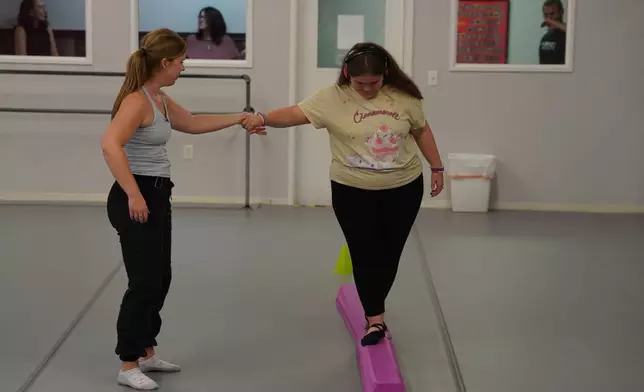
Claire Graham helps a student, Kylie Savage, perform a dance movement on a balance beam during a Dance Abilities class in Ind., Thursday, Sept. 17, 2026. (AP Photo/Obed Lamy)
Claire Graham helps a student, Kylie Savage, perform a dance movement on a balance beam during a Dance Abilities class in Ind., Thursday, Sept. 17, 2026. (AP Photo/Obed Lamy)

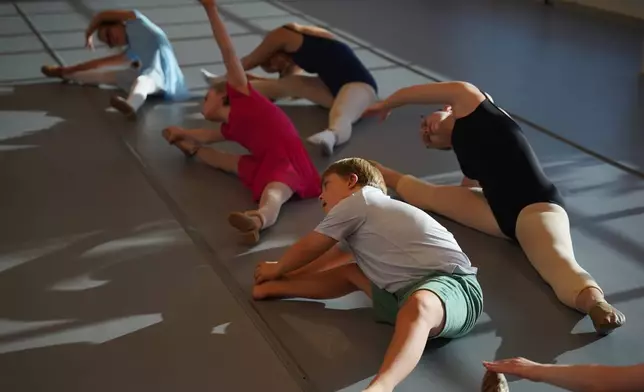
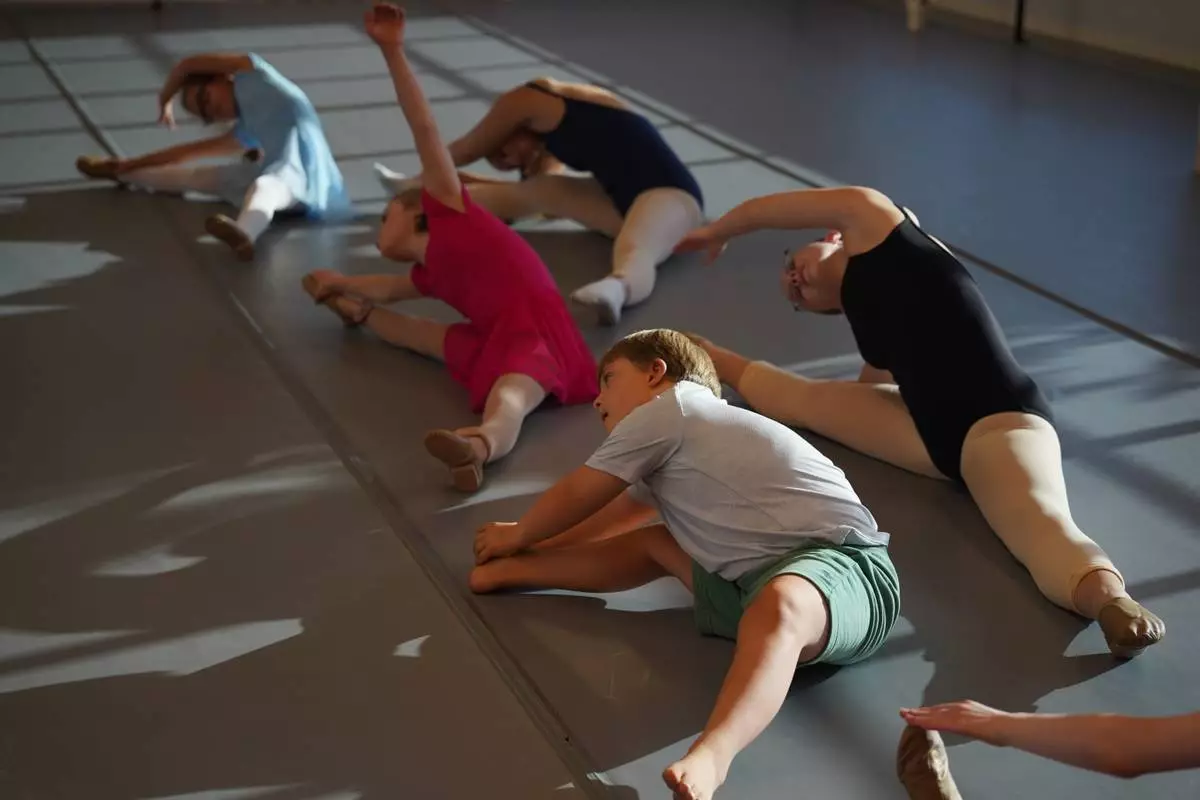
Students perform dance moves on the floor during a Dance Abilities class at the Academy of Dance Arts in the Indianapolis suburb of Fishers, Ind., Thursday, Sept. 17, 2026. (AP Photo/Obed Lamy)
Students perform dance moves on the floor during a Dance Abilities class at the Academy of Dance Arts in the Indianapolis suburb of Fishers, Ind., Thursday, Sept. 17, 2026. (AP Photo/Obed Lamy)
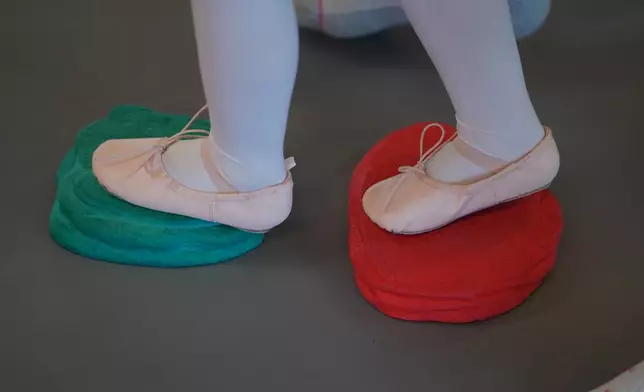
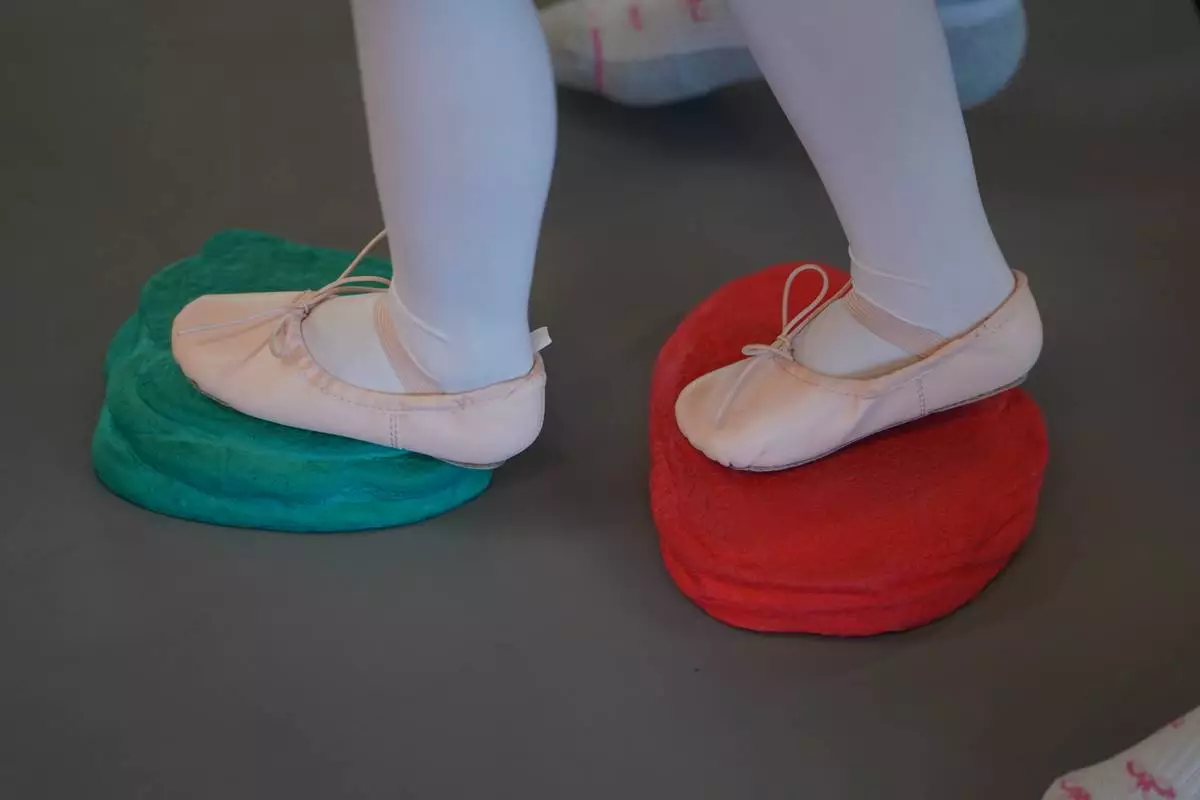
A student's feet perform a dance move using visual cues during a Dance Abilities class at the Academy of Dance Arts in the Indianapolis suburb of Fishers, Ind., Thursday, Sept. 17, 2026. (AP Photo/Obed Lamy)

A student's feet perform a dance move using visual cues during a Dance Abilities class at the Academy of Dance Arts in the Indianapolis suburb of Fishers, Ind., Thursday, Sept. 17, 2026. (AP Photo/Obed Lamy)

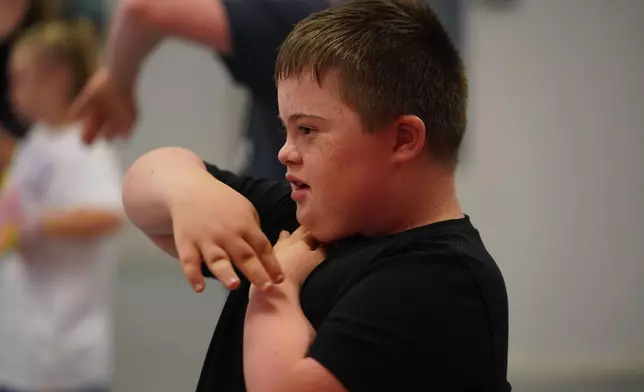
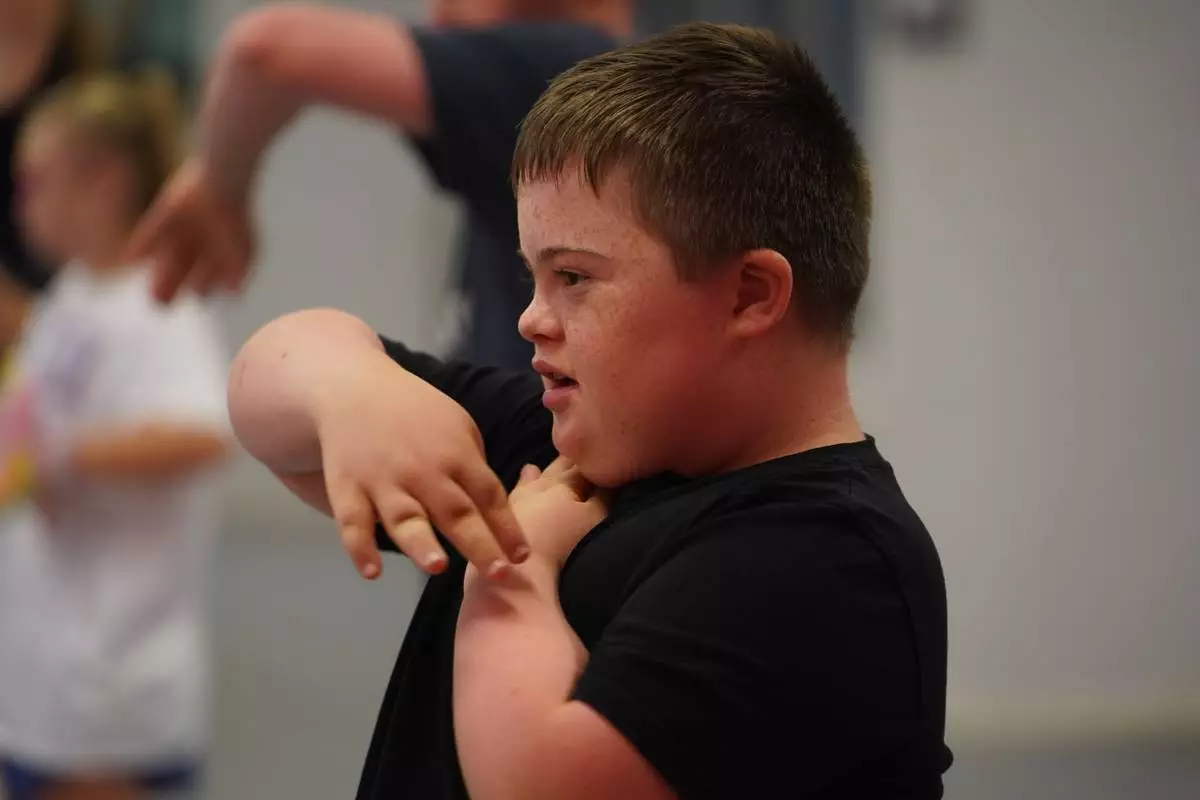
Tucker McGarrell, 13, who has Down syndrome, performs hand movements during a Dance Abilities class in Fishers, Ind., Thursday, Sept. 17, 2026. (AP Photo/Obed Lamy)
Tucker McGarrell, 13, who has Down syndrome, performs hand movements during a Dance Abilities class in Fishers, Ind., Thursday, Sept. 17, 2026. (AP Photo/Obed Lamy)

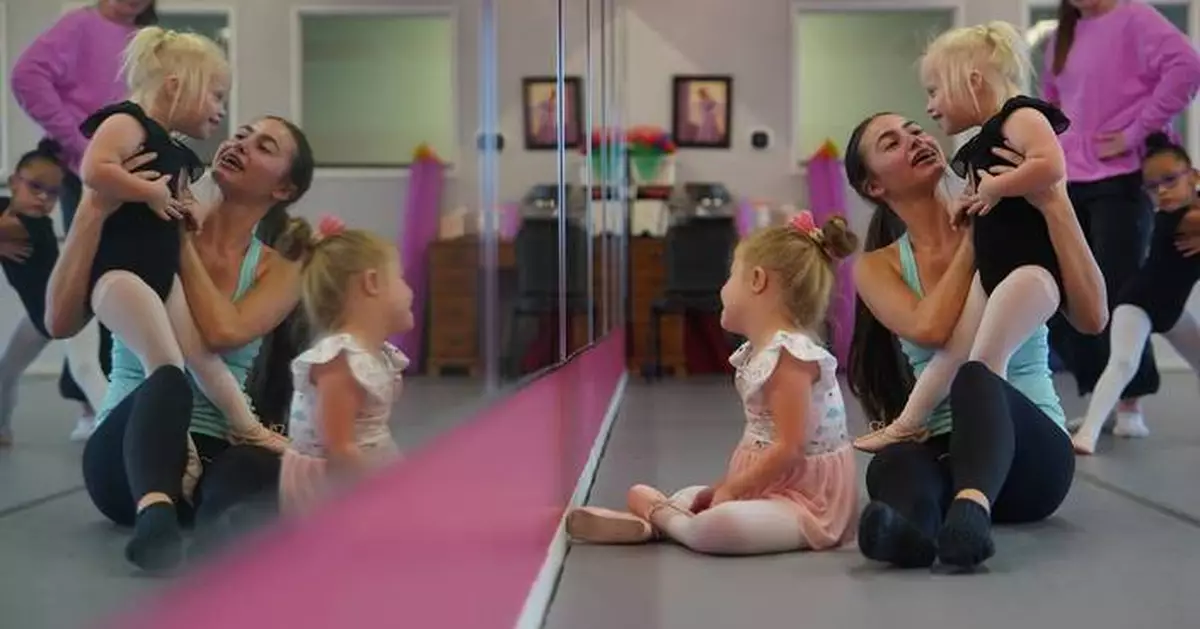
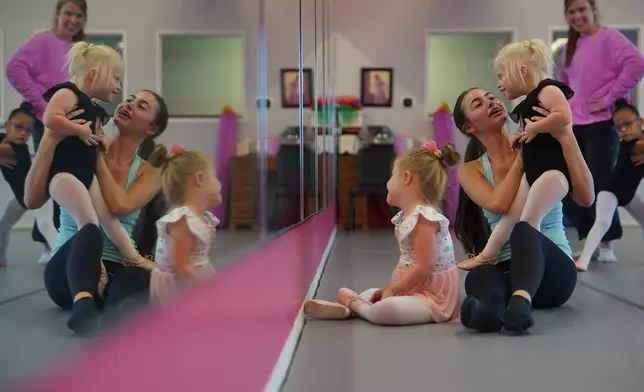
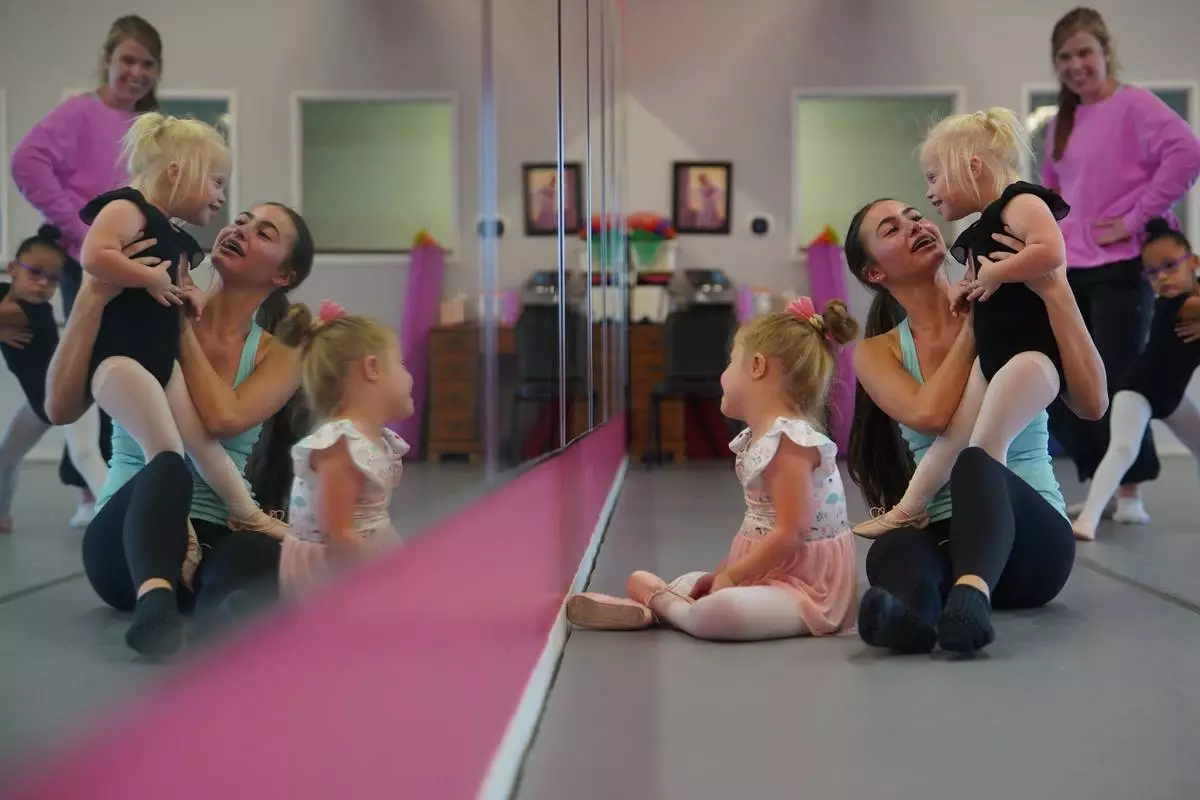
From left, Amelia Woods sits in front as Samantha Hatch holds Elsie Bickett, while Maliyah Rider stands next to Claire Graham in front of a mirror during a Dance Abilities class at the Academy of Dance Arts in the Indianapolis suburb of Fishers, Ind., Thursday, Sept. 17, 2026. (AP Photo/Obed Lamy)

From left, Amelia Woods sits in front as Samantha Hatch holds Elsie Bickett, while Maliyah Rider stands next to Claire Graham in front of a mirror during a Dance Abilities class at the Academy of Dance Arts in the Indianapolis suburb of Fishers, Ind., Thursday, Sept. 17, 2026. (AP Photo/Obed Lamy)

Now dance has become his way to communicate and connect with others, his mom, Nicole Vester, said.

Claire Graham, the founder of Dance Abilities, got the idea for the program in high school after realizing while she was studying dance, she was never able to connect with her sister with Down syndrome while she took part in her own activities. The program has grown in three years from a summer camp for eight youngsters to year-round classes for about 20 people.

Dance Abilities has separate classes for children ages 18 months to 4, ages 4-7 and 8-12, teenagers, and for adults, too. A successful day for Graham, who has a degree in dance and a master's in recreational therapy, is when everyone has had fun and been challenged.

“I’m not looking for perfection of position and not looking for a perfect performance,” Graham said. “Only a performance that they can feel confident about.”

These dancers are not the only ones performing through challenges. Ezra Frech, a two-time gold medal Paralympian, is competing on this season's “Dancing with the Stars” on ABC. Frech, a track and field athlete, has a prosthetic leg.

Finn's mom values her son’s confidence-building that will help him be able to go into the world and learn new things, she said.

“Claire teaches him at his level. She teaches him a little slower. She teaches him a couple more extra times. And he feels proud and he feels accomplished and he feels like he’s part of a group,” Vester said.

Accommodations at Dance Abilities include slowing down, using more visual cues than verbal instruction, and teacher “helpers” who physically guide students through the movements.

“Sometimes, we’ll add something new that they can work on to make it a little harder,” said one helper, Catherine Benko, 16.

Dance is good for the body, too, with different needs for different students.

For students with Down syndrome, who tend to be naturally more flexible and less strong, Graham emphasizes developing muscle tone. Students with autism, she said, often need more help stretching.

Abigail MacGregor, who has Down syndrome, loves to dance through an obstacle course and to perform her latest moves for friends and family after she’s been practicing all week.

“I just love dance,” Abby said. “The best thing of dance is having fun, being with all my dance crew.”

Tucker McGarrell, 13, who has Down syndrome, doesn’t walk but runs into his dance classes, his mom Amanda McGarrell said.

“It’s not speech therapy or physical therapy or occupational therapy appointments. This is actually something he enjoys doing,” McGarrell said.

McGarrell loves to see her son have an accepting, accommodating place.

“It’s just such a huge thing that Tucker’s given a space and a stage to be himself and get to be with friends and learn new things,” McGarrell said. “It just like fills me with joy knowing that he’s getting to do something that he loves too just like typical kids do.”

Whoever her students are, Graham said, “if you give them the chance to succeed and meet them where they are, they can 100% grow.”

Seeing her students smile is the ultimate metric of success.

“It warms my heart to hear my kiddos saying, 'Look, Mom, I did it!'” she said.

Gruver reported from Fort Collins, Colorado.
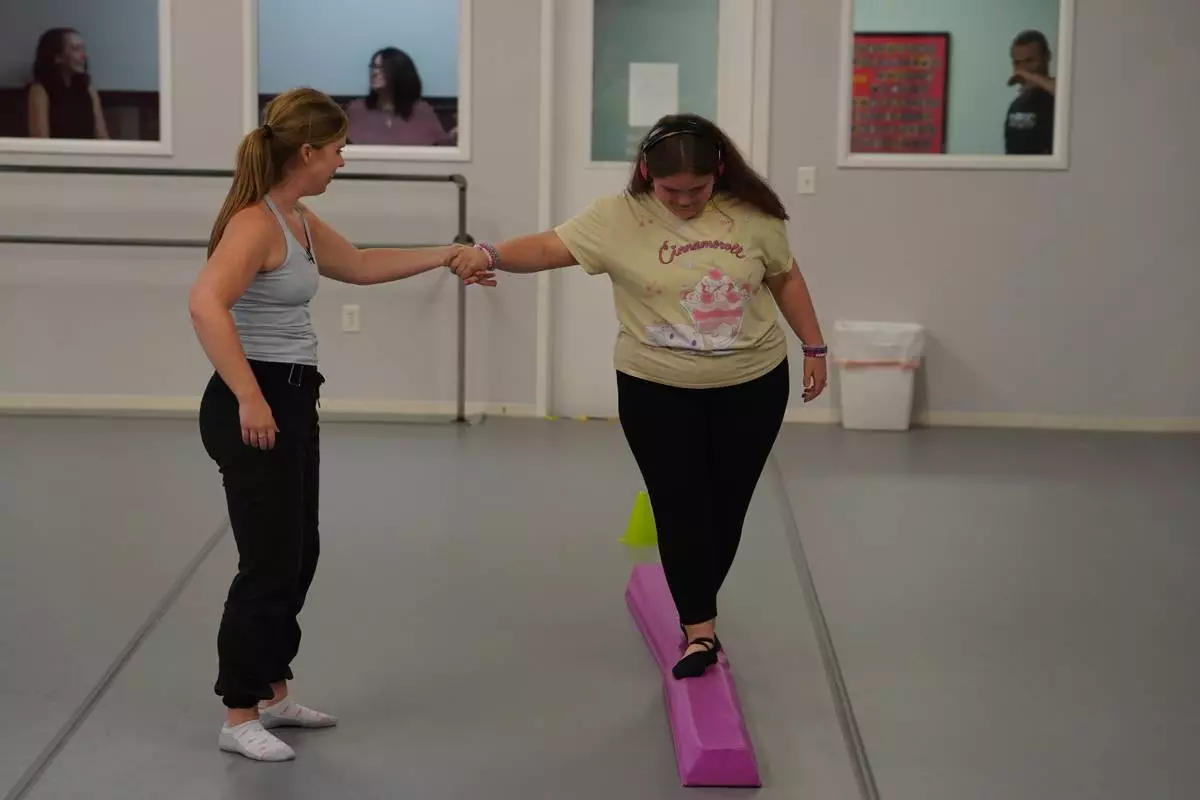
Claire Graham helps a student, Kylie Savage, perform a dance movement on a balance beam during a Dance Abilities class in Ind., Thursday, Sept. 17, 2026. (AP Photo/Obed Lamy)
Claire Graham helps a student, Kylie Savage, perform a dance movement on a balance beam during a Dance Abilities class in Ind., Thursday, Sept. 17, 2026. (AP Photo/Obed Lamy)

Students perform dance moves on the floor during a Dance Abilities class at the Academy of Dance Arts in the Indianapolis suburb of Fishers, Ind., Thursday, Sept. 17, 2026. (AP Photo/Obed Lamy)
Students perform dance moves on the floor during a Dance Abilities class at the Academy of Dance Arts in the Indianapolis suburb of Fishers, Ind., Thursday, Sept. 17, 2026. (AP Photo/Obed Lamy)
A student's feet perform a dance move using visual cues during a Dance Abilities class at the Academy of Dance Arts in the Indianapolis suburb of Fishers, Ind., Thursday, Sept. 17, 2026. (AP Photo/Obed Lamy)

A student's feet perform a dance move using visual cues during a Dance Abilities class at the Academy of Dance Arts in the Indianapolis suburb of Fishers, Ind., Thursday, Sept. 17, 2026. (AP Photo/Obed Lamy)

Tucker McGarrell, 13, who has Down syndrome, performs hand movements during a Dance Abilities class in Fishers, Ind., Thursday, Sept. 17, 2026. (AP Photo/Obed Lamy)
Tucker McGarrell, 13, who has Down syndrome, performs hand movements during a Dance Abilities class in Fishers, Ind., Thursday, Sept. 17, 2026. (AP Photo/Obed Lamy)

From left, Amelia Woods sits in front as Samantha Hatch holds Elsie Bickett, while Maliyah Rider stands next to Claire Graham in front of a mirror during a Dance Abilities class at the Academy of Dance Arts in the Indianapolis suburb of Fishers, Ind., Thursday, Sept. 17, 2026. (AP Photo/Obed Lamy)

From left, Amelia Woods sits in front as Samantha Hatch holds Elsie Bickett, while Maliyah Rider stands next to Claire Graham in front of a mirror during a Dance Abilities class at the Academy of Dance Arts in the Indianapolis suburb of Fishers, Ind., Thursday, Sept. 17, 2026. (AP Photo/Obed Lamy)
KYIV, Ukraine (AP) — Russia’s round-the-clock bombardment of targets in Ukraine killed at least three civilians and wounded 41 others, officials said Monday, while Ukraine’s army claimed more successes in a recent push on the front line.

The attacks followed a week of diplomatic efforts at the United Nations to get traction for negotiations on ending Moscow’s invasion that began 4½ years ago.

Battlefield positions have changed little since last year, in part because swarms of drones severely restrict troop movements, but Kyiv’s forces launched a recent offensive, codenamed Operation Vivaldi, on part of the 1,250-kilometer (800-mile) front line.

Ukraine’s Third Army Corps said Monday it had recaptured another 51 square kilometers (20 square miles) from the Russians, bringing the total to 176 square kilometers (68 square miles) since the offensive began several months ago.

The corps said that in order to break through Russian defenses, it converted Soviet-era BTR-60 armored personnel carriers into kamikaze vehicles that blew up the strongest Russian fortifications. The operation has also used ground robots to attack Russian positions.

The claimed breakthroughs came in the Donetsk region of eastern Ukraine, which the bigger Russian army has been trying in vain to conquer.

Russian officials made no immediate comment on the Ukrainian claim.

Russia’s Defense Ministry, meanwhile, said that Russian troops captured the villages of Novovodiane in the Donetsk region and Ulanove in the northern Sumy region.

It was not possible to independently verify the claims.

The ceaseless Russian drone attacks on cities and towns aim to wear down Ukraine’s resistance and cripple the Ukrainian economy.

Russia’s Defense Ministry said its forces struck two data centers in Kyiv, as well as gas stations in the Ukrainian capital. A distribution hub belonging to Nova Poshta postal service was struck in the southern city of Odesa, it said.

The Russian military also hit a cargo ship in the Black Sea and another one in the Ukrainian port of Chornomorsk, the ministry said. The strikes aim to curb Ukraine’s grain exports, though they may also create food shortages in countries that rely on Ukrainian imports.

The Russian aerial attacks regularly hit civilian areas. Moscow claims it targets only military-related sites.

Russian drone attacks on the Kyiv region killed three people and wounded eight, said Tymur Tkachenko, head of the regional military administration.

A Russian strike on a nine-story apartment building in the northeastern city of Kharkiv wounded 38 people, including 10 children, Mayor Ihor Terekhov said.

Four people, including two teenage girls, were hurt when a Russian drone struck a residential area in northern Ukraine’s Chernihiv region on Sunday evening, said Viacheslav Chaus, head of the regional military administration.

Ukrainian long-range drones have targeted fuel depots and industrial plants deep inside Russia that are a mainstay of Moscow’s economy and war effort.

Ukrainian drone attacks overnight started fires at three infrastructure facilities in Russia’s Krasnodar region, local emergency officials said Monday, without identifying the locations.

Russia’s Defense Ministry said that air defenses downed 254 Ukrainian drones overnight.

Hatton reported from Lisbon, Portugal.

Follow the AP’s coverage of the war in Ukraine at https://apnews.com/hub/russia-ukraine

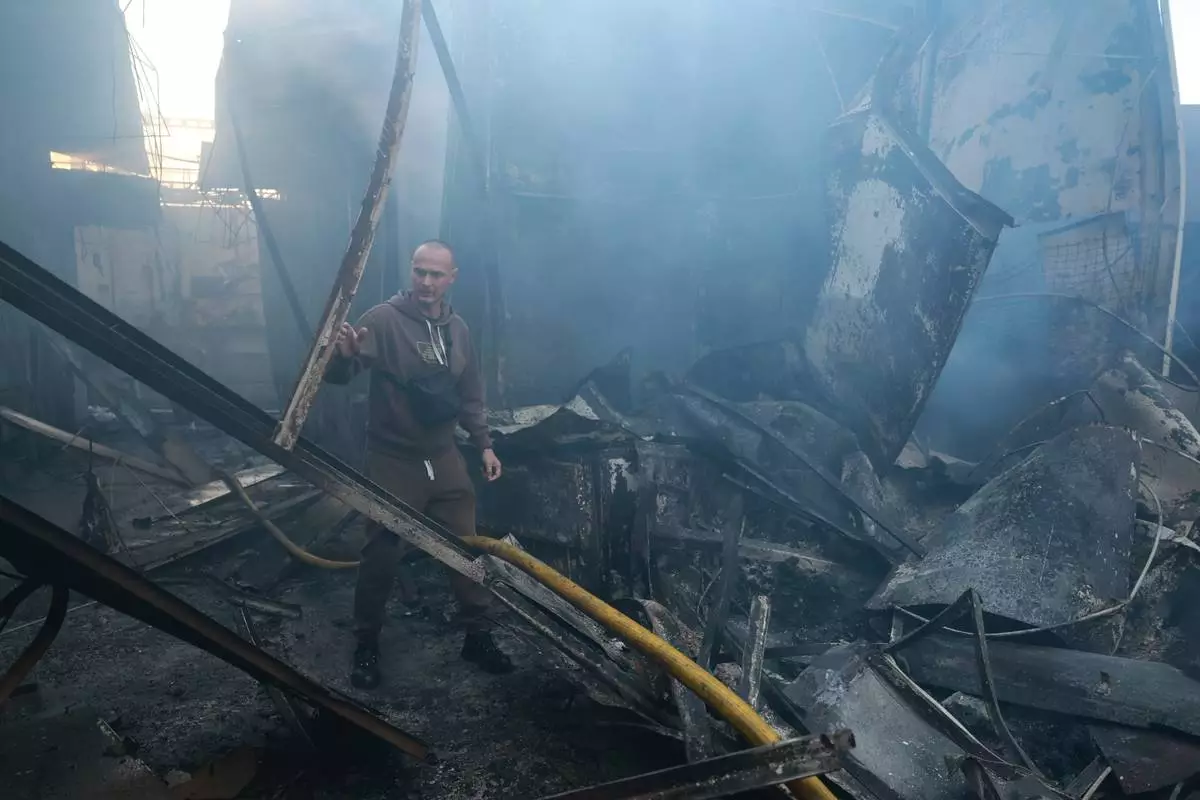
A man walks at the central market damaged in a Russian strike on Zaporizhzhia, Ukraine, on Saturday, Sept.26, 2026. (AP Photo/Kateryna Klochko)

A man walks at the central market damaged in a Russian strike on Zaporizhzhia, Ukraine, on Saturday, Sept.26, 2026. (AP Photo/Kateryna Klochko)

Recommended Articles