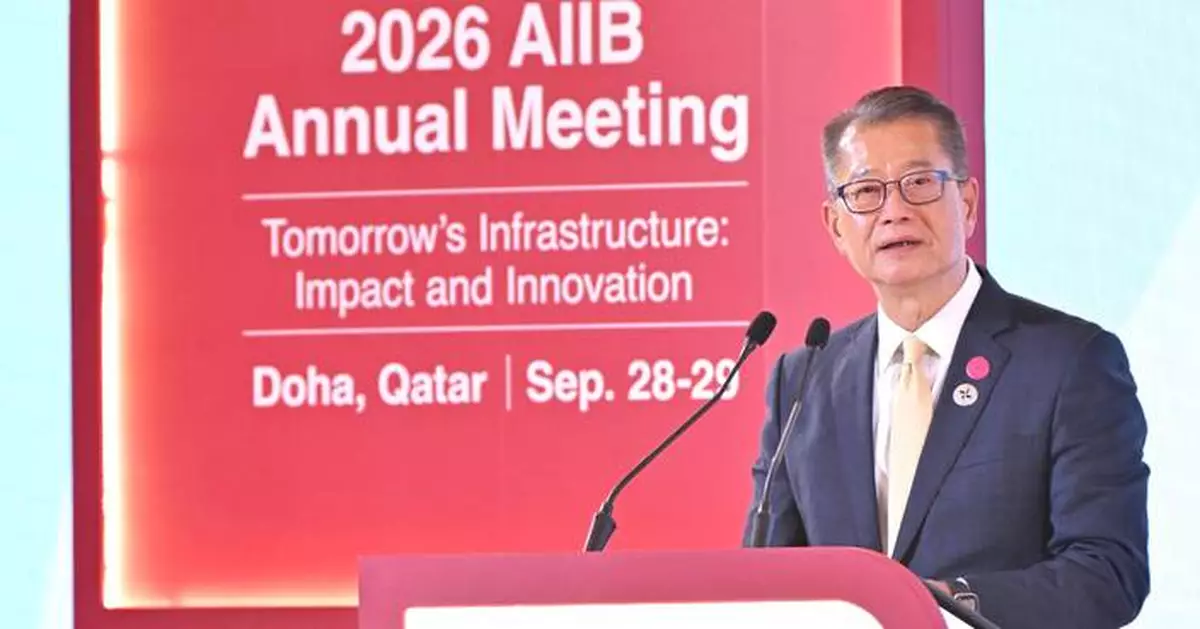
Speech by FS at seminar on "Digital Public Infrastructure as an Enabler for Resilient Economies" of 2026 AIIB Annual Meeting
Following is the speech by the Financial Secretary, Mr Paul Chan, at the seminar on "Digital Public Infrastructure as an Enabler for Resilient Economies" of the 2026 Asian Infrastructure Investment Bank (AIIB)Annual Meetingin Doha, Qatar, today (September 28, Doha time):
Fellow Governors, distinguished panelists, honoured guests, ladies and gentlemen,
Good afternoon. It is a pleasure to join you for this discussion on digital infrastructure and economic resilience.
From digital services to public value
Infrastructure connects people to opportunities. Beyond roads and power grids, digital connections help citizens access services, and businesses reach markets and obtain finance.
Yet putting services online does not necessarily make them work together. Citizens may still need to provide the same information repeatedly in order to get different public services, while businesses need to do the same in order to demonstrate their creditworthiness. Digital public infrastructure can bridge these gaps through sharing identity, financial and other information on a single common platform, which can also facilitate payment.
For developing economies, the priority may be inclusive and convenient access to essential services. For advanced economies, it may be connecting different systems built separately over many years. Whatever the starting point, all economies want to meet the aspirations of their people: that is, in the digital era, people can use every service they need just a fingertip away.
Then, how do we make such data and services available seamlessly for the benefit of the people and businesses? And how do we safeguard their privacy so they can participate with confidence?
Allow me to share Hong Kong's experience in this pursuit.
Hong Kong's experience
In Hong Kong, our extensive broadband networks and established data infrastructure provide a strong foundation. The task is to make public and private services more connected and accessible.
"iAM Smart", our mobile digital identity platform is one example. It allows our residents to use one identity for different services, from tax filing to accessing health records, thus reducing paper work and repeated verifications. It now supports over 1 400 online services provided by the Government as well as public and private organisations. It is free for our residents, with charges waived for private-sector service providers so as to encourage early adoption.
There is still much to do to make the experience smooth and pleasant. Our lesson is to bring government departments and businesses together early, agree on common standards, and design services around our users, thereby removing departmental boundaries. That demands agreement on priorities and co-ordination of implementation timetables. In other words, not simply technology compatibility. We are bringing more services into "iAM Smart" and, by the end of this year, extending it to businesses through a Digital Corporate Identity platform.
Better connections can also make finance more convenient and inclusive. Our Faster Payment System, or FPS, connects banks and e-wallets for instant transfers around the clock. By the end of last year, the average daily value of transactions done through FPS reached US$2 billion. Its coverage has also been extended to cover cross-border activities. For example, by linking with Thailand's PromptPay. Travellers can pay participating merchants in both places with their usual payment apps.
On top of this, e-wallets in Hong Kong - or what we call stored value facilities - have over 90 million accounts. That was nearly a 50 per cent growth compared to 2022.
Beyond payments, access to credit remains a challenge for smaller businesses. SMEs (small and medium-sized enterprises) may have sound trading records but insufficient collateral for a bank loan. The Hong Kong Monetary Authority's Commercial Data Interchange, or CDI, securely connects banks with commercial data providers. With clients' prior consent, banks can use such data to assess creditworthiness. By June this year, over 100 000 loan applications with an aggregate value of over US$11 billion had been concluded by using CDI.
For importers and exporters, banks traditionally rely on shipping documentation for verification of shipment. Project Cargo X, which builds on CDI, makes cargo and trade data accessible faster, helping banks verify transactions and provide the needed financing. In other words, it enables timely and easier access to trade finance, not simply less paperwork.
AI offers a new opportunity to raise productivity and improve public services. In government, our AI Efficacy Enhancement Team is pairing AI adoption with workflow redesign to deliver faster, more responsive services to our citizens and businesses, including licensing approval and complaint handling.
Realising AI's potential across the economy requires strong foundational support, including computing capacity and reliable electricity. At Sandy Ridge in the Northern Metropolis, we are developing a major data facility cluster in an energy-efficiency and lower-carbon manner.
To make these resources accessible and affordable, we have rolled out a US$500 million Artificial Intelligence Subsidy Scheme for eligible research institutions, start-ups and business enterprises.
Besides infrastructure and access, businesses need room to experiment different solutions. In finance, for example, our AI sandbox programme covers banking, securities, wealth management, insurance and retirement plans, enabling firms and regulators to test applications and refine products for wider adoption.
Ultimately, the benefits of AI depend on people's ability to use it confidently and responsibly. Our "AI for All" programme seeks to broaden AI literacy across the society and strengthen the capabilities of our workforce and businesses. The aim is to equip people from all walks of life to participate in an AI-enabled economy and share in its opportunities.
The deeper challenge: governance and trust
The deeper challenge in AI adoption is governance. In the interest of time, I would just highlight two closely related challenges. First, cybersecurity. Greater connectivity increases exposure to attacks and disruption. Security must be built in from the outset, supported by regular testing, updating and the ability to recover quickly.
Our legislation for protecting critical infrastructure took effect this January, requiring designated operators to assess risks, conduct security audits, prepare response plans and report incidents. The objective is continuity of essential services.
Data sharing depends on trust. Our Consented Data Exchange Gateway provides an institutionalised mechanism for secure, consent-based data sharing within the Government and with external stakeholders like the banking sector. On the one hand, this facilitates better and more efficient delivery of public and private services; and on the other, clear and transparent protocols provide the needed safeguards to inspire trust. So far, the gateway has facilitated over 62 million exchanges.
Second, AI magnifies risks, making scams more sophisticated and allowing errors to spread at speed and scale. Safeguards must be built into how AI is procured, tested, used and monitored.
This month, we released Hong Kong's First Five-Year Plan (the First Five-Year Plan for Economic and Social Development of the Hong Kong Special Administrative Region (2026-2030)) and the 2026 Policy Address, which set out our AI risk-governance strategy. We will work with stakeholders and professionals on sector-specific guidance and governance frameworks. Safeguards should cater to risks associated with each application rather than in the form of a universal requirement for all.
We will also review whether the existing law already adequately addresses liabilities for harm caused by AI. Innovation does need room to develop, but those affected must have clarity about responsibility and redress.
Our vision is clear: guardrails must be in place to give people confidence to embrace innovation. In this way, we can move ahead earlier and faster.
Working with AIIB
Ladies and gentlemen, the next phase of digital development should be measured not simply by how connected we become, but by the opportunities we create and the resilience we build. I commend AIIB for bringing us together to share practical experience on this important subject.
Hong Kong stands ready to contribute to share our experience and learn from one another. Together, we can realise the common ambition of building digital infrastructure that improve people's lives and enhance business efficiency. Thank you very much.
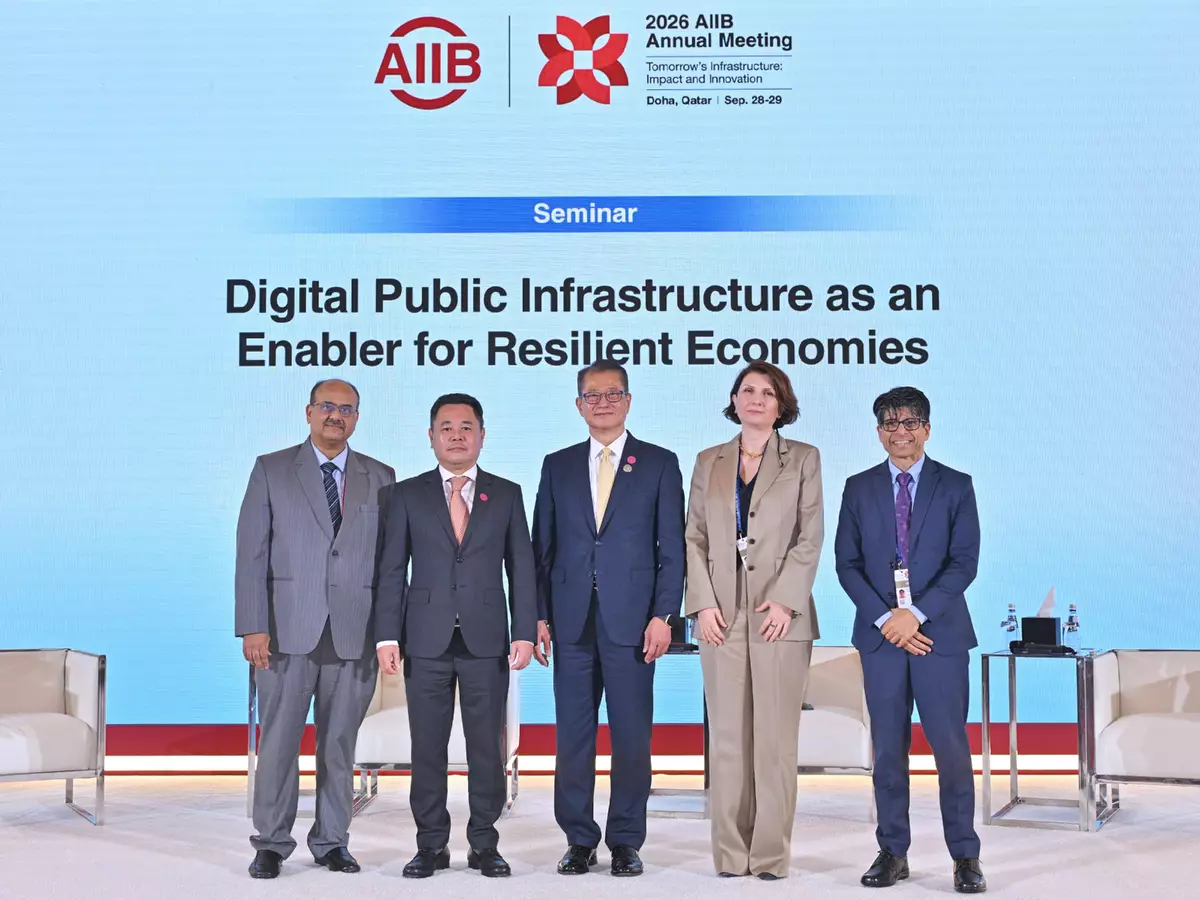
Speech by FS at seminar on "Digital Public Infrastructure as an Enabler for Resilient Economies" at 2026 AIIB Annual Meeting Source: HKSAR Government Press Releases
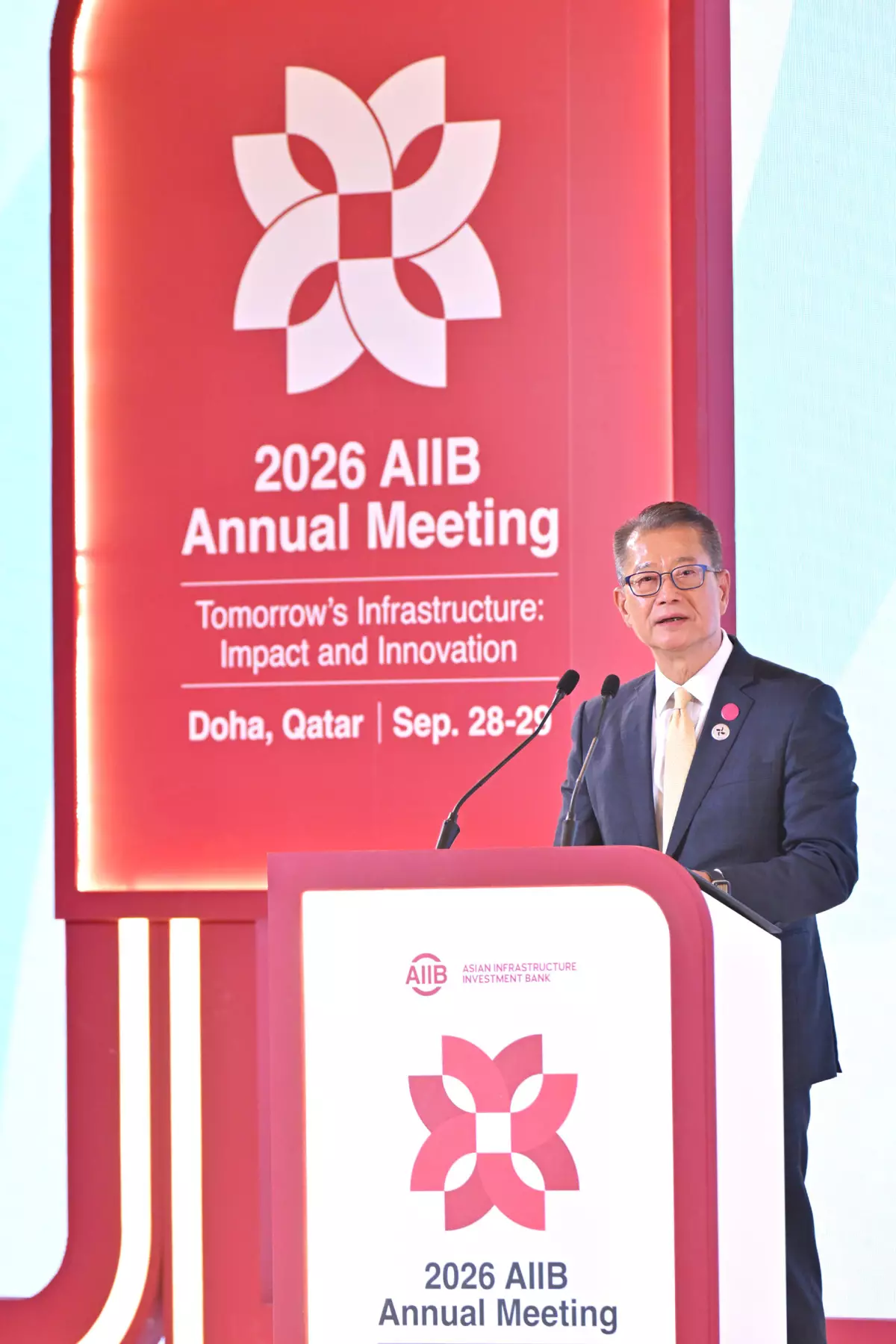
Speech by FS at seminar on "Digital Public Infrastructure as an Enabler for Resilient Economies" at 2026 AIIB Annual Meeting Source: HKSAR Government Press Releases