CAIRO (AP) — Mediators are still working with Iran and the United States on brokering a deal to end the fighting and open the Strait of Hormuz — even after U.S. President Donald Trump publicly rejected Iran's latest proposal, four officials familiar with the matter, including a senior U.S. official, told The Associated Press.
The indirect talks were expected to resume on Monday and come as the conflict that's caused global economic damage and badly battered Iran enters its eighth month. Multiple efforts to allow safe shipping on one of the world's most crucial waterways have failed.
The officials divulged that the behind-the-scenes efforts continue even after Trump spurned an Iranian proposal to reopen the strait in a week if the U.S. agreed to lift its blockade of Iranian ports, releases frozen Iranian assets and waives sanctions on Iranian oil sales, among other conditions.
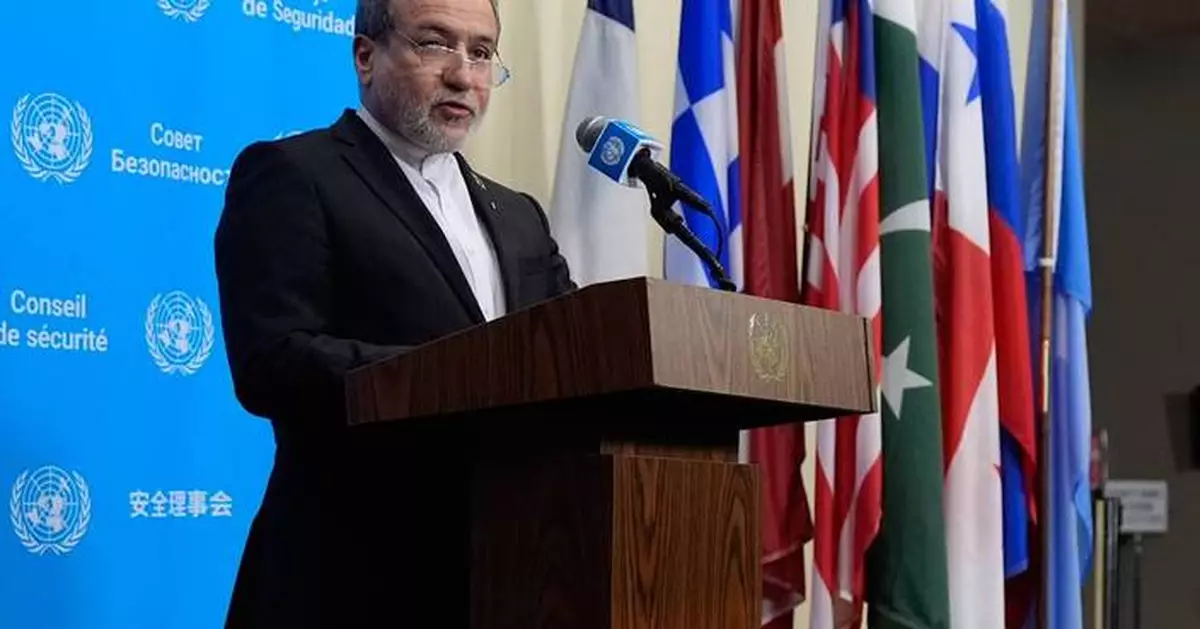
Iran Foreign Minister Abbas Araghchi, however, remained in New York after last week's gathering of world leaders at the U.N. General Assembly. He said he was awaiting “definitive” word from mediators of Trump's rejection. Qatar has been mediating.
Despite Trump’s often bellicose rhetoric, he remains open to pursuing a non-military resolution to the conflict if one can possibly be achieved, said the senior U.S. official.
But the official stressed there's a measure of doubt about whether Iran can be persuaded to ultimately reach Trump's conditions for a deal.
The officials were not authorized to comment publicly and spoke on the condition of anonymity about the behind-the-scenes diplomatic negotiations.
Two of the officials speaking to the AP confirmed that mediators are working with both sides on a proposal that would include reopening the strait and lifting the U.S. blockade, and then removing sanctions.
According to the draft text being discussed, the strait would reopen in accordance with a separate deal that Iran has been discussing with Oman, on the other side of the strait, and it would include no tolls — something Tehran has pursued. That deal seeks to temporarily manage shipping traffic on what was seen as an international waterway before the war.
Despite Trump’s public comments, the U.S. has not officially rejected the current proposal, indicating that his remarks may have been a negotiating tactic, according to the officials.
One official said the U.S is seeking Iranian concessions on its nuclear program, including allowing inspectors to enter the country. Under the Memorandum of Understanding the two sides signed in June that collapsed within days, Iran's nuclear program was meant to be discussed over a 60-day period.
One official reported positive signals coming from both sides. A second reported “slight progress” over the weekend. The third said mediators are still trying “to soften” the positions of both sides.
The White House did not immediately respond to a request for comment.
While Iran’s latest proposal echoes the June deal, a key difference is speed.
Foreign Minister Abbas Araghchi told a closed-door meeting on the sidelines of the U.N. General Assembly last week that Tehran had pitched the deal as benefiting Trump in the midterm elections. Araghchi later told journalists that “the seven-day timeline will start as soon as the United States accepts this plan.”
Both the U.S. and Iran have been hurting economically — the U.S. from high oil prices as Iran attacks ships on the strait, and Tehran from the naval blockade and a growing number of U.S. sanctions that bottle up its oil sales. Brent crude, the international standard, is above $108.
For months, the two sides have been trying to outlast the other, while regional countries put up with missile and drone attacks as Tehran claims to target U.S. military assets in the region.
Reflecting Iran's impatience, a rare statement on Monday attributed to the theocracy's Supreme Leader Ayatollah Mojtaba Khamenei noted the “painful blows” that enemy forces have received near the strait. “Before long, the Arabian Sea, too, will be rid of them,” the statement added.
Tehran latest proposal again sought to end the fighting on all fronts, including in Lebanon. But a new front has emerged in recent weeks as Iran-backed Houthi rebels in Yemen are now perched on another crucial waterway, the Bab el-Mandeb Strait at the southern entrance to the Red Sea. That has further pressured global energy markets.
Iran argues that the Houthis have their own demands, and that their conflict with neighboring Saudi Arabia is separate from the U.S.-Iran war, but Iranian officials said they are willing to help in finding a settlement between the Houthis and the Saudis, one of the officials said.
Lee reported from Washington. Associated Press writers Collin Binkley in Washington and AP Middle East editor Victoria Eastwood contributed to this report.
AP STANDARDS: The AP only uses anonymous sources when the information is vital to the news report and not opinion or speculation. The information must be unavailable except under the conditions of anonymity imposed by the source. The source must be reliable, in a position to have accurate information and approved by news managers.
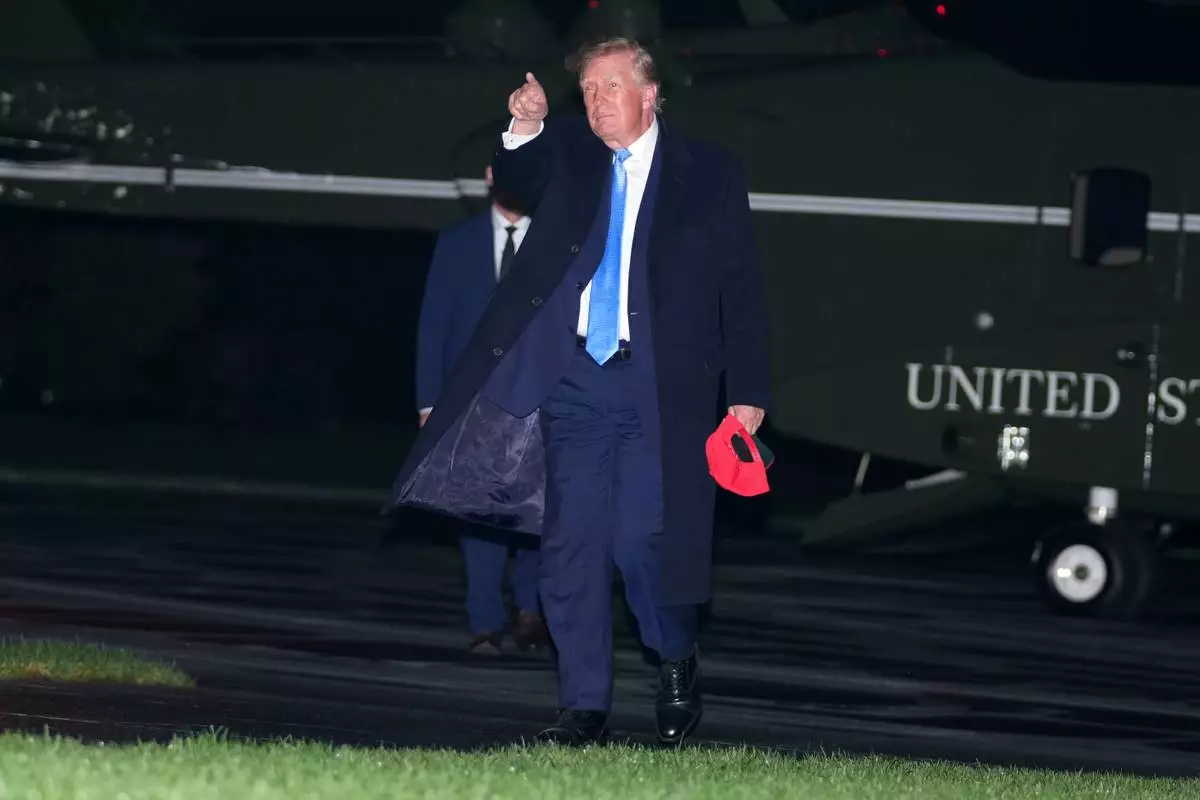
President Donald Trump walks on the South Lawn of the White House after arriving on Marine One, Sunday, Sept. 27, 2026, in Washington. (AP Photo/Allison Robbert)
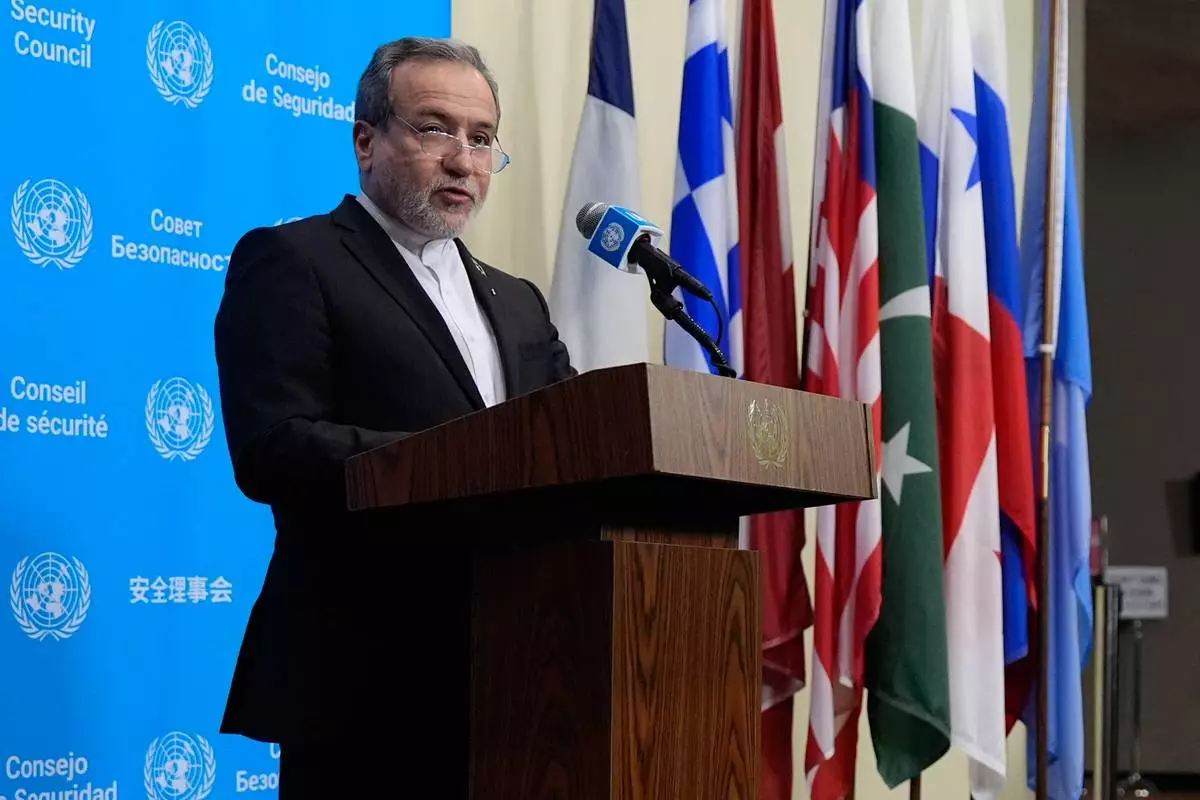
Iran's Foreign Minister Abbas Araghchi speaks to the media during the 81st session of the United Nations General Assembly at United Nations headquarters, Friday, Sept. 25, 2026. (AP Photo/Yuki Iwamura)
PUERTO SAN CARLOS, Mexico (AP) — Residents of Mexico’s Baja California Sur state boarded up homes and workers hauled dirt and rubble to shore up embankments as Hurricane Polo bore down on the peninsula Monday, threatening high winds, floods and mudslides. Meanwhile, Hurricane Nolo could still bring torrential rain to parts of Hawaii even as the storm edged away from the state.
In Puerto San Carlos, a fishing town of about 5,700 people, some feared high tides and pounding waves from Polo could breach barriers and send seawater into the community. Some families planned to head to shelters in Ciudad Constitucion, about 37 miles (60 kilometers) away, while dozens of people elsewhere in the state were evacuated.
“Civil Protection told those of us here in San Carlos to evacuate because this is a high-risk area. With the current tides, the expected waves and the wind, the earthen barriers they built (to prevent flooding) could give way,” Rocío Sánchez, a fisherwoman, said.
Polo was a Category 3 storm with top sustained winds of 115 mph (185 kph) Monday morning, the U.S. National Hurricane Center in Miami said. Forecasters said it would hit the Mexican mainland after lashing Baja California Sur with heavy rains, potentially causing life-threatening flooding and mudslides. It could bring heavy rain and flooding to parts of the U.S. Southwest later in the week.
“Polo is forecast to be near major hurricane strength when it reaches Baja California Sur later today, and is anticipated to be a hurricane when it makes landfall in mainland Mexico late tonight or early Tuesday morning,” the center said.
As swirling clouds and strong winds marked the region, Laura Velázquez, national coordinator of Mexico’s Civil Protection Agency, reported that Polo would make landfall later in the afternoon.
At a Monday morning news briefing, she urged residents to stay off the streets and seek shelter if their homes are at risk. She said travel will be suspended in the area where the hurricane was expected to make landfall and that ports across the region would be closed.
Nolo, meanwhile, was well southwest of Hawaii and moving away from the Big Island as the weekend drew to a close, but a wind advisory and high surf advisory remained in effect for parts of the island through Monday morning. Nolo’s maximum sustained winds increased to near 155 mph (249 kph).
Storm activity in the Pacific has been above average during what is already the peak of hurricane season, according to National Weather Service lead forecaster Bob Oravec. He said that pattern is consistent with El Niño years, when the Pacific often sees more tropical storms and hurricanes.
With Polo approaching Mexico, the Mexican navy said it has gathered personnel and humanitarian aid in the ports of Guaymas and Mazatlan, on the Pacific Coast, and deployed three vessels that could ship aid to coastal communities isolated by the storm.
One of the towns in the hurricane’s projected path is San Juanico, a small fishing community on Baja’s Pacific coast. The town has only had full-time electricity for a few years, and still experiences frequent outages. There is concern that washed-out roads could block access to medical facilities.
“Our people are concerned about this event,” said Gloriely Robles Meza, a manager at a small hotel. “We haven’t faced such a worrying situation in many years.”
Robles Meza said Sunday that army soldiers arrived in San Juanico to prepare a shelter and provide support for possible emergencies.
Also Sunday, Tropical Storm Rachel formed well off Mexico's southwest coast. The hurricane center said Rachel had maximum sustained winds of 45 mph (72 kph) and was located about 250 miles (402 kilometers) south of Acapulco. No coastal watches or warnings were in effect.
Forecasters said Nolo’s outer bands could cause life-threatening flooding and mudslides, with parts of the Big Island possibly getting up to 20 inches (50 centimeters) of rain. Heavy rain also was expected on the other islands.
More than 120 National Guard members were activated, part of roughly 400 statewide after the governor issued an emergency proclamation. President Donald Trump recently approved an emergency declaration, authorizing the Federal Emergency Management Agency to coordinate assistance and provide funding support.
Hawaii residents are still recovering from Hurricane Lala, which produced heavy rain and winds strong enough to sweep about 100 homes off their foundations on the Big Island.
Video journalist Eugene Garcia and photographer Gregory Bull contributed from Hilo, Hawaii.
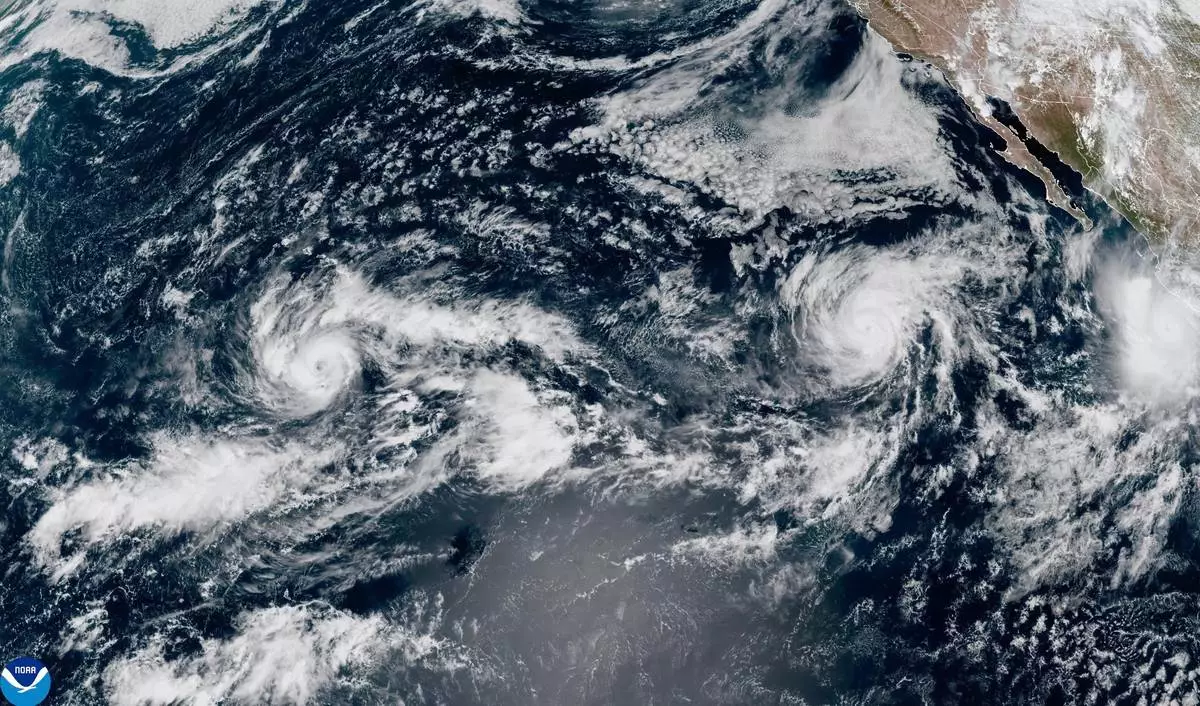
This satellite image provided by NOAA shows Tropical Storm Nolo, left, south of Hawaii; Hurricane Odalys, middle, and Hurricane Polo, right, off the coast of Mexico, in the Pacific Ocean on Thursday, Sept. 24, 2026. (NOAA via AP)
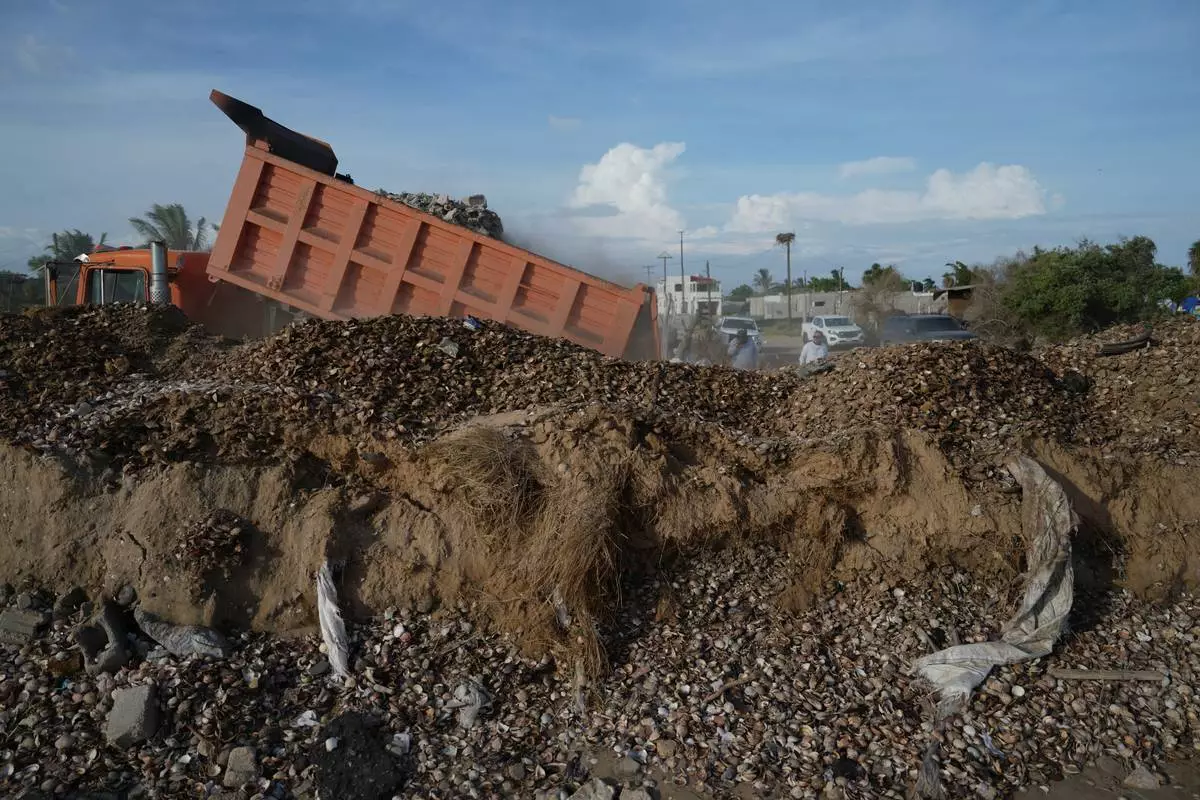
Workers build a barricade to help keep water out of their town as Hurricane Polo approaches in Puerto San Carlos, Baja California Sur state, Mexico, Sunday, Sept. 27, 2026. (AP Photo/Eduardo Verdugo)
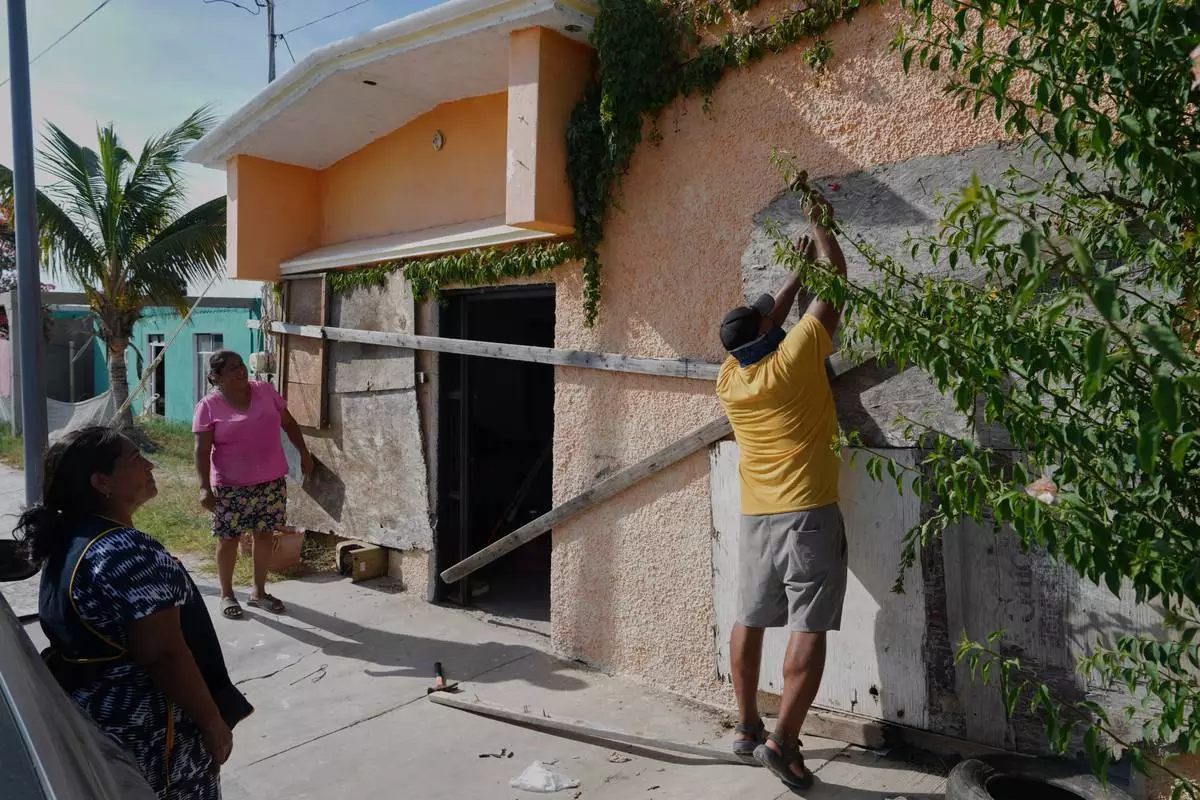
A man boards up a house's windows as Hurricane Polo approaches in Puerto San Carlos, Baja California Sur state, Mexico, Sunday, Sept. 27, 2026. (AP Photo/Eduardo Verdugo)
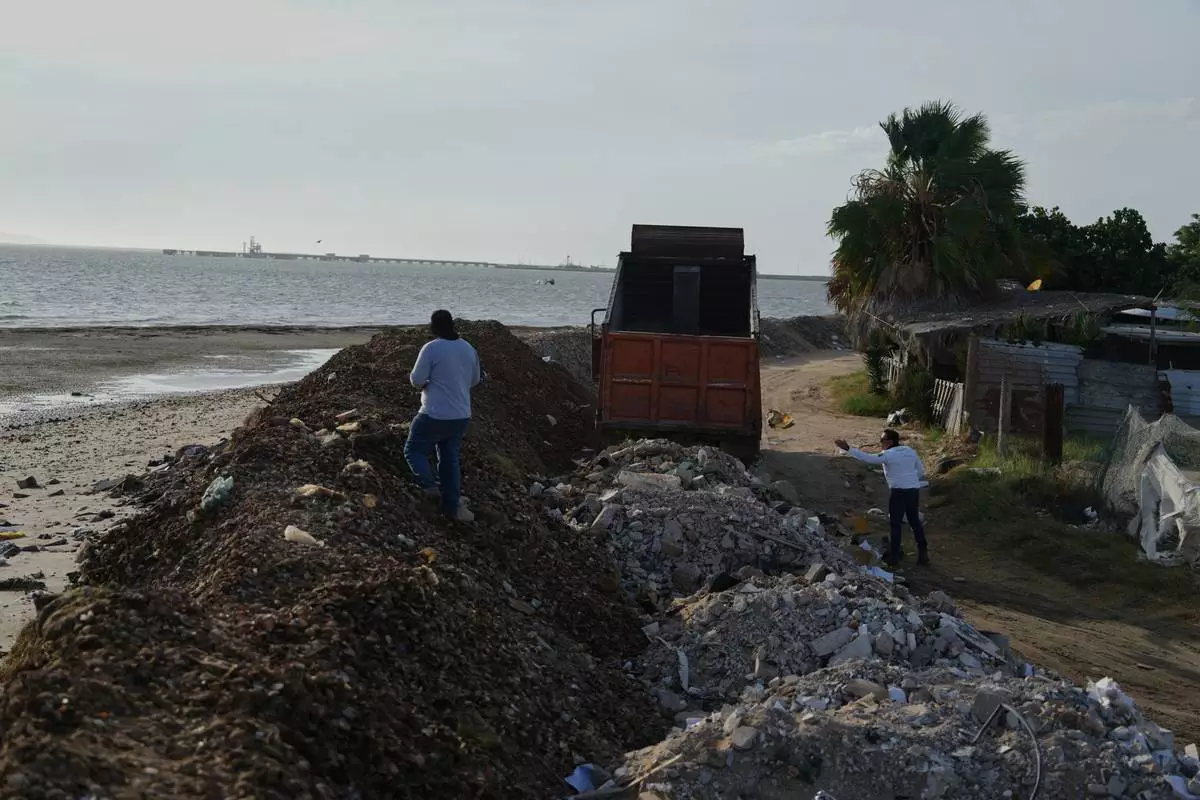
Workers build a barricade to help keep water out of their town as Hurricane Polo approaches in Puerto San Carlos, Baja California Sur state, Mexico, Sunday, Sept. 27, 2026. (AP Photo/Eduardo Verdugo)
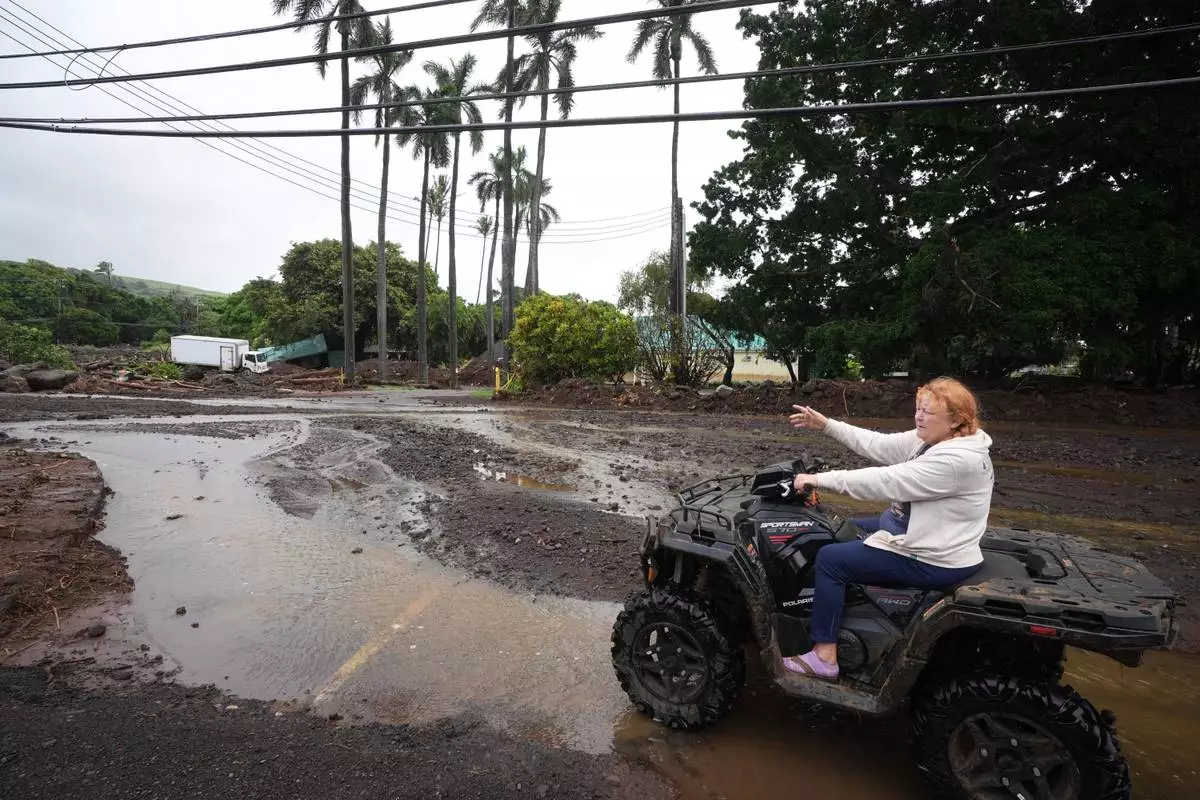
Peggy McKibbin looks at where floodwaters from nearby Hurricane Nolo run past widespread damage from last month's Hurricane Lala Sunday, Sept. 27, 2026, in Naalehu, Hawaii. (AP Photo/Gregory Bull)
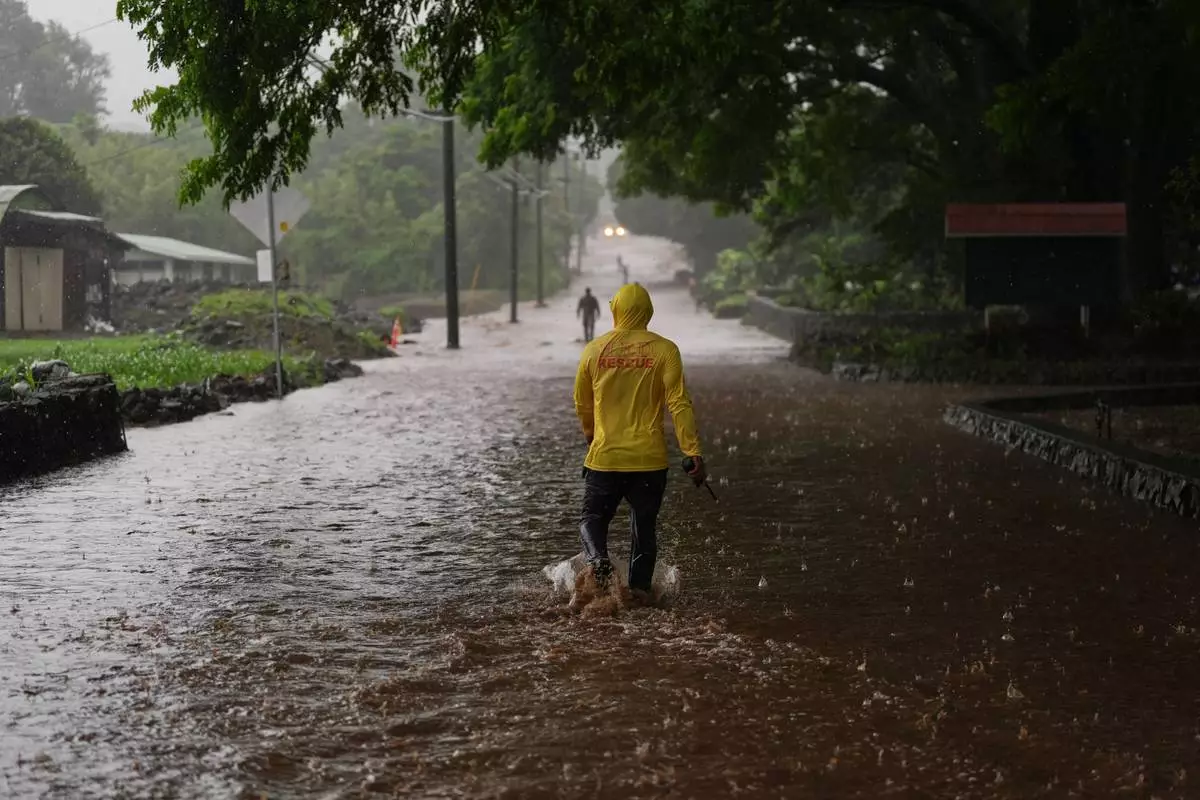
Fire Captain Lui Sales of the Hawaii Fire Department looks for residents to help as rainwater from nearby Hurricane Nolo flood a section of Mamalahoa highway Saturday, Sept. 26, 2026, near Naalehu, Hawaii. (AP Photo/Gregory Bull)
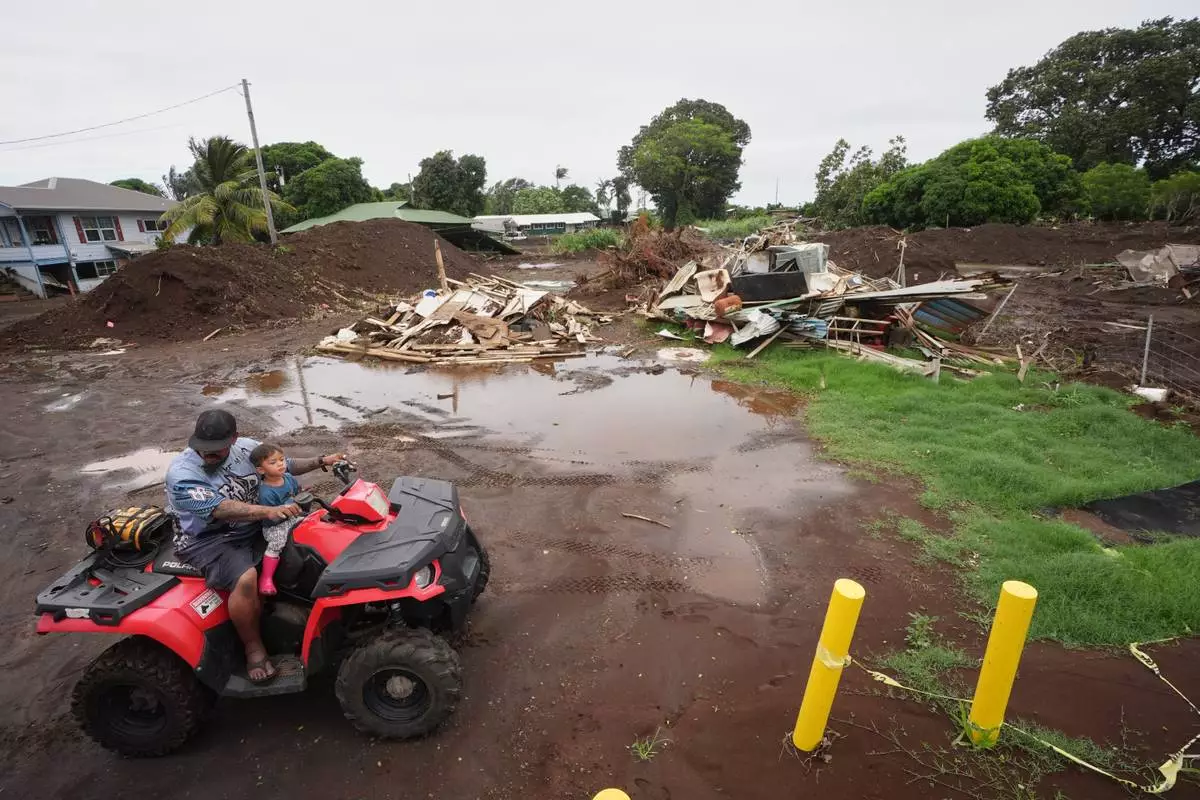
A man rides with his son near where a home was destroyed during last month's Hurricane Lala, as floodwaters from Hurricane Nolo recedes Sunday, Sept. 27, 2026, in Naalehu, Hawaii. (AP Photo/Gregory Bull)