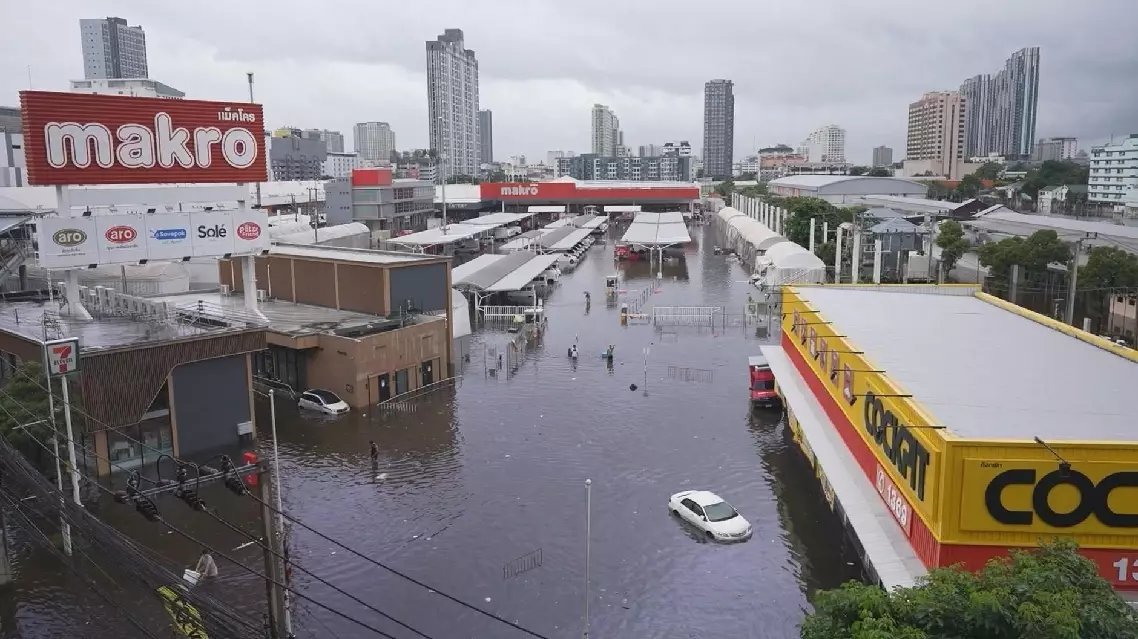
Thailand's nationwide flooding since September 16 has left eight people dead, the Department of Disaster Prevention and Mitigation said on Monday.
Twenty-eight provinces, including Bangkok, are still affected by the disaster, mainly in Thailand's central, northern, eastern and northeastern regions.
According to the department, flooding has swept through 42 provinces between Sept 16 and 28, affecting 1.8 million people.
On Saturday, Bangkok Governor Chadchart Sittipunt declared the whole of the capital a flood-hit zone after almost 48 hours of relentless rainfall caused widespread inundation and traffic chaos. Thailand's meteorological department said on Monday that downpours in Bangkok and its environs had abated.
In an interview, Chadchart said that the capital's overall flood situation had improved, with standing water retreating significantly in downtown areas. However, large-scale serious flooding lingers in outlying districts, and it could take two to three weeks for floodwaters to drain away. He also confirmed there have been no reported flood-related deaths in Bangkok.
The Thai cabinet has designated Monday and Tuesday as public holidays for Bangkok and three adjacent provinces. Government offices and schools will suspend operations to ease disruptions caused by the floods.
Thailand's meteorological department forecasts isolated heavy to torrential rain will continue across parts of northern, central and eastern Thailand on Monday.
Eight dead as floods swamp Thailand
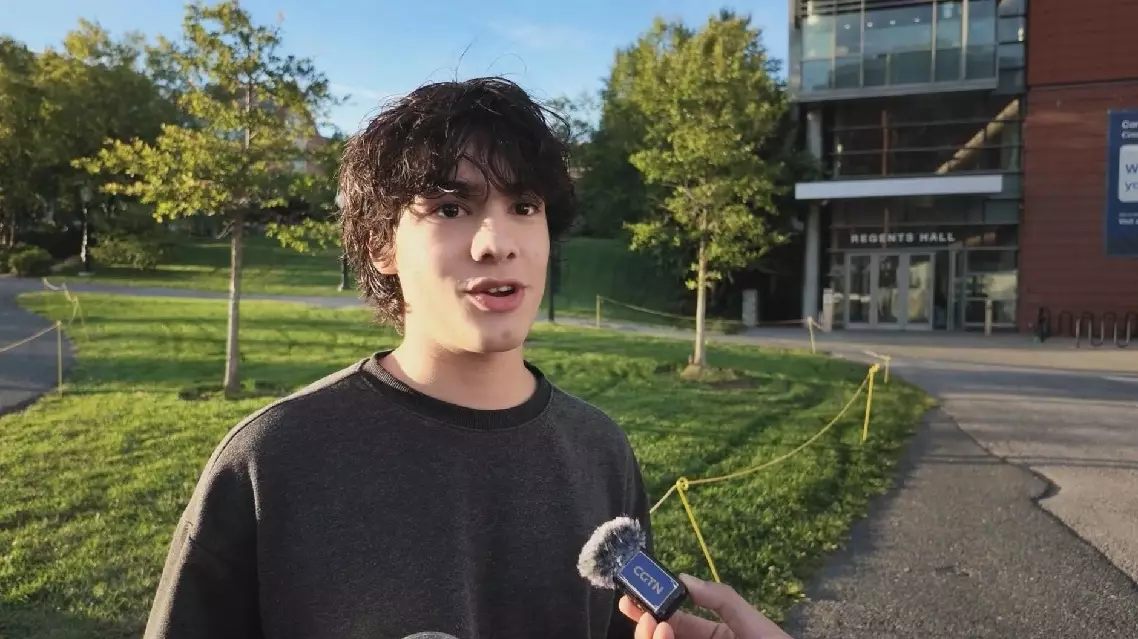
A number of university students in the U.S. capital have shared their views on China's initiative to invite 100,000 young Americans to visit the country for exchanges and study over the next five years.
The program was announced by Chinese President Xi Jinping when addressing a welcome ceremony at the White House during his visit to the United States from Wednesday to Friday.
Many of the students interviewed expressed their hope to visit some well-known places in China like Beijing, Shanghai and Guangdong.
"My dad's been to China for work, and he really loves it, so I'd love to go sometime. Maybe Shanghai. That's where my dad went, and he really liked it there," said a student.
"I've heard of Guangdong. I've heard of the basketball team," another student said.
Many of the students agreed that allowing more young Americans to experience Chinese culture in person would be beneficial for both countries.
"I think that's really cool to have the opportunity to connect with those cultures. And I really do like that idea. I think it's a great idea to invite us to China. It's great," said a student.
"I feel like the culture. I feel like getting the opportunity to immerse yourself in different cultures is really important," said another student.
"There's definitely value in traveling to other places and learning other cultures. So I think that it can be beneficial," said another one.
Even beyond cultural exchange, the students expressed their beliefs that American youth could learn a lot from Chinese society.
"I think, for me personally, it's the scale, with how many people live in China. I would definitely be interested in seeing how that functions, especially in those larger cities," said a student.
"I think I would like to know what their people are like. What are their thoughts on the world? On what the world should be like?" one student said.
"I think China's amazing. They're so far ahead. We're supposed to be the Western world, but I feel like they're so much more advanced than us in so many ways. I know AI and medicine are big things right now, and I think China has made huge advancements in that. So probably that," said a student.
The students also hope that the program will help strengthen China-U.S. relationship, promote educational exchanges, and broaden the horizons of those who take part.
"It's better for both countries to be connected and to build a better relationship over the coming years. And I think that's important to global peace and prosperity," said a student.
"I think it's really a great thing. I think different cultures, combining different cultures, and education is such a global thing, and having different students come all over the place and take classes here and there," said another student.
"There's a lot more to this world than what's right in front of us. And there's a lot to learn from different ways of seeing things around the world. So I think it could be valuable from that standpoint," a student said.
US students share views on China's plan to invite 100,000 young people for study, exchange