As a sweeping U.S. import ban on Canadian alcohol, dairy and motorcycles takes effect Tuesday, Canadian wineries are now pivoting to alternative markets, including China and the European Union, to cushion the blow of escalating trade tensions with their North American neighbor.
The ban marks another severe escalation in the ongoing trade dispute between Canada and the United States, following the implementation of a 50-percent U.S. tariff on Canadian goods back in August.
For wineries in Prince Edward County of Ontario, the fallout is already being felt on the ground.
Saxe Brickenden, managing partner of the Karlo Estates Winery, said his business is anticipating a sharp drop in sales as a result of the ban that will bring an abrupt end to a steady period of growth.
"It's actually already affected our business. For the last 12 years, we've grown at an average [rate] of 20.1 percent per annum, and now we're looking at flat because we're losing that American component, so that has really impacted us," he said.
Brickenden noted that American visitors to the winery make up about 25 percent of its sales, as they would normally stock up on wine before heading back to the U.S., but he is concerned that a lack of growth this year will force the winery to make some difficult decisions.
"We are going to have to shrink our employee count. We are going to have to curtail our spending and investing in stuff that makes us more of an attractive destination even than we are now," he said.
According to Wine Growers Canada, a national industry organization, about 90 percent of Canadian wine shipped to the U.S. is made in the province of Ontario.
Karen Chapple and other researchers at the University of Toronto have developed a tracking tool to measure the potential impact of U.S. tariffs on Canadian jobs and businesses, drawing on past experiences.
"The impacts are going to play out really over the next couple of years, and we know this because we studied what we call 'Trump 1 tariffs' [from U.S. President Donald Trump's first term in office starting] 2017. So we have actually experience with the first Trump administration and what happened," she said.
Chapple added that Canada is moving in the right direction by actively moving away from its heavy reliance on the U.S. market and exploring new avenues.
"We are really finding a way to develop new trade relationships throughout the world, and that's really going to be transformative, and particular with places like China, but also the EU," said Chapple.
Canada has struck a resilient tone amid the current trade tensions, and now many Canadians have rallied around local products as a way of showing their support.
"We're seeing the benefit slightly, with Canadians coming here and saying 'I'm willing to try something different. I want to find a new favorite'. And they're happy, and we like that," said Brickenden.
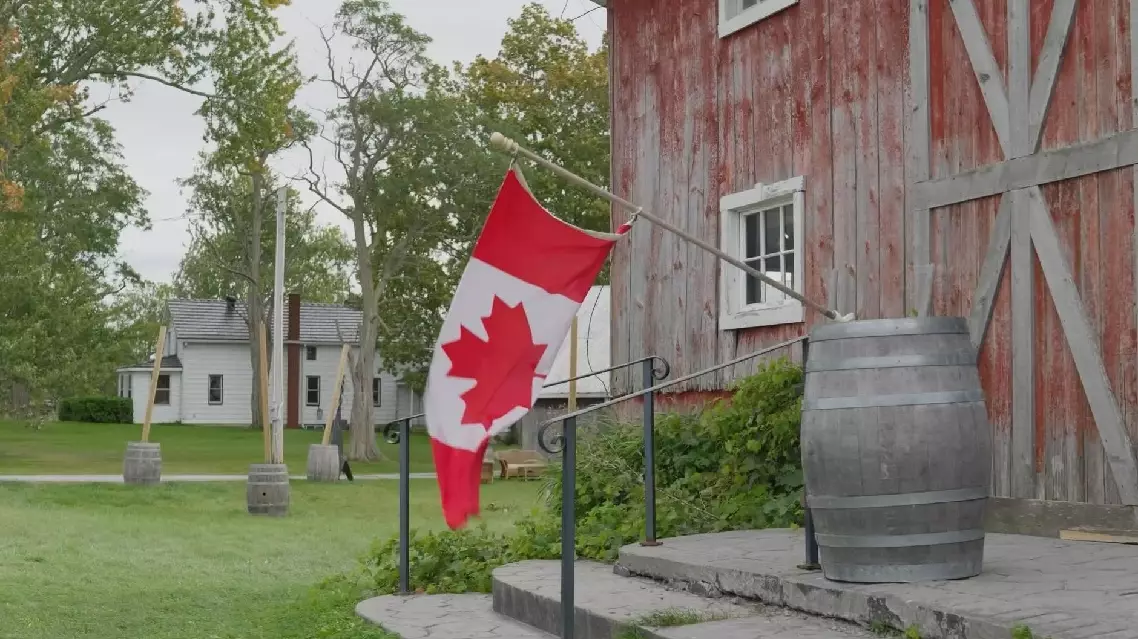
Canadian wineries eye up China, EU markets as US import ban takes effect
Canadian wineries eye up China, EU markets as US import ban takes effect