China's online consumption remained brisk in the first eight months of the year, with the logistics network steadily expanding in lower-tier markets, as innovative service models and integrated urban-rural delivery solutions helped unlock untapped consumer demand across the country.
The momentum came as the total value of social logistics, an official measure of the value of goods moving through the logistics system, came in at 243.6 trillion yuan (about 36.3 trillion U.S. dollars) between January and August, up 4.9 percent year on year, according to the China Federation of Logistics and Purchasing.
From the perspective of consumer logistics, the total value of logistics for goods belonging to units and residents rose 3.4 percent year on year in the January-August period, while rural consumer goods retail sales grew 2.3 percent, outpacing urban growth by 1.3 percentage points.
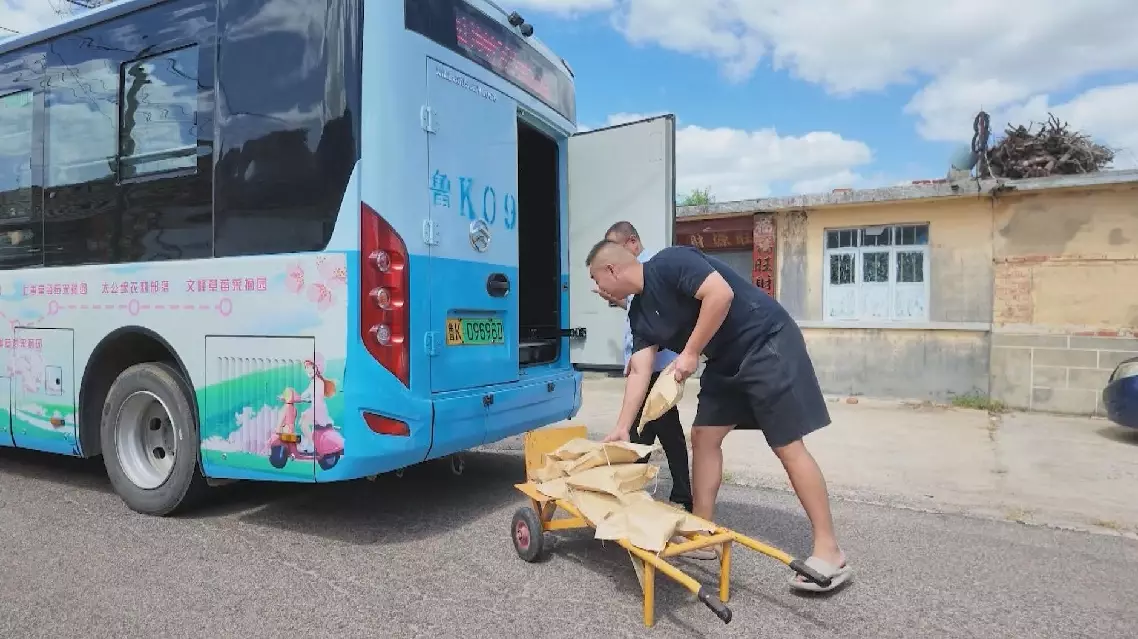
In Lingang District of Weihai City, east China’s Shandong Province, local authorities have promoted an integrated "passenger, freight and postal" model, mobilizing urban and rural bus capacity to open up two-way channels for express deliveries into villages and agricultural products out of villages.
"We sort the parcels as soon as they arrive, with each village assigned according to (bus) routes. After sorting, I call customers one by one to notify them where to pick up their packages," said Qi Shengjie, deputy director of the Passenger-Freight-Postal Service Center, Weihai Transportation Group.
Relying on five dedicated passenger-freight-postal routes, buses carry parcels during off-peak passenger hours, not only solving the problem of villagers picking up packages but also helping farmers transport local specialties outward and shoring up weak links in rural logistics.
Logistics data show that online retail sales of goods rose 4.3 percent year on year in the first eight months, driving steady operation of e-commerce logistics. Online retail sales of food products jumped 15.9 percent, while sales at warehouse membership stores and unmanned stores both grew by more than 25 percent. New models such as instant delivery and integrated warehousing-distribution services continue to underpin public consumption logistics.
"From the perspective of consumer logistics, as policies to expand domestic demand, boost consumption and promote trade-ins gradually take effect, changes in consumer demand are driving logistics networks to extend to lower-tier markets. Innovations in logistics service models such as instant delivery and integrated warehousing-distribution are steadily improving the quality of consumer logistics demand," said He Hui, vice president of the China Federation of Logistics and Purchasing.
China's online consumption stays active, lower-tier market logistics expands: data