TALLINN, Estonia (AP) — Estonian authorities said Tuesday that an arson attack carried out last month on a defense company that provides military vehicles to Ukraine was an act of sabotage commissioned by Russian security services.
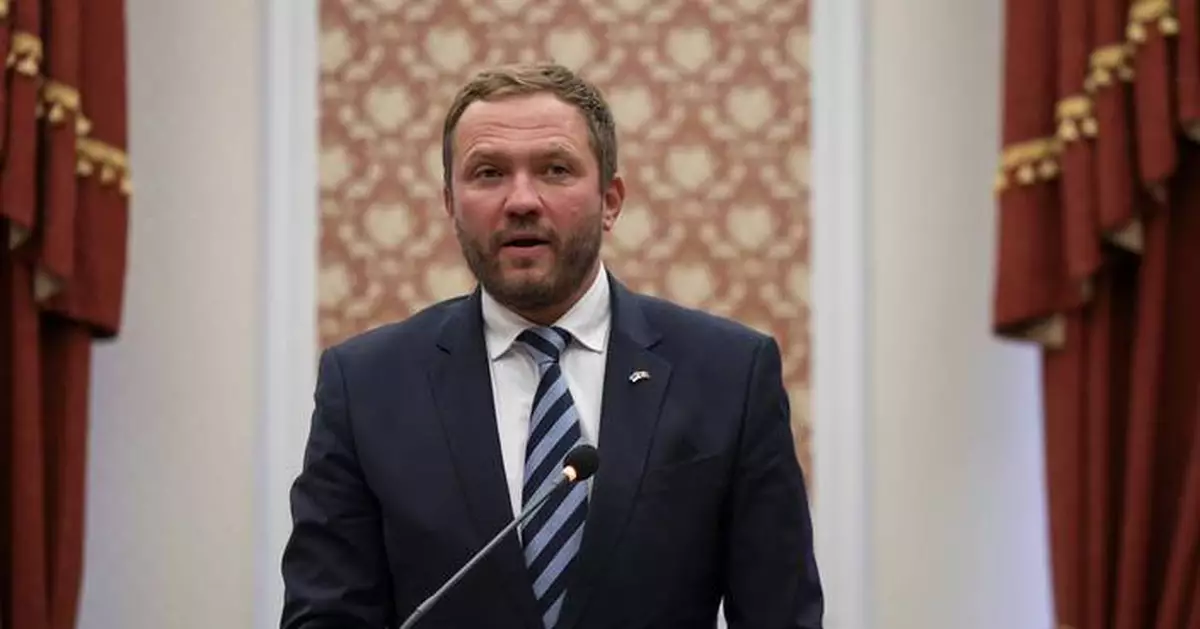
Foreign Minister Margus Tsahkna said that “such actions are absolutely unacceptable” and that Russia's charge d'affaires in Tallinn was being summoned to his ministry.
A fire broke out overnight on Aug. 15 at a building in the Estonian capital used by Milrem Robotics, but was quickly brought under control, the BNS news agency reported. On Aug. 17, two Latvian suspects were detained in neighboring Latvia, and a third followed the next day. The suspects were handed over to Estonia.
Milrem has supplied THeMIS unmanned ground vehicles to Ukraine.
The Estonian Internal Security Service said that it has concluded that the arson attack “was a deliberate and pre-planned act commissioned by Russian security services.”
It said in a statement that “the modus operandi of the Milrem attack is consistent with other acts of sabotage carried out in Europe on behalf of Russia,” adding that it “assesses that the attack is directly attributable to the Russian Federation.”
Kremlin spokesman Dmitry Peskov said that “such statements are unfounded, ill-considered, absolutely not reflecting the reality, not containing any substantiation whatsoever.”
“We cannot take such statements seriously, and we won’t,” Peskov said.
Moscow has been widely accused by Western officials of running a campaign of sabotage and disruption with the aim of undermining support for Ukraine and destabilizing European nations.
The Associated Press has tracked around 200 incidents of sabotage and malign activity across Europe blamed on Russia since the full-scale invasion of Ukraine on Feb. 24, 2022.
That includes organizing plots to set fire to warehouses, launching drones and trying to kill enemies abroad as well as stealing defense technology and carrying out cyberattacks on critical European infrastructure.
In a recent case that pointed to an escalation of such activity, Germany blamed Russia for an attempted attack at Leipzig/Halle Airport in early August using a drone laden with explosives.
Estonian Prime Minister Kristen Michal wrote on X that “we will not be intimidated.”
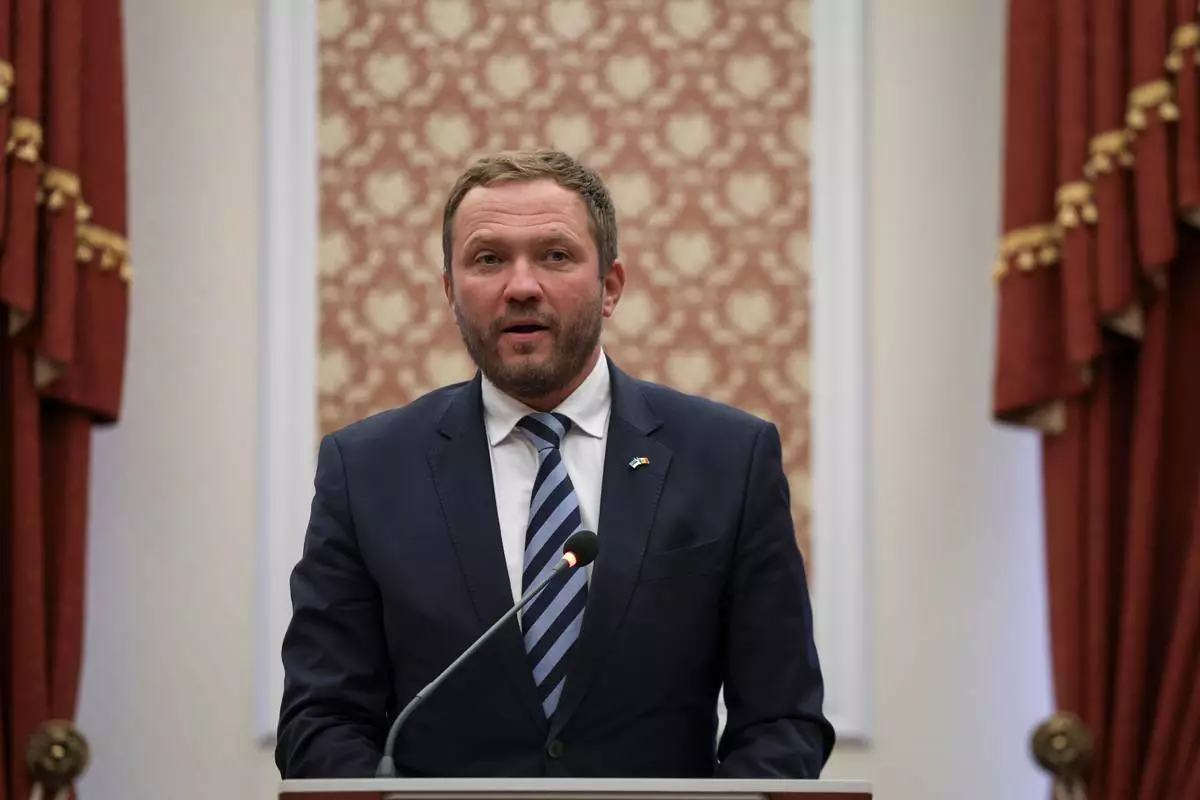
FILE -Estonia's Foreign Minister Margus Tsahkna speaks during a meeting of foreign ministers and state secretaries from the Nordic-Baltic Eight, in Chisinau, Moldova, Oct.15, 2024. (AP Photo/Aurel Obreja, File)
DAKAR, Senegal (AP) — Burkina Faso has opened its first gold refinery as its military-led government seeks greater economic sovereignty after severing ties with traditional Western partners.
“From now on, gold from Burkina Faso must not only be extracted in Burkina Faso, it must be processed, controlled, valued and certified in Burkina Faso," President Ibrahim Traore, who has ruled the West African country since a 2022 military coup, said on Monday at the opening of the refinery, known as Raffinor-BF.
Across West Africa, governments are taking steps to reclaim control over their natural resources by rewriting mining codes, banning exports of raw produce and boosting government ownership. Guinea and Ghana recently restricted gold exports. Mali said it was building a gold refinery together with Russia’s Yadran Group, and Ivory Coast announced it would open one next year.
Burkina Faso is one of the region's main gold exporters, but the sector has been disrupted by extremist violence, which has intensified since the military junta seized power.
Under Traoré, Burkina Faso has presented natural resources as a sovereignty issue. The refinery is part of the junta's campaign to reduce its dependence on foreign states and companies, in particular the West, and to process natural resources at home, instead of exporting raw produce.
“Natural resources belong to the people,” Traore said. “They must contribute to improve their living conditions, with respect for the environment, social justice and in the interest of future generations.”
Built on five hectares in the capital Ouagadougou, the refinery has a capacity of 164 tonnes of gold per year, the presidency said, with a target capacity of 515 tonnes. Burkina Faso produced 94 tonnes of gold last year, according to the authorities.
Raffinor-BF cost more than 11 billion CFA francs ($19 million) and was financed by the government, including through the National Precious Metals Company, known as SONASP, and by the private sector.
The West African country of 23 million people has endured years of violence by extremist groups linked to al-Qaida and the Islamic State group. Government forces have also been accused of extrajudicial killings.
Since taking power in 2022, the junta has been accused of killings of civilians,cracking down on political dissent and journalists, shutting down independent media outlets and forcibly conscripting dissidents into the army to fight Islamic militants.
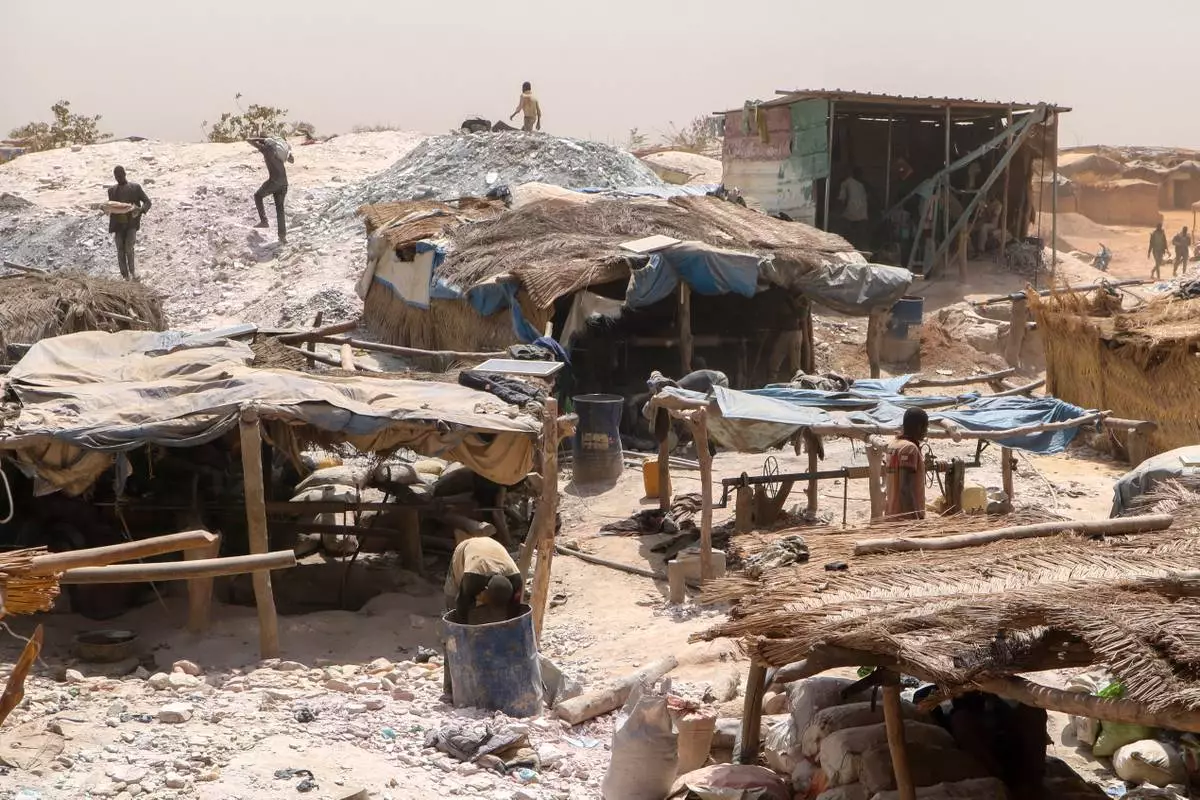
FILE - Miners work at a gold mine in Bouda, Burkina Faso on Feb. 23, 2020. (AP Photo/Sam Mednick)