Zhu Xirui, a Gen-Z vlogger born and raised in New Jersey, was invited to return to her ancestral homeland in northwest China's Shaanxi Province, months after her themed campaign "Becoming Chinese" sparked widespread resonance.
Zhu said she began seriously making short videos about Chinese culture after graduating from college.
She posted some photos of herself wearing Hanfu, a type of traditional Chinese clothing, on TikTok, where she received over 100,000 views at the time. She noted that viewers were curious about the name of the dress and where the photos were taken, which encouraged her to continue posting similar content.
A few months after the campaign, she was invited to Xi'an, the provincial capital, for a tour, and most importantly, for a memorial ceremony for the Yellow Emperor, who is considered to have been the founder of the Chinese civilization and the common ancestor of all Chinese people.
"I think that what's really beautiful and significant is that all of us, specifically like me and the people overseas, we came together here to pay our respects to our grand ancestor. I think it was really, really moving because I didn't expect, I didn't come in with any expectations. But seeing all of these people come together and really connect over our shared ancestor really shows the strength of Chinese culture. And I encourage others to attend this event and also just come overseas and connect with their culture," she said.
During her visit at the memorial site, Zhu observed inscriptions on a stele declaring that all ethnic groups across China are one family, symbolizing unity of the Chinese people.
She took a moment to reflect on how Chinese culture speaks of identity and shared bloodline, yet even those without blood ties share a common culture.
"I feel like when I came here I didn't have any expectations, because I don't have any roots in Xi'an. But when he was talking about how so many leaders and emperors really pay attention to the roots, and kind of like me remembering how my grandma was taking care of me," she said tearfully.
She called on more American-born Chinese and people in China to share their own experiences, adding that the more stories are shared, the greater representation Chinese culture will have around the world.
"I want to say to my audience that 'Being Chinese' is more than a trend. There is meaning. There is culture. There is history behind 'Being Chinese'. I would like to take this wellness trend to recognize Chinese culture," she said.
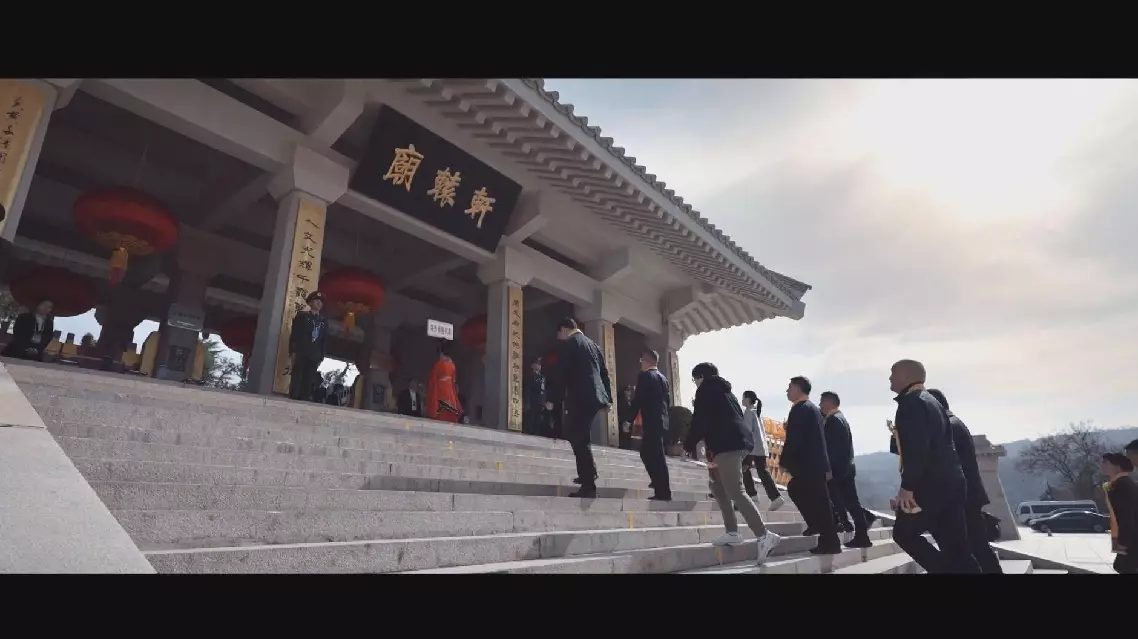
"Becoming Chinese" campaign creator returns to ancestral homeland in Shaanxi
As the U.S.-Canada tension over trade and tariff escalates, Canada is aiming to diversify its export structure while seeking to negotiate with its southern neighbor, Wang Yaojing, associate professor of economics at Peking University noted.
As part of the responsive measure by the Trump administration to Canada's tariff retaliation on a range of U.S. goods earlier this month following a breakdown in trade talks, the United States banned several Canadian imports of alcohol, dairy, and motorcycles, which has taken effect on Tuesday.
While the new trade ban is considered part of the U.S. move to manipulate its partners with trade policy, the strategy is a double-edged sword for the country, said the professor.
"I think Washington is trying to use access to the U.S. market as leverage to force Canada to make concessions on issues such as dairy, alcohol, autos, and even the broader market access. Moving from tariffs to outright importer restrictions itself is sending a much stronger message. And there is also a wider strategic point here. The U.S. is increasingly treating trade policy as part of the national power even towards close allies. But I also want to mention that is that the leverage on the U.S. is not cost-free. The Canada has already retaliated I think against roughly 20 billion worth of American goods. it can hurt Canada, U.S. exporters, raise cost of retailers and consumers for both countries and also create uncertainty across the highly integrated North America supply chain," she said in an interview with China Global Television Network (CGTN).
As the cross-border rivalry escalates, the EU has proposed to make Canada its first associate member. While the unexpected move provides Canada with a new choice to diversify its overly reliant export structure, Europe cannot completely replace the United States to support Canadian economy, according to Wang.
"The current trade tension with Washington have reminded Canada just how dependent it is still on the U.S. market. And roughly two thirds of Canada exports still go south of the border. And that is why the EU proposal is very interesting, even though this idea of Canada becoming an associate member is still quite vague. But the political signal is very clear. Both sides want a closer relationship not only in trade, but also in defense technology, critical minerals, and Arctic security. But at the same time, Europe cannot simply replace the U.S. So, I would describe this relationship as becoming more triangular," she said.
The U.S. attempt to pressure its neighbor has triggered public resentment. A recent poll from CTV News, Canada's major broadcast TV network, showed that over 80 percent of Canadians support the country's tit-for-tat tariffs on U.S. imports, laying solid political foundation for Canada to hold its position, Wang noted.
"For many Canadians, the dispute is no longer viewed simply as a technical disagreement over tariffs. It has increasingly become a question of economic sovereignty and whether Canada should push back against the pressure from its much larger neighbor. And that matters politically because it gives the Canadian government more room to maintain a relatively firm negotiation position. But at the same time, public support does not automatically remove the economic constraints. And if this escalation prolongs, it could hurt jobs, investment, and supply chains. So, the Canadian government has an incentive to appear firm domestically while continuing to look for and negotiate a settlement and, as we just talked about, to increasingly diversify trade toward Europe and other markets," she said.

Trade tension with US prompts Canada to diversify trade structure: expert