The paper examines how dynamic AI workloads are reshaping battery requirements, power architectures and energy management in AI data centers.
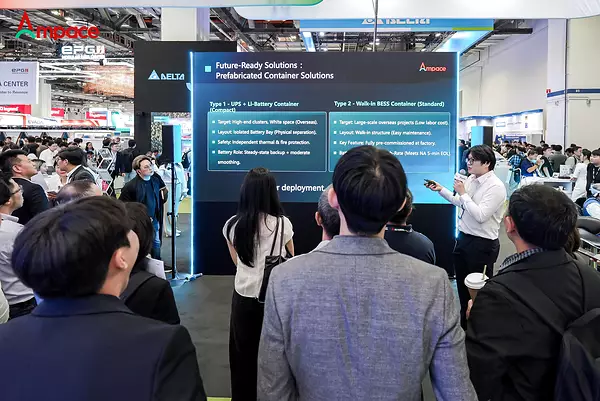
SINGAPORE, Sept. 29, 2026 /PRNewswire/ -- Ampace, a provider of advanced lithium-ion battery solutions, today launched its "AIDC Battery Solutions White Paper" at a dedicated event during Data Centre World Asia 2026. The launch included an in-depth presentation of the paper's key findings, examining how rising compute density and rapidly fluctuating AI workloads are changing the requirements for data center power infrastructure.
The white paper sets out a central challenge for artificial intelligence data centers (AIDCs): batteries must support reliable backup power while meeting growing demands for dynamic power response, safety and long-term performance. It explores how battery-backed uninterruptible power supply (UPS) systems, battery energy storage systems (BESS) and rack-level storage can serve complementary roles as power infrastructure evolves toward more active energy management.
Meeting the Demands of Dynamic AI Workloads
AI training and inference introduce power profiles that differ substantially from those of conventional data centers. Rapid load increases, frequent fluctuations and sudden load reductions place new demands on batteries and the wider power supply system.
According to the white paper, high-rate, high-safety and long-life lithium-ion batteries paired with UPS systems remain a mature and reliable foundation for AIDC backup power. At the same time, adapting batteries to dynamic AI operating conditions is becoming increasingly important within existing UPS architectures.
The paper identifies high-rate charge and discharge capability, resilience to frequent shallow cycling, and consistent performance across parallel battery systems as key requirements. These capabilities must be supported by battery management strategies suited to changing loads, helping maintain reliable backup capacity over the system's operating life.
Ampace's Battery Technology Response
The white paper details Ampace's approach across cell design, thermal management and battery management systems. This includes semi-solid-state lithium iron phosphate technology, cells designed for demanding dynamic duty cycles, and management algorithms addressing current sharing, state of charge and state of health across parallel battery cabinets.
Together, these capabilities are designed to address the combined demands of AI load fluctuations and dependable outage backup. The paper also examines system-level fire protection, lifecycle traceability and delivery capabilities as integral elements of AIDC battery solutions.
A Complementary, Multi-Tier Power Architecture
Over the medium to long term, the white paper anticipates a broader role for BESS and rack-level storage alongside battery-backed UPS systems.
BESS can support peak shaving, load shifting, renewable energy integration, demand response and emergency backup, creating additional operational and economic value where market and operating conditions allow. Rack-level storage brings energy support closer to computing loads, with battery and capacitor backup units serving complementary functions in architectures such as OCP Sidecar.
Rather than identifying a single architecture for every deployment, the paper examines multiple pathways, including high-voltage DC, medium-voltage UPS and distributed rack-level solutions, each suited to different project requirements.
Four Developments Shaping Future Deployment
The white paper highlights four areas influencing the next phase of AIDC power infrastructure:
- Prefabricated integration: Factory assembly and system commissioning can simplify on-site installation and support faster, more predictable deployment.
- Solid-state transformers: The paper identifies SSTs as a promising direction for integrating power conversion, flexible power routing and energy storage coordination.
- Emerging battery technologies: Sodium-ion batteries could complement lithium-ion systems in selected applications. Hybrid solid-liquid technologies are closer to commercialization, while all-solid-state batteries remain a longer-term pathway requiring further development and validation.
- Safety and lifecycle data: Fire protection, traceability and preparation for evolving battery data requirements are becoming increasingly important considerations in global deployment.
Supporting AI Continuity
Building on its UPS battery delivery experience, Ampace is developing capabilities across backup power, energy storage and energy management. The white paper connects this technology development with the practical needs of data center operators: reliable power, efficient use of space, predictable delivery and lifecycle performance.
Through continued work on high-power-density cells, dynamic battery management, prefabricated integration and lifecycle traceability, Ampace aims to support the dependable deployment of next-generation AI infrastructure.
To learn more about Ampace and its AIDC battery solutions, visit https://en.ampace.com/
** This press release is distributed by PR Newswire through automated distribution system, for which the client assumes full responsibility. **

Ampace Launches AIDC Battery Solutions White Paper, Exploring the Evolving Role of Batteries Beyond Backup Power
Ampace Launches AIDC Battery Solutions White Paper, Exploring the Evolving Role of Batteries Beyond Backup Power
Price pressure, sourcing requirements and skilled labor challenges are giving senior living furniture dealers more reasons to add metal wood grain seating to their product portfolios.
HESHAN, China, Sept. 29, 2026 /PRNewswire/ -- Senior living furniture dealers who rely only on solid wood are carrying three separate business risks at the same time. Customers are watching budgets more closely, wood sourcing is receiving greater regulatory attention, and skilled labor remains a long-term concern for the woodworking and furniture sectors. For dealers in senior living, nursing home and care home furniture, the case for carrying more than one material is getting harder to ignore.
Price Pressure Is Creating a Gap in the Sales Conversation
Price is the most immediate of these pressures. Senior living projects cover a wide range of budgets, and not every customer can stretch to solid wood pricing.
When a customer pushes back on the cost of a solid wood chair, the dealer's next move matters. Finding a cheaper solid wood alternative rarely solves the problem. The customer still wants the warmth and visual character of wood, just at a price the project can support. Metal wood grain seating fills that gap. It keeps the look of wood while using a metal frame that brings the cost to a level more projects can accommodate.
Yumeya Furniture states that its metal wood grain senior living chairs are generally priced at around 50% to 60% of comparable solid wood chairs. For dealers, that creates a second price point within the same product category, giving dealers a way to keep the sales conversation going when solid wood falls outside a customer's budget.
Sourcing Requirements Are Adding Another Layer
European furniture dealers selling into the care home market are finding that material origin has become part of the buyer conversation. The EU Deforestation Regulation, which covers wood and certain wood-derived products, sets due diligence requirements for operators placing those products on the EU market. Large and medium operators face a December 30, 2026 deadline, while most micro and small operators follow on June 30, 2027.
For dealers with solid wood in their range, sourcing records and supply chain documentation have moved out of the back office and into the buyer conversation. A buyer may ask about them before placing an order. For dealers who want part of their portfolio to sit outside that conversation, metal wood grain offers a practical route.
The Installer Problem Is Already Here
The third pressure moves on a longer timeline, but it is already visible. A 2026 position paper from the European Federation of Building and Woodworkers, drawing on research into job vacancies and recruitment across the woodworking and furniture sectors, identified persistent labor shortages as a risk to the industry's long-term workforce supply.
For senior living furniture dealers, this shows up in the day-to-day reality of finding workers with woodworking and installation skills. A dealer who sells only solid wood is tied to that labor supply for every project.
Yumeya Furniture's metal wood grain chairs are assembled by tightening a small number of structural screws rather than through traditional woodworking joints, a design decision built into the product from its earliest development. That decision has always been part of the commercial logic. As installer availability tightens, it takes on a different kind of value for dealers thinking about where their business needs to be in five years.
What Dealers Are Actually Doing
Three pressures, arriving at the same time, in the same product category. Taken individually, each one is manageable. Taken together, they point to the same underlying issue: a business built around a single material has no fallback when that material comes under pressure.
Solid wood keeps its place in projects where natural materials and premium positioning matter. Metal wood grain covers the projects where budgets are tighter, sourcing questions come up, or installation needs to be straightforward. A higher budget project stays in solid wood. A more price-sensitive customer moves to metal wood grain. The same dealer handles both without sending anyone away.
Yumeya Furniture has developed metal wood grain furniture since 1998, applying the technology across senior living, healthcare, restaurant and hospitality applications. The company's view of how dealers are navigating this material shift comes from more than 10,000 projects across over 80 countries.
"Dealers need more than one answer when customer budgets, sourcing requirements and operating conditions change," said Mr. Gong, founder of Yumeya Furniture.
The risks in a solid wood-only senior living furniture business are showing up now: in sales conversations, in sourcing documentation requests, and in the longer-term math of finding installation labor. Adding metal wood grain keeps solid wood in place for projects where the material matters most. For the projects where budgets are tighter, sourcing questions arise, or installation needs to be simple, it gives the business a second route.
That is what moving beyond solid wood looks like in practice.
About Yumeya Furniture
Founded in 1998, Yumeya Furniture specializes in commercial metal wood grain furniture for healthcare and senior living, restaurants and cafes, hotel banquets, and outdoor commercial applications. With nearly three decades of experience in commercial seating, Yumeya Furniture has completed more than 10,000 successful cases across over 80 countries and regions and supports its products with a 10-year frame warranty. For more information, please visit Yumeya Furniture.
Media Contact:
Heshan Yumeya Furniture Co., Ltd.
Website: https://www.yumeyafurniture.com/
Email: info@youmeiya.net
WhatsApp: +86 15219693331
Address: Zhennan Industry, Heshan City, Guangdong Province, China.
** This press release is distributed by PR Newswire through automated distribution system, for which the client assumes full responsibility. **
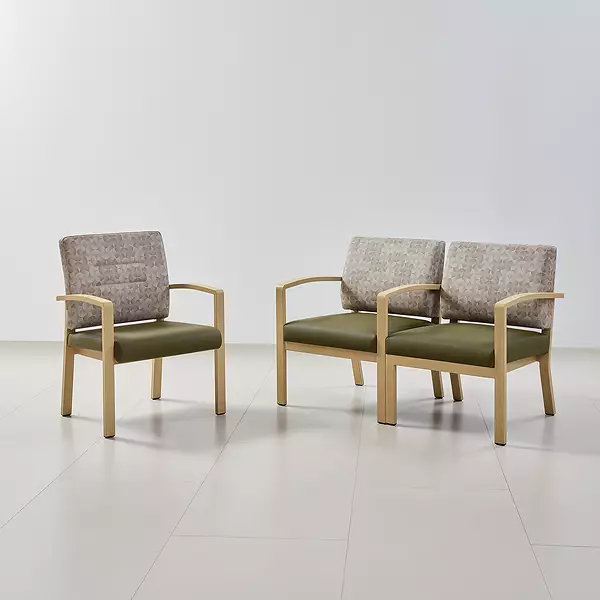
Senior Living Furniture Moves Beyond Solid Wood as Dealers Face New Market Pressures