Land and Development Advisory Committee holds meeting
At its meeting today (September 29), the Land and Development Advisory Committee was briefed by the Development Bureau (DEVB) on major initiatives related to the Bureau in the First Five-Year Plan for Economic and Social Development of the Hong Kong Special Administrative Region (2026-2030) (Hong Kong's First Five-Year Plan) and the Chief Executive's 2026 Policy Address (Policy Address).
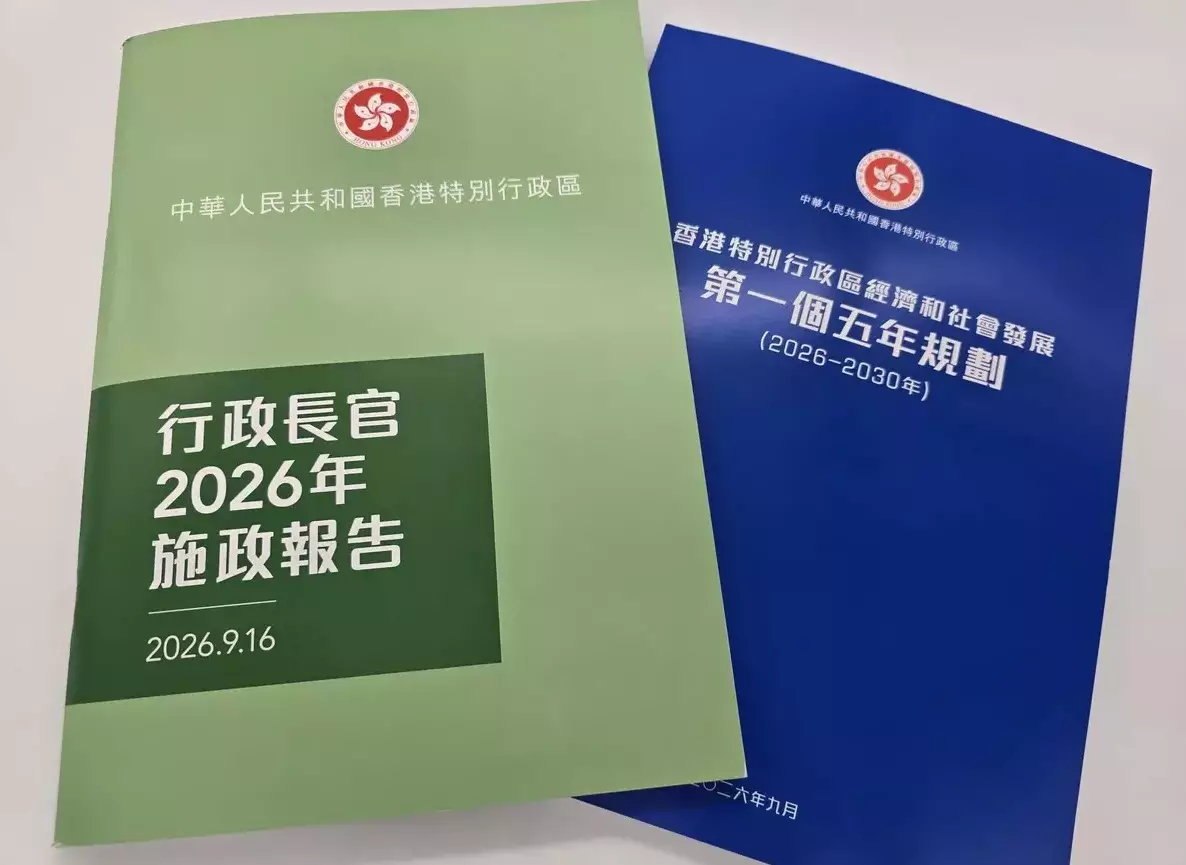
Hong Kong's First Five-Year Plan and 2026 Policy Address, Photo by Bastille Post
Members generally supported the vision and objectives outlined in the Hong Kong's First Five-Year Plan, as well as the Development Bureau's initiatives in the Policy Address. Members supported the Government's commitment to sustaining its land creation effort, building up land reserves, enhancing the speed, effectiveness and quality of the Northern Metropolis (NM) development, promoting urban renewal with a new mindset, comprehensively enhancing building safety governance, and building a liveable city. They considered that these commitments responded to market situation took on board the views of the industry and professional bodies. The key measures are as follows:
- Sustained efforts in land creation and building up the land reserve: It is estimated that around 2 500 hectares of "spade-ready sites" can be made available in the next ten years (2027/28 - 2036/37), of which about 70 per cent will come from the NM. Development of the five New Development Areas (NDAs) in the NM is well underway. The first four NDAs have entered the construction stage. The Government will also seek funding approval from the Legislative Council (LegCo) for Ngau Tam Mei NDA soon. The Government will continue to advance the development of the remaining NDAs, including Lau Fau Shan, Ta Kwu Ling, Au Tau and part of Ma Tso Lung.
- Enhancing speed, effectiveness and quality of construction in the NM: The LegCo is scrutinising the NM Development Bill and it is expected that the Bill would be approved within this year. The Government will then introduce five pieces of subsidiary legislation into the LegCo, with a view to bringing the facilitation measures into effect in the first quarter of 2027.The Government will continue to control construction costs through various measures, including reviewing the existing building standards and requirements, adopting new procurement models, applying advanced technologies and construction methods, and further streamlining the relevant procedures. The Government will develop university towns in San Tin, Hung Shui Kiu and Ta Kwu Ling in the NM to achieve the integrated development of education, technology and talent. It has also earmarked 30 hectares of land in the NM for the development of the Advanced Construction Industrial Park. Following the award of tender under large-scale land disposal in Hung Shui Kiu New Development Area, the Government aims to launch the tender for the second pilot area in Fanling North by the end of this year. The Government will also publish the Guidelines on Promoting Urban-rural Integration in the NM within this year, and seek funding approval for $200 million from the LegCo Finance Committee to launch the NM Urban-rural Integration Fund.
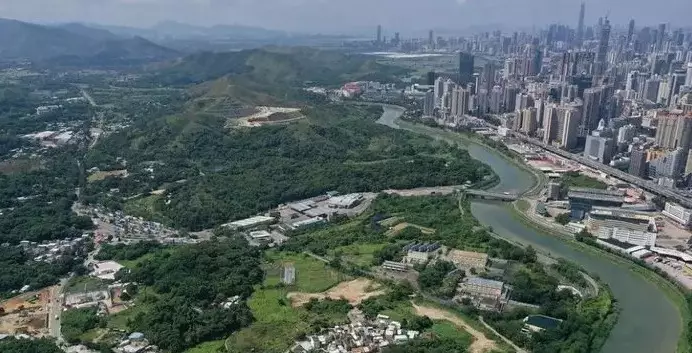
The Northern Metropolis, Photo source: reference image
- Regenerate old districts with a new mindset: The Government will reform the maintenance system for aged buildings by adopting a two-pronged approach. On one hand, the scope of amendments to the Buildings Ordinance will be expanded to step up regulation of large-scale building maintenance works and the maintenance works sector and increase penalty for non-compliance. On the other hand, the Government will reform building rehabilitation strategies and provide brand-new support services for owners by establishing more stringent pre-qualification lists of consultants and contractors, and, for the first time, providing tendering and tender evaluation services for property owners in engaging consultants and contractors.
- Enhancing city governance and renewing aged infrastructures: The Government will replace or rehabilitate 350 kilometres of high-risk aged water pipes over the next five years, doubling the current annual average rate. Meanwhile, the Government will upgrade the water supply system by, among other measures, replacing and installing water pipe valves, laying backup cross-harbour water mains, adopting split water supply mode for the salt water supply system, establishing an intelligent water network and dynamically adjusting the water pressure in the government's water mains network. The Government will make good use of artificial intelligence (AI) to upgrade the Common Spatial Data Infrastructure and expand the deployment of the cross-departmental joint drone management platform with a view to improving city and emergency management and enhancing the management of public works through AI. Moreover, the Government has started to construct underground common utility tunnels under some major roads in NDAs to strengthen city resilience.
Members supported the Bureau's effort in creating land continuously, and agreed that there was a need to sustain land creation to support Hong Kong's economic and housing needs. Members also reminded the Government that, when releasing land and housing supply, market response, population growth and economic conditions should be carefully considered, with a view to ensuring a stable property market and paced land supply. Members supported to accelerate the development of the NM with enhanced effectiveness and quality through adopting diversified development models such as large-scale land disposal, Industry Park Company and "Pay for What You Build". Members agreed that the Government should continue to remove restrictions and streamline procedures, with a view to enhancing development efficiency through flexible planning, control on construction cost and application of advanced technology and construction techniques. Members recommended that small-scale development projects should be provided to enable the participation of small-and-medium sized developers in NM development. Members proposed that the Government might review the "Hong Kong 2030+: Towards a Planning Vision and Strategy Transcending 2030" when appropriate to reflect the latest development, and suggested that city design should be taken into account to ensure that the NM would be a livable community.

Photo source: reference image
In addition, Members supported the Government's proposal of expanding the scope of amendments to the Buildings Ordinance to strengthen regulation and providing support services for building maintenance, while reminding the Government to strike a balance between tightening regulatory control over the maintenance works and facilitating the public. Members suggested that the Government should provide reference prices for maintenance works to enable property owners to come up with more reasonable budgets, and suggested that the Government should explore with the Competition Commission measures to mitigate the risk of bid-rigging in building maintenance projects. Regarding city governance, Members welcomed the Development Bureau's plan to replace high-risk, aging water mains over the next five years and suggested leveraging AI to monitor and provide predictive warnings for flooding and hazardous slopes, etc., thereby addressing extreme weather and enhancing city resilience.
The Government will continue to solicit the views and feedback of stakeholders, including the industry and professional bodies, with a view to finalising the details of the proposed measures as soon as possible.