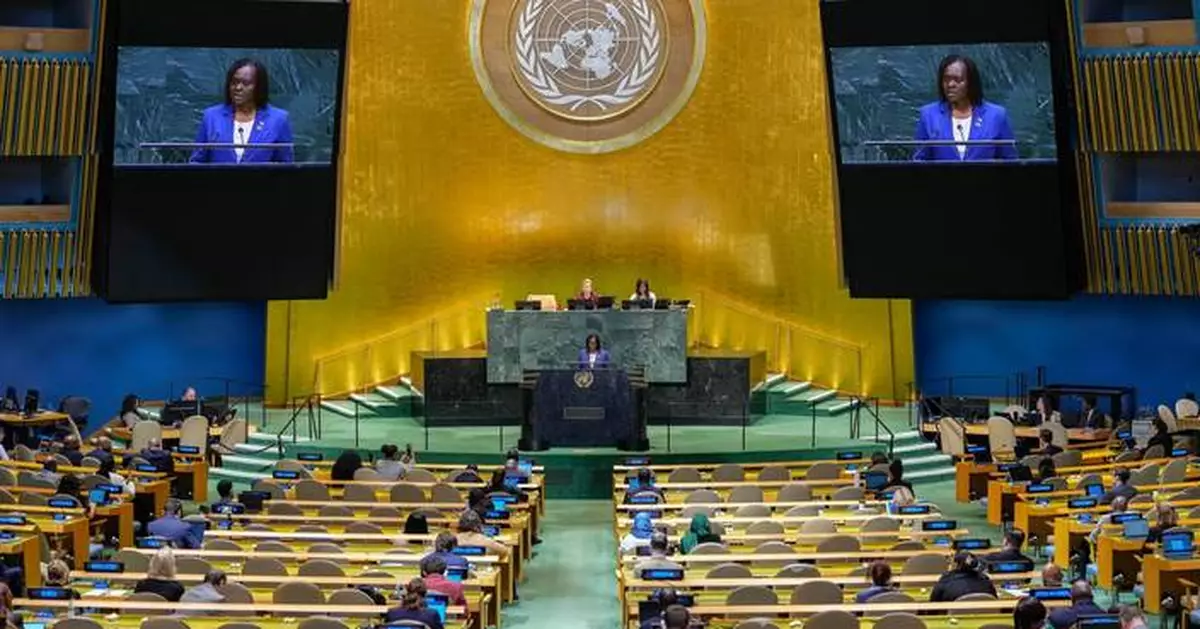
At a time when the fight for gender equality is facing a backlash, pressure is mounting for the next leader of the United Nations to be the first woman in its more than 80-year history.
The contradiction isn’t lost on UN Women, the agency facing an uphill struggle pressing for the rights of women and girls — and for women to be at the top in international organizations, governments, business, technology and the escalating debate over artificial intelligence.
According to the U.N. agency’s recent “gender snapshot,” at the current rate of progress it will take 171 years to achieve gender equality, a U.N. goal initially set for 2015 and then moved to 2030. Other findings are also grim: Nearly one in three women globally have experienced sexual violence. Nearly one in five girls is married before age 18. And at the pace of the last five years, gender parity in parliament won’t be reached until 2089.
After years of upward movement, women’s political leadership is also losing momentum, with six in seven countries still led by men.
Sarah Hendriks, a high-ranking official in UN Women, said the just-ended annual gathering of world leaders in the U.N. General Assembly hall “very much reflected a male-dominated world, both in terms of representation as well as content.”
She welcomed the “disproportionate reinforcement” of the potential for a woman to be the next U.N. chief which she said cut across regions of the world and political divides, and was “energizing.”
“This is not just a question simply of symbolism,” she told The Associated Press. “It’s a question of whether the U.N. actually reflects the equality it asks the world to uphold.”
“We can’t ask governments to dismantle barriers to women’s leadership while accepting those barriers in its own institutions,” she said. “We can’t tell companies to break glass ceilings while the U.N. leaves our own ceilings intact.”
During the weeklong high-level meeting that ended Monday, Hendriks said, leaders said women “must have an equal opportunity to hold the most powerful positions in the world including this one – and, in fact, especially this one.”
Among those speaking out was East Timor’s President José Ramos-Horta, co-winner of the 1996 Nobel Peace Prize. He said that after more than 80 years, “we ought to have enough wisdom and elect a woman with unquestionable integrity." And Botswana's president, Duma Boko, lamented “an unfinished chapter in the history of this organization” — that after eight decades “the United Nations has yet to be led by a woman as secretary-general.”
There are currently seven candidates to replace Secretary-General Antonio Guterres, whose second five-year term ends Dec. 31. The slate consists of four women and three men; former Chilean president Michele Bachelet dropped out.
Two women – U.N. trade chief Rebeca Grynspan of Costa Rica and Guyana’s U.N. ambassador, Caroline Rodrigues Birkett, topped the poll, but in the 15-member council each had at least five “discourage” votes. A third straw poll is scheduled Tuesday, and some diplomats said the results could encourage new candidates.
By tradition, the job of secretary-general rotates by region; this is Latin America’s turn, though there are two African contenders. While the General Assembly has the final say, decision-making rests with the five veto-wielding members on the Security Council — the U.S., Russia, China, Britain and France. They have been mum about their choices, though Russian Foreign Minister Sergey Lavrov said Saturday that Grynspan and Rodrigues-Birkett “meet the criteria."
Hendriks, UN Women’s director of policy, programs and its intergovernmental division, said the choice, for her, is really about the kind of multilateralism the United Nations wants for the next 80 years.
During the high-level meeting, she said there was a reduction in the focus on gender equality in speeches by the U.N.’s 193 member nations. Leaders spoke extensively about conflicts in the Mideast, Ukraine and elsewhere, about peace and security and U.N. reform and in some causes about climate change, development, finance and artificial intelligence. “But gender equality was much less prominent as a political priority.”
Hendriks said the gender dimension of the technological transformation taking place today, including the use of AI, received far less attention. She called this a serious concern because “if we build a future of technology without women,” inequality will be embedded. Right now, she said, women hold only 22% of the AI professional positions globally and only 14% of leadership positions, “but nobody was talking about that.”
Still, there were some champions. Liberian President Joseph Boakai told the assembly that “gender equality is essential. When women lead, peace agreements last longer, economies grow faster and government becomes more accountable.”
In his farewell “state of the world” speech opening the meeting, Guterres called gender inequality the most universal form of inequality.
“Everywhere, women and girls continue to face discrimination, violence, exclusion and abuse,” he said. “Around the world, their rights are being rolled back. Their voices silenced. Their bodies turned into battlegrounds. And their freedoms treated as bargaining chips.”
Calling this “a profound waste for humanity,” the U.N. chief said women make peace more durable, economies more dynamic and institutions more effective.
Over his 10 years as secretary-general, Guterres said, the United Nations has achieved gender parity for the first time in its history in its senior leadership and all headquarters and professional staff.
“Equality is not a dream. It is a decision,” he said. “If the United Nations can change, so can governments. So can parliaments. So can businesses. So can peace processes. And so can this General Assembly.”
Edith M. Lederer has covered international affairs for The Associated Press for more than a half century.
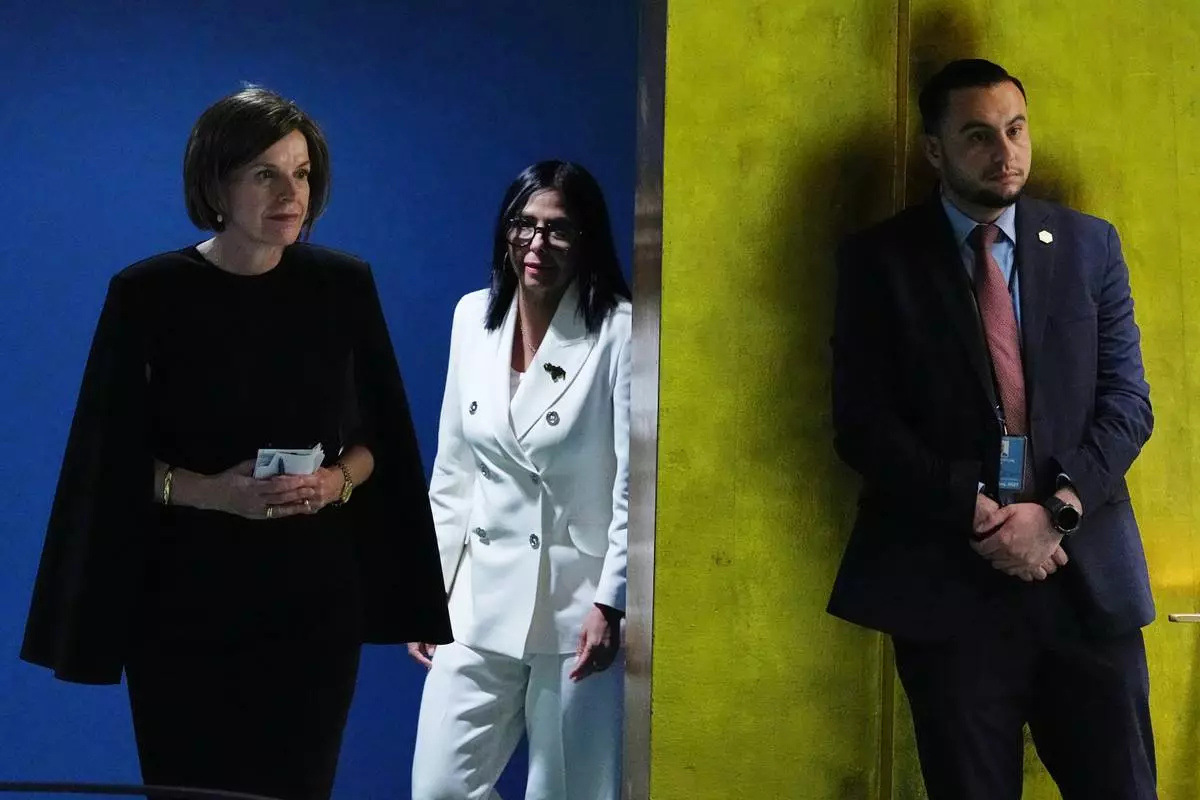
Delcy Rodríguez, acting president of Venezuela, is escorted to the podium to address the 81st session of the United Nations General Assembly at U.N. headquarters Wednesday, Sept. 23, 2026. (AP Photo/Frank Franklin II)
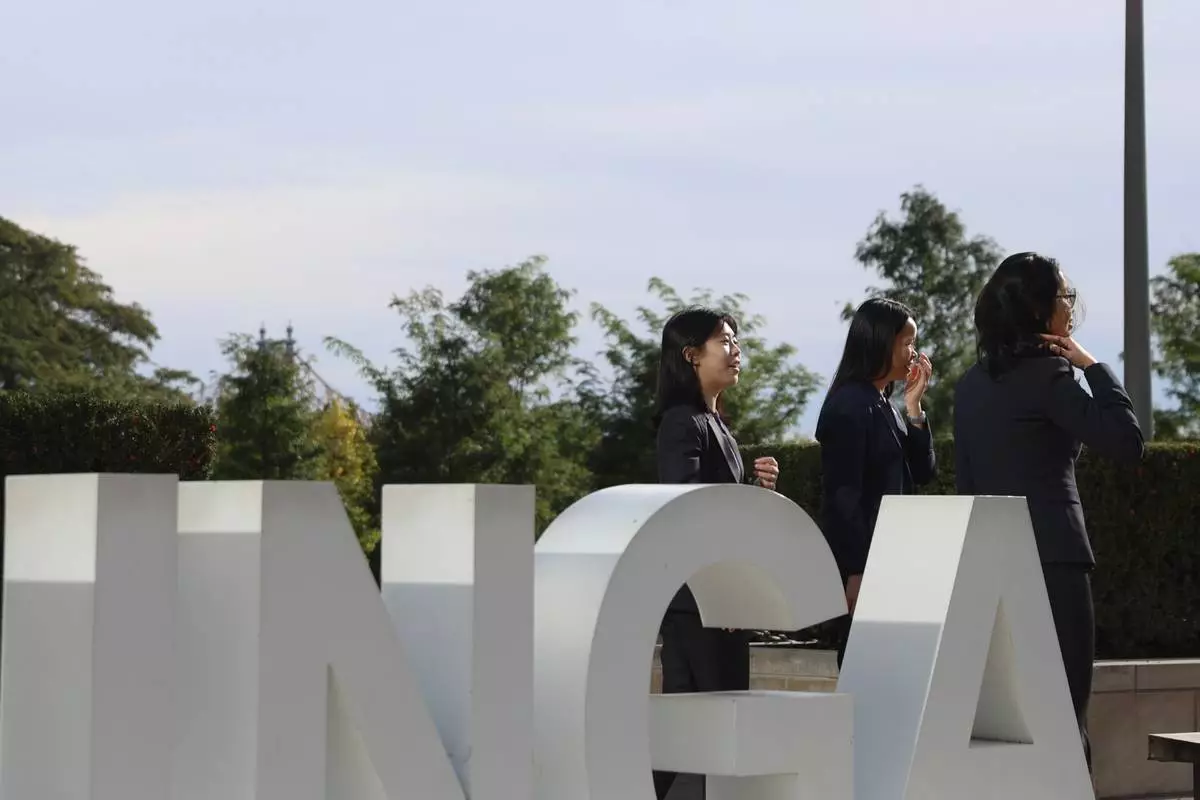
People pose for photos at United Nations headquarters during the 81st session of the United Nations General Assembly, Friday, Sept. 25, 2026. (AP Photo/Heather Khalifa)
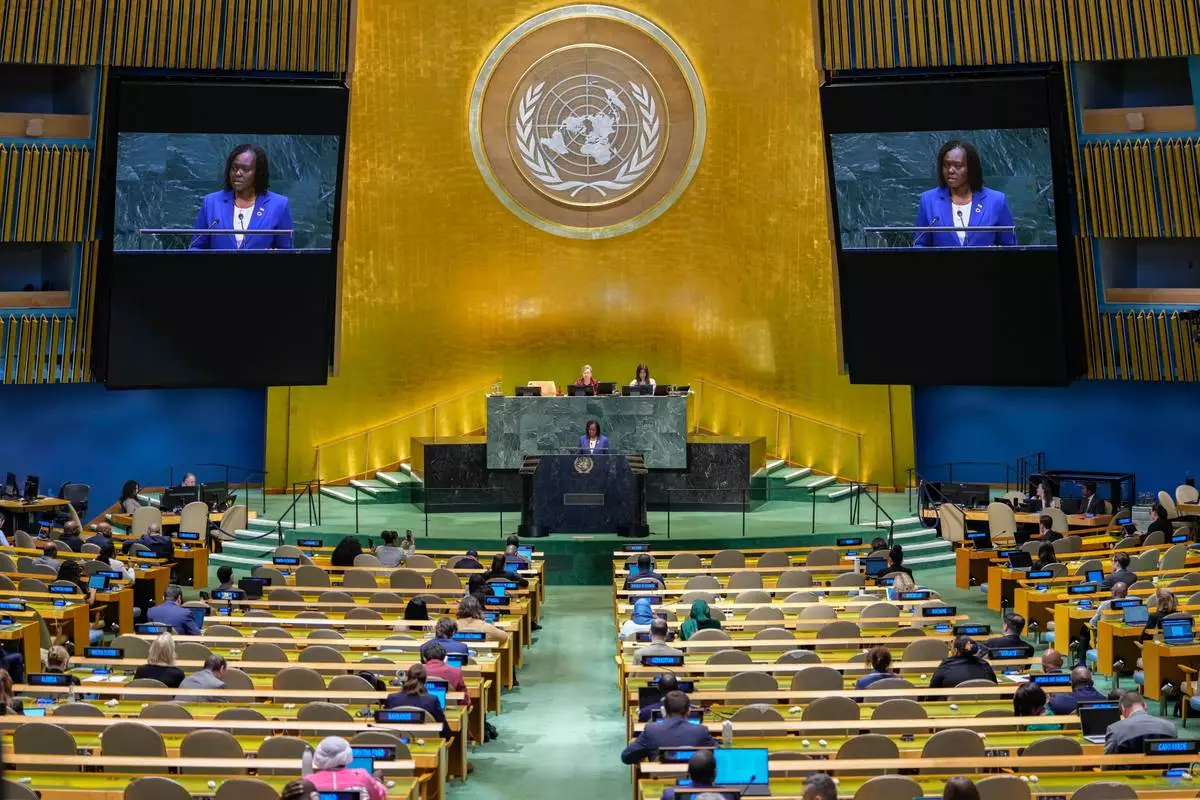
South Sudan's Permanent Representative to the United Nations Cecilia Adout Majok Adeng addresses the 81st session of the United Nations General Assembly at United Nations headquarters, Monday, Sept. 28, 2026. (AP Photo/Yuki Iwamura)
ISTANBUL (AP) — Hamas and the allied Islamic Jihad group have agreed to form an unlikely electoral coalition with a former top Fatah official who has close ties to the United Arab Emirates, Israel's closest ally in the Middle East, Palestinian officials told The Associated Press.
The alliance could be well positioned to threaten the dominance of President Mahmoud Abbas' Fatah party over the internationally recognized Palestinian Authority — but only if the first national elections in 20 years actually happen, which is very much in doubt.
Abbas has said parliamentary elections will be held Nov. 28 in Gaza and the West Bank. But he has repeatedly delayed elections, most recently in 2021, when Fatah appeared headed for defeat. When Hamas won the last elections, in 2006, Israel and Western countries boycotted its government, fueling months of unrest that led to its takeover of Gaza the following year.
Islamic Jihad deputy Secretary General Mohammed al-Hindi confirmed the formation of the electoral alliance in a rare interview with The Associated Press in Istanbul on Monday. He said it would support “a unified national list” that could be made up of independent figures rather than members of the groups.
It would include a bloc led by Mohammed Dahlan, a former Fatah security chief who was exiled in 2010 after a bitter falling-out with Abbas and had previously been driven from Gaza by Hamas. Dahlan has since cultivated close ties with the UAE, where he serves as an adviser to the ruler.
The UAE was the driving force behind the 2020 Abraham Accords, and Dahlan himself has extensive contacts with U.S. and Israeli officials, making him an unlikely ally for Hamas and Islamic Jihad, which have fought Israel for decades. The alliance appears to be rooted in shared frustration with Abbas.
Abbas’ leadership of the Palestinian Authority, which has limited autonomy over parts of the occupied West Bank, is deeply unpopular among Palestinians who see it as autocratic, corrupt and ineffective.
The 90-year-old Abbas has clung to power since his own mandate expired in 2009, while Hamas continues to control parts of Gaza three years into a brutal war with Israel.
Dimitri Diliani, spokesperson for Dahlan’s Reformist Democratic Faction, stopped short of declaring a formal alliance but confirmed the factions are assembling a list that would transcend their political differences. The Palestinian Authority under Abbas “has failed Gaza and the Palestinian people everywhere,” he said.
He said several other Palestinian groups are also part of the initiative and there are efforts to bring “all other factions and independent professionals into uniting around one national rebuilding program.”
Hamas said in August that Dahlan and Hamas leader Khalil al-Hayya had met in Cairo and discussed ways to “end the monopolization of national decision-making and formulate a comprehensive national strategy.”
Hamas and Fatah officials did not immediately respond to requests for comment.
Al-Hindi said the decision to launch the alliance came after attempts to bring together all factions in a “dialogue for internal consensus on the overall Palestinian issue” failed to bear fruit.
There have been multiple attempts over the years to bring Hamas and Islamic Jihad into the Fatah-led Palestine Liberation Organization, the highest body representing the Palestinian cause internationally, but all have foundered.
A main sticking point has been the PLO’s recognition of Israel. While Hamas officials have said they are willing to accept a Palestinian state in Gaza, the West Bank and east Jerusalem — territories Israel seized in the 1967 Mideast war — they have stopped short of recognizing Israel, while Islamic Jihad takes a harder line.
Both are considered terrorist groups by the U.S. and other Western countries, which have voiced support for Palestinian democracy over the years while rejecting any government that includes Hamas. Fatah and Hamas are the most popular factions by far, though many Palestinians are frustrated with both.
Al-Hindi said his group — which has historically not participated in elections run by the Palestinian Authority — will not directly run any candidates but will “support a national list that is agreed upon.”
The scheduled elections come at a precarious time.
In the West Bank, attacks by Israeli settlers on Palestinians have intensified. In Gaza, a ceasefire that took effect in October 2025 has halted the heaviest fighting, but the Israeli military has seized control of more of the territory and continued strikes, which it says are in response to threats.
More than 74,000 Palestinians have been killed in Gaza since the start of the war, according to the Gaza Health Ministry. Hamas started the war with its Oct. 7, 2023, attack on Israel, in which militants killed some 1,200 people, mostly civilians, and took 251 others hostage.
Under a U.S. plan for implementing the ceasefire, armed Palestinian groups were to give up their weapons while Israel would withdraw from the enclave. Al-Hindi said his group, along with Hamas, had agreed to the plan and blamed Israel for blocking it.
“When Israel’s obligations in the first phase (of the agreement) are achieved, we will move on to talk about the second phase, which includes the issue of weapons,” al-Hindi said.
Islamic Jihad took part in the Oct. 7 attack and held Israeli hostages, but al-Hindi said the group was not involved in planning the attack or given forewarning by Hamas. The night before, he said, Islamic Jihad members held a commemoration of the group’s founding and many stayed up late.
“In the morning, we were surprised by the media reporting what happened, but as a resistance movement, we were quick to participate in these confrontations,” he said.
With tens of thousands dead, Gaza largely reduced to rubble, and most of its population displaced, al-Hindi acknowledged that “some voices began to express doubts and say, ’What has the resistance brought down on the Palestinian people?'”
But he insisted that the Oct. 7 attack had been necessary to prevent the plight of the Palestinians from being completely sidelined as the UAE and other Arab countries had moved to normalize relations with Israel.
He also acknowledged that Iran — long a main source of support for Palestinian militant groups — is now preoccupied by the ongoing war and a U.S. economic blockade. But al-Hindi said his group will continue with or without Iranian support.
“As long as there is no political horizon to solve the Palestinian issue and attempts continue to flee from the Palestinian cause in the region, the future will be resistance,” he said.
Associated Press writer Josef Federman in Jerusalem contributed to this report.
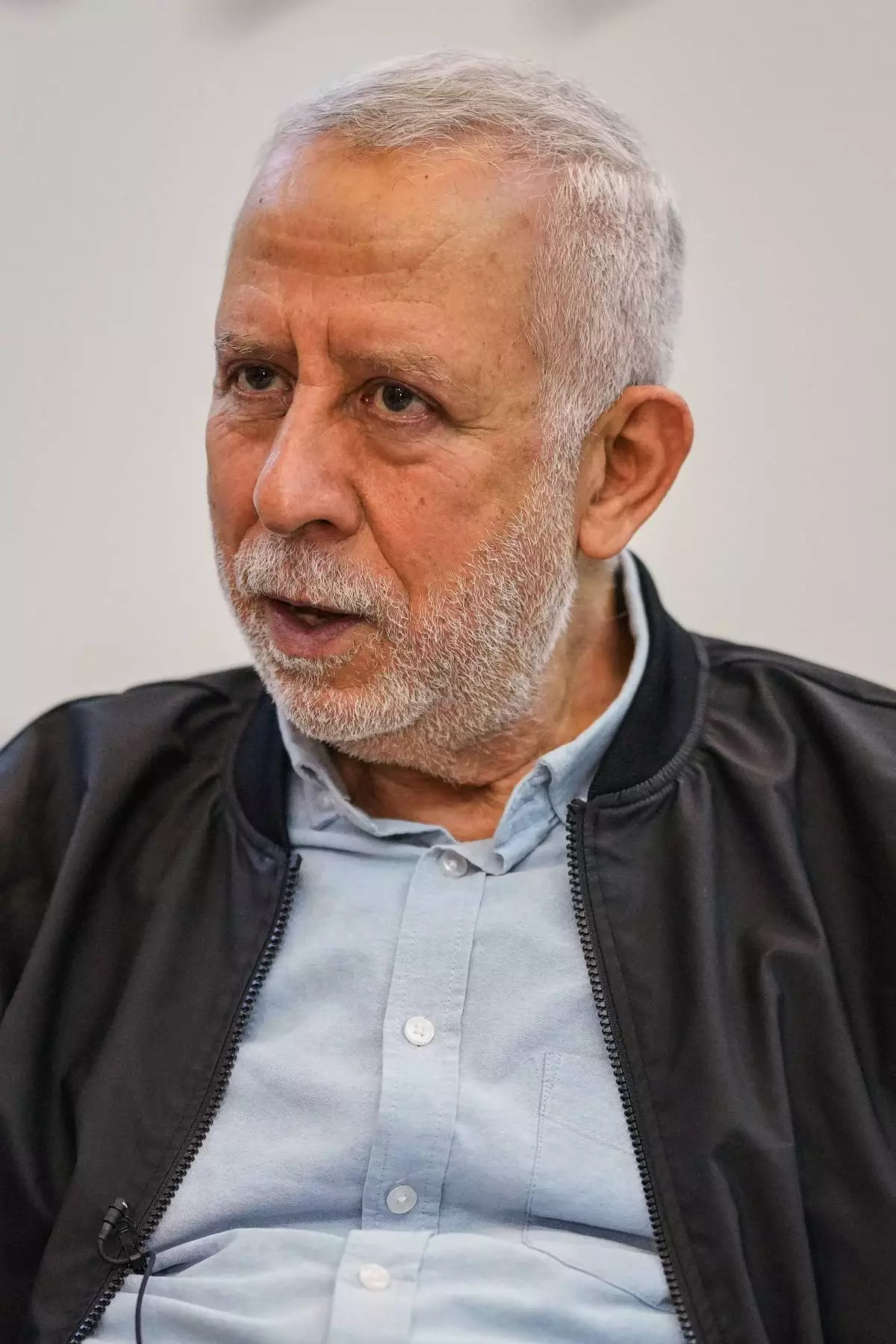
Islamic Jihad deputy Secretary General Mohammed al-Hindi talks during an interview with The Associated Press in Istanbul on Monday, Sept. 28, 2026. (AP Photo/Emrah Gurel)
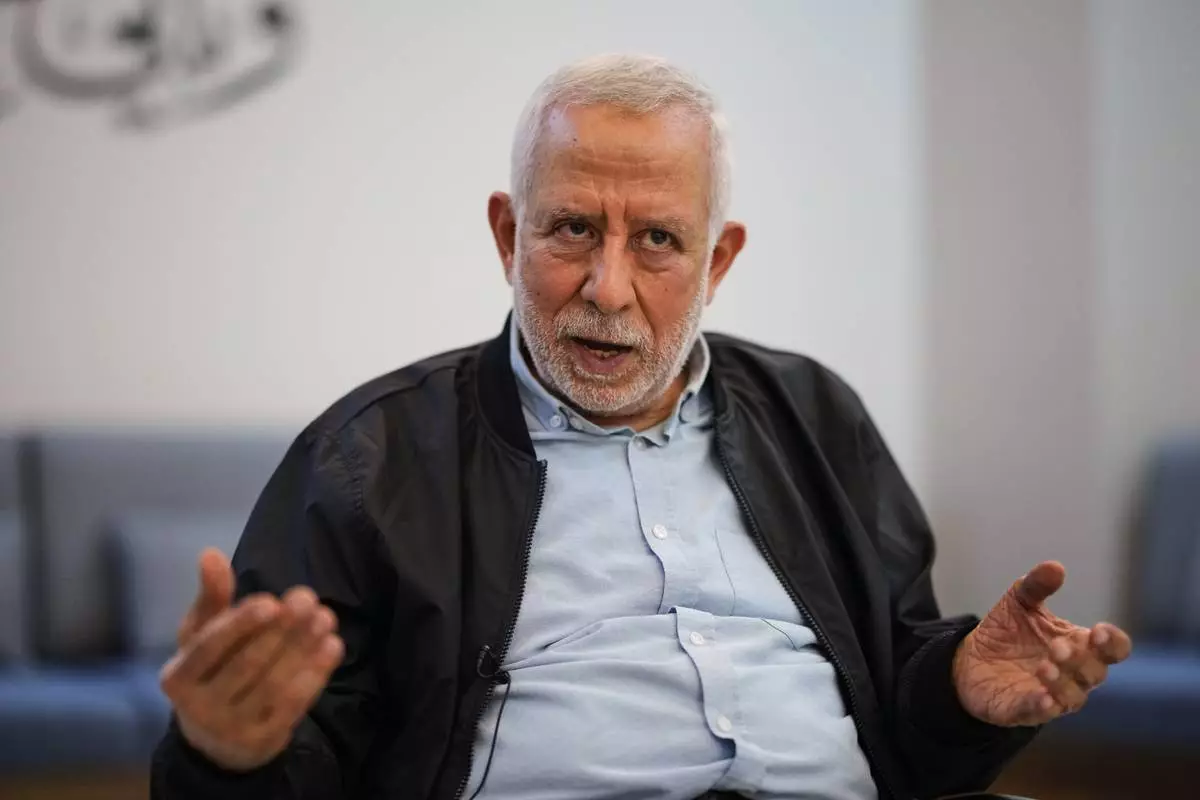
Islamic Jihad deputy Secretary General Mohammed al-Hindi talks during an interview with The Associated Press in Istanbul on Monday, Sept. 28, 2026. (AP Photo/Emrah Gurel)
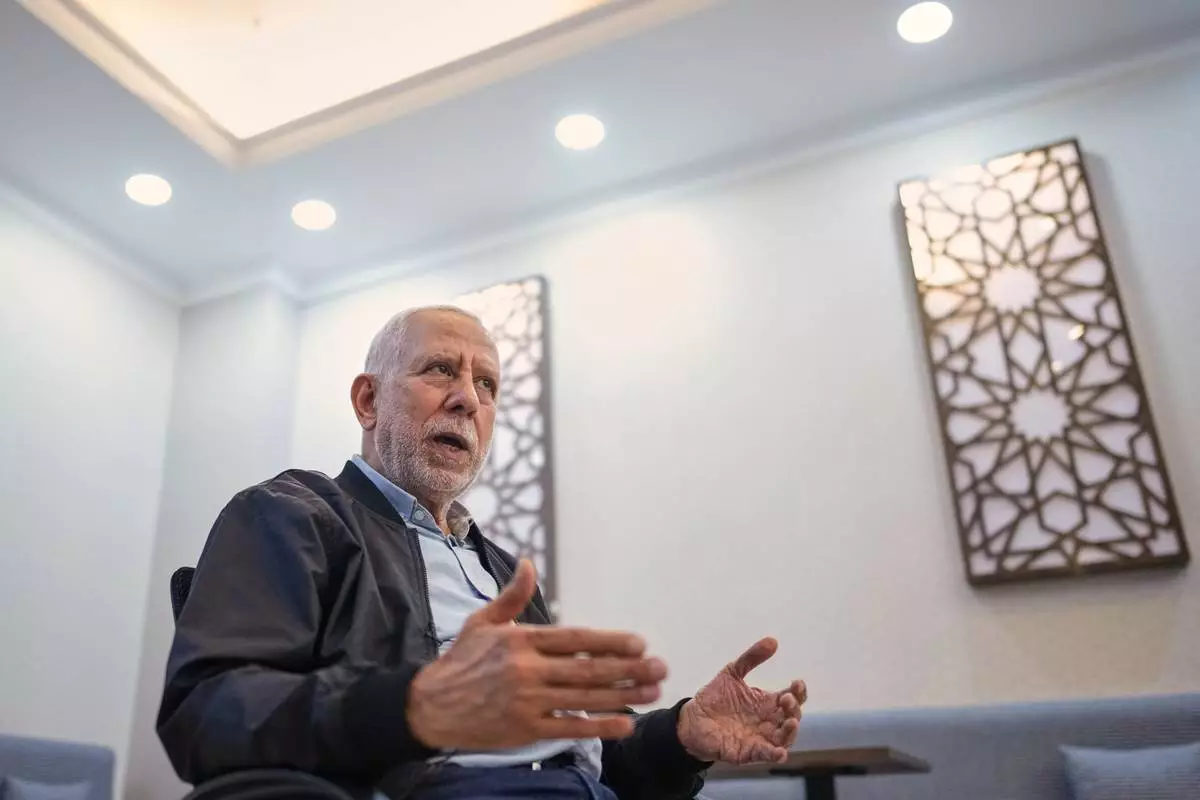
Islamic Jihad deputy Secretary General Mohammed al-Hindi talks during an interview with The Associated Press in Istanbul on Monday, Sept. 28, 2026. (AP Photo/Emrah Gurel)
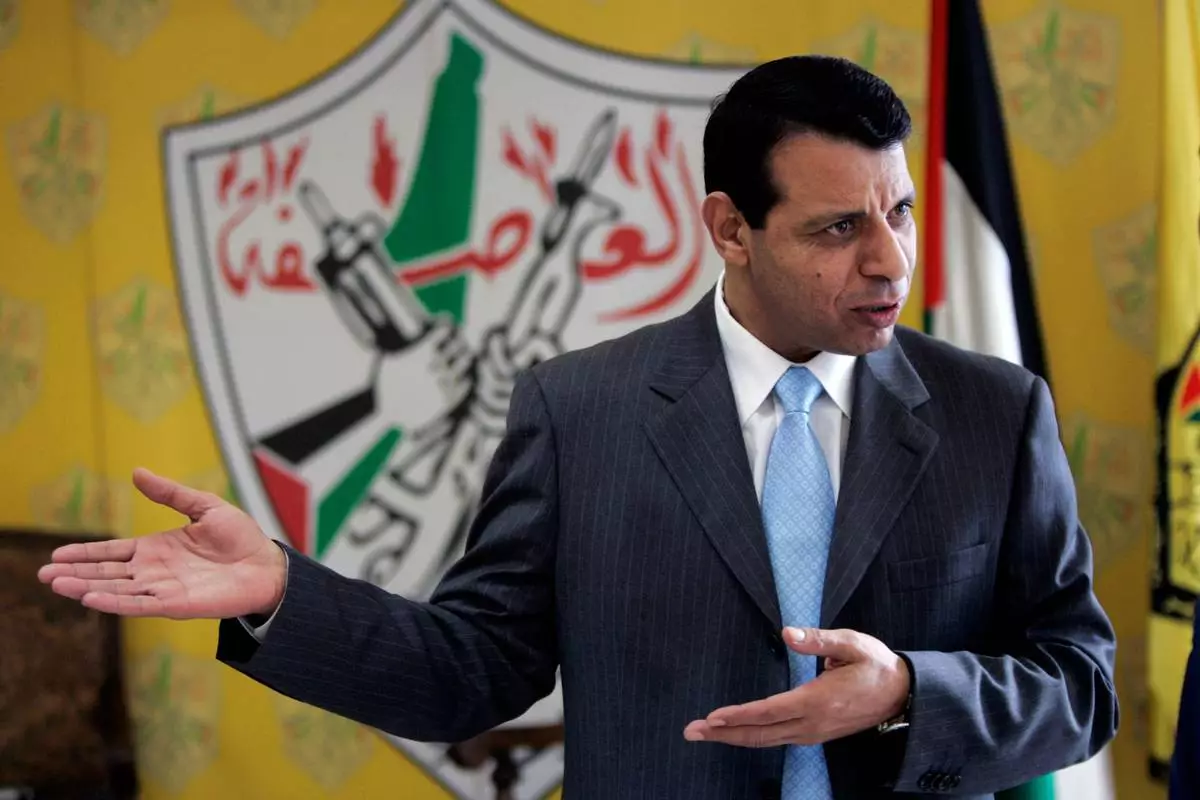
FILE - Palestinian Fatah leader Mohammed Dahlan gestures in his office in the West Bank city of Ramallah on Jan. 3, 2011. (AP Photo/Majdi Mohammed, File)
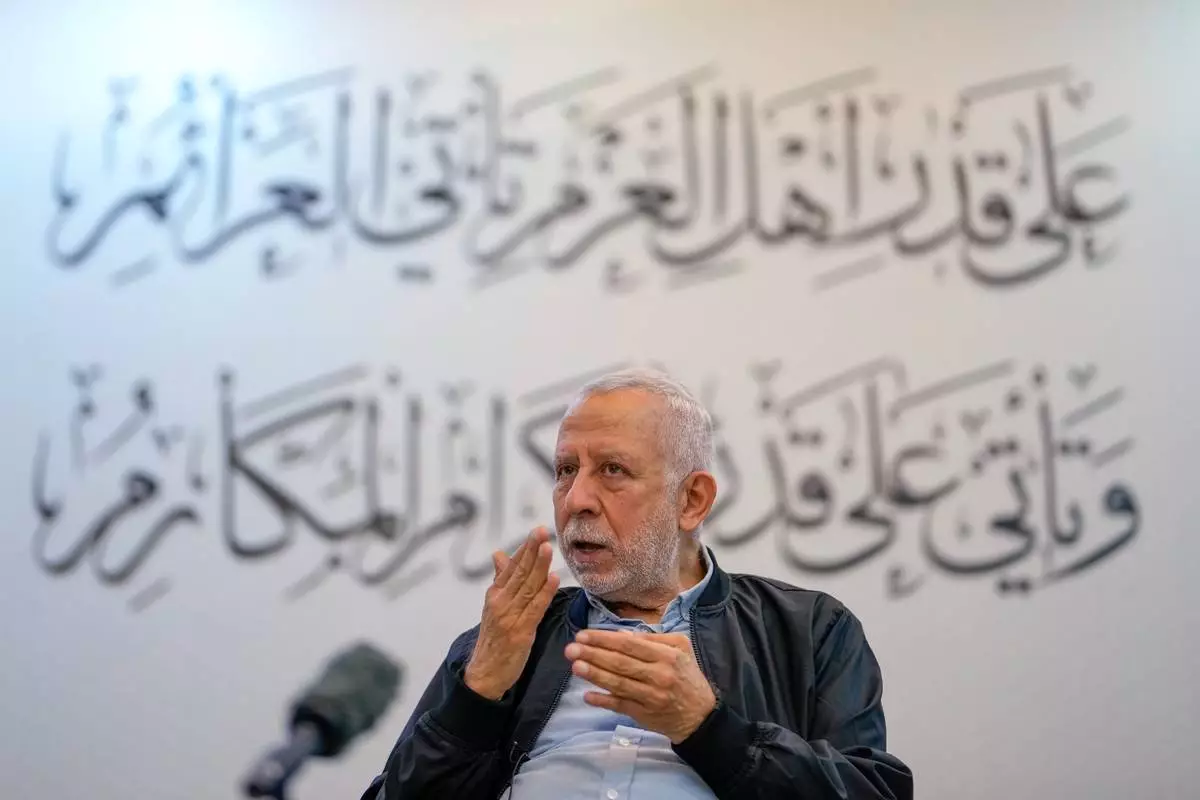
Islamic Jihad deputy Secretary General Mohammed al-Hindi talks during an interview with The Associated Press in Istanbul on Monday, Sept. 28, 2026. (AP Photo/Emrah Gurel)