VANCOUVER, British Columbia (AP) — The multinational owners of Canada’s first large-scale liquefied natural gas export terminal agreed Tuesday to a C$33 billion (US$23 billion) expansion in British Columbia that will double the facility’s capacity and expand Canada’s exports to overseas energy markets.
LNG Canada said its partners made a final investment decision on Phase 2 of the Kitimat project, increasing capacity to 28 million tons a year. The expansion will add two LNG processing units, another storage tank and an additional loading berth, while building on infrastructure from the first phase, which began exports last year.
LNG Canada is owned by Britain's Shell, Malaysia’s Petronas, PetroChina, Japan’s Mitsubishi Corp. and South Korea’s KOGAS.
Natural gas from western Canada is piped to Kitimat, where it is liquefied and loaded onto tankers for export, primarily to Asian markets. Liquefied natural gas, or LNG, is natural gas cooled to a liquid form for shipping and storage before being converted back into gas for heating, electricity generation and industrial use.
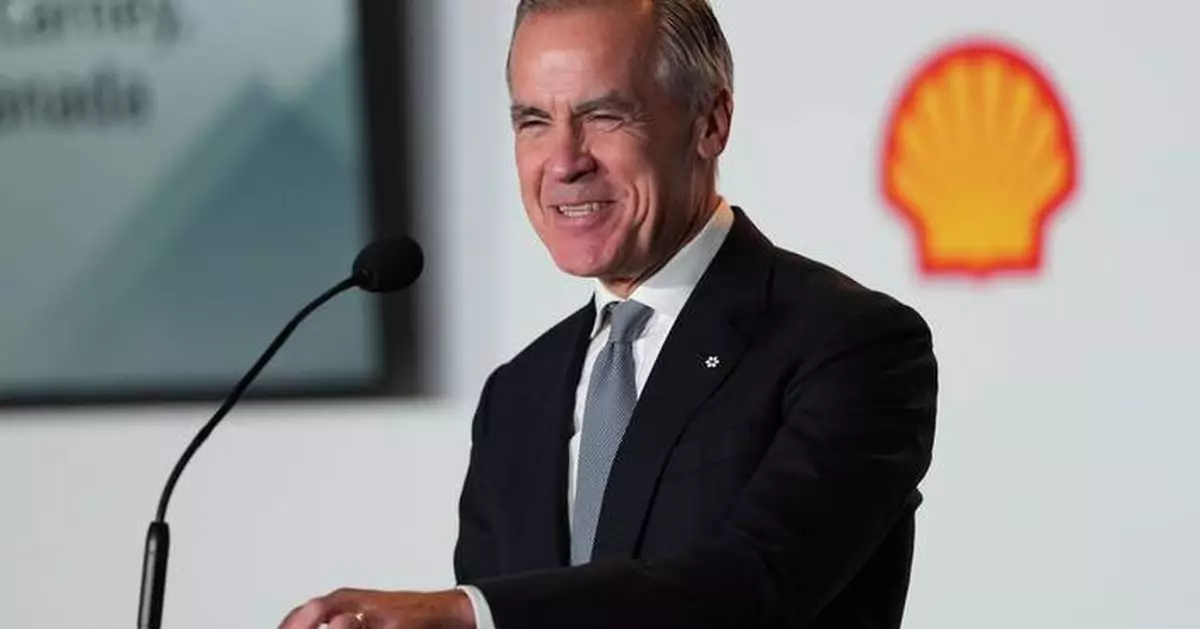
Canadian Prime Minister Mark Carney said the expansion would make LNG Canada the second-largest facility of its kind in the world and create up to 4,000 jobs at peak construction.
“Today’s investment is being made in a different environment: a more dangerous and divided world,” Carney said. “A world where Canada fully values export diversification and the greater sovereignty it confers.”
Carney has made reducing Canada’s economic reliance on the United States a priority as U.S. President Donald Trump’s tariffs and other trade restrictions have strained relations between the longtime allies.
Carney said Canada’s Pacific Coast gives the project an advantage over U.S. LNG exporters, with shipments from Kitimat able to reach Asia in eight to 10 days, less than half the transit time from the U.S. Gulf Coast.
The expansion will also trigger a multibillion-dollar expansion of the TC Energy-operated Coastal GasLink pipeline, which carries natural gas from Dawson Creek to Kitimat. TC Energy said it will add compressor stations and upgrade facilities, nearly doubling the pipeline’s capacity and creating up to 2,100 jobs at peak construction.
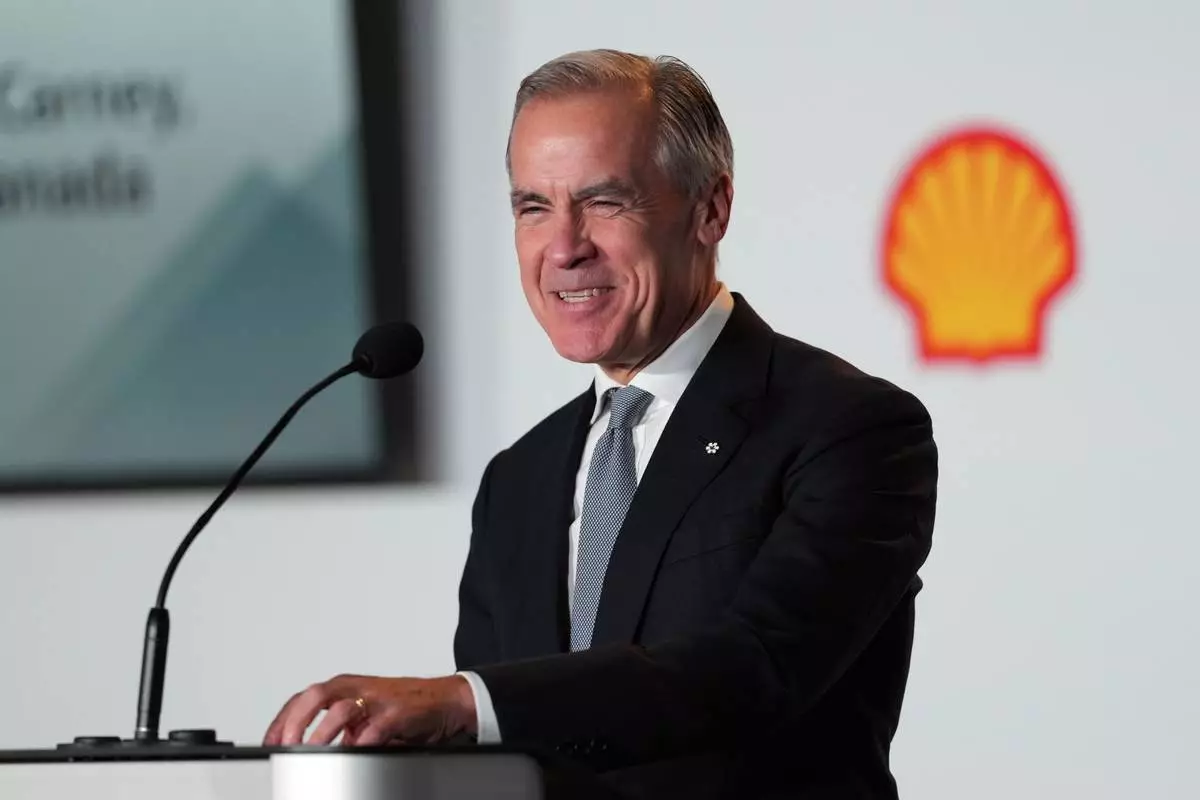
Prime Minister Mark Carney speaks after LNG Canada said it will go ahead with the Phase 2 expansion project at its LNG terminal in Kitimat, B.C., during an announcement in Vancouver, on Tuesday, Sept. 29, 2026. (Darryl Dyck/The Canadian Press via AP)
MIAMI (AP) — A 77-year-old Florida man convicted of beating a woman to death with a hammer is scheduled Tuesday to become the 16th person executed this year in the nation's busiest death chamber.
Curtis Wilkie Beasley was sentenced to death after being convicted of first-degree murder, robbery and grand theft auto in a 1995 attack on Carolyn Monfort. The Florida Supreme Court last week rejected appeals that executing a man his age who is suffering from cognitive decline would amount to cruel and unusual punishment.
Beasley, who would become Florida's seventh prisoner over the age of 70 to be executed this year, is set to receive a three-drug injection at the state prison starting at 6 p.m.
It was one of two executions scheduled this week in the U.S. Tennessee plans to execute a woman for the first time in 200 years on Wednesday by administering a lethal injection to Christa Pike, 50, who was convicted of killing a classmate in a jealous rage when they were both teens.
Beasley awoke at 5 a.m. Tuesday and remained compliant while awaiting execution, Florida Department of Corrections spokesman Jordan Kirkland said at a news conference. The official said Beasley had grilled cheese sandwiches and ice cream for a last meal and met with three visitors and a spiritual adviser.
Earlier Tuesday afternoon, the U.S. Supreme Court denied the inmate's last appeal without comment.
According to court records, Beasley had been staying at Monfort’s Dundee home, south of Orlando, in August 1995 while he was pressure washing and painting nearby apartments owned by her son-in-law. Monfort's daughter went to her home after being unable to reach her for two days and found her body in a blood-splattered laundry room.
Monfort suffered multiple blunt-force trauma injuries to the head, and a bloody hammer head was found wrapped in a towel nearby, according to investigators.
Authorities began searching for Beasley after a witness reported seeing him driving what turned out to be Monfort's car. Investigators determined Beasley had traveled to Miami and later relocated to Alabama, where he was arrested while working under a fake name for an electrical company, officials said.
Beasley was convicted of murder and sentenced to death in 1998.
Beasley would be the nation’s 29th execution this year, most of which have taken place in Florida.
The state is getting closer to last year's 19 executions, which was a record in Florida since the death penalty was reinstated in 1976. In July, Florida executed two prisoners in one day, the first state in nearly a decade to do so.
Two more are scheduled for this year, but Republican Gov. Ron DeSantis has temporarily paused the next one.
William Lee Thompson, 74, is scheduled to be executed Oct. 13 for raping and fatally beating a woman at a Florida motel in 1976. After a doctor this month determined Thompson might be suffering from dementia, DeSantis ordered a panel of three psychiatrists to examine him Thursday to determine if he is competent to be executed.
DeSantis, who leaves office in January, issued similar stays in 2023 and 2025 but both executions proceeded following evaluations.
William Reaves, 77, has an Oct. 20 execution date. He was convicted of fatally shooting a deputy outside a convenience store in 1986.
All Florida executions are carried out via lethal injection of a sedative, a paralytic and a drug that stops the heart, according to the Department of Corrections.
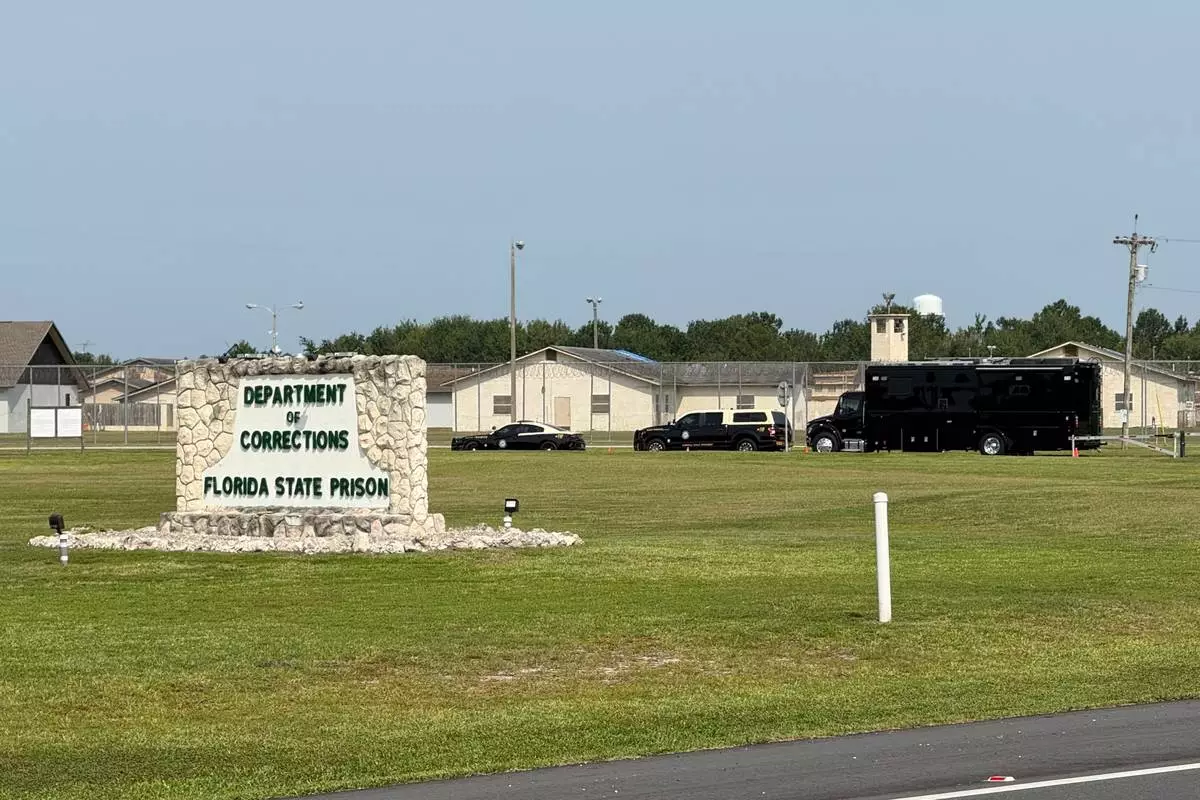
FILE - Law enforcement vehicles sit parked outside the Florida state prison in Starke, Fla., on Tuesday, July 28, 2026. (AP Photo/David Fischer, file)