President Donald Trump is adding to the economic numbers he touts, claiming the lowest poverty numbers in history.
In part, he is correct. His comments, made Sunday and again Monday, are supported by the Census Bureau’s latest annual poverty report, released earlier this month, which found that the poverty rate in 2025 was the lowest it’s been since tracking began nearly 70 years ago.
But another measure of poverty, widely regarded among experts as more comprehensive, is not at an all-time low. Plus, the 2025 poverty rate only reflects the first few months of Trump's second administration.
Here's a closer look at the facts.
TRUMP, on Monday: “We have the best poverty numbers in history. We have the best poverty, meaning the lowest. We have the best poverty numbers."
THE FACTS: This is missing context. The poverty rate in 2025 was 10.2%, according to a report released this month by the Census Bureau. That's the lowest rate on record since 1959, when the agency started tracking it. However, it was determined using a survey conducted in March of that year — only three months after Trump reentered the White House. The supplemental poverty measure, which, unlike the poverty rate, accounts for factors such as non-cash benefits like food aid and household expenses, was at 13.1% in 2025. It reached an all-time low of 7.7% in 2021, under former President Joe Biden.
“What he said is factually correct, but it's a misleading characterization of the state of poverty,” said Steven Durlauf, a professor of public policy at the University of Chicago who studies poverty, inequality and economic growth.
In addition to what is known as the official poverty rate, the Census Bureau also examines the numbers using the supplemental poverty measure, or SPM. It accounts for resources such as SNAP benefits and Medicaid, as well as expenses such as housing and medical costs. The official poverty rate compares pretax cash income to a national poverty threshold, taking into account the size and makeup of a family.
The SPM, which has been tracked by the Census Bureau since 2009, is not a replacement for the traditional poverty rate, though it is considered more accurate by experts because of the additional factors it reflects.
“You want to have the most comprehensive vision of what the resources are that they have and what the costs are,” Durlauf said. "What it is trying to do is look more systematically at what the resources are available to a family and accounting for differences in the flows of both directions.”
Durlauf added that one reason the SPM was so low in 2021 was a temporary increase in the child tax credit under the American Rescue Plan, a COVID-era initiative. The credit expired in December 2021.
The official poverty rate fell because incomes have risen. The median U.S. household income went up 2.6% in 2025 from the previous year, after adjusting for inflation, to $87,460, according to the Census Bureau. That's a record high, topping the 2019 household income of $85,320. Even though there are more people living below the poverty line than there have been in past years, the official poverty rate is lower because of population growth. There were 34.51 million people living below the poverty line in 2025, compared with an all-time low of 22.97 million in 1973. But while the 2025 number is larger, the U.S. population was 11.54 million higher, which drove down the rate.
Both the official poverty rate and the SPM are calculated using the Current Population Survey's March supplement. This means that the 2025 rates are a snapshot of poverty from March of that year and don't reflect the current economy. Trump began his second administration in January 2025, just three months prior.
“Unless he managed to make something really dramatically happen in six weeks, it's really reflective of Biden, to the extent that we think that it's actually driven by the presidency or not,” said Natasha Pilkauskas, an associate faculty director at the University of Michigan’s Poverty Solutions initiative.
Asked for comment on Trump's claims, the White House directed The Associated Press to a Census Bureau press release about three of its most recent reports, including the one on poverty. The Census Bureau did not immediately respond to a request for comment.
Find AP Fact Checks here: https://apnews.com/APFactCheck.

Change is made after a sale at a produce market in downtown Dallas, Tuesday, Sept. 29, 2026. (AP Photo/LM Otero)
WASHINGTON (AP) — In eastern Kentucky, Libby Honeycutt listened upstairs to the sound of glass breaking below as floodwaters tore apart her house. Twenty-six miles to the south, Ronald Conley rescued his dogs from his elevated house with a pontoon boat. Jennifer Campbell heard the screams from across the river of a neighbor desperate for rescue.
They all remember the horrifying speed of that July 2022 flood that also isolated so many by knocking out cell service, leaving people unable to learn the fate of loved ones.
And then the sun rose, the waters receded and thousands of people had to figure out what to do about their damaged homes and upended lives. That work was made harder for the vast majority hit by the downpours, including these three people, who did not have flood insurance.
Nationwide, just 2.4% of properties are covered by 4.5 million federal flood insurance policies, an Associated Press analysis shows — but 8.4% are at severe or extreme risk of flooding. The gap illustrates the foundational flaws in a program that fails to balance affordability, flood protection and cost to taxpayers.
It’s getting worse. The count of policies is down roughly 500,000 in five years. Price increases are a big factor. This downward trend collides with the rising risk of flooding across many areas of the United States, driven by climate change that can strengthen hurricanes and worsen downpours far from the coasts.
The problem is especially bad in eastern Kentucky, where in some ZIP codes, no more than 5% of properties are covered by flood insurance, even though hundreds or thousands of buildings are at extreme risk of flooding, according to figures from the federal government and data provided exclusively to the AP by the risk analysis group First Street.
It's not just Appalachia — coastal areas including parts of southern Louisiana stand out, too. Areas at high risk of flooding and where few people are insured tend to be poorer, experts said, as are areas where FEMA’s flood maps don’t properly convey the severity of the risk or mandate that enough people buy coverage.
Proposals to overhaul the program have stalled, including adding options to make it more affordable to low-income buyers.
“Everybody agrees it’s broken, but no one can agree how to fix it,” said Jeffrey Schlegelmilch, faculty director of the National Center for Disaster Preparedness at Columbia University.
Conley's double-wide trailer in Kentucky is elevated by stacked cement cinder blocks. In 2022, when he floated his dogs to safety on a pontoon boat, that wasn’t enough. The flood left six inches of “gooey, clay mud” in the house that was so thick it could suck shoes off feet and had to be shoveled out. Without insurance, he’s mostly lived in a small place FEMA provided and relied on generous church groups and donations, he said. With insurance, he is confident the work would have been done much faster.
Instead, after that flood, and another that set his repairs back in 2025, he was only able to move back into his home this month.
Congress set up the National Flood Insurance Program in 1968. It offers flood insurance in participating communities that agree to take steps to manage flood risk, such as restricting construction in high-risk areas. Homeowners insurance doesn’t cover floods.
Policies are available to renters and businesses, but most are purchased by homeowners covering up to $250,000 for their property and $100,000 for belongings. FEMA flood maps determine who is in a high-risk area where flood insurance must be attached to a federally backed mortgage.
When it works, it is life changing.
Bryant Matthews was up late with a toothache in Letcher, Kentucky, when he noticed the water rising fast during the 2022 flood. Being awake, he managed to get his wife, stepkids and mother to safety.
“I was up. I was aware of what was going on, and I was able to get the family out of the house before it got too bad.”
Friends let them stay in their basement for about three months and they lost a lot. Beloved collections of old Metallica recordings and cheesy 80s horror movies were damaged.
But they had flood insurance, which paid what was left on their mortgage. That helped them start again, debt free. They found a place in nearby Hazard, which was closer to the kids’ school and their work.
“I am very appreciative, very blessed,” he said.
In many places, FEMA’s flood maps don’t do a good job of capturing the extent of severe flood risk. Millions think their homes are safer than they really are and aren’t forced to buy insurance when they probably should.
That made rebuilding more difficult in 2022 after more than a foot of rain fell over parts of Kentucky, killing more than 40 people. The worst came during the early hours of July 28, when heavy rains fell on already soggy ground, running down steep hills into narrow river valleys — a perfect recipe for fast, devastating flooding. Six hundred people required helicopter rescues.
Where the flood struck, just 2.1% of properties were insured then, a rate that remains about the same today, an AP analysis shows, even though about 47% are at severe or extreme risk of flooding. That’s a gap of 45 percentage points — more than seven times as large as the national average.
FEMA’s flood maps didn’t catch all that risk during the 2022 flood, with only 18% of the buildings struck falling within a high-risk zone.
Flood maps, which are commonly out of date, don’t consider some types of flood risk, such as flooding from inland heavy rains.
The places with the biggest insurance gaps are those where heavy precipitation flooding occurs away from large water bodies, said Jeremy Porter, the chief economist at First Street, a part of finance company MSCI.
“That’s the Appalachian region, further inland, and then in the Midwest and Northeast in particular, extreme precipitation is the way climate change is manifesting itself,” he said.
The system works well in some places — such as the Charleston, South Carolina, area. Here, flood maps do record the risk from obvious threats like hurricanes, with high-risk zones blanketing the area. People expect to talk about flood insurance when they buy a home, and the booming region's wealthy buyers can better afford it.
High prices are a worsening obstacle.
The typical cost of a flood insurance policy is $1,100 per year, up roughly 90% in the last five years, AP’s estimates show.
Lake Charles, Louisiana, resident Dan Charlson said his insurance shot up over time from roughly $900 to $4,000. That's when he dropped his policy.
“I’m looking at what it costs to fix the house, and the fact that I only flooded once in 50 years. So, it's a risk analysis,” he said.
The costs have been driven up chiefly by efforts to modernize pricing.
A few years ago, the federal government fully implemented Risk Rating 2.0, a much more accurate way of aligning a property’s flood risk with the price of coverage.
But more accurately priced flood insurance meant much higher prices overall for most buyers. A government watchdog report found that Gulf Coast states had been especially underpriced and required big increases under the new pricing structure.
Louisiana Sen. Bill Cassidy, a Republican, said the rating system implemented by the Biden administration and defended by the Trump White House has put insurance out of reach for too many.
“Recent administrations pushed Risk 2.0 forward without fixing the affordability problems created for Louisiana families,” Cassidy said.
A May review commissioned by the Trump administration found fundamental flaws in the National Flood Insurance Program, which is run by FEMA and is in more than $20 billion of debt.
“Congress has instructed the NFIP to be affordable, financially sound, available to all, and risk informed. These goals often pull in opposite directions, and political pressures have frequently blocked meaningful reform, leading to dozens of short-term program reauthorizations,” the report said.
FEMA said in a statement that stronger building codes, smarter zoning and competitive private insurance options are needed rather than shifting all flood risk and cost to the federal government. The agency can’t address affordability without action from Congress.
FEMA is also working on a better system to map flood risk called Future of Flood Risk Data that aims to replace flood zones with more nuanced models that will do a better job of mandating who must buy insurance. The timeline for that work isn’t clear.
Thousands of buildings were damaged in the 2022 flood. The majority of residents in these homes lived on less than $30,000 a year, a nonprofit report found.
For those without insurance, FEMA may help if a presidential disaster declaration is issued. But that assistance only provides for basic needs. Its two biggest programs are capped at about $40,000 each: housing assistance and other needs like childcare. Few receive the maximum.
FEMA will pay aid to an uninsured flood victim after their first flood. If that property is in a flood zone and isn't covered by flood insurance when it gets hit again, FEMA typically won’t pay. That's a big deal in Kentucky, which has experienced repeat disasters in recent decades.
In the 2022 floods, FEMA provided nearly $90 million in direct assistance, separate from insurance payouts, to help with that damage — roughly one-fifth of the lowest estimated cost to rebuild.
“It was clear that a trend was happening where people were just having to move away. They were living with other people in eastern Kentucky, in the damaged area, or they were having to move to other eastern Kentucky counties, or, you know, out of the region,” said one of the report’s authors, Eric Dixon, a senior researcher at the nonprofit Ohio River Valley Institute.
After Honeycutt and her family escaped the second story of their inundated home during the 2022 Kentucky floods, it cost the family — which lacked flood insurance — a significant amount to fix the immense damage. But because of the anxiety of staying in a neighborhood that absorbed so much destruction, she's now taking part in a voluntary government buyout program that purchases homes in flood-prone areas.
Others had to live in their damaged homes and fix up what they could, when they could find the money. Charity and neighborliness helped a lot — many victims are still thankful to churches and neighbors that volunteered their labor, according to Whitney Bailey, a disaster response project director at AppalReD Legal Aid.
Troublesome Creek, Kentucky, overflowed, destroying pictures of the late 13-year-old boy whom Campbell helped raise — and just about everything else in her home. She thought flooding wouldn’t be a problem. She said she asked her insurer about flood coverage and was incorrectly told she was at such low risk it wasn’t available.
When Campbell’s home did flood, it cost her about $100,000. She went from not having a house payment to having to take out a loan and rely on some FEMA assistance.
In 2025, flooding once again nearly reached Campbell's house and blocked the road.
The experience prompted Campbell to sign up for a buyout program to move.
“I just decided at that moment, I told my husband, ‘I can’t do this anymore,’” she said. “We can’t do this anymore.”
The Associated Press receives support from the Walton Family Foundation for coverage of water and environmental policy. The AP is solely responsible for all content. For all of AP’s environmental coverage, visit https://apnews.com/hub/climate-and-environment
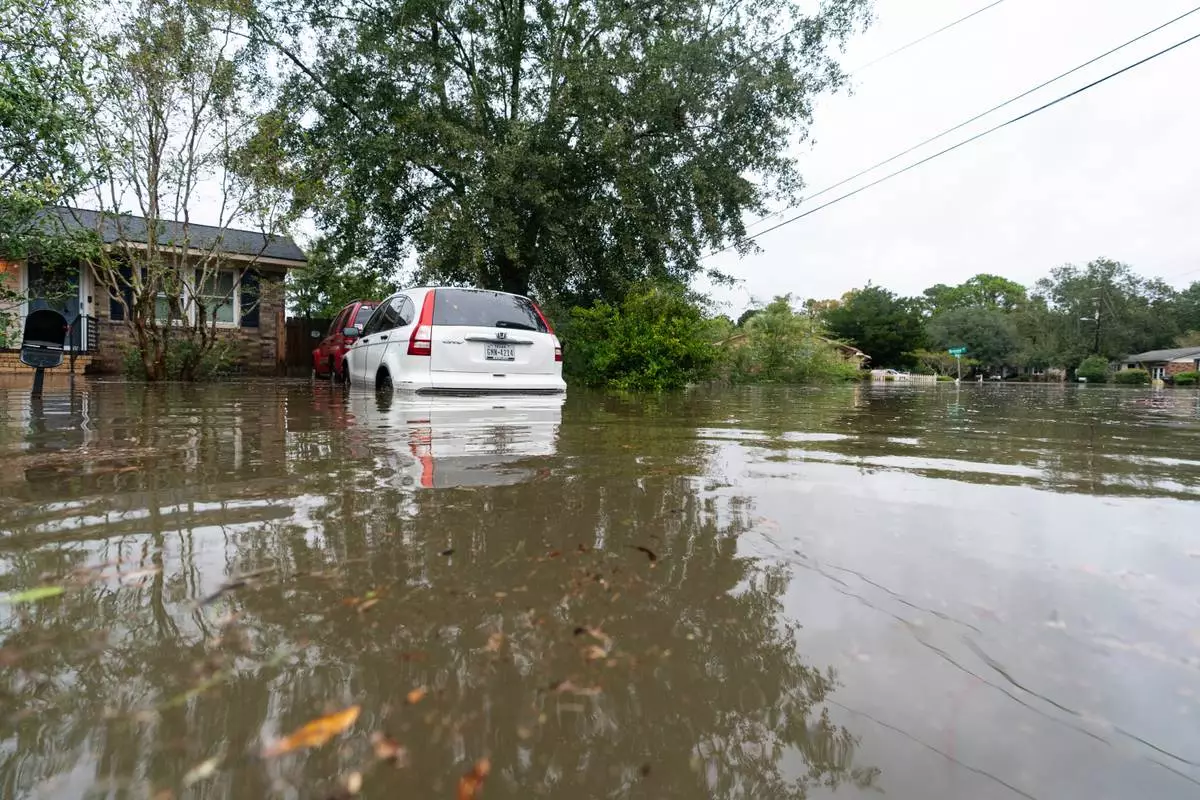
FILE - A car sits in floodwaters from Hurricane Ian, Sept. 30, 2022, in Charleston, S.C. (AP Photo/Alex Brandon, File)
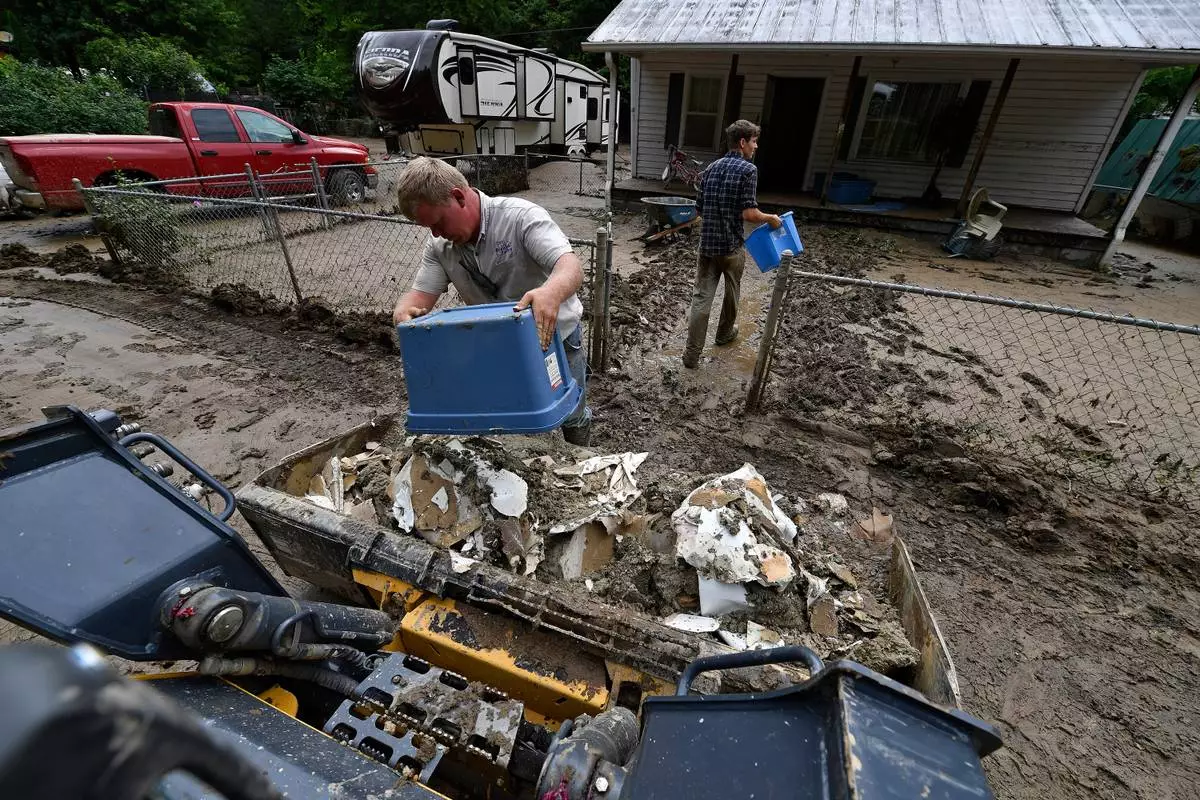
FILE - Volunteers from the local mennonite community clean a flood-damaged property from a house at Ogden Hollar in Hindman, Ky., July 30, 2022. (AP Photo/Timothy D. Easley, File)
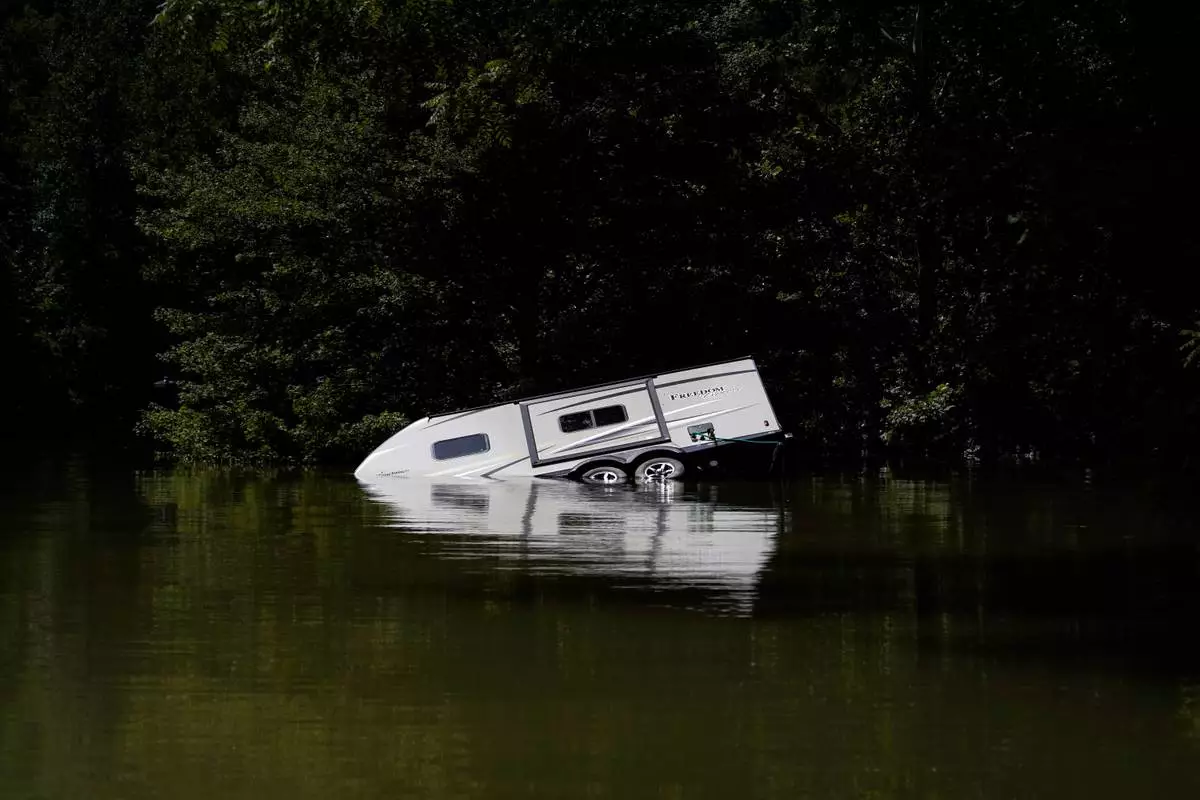
FILE - A camper is partly submerged under water Aug. 3, 2022, in Carr Creek Lake, near Hazard, Ky. (AP Photo/Brynn Anderson, File)
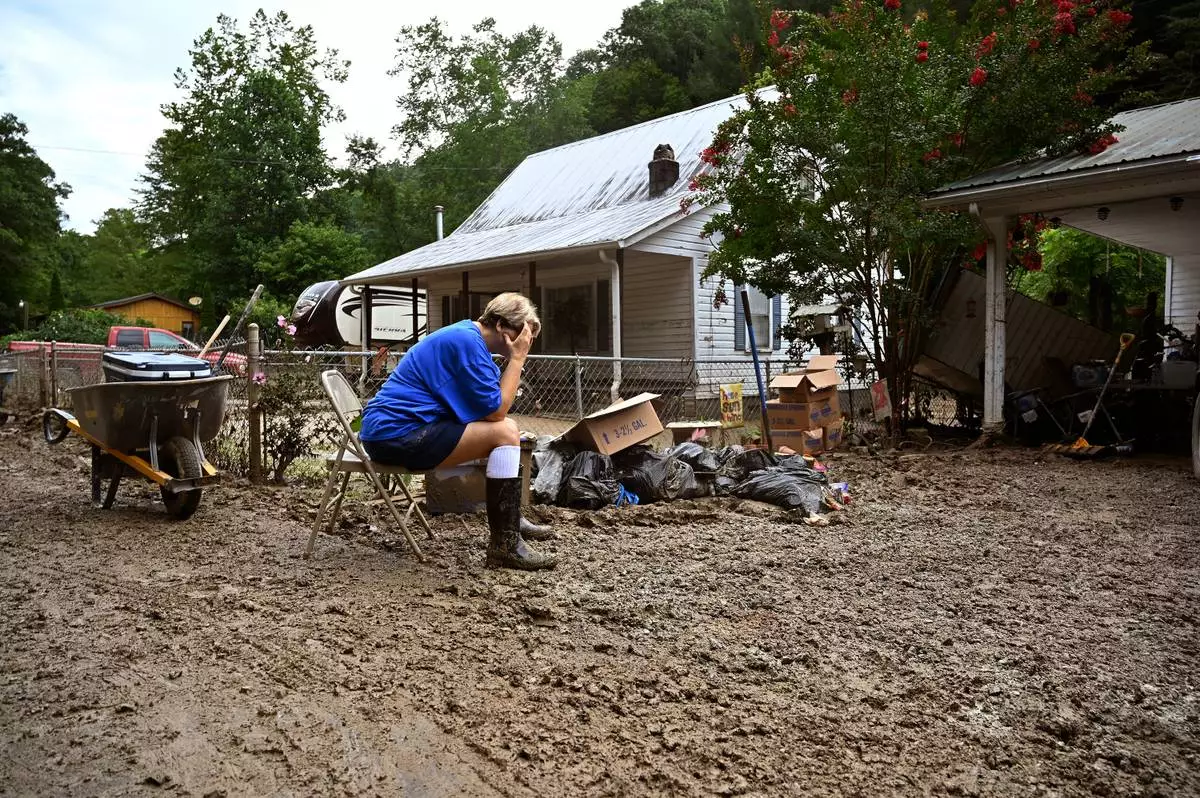
FILE - Teresa Reynolds sits exhausted as members of her community clean the debris from their flood-ravaged homes at Ogden Hollar in Hindman, Ky., July 30, 2022. (AP Photo/Timothy D. Easley, File)
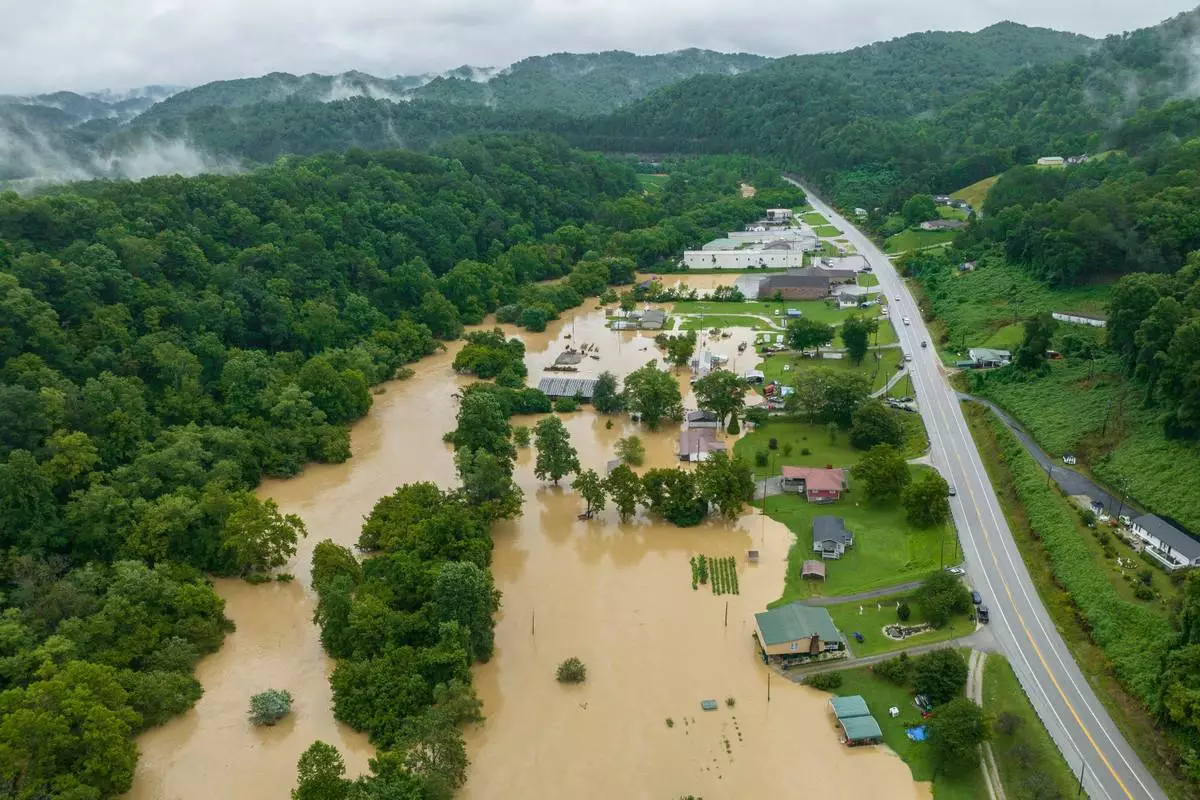
FILE - Homes and structures are flooded near Quicksand, Ky., July 28, 2022. (Ryan C. Hermens/Lexington Herald-Leader via AP, File)
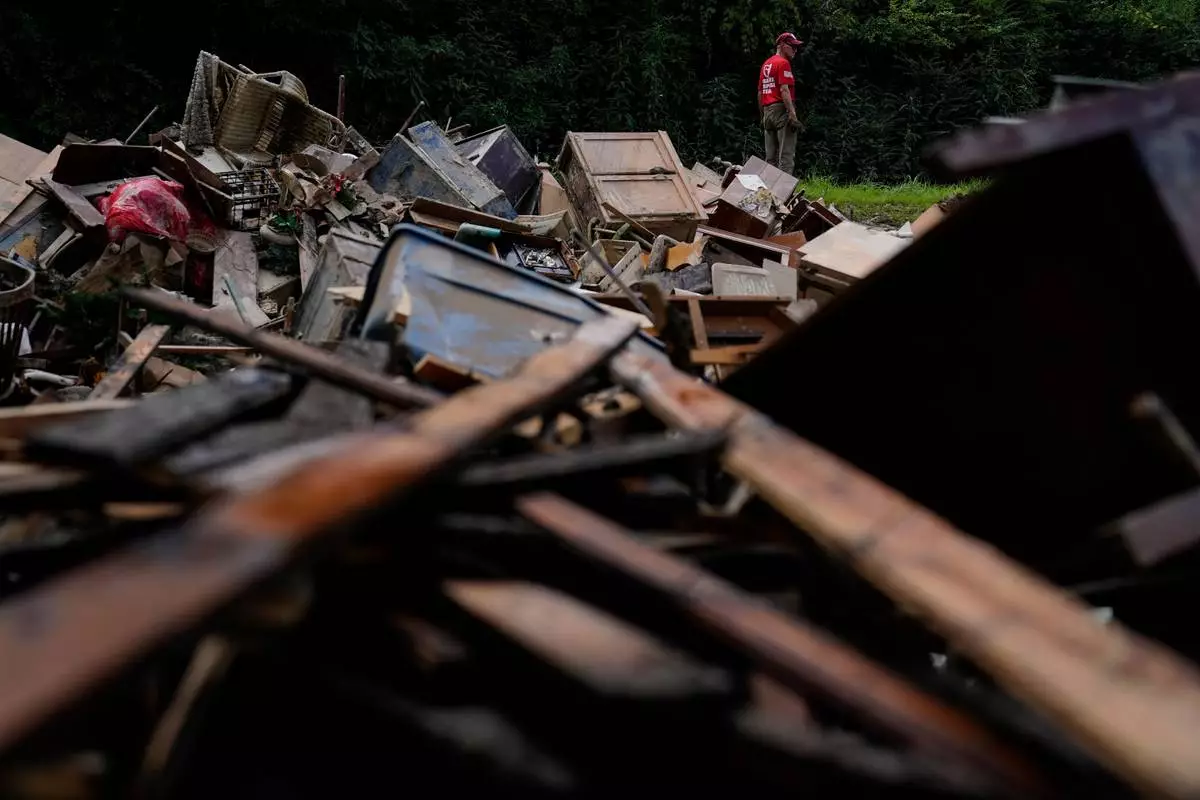
FILE - A man stands near a pile of debris as residents clean up in Fleming-Neon, Ky., Aug. 5, 2022, after massive flooding the previous week. (AP Photo/Brynn Anderson, File)