WASHINGTON (AP) — The Defense Department will no longer appoint civilians as tenured college faculty at the United States' military service academies, according to a memo signed Tuesday by Secretary Pete Hegseth.
The memo describes the decision to stop granting tenure to civilian faculty as part of an effort to refocus the military academies on warfighting.
“To ensure our educational institutions remain firmly focused on this warfighting mission, we must address the structural mechanisms that have allowed civilian academic norms to dilute our focus on lethality,” the memo said.
The tenure designation generally comes with a career-long academic appointment at a college. Advocates say the job security is a crucial component of academic freedom. Hegseth's directive apparently would not remove the designation from faculty members who are currently tenured.
The U.S. Military Academy at West Point, the U.S. Naval Academy, and the U.S. Air Force Academy all did not immediately respond to questions, and officials at the Pentagon did not offer further details on the plan when reached for comment.
The percentage of faculty who are civilians varies by military academy. It is highest at the United States Naval Academy, where roughly half of the 600 faculty members are civilians. The academies hire civilian faculty to offer expertise in topics and disciplines that military officers don't study as part of their careers, such as English and the humanities.
Hegseth’s decision follows broader conservative attacks on tenured faculty appointments in higher education. Those efforts to rein in tenure are often presented as bids to rein in academics with liberal views.
Civilian faculty members often have more teaching experience and credentials than their military counterparts at the service academies, said Eric Merriam, a legal studies and political science professor at the University of Central Florida and a former professor at the Air Force Academy.
The academies have long served a dual role — training the next generation of officers, while providing a traditional, prestigious, four-year college experience, Merriam said. The schools offer a broad, liberal arts education, in recognition that senior leadership must be critical thinkers who can understand different points of view.
Hegseth's actions signal a shift toward a narrower focus, Merriam said.
“It does seem to me as though it’s a retrenchment,” he said. “It's a retreat from what I think was positive progress in ensuring that these elite educational academies actually have elite education as part of the program.”
In Hegseth's memo Tuesday, tenure was described as a factor that contributed to “academic stagnation, faculty complacency, and institutional inability to adapt to emerging needs. Additionally, it contributes to curriculum that drifts from the mission of educating our warfighters to the research priorities of the tenured academics.”
Traditionally, tenured professors can be terminated only under extreme circumstances, such as professional misconduct or a financial emergency. Advocates say it's especially important to maintain tenure as controversy grows over scholarly discussions about history, race, gender and sexuality.
The decision Tuesday is part of a broader push from Hegseth to remake the military's education apparatus. Earlier this year, the Pentagon severed longstanding ties with prestigious universities that had been a pipeline for military leadership, forging new relationships with Christian schools and public universities.
The Pentagon has also attempted to reorient the K-12 schools it operates for military families. It introduced a course centered on Western civilization and Christianity, part of an effort to redirect the education system toward patriotic values and classical learning.
The Associated Press’ education coverage receives financial support from multiple private foundations. AP is solely responsible for all content. Find AP’s standards for working with philanthropies, a list of supporters and funded coverage areas at AP.org.

Defense Secretary Pete Hegseth speaks during the POW/MIA National Recognition Day Ceremony at the Pentagon, Friday, Sept. 18, 2026, in Washington. (AP Photo/Mark Schiefelbein)
PLYMOUTH, Mass. (AP) — Lindsay Clancy's lawyer argued Tuesday that there wasn’t enough evidence to prove she killed her three children, a striking turn after a lengthy trial that focused more on her mental state than on whether she took their lives.
“This entire case is based on speculation,” attorney Kevin Reddington said during the first hearing since Clancy's trial ended Sept. 4 with a deadlocked jury. They were split 11 to 1 in her favor.
During that trial, Reddington didn't dispute that Clancy killed the children at the family's home in 2023. Instead, the defense sought to persuade the jury that the 36-year-old former labor and delivery nurse was not criminally responsible because of mental disease, a rare condition called postpartum psychosis.
EDITOR’S NOTE: This story includes discussion of suicide. If you or someone you know needs help, the national suicide and crisis lifeline in the U.S. is available by calling or texting 988.
But at Tuesday's hearing, Reddington sought to persuade Judge William Sullivan — the same judge who presided over the first trial — to acquit Clancy.
There is, Reddington contended, not enough evidence “that this woman killed those children.” He pointed to matters ranging from her condition when she was found badly injured and bleeding in the yard outside her home, to her lack of memory of what happened when she woke up in a hospital. At the first trial, her now ex-husband and first responders testified that they arrived at the house and discovered she had tried to kill herself right after killing the children.
“Where is the admission? Where does she say that she did this?” Reddington said, going on to recap his arguments that she also was psychotic and delusional at the time of the children's deaths. He didn’t offer alternative theories or evidence about who might be responsible.
Prosecutor Shanan Buckingham called his argument “laughable.”
At the trial, jurors heard testimony that Clancy said she heard voices instructing her to kill her children. Her DNA was found on exercise bands used to strangle them. Before the trial, Reddington himself filed a motion in which he said Clancy was willing to stipulate, in writing, to her involvement in the children’s deaths.
“For the first time, the defendant is arguing that there is no evidence she did this,” Buckingham told the judge. “I’d suggest to you the entire record is voluminous as to information supporting the fact that she did this.”
The judge didn’t immediately rule and no trial date was set.
The prosecution maintains that Clancy knew her actions were wrong when she used exercise bands to strangle 5-year-old Cora, 3-year-old Dawson and 8-month-old Callan Clancy. They said she contrived to get her husband out of the house that evening by sending him to pick up medicine for one of their children and dinner for the family.
Prosecutors have yet to decide whether to retry Clancy, Plymouth County District Attorney Timothy Cruz said after the hearing. They could choose to retry her on first-degree murder charges or pursue lesser charges, including second-degree murder or manslaughter, or drop the case entirely.
“We are going to do what we can for the children,” Cruz told reporters outside court. “That is what this case is about.”
Clancy's attorneys have asked the judge to dismiss the criminal case. Among other things, they have argued that the judge should have ousted the one juror who favored a murder conviction after the jury foreperson complained he was refusing to listen to the law on reasonable doubt.
The juror, Michael Desronvil, has said through his lawyer that he had no doubts about his stance. Desronvil told Fox News’ “Hannity” in a brief video statement Monday that “the whole focus has been on me, but we want to reel everything back and put the focus on the three angels,” meaning the children.
The livestreamed trial generated intense public interest and drew attention to maternal mental health after childbirth. About a dozen Clancy supporters, most dressed in pink, stood outside court Tuesday waiting for her.
Clancy remains charged with murder and is expected to stay at a psychiatric hospital until her case is resolved.
She could have been sentenced to life in prison if convicted of murder. If acquitted, the judge could have ordered her confined to a mental health facility.
Peltz reported from New York.
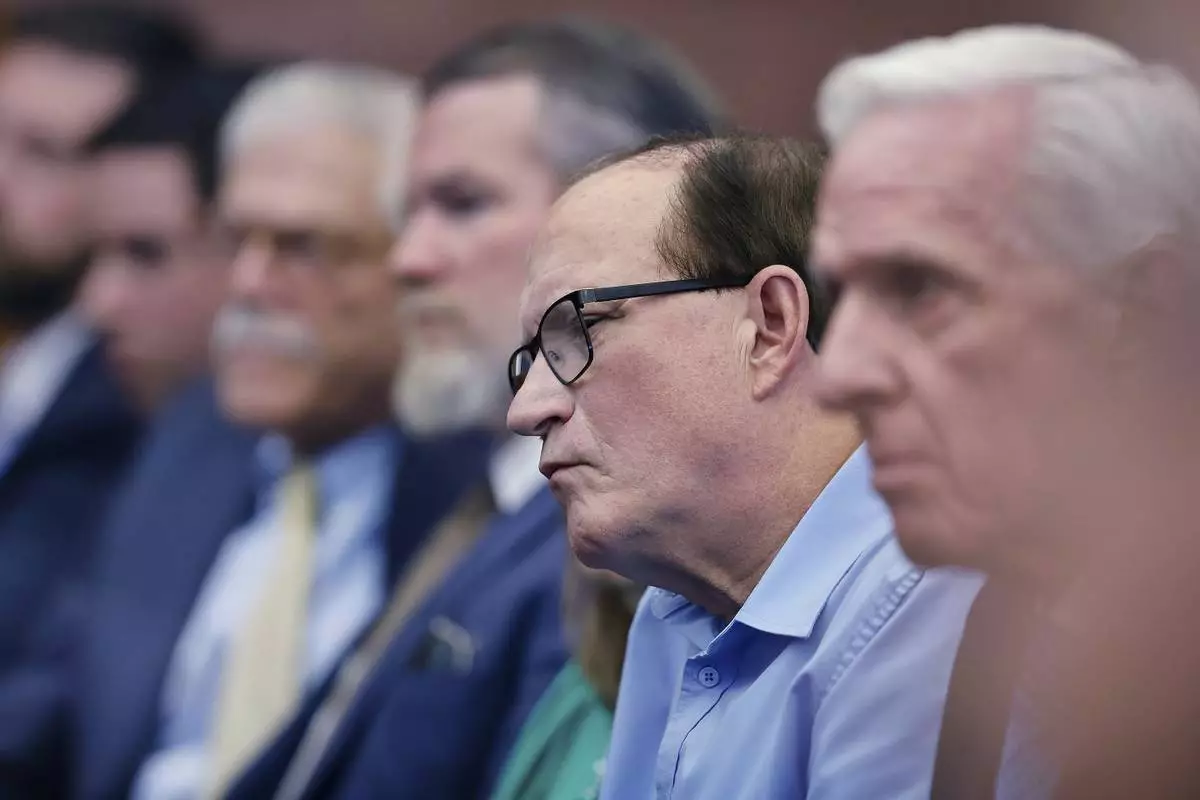
Lindsay Clancy's father Michael Musgrove listens to the motions hearing in his daughter's triple murder trial, Tuesday, Sept. 29, 2026, at Plymouth Superior Court in Plymouth, Mass. (Greg Derr/The Patriot Ledger via AP, Pool)
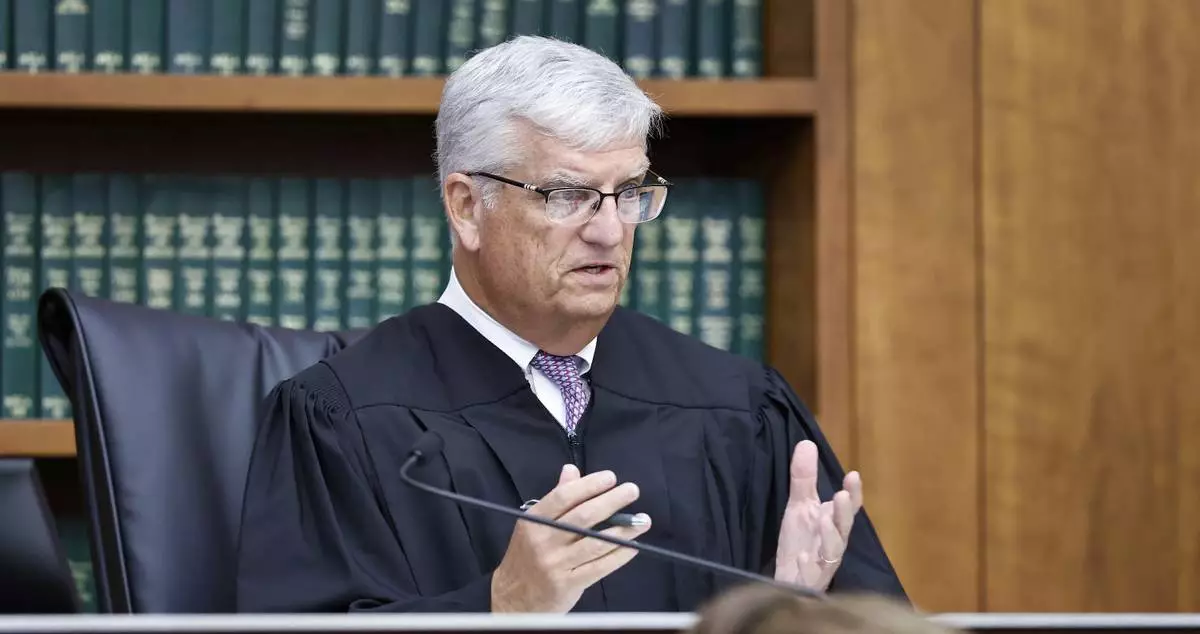
Judge William Sullivan listens to an argument by Kevin Reddington on a motion to dismiss the case as the Lindsay Clancy murder trial continues, Tuesday, Sept. 29, 2026, during a hearing set to determine the next steps after a mistrial was declared on Sept. 4th, in Plymouth, Mass. (Greg Derr/The Patriot Ledger via AP, Pool)
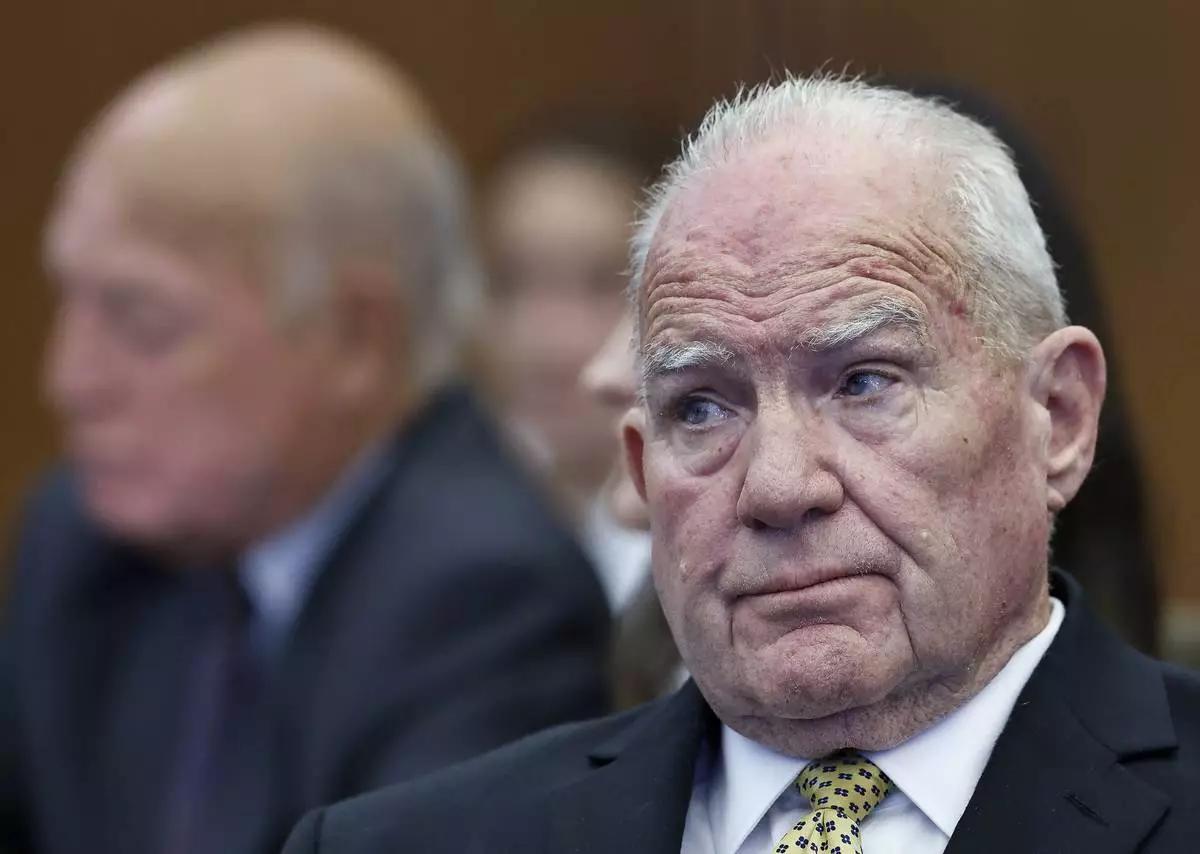
Attorney Kevin Reddington listens during a hearing set to determine the next steps after a mistrial was declared on Sept. 4th, in Plymouth, Mass. on Tuesday, Sept. 29, 2026. (Greg Derr/The Patriot Ledger via AP, Pool)
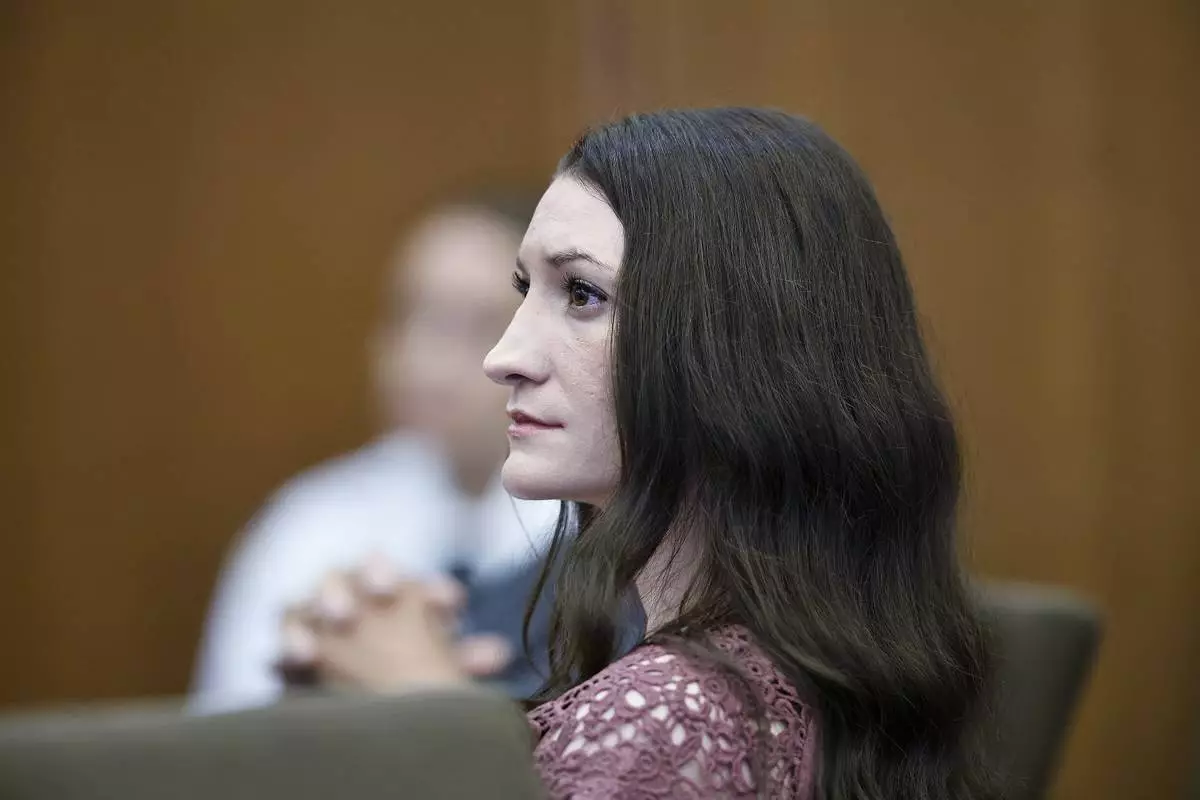
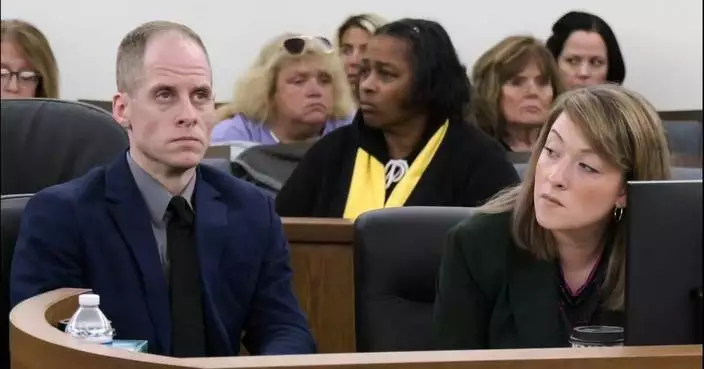
Lindsay Clancy sits in Plymouth Superior Court, Tuesday, Sept. 29, 2026, during a hearing set to determine the next steps after a mistrial was declared on Sept. 4th, in Plymouth, Mass. (Greg Derr/The Patriot Ledger via AP, Pool)
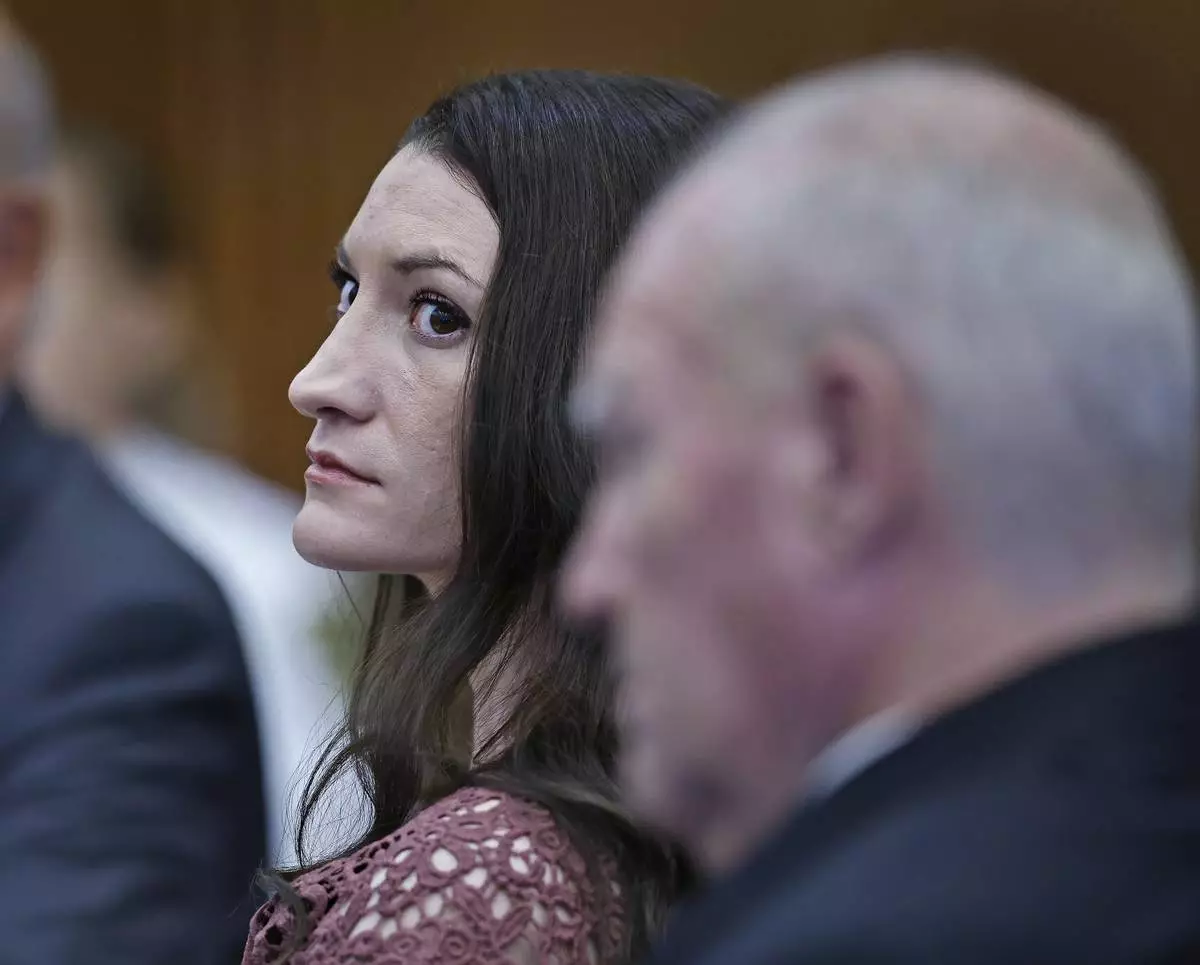
Defendant Lindsay Clancy listens to a motion in court while seated next to her attorney Kevin Reddington, Tuesday, Sept. 29, 2026, during a hearing set to determine the next steps after a mistrial was declared on Sept. 4th, in Plymouth, Mass. (Greg Derr/The Patriot Ledger via AP, Pool)