GUWAHATI, India (AP) — Shubman Gill called correctly at the coin toss and India opted to bowl against the West Indies in their second one-day cricket international on Wednesday.
India won the first ODI by eight wickets on Sunday in the three-match series.
The host made one change; pace bowler Auqib Nabi makes his ODI debut. Allrounder Nitish Reddy was left out as India improved its pace combination.
West Indies changed four: Justin Greaves, who scored a maiden hundred in the first game, was out due to a calf injury. Keacy Carty will open the innings instead. Also included were allrounders Sherfane Rutherford and Keemo Paul along with left-arm wrist spinner Vitel Lawes.
Batter Jewel Andrew, pacer Matthew Forde and left-arm spinner Gudakesh Motie were left out.
The pitch at Barsapara Cricket Stadium has a bit more grass compared to the first game. Usually it favours spinners but batters will still find it easy through the day.
Lineups:
India: Rohit Sharma, Shubman Gill (captain), Virat Kohli, Ruturaj Gaikwad, KL Rahul, Naman Dhir, Ravindra Jadeja, Auqib Nabi, Gurnoor Brar, Kuldeep Yadav, Prasidh Krishna
West Indies: John Campbell, Keacy Carty, Shai Hope (captain), Amir Jangoo, Sherfane Rutherford, Roston Chase, Keemo Paul, Alzarri Joseph, Shamar Joseph, Jayden Seales, Vitel Lawes
See AP’s full cricket coverage here
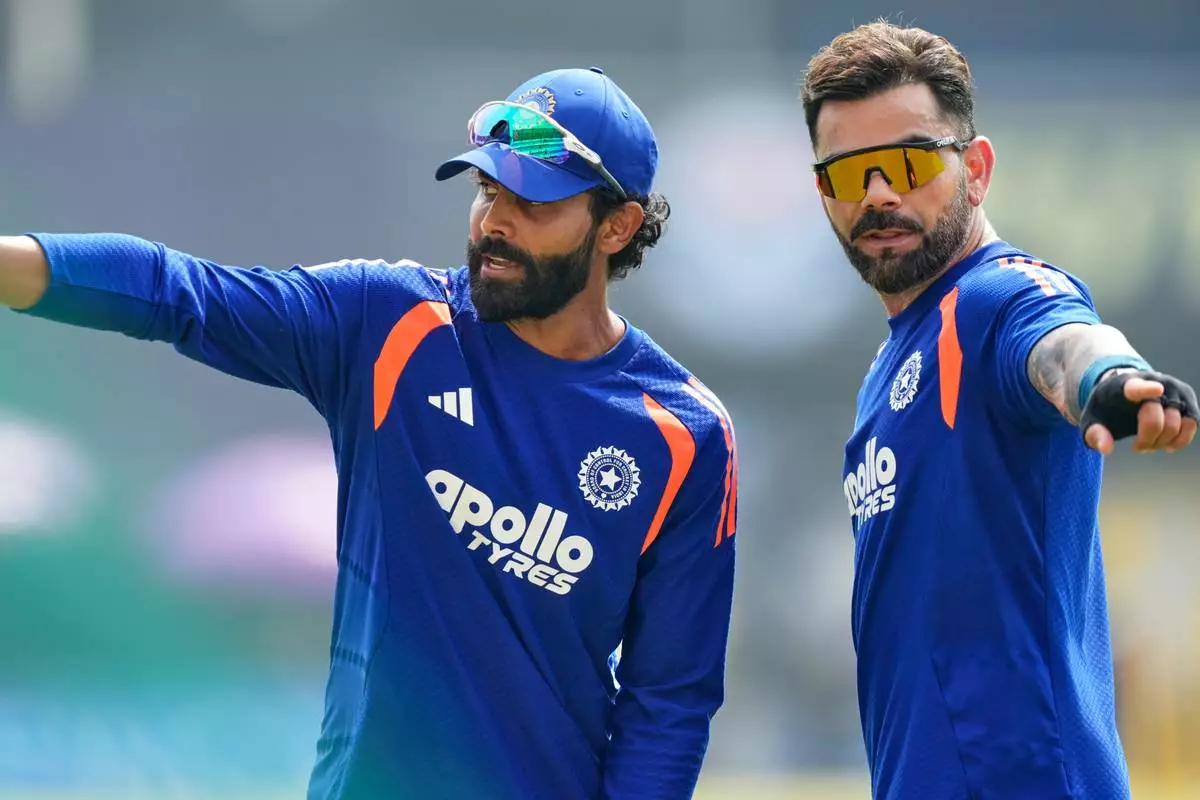
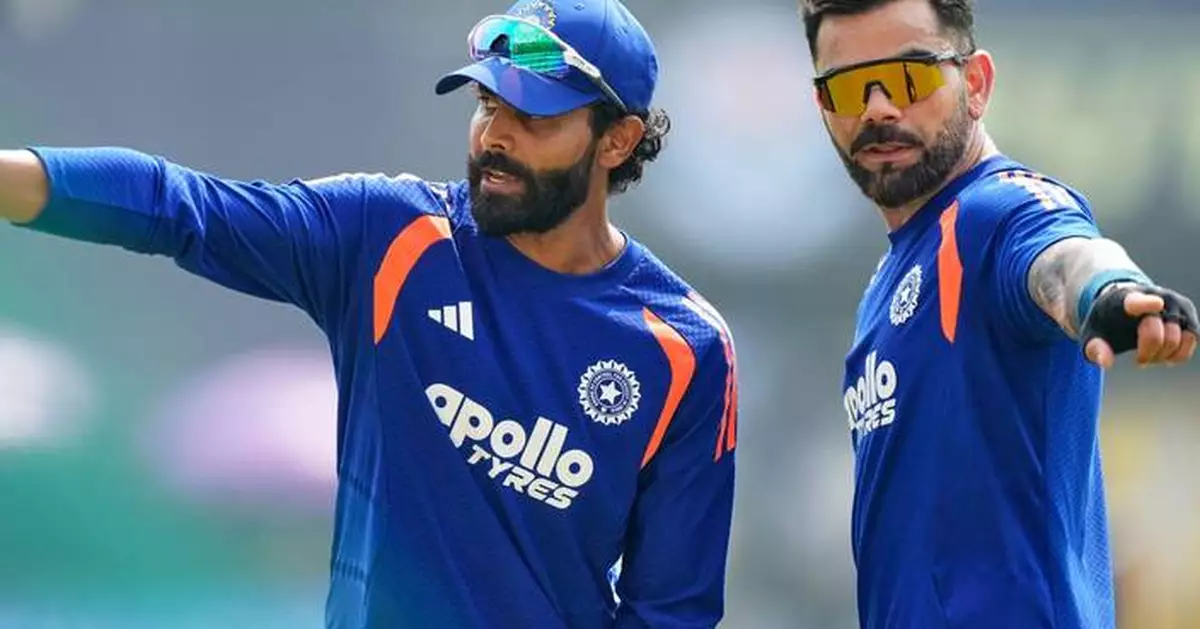
India's Virat Kohli, right and Ravindra Jadeja talk as they warm up before the start of the second one-day international cricket match between India and West Indies in Guwahati, India, Wednesday, Sept. 30, 2026. (AP Photo/Anupam Nath)
BAGHDAD (AP) — The U.S. military announced on Wednesday that it has completed the withdrawal of its troops from Iraq, ending a 12-year mission to fight the Islamic State group.
The last U.S. troops left the last air base where they had been present in northern Iraq under an agreement between Baghdad and Washington.
The move, which came in the midst of an ongoing war between the United States and Iran that has also sometimes spilled over into Iraq, was touted by Baghdad as a sign of the country's increasing strength and sovereignty.
The withdrawal was also celebrated by Iran-backed groups but raised concerns among some other other Iraqis, particularly in the Kurdish region.
Pentagon spokesperson Sean Parnell said in a statement that U.S. troops and equipment had completed an “orderly departure” from the air base in Irbil, in northern Iraq's semi-autonomous Kurdish region.
“This milestone reflects the success of a 12-year campaign that defeated ISIS as an organized military threat in Iraq and across the region,” he said. “It also marks a transition from a wartime coalition mission to an Iraqi-led security effort supported by a more normal bilateral security relationship.”
Iraqi Prime Minister Ali al-Zaidi presided over the handover ceremony and described the U.S. withdrawal as the beginning of a “a new phase, one defined by Iraq’s sovereignty, the strength of its institutions, the readiness of its forces, the unity of its decision-making, and balanced partnerships with its friends.”
U.S. troops invaded Iraq in 2003 to topple Saddam Hussein. They departed in 2011, but three years later, Iraqi authorities invited a smaller U.S.-led mission to fight the Islamic State group, which had rampaged across Iraq, seizing large swaths of territory.
With the extremist group reduced to scattered sleeper cells, Washington and Baghdad agreed in 2024 to wind the mission down.
U.S. troops pulled out of bases in most areas of Iraq last year but maintained a small presence of hundreds of troops in the semiautonomous northern Kurdish region. Bases there have regularly come under attack since the U.S. and Israel launched their war against Iran on Feb. 28. Iran-backed Iraqi militias also have coordinated with Yemen’s Houthi rebels to attack Saudi Arabia.
The Iraqi government initially linked the Sept. 30 deadline for U.S. withdrawal to the disarmament of non-state armed groups by that date.
While a handful of less-influential militias have agreed to turn over their weapons, powerful groups close to Iran rejected the prospect or set conditions for disarming that the government would be unlikely to meet.
Prime Minister Ali al-Zaidi has since walked back the deadline. He told The New York Times earlier this month that the deadline for militia disarmament has been pushed to June 2027.
The effects of the U.S. withdrawal may not be immediately visible, particularly since the U.S. military presence had already been scaled down. But officials in Iraq's Kurdish region have expressed anxiety about the departure and particularly about the removal of U.S. air defense systems.
The Kurdish regional government's Peshmerga Ministry said the Kurdish region had faced more than 1,000 drone and ballistic-missile attacks during the recent U.S.-Iran conflict.
“The departure of the United States from the Kurdistan Region under these complex regional circumstances, without the provision of a defense system, is a matter of concern,” the statement said.
Iran-allied groups in Iraq, meanwhile, have celebrated the U.S. withdrawal.
“The expulsion of the occupation forces, defeated, from the land of Iraq is the beginning of full sovereignty,” Abu Mujahid al-Assaf, a security official with the powerful Kataib Hezbollah militia, said in a statement.
He added a warning to al-Zaidi and his government not to carry out American plans, threatening that “any government that does not work for the benefit of the people will be overthrown by all means.”
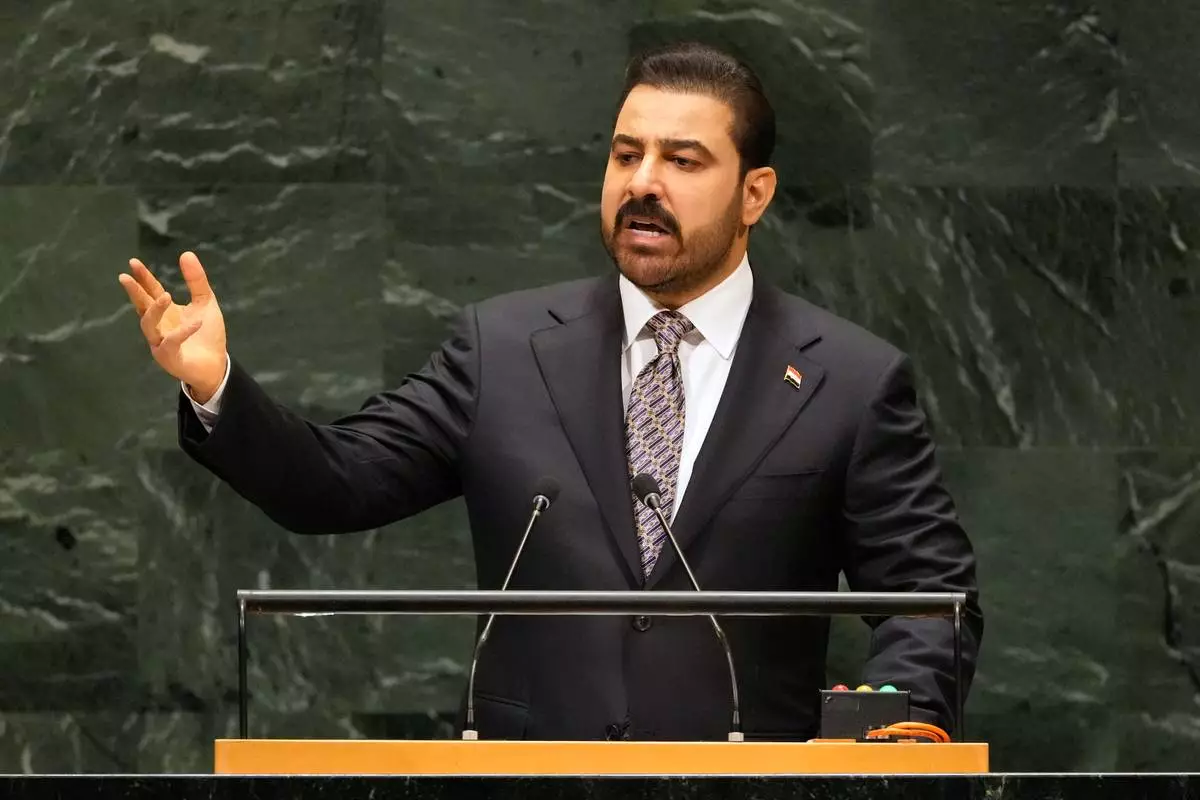
Iraq's Prime Minister Ali al-Zaidi speaks during the 81st session of the United Nations General Assembly at United Nations headquarters, Friday, Sept. 25, 2026. (AP Photo/Seth Wenig)
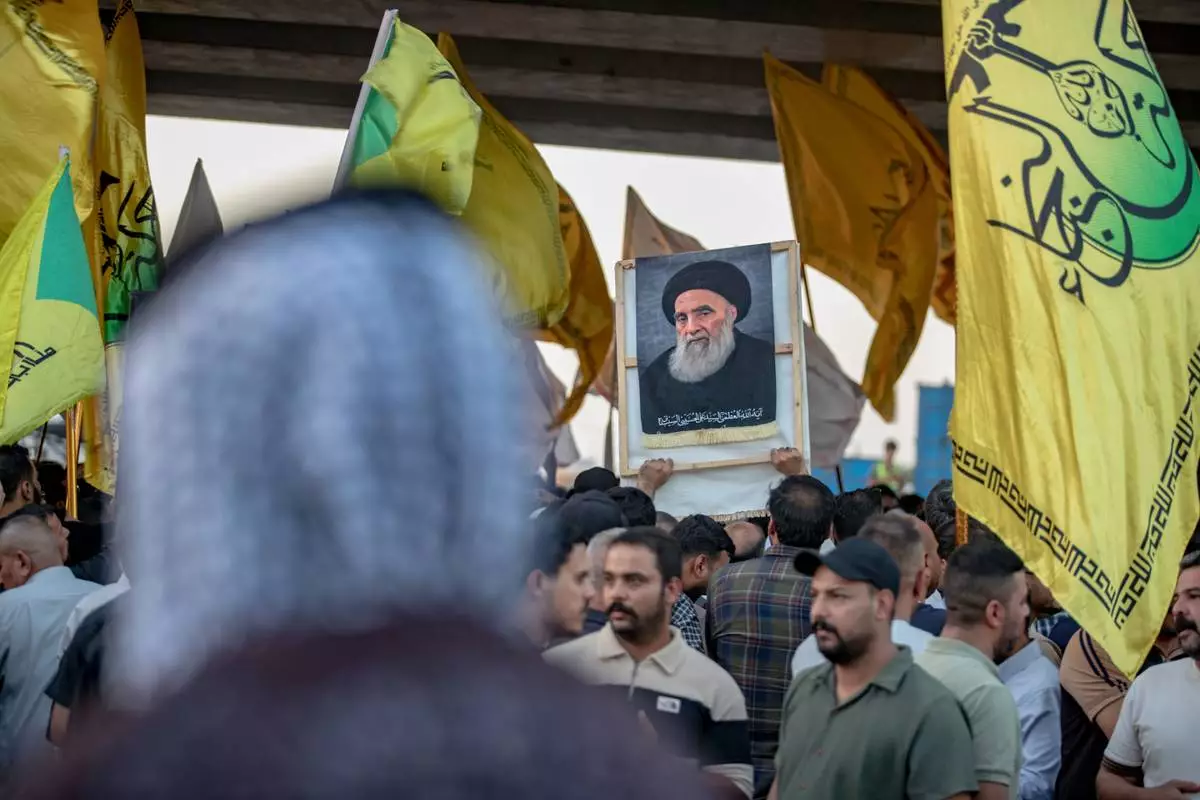
A demonstrator holds a portrait of Iraq's top Shiite cleric, Grand Ayatollah Ali al-Sistani, during a protest against the suspension of flights between Iraq and Iran outside Najaf International Airport in Najaf, Iraq, Monday, Sept. 28, 2026. (AP Photo/Anmar Khalil)