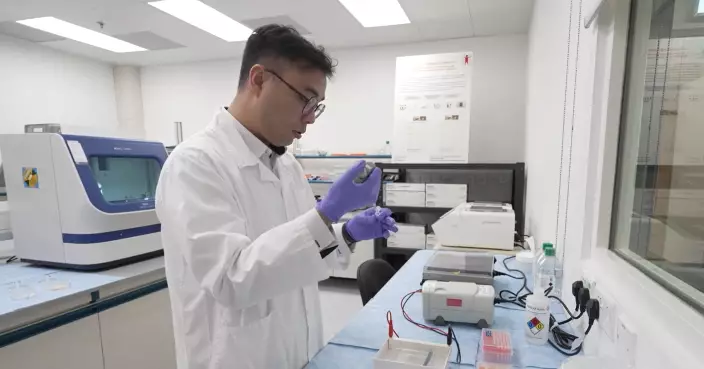
CHP investigates case of human infection of rat Hepatitis E virus epidemiologically linked to previously reported case
The Centre for Health Protection (CHP) of the Department of Health today (September 30) is investigating a case of human infection of rat Hepatitis E virus (HEV). The patient is a family member of another case announced last week and the two cases are epidemiologically linked. The CHP once again urges the public to maintain good personal, food and environmental hygiene, and to implement effective rodent prevention and control measures to prevent rat HEV infection.
Case details
----------------
Last week, the CHP recorded a rat HEV case involving a 91-year-old man with underlying illnesses. Since then, the CHP and the Food and Environmental Hygiene Department (FEHD) have been investigating the source and route of the infection. One of the male patient's family members, an 80-year-old female, lives in the same Residential Care Home for the Elderly (RCHE) in Kowloon City District. Since the two also share a similar exposure history, the CHP prudently arranged for her to undergo a blood test. Upon laboratory testing by the Public Health Laboratory Services Branch under the CHP, herblood sample tested positive for rat HEV.
The female patient has not exhibited any symptoms of rat HEV and her condition remains stable all along. The CHP will arrange her to undergo further examination and assessment at a hospital.
According to the information provided by the patient, the RCHE staff and the patient's family, the patient had no travel history during the incubation period and no direct contact with rodents, and no rats were observed in the RCHE. Apart from the meals provided by the RCHE, the patient dines at a restaurant in Homantin Plaza with her family at least once or twice a week. Family members of both patients, as well as other residents and staff of the RCHE, are currently asymptomatic and have been put under medical surveillance. No other confirmed cases have been identified so far. Based on the current epidemiological investigation, the CHP believes that it is more likely that patients were infected at the restaurant in question. The CHP does not rule out the possibility that the two patients came into indirect contact with places or food contaminated by rats or their excreta during the incubation period.
Followed an inspection last week, the FEHD conducted another inspection today at the restaurant the patients frequently visited. During the inspection, the FEHD found that the restaurant was still carrying out cleaning and disinfection, and provided staff of the restaurant with environmental hygiene education and advice on pest control. In accordance with the FEHD's instruction, the restaurant suspended operations for thorough cleaning and disinfection, and rodent control work. The FEHD will continue to strengthen cleaning, disinfection and rodent control efforts in the public areas near the locations which the patients visited.
The CHP and the FEHD will also continue to investigate the source and route of infection of this case.
This is the fourth case of human infection of rat HEV recorded so far this year.
Symptoms of rat hepatitis E
-----------------------------------
Human cases of rat hepatitis E virus infection affect mostly immunocompromised persons. Most cases are asymptomatic, while symptomatic patients reported mild symptoms, such as fatigue, abdominal pain and loss in appetite. It is less likely for patients with rat HEV infection to develop jaundice compared to HEV infected patients.
Prevention
--------------
The possible routes of transmission of rat HEV to humans include ingestion of food or water contaminated by rodents or their excreta, exposure to environments or objects contaminated by rodents or their excreta and direct contact with rodents or their excreta. The HEV that usually causes human infection is mainly transmitted through the faecal-oral route.
To prevent infection, the members of the public should maintain good personal, food and environmental hygiene. For example, they should wash their hands thoroughly before eating, store food properly or in the refrigerator, avoid leaving food at room temperature for a long time, and use 1:99 diluted household bleach for general household cleaning and disinfection as household detergents may not kill HEV.
The Five Keys to Food Safety should be adopted when handling food, i.e. Choose (choose safe raw materials), Clean (keep hands and utensils clean), Separate (separate raw and cooked food), Cook (cook thoroughly) and Safe Temperature (keep food at a safe temperature), to prevent food-borne diseases.
In general, rodents (such as rats) can transmit multiple diseases to humans, both directly and indirectly. The public is advised to take the following measures:
- Eliminate sources of food and nesting places for rodents in the living environments. Store food in covered containers and handle pet food properly to prevent it frombecoming food for rodents;
- Store all refuse and food remnants in dustbins with well-fitted covers. Dustbins must be emptied at least once a day;
- Keep premises, especially refuse rooms and stairways, clean. Avoid accumulation of articles;
- Inspect all flower beds and pavements regularly for signs of rodent infestation; and
- Avoid the high-risk activities below to reduce rodent contact:
- Avoid contact with rodents and areas contaminated by rodent excreta;
- Avoid handling rodents with bare hands;
- Wash hands with liquid soap and water immediately after handling animals, and disinfect contaminated areas; and
- If a wound appears, clean the broken skin immediately and cover it properly with waterproof adhesive dressings.
Rodent control requires co-operation from all sectors of society. The CHP urged the public to strengthen rodent prevention and control measures and co-operate with government's efforts to reduce the risk of rat HEV transmission.
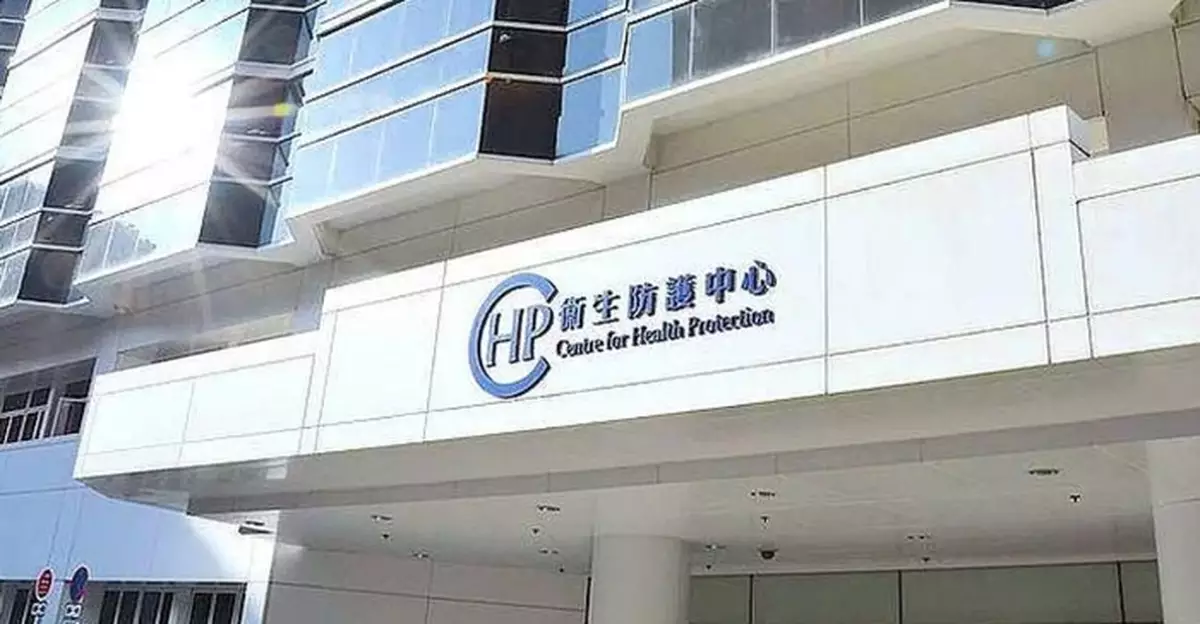
The Centre for Health Protection, Photo source: reference image
Speech by PSITI at Global Youth Powerhouse Summit 2026
Following is the speech by the Permanent Secretary for Innovation, Technology and Industry, Mr Kevin Choi, at the Global Youth Powerhouse Summit 2026 today (October 5):
Distinguished guests, ladies and gentlemen,
Good morning. It is a pleasure to join you at the Global Youth Powerhouse Summit, alongside over 200 young professionals, educators, and industry leaders from more than 30 countries and regions.
Every major technological shift brings uncertainty. Our theme today, "From Entry-Level Shock to AI Power Users: Building the Next Talent Ladder", turns that uncertainty into a challenge we can rise to together.
Let me be candid. The "entry-level shock" in today's theme is real. Many of the routine tasks that once made up a graduate's first job, such as basic coding and first-line customer service, are precisely the tasks AI now performs well. Our answer is not to shield young people from AI, but to make sure the first job is still there, and that it is a better one.
The good news is that Hong Kong starts from a position of strength. A recent study by a global technology company found that among Hong Kong respondents, nearly 70 per cent are already proficient AI users, able to compare and choose between different tools, and about 20 per cent are "super users" who harness AI agents to automate everyday tasks. In other words, many people are already climbing the ladder, our task is to make sure that this ladder reaches everyone.
In Hong Kong, we view AI not as a threat, but as a catalyst. Anchored by Hong Kong's First Five-Year Plan and our latest Policy Address, both announced just last month, we are building a comprehensive "talent ladder" to take emerging professionals from foundational literacy to industry leadership. Today, I want to walk you through how we are setting up that ladder, step by step.
Before anyone can become an AI power user, they must first master the basics. The first step of our talent ladder is mass AI literacy, removing cost and access barriers so that no one is left behind.
We are investing at a population scale. Through our "AI for All" Inclusive Programme, we are delivering over 200 tailored training courses and activities by early 2028, promoting responsible AI use among students, researchers, and working professionals. To build public familiarity with emerging technologies such as embodied AI, we are introducing the "Robots in the Community" Pilot Programme, bringing technology out of labs and into daily life. For the workforce, we offer free online training courses for all with a focus on the workplace application of AI, aimed at upskilling 40 000 employees. For small and medium enterprises, enhanced programmes like the Digital Transformation Support Pilot Programme and Hong Kong Productivity Council's advisory services provide direct tools to integrate AI into everyday operations.
Once literacy is established, the second step converts active learners into practical innovators. Hong Kong holds a unique position to drive this transformation. We are the only city in the world home to five universities ranked in the global top 100. Hong Kong ranks fourth in the IMD (International Institute for Management Development) World Talent Ranking and third in education competitiveness.
To prepare our youth for an AI-driven economy, the universities funded by the University Grants Committee are introducing 27 new STEM (science, technology, engineering and mathematics) undergraduate programmes focused on AI, creative technologies, and data science. Hong Kong Science and Technology Parks Corporation (HKSTPC) has also expanded the Talent Foundry programme to offer around 500 training opportunities on AI+ and emerging technologies for professionals and students each year.
Just as importantly, we are paving the way for that crucial first job. As announced in the 2026 Policy Address, the Government and the business sector will launch the two-year 30 000 Youth Employment and Internship Programme. Amongst others, we will expand the STEM Internship Scheme to provide around 10 000 internship quotas within two years, for young people to explore new I&T (innovation and technology) disciplines.
The third step turns academic excellence into real-world impact by aligning spatial strategy, research funding, and industry application. In fact, we are fully committed to nurturing this synergistic ecosystem by rolling out various initiatives to empower local university teams to transform innovative ideas into viable start-ups, examples of which include the Technology Start-up Support Scheme for Universities and the $10 billion Research, Academic and Industry Sectors One-plus Scheme.
Furthermore, guided by the Committee on AI+ and Industry Development Strategy, we are driving AI integration across all sectors. To spearhead this transformation, the new Hong Kong Artificial Intelligence Research and Development Institute will come into operation later this year, accelerating the commercialisation of research breakthroughs. At the same time, we support the HKSTPC in exploring the establishment of the Hong Kong Innovation and Technology Application Scenario Promotion Centre. We trust that these programmes would give researchers the test beds they need, in both the public and private sectors, to prove their concepts.
This brings us to the final step, providing the infrastructure, career opportunities, and policy pathways that empower AI users to thrive over the long term.
AI requires massive computing power. The Sandy Ridge Data Facility Cluster will underpin Hong Kong's AI development with critical data infrastructure. The cluster is expected to commence phased operation in mid-2027, with its computing power to reach 180 000 peta-floating point operations per second (PFLOPS) by 2032, which is 36 times Hong Kong's current level, ensuring our technology developers have access to high-performance infrastructure.
Our innovation blueprint creates a connected innovation corridor stretching from Cyberport in the south, through the Hong Kong Science Park in the centre, to the new Loop Hong Kong Park in the north, where Loop Academy One, the flagship of the Northern Metropolis University Town, will merge academia, research, and industry under one roof. This gives our young professionals a unique launchpad to build, test, and scale solutions.
Finally, a ladder needs solid ground, and for Hong Kong that foundation is a deliberate strategy of balancing robust innovation with responsible governance. Under our AI risk-governance strategy, we are addressing seven areas from ethical governance and AI agent safety to the broader impact of widespread AI use under the support of a new Commissioner for AI to be created within the Digital Policy Office.
Young professionals, Hong Kong may be small in landmass, but our technological ambitions are vast. Hong Kong has already given rise to about 20 unicorns from fintech to AI, alongside more than 5 200 start-ups. Here, we provide the platform, the data, and the market for you to build a career.
So may I leave you with one request for this year. Adopt one AI tool in your work, step onto the ladder, become an AI power user, and build the future right here in Hong Kong.
The policy framework is set. In the session that follows, I am sure Alibaba, Huawei and Tech for Good will show how organisations actually put AI to good use. I wish you all a rewarding and enjoyable Summit. Thank you.

Source: AI-found images
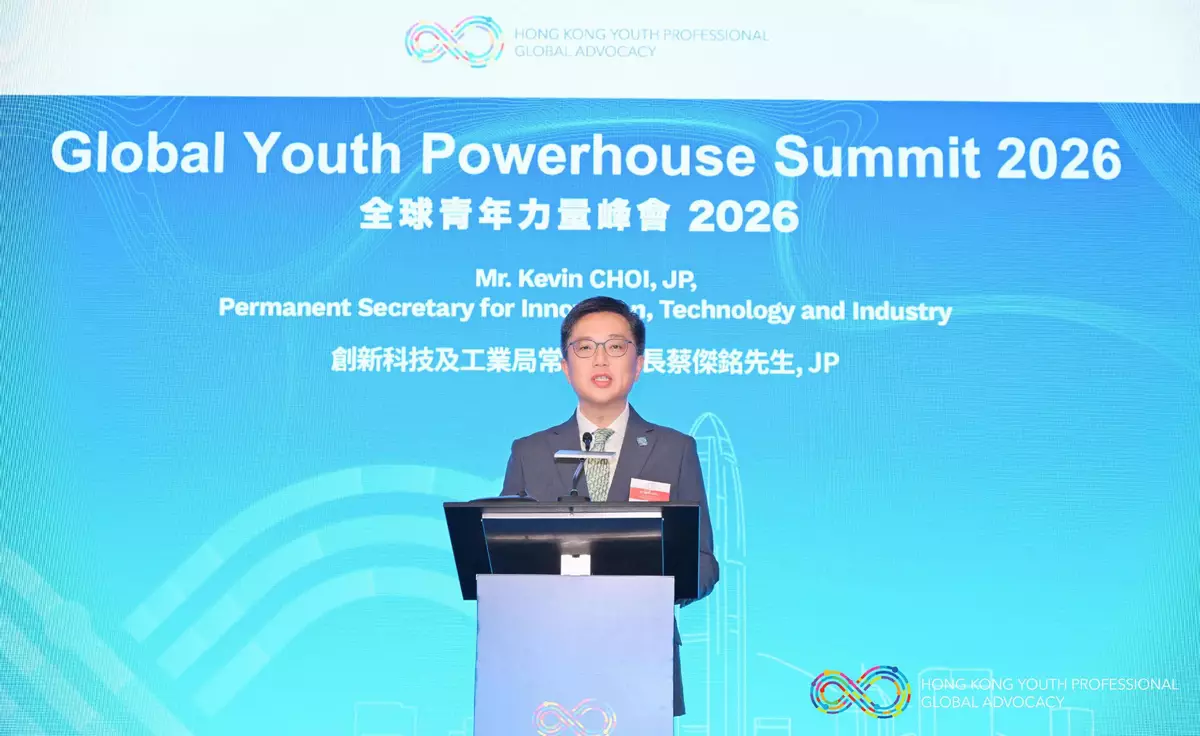
Speech by PSITI at Global Youth Powerhouse Summit 2026 Source: HKSAR Government Press Releases
Source: AI-found images