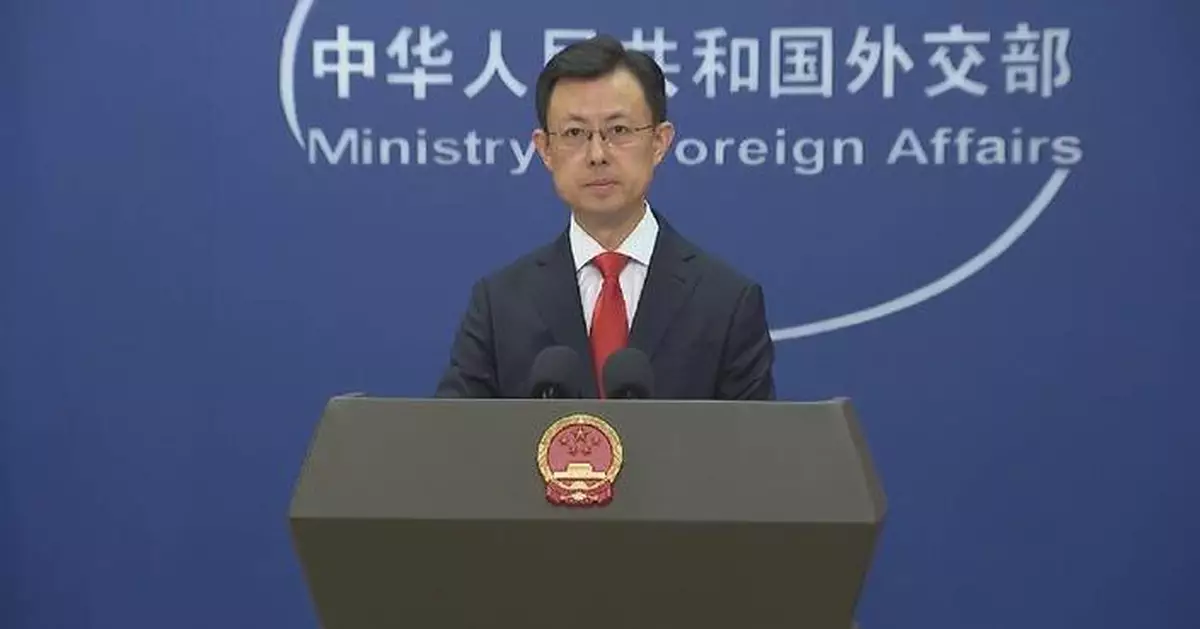
China and Russia will deepen comprehensive strategic coordination and jointly open up an even broader prospect for bilateral ties, Foreign Ministry spokesman Guo Jiakun said on Wednesday when expressing China's expectations for Sino-Russia relations in the future.
Oct 2 marks the 77th anniversary of the establishment of diplomatic relations between China and Russia.
"After 77 years of going through winds and rains together, China and Russia are all the more committed to lasting good-neighborliness and friendship, comprehensive strategic coordination, and mutual benefit and win-win cooperation in their bilateral ties, setting a stellar example of a new type of international relations," Guo said at a regular press briefing in Beijing.
"President Xi Jinping and President Vladimir Putin met twice this year in Beijing in May and in Bishkek in August, leading China-Russia relations into a new stage with higher-quality and faster development. We are confident that, under the guidance of the two leaders, China and Russia will remain true to the founding vision of the diplomatic ties and deepen our comprehensive strategic coordination. We will make advancing the development and revitalization of our respective countries an important mission, and shoulder our responsibilities as major countries by reforming and improving global governance, so as to open up an even broader prospect for China-Russia relations," he continued.
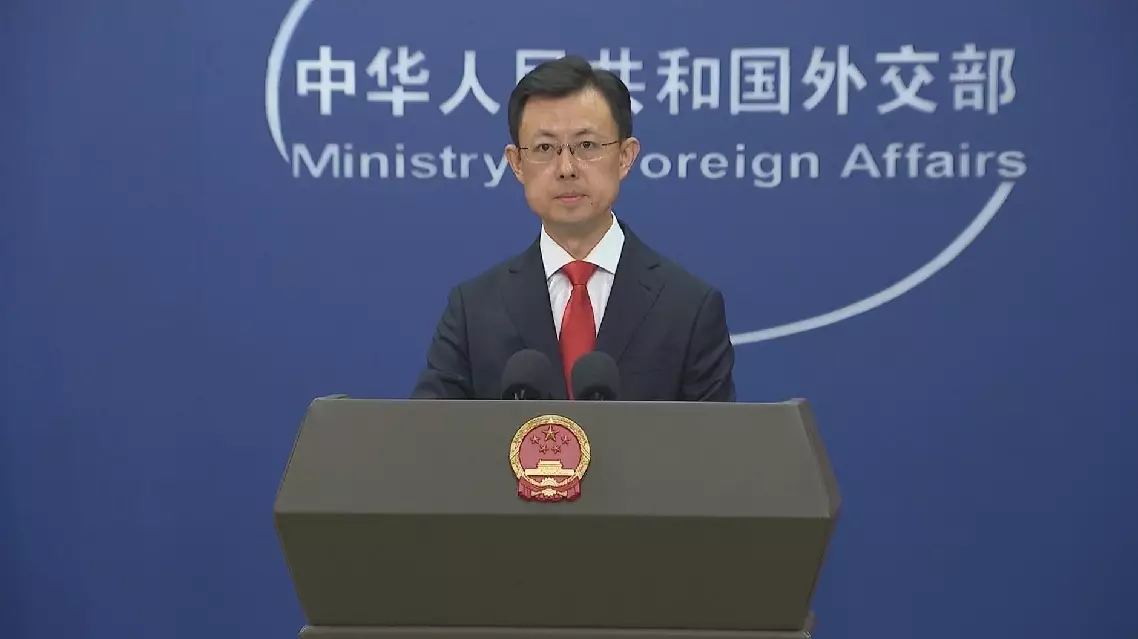
China expects broader prospect for bilateral ties with Russia: spokesman
Canadian consumers are continuing to play their part in supporting local businesses in the face of escalating trade tensions with the U.S., as the grassroots reaction to the government-backed campaign to "Buy Canadian" continues to gain momentum.
The movement took hold about 18 months ago in response to the first round of tariffs imposed by U.S. President Donald Trump. The measure saw several provinces remove U.S. alcohol from liquor store shelves, while many Canadians also began boycotting travel to the United States.
The backlash had a measurable effect, with U.S. alcohol exports to Canada falling sharply, while Canadian travel to the U.S. dropped 25 percent last year compared with the year before.
The push to buy Canadian products has intensified in recent weeks ever since bilateral trade talks collapsed in late August, while Trump's move to rename Lake Ontario as "Lake America" further antagonized Canadian residents.
Many Canadians have sought to express support for domestic products through their spending, and what began as a grassroots movement has since been incorporated into the federal government's 'Canada Strong' campaign -- a collection of initiatives aimed at making Canada's economy more resilient amid the current trade tensions with the U.S.
In spite of this resilience, finding Canadian alternatives to several American products remains challenging. The push is being promoted online, where a growing number of apps, websites and Facebook groups are helping consumers identify Canadian brands, while more prominent labeling is making Canadian brands easier to spot on store shelves.
"Now when you go to the supermarket you actually find concrete infrastructure that caters to the Buy Canadian movement - so you find labels, you find branding campaigns, you find patriotic statements on packaging, and so all of this helps consumers orient themselves and helps consumers navigate the movement more effectively," said Markus Giesler, a professor of Marketing at the Schulich School of Business of York University.
Giesler says the "Buy Local" movement is a natural response to external pressures, noting such community-level campaigns have emerged at various points in history as a way of bringing people together. Despite the unified cause behind it, the professor still believes the broader economic impact can be limited.
"Does it actually weaken the U.S. export bottom line? I would argue that it doesn't but it helps sort of galvanize the country around a particular patriotic sentiment, which in turn is politically desirable. The political leadership here in Canada wants us to think more patriotically right now," he said.
Some believe the movement will fade if the Trump administration changes course or when the president leaves office, but Giesler does believe the shift in consumer habits could last well beyond Trump as Canadians remain wary of relying on the United States again.

'Buy Canadian' movement stays strong as local consumers stand up to US tariffs