NEW YORK (AP) — Oatly, the world's largest producer of oat milk, is sending a new message to its consumers: Most people want their governments to take action on climate change.
Splashed on the side of the Swedish company's cartons is messaging from the “89 Percent Project,” a campaign launched by Covering Climate Now, a global journalism nonprofit.
Newsrooms traditionally try not to associate with organized advocacy efforts, but the unorthodox campaign has been gaining traction. Participating news organizations have amplified research that 80% to 89% of people worldwide want their governments to confront climate change.
Oatly's new cartons were first released in Sweden and have since been rolled out to other European nations, including Belgium and Germany. The cartons are expected to be on U.S. shelves by January, said Caroline Reid, senior sustainability director at Oatly.
“Companies should be taking much more responsibility, not only in reducing their own environmental footprint, but really working out how they can use their platform to drive a positive future,” Reid said at an event last week during New York Climate Week.
In addition to producing stories on climate change, Covering Climate Now promotes reporting on the issue through journalism trainings, newsroom collaborations and press awards. It launched the “89 Percent Project” last year and describes it as a global collaborative journalism initiative.
The project takes its name from a 2024 study in the peer-reviewed scientific journal Nature Climate Change. Based on a survey of nearly 130,000 people across 125 countries, the study found that 89% of people want intensified political action on climate change.
Most people who want climate action don’t realize they are in the “silent majority,” said Mark Hertsgaard, executive director of Covering Climate Now. But that is beginning to change, as “elements of civil society all around the world pick up this 89% message and spread it themselves.”
The project launched with several media partners, including The Guardian, Agence France-Presse and El País. In April, Japanese TV stations said over the next two years they would air announcements about how the majority of Japanese people want stronger climate action. In June, in a separate initiative, 136 Japanese news outlets also began spreading this messaging via social media platforms, news releases, and other forms of public communication.
Numerous polls, surveys and scientific studies in the U.S. have long found that a majority want the government to take more action on climate change, even if the issue is rarely brought up in political campaigns.
In a 2022 poll, The Associated Press-NORC Center for Public Affairs Research found that nearly two-thirds of Americans thought the federal government was not doing enough to fight climate change, which is primarily caused by the release of greenhouse gases when coal, oil and gas are burned.
That same year, a study based on responses from more than 6,000 Americans and published in the peer-reviewed scientific journal Nature Communications found that most Americans underestimate the prevalence of support for major climate change mitigation policies and climate concern. While 66% to 80% of Americans support these policies, Americans think only 37% to 43% do.
“We felt that we, and our fellow journalists, were really missing the story here,” said Hertsgaard, adding he believed the industry was inadvertently “misrepresenting a big part of the climate story, which is that most people around the world want this tackled.”
Oatly’s milk carton campaign is subtle, especially when compared to the more well-known 1980s U.S. milk carton campaign that put photos of missing children on cartons to spread awareness about their cases.
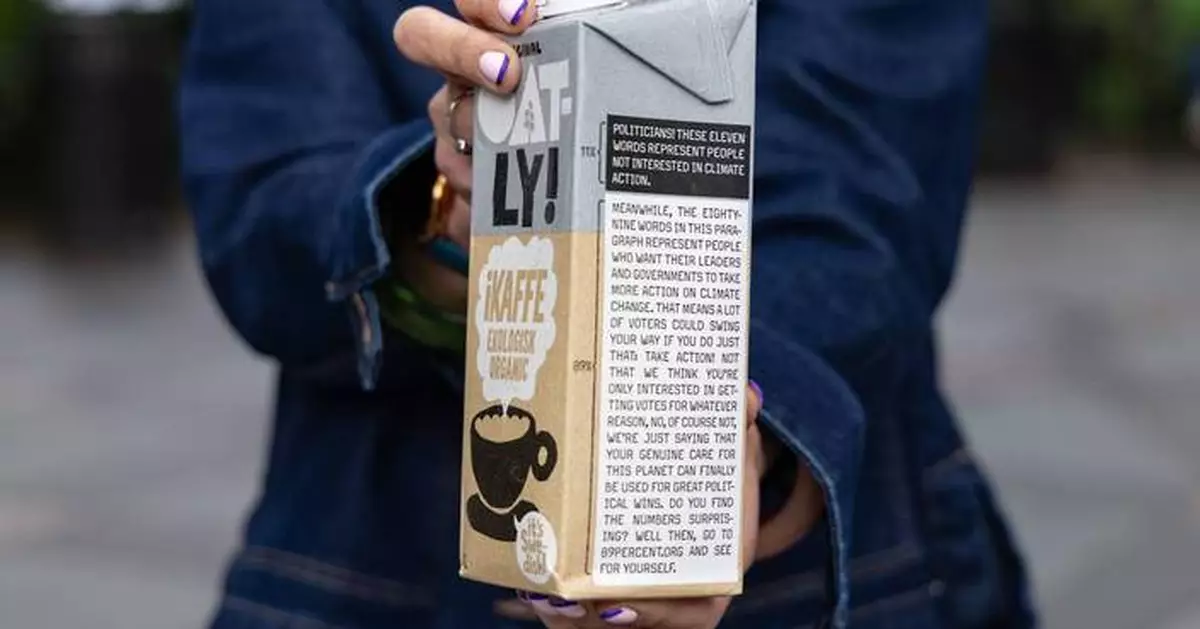
The new cartons feature two stacked text boxes on one side of the carton.
The much smaller top box reads: “Politicians! These eleven words represent people not interested in climate action.” The lower box, which takes up most of the carton's side, has an 89-word message that makes the case that most people want their governments to take climate action and that doing so could lead to political wins.
Reid, with Oatly, first read about the climate project in The Guardian. As a company selling alternatives to cow milk, she said the project “aligns with what we’re trying to do. We’re trying to engage people and make them want to do something different.”
Every organization, political party and brand can play a bigger role in contributing to societal net zero, meaning as much carbon being absorbed as is released into the atmosphere, and driving the transition to renewable energy, Reid said.
President Donald Trump has periodically railed about climate change and policies meant to address it, including transitioning to carbon-free energy like wind and solar. During the 2025 U.N. General Assembly, Trump called climate change a “con job” and renewable energy the “Green Scam.”
This narrative, which goes against years of science that has established that human-caused emissions are driving the climate to change, has pushed some organizations to take a stronger stand in rebutting the administration and go a step further to advocate for solutions.
Covering Climate Now's project straddles a tightrope between advocacy and journalism, which experts say has pros and cons.
“The economic failures of so many news outlets have led to a rise in independent journalism that operates outside the norms established by legacy media outlets,” said Seth Stern, chief of advocacy at the Freedom of the Press Foundation. “There is plenty of room for advocacy in journalism.”
Clay Calvert, who specializes in First Amendment and freedom of expression issues at the University of Florida, said two dangers arise when journalism organizations partner with companies.
The first is that the journalism group will pull its punches and self-censor negative information about the corporate partner. The second is that the journalism organization will favorably portray its corporate partner in news coverage.
“There really needs to be a wall of separation in any newsroom between the interests of the journalism entity, including its readers and viewers, and those of its corporate partners,” Calvert said. “Sometimes creating and maintaining that separation is easier said than done.”
No money has changed hands between Covering Climate Now and Oatly, according to Hertsgaard, who called the company an “ally.”
“As a journalist, I feel like we have to have the courage to not just report the facts, but to draw the connections,” Hertsgaard said. “Now, if that amounts to advocacy, then that’s an advocacy I’m comfortable with.”
Associated Press writer Jennifer McDermott contributed to this report.
The Associated Press’ climate and environmental coverage receives financial support from multiple private foundations. The AP is solely responsible for all content. Find AP’s standards for working with philanthropies, a list of supporters and funded coverage areas at AP.org.
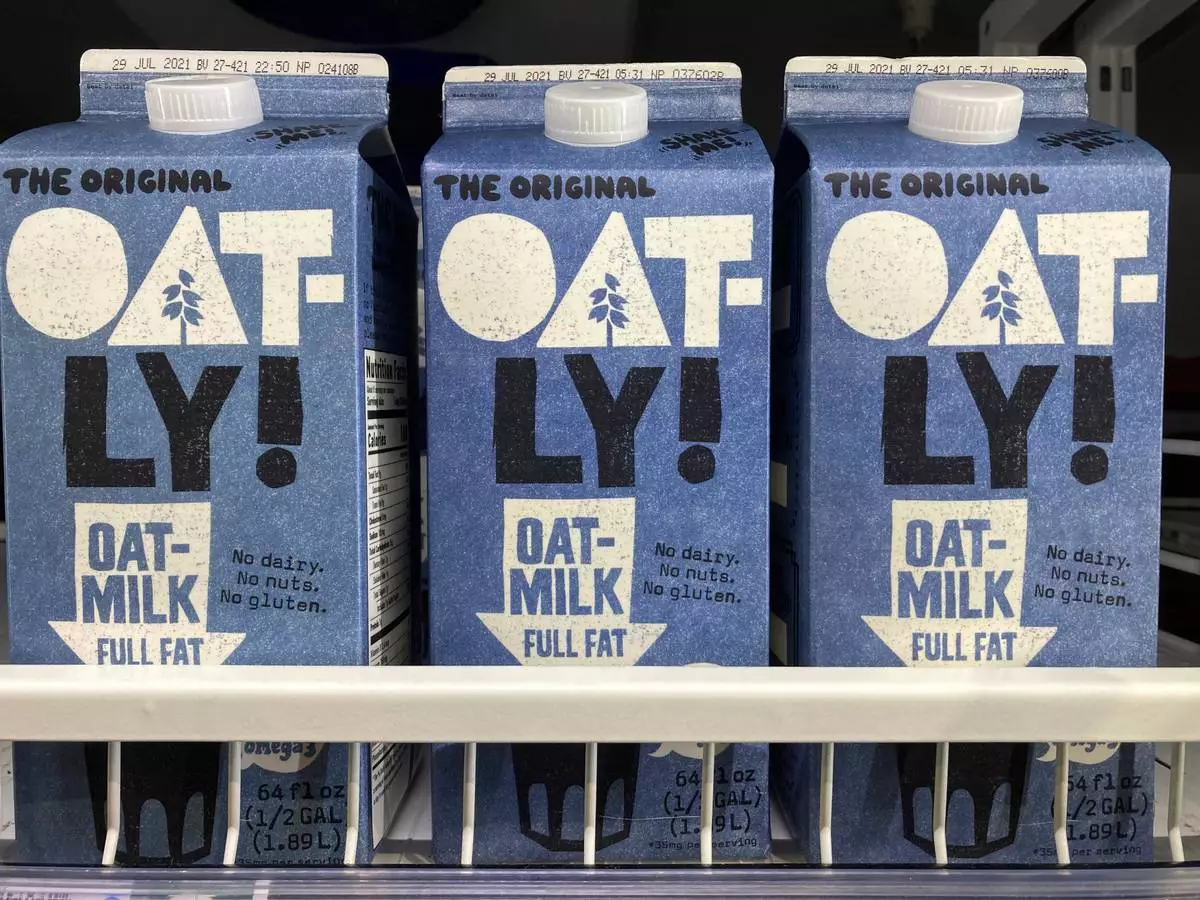
FILE - Oatly containers are displayed at a grocery store May 18, 2021, in North Miami, Fla. (AP Photo/Marta Lavandier, File)
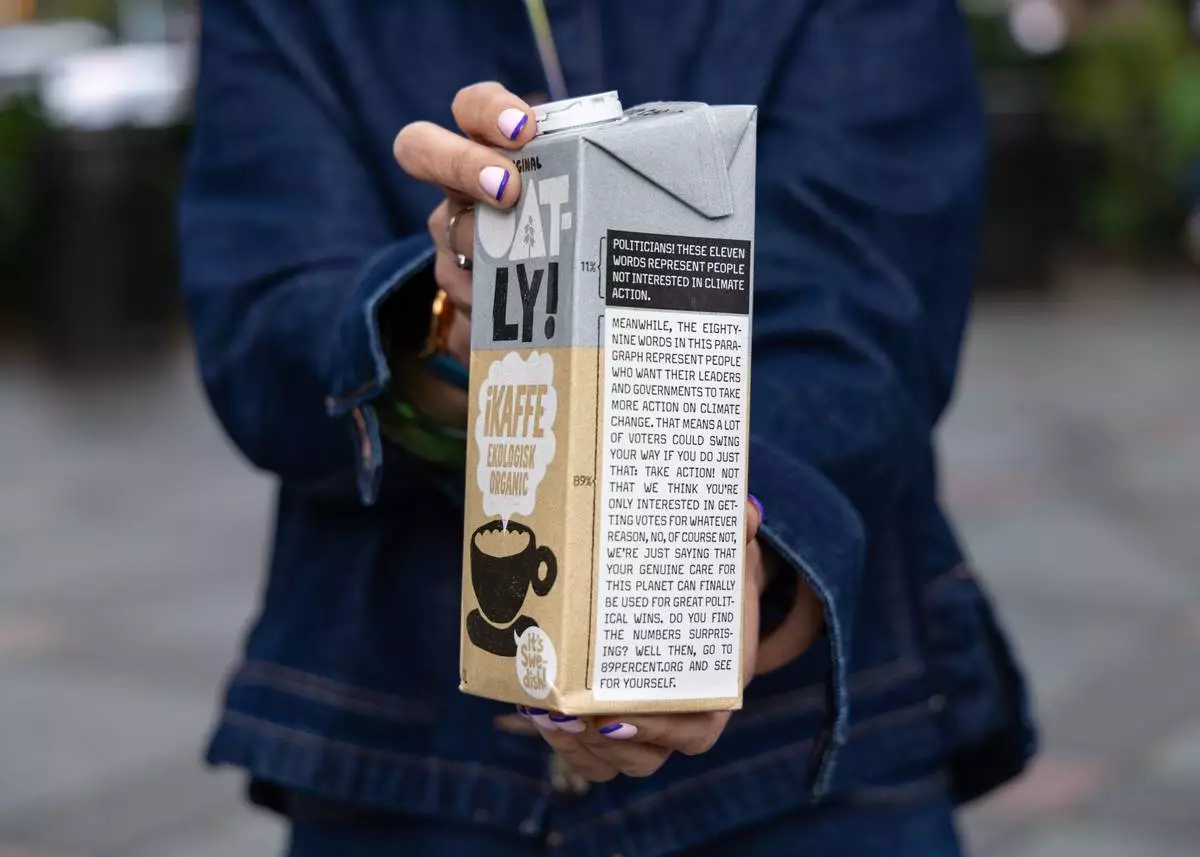
Caroline Reid, with the Swedish oat milk company Oatly, shows a sample of the company's new milk carton climate campaign for New York Climate Week on Wednesday, Sept. 23, 2026, in New York. (AP Photo/Anton L. Delgado)