CARROLLTON, Ga--(BUSINESS WIRE)--Sep 30, 2026--
Patients with suspected heart attacks across west Georgia and east Alabama will now have access to artificial intelligence-powered electrocardiogram (ECG) assessment whether their first medical contact occurs in a 911 ambulance, a community hospital or a cardiac center, following Tanner Health's deployment of Powerful Medical's PMcardio platform.
This press release features multimedia. View the full release here: https://www.businesswire.com/news/home/20260930764314/en/
The rollout marks the first commercial United States deployment of Queen of Hearts, Powerful Medical's newly FDA-authorized AI ECG model for urgent acute coronary syndrome, and brings the technology into routine clinical care just days after its FDA De Novo authorization.
“We are proud to be the first healthcare organization in the United States to adopt the PMcardio platform,” said Loy Howard, president and CEO of Tanner Health. “Healthliant Ventures, which is the innovation arm of Tanner, aims to improve access, transform care and empower professionals for higher quality and better efficiency. PMcardio aligns closely with all of this — helping to detect acute heart attacks from ECGs and improving outcomes. This technology builds on our continued investment in cardiovascular care, ensuring that patients move quickly from initial assessment to the specialized teams and advanced capabilities available at Tanner and Adams Heart Center.”
A heart attack occurs approximately every 40 seconds in the United States. However, conventional ECG interpretation can fail to identify acute coronary occlusions that do not meet traditional ST-elevation myocardial infarction (STEMI) criteria, potentially delaying recognition and treatment.
Through integration with Tanner's Epic electronic health record and EMS workflows, PMcardio embeds Queen of Hearts into existing clinical pathways. When a patient receives a 12-lead ECG in a Tanner ambulance or emergency department, the AI assessment is a secondary support to clinical decision-making and, where appropriate, earlier cardiology consultation and cardiac catheterization.
“This deployment reflects Tanner’s commitment to bringing advanced cardiac care closer to the communities we serve,” said LaQuinta Grizzard, MSN, RN, NE-BC, AACC, vice president of Heart and Vascular Services at Tanner Health. “By integrating PMcardio and the Queen of Hearts AI ECG model across EMS, emergency departments and cardiology workflows, our clinicians have another decision-support tool to help recognize high-risk heart attack presentations earlier, including cases that may not meet traditional STEMI criteria. That shared insight can help support faster evaluation, more informed escalation and timely access to the right level of care.”
Moving Beyond Conventional STEMI Criteria
Queen of Hearts is supported by more than 20 peer-reviewed studies encompassing more than 40,000 patients across four continents. In a multicenter U.S. study of 1,032 patients published in JACC: Cardiovascular Interventions, Queen of Hearts identified 553 of 601 confirmed STEMIs from the initial ECG, compared with 427 through standard triage, while reducing the false-positive rate from 41.8% to 7.9%.
“Regulatory authorization tells clinicians a technology is safe and effective, but the real test is whether it changes what happens to the patient in front of them,” said Robert Herman, MD, PhD, chief medical officer and co-founder of Powerful Medical. “With Tanner, Queen of Hearts is entering routine clinical practice in the United States for the first time, giving paramedics, emergency physicians and cardiologists a shared, objective assessment of the ECG at the moment critical decisions are made.”
Queen of Hearts received FDA De Novo authorization in September 2026, establishing a new device classification for AI ECG models targeting acute, life-threatening cardiovascular diagnoses, following FDA Breakthrough Device Designation in March 2025.
“A patient having a heart attack in a rural community deserves the same diagnostic support as one who walks into a major cardiac center,” said Michal Martonak, commercial director at Powerful Medical. “Since FDA authorization, hundreds of health systems and clinical sites across the United States have expressed interest in deploying Queen of Hearts. Tanner is the first to turn that demand into a live deployment across ambulances, emergency departments and the cath lab. It is a blueprint for bringing AI-supported cardiac diagnostics to the point of first medical contact.”
About Powerful Medical
Powerful Medical is leading the AI revolution in cardiology, making expert-level cardiac diagnosis available to every patient, regardless of where they present. Its platform, PMcardio, embeds AI ECG models that interpret 12-lead ECGs to detect acute heart attacks (Queen of Hearts), heart failure, structural heart disease and 40+ other cardiac conditions. PMcardio is used by more than 100,000 clinicians across hospitals, EMS and cardiac centers worldwide.
PMcardio is used more than 2 million times per year, by more than 100,000 clinicians and connects EMS, emergency departments and cardiology teams into a single care coordination platform. Founded in 2019, Powerful Medical has been recognized by awards from Google for Startups, the American Heart Association, Forbes 30 Under 30, the European Innovation Council and as the 2025 MedTech Innovator Accelerator.
About Tanner Health
Tanner Health is a five-hospital non-profit health system providing convenient, personalized healthcare to communities across west Georgia and east Alabama. Tanner Health physicians and staff provide the latest technology and treatment options to advance the health of its patients. In addition to its regional hospitals and care centers, Tanner operates Tanner Medical Group, one of metro Atlanta’s largest multi-specialty physician groups. Learn more at tanner.org.
About Healthliant Ventures
Healthliant Ventures was born out of the idea of Tanner Health being a strategic partner to healthcare startups seeking to validate their products or services, expand their offerings through co-development and market them to other health systems and types of customers. Healthliant Ventures is dedicated to driving innovation, fostering strategic partnerships and transforming the way healthcare is delivered. Committed to advancing the industry, Healthliant Ventures focuses on developing innovative technologies and driving impactful change across the healthcare landscape. Learn more at healthliant.com.
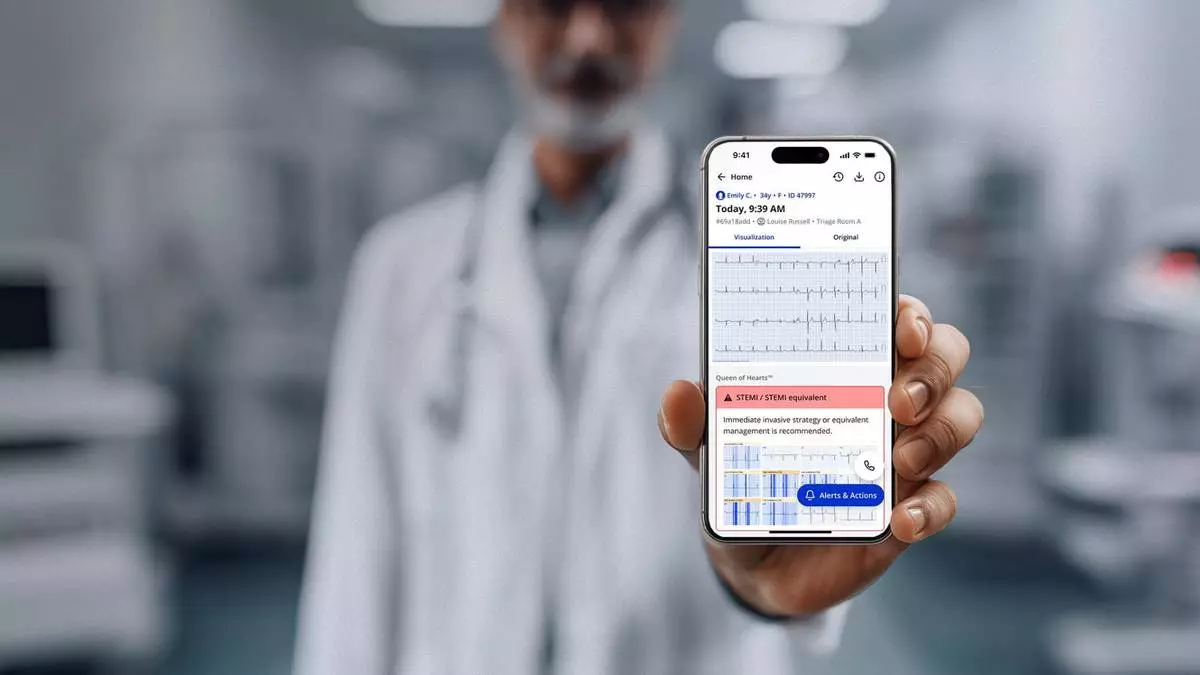
Tanner Health is bringing AI-powered ECG assessment to patients across west Georgia and east Alabama through the first commercial U.S. deployment of Powerful Medical’s PMcardio platform.
QUANTICO, Va. (AP) — Defense Secretary Pete Hegseth announced some major changes to the U.S. military on Wednesday in what he called his “State of the Force” address, including establishing a new drone command and cutting 20% of the nation’s generals and admirals.
The Pentagon also will launch an effort to study the future of warfare that will be led in part by SpaceX CEO Elon Musk and former Republican House Speaker Newt Gingrich, Hegseth said. The Defense Department will create an Office of Religious Affairs and plans to build a new base for the first time in 40 years, he added.
Hegseth made the announcements to junior officers and enlisted leaders at the Marine Corps Base Quantico in Virginia — the second year in a row that he has given such an address. But this time, the U.S. military is seven months into a war with Iran with no clear end in sight, has captured Venezuelan leader Nicolás Maduro and killed more than 200 people in strikes on alleged drug trafficking boats in Latin America, among other actions worldwide.
The speech is not a usual fixture among Pentagon leaders. While Hegseth’s predecessors have regularly addressed troops and top officers, they have traditionally done so in small or private settings.
The Pentagon chief, however, again led with how he has drastically retooled the U.S. military by targeting what he calls “woke” culture — through a rollback of diversity programs, a review of ground combat units with female troops and a new screening program for “testosterone deficiency” among male personnel — as well as attacks on the media for the coverage of the military.
The Pentagon chief announced the intention to create a new four-star command to oversee the rollout of autonomous and robotic capabilities in what he called “the fastest peacetime shift in modern military history.”
He acknowledged that “the pace of war is changing faster than the process to support it.” Iran commonly uses cheap drones, including those that have killed U.S. troops during the seven-month war. Hegseth pointed to Ukraine's pioneering use of drones to combat Russian forces — something American forces have learned from firsthand.
“Ukraine’s lesson is not that one type of drone wins wars, but rather the need for a purpose-built system that maximizes the ability to adapt,” Hegseth said.
However, a U.S. Army unit based in Europe that specialized in drone warfare was ordered recently to end its efforts and return to being a traditional infantry battalion.
A bipartisan group of U.S. lawmakers subsequently asked the Army to explain the order, given that the world’s battlefields are rapidly evolving and military tactics increasingly rely on uncrewed systems to fight.
The plans for a drone command come as the U.S. is in a stalemate with Iran over control of the Strait of Hormuz, a vital energy shipping corridor. The war has forced American forces in the region to expend hundreds of expensive missile interceptors to defend against Iran’s missile and drone attacks, which have still managed to kill and wound U.S. troops.
Hegseth repeated claims that the U.S. military has destroyed Iran's navy, air force and defense systems as well as many of its leaders and its industrial base. But Tehran has continued intermittently to launch drone and missile attacks against at U.S. or allied bases, while maintaining its ability to strike commercial and military ships in the Strait of Hormuz.
During his speech, Hegseth touted the Trump administration’s major investments in the defense industry and push for contractors to speed up their work to expand the nation’s weapons arsenals. But experts say U.S. military contractors will need at least three years to replenish stockpiles of key weapons systems used heavily in the Iran war.
Hegseth said he directed the military services to double the 10% reduction he ordered last spring for roughly 800 flag and general officer positions, to a 20% decrease to be completed by Jan. 1, 2027.
“I call it accountability and long overdue,” he said.
Some members of Congress have criticized the war and the drawdown of munitions stockpiles, while calling the latest cuts to the general ranks a “purge” that will take years to rebuild.
“He’s got some kind of like deep-seated grievance about leadership in the military,” said Sen. Mark Kelly, D-Ariz., a former Navy combat pilot who has been critical of Hegseth. “He’s purging a generation of great leaders of the military, and it’s going to take a generation to recover from it.”
Republican Sen. Mike Rounds of South Dakota, a member of the Senate Armed Services Committee, said he wanted to understand Hegseth’s reasoning.
“If it’s simply a matter of eliminating a very heavy top, there may be some validity to it, but I want to see it first,” Rounds said.
In innovating the next wave of weapons systems, Hegseth announced an effort to study the future of warfare led by Musk, Gingrich and Palmer Luckey, co-founder of Anduril Industries.
Hegseth said the work “will be focused on discovering, developing and fielding the weapons and systems that our children and our grandchildren will need in their lifetimes.” He pointed to the need to dominate "any future battlefield, from under the Earth to beyond the moon.”
This month, the U.S. confirmed for the first time that it had deployed weapons in space, a remarkable revelation after previous warnings about countries such as Russia possibly weaponizing a global frontier long agreed in treaties to be used for only peaceful purposes.
Among the other announcements was the unveiling of a plan to build a new military base, with Hegseth inviting all 50 states to compete for the chance to play host to 15,000 to 25,000 service members. He also announced a plan to make every military base self-powered.
Finley reported from Washington, and Kinnard from Columbia, South Carolina. Associated Press writer Lisa Mascaro in Washington contributed to this report.

Secretary of Defense Pete Hegseth gives a State of the Force address at Marine Corps Base Quantico, Wednesday, Sept. 30, 2026 in Quantico, Va. (Alex Wong/Pool Photo via AP)

Secretary of Defense Pete Hegseth salutes troops after giving a State of the Force address at Marine Corps Base Quantico, Wednesday, Sept. 30, 2026 in Quantico, Va. (Alex Wong/Pool Photo via AP)

Secretary of Defense Pete Hegseth gives a State of the Force address at Marine Corps Base Quantico, Wednesday, Sept. 30, 2026 in Quantico, Va. (Alex Wong/Pool Photo via AP)

Members of the military listen as Secretary of Defense Pete Hegseth gives a State of the Force address at Marine Corps Base Quantico, Wednesday, Sept. 30, 2026 in Quantico, Va. (Alex Wong/Pool Photo via AP)

Secretary of Defense Pete Hegseth gives a State of the Force address at Marine Corps Base Quantico, Wednesday, Sept. 30, 2026 in Quantico, Va. (Alex Wong/Pool Photo via AP)

Secretary of Defense Pete Hegseth gives a State of the Force address at Marine Corps Base Quantico, Wednesday, Sept. 30, 2026 in Quantico, Va. (Alex Wong/Pool Photo via AP)

Secretary of Defense Pete Hegseth gives a State of the Force address at Marine Corps Base Quantico, Wednesday, Sept. 30, 2026 in Quantico, Va. (Alex Wong/Pool Photo via AP)

Defense Secretary Pete Hegseth walks along the Colonnade before President Donald Trump and China's President Xi Jinping at the White House, Thursday, Sept. 24, 2026, in Washington. (AP Photo/Jacquelyn Martin)