Skip to Content Facebook Feature Image

Judge approves Paramount's settlement with states over Warner buyout, allowing merger to soon close

News

Judge approves Paramount's settlement with states over Warner buyout, allowing merger to soon close
News

News

Judge approves Paramount's settlement with states over Warner buyout, allowing merger to soon close

2026-10-01 07:13 Last Updated At:07:20

CHICAGO (AP) — A federal judge has granted Paramount’s settlement agreement with 12 states that sued over the company’s takeover of Warner Bros. Discovery, allowing the companies to soon close their $81 billion mega merger.

In a Wednesday order, U.S. District Judge Araceli Martínez-Olguín ruled that the proposed consent decree was a “fair, reasonable, and good faith approach to address the competitive harms” alleged by the states' lawsuit. Paramount, which was bought by Skydance just last year, previously called the antitrust challenge the last hurdle ahead of closing its Warner merger.

The companies now expect to complete the deal on Oct. 6. Shortly after Martínez-Olguín's ruling Wednesday afternoon, Paramount also announced Ynon Kreiz — who is toy giant Mattel's current chief executive — will soon join as co-CEO alongside David Ellison.

In a statement, Ellison said Paramount's merger with Warner marks a “transformational moment for our industry” and that he and his new co-CEO will lead a business that is “creator-first, tech-forward and built to scale globally.”

A Paramount-Warner marriage will bring together two of Hollywood’s last five legacy studios. HBO Max, a library full of titles including “Harry Potter” and cable networks such as CNN will also find themselves under the same roof with CBS, the likes of the “Top Gun” franchise and the Paramount+ streaming service.

That further concentrates power in an industry already run by just a handful of major players. And many critics of the deal have decried the states' settlement, arguing the terms are too weak.

Paramount touted clearances for its Warner acquisition from regulators worldwide over recent months, including the Trump administration's Justice Department in the U.S.

But in July, top prosecutors from 12 states — led by California Attorney General Rob Bonta — sued to block the merger altogether. They alleged a Paramount-Warner combination would “extinguish competition” in Hollywood and lead to fewer choices for consumers, particularly movie theatergoers and cable customers.

Last week, the states agreed to settle those claims through new commitments from Paramount, including pledges to increase film production in the U.S. over the next five years, grant millions of dollars to a fund aimed at supporting workers displaced by the merger and establish new editorial monitoring of CNN and CBS.

Martínez-Olguín didn't greenlight the terms right away — maintaining at a Thursday hearing that the court isn’t merely a “rubber stamp” on a settlement of this kind and that she, like many others, had questions. The judge granted outside critics of the settlement (including members of the Block The Merger coalition and the League of United Latin American Citizens) a brief window to share their opposition. She also instructed Paramount and the states to respond to concerns raised by Democratic Sen. Cory Booker.

By Wednesday's order, however, she concluded that the hopes for settlement terms to go further "do not rise to the level of legal violations upon which the Court can reject the parties’ negotiated resolution.”

The Writers Guild of America, which had filed its own suit shortly after the states in July, also reached a settlement agreement with Paramount last week — concluding that it couldn’t continue its legal fight alone.

The Block the Merger coalition on Wednesday maintained the states' settlement was a “toothless” deal.

“In years to come, we’ll be able to point to this failure to put consumers over the monied interests of corporate consolidation as the tipping-point moment for media in this country," Block the Merger said in a statement. But, the group added, “if there is one discernible benefit to the approval of this corporate takeover, it’s that people are now wide awake and paying attention — and their anger is not going to fade away."

Before agreeing to settle, Bonta previously said the states would only consider “robust” structural remedies. The bulk of the eventual settlement outlined behavioral requirements, at least in the immediate future, with some potential “court enforceable” penalties if Paramount breaks promises down the road.

Even so, most of the company’s new commitments only last five years. Paula Blizzard, an attorney for California, said in Thursday's hearing that the states eventually settled on terms that didn’t “last forever” because the industry is changing — while immediate divestments, or even the complete blocking of the deal that they initially demanded, could open the door to further acquisitions.

Among those new commitments include a pledge from Paramount to increase spending on film production in the U.S. — by at least an additional $1.5 billion over the next five years — and promises to release at least 30 films each year, a figure Ellison already touted earlier in his quest for Warner.

The states’ settlement would require Paramount to distribute 30 films in theaters each year for the next two years — and 32 films in each of the three years after that. The fine print notes that only 50% of those movies would have to be “produced or jointly produced” by the combined company. If Paramount fails to meet these film outputs, the states say it will have to divest from Miramax Studios and pay $30 million for each missed film toward healthcare and retirement trust funds associated with the Writers Guild of America and other industry unions.

Paramount also agreed to commit $47.5 million to help fund training and career development for workers displaced by the merger, again over the next five years ($9.5 million each year).

Meanwhile, when it comes to cable, the states' settlement orders the company to negotiate deals for current Paramount-owned and Warner-owned basic cable channels separately over the next five years. If Paramount violates those terms, a court may order future divestments.

The company must also form a “News Editorial Independence Board” to monitor news operations at CBS and CNN within 180 days of completing its Warner acquisition. But critics point to editorial turmoil already seen at CBS under Skydance ownership — and aren’t convinced this new body will move the needle much.

Per court documents outlining the settlement’s terms, Paramount’s new editorial body will be made up of five “active or retired” journalists with at least 10 years of experience — all appointed by, and reporting to, the combined company’s board of directors for three-year terms. Beyond his CEO title, Ellison is Paramount’s current chairman and is set to remain in the top spot after the Warner acquisition closes.

While joining the rest of the states in the wider settlement, Colorado and Washington declined to sign off on the editorial board terms. And prosecutors like Connecticut Attorney General William Tong, who wanted a full divestiture of CNN and CBS, said last week he wished the deal could have gone further.

Including billions of dollars in debt, Paramount’s buyout of Warner is currently valued at about $111 billion based on outstanding shares.
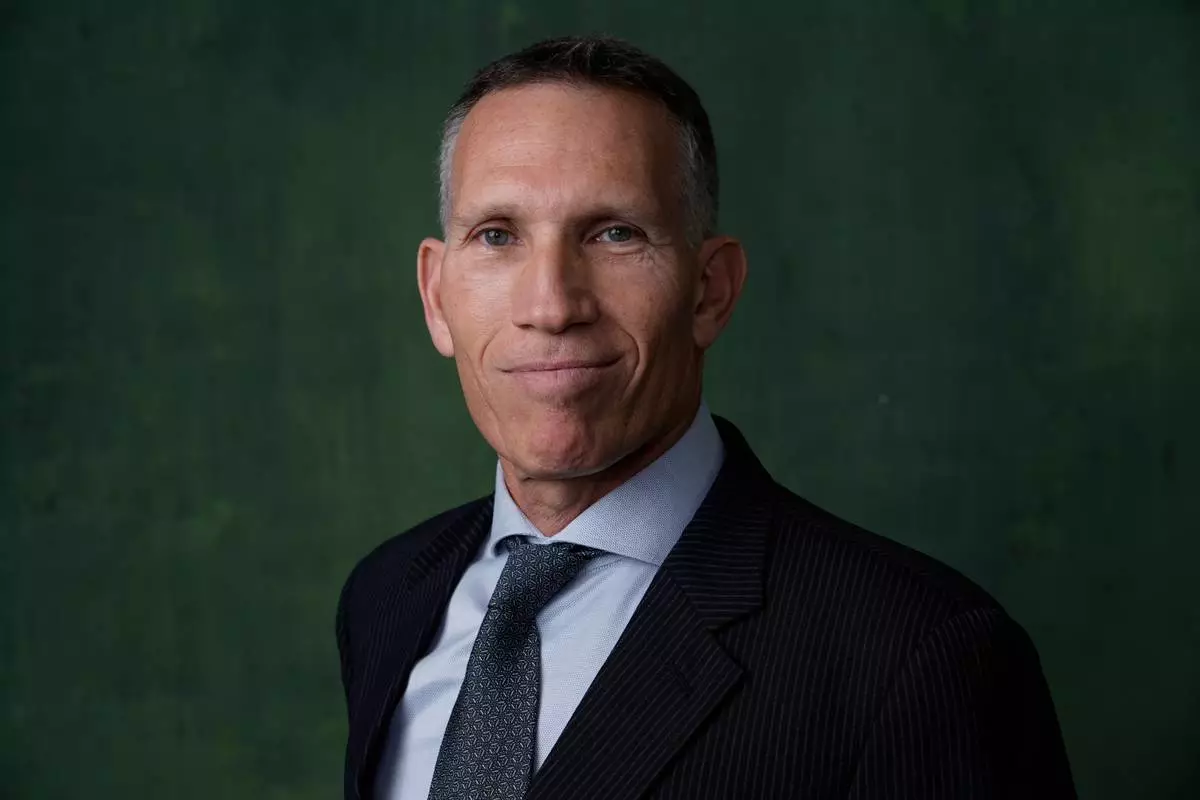
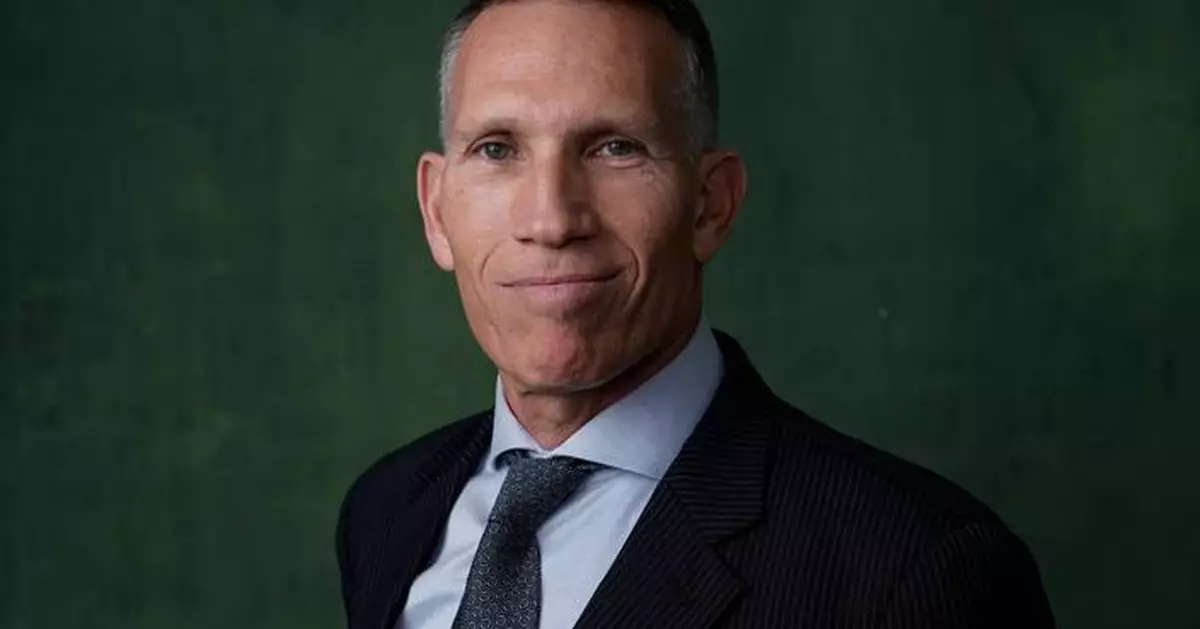
FILE - Ynon Kreiz poses for a portrait during the 96th Academy Awards Oscar nominees luncheon on Feb. 12, 2024, at the Beverly Hilton Hotel in Beverly Hills, Calif. (AP Photo/Chris Pizzello, File)


FILE - Ynon Kreiz poses for a portrait during the 96th Academy Awards Oscar nominees luncheon on Feb. 12, 2024, at the Beverly Hilton Hotel in Beverly Hills, Calif. (AP Photo/Chris Pizzello, File)

NASHVILLE, Tenn. (AP) — The U.S. Supreme Court is allowing the execution of Christa Gail Pike to go forward in Tennessee, overturning a last-minute stay that was issued by an appeals court hours earlier Wednesday.

Pike, 50, was scheduled to die by lethal injection in the morning, and witnesses had already gathered at the Riverbend Maximum Security Institution in Nashville when the 6th Circuit U.S. Court of Appeals voted 2-1 to issue a stay. That court said a delay was needed to consider whether Pike’s allegations of childhood sexual abuse were fully considered at her sentencing.

The Supreme Court's three liberal justices, Sonia Sotomayor, Elena Kagan and Ketanji Brown Jackson, dissented from the ruling. Sotomayor called the court’s decision stunning, as it clears the way for the execution to happen “before her still-pending legal challenges to her conviction can be properly considered.”

Pike, who was 18 at the time, and her boyfriend were convicted of the 1995 stabbing and beating of 19-year-old Colleen Slemmer, their classmate at a job training facility in Knoxville.

The case garnered widespread attention back then in part because a pentagram that was carved on Slemmer’s body and other elements of the crime stoked fears of Satan worship during the “satanic panic” of the 1980s and 1990s.

The Tennessee Department of Correction did not immediately respond to an email from The Associated Press asking if the execution would move forward Wednesday. The state’s execution order expires at midnight, according to Kelley Henry, a Nashville-based attorney experienced with Tennessee death penalty law. If time runs out, the state Supreme Court would need to set a new date.

After the stay was issued, Tennessee’s attorney general immediately appealed to the U.S. Supreme Court. Witnesses and media remained at the prison while the high court considered the case.

The attorney general's office wrote in the appeal that halting the execution at the last moment traumatized Slemmer’s family and rewarded “abusive delay tactics” by Pike’s attorneys.

Pike does not deny committing the killing, but her supporters argue the state should consider her age at the time, her mental illness and her allegations of severe sexual abuse that included being raped from the time she was a toddler.

“It is inconceivable that in the 21st century, the criminal justice system is poised to execute a survivor of rape and child sexual abuse whose jury never had the opportunity to consider those facts in weighing the defendant’s moral culpability,” her attorneys wrote in a filing.

As the execution date drew near, Pike's case renewed debate over the death penalty for young offenders.

Assistant Federal Defender Stephen Ferrell said Pike’s death sentence is an outlier because other 18-year-olds in Tennessee have had such sentences vacated.

After the killing, Pike was diagnosed with bipolar disorder and post-traumatic stress disorder. In her clemency petition, she said she only wanted to fight Slemmer but killed her in a frenzied attack when she couldn’t “put the brakes on.”

“I was a mentally ill 18-year-old kid. It took me numerous years to even realize the gravity of what I’d done. Even more to accept how many lives I affected. I took the life of someone’s child, sister, friend. It sickens me now to think I had the ability to commit such a crime,” Pike said in a statement.

Slemmer’s mother wants the lethal injection to go forward, saying she has waited decades to see Pike’s sentence carried out.

“Every time I think about it, I think about Colleen feeling that pain and trying to get up and run,” May Martinez told The Associated Press in a telephone interview on Saturday.

Martinez said a group helped raise money so she and her husband could travel from Florida to witness the execution. She didn't respond to a message Wednesday after the execution was halted.

Martinez said her daughter's age also should matter in deciding Pike's fate.

“Not a day goes by, or a minute goes by that I do not think about Colleen. Holidays are the worst,” she said, noting that her daughter would have turned 51 earlier in September.

The killing rocked the city of Knoxville. Prosecutors said Pike, fearing Slemmer was trying to steal her boyfriend, lured her to a wooded area on Jan. 12, 1995. Pike cut Slemmer with a box cutter and beat her with a large chunk of asphalt. Shipp, Pike’s boyfriend, has admitted that he was the one who carved a pentagram, a star-shaped symbol associated with Satan, into her body.

Shipp was 17 when the crime happened and received a sentence of life in prison with the possibility of parole. Pike was the only one sentenced to death.

Tennessee has not executed a woman for at least 200 years, according to Robin M. Maher, executive director of the Death Penalty Information Center. Older records can be spotty, though, so it is difficult to know precise details about the last woman who was put to death there.

Since the Supreme Court reinstated the death penalty in 1976, 18 women have been put to death, representing about 1% of all executions, according to the center.

Most recently, in 2023, Missouri executed Amber McLaughlin for a 2003 killing, in what is believed to be the first execution of a transgender woman in the U.S. In 2021 the federal government executed Lisa Montgomery, marking the first time in nearly seven decades that it put a female inmate to death.

Pike would be the 30th person executed in the U.S. this year after Florida carried out an execution on Tuesday.

Associated Press writers Jeffrey Collins in Columbia, South Carolina, Ed White in Detroit and Hallie Golden in Seattle contributed.

May Martinez, left, mother of murder victim Colleen Slemmer, walks out of Riverbend Maximum Security Institution during a stay of the planned execution of Christa Pike, Wednesday, Sept. 30, 2026, in Nashville, Tenn. (AP Photo/George Walker IV)

May Martinez, left, mother of murder victim Colleen Slemmer, walks out of Riverbend Maximum Security Institution during a stay of the planned execution of Christa Pike, Wednesday, Sept. 30, 2026, in Nashville, Tenn. (AP Photo/George Walker IV)

Leslie Brown, right, stands with others in the area reserved for people in favor to the death penalty outside Riverbend Maximum Security Institution before the planned execution of Christa Pike, Wednesday, Sept. 30, 2026, in Nashville, Tenn. (AP Photo/George Walker IV)

Leslie Brown, right, stands with others in the area reserved for people in favor to the death penalty outside Riverbend Maximum Security Institution before the planned execution of Christa Pike, Wednesday, Sept. 30, 2026, in Nashville, Tenn. (AP Photo/George Walker IV)

Kathleen Walter prays in the area reserved for people opposed to the death penalty outside Riverbend Maximum Security Institution before the planned execution of Christa Pike, Wednesday, Sept. 30, 2026, in Nashville, Tenn. (AP Photo/George Walker IV)

Kathleen Walter prays in the area reserved for people opposed to the death penalty outside Riverbend Maximum Security Institution before the planned execution of Christa Pike, Wednesday, Sept. 30, 2026, in Nashville, Tenn. (AP Photo/George Walker IV)

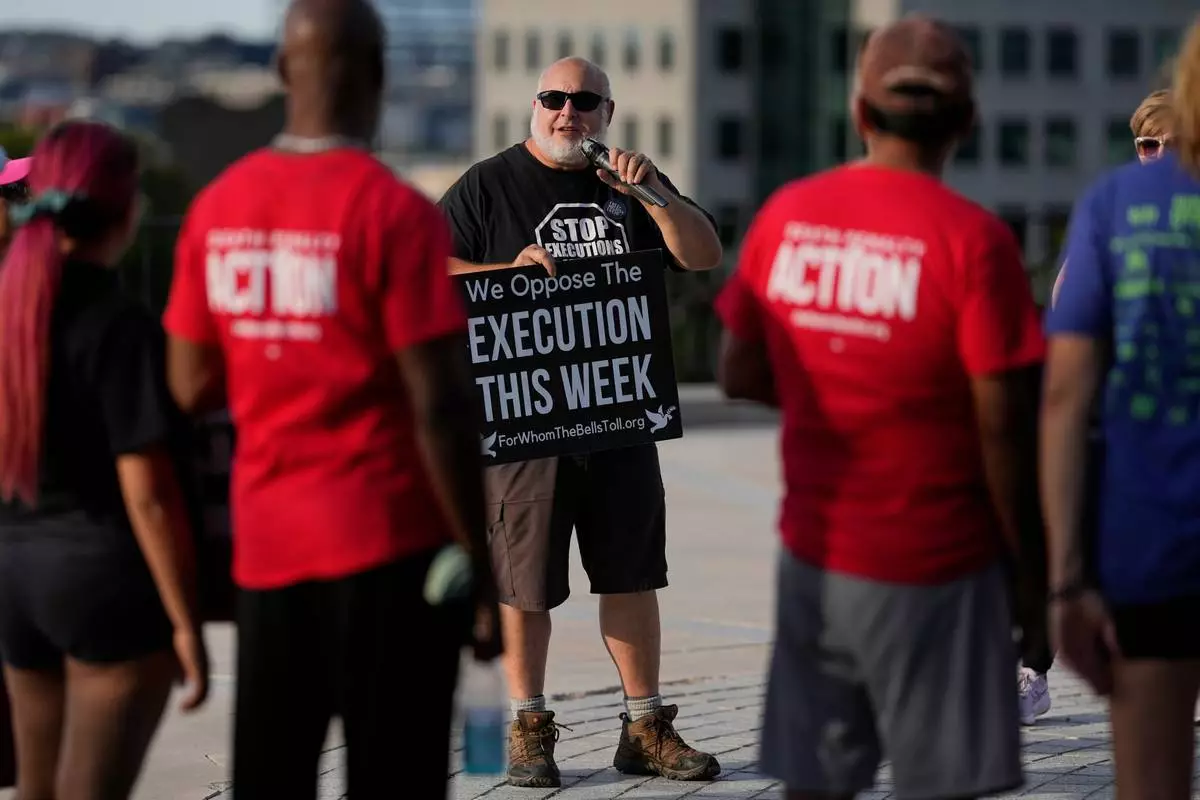
Abraham Bonowitz speaks during a March 4 Mercy protest against the death penalty at the Tennessee State Capitol, Sunday, Sept. 27, 2026, in Nashville, Tenn. ahead of the Sept. 30th scheduled execution of Christa Pike. (AP Photo/George Walker IV)

Abraham Bonowitz speaks during a March 4 Mercy protest against the death penalty at the Tennessee State Capitol, Sunday, Sept. 27, 2026, in Nashville, Tenn. ahead of the Sept. 30th scheduled execution of Christa Pike. (AP Photo/George Walker IV)

Alonzo Hughes participates in a March 4 Mercy protest against the death penalty at the Tennessee State Capitol, Sunday, Sept. 27, 2026, in Nashville, Tenn. ahead of the Sept. 30th scheduled execution of Christa Pike. (AP Photo/George Walker IV)

Alonzo Hughes participates in a March 4 Mercy protest against the death penalty at the Tennessee State Capitol, Sunday, Sept. 27, 2026, in Nashville, Tenn. ahead of the Sept. 30th scheduled execution of Christa Pike. (AP Photo/George Walker IV)

In this image from video provided by WBIR-TV, Christa Pike cries after being sentenced to death on March 30, 1996 in Knoxville, Tenn. (WBIR-TV via AP)

In this image from video provided by WBIR-TV, Christa Pike cries after being sentenced to death on March 30, 1996 in Knoxville, Tenn. (WBIR-TV via AP)

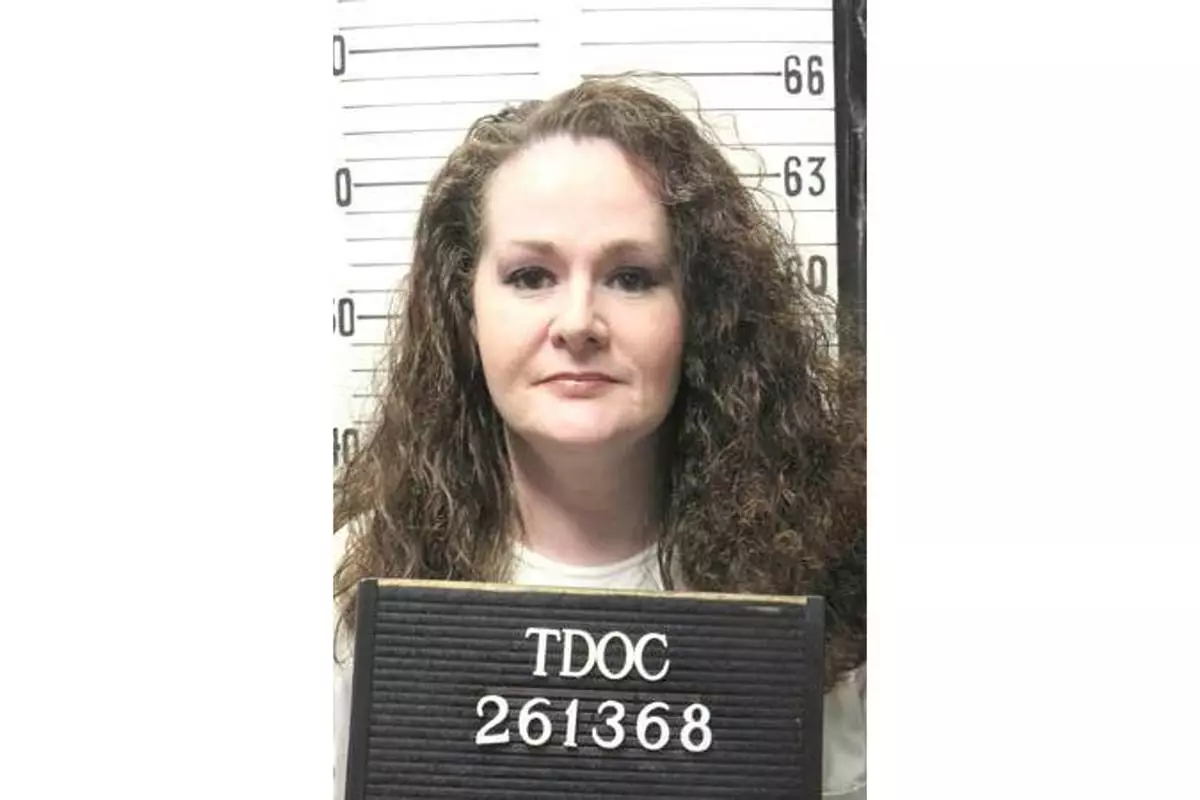
This photo provided by the Tennessee Department of Correction shows Christa Pike on Jan. 12, 2023. (TDOC via AP)

This photo provided by the Tennessee Department of Correction shows Christa Pike on Jan. 12, 2023. (TDOC via AP)

Recommended Articles