Skip to Content Facebook Feature Image

Judge keeps Venezuelan delivery driver shot by ICE in custody for alleged assault

News

Judge keeps Venezuelan delivery driver shot by ICE in custody for alleged assault
News

News

Judge keeps Venezuelan delivery driver shot by ICE in custody for alleged assault

2026-10-01 08:15 Last Updated At:08:20

AUSTIN, Texas (AP) — A Venezuelan delivery driver who was shot in his car by a federal immigration agent in Texas will remain in custody on charges that he assaulted an officer while trying to evade arrest, a federal judge ruled Wednesday.

Judge Dustin Howell said that the case against Wilber Rafael Garces Perez, 28, should proceed after prosecutors presented body-worn camera footage of the encounter in Austin, in which Garces Perez allegedly struck a U.S. Immigration and Customs Enforcement officer with his driver's side mirror.

Garces Perez is charged with one count of assaulting, resisting and impeding a federal officer and faces up to 20 years in prison if convicted. His case has sparked widespread outrage across the Texas capital city and brought renewed criticism from Democrats of President Donald Trump’s aggressive crackdown on immigration.

With a bullet still lodged in his back, Garces Perez appeared in court in a wheelchair. His attorneys said he still urgently needs medical care, 10 days after being shot. He also wore a sling on his arm and needed help putting on a headset to listen to a translation of the proceedings.

The defense called the charges against Garces Perez “retaliation” and argued that the camera footage was inconclusive because it didn't fully capture the moment when he allegedly tried to flee.

The hearing also included testimony from Homeland Security Investigations Special Agent Rick Bazan, who signed the criminal complaint charging Garces Perez with assault. The defense argued that Bazan, whose agency is the investigative arm of ICE, could not confirm whether the ICE agent was actually hit by the car mirror since no federal investigators interviewed the agent directly. Bazan also couldn't explain why officer allegedly struck by the mirror was not wearing a body-worn camera.

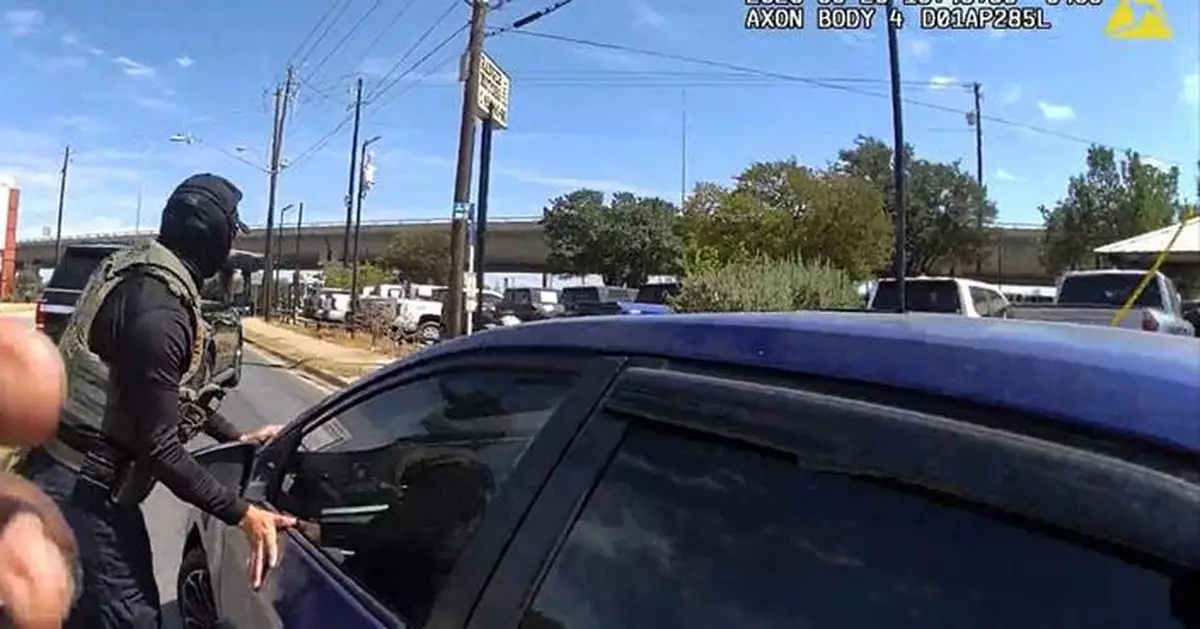
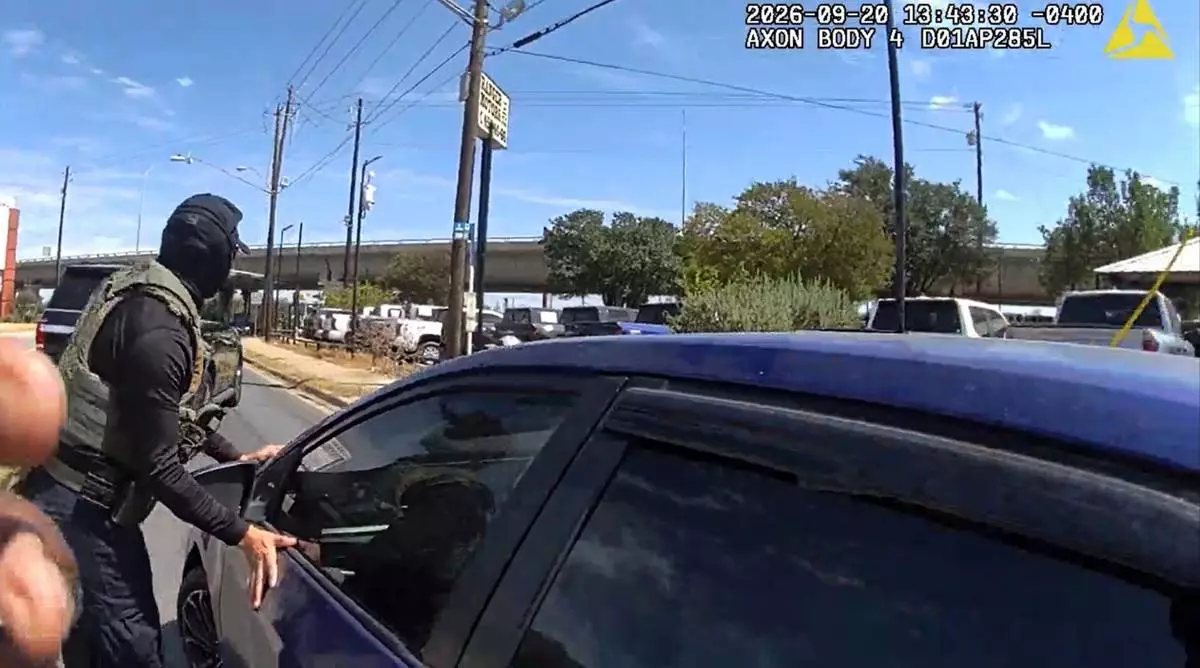
Footage provided Wednesday in court shows officers pulling Garces Perez over Sept. 20 in Austin, where he was making deliveries for DoorDash.

The video showed Garces Perez giving officers his drivers license through a crack in his window and then asking in Spanish if he can park his car so that a relative could come retrieve it. The officer demanded Garces Perez get out of the car multiple times, to which he asked if he could park his own car so a family member could come retrieve it. After a back and forth, Garces Perez abruptly and rapidly drives off.

Prosecutors presented a video from cameras at a nearby business showing the ensuing high-speed chase through residential streets. The shooting itself was not captured on the footage shared in court.

The federal officer who shot Garces Perez wasn’t wearing a body-worn camera. The immigration officer who did have a camera was driving in a separate car and turned the camera off during the pursuit.

Garces Perez said he was struck by a law enforcement SUV and spun around before he was shot. Federal officers told investigators, however, that Garces Perez attempted to strike an officer with his car at the end of the chase before the unidentified officer fired his weapon.

The accusations against Garces Perez recall previous claims made by immigration agents after other high-profile shootings similarly accusing drivers of weaponizing their vehicles. In a handful of cases, the allegations have been undermined or walked back after the release of body-worn camera footage, drawing renewed scrutiny about the DHS’s reliance on vehicular stops to execute arrests.

Kate Lincoln-Goldfinch, one of Garces Perez's immigration attorneys, accused ICE of denying him medical treatment for his bullet wound.

“ICE’s conduct has been so egregious, that physicians, nurses, medical ethicists and health advocates have come together to demand his release,” she said outside court after the hearing.

Garces Perez entered the U.S. in 2024 using CBP One, a program begun under President Joe Biden that allowed migrants to schdule appointments with U.S. authorities to be considered for asylum. President Donald Trump ended the program on his first day back in office.

Garces Perez was an asylum seeker and had a valid work permit, according to his lawyer. She said a judge later issued a deportation order after Garces Perez missed an immigration court hearing because the notice had been sent to a former address.

Judge Howell said he denied Garces Perez bond on the basis that he could be a flight risk to Venezuela, where he has a child.

His attorneys have filed a lawsuit seeking to prevent his removal from the U.S.

Riddle reported from Los Angeles.
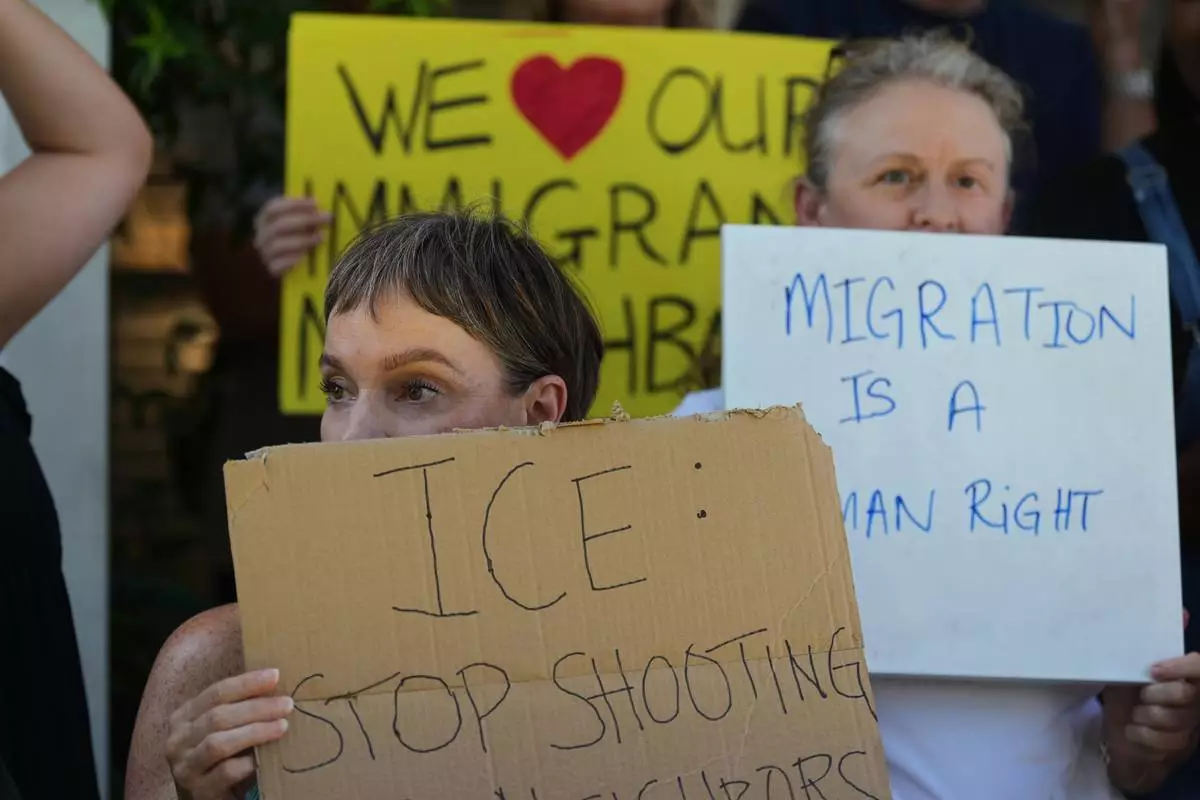
Supporters gather around a news conference for Wilber Rafael Garces Perez, a Venezuelan man shot by an ICE officer, at the offices of attorney Kate Lincoln-Goldfinch, in Austin, Texas, Monday, Sept. 21, 2026. (AP Photo/Eric Gay)
Supporters gather around a news conference for Wilber Rafael Garces Perez, a Venezuelan man shot by an ICE officer, at the offices of attorney Kate Lincoln-Goldfinch, in Austin, Texas, Monday, Sept. 21, 2026. (AP Photo/Eric Gay)

This image made from Immigration and Customs Enforcement (ICE) body camera footage shows an ICE officer stopping Wilber Rafael Garces Perez on Sunday, Sept. 20, 2026, in Austin, Texas. (Immigration and Customs Enforcement via AP)

This image made from Immigration and Customs Enforcement (ICE) body camera footage shows an ICE officer stopping Wilber Rafael Garces Perez on Sunday, Sept. 20, 2026, in Austin, Texas. (Immigration and Customs Enforcement via AP)
A woman who filed a lawsuit saying she was sexually assaulted by seven men at a Cornell University fraternity house told police weeks after the incident that she could “say with 100% confidence I was raped,” according to a report by CBS New York, which said it obtained a transcript of her interview with investigators.

The transcript, which has not been publicly released, raises new questions surrounding the local district attorney's decision not to prosecute anyone at the time.

In recent days, Tompkins County District Attorney Matthew Van Houten has maintained the woman's first account to police didn't include allegations that she was drugged, incapacitated beyond the ability to consent, or forced into sex. Yet, he also said he had reopened the investigation based on new information in the woman's lawsuit, which was filed this month.

Cornell has agreed to bring in outside lawyers to independently investigate how the university handled the woman's allegations, New York Gov. Kathy Hochul announced Wednesday.

The woman initially went to Cornell's campus police about three weeks after the alleged attack that began on Oct. 19, 2024, then went back on Nov. 14 and 15, 2024, to be interviewed.

“Yes. It was coercion, yes,” she told a campus police officer, according to the transcript obtained by CBS. According to CBS News, she said she was “completely and totally incapacitated” before some of the sexual abuse.

The woman acknowledged she had been drinking alcohol and used drugs the night she visited the Chi Phi fraternity house in October 2024, and that she had gaps in her memory.

She also told police she was comfortable with an initial sexual encounter with two of the men, but not with what happened later, when other men began to enter the room.

“And then, of course, I was being hit at the same time. Physically hit very, very hard," she told police, according to the transcript. “I can say with 100% confidence I was raped," it said she told investigators.

The woman, identified only by the pseudonym Jane Doe in the lawsuit, filed a complaint Sept. 16 saying she was sexually assaulted at the Chi Phi fraternity house after being pressured into snorting ketamine, smoking marijuana and drinking alcohol. She became completely incapacitated while fraternity members were sexually assaulting her, she said.

Van Houten didn't immediately respond to emails and phone messages from The Associated Press on Wednesday, but he told CBS News he never saw the transcript of the woman's interview when his office declined to bring charges, and relied instead on a statement written by a campus police officer but signed by the accuser.

Van Houten has released a summary of that statement, with some of her direct quotes included. He has defended his office’s decision not to do additional investigation after the woman first came forward.

“There were no question marks. There was no additional need to find information because we had all of the information that the police collected from Jane Doe through her very detailed, very comprehensive statement that she provided,” Van Houten told CNN earlier this week.

Cornell University first publicly disclosed that it was investigating the woman's allegations on Nov. 8, 2024, the same day she first went to police. The school sent students an email warning them that a person had reported they had been sexually assaulted at a fraternity house and coerced into consuming drugs. Cornell suspended the Chi Phi fraternity the same day.

In another public statement to students in late November 2024, Cornell University President Michael Kotlikoff said campus police were investigating “deeply disturbing allegations of drug abuse and sexual violence” at the fraternity house.

Later, Cornell appointed a task force designed to address sexual assault on campus. But with the district attorney's decision not to pursue charges and the university's internal disciplinary investigation shielded from the public, attention on the matter waned.

Cornell said in a statement this week that it supported the decision to reopen the criminal investigation, adding that its own investigation had led to some students being disciplined or expelled. The Chi Phi chapter remains barred from campus, but the university has declined to release more information on discipline for individual students, citing privacy rules.

Earlier this week, Hochul called for a new investigation into the university's handling of the matter. In a post on social media Wednesday, she said she had spoken with Kotlikoff and he “agreed to bring in outside counsel for an independent investigation.” Cornell confirmed it had agreed but declined additional comment.

“This culture has to stop. And in New York, we’re going to do everything we can to stop it,” Hochul said.

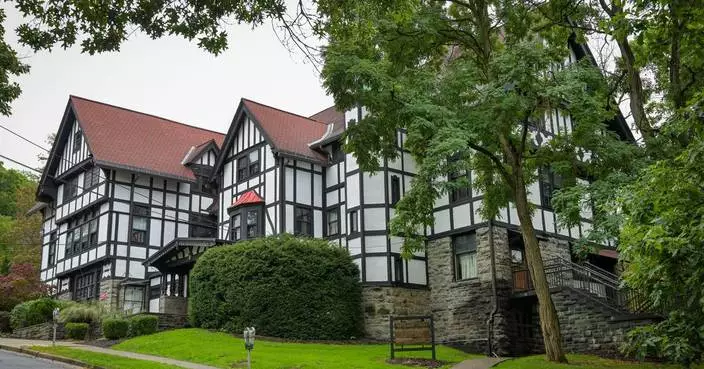
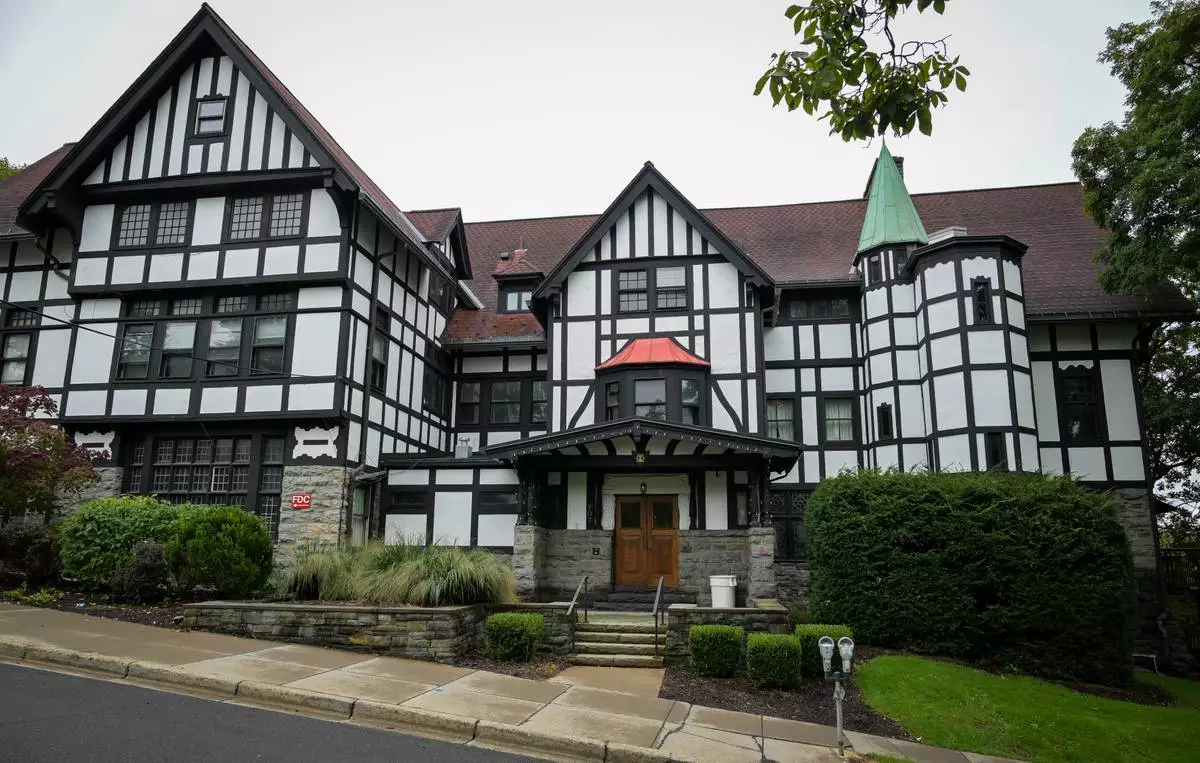
The Chi Phi fraternity house at Cornell University in Ithaca, N.Y., Monday, Sept. 28, 2026. (AP Photo/Heather Ainsworth)

The Chi Phi fraternity house at Cornell University in Ithaca, N.Y., Monday, Sept. 28, 2026. (AP Photo/Heather Ainsworth)

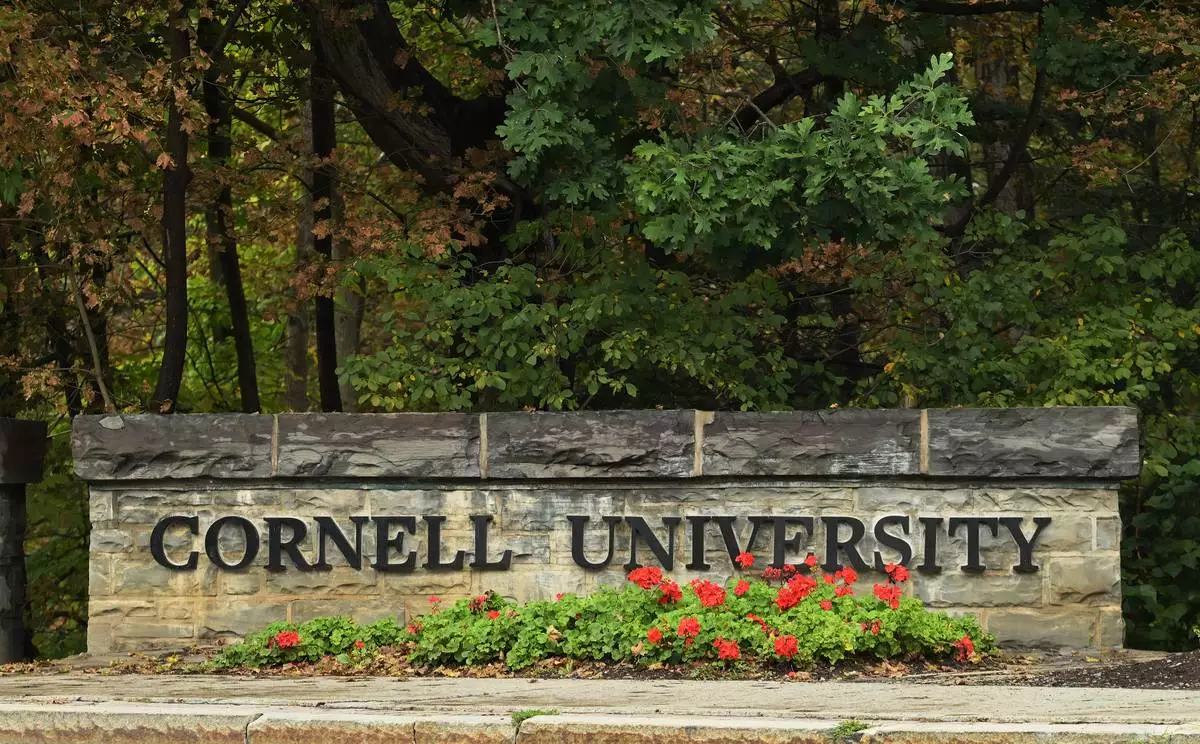
A Cornell University sign stands in Ithaca, N.Y., Monday, Sept. 28, 2026. (AP Photo/Heather Ainsworth)

A Cornell University sign stands in Ithaca, N.Y., Monday, Sept. 28, 2026. (AP Photo/Heather Ainsworth)

Recommended Articles