The Company has reduced carbon emissions intensity by 47% since 2020 and strengthened environmental monitoring, renewable energy use and conservation initiatives
SINGAPORE – Media OutReach Newswire – 1 October 2026 – As Brazil marks National Day for Industrial Pollution Control in August, Bracell is highlighting its continued efforts to reduce the environmental impact of its industrial operations while advancing operational efficiency and sustainable development in Bahia.
Between 2020 and 2025, Bracell reduced its carbon emissions intensity by 47% per ton of pulp produced, reaching 0.257 tons of CO₂ equivalent per ton of product (tCO₂e/adt) across its operations in Bahia, São Paulo and Mato Grosso do Sul.
The progress is part of Bracell 2030, the company's long-term sustainability strategy, which is aligned with the United Nations Sustainable Development Goals. The strategy comprises 14 targets across four pillars: Climate Action, Sustainable Landscapes and Biodiversity, Sustainable Growth, and Empowering Lives.
Under its Climate Action pillar, Bracell aims to achieve a 75% reduction in carbon emissions per ton of product by 2030, reaching 0.122 tCO₂e/adt. At Bracell's industrial unit in Camaçari, one of the key advances has been the modernisation of a pulp production line. A new cooking line, which began operating in October 2025, has improved process efficiency by reducing the amount of steam required during pulp manufacturing.
"As part of our goals, we seek to increase operational efficiency through continuous investments in innovation and technology in our processes, making us more sustainable, competitive, and aligned with our commitment to reducing carbon emissions," said Angela Ribeiro, Sustainability Manager at Bracell Bahia.
Bracell also conducts an annual corporate inventory of greenhouse gas (GHG) emissions and removals. In 2025, the inventory covered the company's pulp and paper value chain, including industrial operations in Bahia and São Paulo, forestry activities in Bahia, São Paulo and Mato Grosso do Sul, and logistics operations.
Environmental controls at Bracell's Camaçari industrial unit include continuous and isokinetic monitoring of nitrogen oxides (NOx), sulfur oxides (SOx), particulate matter and reduced sulfur compounds (RSCs). According to the company, monitoring results consistently remain below applicable legal emission limits.
"Environmental control includes continuous and isokinetic monitoring of parameters such as nitrogen oxides (NOx), sulfur oxides (SOx), particulate matter, and reduced sulfur compounds (RSCs). The results consistently remain below legal emission limits, reinforcing the efficiency of the environmental control systems implemented at the factory," said Angela.
The monitoring is conducted in accordance with Brazilian environmental legislation and forms part of the company's broader approach to continuous environmental management. Bracell's work in measuring, managing and transparently disclosing GHG emissions has also been recognised with the Gold Seal of the Brazilian GHG Protocol Program for four consecutive years. The programme is developed by the Centre for Sustainability Studies at Fundação Getulio Vargas (FGV) and the World Resources Institute (WRI), in partnership with institutions including Brazil's Ministry of the Environment and the Brazilian Business Council for Sustainable Development.
Bracell also participates in the Air Quality Monitoring Program of the Camaçari Industrial Complex, conducted by Cetrel. The Air Monitoring Network has operated continuously since May 1994 and is nationally recognised for the quality and technical reliability of the data generated.
Beyond reducing emissions from its industrial operations, Bracell has set a target to remove 25 million tons of CO₂ equivalent from the atmosphere between 2020 and 2030. Over the first five years of the programme, the company removed approximately 6 million tons of CO₂ equivalent. In 2025 alone, 3.4 million tCO₂e were removed, including 1.8 million tons from planted forests and 1.6 million tons from preserved native vegetation.
The results reflect the balance between emissions from operations, carbon sequestration in eucalyptus plantations and the conservation of native vegetation managed by the company, as well as areas conserved in partnership with governments in the states where Bracell operates.
"One of the most relevant milestones in our sustainability agenda is the progress of the One for One Commitment, through which we support the conservation of one hectare of native forest for every hectare of eucalyptus planted," said Meryellen Baldim, Environment and Certifications Manager at Bracell Bahia.
By 2025, Bracell, a member of the RGE group of companies founded by Sukanto Tanoto, had contributed to the protection of approximately 301,000 hectares of native vegetation across the states where it operates, achieving its established goal ahead of schedule.
In Bahia, the company owns four Private Natural Heritage Reserves (RPPNs). One of these is Lontra, located on the North Coast, which protects 1,377 hectares of Atlantic Forest, a biome of strategic importance for water and climate security. The reserve is recognised as an Advanced Post of the Atlantic Forest Biosphere Reserve (RBMA) by UNESCO.
Bracell's climate strategy also focuses on increasing the efficiency of its industrial operations and reducing reliance on fossil fuels. At its industrial unit, approximately 90% of the energy consumed comes from renewable sources, supporting the company's efforts to reduce carbon emissions and the environmental impacts associated with industrial activity.
Together, investments in process efficiency, emissions monitoring, renewable energy, carbon removal and native vegetation conservation form part of Bracell's broader commitment to developing more sustainable industrial practices while contributing to economic development and environmental responsibility.
Hashtag: #RGE #Bracell #Bracell2030 #Sustainability #Carbon #Environment #Renewable #Emissions
https://www.bracell.com
The issuer is solely responsible for the content of this announcement.
About Bracell
Bracell is a global leader in the production of dissolving pulp and specialty cellulose with two main mill operations in Brazil in Bahia and São Paulo. In addition to its operations in Brazil, Bracell has a management office in Singapore and sales offices in Asia, Europe and the U.S.
Please visit Bracell's website for more information.
** This press release is distributed by Media OutReach Newswire through automated distribution system, for which the client assumes full responsibility. **
Vinhomes Green Paradise, the first Official Participant in New7Wonders’ “7 Wonders of Future Cities” campaign, advances to the global vote as the developer takes its township model into five overseas markets
HO CHI MINH CITY, VIETNAM – Media OutReach Newswire – 1 October 2026 – For decades, the world has known Vietnam by what it ships: rice, coffee, cashews, black pepper, apparel and footwear. VinFast then proved that a Vietnamese company could export advanced technology. Now Vinhomes is preparing a different kind of export: its all-in-one integrated mega-city model. The company's flagship, Vinhomes Green Paradise in Can Gio, was the first project New7Wonders recognized as an Official Participant in its "7 Wonders of Future Cities" campaign and has since advanced to the global vote.
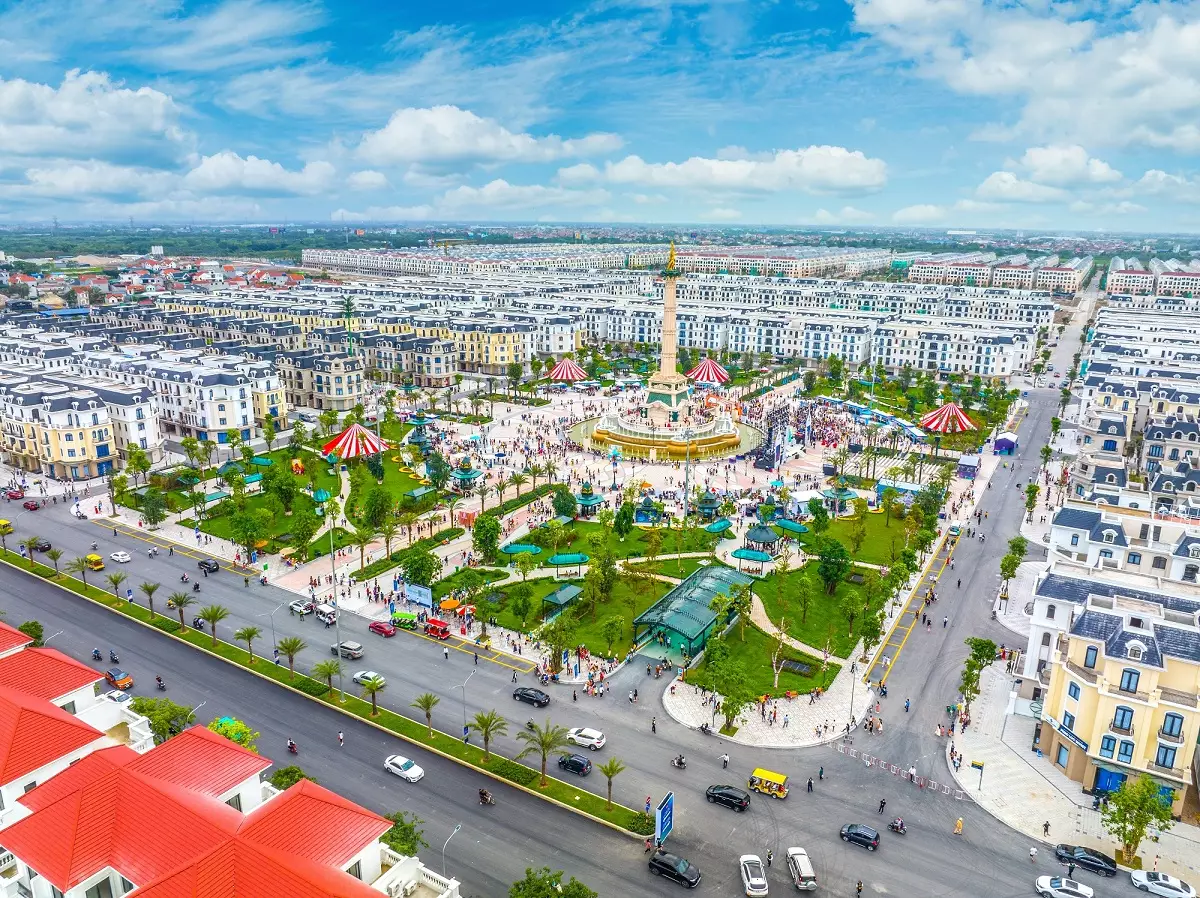
A Vinhomes integrated township.
As Vietnam's leading real estate developer, Vinhomes has brought 32 projects and urban developments into operation, serving hundreds of thousands of residents nationwide. That strategy is now reaching beyond Vietnam's borders, with projects and development plans in Congo, India, Australia, the Philippines and Indonesia. The model is built to meet a defining challenge of rapid urbanization: delivering homes together with commercial, educational, healthcare, transportation and public infrastructure, rather than years later.
An All-in-One Model Built for a Rapidly Urbanizing World
Vinhomes' integrated townships, typically larger than 300 hectares in strategic locations, are designed to function as economies in miniature. U.S. market data shows master-planned communities outselling standalone developments and attracting households with markedly higher incomes than their surrounding areas.
The world is in the midst of a historic wave of urbanization. According to the United Nations' World Urbanization Prospects 2025, cities are now home to 45% of the world's 8.2 billion people, more than double their 20% share in 1950. Cities are also projected to absorb two-thirds of global population growth between now and 2050.
The real challenge is not how many homes get built, but whether infrastructure can keep pace with the people who move into them. In many fast-growing cities, housing comes first while schools, hospitals, parks and transit arrive years later, leaving residents with long commutes, scattered services and a steadily eroding quality of life.
Vinhomes' model tackles that problem at the source. The company focuses on internationally benchmarked integrated townships, typically larger than 300 hectares in strategic locations, where homes are delivered alongside commercial, educational, healthcare, transportation and public facilities. Built this way, a township ceases to be merely a real estate product and begins to function as an economy in miniature, generating its own jobs, services and investment as residents move in.
International market data underscores the value of integration. Zonda's Master Plan Outlook found that U.S. master-planned communities averaged 2.3 home sales per month in the third quarter of 2025, compared with 2.1 for standalone communities; in the entry-level segment below $300,000, the gap widened to 51%. Research by Cushman & Wakefield found that median household incomes in the master-planned communities it studied were 38% higher than in surrounding areas, a profile that helps draw premium retail and services.
What sets Vinhomes apart is its ability to execute at rare scale and speed. After visiting the company's project in Can Gio, New7Wonders Director Jean-Paul de la Fuente observed that few developers anywhere have the capacity to build at such scale and pace while still managing the complexity involved.
Vinhomes Green Paradise Showcases a Human-Centric City Built for Export
Spanning 2,870 hectares with a construction density of just 16%, Vinhomes Green Paradise is the flagship of the Vinhomes model. Having stood out across New7Wonders' three pillars of Environment & Nature, Smart City and Human-Centric Development, the project has advanced to the global vote of the "7 Wonders of Future Cities" campaign.
If one project captures the global ambition of the Vinhomes model, it is Vinhomes Green Paradise. The 2,870-hectare development reserves most of its land for greenery and water, including a natural seawater lagoon of up to 800 hectares and 121 kilometers of shoreline. It sits beside the 75,000-hectare Can Gio Mangrove Biosphere Reserve, recognized by UNESCO.
Vinhomes Green Paradise became the first project New7Wonders recognized as an Official Participant after the "7 Wonders of Future Cities" campaign opened on Oct. 31, 2025. Under the organization's evaluation framework, the Vietnamese entry stands out across three pillars: Environment & Nature, Smart City and Human-Centric Development. The project has since advanced to the campaign's global vote.
The human-centric pillar comes to life in a new idea of the second home: the city by morning, the sea by evening. Once the planned Ben Thanh–Can Gio rail line, designed for speeds of up to 350 km/h, is complete, the trip from downtown Ho Chi Minh City to the coast is expected to take about 13 minutes. By road, with the Can Gio Bridge replacing the Binh Khanh ferry and Rung Sac Boulevard widened, the drive should take around 35 minutes. Families could leave work on Friday, have dinner by the sea and be back in the city Monday morning. Such travel times would bring a coastal home within daily commuting range of the city center.
The project is designed so that every generation finds its own joy in a shared place. Children can paddleboard and swim in the lagoon, cycle along seaside paths and explore the 122-hectare VinWonders, with 280 attractions and 30 shows a day, while Young Paradise Hub nurtures their talents in technology and the arts. Grandparents can stroll through 370 parks, unwind in thermal mineral waters at Retreat Hub, connect with friends at New Horizon Center and share their experience at the Wisdom Academy within Vin New Horizon. Shared moments can be simple: a sunset on the lagoon's sandy shore, fireworks over the bay, an evening at the Song Xanh theater.
A city model becomes exportable not because of its size, but because it addresses a challenge shared by cities worldwide: creating places where people choose to live, work and return to each day. Having applied the model from Hanoi and Ha Long to Can Gio, Vinhomes is now taking it to international markets as a new kind of "Made in Vietnam."
Hashtag: #Vinhomes
https://vinhomes.vn/en
The issuer is solely responsible for the content of this announcement.
About Vinhomes
Vinhomes is Vietnam's largest residential real estate and integrated township developer. The company pioneers the development of synchronized, modern large-scale townships, delivering premium living standards and unlocking sustainable investment opportunities for domestic and international clients.
** This press release is distributed by Media OutReach Newswire through automated distribution system, for which the client assumes full responsibility. **