Skip to Content Facebook Feature Image

This Head Start center teaches in two languages. A Trump overhaul would require one: English

News

This Head Start center teaches in two languages. A Trump overhaul would require one: English
News

News

This Head Start center teaches in two languages. A Trump overhaul would require one: English

2026-10-01 12:01 Last Updated At:12:11

IMMOKALEE, Fla. (AP) — It's almost noon, and after playing on the playground, working with clay and washing their hands, the 2-year-olds are ready for lunch.

The eight children and their Head Start teachers pray in English, thanking God for the meal. Then, the adults bring over several bowls.

More Images
A poster shows common shapes labeled in both English and Spanish inside a classroom at a Head Start preschool in Immokalee, Fla., Thursday, Sept. 10, 2026. (AP Photo/Rebecca Blackwell)
A poster shows common shapes labeled in both English and Spanish inside a classroom at a Head Start preschool in Immokalee, Fla., Thursday, Sept. 10, 2026. (AP Photo/Rebecca Blackwell)

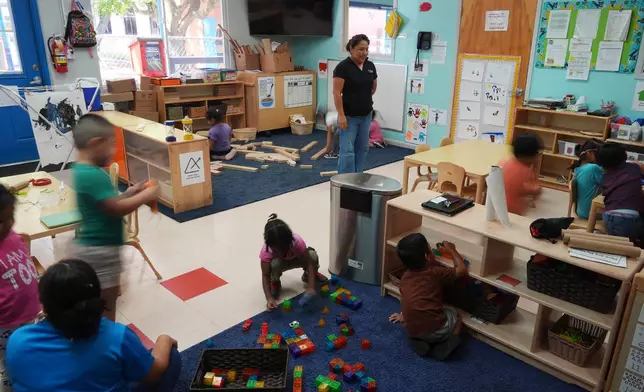
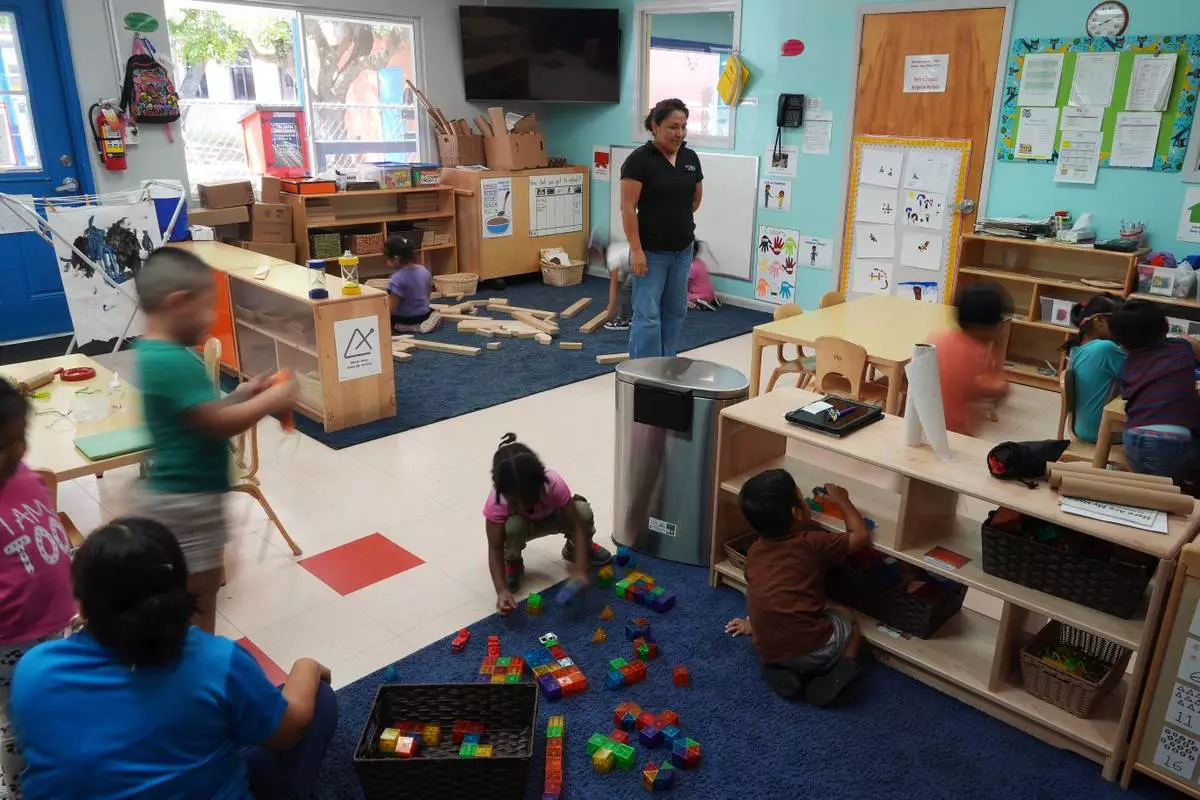
Children play at a Head Start preschool in Immokalee, Fla., Thursday, Sept. 10, 2026. (AP Photo/Rebecca Blackwell)

Children play at a Head Start preschool in Immokalee, Fla., Thursday, Sept. 10, 2026. (AP Photo/Rebecca Blackwell)

A mother picks up her young child from a Head Start preschool in Immokalee, Fla., Thursday, Sept. 10, 2026. (AP Photo/Rebecca Blackwell)
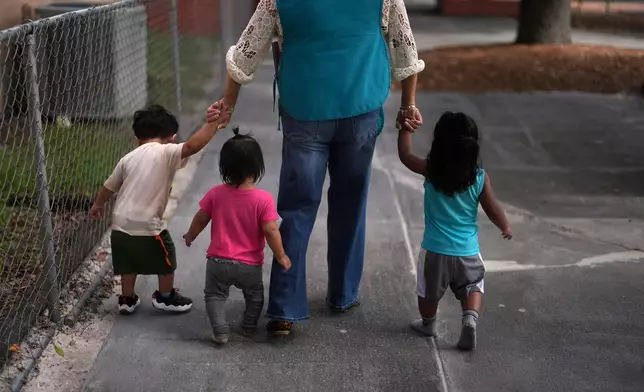
A mother picks up her young child from a Head Start preschool in Immokalee, Fla., Thursday, Sept. 10, 2026. (AP Photo/Rebecca Blackwell)

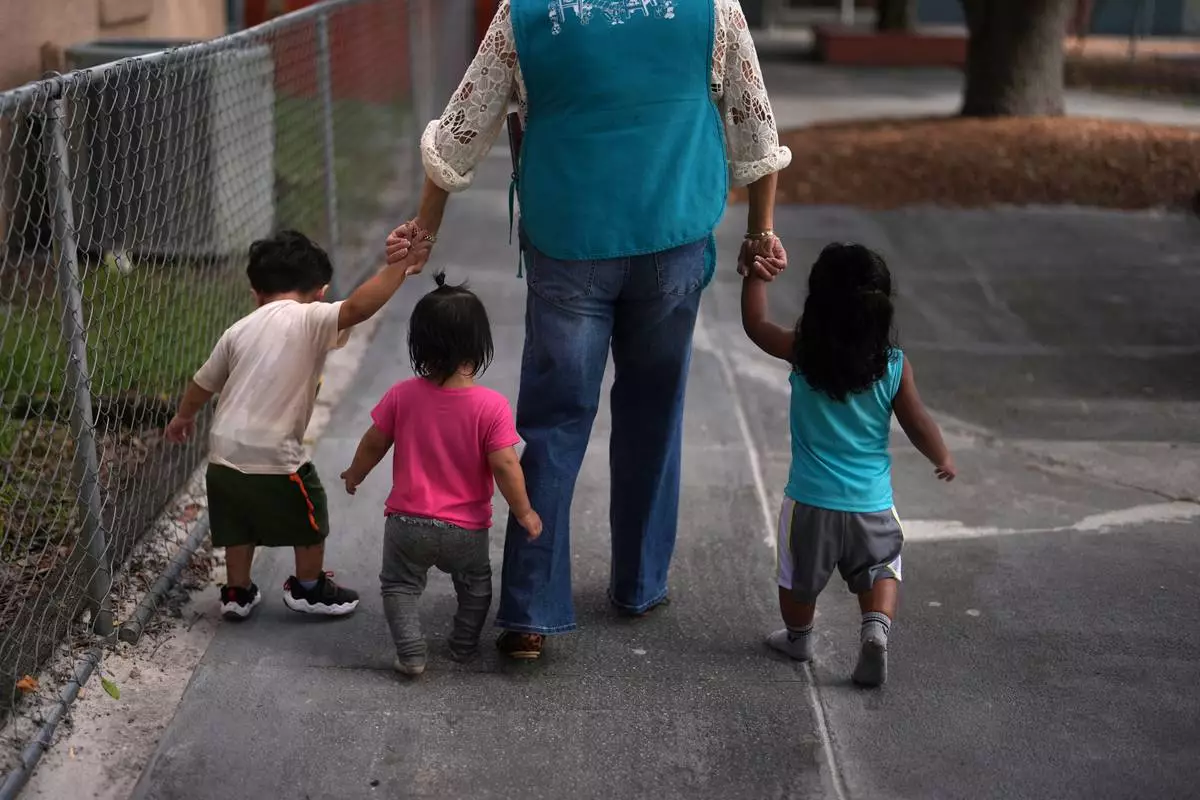
A teacher escorts young children back to their classroom at a Head Start preschool in Immokalee, Fla., Thursday, Sept. 10, 2026. (AP Photo/Rebecca Blackwell)
A teacher escorts young children back to their classroom at a Head Start preschool in Immokalee, Fla., Thursday, Sept. 10, 2026. (AP Photo/Rebecca Blackwell)

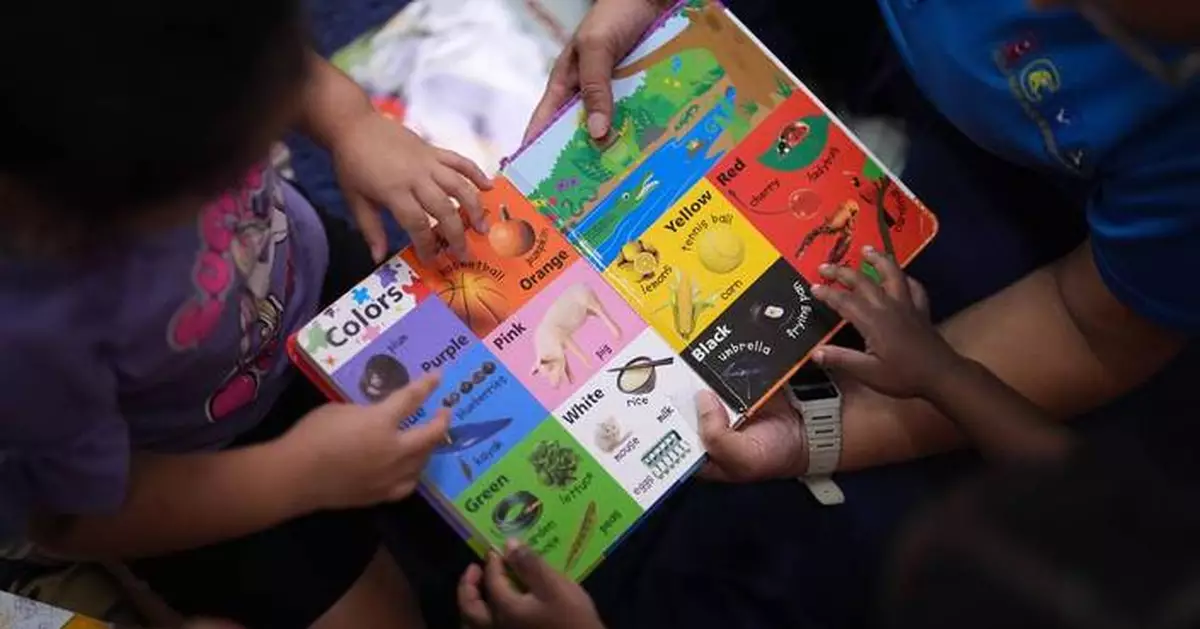
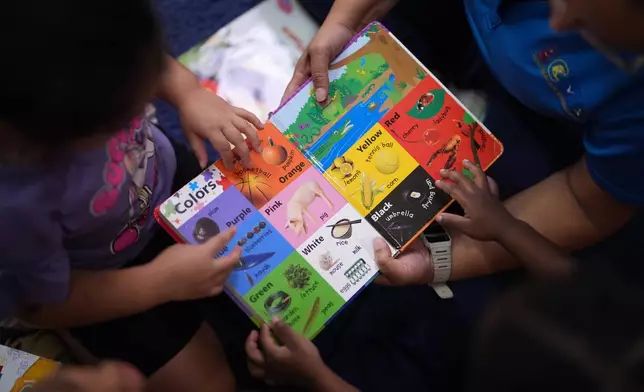
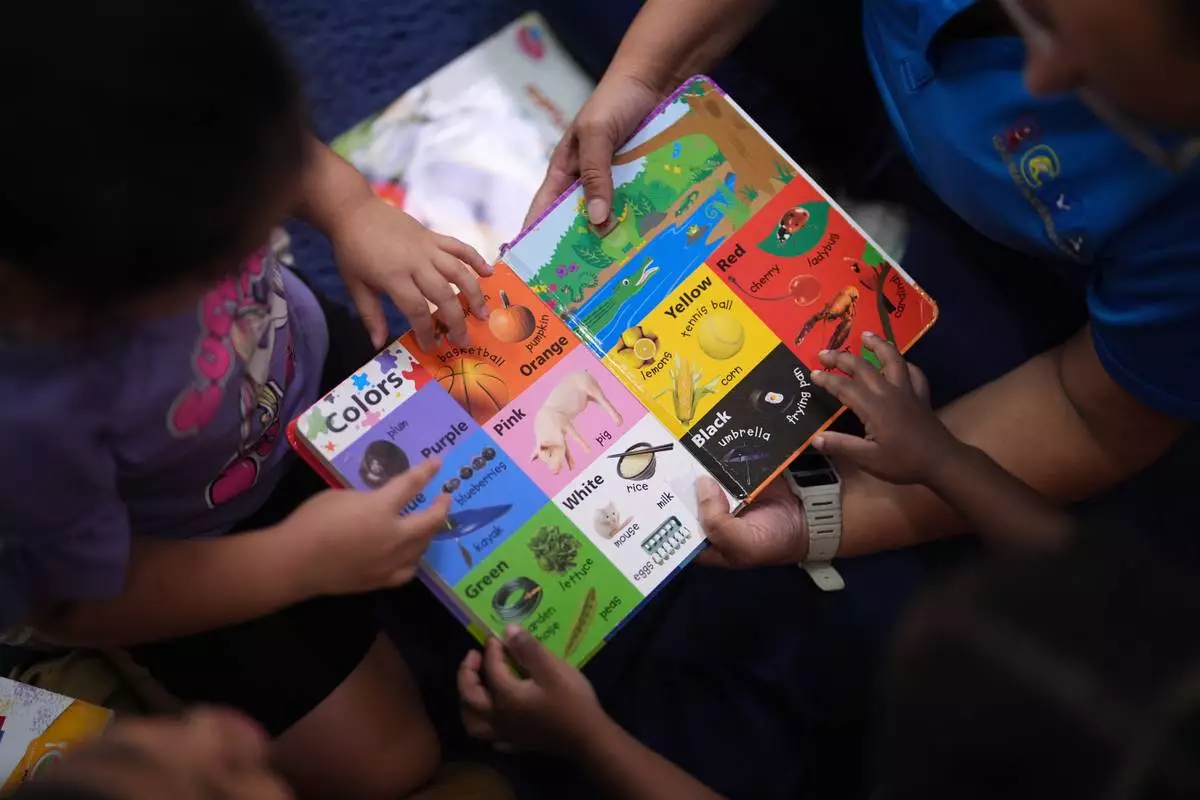
Children look through a book of first words at a Head Start preschool in Immokalee, Fla., Thursday, Sept. 10, 2026. (AP Photo/Rebecca Blackwell)

Children look through a book of first words at a Head Start preschool in Immokalee, Fla., Thursday, Sept. 10, 2026. (AP Photo/Rebecca Blackwell)

“Hoy tenemos arroz. Eduardo, ¿puedes servir tu arroz, por favor?" In Spanish, the teacher announces the children are having rice, asking Eduardo to start serving. The little boy grabs a ladle and scoops rice onto his plate.

Both English and Spanish are core to daily life in this Head Start preschool in Immokalee, Florida — an agricultural area about 120 miles (190 km) northwest of Miami. The center serves more than 50 children from mostly Guatemalan families, ages six months to 5 years. Most students arrive speaking little or no English.

Children who speak a language other than English at home account for at least a third of the enrollment in Head Start, a federally funded early childhood program serving roughly 700,000 low-income children and their parents. For decades, Head Start has supported these kids by hiring multilingual teachers to teach them English, while using their home languages as a foundation.

But an overhaul of Head Start’s standards proposed by President Donald Trump's administration would amend that approach.

If finalized, the proposal would require Head Start programs to conduct all education in English, though programs could seek waivers and certain Tribal-language instruction would be exempt. The administration argues emphasizing English will expand children’s future economic opportunities and their ability to participate in American communities.

“A firm foundation in the English language” is critical to preparing kids for school, said the Department of Health and Human Services, which oversees Head Start, in response to questions from The Associated Press.

The administration says the change would allow programs to reduce multilingual services and redirect resources toward English-language education and “assimilation.” But it also estimates tens of millions of dollars in one-time costs to make the switch to English instruction, including nearly $47 million to replace curricula, books and other classroom materials containing other languages.

Toys line shelves in the Immokalee classrooms, labeled in English and Spanish — helicopters, airplanes, tower builders. Bilingual signs show shapes in different colors and list children’s birthdays.

Every day, teachers sing and read in both languages, with offerings like “La Vaca Lola” (Lola the Cow), “The Wheels on the Bus,” “El Camioncito Azul” (Little Blue Truck) and “Pete the Cat.”

One afternoon, a group of children is eating muffins when it suddenly grows dark outside and thunder rolls. Noticing the preschoolers look worried, a teacher explains in English, “When you see it, it’s lightning. When you hear it, it’s thunder. What was it?”

“Thunder,” a boy responds. Another answers the question in Spanish, noting the danger: “Es muy peligroso."

“Si te cae un rayo muy fuerte, te puedes lastimar," the teacher responds. (If a very strong bolt of lightning hits you, you could get hurt.) Then she adds in English: “So we don’t go outside.”

The children cover their ears. “¡Lo escuché!” one shouts. (I heard it!)

Speaking in English, the teacher tries to calm them down. Everything is fine, she explains. They are safe inside the classroom.

This is part of Head Start’s Planned Language Approach in action. Educators help children learn English while also using the language they speak at home — not simply as an accommodation, but as a teaching strategy. Research shows skills and knowledge developed in a child’s home language can provide a foundation for learning English.

If a child already knows the word for “yellow” in Spanish, she doesn’t have to completely rediscover the concept behind the color when learning the word in English. Rather, Spanish becomes a bridge to English.

Asked for research supporting the proposed English-only requirement, the Department of Health and Human Services pointed to a section of the proposal that cites Trump’s executive order designating English as the country’s official language. “The changes set forth in the proposed Head Start rule help achieve these goals by exposing children to English earlier, during a critical time in children’s development,” a department spokeswoman said.

But education studies don't back up the administration's claim, said Michael López, a child psychologist who has spent more than three decades researching early learning and leading Head Start studies for the federal government and non-governmental organizations.

“There’s really not any credible research basis that suggests that English-only instruction will produce stronger English academic outcomes,” López said. “It’s a mistake. It’s really going back 30 years.”

Dual-language instruction produces better academic outcomes, he said, including in subjects like mathematics. And, he said, studies suggest instruction in both languages can produce better Spanish skills without sacrificing English-language development.

Francisco Rodriguez, who attended Head Start in Florida as a child, said he spoke English at home with his mother, but often couldn’t communicate with his father, who speaks only Spanish. Head Start helped him build a foundation in Spanish to deepen his relationship with his dad. Today, he is fluent in both languages.

“Knowing how to read or write in English, it was easy for me to pick up Spanish words,” said Rodríguez, now 32, who holds a master’s degree in architecture and creates interactive experiences in museums. “And because I’ve heard them at home, I can easily put two and two together.”

In the 1970s, Head Start began requiring centers with significant numbers of non-native English speakers to hire at least one staff member fluent in their home language — a regulation still in place today.

The Trump administration wants to drop that requirement, saying it could help centers more easily staff classrooms.

The language changes are part of a broader effort by the Trump administration to eliminate or rewrite many federal Head Start requirements for classroom conditions, curriculum and safety. Instead, state and local regulations — which are often more lenient — would apply. The administration says the change would give Head Start centers more flexibility over how they operate.

The proposed changes do not require a vote in Congress, but the administration is required to seek and consider feedback from the public. Comments are due Oct. 6.

Thus far, most comments related to the English-only proposal oppose that approach.

At Immokalee, teachers give daily notes to parents when they pick up their children, writing in both English and Spanish. A recent note to the family of a girl named Deleiza, for example, said she’d eaten almost all her breakfast and lunch. “Hoy estuve sonriente," it said. (Today I was smiling.)

Beyond these simple reports are monthly parent meetings on campus to discuss topics like security, plus four in-person parent-teacher conferences every year — two at the children’s homes and two at school. (Those conferences would become optional under the Trump administration proposal.)

In all of these interactions, parents and staff currently speak in Spanish with each other.

The executive director overseeing the Immokalee center said she is unsure what the English-only proposal would mean in practice, particularly for parents’ involvement.

“I don’t know how you’re going to keep people from … speaking Spanish, because it is the home language,” said Isabel Garcia, who, as executive director of the Redlands Christian Migrant Association, supervises 26 Head Start and Early Head Start locations. “It is important that (family members) feel comfortable understanding what is happening with their child.”

HHS told the AP the English-language requirement would apply only to instruction. Head Start teachers could continue using kids’ home languages in non-instructional contexts — explaining safety rules or providing comfort, for example — and when communicating and engaging with families, the department said. In fact, the law requires Head Start centers to communicate with parents in a language they understand, “to the extent practicable,” which wouldn't change.

But communicating thoroughly may be more difficult without a staff member who speaks the language. The department acknowledged that eliminating requirements for bilingual staffers “may negatively affect communication with non-English-speaking families and weaken family engagement."

“Technology-based translation tools may help mitigate some of these impacts,” the department said.

López, the researcher, noted parents help advance their children’s learning by being teachers at home, even when they’re using a language other than English. They help kids by counting, referencing different colors and repeating stories and songs.

“We are going to lose that bridge,” López said.

During naptime at the Immokalee center, a mother opens the door to pick up a sick child. The teacher greets her in Spanish, reporting her daughter didn't want to sleep or eat.

“No quiso dormir. No quiso comer," the teacher says.

The mother lifts her daughter from the mat, rests her little head on one of her shoulders, and says to her: “It is OK, bebé.”

“Hasta mañana," the teacher whispers. “Hope you feel better.”

AP Education Writers Alia Wong and Moriah Balingit contributed reporting.

The Associated Press’ education coverage receives financial support from multiple private foundations. AP is solely responsible for all content. Find AP’s standards for working with philanthropies, a list of supporters and funded coverage areas at AP.org.

A poster shows common shapes labeled in both English and Spanish inside a classroom at a Head Start preschool in Immokalee, Fla., Thursday, Sept. 10, 2026. (AP Photo/Rebecca Blackwell)
A poster shows common shapes labeled in both English and Spanish inside a classroom at a Head Start preschool in Immokalee, Fla., Thursday, Sept. 10, 2026. (AP Photo/Rebecca Blackwell)

Children play at a Head Start preschool in Immokalee, Fla., Thursday, Sept. 10, 2026. (AP Photo/Rebecca Blackwell)

Children play at a Head Start preschool in Immokalee, Fla., Thursday, Sept. 10, 2026. (AP Photo/Rebecca Blackwell)

A mother picks up her young child from a Head Start preschool in Immokalee, Fla., Thursday, Sept. 10, 2026. (AP Photo/Rebecca Blackwell)
A mother picks up her young child from a Head Start preschool in Immokalee, Fla., Thursday, Sept. 10, 2026. (AP Photo/Rebecca Blackwell)

A teacher escorts young children back to their classroom at a Head Start preschool in Immokalee, Fla., Thursday, Sept. 10, 2026. (AP Photo/Rebecca Blackwell)
A teacher escorts young children back to their classroom at a Head Start preschool in Immokalee, Fla., Thursday, Sept. 10, 2026. (AP Photo/Rebecca Blackwell)

Children look through a book of first words at a Head Start preschool in Immokalee, Fla., Thursday, Sept. 10, 2026. (AP Photo/Rebecca Blackwell)
Children look through a book of first words at a Head Start preschool in Immokalee, Fla., Thursday, Sept. 10, 2026. (AP Photo/Rebecca Blackwell)
NASHVILLE, Tenn. (AP) — Tennessee officials were unable to put Christa Gail Pike to death Wednesday for a 1995 murder after administering two doses of a lethal drug. A death penalty expert said it was an unprecedented failure.

Pike was alive and loudly snoring after the attempted lethal injection and taken by ambulance from the prison, her attorneys said.

“We have not been informed as to her condition,” Pike's attorneys said in a statement.

Pike, 50, had been scheduled for execution at 10 a.m. Wednesday for the killing she committed at age 18 and would have been the first woman executed in Tennessee in more than 200 years. An appeals court stopped the lethal injection just an hour before it was to start and hours later the U.S. Supreme Court overturned that stay.

Officials gave Pike two doses of pentobarbital, her attorneys said in court filings late Wednesday. Robin M. Maher, executive director of the Death Penalty Information Center, said what Pike experienced is “singular and unparalleled.”

Seven other people have survived medical problems due to the execution team's failure to access a vein to administer lethal injection drugs, but no one has stayed alive after receiving the drugs used in such executions, she said.

Pike’s attorneys said: “We take no pleasure in being right, but the concerns raised by Ms. Pike proved to be true: difficult vein access, blown veins, degraded pentobarbital, no emergency medical care available when things inevitably go wrong, all under a protocol that remains veiled in secrecy.”

Media witnesses observing from a separate room said officials raised curtains to the execution chamber at 7:27 p.m., showing Pike strapped to a gurney.

Pike remained awake and at one point raised her head and asked prison officials if her arm was supposed to feel that way. It was not clear what she was referencing.

By 8:26 p.m., execution witnesses reported that the second dose of pentobarbital had been administered.

Pike continued to be heard snoring behind the closed curtain until the microphone was cut off at 8:53 p.m. At that time there was an announcement to escort media witnesses out of the area.

Tennessee Department of Correction spokesperson Dorinda Carter told media witnesses she was unable to immediately provide information about what happened.

Lawyers for Pike filed an emergency motion late Wednesday to the U.S. Supreme Court seeking to immediately halt and stay the execution, saying she was in “unnecessary agony” and it was violating her right to be executed free of cruel and unusual punishment. They also filed motions in the Sixth Circuit court and district court.

The motion also asserted that the Department of Correction should begin lifesaving measures. “Failure to provide such care constitutes deliberate indifference to legitimate, serious medical needs.”

Pike and her boyfriend were convicted of the fatal stabbing and beating in 1995 of 19-year-old Colleen Slemmer, their classmate at a job training facility in Knoxville. The case garnered widespread attention in part because of a pentagram that was carved on Slemmer’s body and other elements of the crime stoked fears of Satan worship during the “satanic panic” of the 1980s and 1990s.

It was the second time this year that Tennessee has been unable to carry out an execution: In May state officials called off the lethal injection of Tony Carruthers, who was convicted of kidnapping and killing three people in 1994, after executioners tried and failed for over an hour to place an IV to administer pentobarbital.

Pike was initially scheduled to be put to death in the morning, and witnesses had gathered at the Riverbend Maximum Security Institution in Nashville when the 6th Circuit U.S. Court of Appeals voted 2-1 to issue a stay. That court said a delay was needed to consider whether Pike’s allegations of childhood sexual abuse were fully considered at her sentencing.

The attorney general’s office appealed to the Supreme Court, saying that halting the execution at the last moment traumatized Slemmer’s family and rewarded “abusive delay tactics” by Pike’s attorneys.

Later in the day, the high court cleared the way for the execution to proceed. The conservative majority did not explain their order, while the three liberal members signed a dissent that said Pike’s claims deserved a closer look.

Pike does not deny committing the killing, but her supporters argue that the state should consider her age at the time, her mental illness and her allegations of severe sexual abuse.

“It is inconceivable that in the 21st century, the criminal justice system is poised to execute a survivor of rape and child sexual abuse whose jury never had the opportunity to consider those facts in weighing the defendant’s moral culpability,” her attorneys wrote in a filing.

As the execution date drew near, debate renewed over the death penalty for young offenders.

Assistant Federal Defender Stephen Ferrell said Pike’s death sentence is an outlier because other 18-year-olds in Tennessee have had such sentences vacated.

After the killing, Pike was diagnosed with bipolar disorder and post-traumatic stress disorder. In her clemency petition, she said she only wanted to fight Slemmer but killed her in a frenzied attack when she couldn’t “put the brakes on.”

“I was a mentally ill 18-year-old kid. It took me numerous years to even realize the gravity of what I’d done. Even more to accept how many lives I affected. I took the life of someone’s child, sister, friend. It sickens me now to think I had the ability to commit such a crime,” Pike said in a statement.

Slemmer’s mother said she wants the lethal injection to go forward, saying she has waited decades to see Pike’s sentence carried out.

“Every time I think about it, I think about Colleen feeling that pain and trying to get up and run,” May Martinez told The Associated Press in a telephone interview on Saturday.

Martinez said a group helped raise money so she and her husband could travel from Florida to witness the execution.

“Not a day goes by, or a minute goes by that I do not think about Colleen. Holidays are the worst,” she said, noting that her daughter would have turned 51 in September.

The killing rocked the city of Knoxville. Prosecutors said Pike, fearing Slemmer was trying to steal her boyfriend, lured her to a wooded area on Jan. 12, 1995. Pike cut Slemmer with a box cutter and beat her with a large chunk of asphalt. Shipp, Pike’s boyfriend, has admitted that he was the one who carved a pentagram, a star-shaped symbol associated with Satan, into her body.

Shipp was 17 when the crime happened and received a sentence of life in prison with the possibility of parole. Pike was the only one sentenced to death.

Since the Supreme Court reinstated the death penalty in 1976, 18 women have been put to death, representing about 1% of all executions, according to the Death Penalty Information Center.

Pike would have been the 30th person executed in the U.S. this year after Florida carried out an execution on Tuesday.

Tennessee announced in 2024 that it was switching from a three-drug series for lethal injections to the single drug pentobarbital. That came more than two years after the state abruptly halted the execution of Oscar Smith and acknowledged that it had failed to ensure its lethal injection drugs were tested properly.

This story has been updated to correct that Pike had been scheduled for execution at 10 a.m. local time, not 11 a.m.

Associated Press writers Jeffrey Collins in Columbia, South Carolina, Ed White in Detroit and Hallie Golden in Seattle contributed.

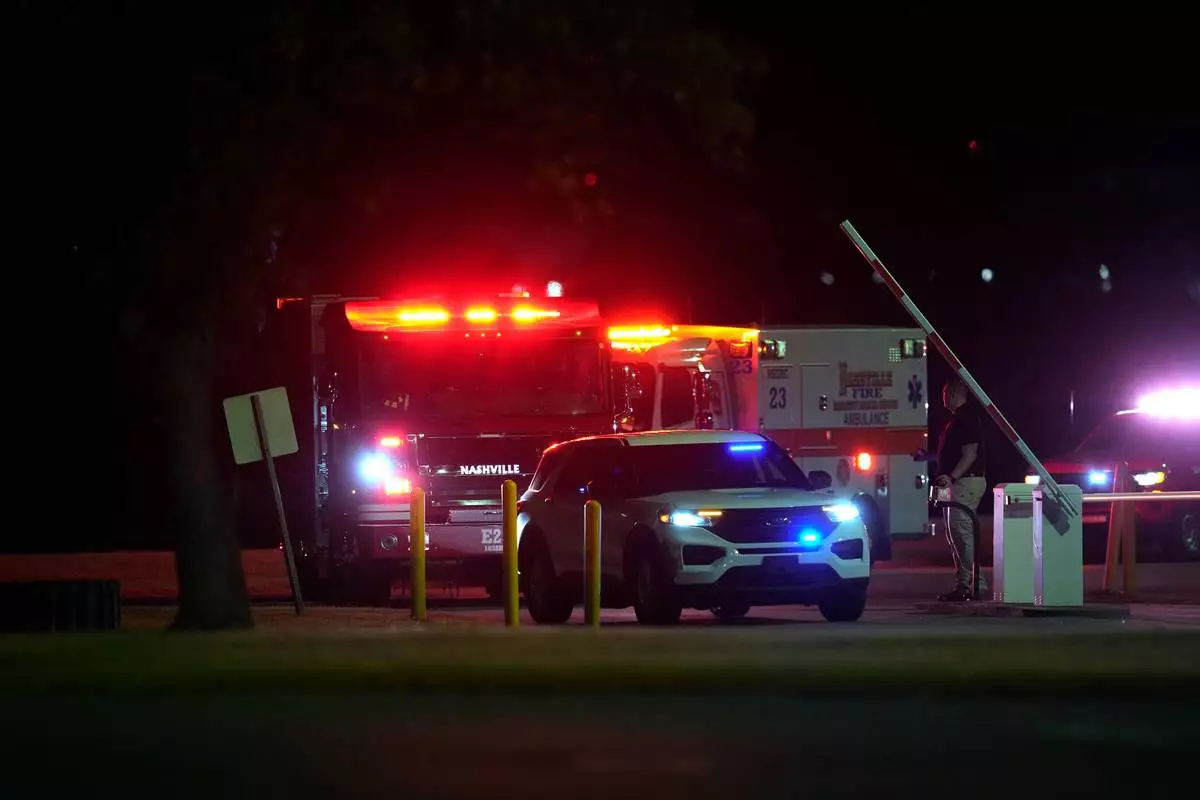
Emergency vehicles arrive at Riverbend Maximum Security Institution after the execution of Christa Pike was halted Wednesday, Sept. 30, 2026, in Nashville, Tenn. (AP Photo/George Walker IV)

Emergency vehicles arrive at Riverbend Maximum Security Institution after the execution of Christa Pike was halted Wednesday, Sept. 30, 2026, in Nashville, Tenn. (AP Photo/George Walker IV)

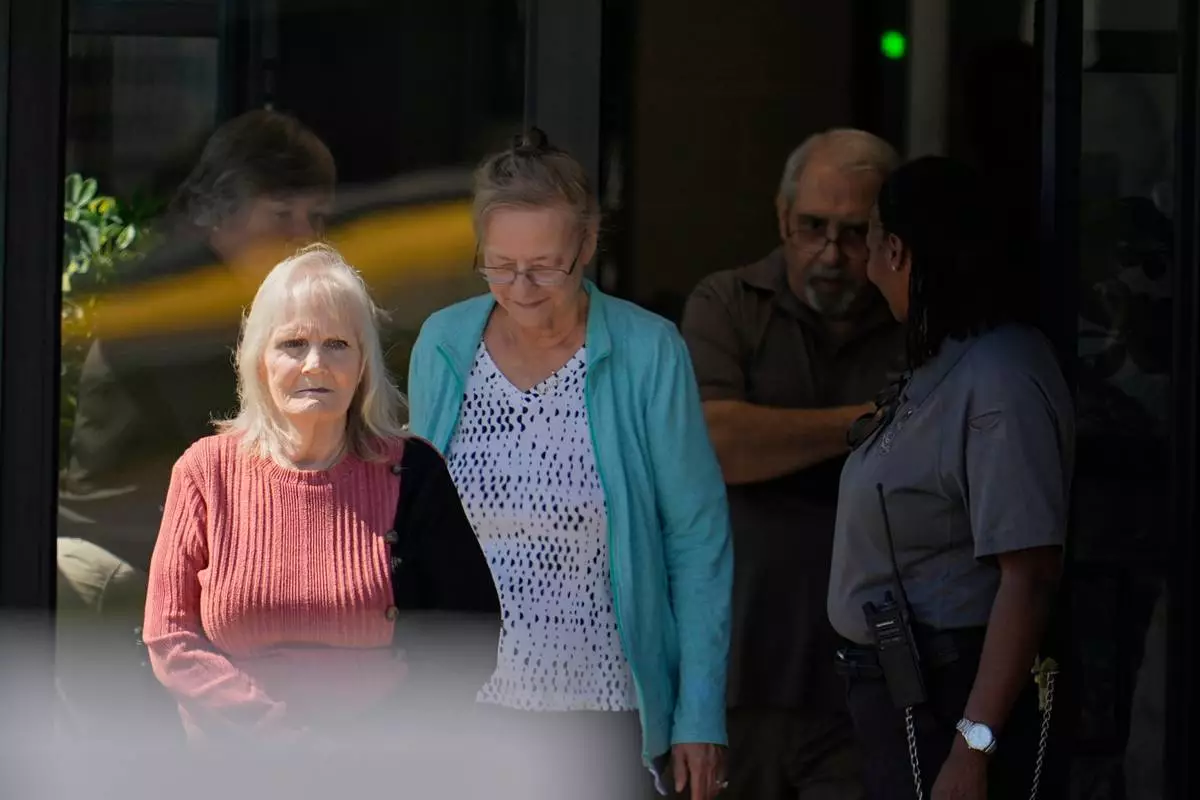
May Martinez, left, mother of murder victim Colleen Slemmer, walks out of Riverbend Maximum Security Institution during a stay of the planned execution of Christa Pike, Wednesday, Sept. 30, 2026, in Nashville, Tenn. (AP Photo/George Walker IV)

May Martinez, left, mother of murder victim Colleen Slemmer, walks out of Riverbend Maximum Security Institution during a stay of the planned execution of Christa Pike, Wednesday, Sept. 30, 2026, in Nashville, Tenn. (AP Photo/George Walker IV)

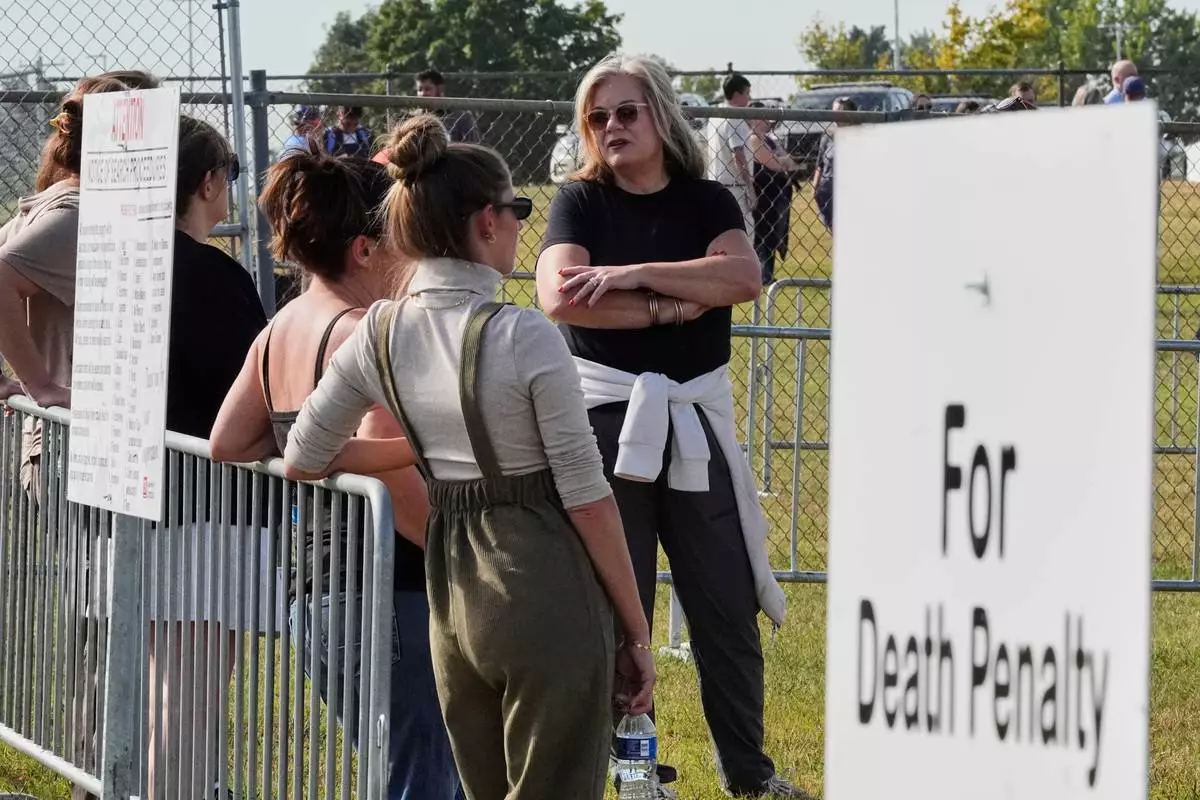
Leslie Brown, right, stands with others in the area reserved for people in favor to the death penalty outside Riverbend Maximum Security Institution before the planned execution of Christa Pike, Wednesday, Sept. 30, 2026, in Nashville, Tenn. (AP Photo/George Walker IV)

Leslie Brown, right, stands with others in the area reserved for people in favor to the death penalty outside Riverbend Maximum Security Institution before the planned execution of Christa Pike, Wednesday, Sept. 30, 2026, in Nashville, Tenn. (AP Photo/George Walker IV)

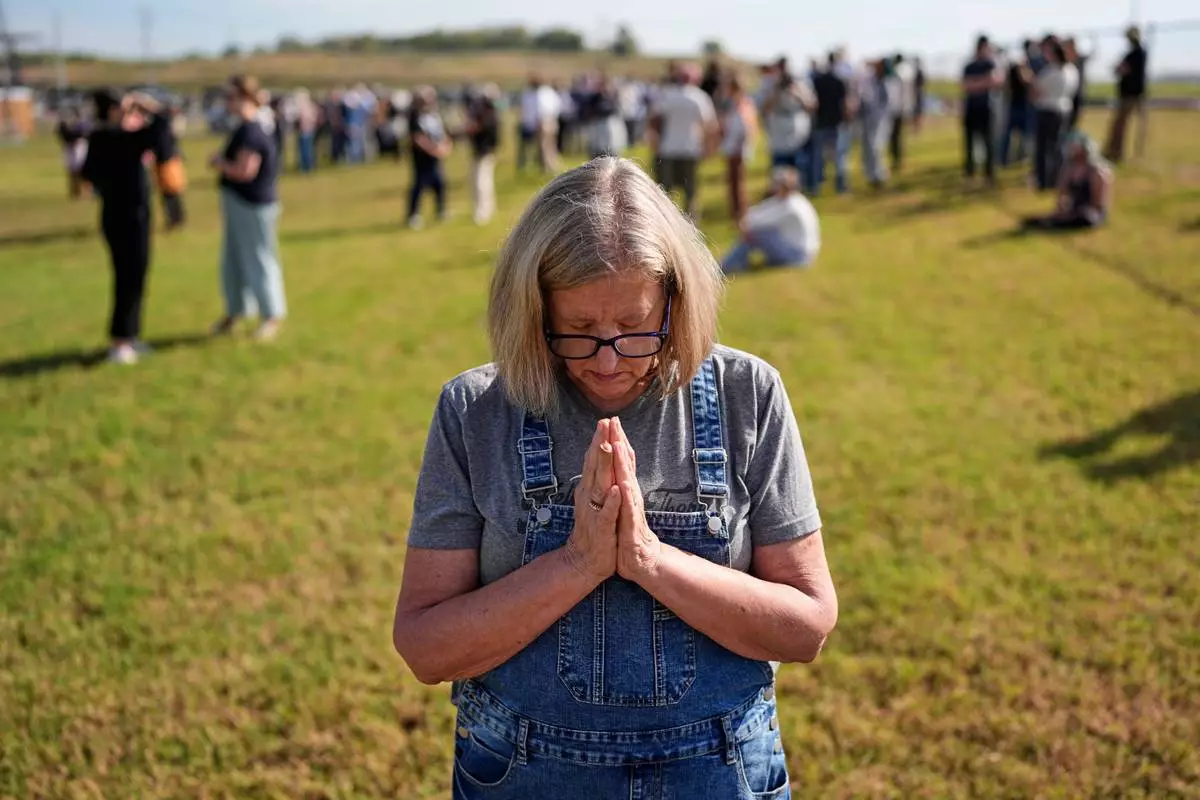
Kathleen Walter prays in the area reserved for people opposed to the death penalty outside Riverbend Maximum Security Institution before the planned execution of Christa Pike, Wednesday, Sept. 30, 2026, in Nashville, Tenn. (AP Photo/George Walker IV)

Kathleen Walter prays in the area reserved for people opposed to the death penalty outside Riverbend Maximum Security Institution before the planned execution of Christa Pike, Wednesday, Sept. 30, 2026, in Nashville, Tenn. (AP Photo/George Walker IV)

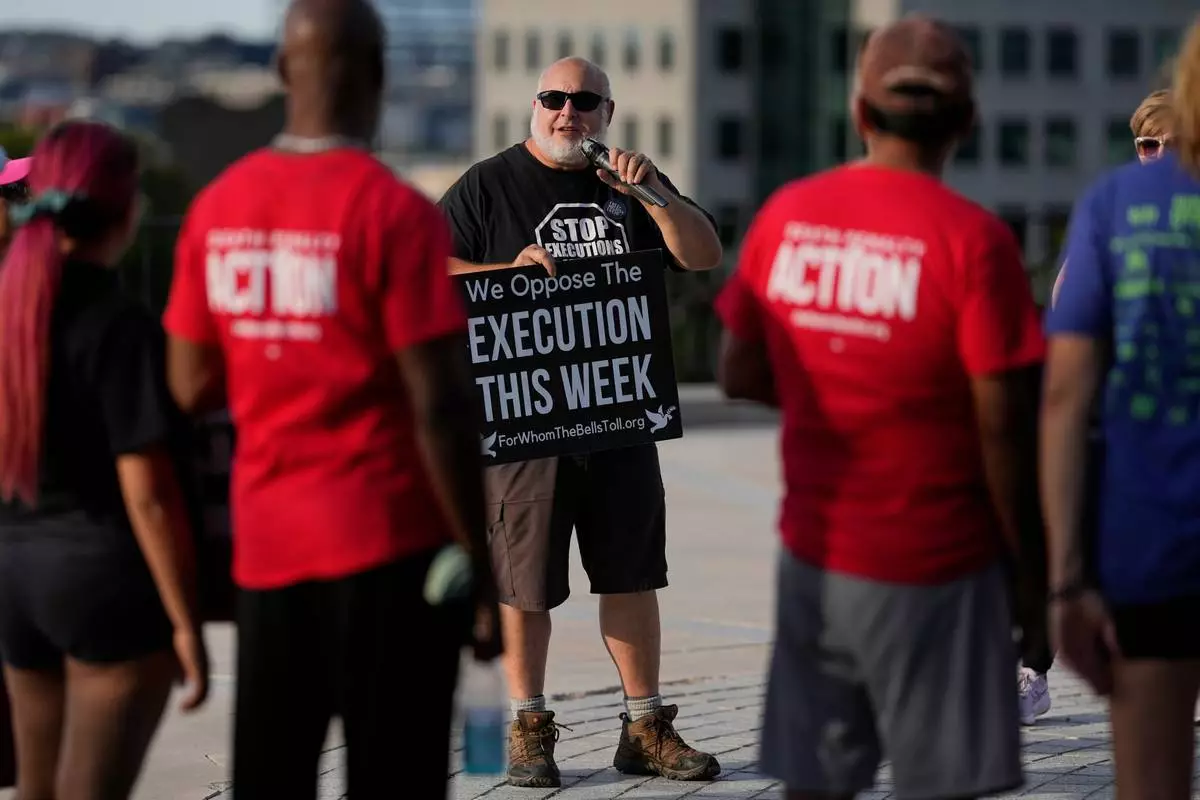
Abraham Bonowitz speaks during a March 4 Mercy protest against the death penalty at the Tennessee State Capitol, Sunday, Sept. 27, 2026, in Nashville, Tenn. ahead of the Sept. 30th scheduled execution of Christa Pike. (AP Photo/George Walker IV)

Abraham Bonowitz speaks during a March 4 Mercy protest against the death penalty at the Tennessee State Capitol, Sunday, Sept. 27, 2026, in Nashville, Tenn. ahead of the Sept. 30th scheduled execution of Christa Pike. (AP Photo/George Walker IV)

Alonzo Hughes participates in a March 4 Mercy protest against the death penalty at the Tennessee State Capitol, Sunday, Sept. 27, 2026, in Nashville, Tenn. ahead of the Sept. 30th scheduled execution of Christa Pike. (AP Photo/George Walker IV)

Alonzo Hughes participates in a March 4 Mercy protest against the death penalty at the Tennessee State Capitol, Sunday, Sept. 27, 2026, in Nashville, Tenn. ahead of the Sept. 30th scheduled execution of Christa Pike. (AP Photo/George Walker IV)

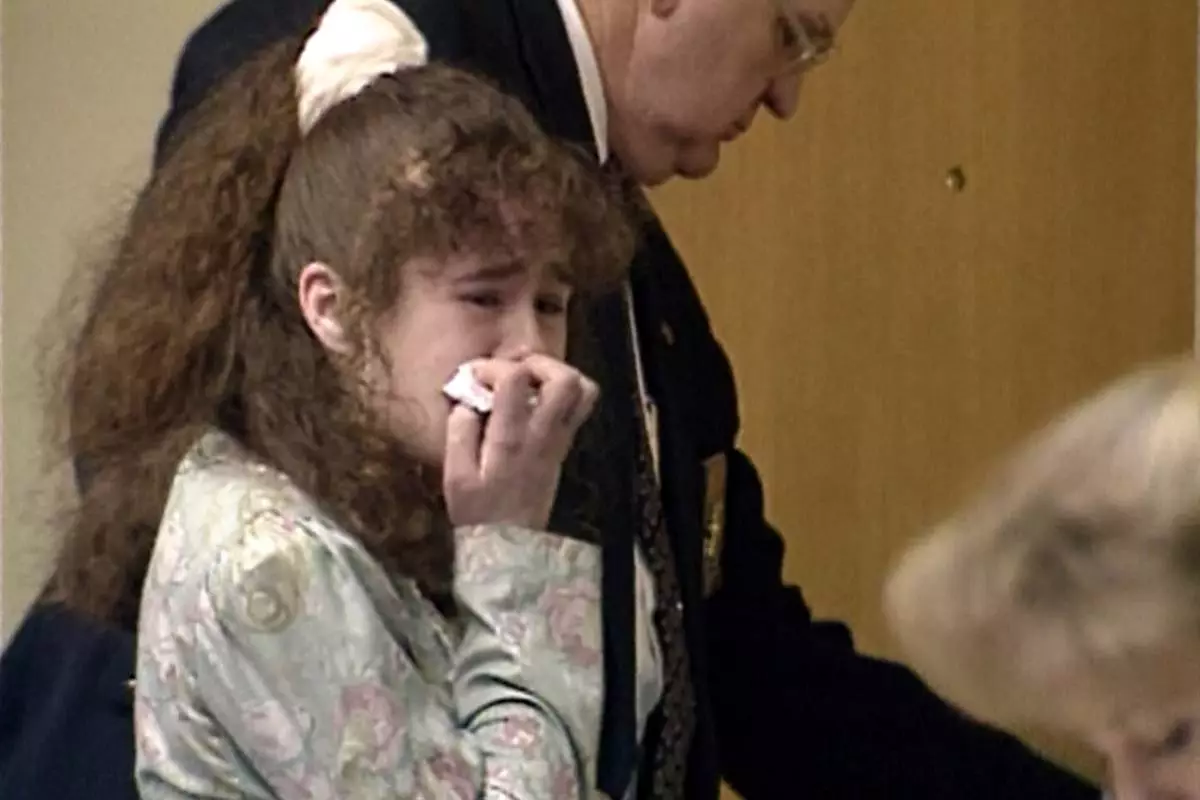
In this image from video provided by WBIR-TV, Christa Pike cries after being sentenced to death on March 30, 1996 in Knoxville, Tenn. (WBIR-TV via AP)

In this image from video provided by WBIR-TV, Christa Pike cries after being sentenced to death on March 30, 1996 in Knoxville, Tenn. (WBIR-TV via AP)

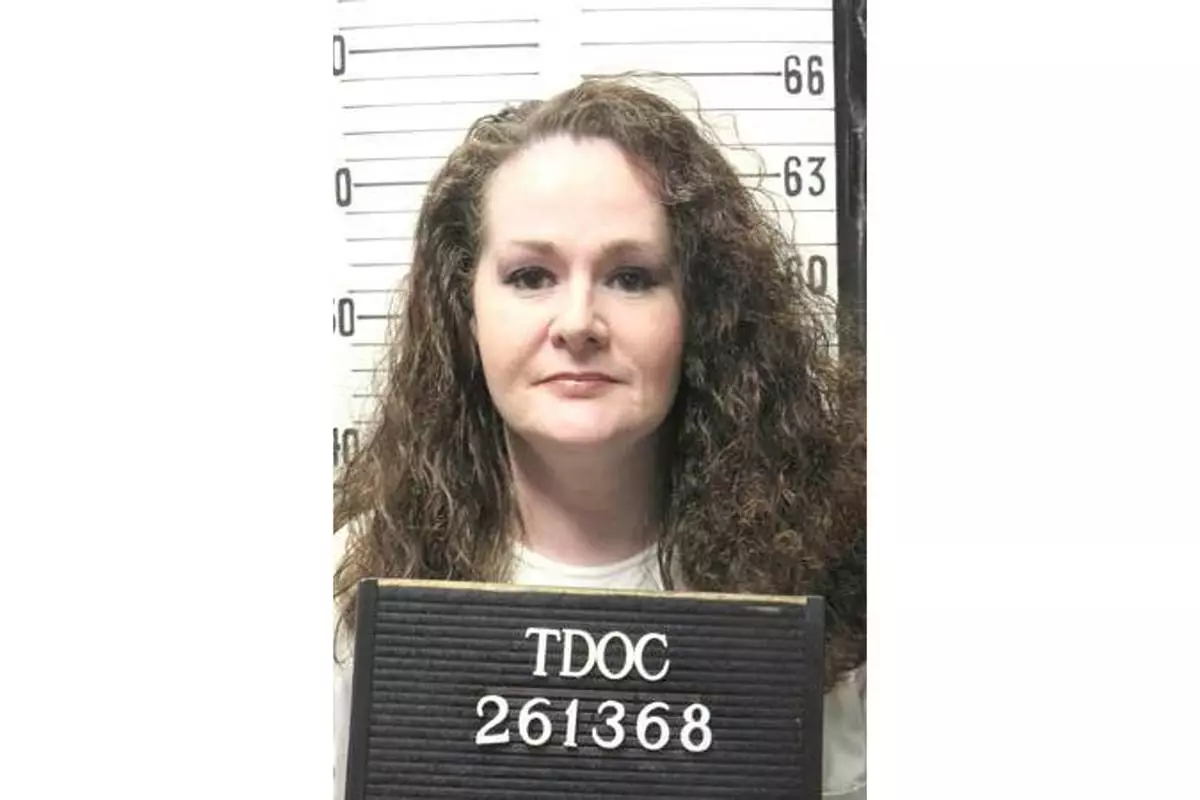
This photo provided by the Tennessee Department of Correction shows Christa Pike on Jan. 12, 2023. (TDOC via AP)

This photo provided by the Tennessee Department of Correction shows Christa Pike on Jan. 12, 2023. (TDOC via AP)

Recommended Articles