MADRID (AP) — Cristiano Ronaldo’s abrupt decision to leave Portugal’s training camp after an apparent rift with coach Jorge Jesus has left many wondering about his future in international soccer.
Is he done with Portugal? Or will he make peace with his coach and be back for the next international break?
Click to Gallery

Portugal's Cristiano Ronaldo starts on the bench during a Nations League soccer match between between Norway and Portugal, in Oslo, Sunday, Sept. 27, 2026. (Cornelius Poppe/NTB Scanpix via AP)
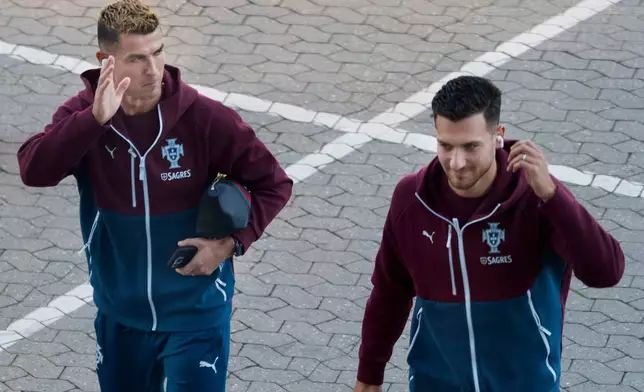
Portugal's Cristiano Ronaldo, left, and Diogo Dalot arrive for training in Copenhagen, Denmark, Wednesday, Sept. 30, 2026, ahead of their Nations League soccer match against Denmark. (Liselotte Sabroe/Ritzau Scanpix via AP)
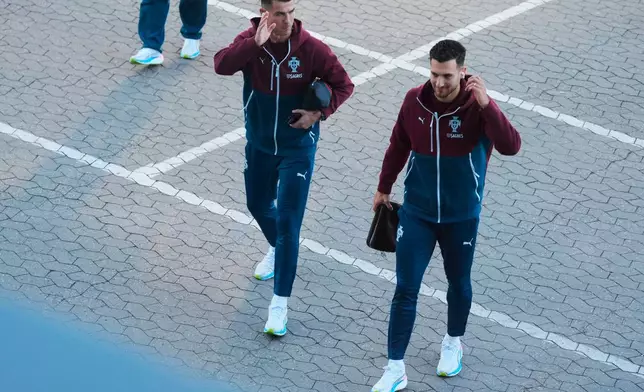
Portugal's Cristiano Ronaldo, left, and Diogo Dalot arrive for training in Copenhagen, Denmark, Wednesday, Sept. 30, 2026, ahead of their Nations League soccer match against Denmark. (Liselotte Sabroe/Ritzau Scanpix via AP)
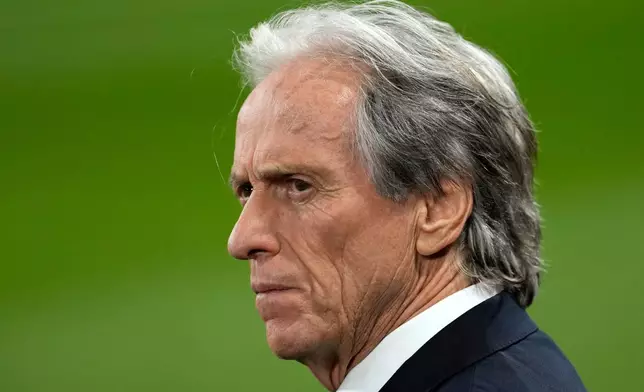
Portugal head coach Jorge Jesus stands by the pitch before the Nations League soccer match between Portugal and Wales in Lisbon, Thursday, Sept. 24, 2026. (AP Photo/Armando Franca)
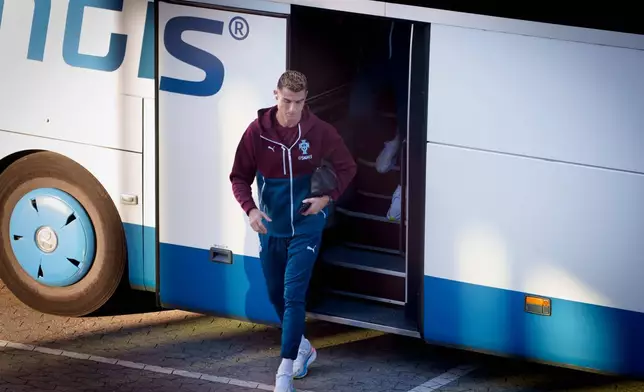
Portugal's Cristiano Ronaldo arrives for training in Copenhagen, Denmark, Wednesday, Sept. 30, 2026, ahead of their Nations League soccer match against Denmark. (Liselotte Sabroe/Ritzau Scanpix via AP)
There were few answers on Thursday, a day after the all-time leading scorer in men's international soccer decided to walk out on Portugal’s training camp in a decision announced a few hours after Jesus said the star forward would not start the game against Denmark in the Nations League.
The 41-year-old Ronaldo, who played in his sixth World Cup this year, only said that in due course he would “tell the Portuguese people the truth about the reasons” behind his departure.
The federation also gave few details, saying only that Ronaldo left the training camp and the rest of the team would remain focused on Thursday's game against Denmark.
There was already a new holder of Ronaldo’s famous No. 7 jersey, with Rafael Leão set to wear it on Thursday. Because of UEFA rules, Portugal had to assign the number to another player after Ronaldo left the roster. Other players have worn the No. 7 in Ronaldo's absence in the past.
In Portugal, the news of Ronaldo's departure fueled speculation that the country's biggest sporting star, who had already hinted that this is his last season in soccer, would not play again for the national team.
“Is this the end?” read Thursday's front-page headline of the JM newspaper based in Ronaldo's native Madeira.
“A sad farewell,” the Portuguese sports paper A Bola said.
“CR7 turns his back on the national team,” read the headline on the O Jogo newspaper.
Portuguese media also reported that Portugal Prime Minister Luís Montenegro got involved in the situation, having talked individually to Ronaldo, Jesus and soccer federation president Pedro Proença.
Regardless of Ronaldo's and the federation's decisions going forward, the star player could possibly face a harsh punishment for leaving the training camp.
The federation's disciplinary regulations say that any player who “abandons or fails to appear” without justification at a training session, match or activity of the national teams, or any activity related to representing the federation, “shall be sanctioned with a suspension of one to six months,” in addition to a fine.
It says the “absence or abandonment shall result in the player’s automatic preventive suspension.”
Ronaldo did tell the federation that he was leaving, but it wasn't clear whether the decision would be considered justified in accordance with the federation's regulations.
Neither the federation nor Ronaldo's representatives immediately responded to requests for comment by The Associated Press on Thursday.
Ronaldo reportedly traveled to Madrid, his home for many years while playing for Real Madrid and where he usually stays when not playing with Al-Nassr in Saudi Arabia.
His social media post offered few hints about what's next.
“Following the national team coach’s news conference, and after a conversation with the president of the Portuguese football federation, I decided to leave the national team’s training camp,” Ronaldo said.
He ended his message by saying that “now is the time to wish good luck to Portugal and to all my teammates.”
Many had been expecting Ronaldo to retire from the national team after the World Cup. And while confirmed he wouldn't appear at another World Cup, he vowed to continue playing and pursuing the milestone of 1,000 career goals. He currently stands at 979, with an international men's record of 146 goals coming for Portugal.
Ronaldo recently said that this Saudi Pro League season is likely to be the last of his professional career. Al-Nassr’s next match is Oct. 9.
Jesus, who coached Ronaldo at Al-Nassr last season when they won the Saudi Arabian league title together, took over from Roberto Martínez after Portugal's round-of-16 elimination at the World Cup. He said Wednesday in the pre-game news conference that he was not planning to start Ronaldo in the Nations League match against Denmark. But he dismissed the notion there was a feud between him and Ronaldo, and said the player told him that he would accept any decision he would make.
“It seems like there was an issue between us, but there was no issue,” Jesus said before Ronaldo announced his decision to leave.
Ronaldo didn't play Sunday in Portugal’s 2-1 win over Norway. He hadn't trained with the rest of the group since, sparking widespread rumors about a possible spat with Jesus. The coach said Ronaldo would practice normally on Wednesday, but he ended up deciding to leave.
Jesus acknowledged that someone with the stature of Ronaldo deserved a different type of attention from coaches, but emphasized that the “rules are the same for everyone.”
Jesus admitted that he told Ronaldo that he would play at least a few minutes against Norway, but changed his mind because of the game's circumstances. He said he's the one making the team choices and "no player will ever make a decision for me.”
He said it was a mistake to send Ronaldo to warm up for as long as he did, and then not use him against Norway. Jesus added that “any player” would be upset about that.
Ronaldo started in Portugal’s 1-0 win over Wales last Thursday but was substituted in the 67th minute. On Tuesday, he posted on Instagram a photo of him wearing the kit accompanied by the country’s flag and a heart emoji.
See AP’s full soccer coverage here

Portugal's Cristiano Ronaldo starts on the bench during a Nations League soccer match between between Norway and Portugal, in Oslo, Sunday, Sept. 27, 2026. (Cornelius Poppe/NTB Scanpix via AP)
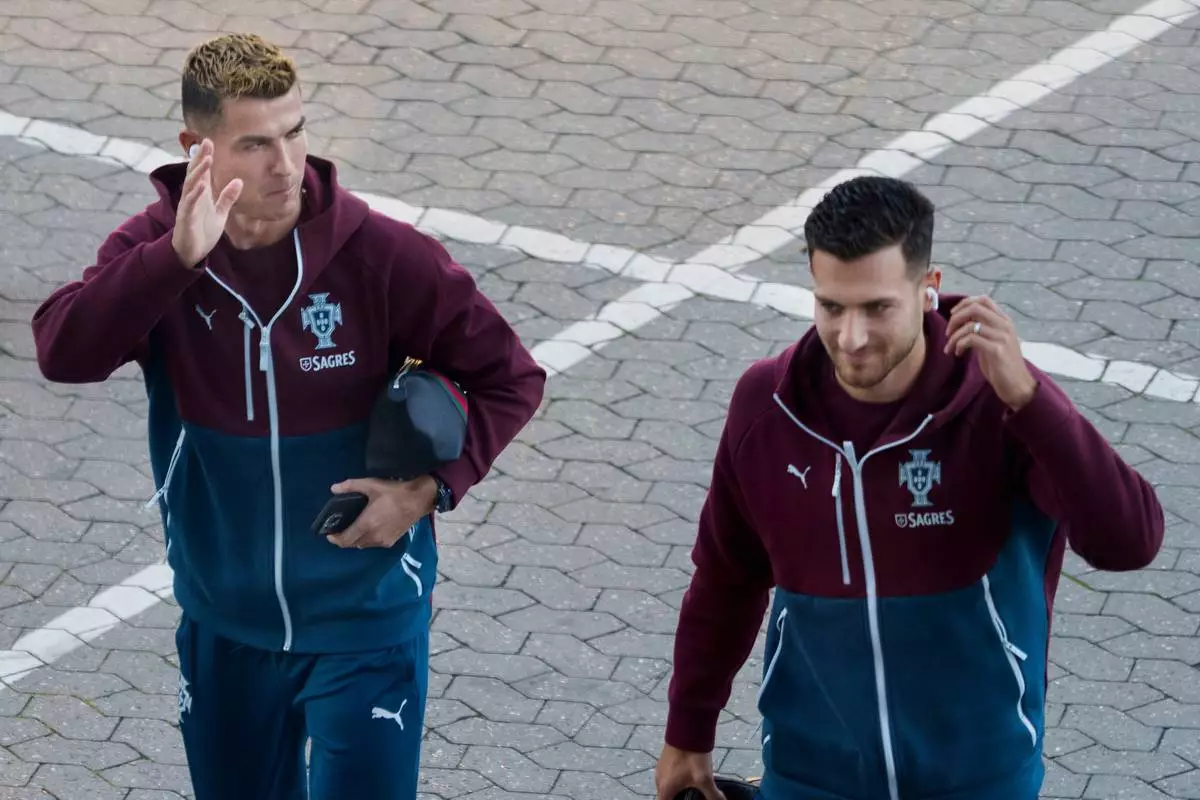
Portugal's Cristiano Ronaldo, left, and Diogo Dalot arrive for training in Copenhagen, Denmark, Wednesday, Sept. 30, 2026, ahead of their Nations League soccer match against Denmark. (Liselotte Sabroe/Ritzau Scanpix via AP)
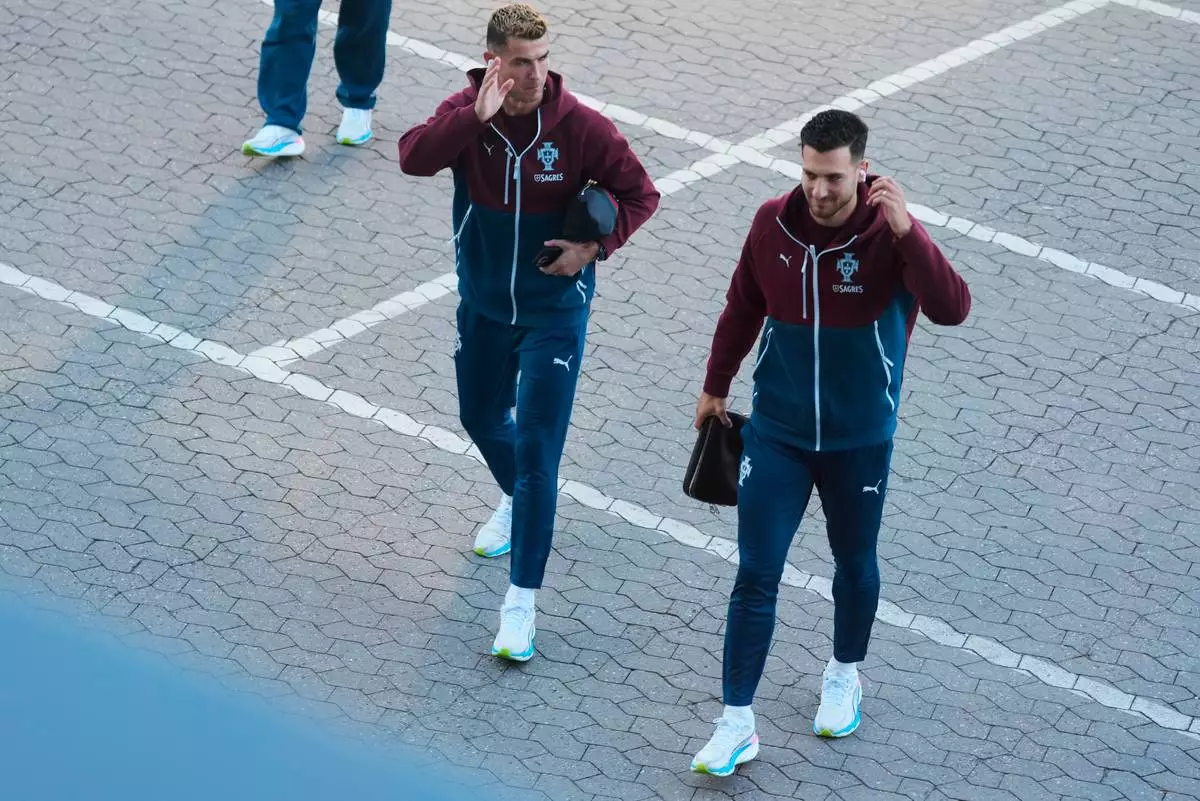
Portugal's Cristiano Ronaldo, left, and Diogo Dalot arrive for training in Copenhagen, Denmark, Wednesday, Sept. 30, 2026, ahead of their Nations League soccer match against Denmark. (Liselotte Sabroe/Ritzau Scanpix via AP)
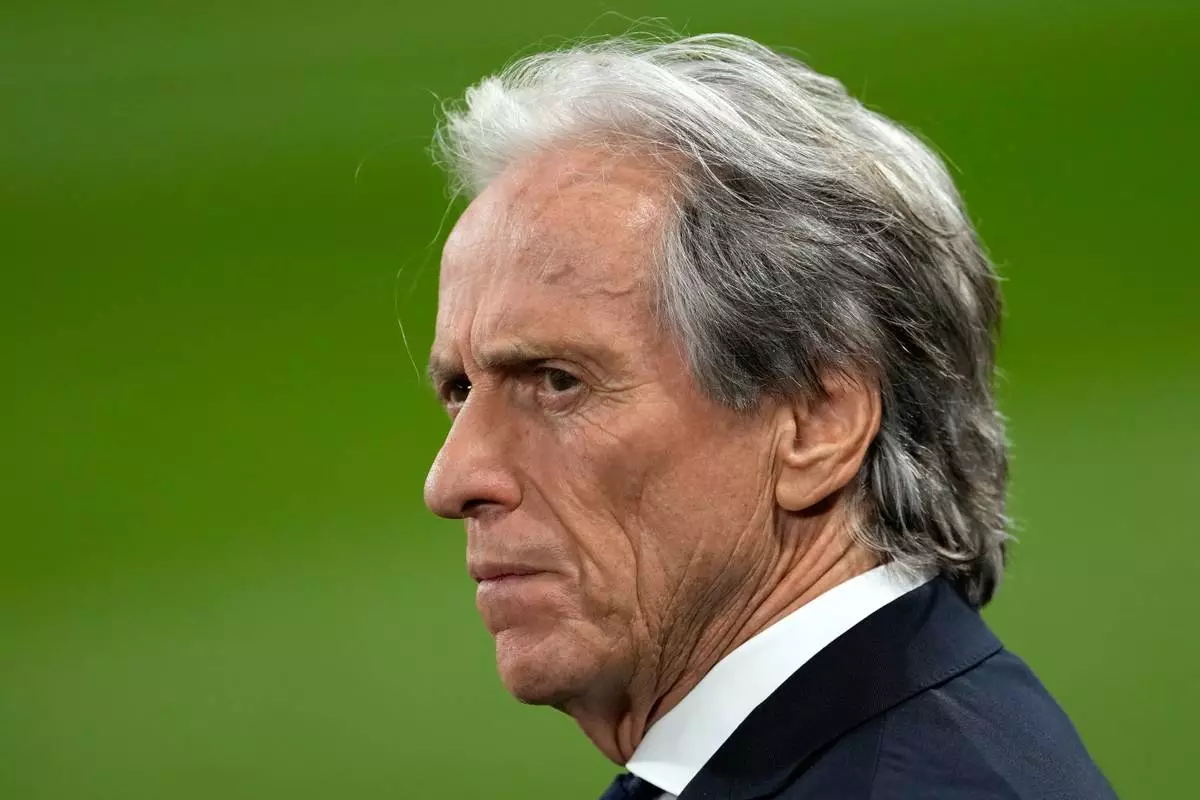
Portugal head coach Jorge Jesus stands by the pitch before the Nations League soccer match between Portugal and Wales in Lisbon, Thursday, Sept. 24, 2026. (AP Photo/Armando Franca)
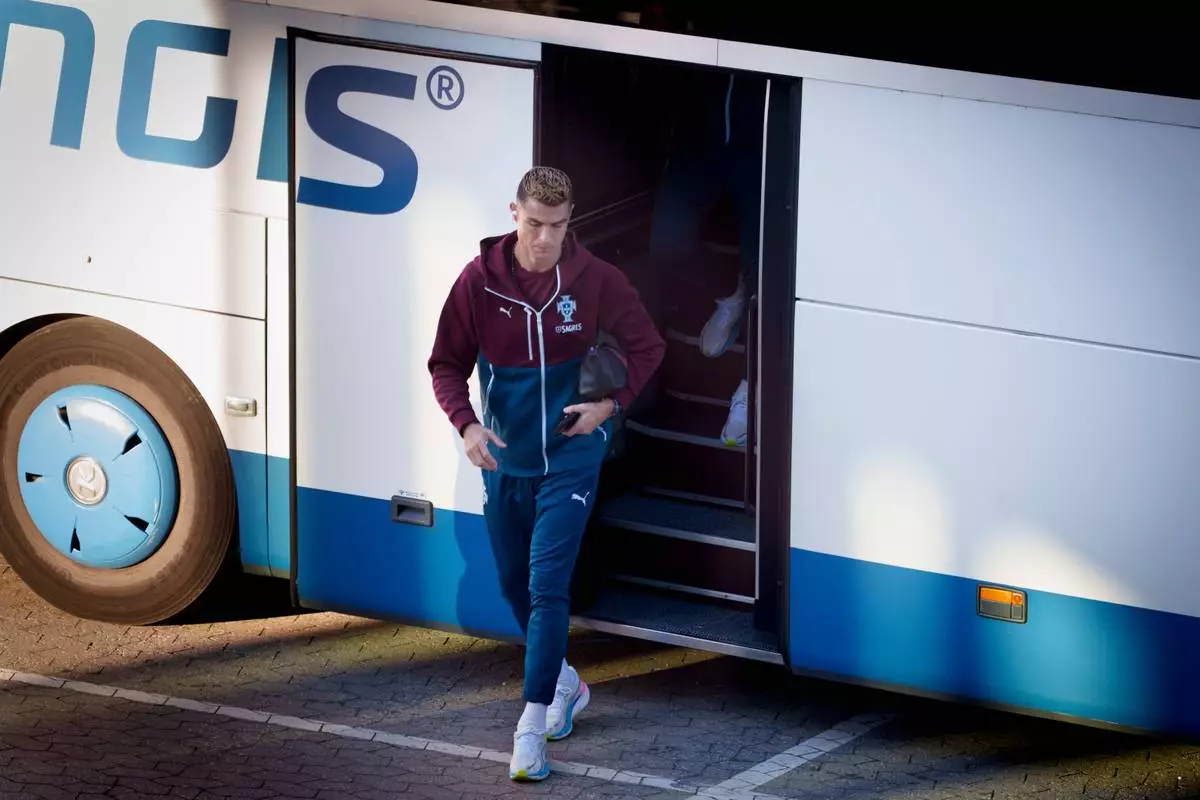
Portugal's Cristiano Ronaldo arrives for training in Copenhagen, Denmark, Wednesday, Sept. 30, 2026, ahead of their Nations League soccer match against Denmark. (Liselotte Sabroe/Ritzau Scanpix via AP)